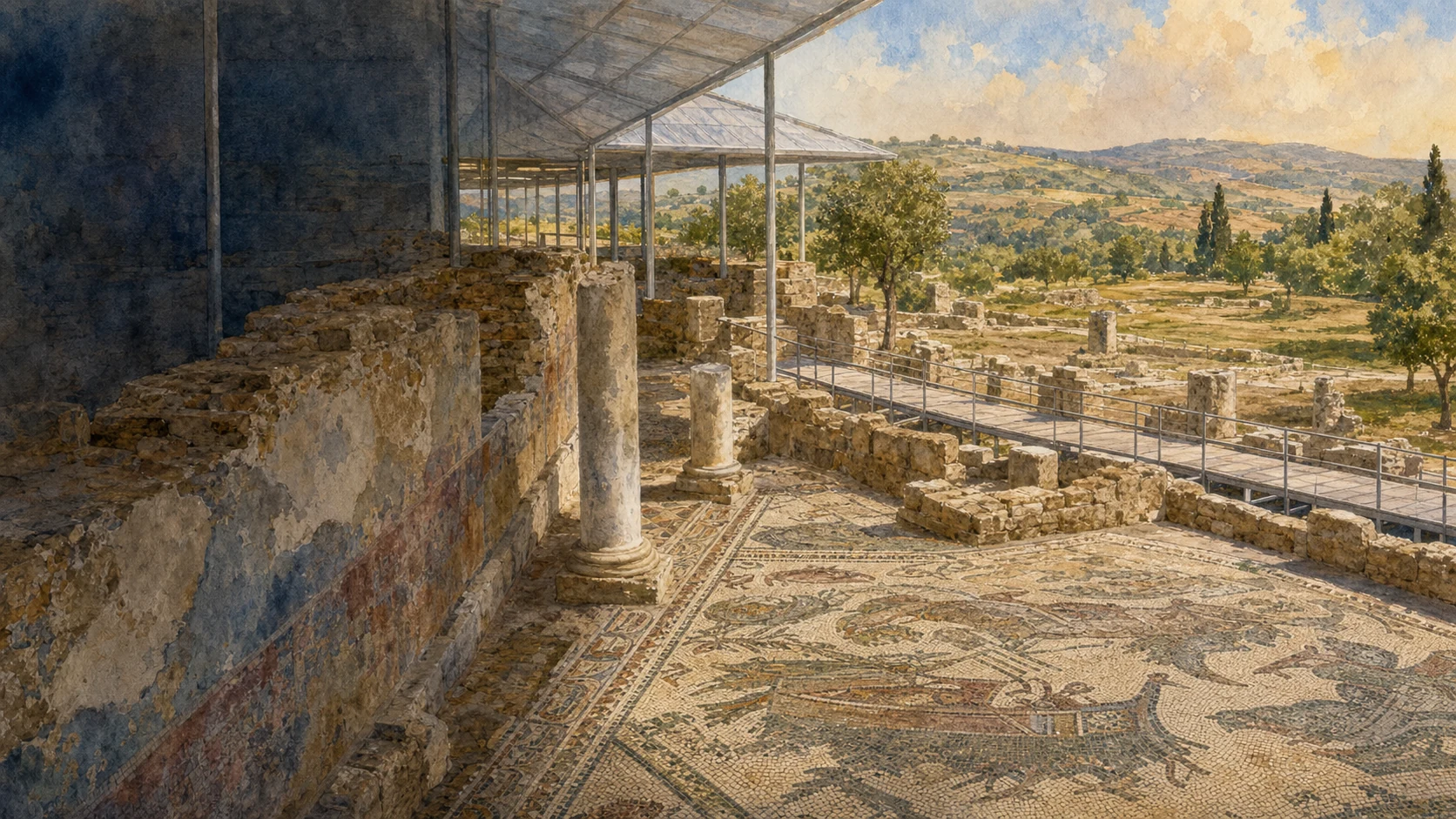
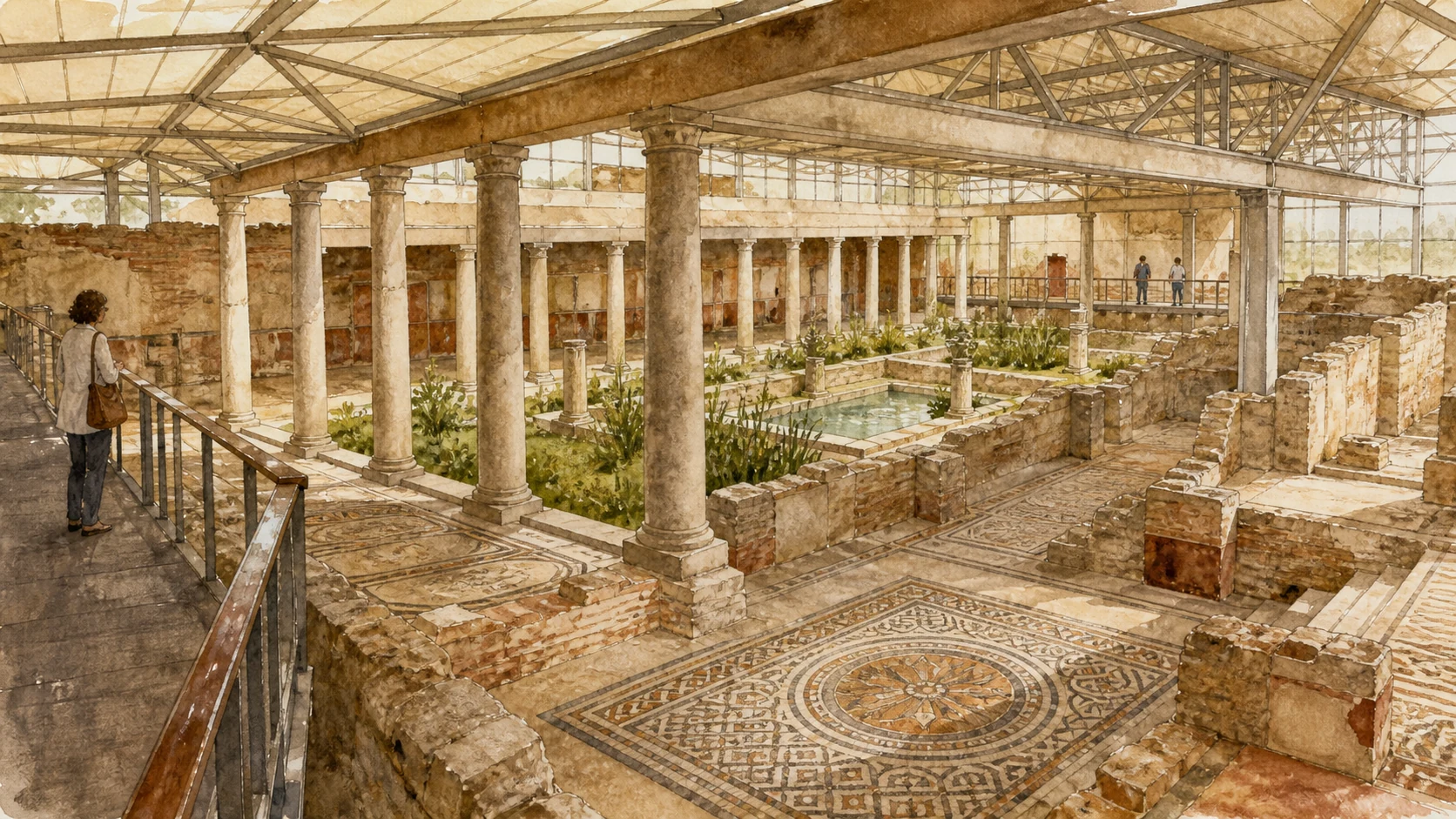
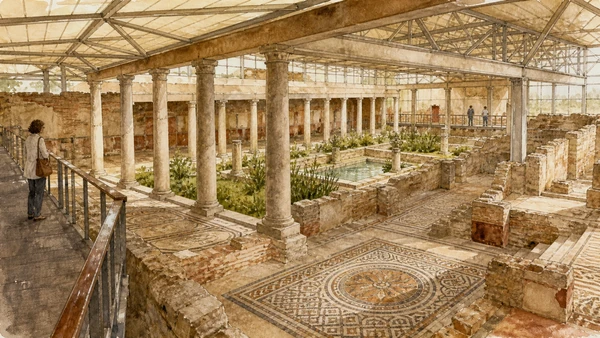
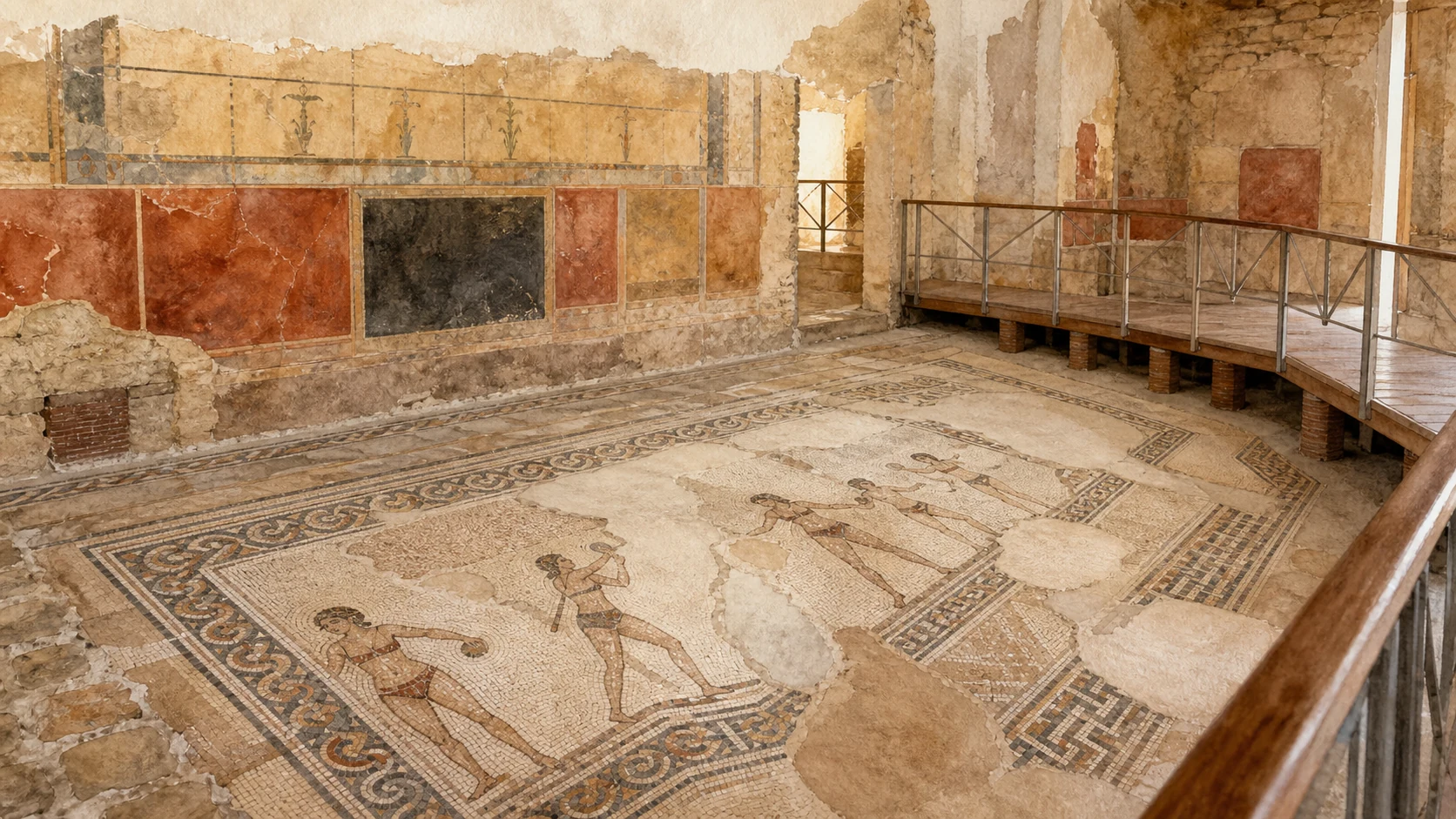
Both reductions erase the essential story. The Villa was an estate centre whose architecture controlled work, reception, bathing, dining and private life. Its images were not an isolated picture book: they directed movement through rooms and expressed the education, rank and Mediterranean reach of an unknown late-Roman owner.
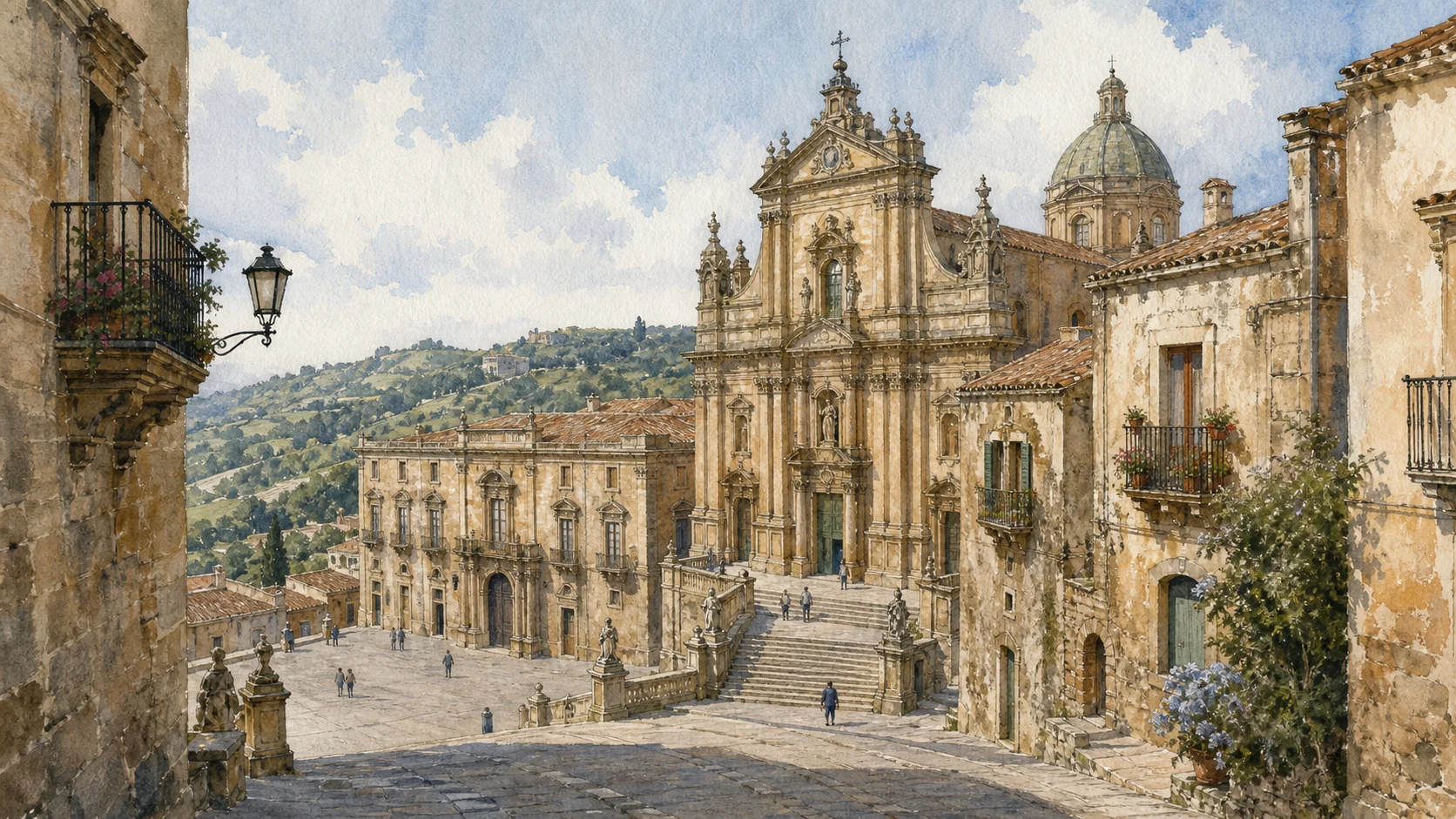
Four kilometres away, the hill town grew through a different history. Destruction and reconstruction in the Norman period, settlement by northern communities, Aragonese fortification, religious institutions, civic ambition and later Baroque building made a city whose stone cannot be treated as the entrance hall to the Villa.
This guide therefore gives the town and estate their own spaces, then reconnects them through land, power, preservation and the modern responsibility of caring for an extraordinary but fragile inheritance.