Italy · National city chapter

RomeCaput Mundi

The Eternal City, read as a world: empire and pilgrimage, palaces and neighbourhoods, roads, water and three millennia of inhabited history.

8historical layers
12urban gateways
18complete guides
Rome is not one destination. It is a sequence of cities occupying the same ground.
The rule behind every choice
Place before checklist; historical relationship before ranking; the living city alongside the monumental one.
A chapter beyond the regions

Rome belongs geographically to Lazio, but its scale and historical reach require a chapter of its own. The city cannot be explained by a single list of monuments: ancient roads determine modern movement, Christian basilicas reuse imperial geographies, papal projects reshape classical space, and residential districts continue the story beyond the ceremonial centre.

The Rome atlas therefore follows connected territories. Each gateway joins monuments to streets, hills, water systems, institutions and the neighbourhoods that give them meaning.

Three millennia in one fabric

Eight Romes, never fully erased.

The UNESCO historic centre is defined by continuous stratification: antiquity, Christian Rome, Renaissance and Baroque form one evolving urban ensemble rather than separate museums.

01

Origins, hills and the river

Settlement, crossings and the seven-hill terrain shaped the city before its monumental centre emerged.

02

Republican Rome

Temples, roads, assemblies and aristocratic competition created the political grammar of the Forum.

03

Imperial capital

Fora, baths, palaces, aqueducts, amphitheatres and ports connected spectacle to administration.

04

Christian transformation

Basilicas, martyrs’ roads and pilgrimage routes reinterpreted the inherited imperial city.

05

Medieval Rome

Towers, fortified ruins, monasteries and river districts reveal a smaller but continuously inhabited capital.

06

Renaissance renewal

Papal streets, palaces and new cultural institutions reconnected the city to classical models.

07

Baroque theatre

Bernini, Borromini and their contemporaries turned water, movement and perspective into urban form.

08

Capital and metropolis

From 1870 onward, embankments, ministries, housing districts and modern cultural architecture expanded Rome again.

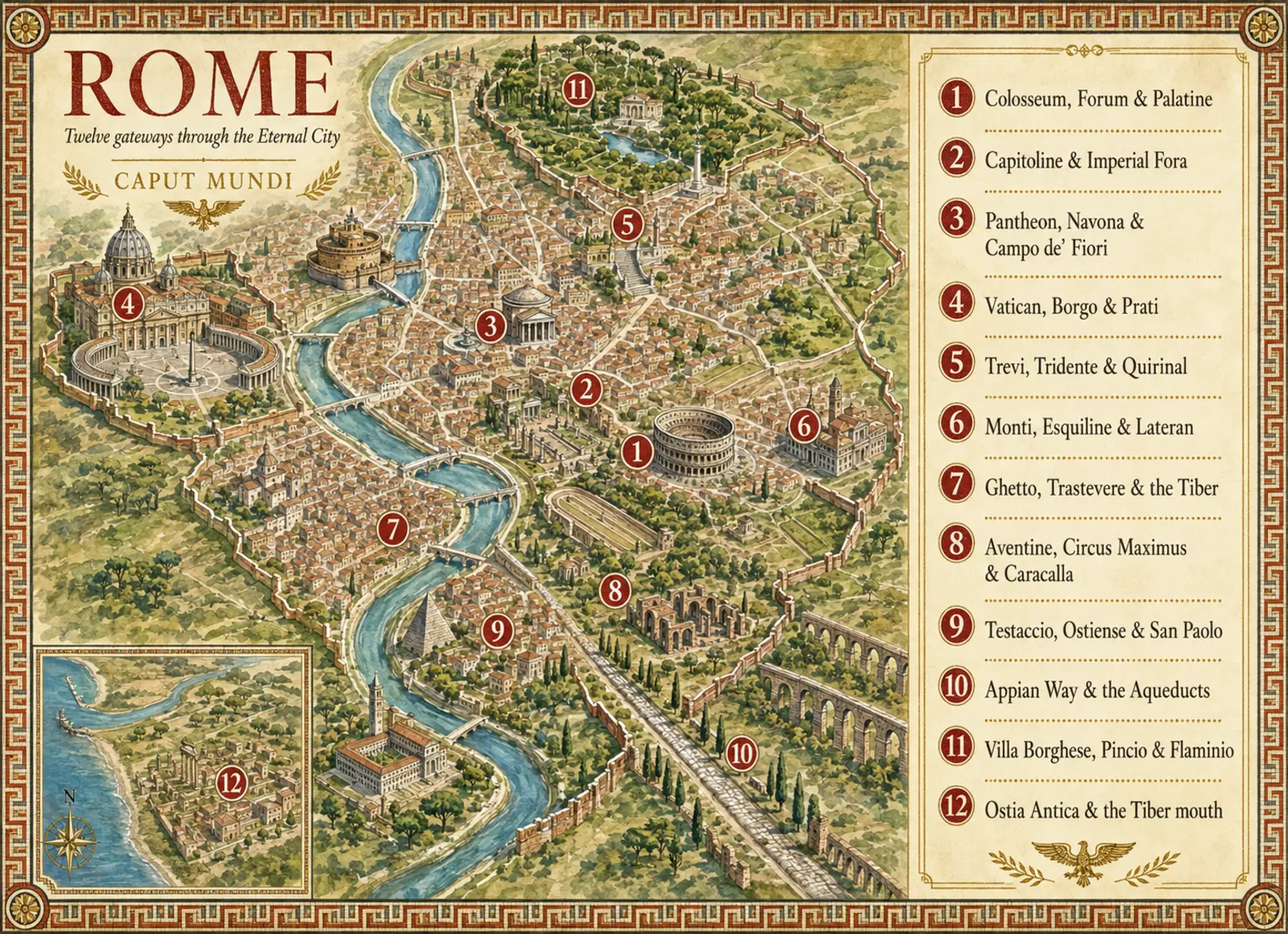
Illustrated map of Rome with twelve numbered geographic gateways
The complete city

Twelve gateways, one urban organism.

The Tiber, hills, walls and ancient roads organise the atlas. Ostia Antica appears separately because the port completes Rome’s relationship with the Mediterranean.

Six ways through

Follow a system, not a queue.

The routes overlap deliberately. Rome becomes clearer when monuments are read through power, belief, water, streets and daily life.

Route 01

The city of power

Forum, Palatine, Imperial Fora, Capitoline and the institutions that made a capital.

Route 02

Roads of empire

Colosseum, baths, aqueducts, Appian Way and Ostia as parts of a connected infrastructure.

Route 03

Christian Rome

Lateran, Saint Peter’s, early basilicas, martyrs’ landscapes and pilgrimage across the city.

Route 04

Papal and Baroque Rome

Vatican, palaces, ceremonial streets, fountains and the city as a theatre of persuasion.

Route 05

The river city

Ghetto, Tiber Island, Trastevere, Testaccio and Ostiense through commerce and community.

Route 06

Rome beyond the postcard

Monti, Esquiline, Flaminio, Garbatella and EUR as chapters in the inhabited metropolis.

The Rome atlas

Eighteen complete guides.

Each guide keeps a manageable territory while preserving the relationships that make Rome intelligible.

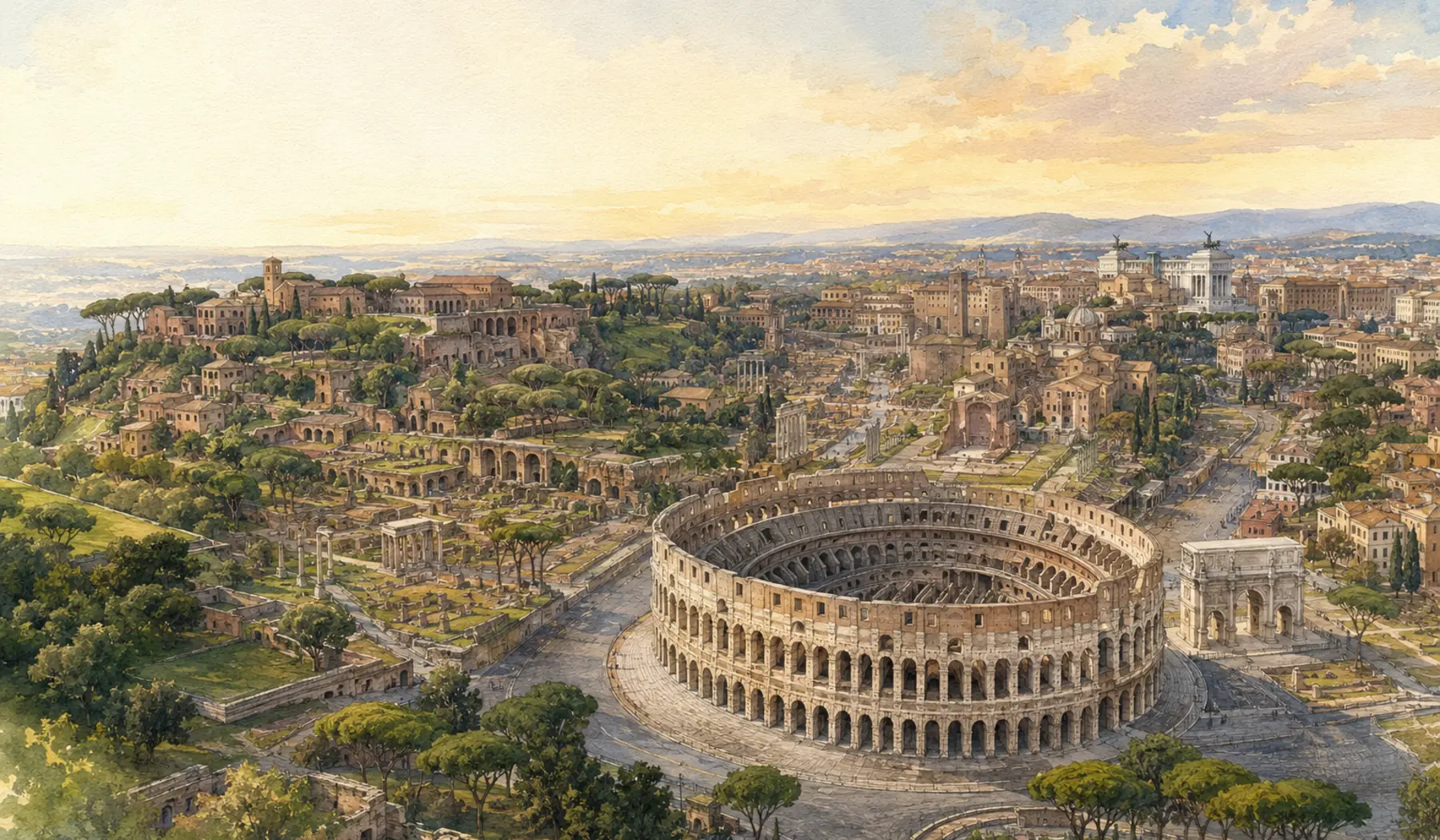
Documentary watercolour of the Colosseum, Roman Forum and Palatine Hill
01Ancient core

Colosseum, Forum and Palatine

The arena, political centre and imperial hill as one archaeological landscape.

Open guide ↗
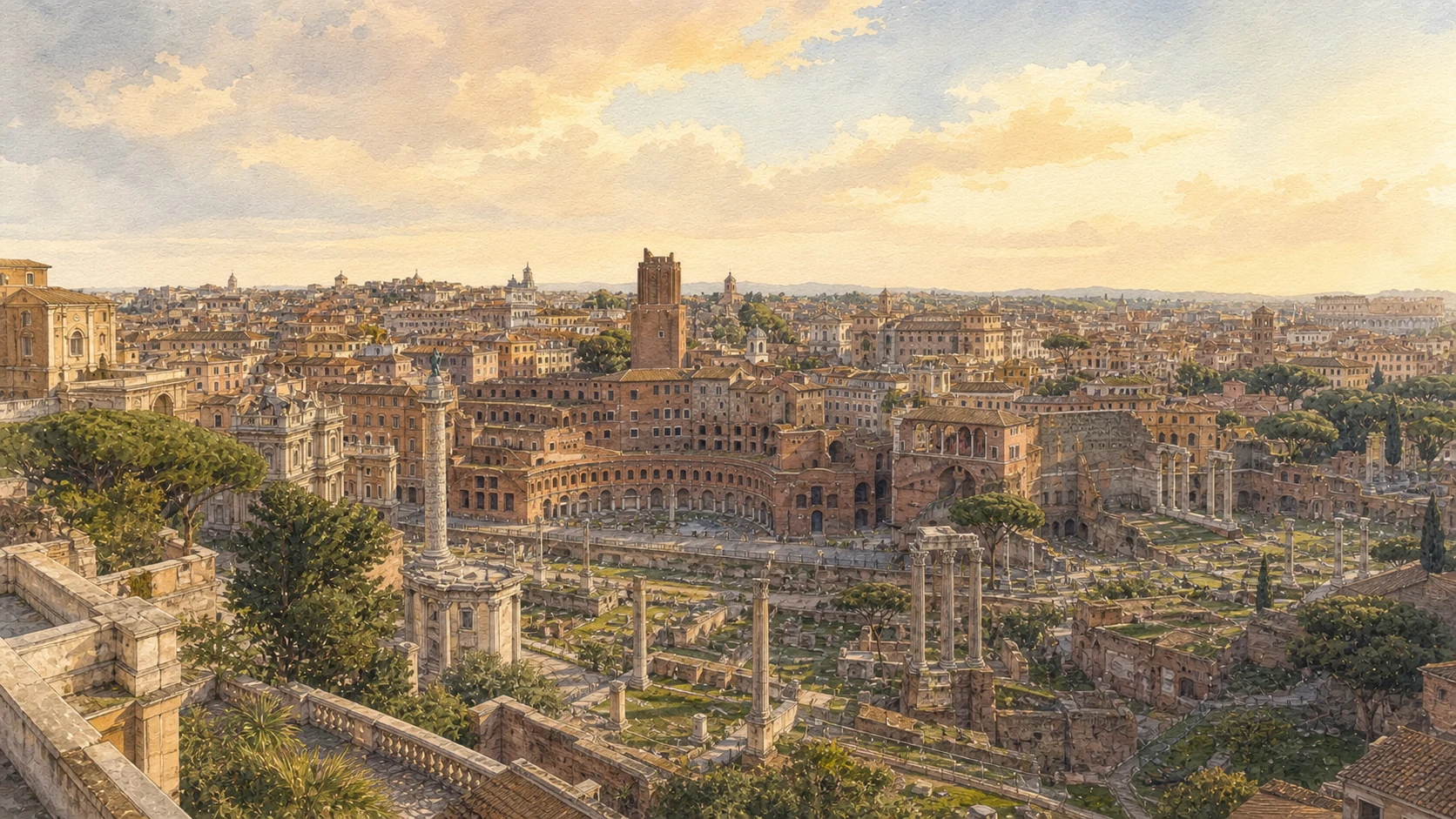
Documentary watercolour of the Capitoline and Imperial Fora
02Power and memory

Capitoline and Imperial Fora

Civic identity, imperial construction and the long remaking of Rome’s ceremonial centre.

Open guide ↗
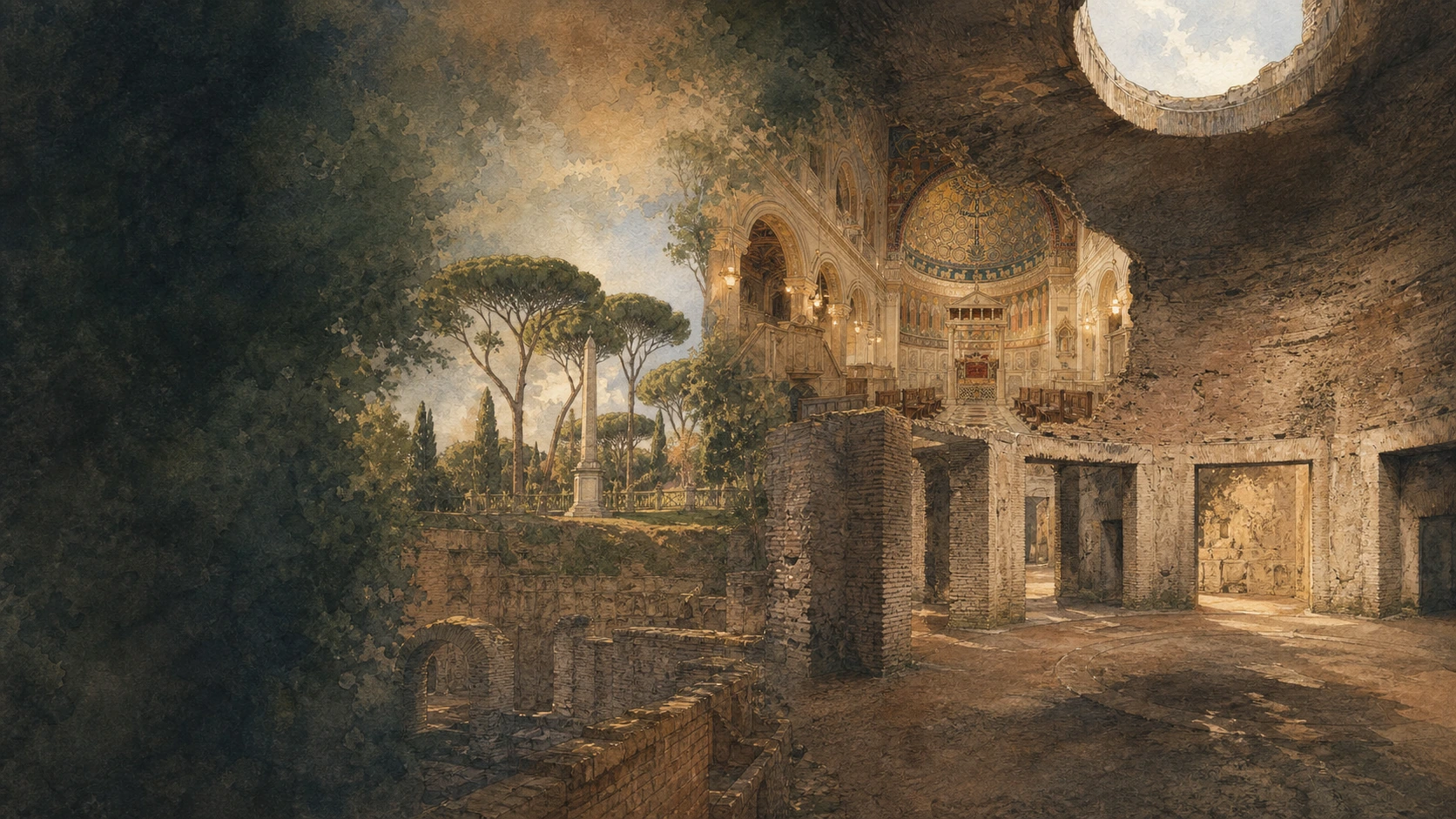
Documentary watercolour of the Domus Aurea, Caelian Hill and San Clemente
03Layered ground

Domus Aurea, Caelian and San Clemente

Palace, hill, churches and underground strata reveal the city built over itself.

Open guide ↗
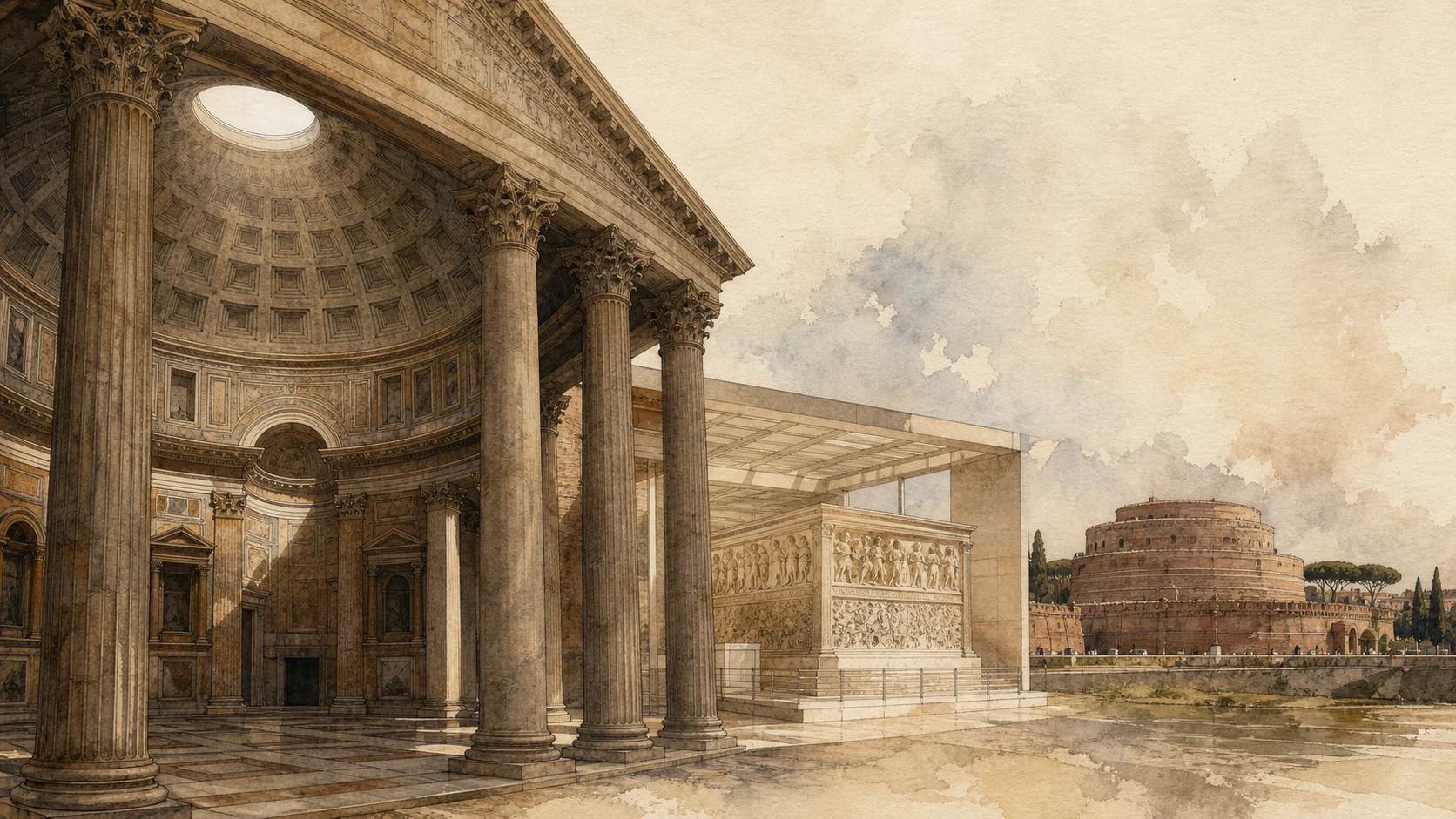
Documentary watercolour of the Pantheon and Campo Marzio
04Campus Martius

Pantheon and Campo Marzio

Temple, mausoleums, baths and later streets inside Rome’s ancient northern plain.

Open guide ↗
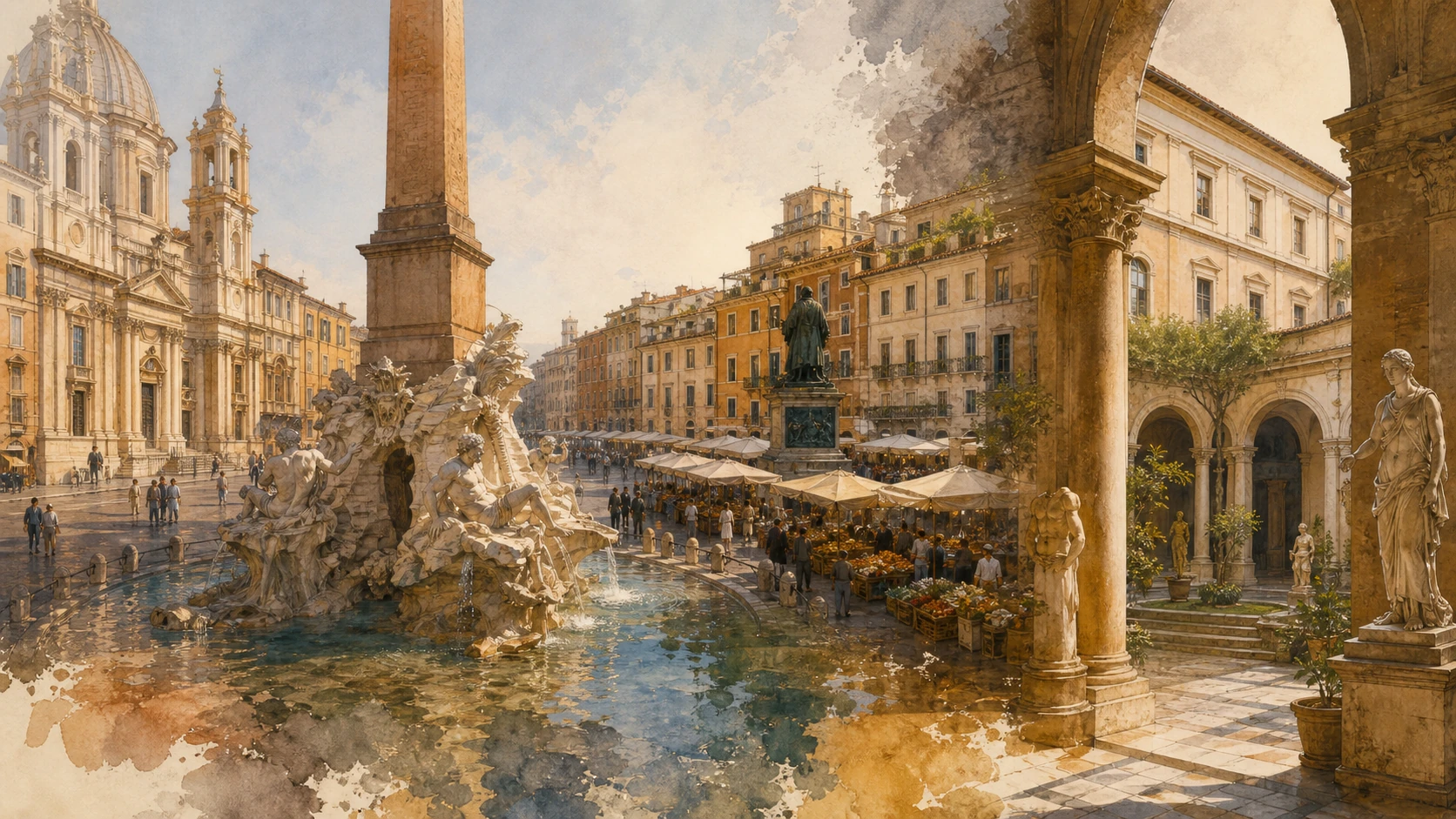
Documentary watercolour of Piazza Navona, Campo de’ Fiori and Palazzo Altemps
05Stadium to square

Navona, Campo de’ Fiori and Palazzo Altemps

Baroque space, markets, palaces and collections anchored in ancient urban forms.

Open guide ↗
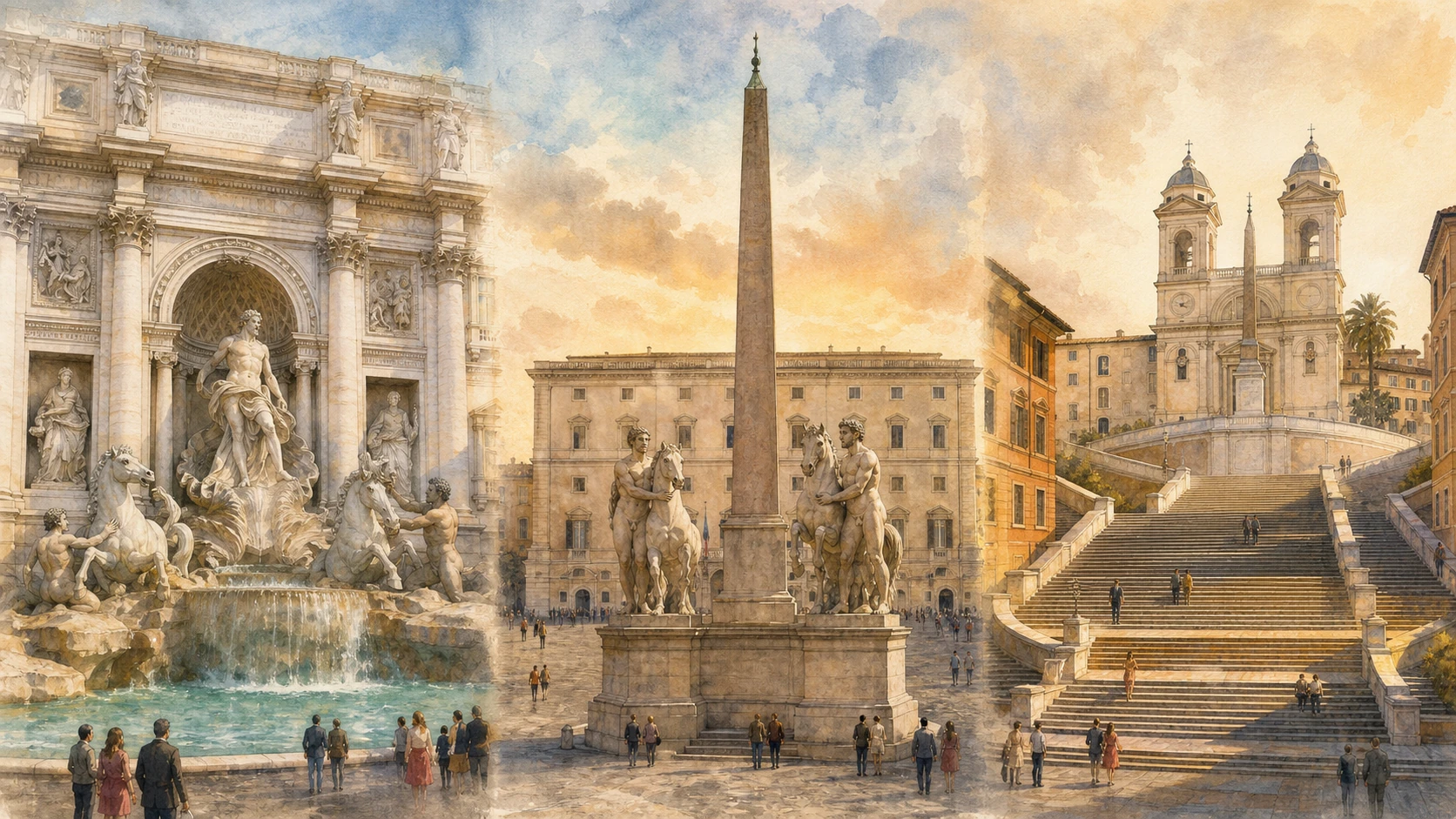
Documentary watercolour of Trevi, the Quirinal and the Spanish Steps
06Water and perspective

Trevi, Quirinal and the Spanish Steps

Aqueduct water, papal streets and staged views across the slopes of central Rome.

Open guide ↗
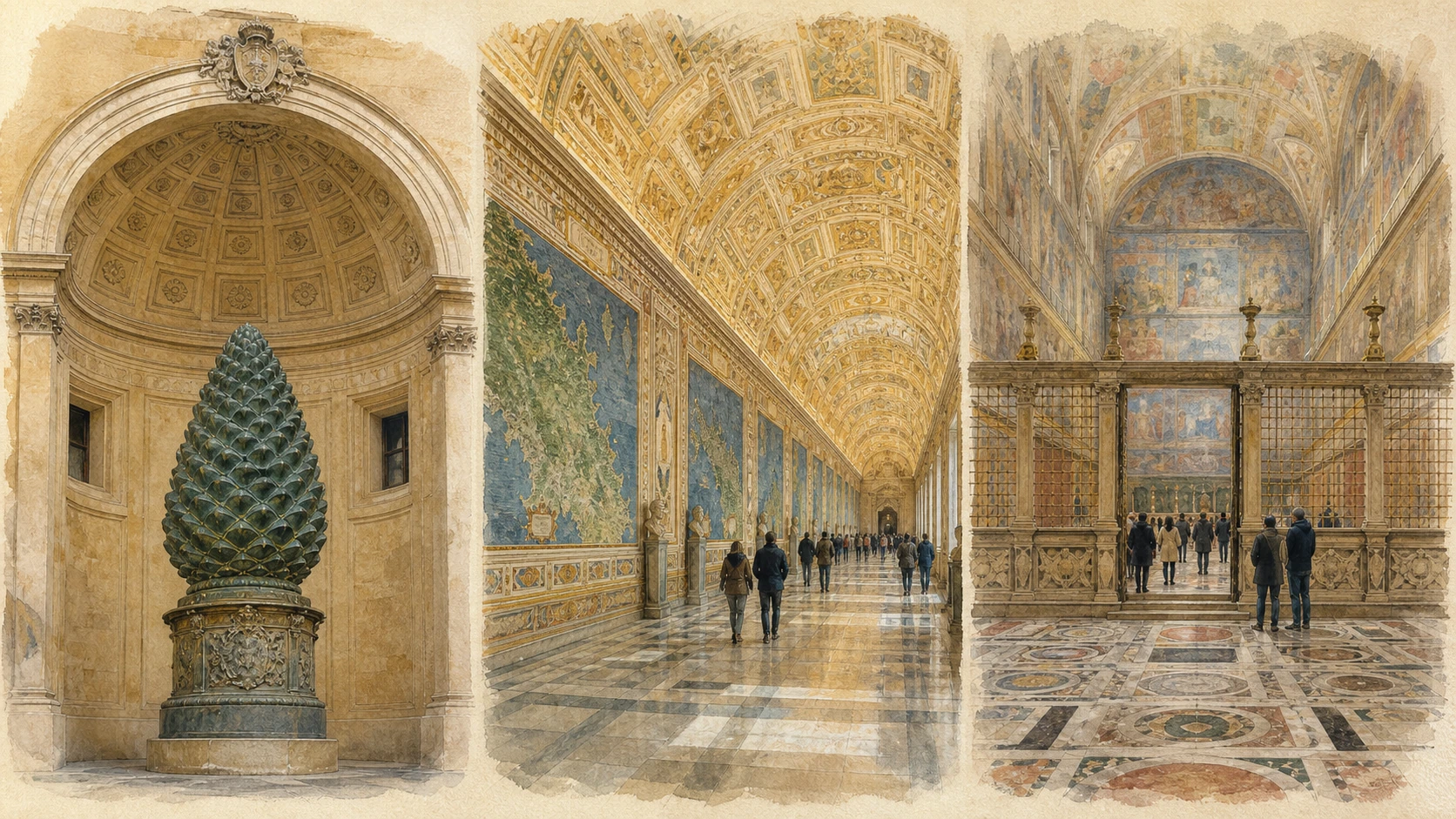
Documentary watercolour of the Vatican Museums and Sistine Chapel
07The papal collections

Vatican Museums and the Sistine Chapel

The museums through their palaces, courtyards, galleries and institutional history.

Open guide ↗
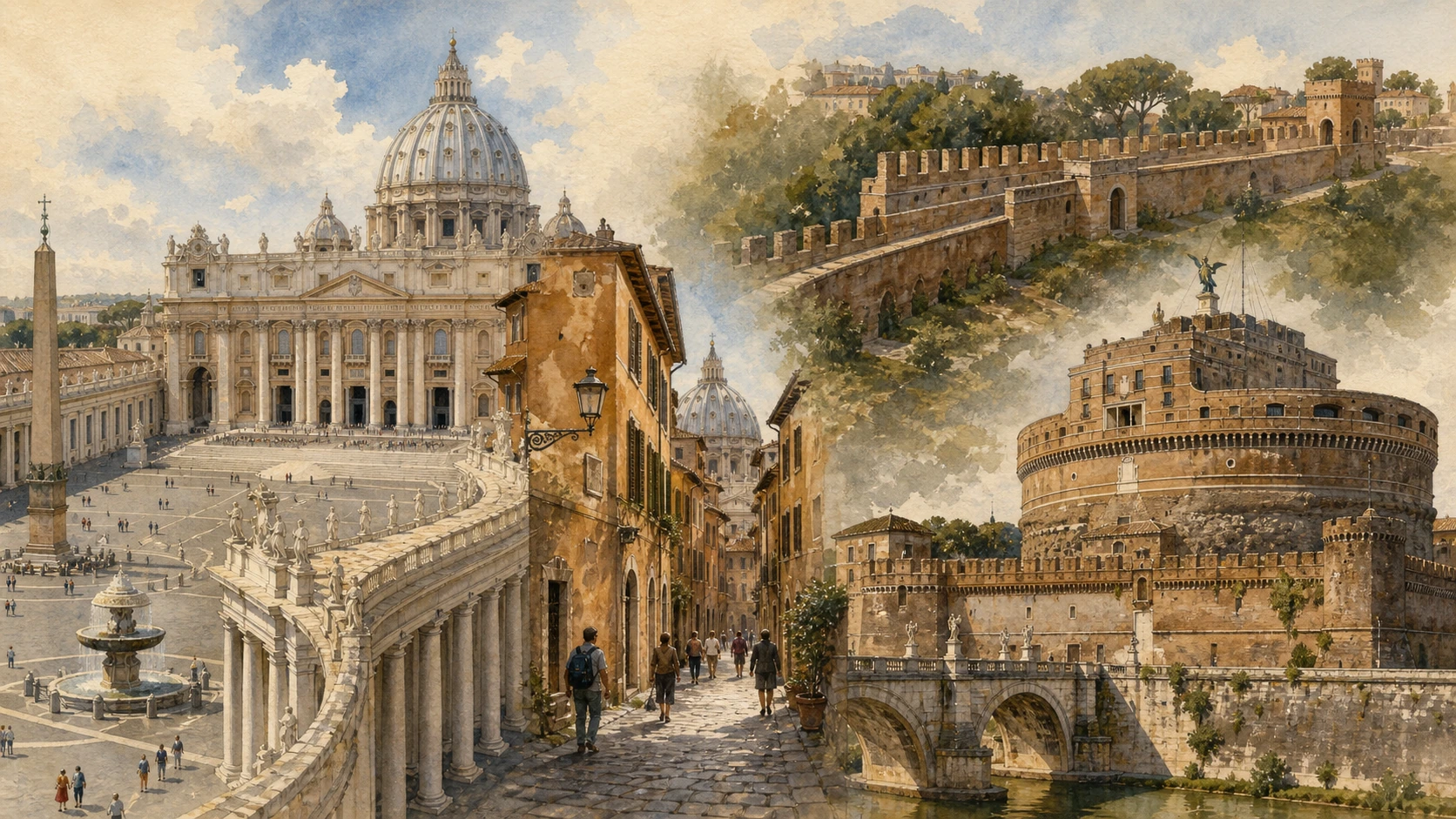
Documentary watercolour of Saint Peter’s, Borgo and Castel Sant’Angelo
08Pilgrimage and power

Saint Peter’s, Borgo and Castel Sant’Angelo

Basilica, fortified mausoleum and processional district across the western bank.

Open guide ↗
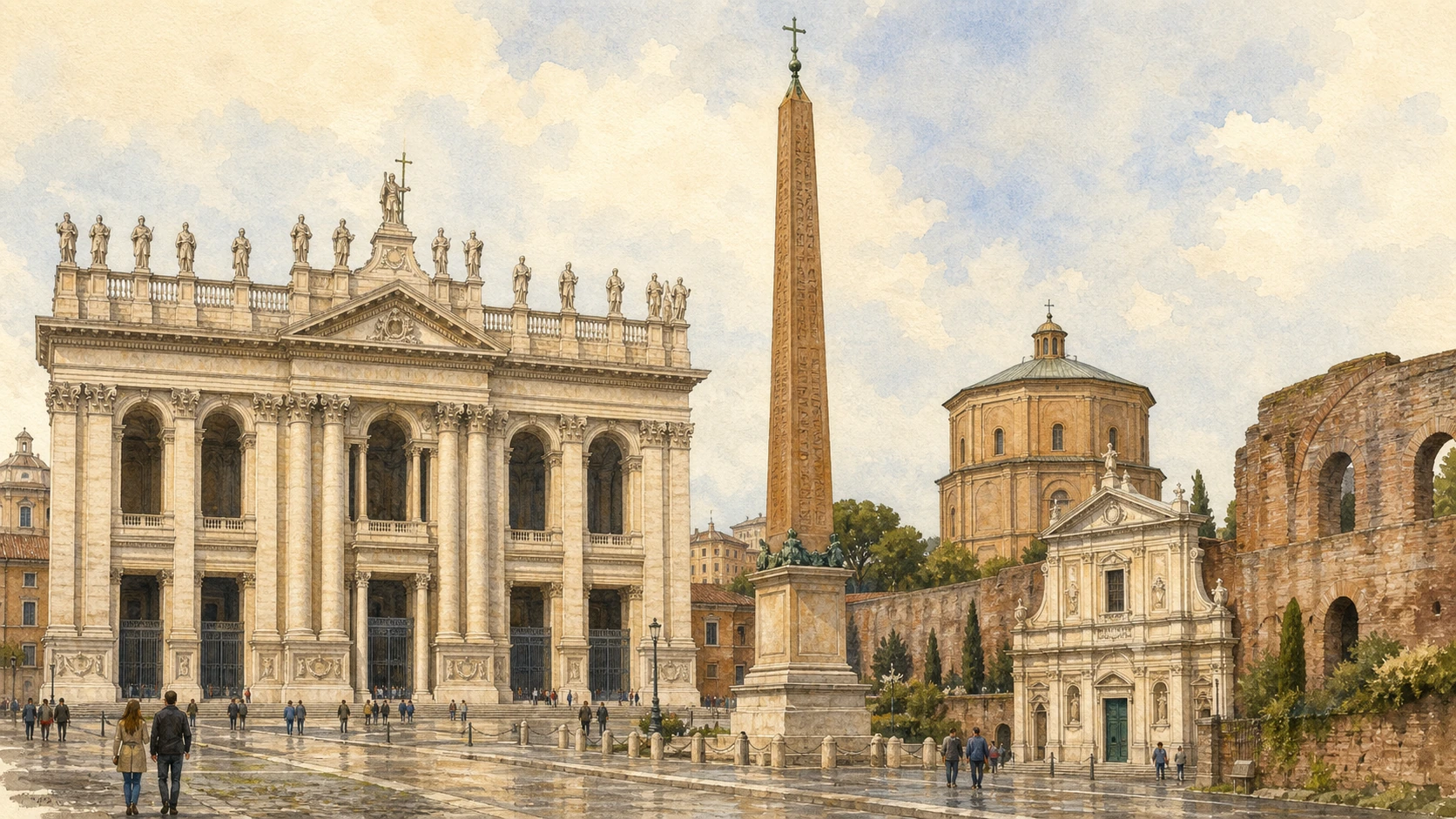
Documentary watercolour of the Lateran and early Christian Rome
09The first cathedral

Lateran and early Christian Rome

Cathedral, baptistery, walls and basilicas that established a new sacred geography.

Open guide ↗
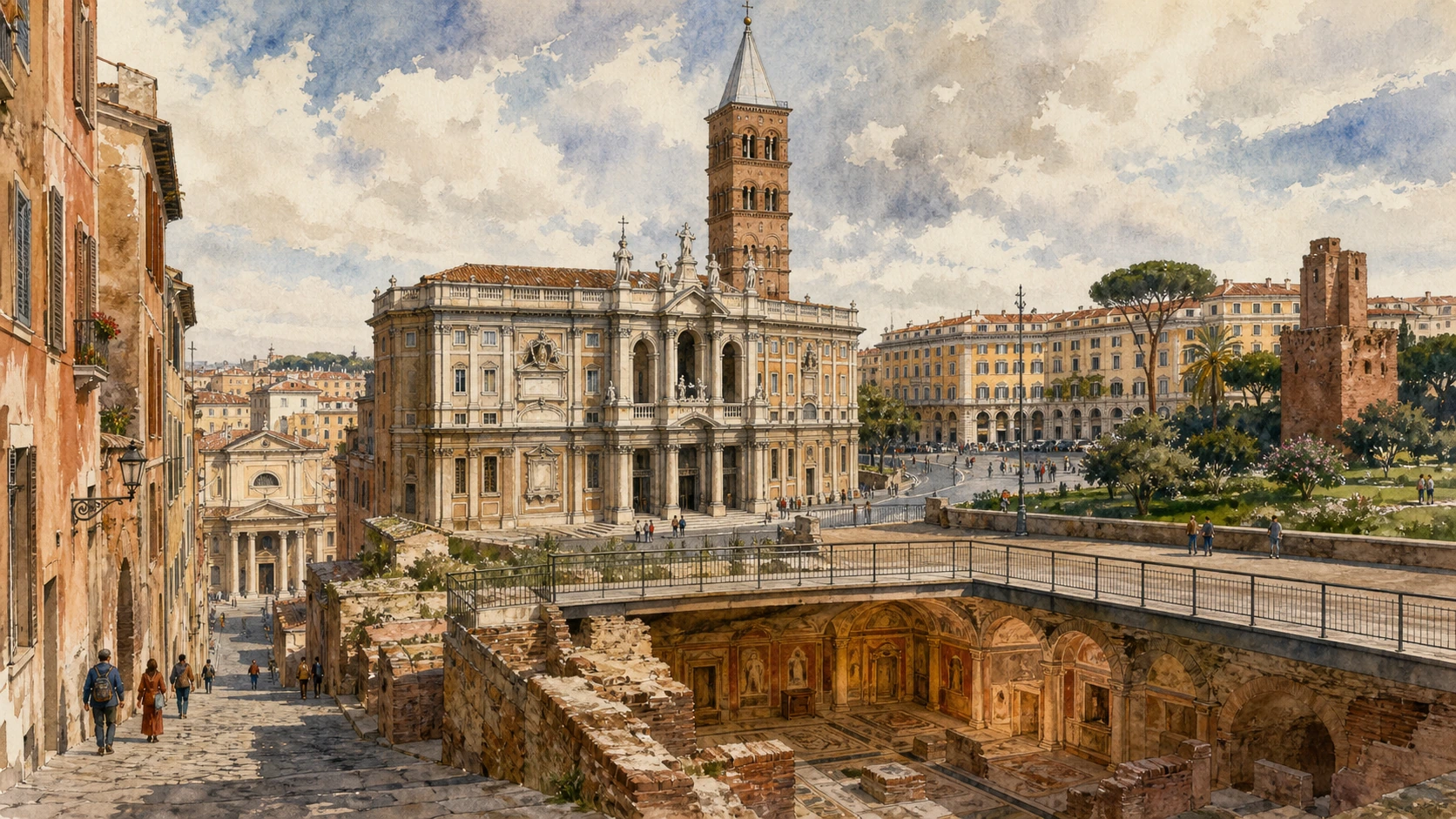
Documentary watercolour of the Esquiline, Santa Maria Maggiore and Monti
10Between station and hill

Esquiline, Santa Maria Maggiore and Monti

Ancient gardens, major basilicas and dense neighbourhood life east of the centre.

Open guide ↗
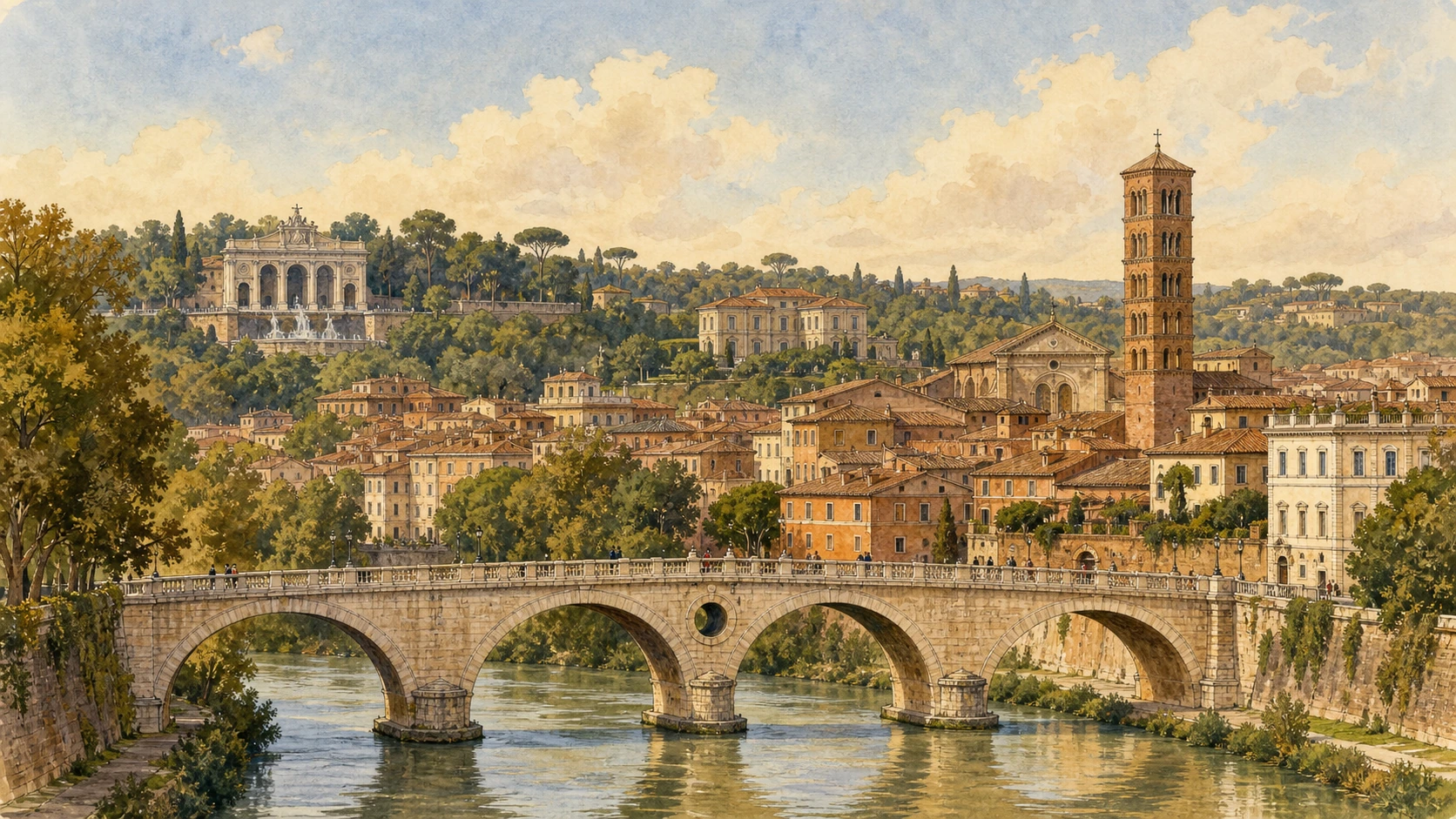
Documentary watercolour of Trastevere, the Janiculum and Villa Farnesina
11Across the Tiber

Trastevere, Janiculum and Villa Farnesina

Riverside streets, early worship, Renaissance patronage and the hill above the city.

Open guide ↗
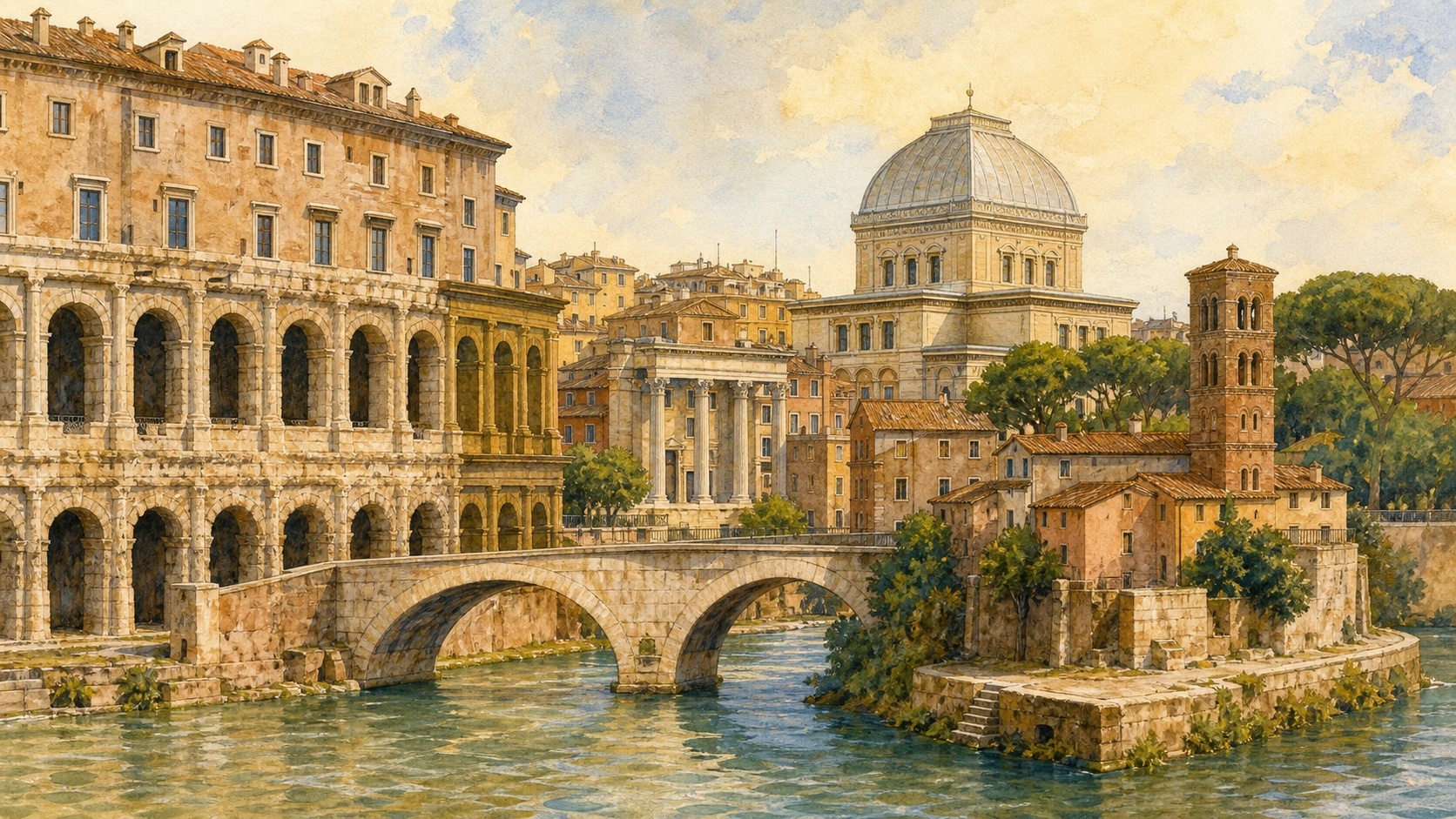
Documentary watercolour of the Ghetto, Theatre of Marcellus and Tiber Island
12River communities

Ghetto, Theatre of Marcellus and Tiber Island

Ancient monuments and Jewish history within one of Rome’s most complex inhabited quarters.

Open guide ↗
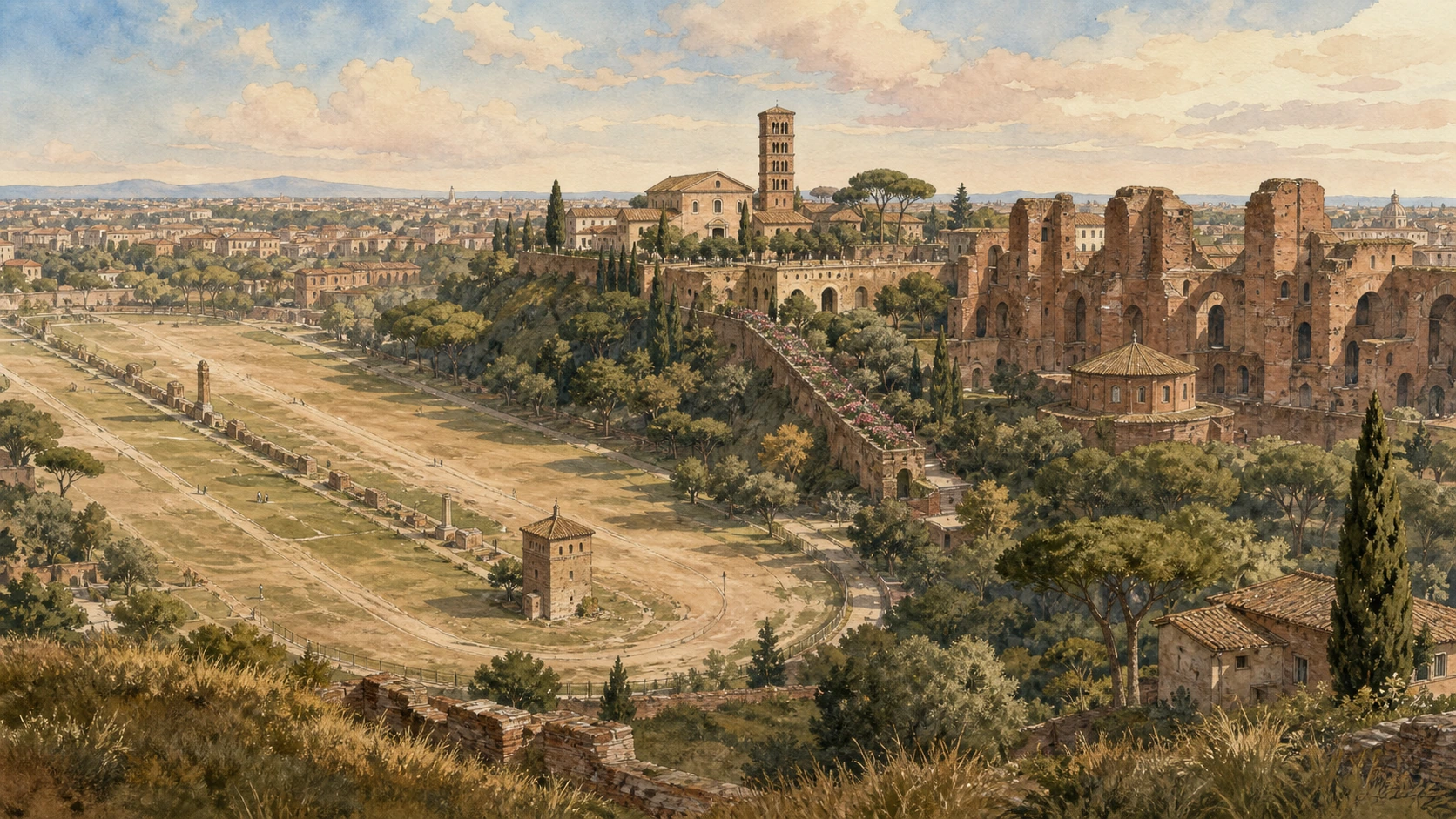
Documentary watercolour of the Aventine, Circus Maximus and Baths of Caracalla
13Southern hills

Aventine, Circus Maximus and Caracalla

Sacred hill, spectacle valley, imperial baths and gardens above the city.

Open guide ↗
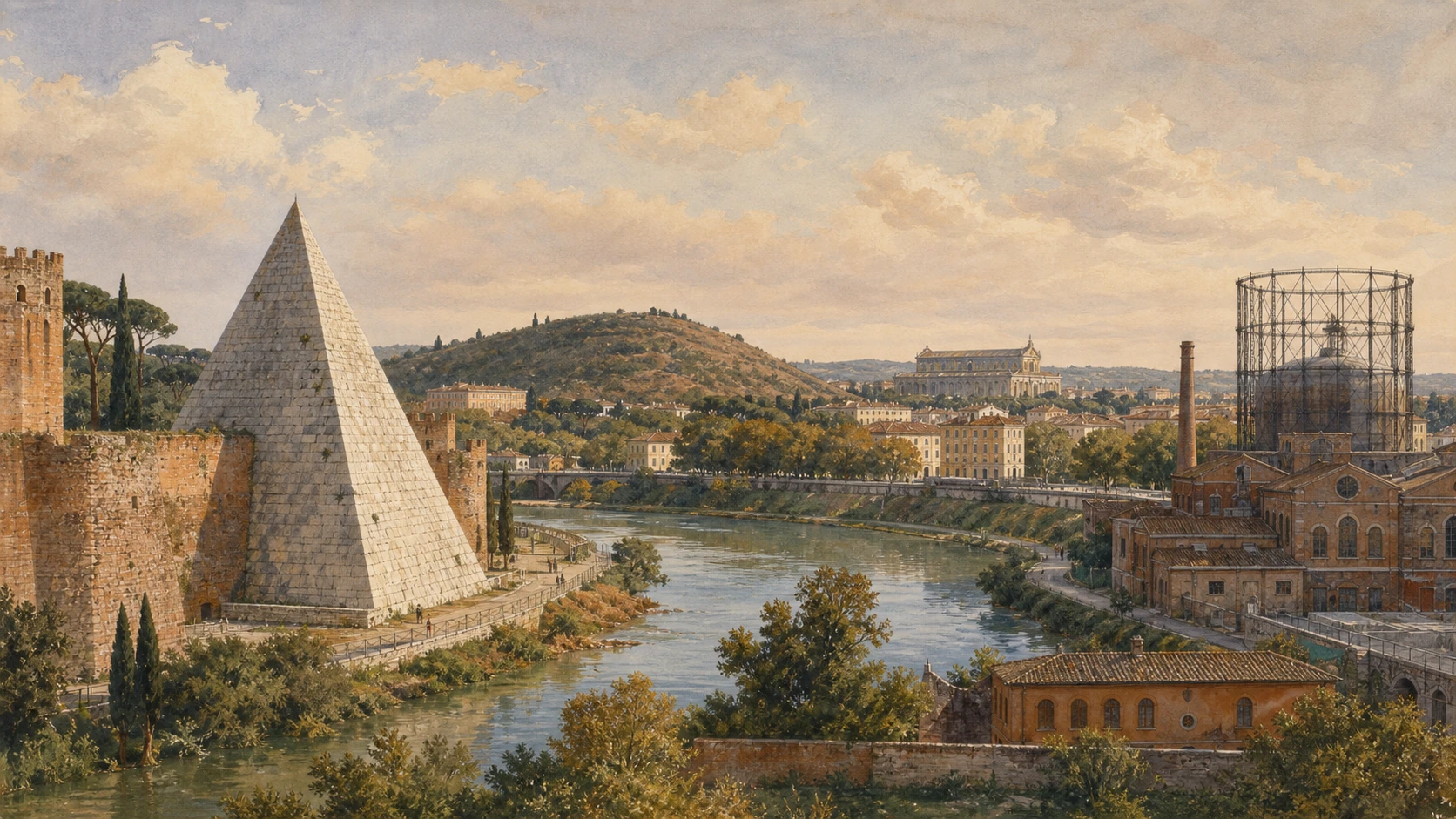
Documentary watercolour of Testaccio, the Pyramid of Cestius and Ostiense
14Food, industry and memory

Testaccio, Pyramid and Ostiense

An artificial Roman hill, modern archaeology, working-class districts and new cultural uses.

Open guide ↗
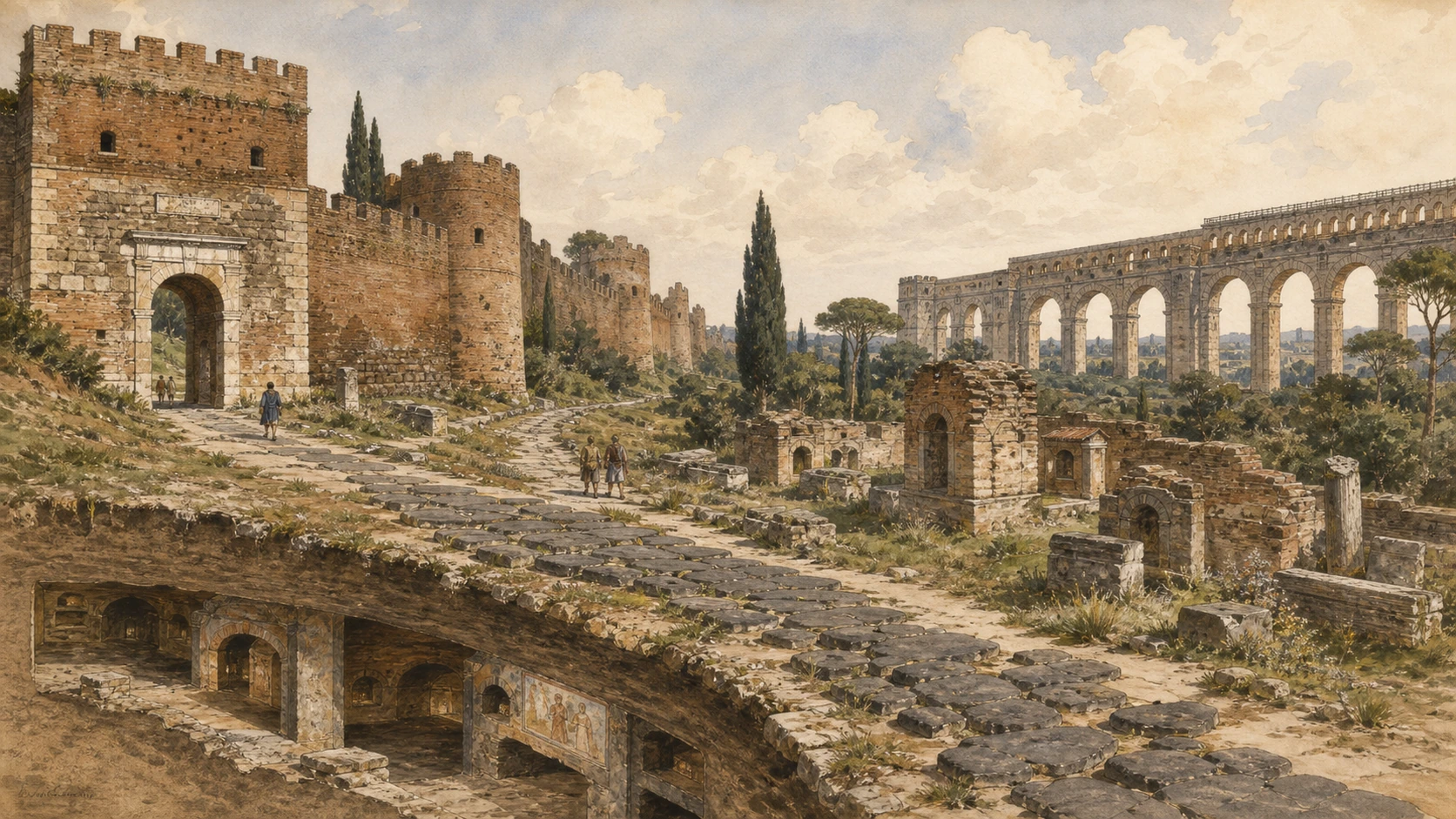
Documentary watercolour of the Appian Way, catacombs and Roman aqueducts
15Regina Viarum

Appian Way, catacombs and aqueducts

Road engineering, funerary landscapes and the infrastructure that supplied Rome.

Open guide ↗
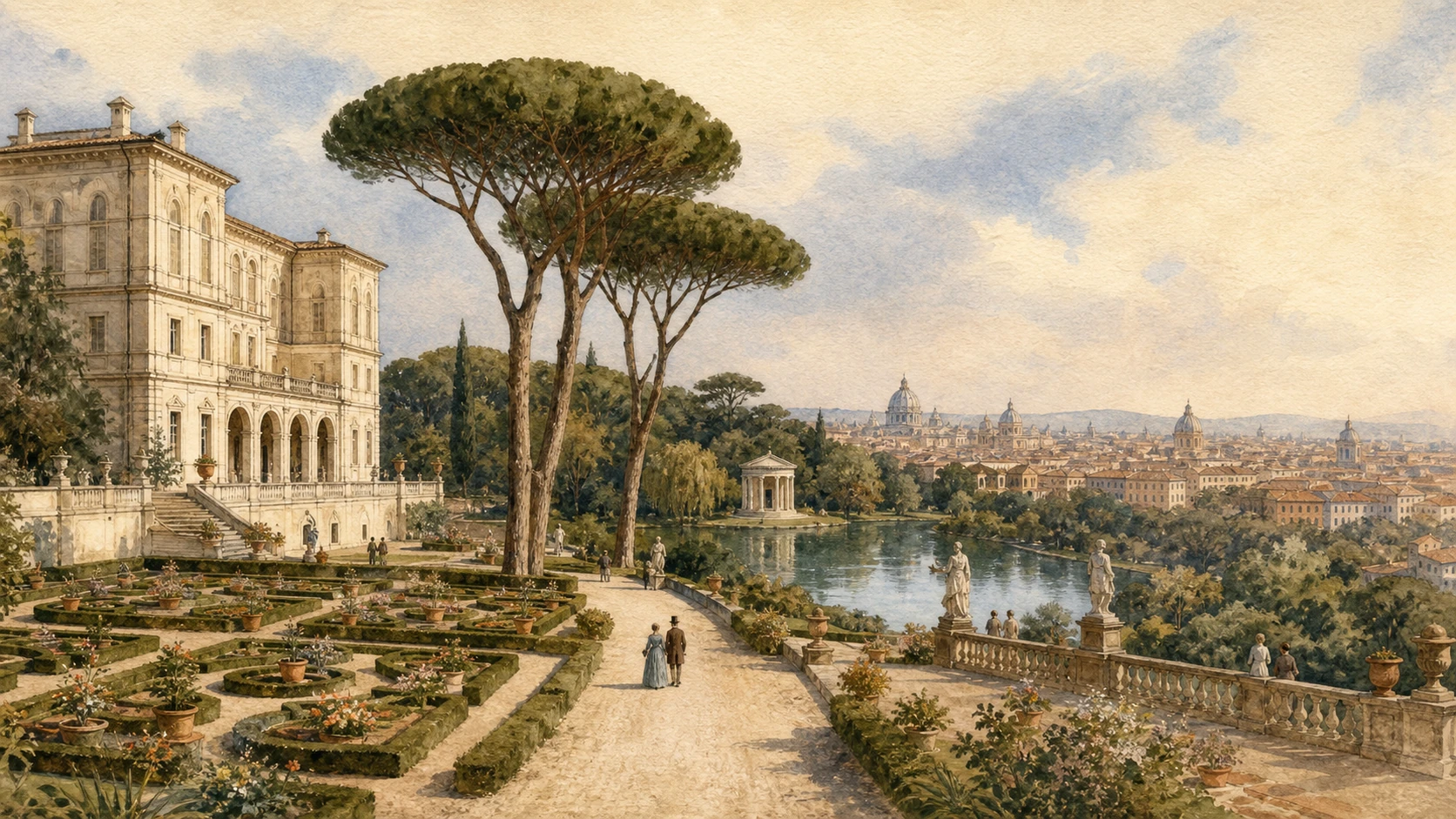
Documentary watercolour of Villa Borghese, Galleria Borghese and the Pincio
16Collections in landscape

Villa Borghese, Galleria Borghese and Pincio

Villa, gardens, museum architecture and the northern approach to the historic centre.

Open guide ↗
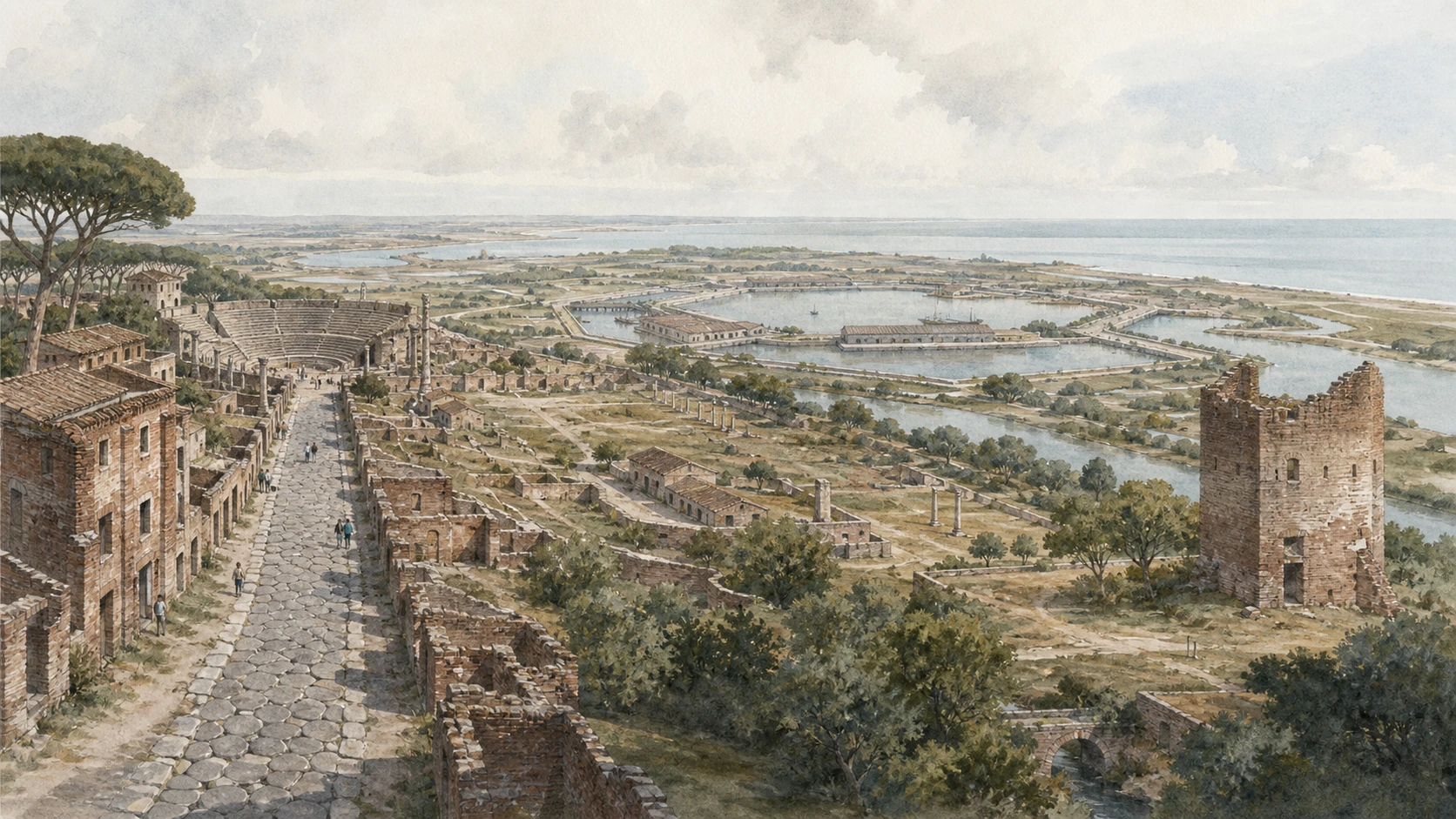
Documentary watercolour of Ostia Antica and the Tiber mouth
17The city’s port

Ostia Antica and the Tiber mouth

Warehouses, apartments, temples and guilds explain how the capital met the Mediterranean.

Open guide ↗
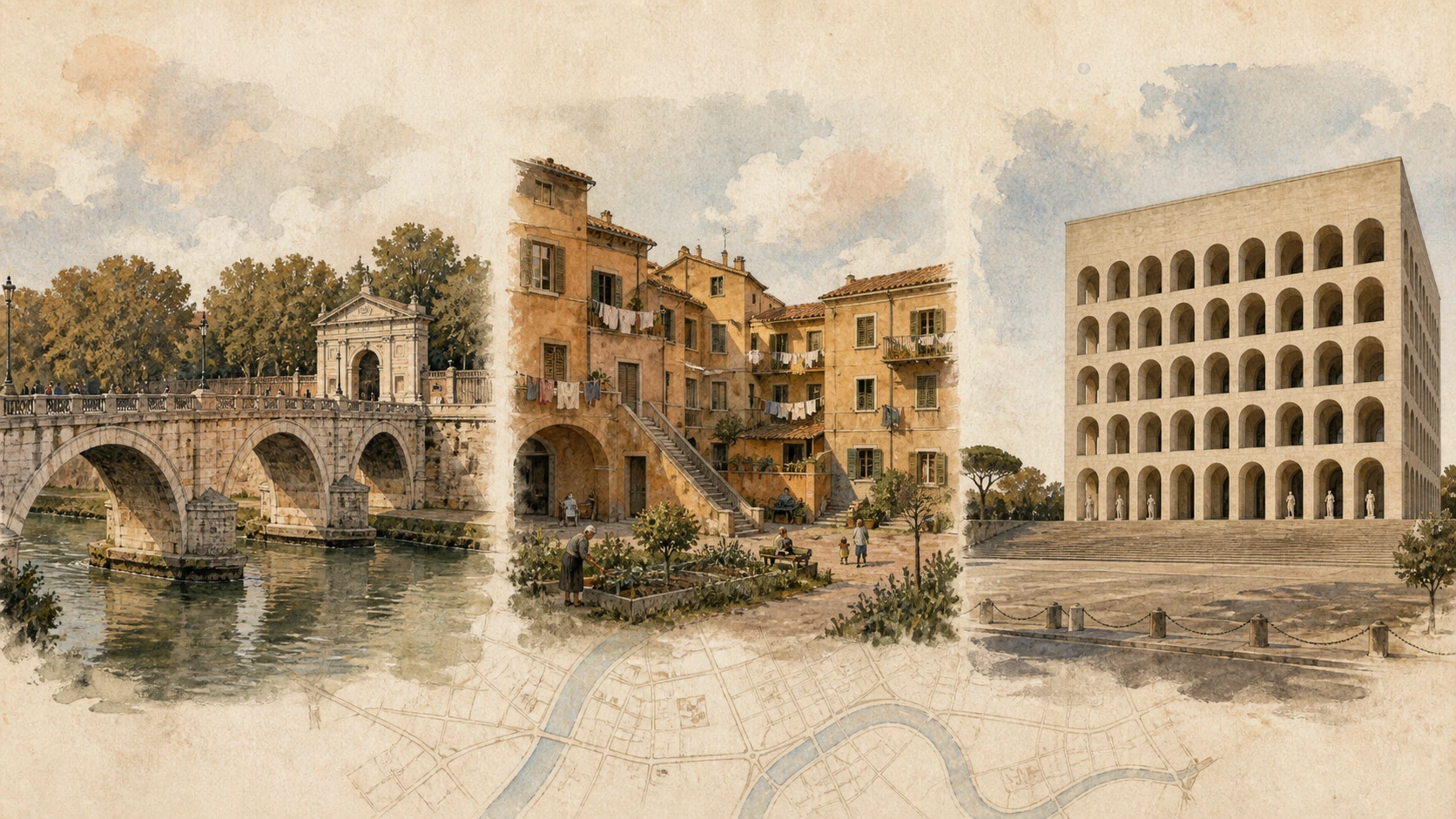
Documentary watercolour of Flaminio, Garbatella and EUR
18The modern capital

Flaminio, Garbatella and EUR

Planned neighbourhoods and modern cultural architecture beyond the ancient walls.

Open guide ↗
How to read Rome

A city of relationships.

Terrain first

Hills, valleys and the Tiber explain why roads, temples, palaces and districts occupy their positions.

Layers together

Ancient, medieval, papal and modern Rome are read in the same streets instead of isolated timelines.

Buildings in context

Museums and churches appear through their architecture, urban setting and institutional history.

The living city

Markets, housing, transport and neighbourhood identity remain part of the account.

Rome begins here.

One city, twelve gateways and eighteen journeys through the places that made the idea of Rome.

Open the eighteen guides