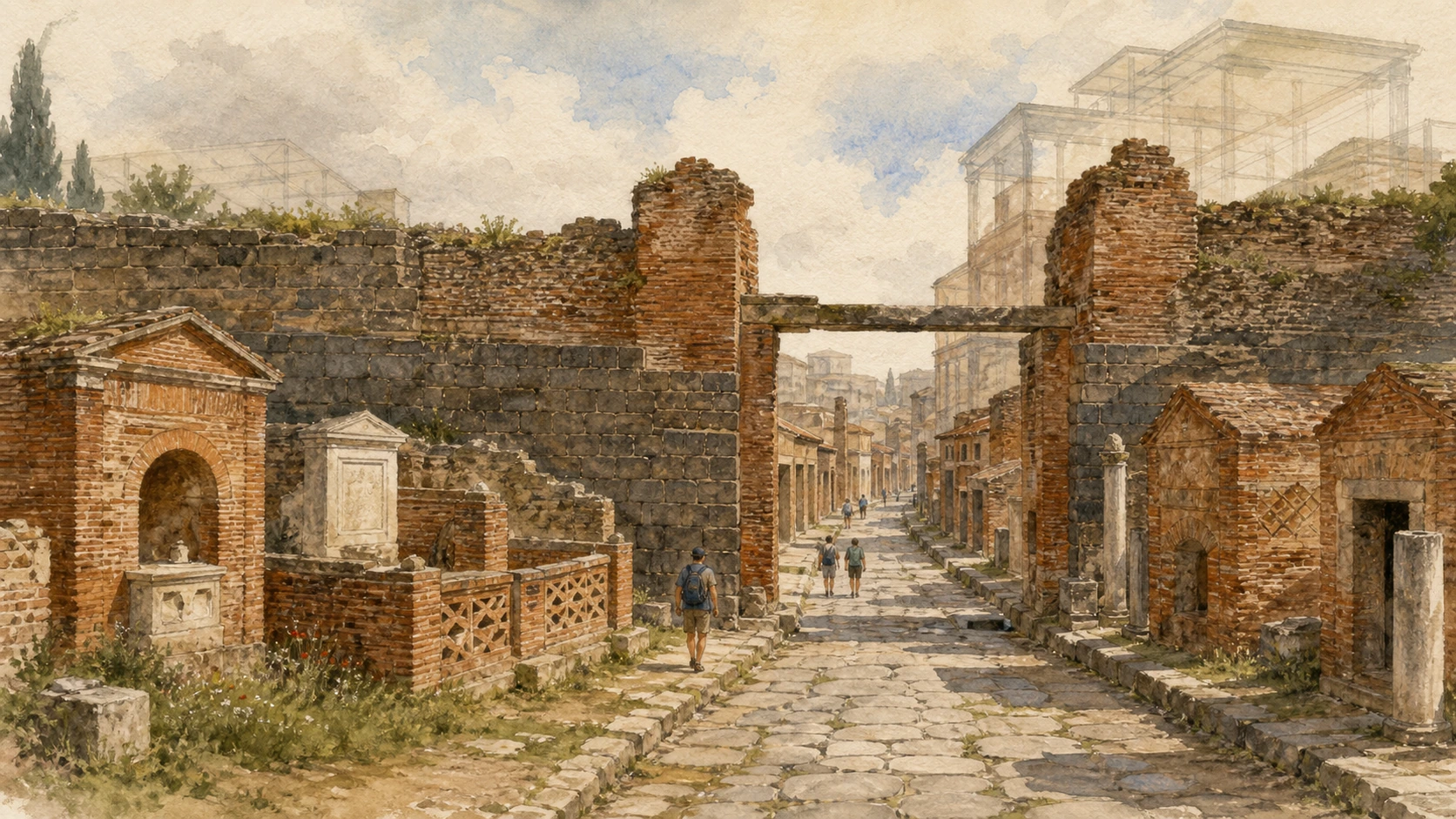
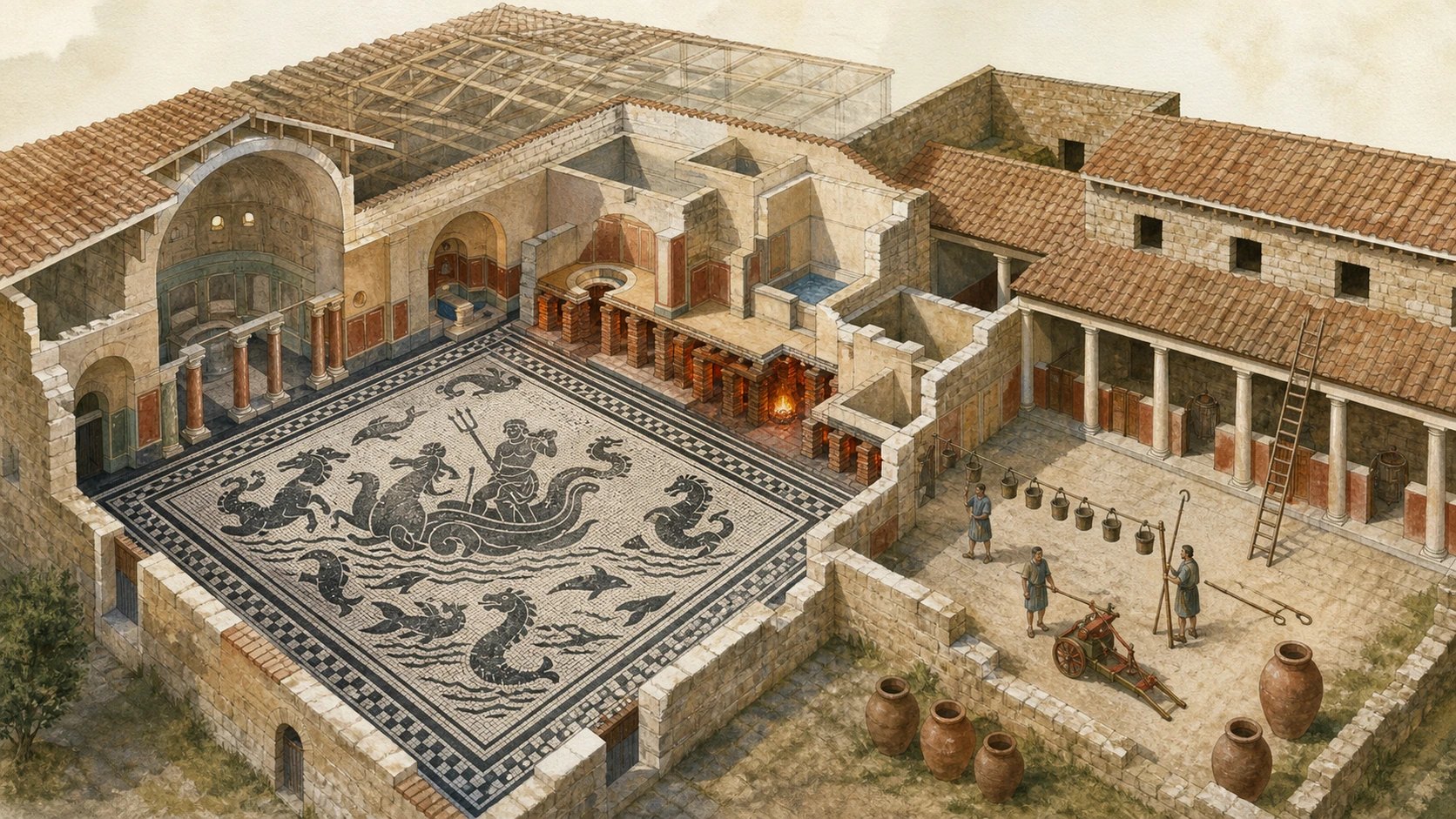
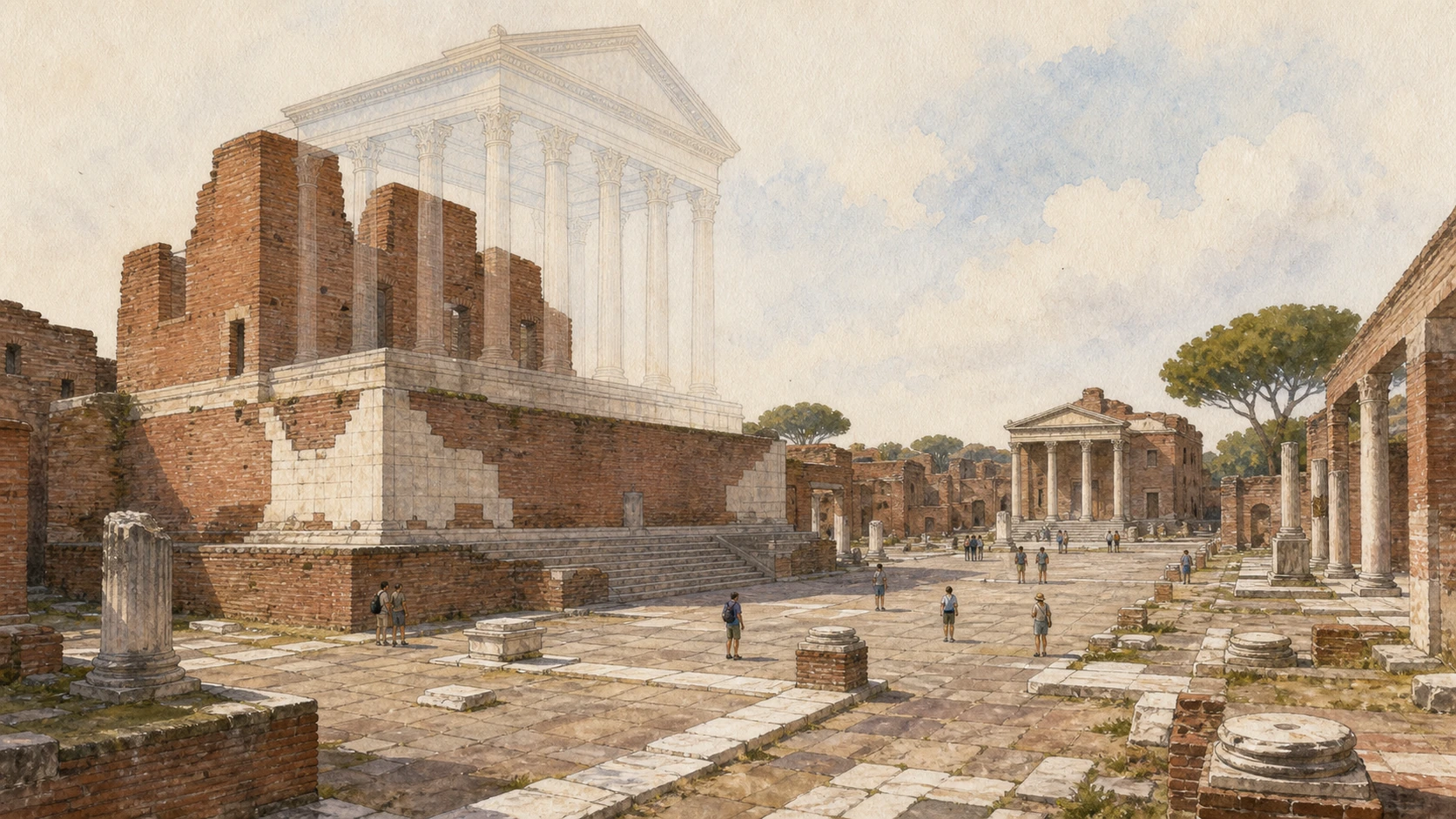
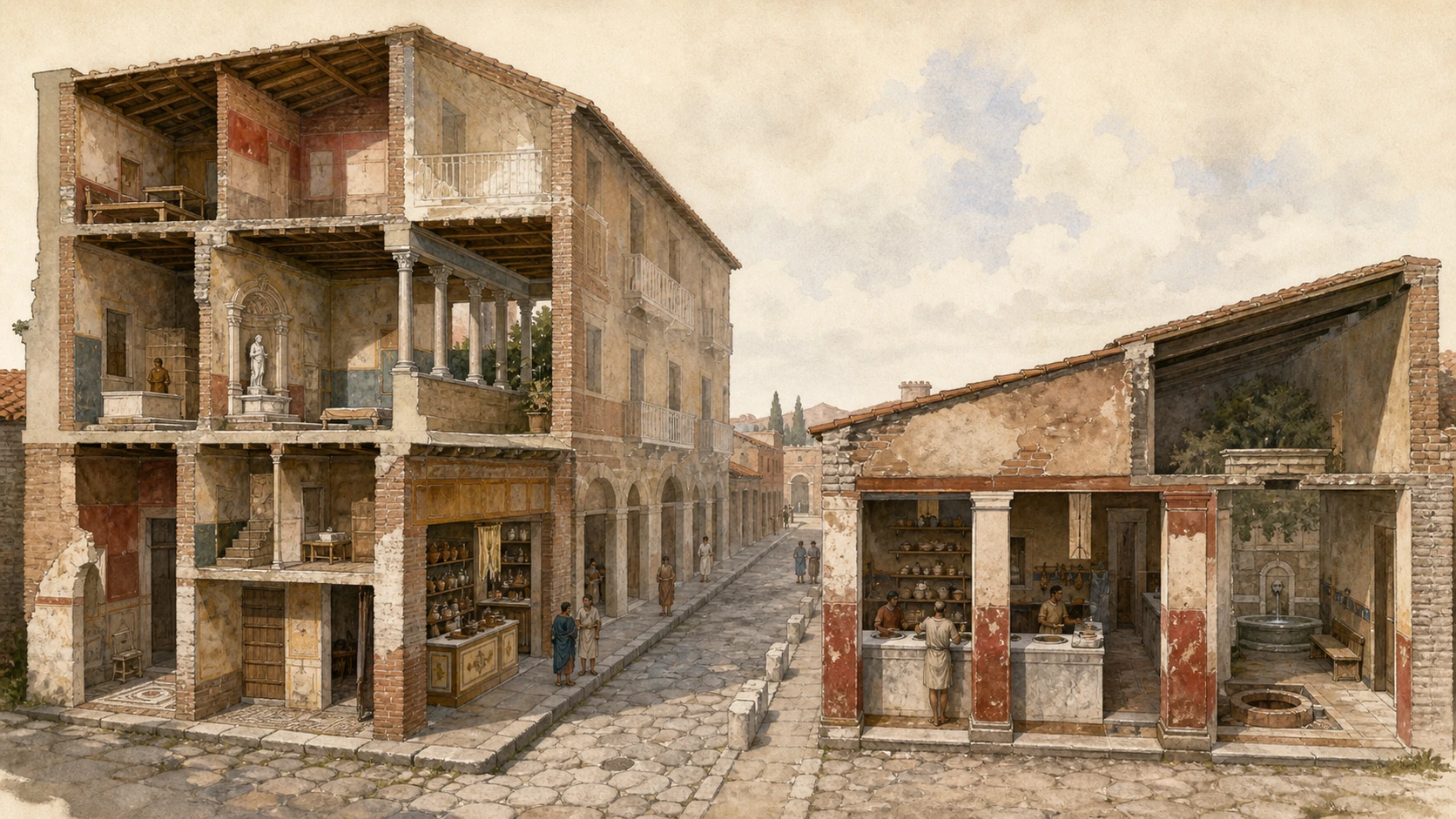
Ancient literature attributed Ostia's foundation to King Ancus Marcius and the salt pans at the Tiber mouth, but the earliest secure settlement is the fourth-century BC fortified colony. From that castrum the city expanded along the Cardo and Decumanus. Warehouses, baths, guild buildings, apartment blocks, temples and workshops multiplied as Ostia handled people and goods moving between the Mediterranean, the river and Rome. The ruins visible today are therefore dominated by imperial rebuilding, especially under Hadrian and the Antonines, rather than one frozen founding moment.
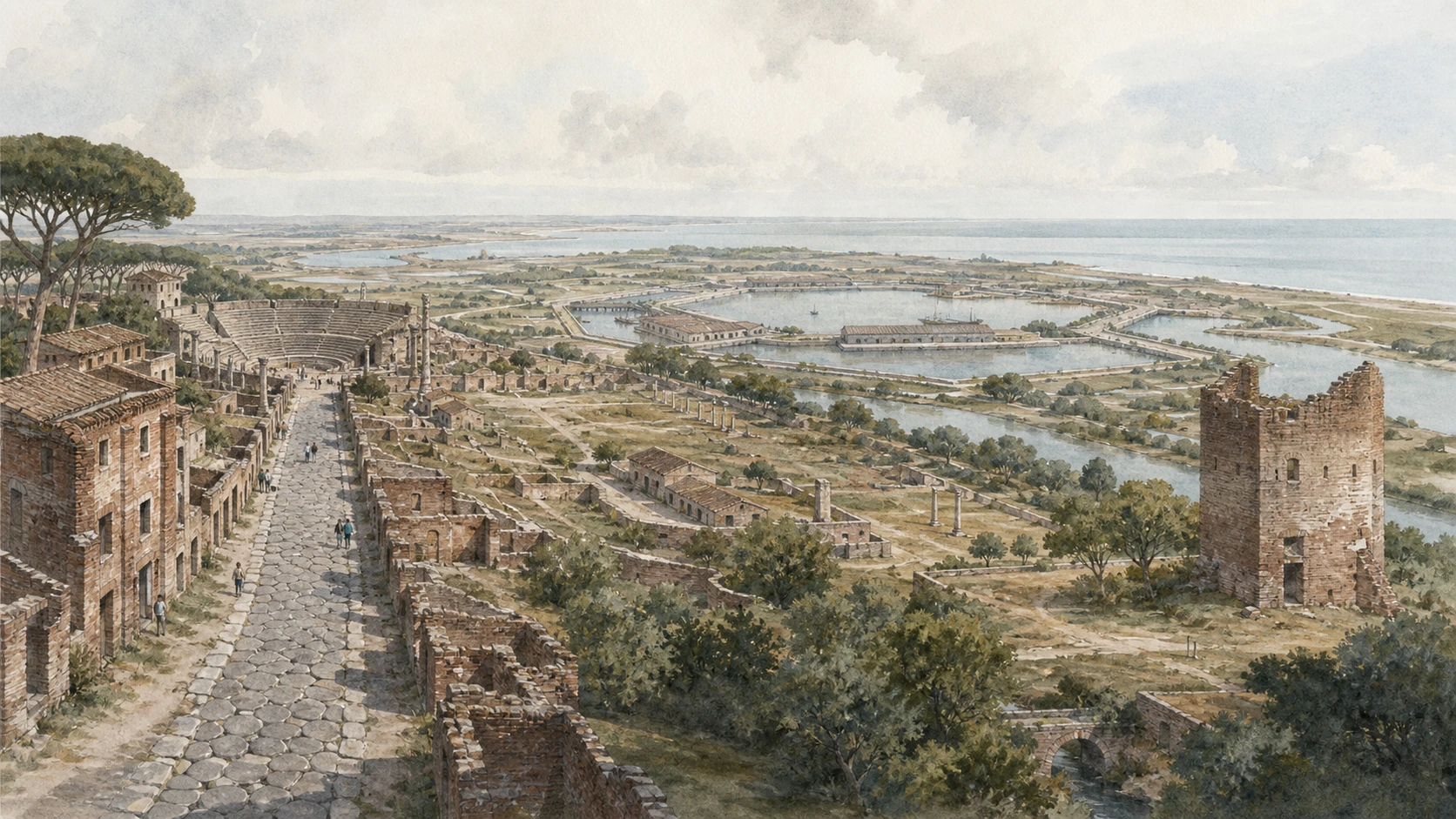
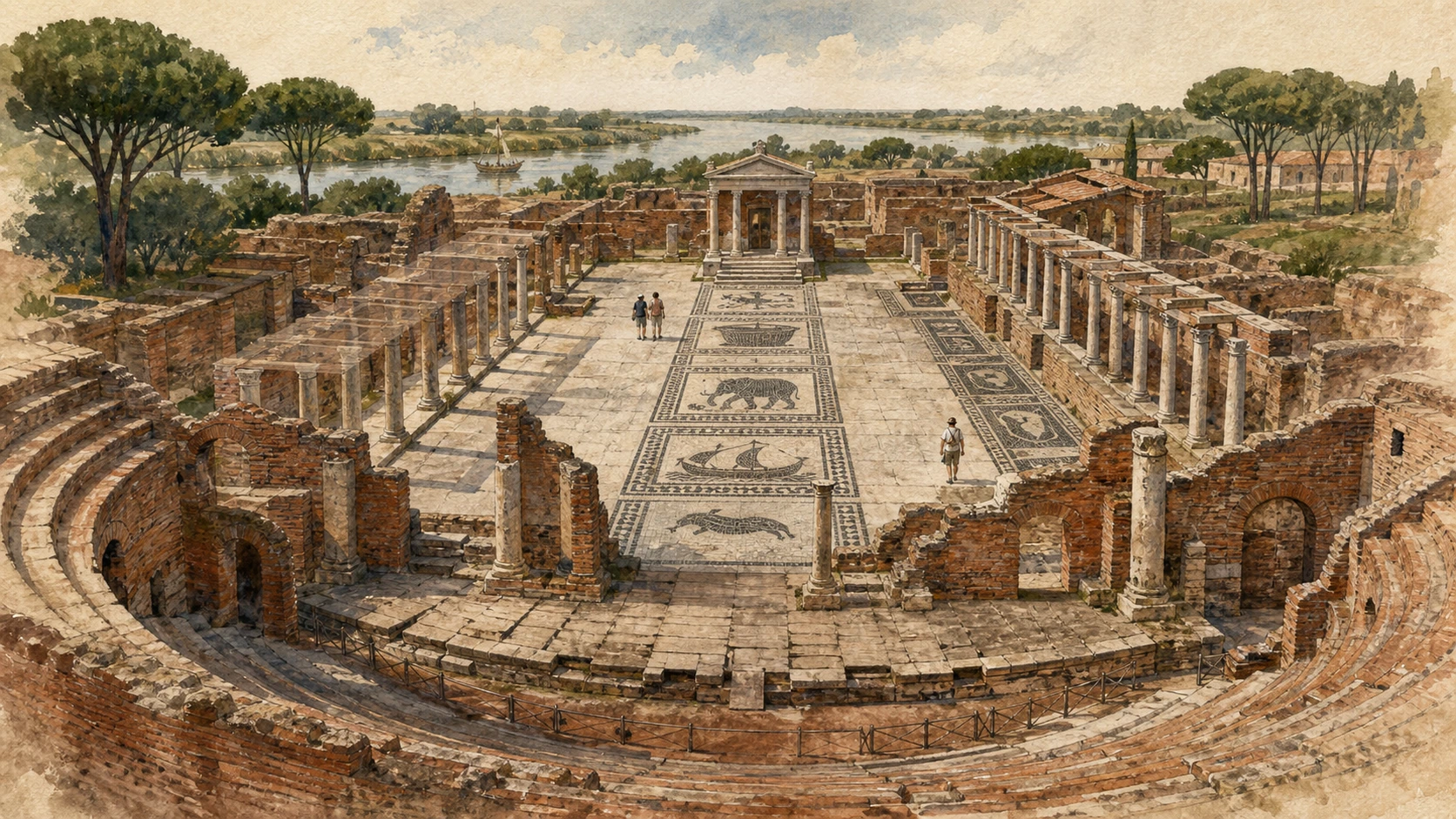
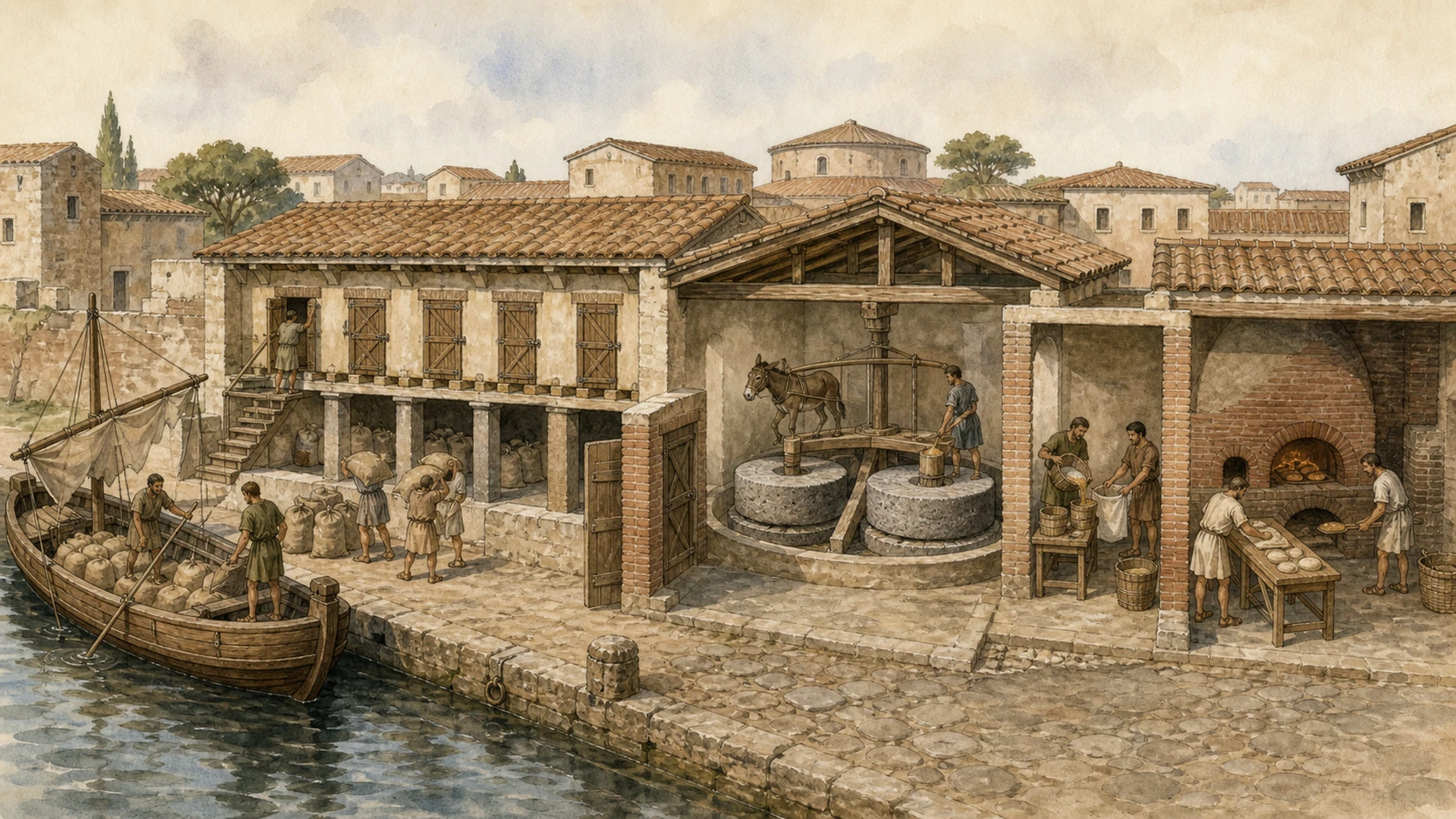
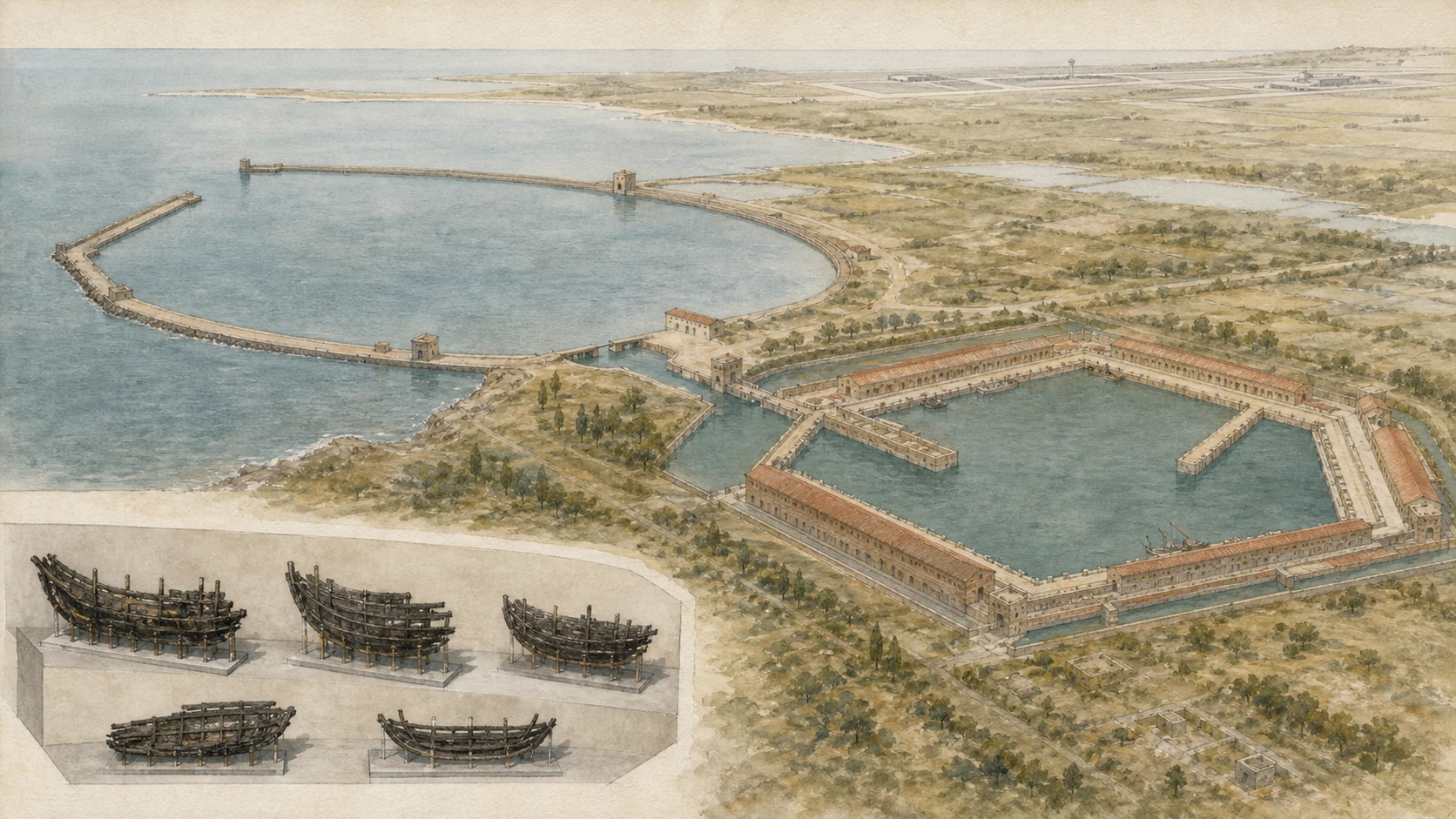
The city worked within a wider port system. Claudius began an enormous maritime basin north of the river mouth in AD 42; Trajan added the famous hexagonal harbour around AD 110. Ocean-going cargoes could be transferred to river craft and hauled upstream. Ostia continued to house commercial, administrative and residential life even after Portus acquired the largest ships and warehouses. The Square of the Guilds, granaries, mills and Fiumicino ship hulls document connected stages of exchange, not rival ports that replaced one another overnight.
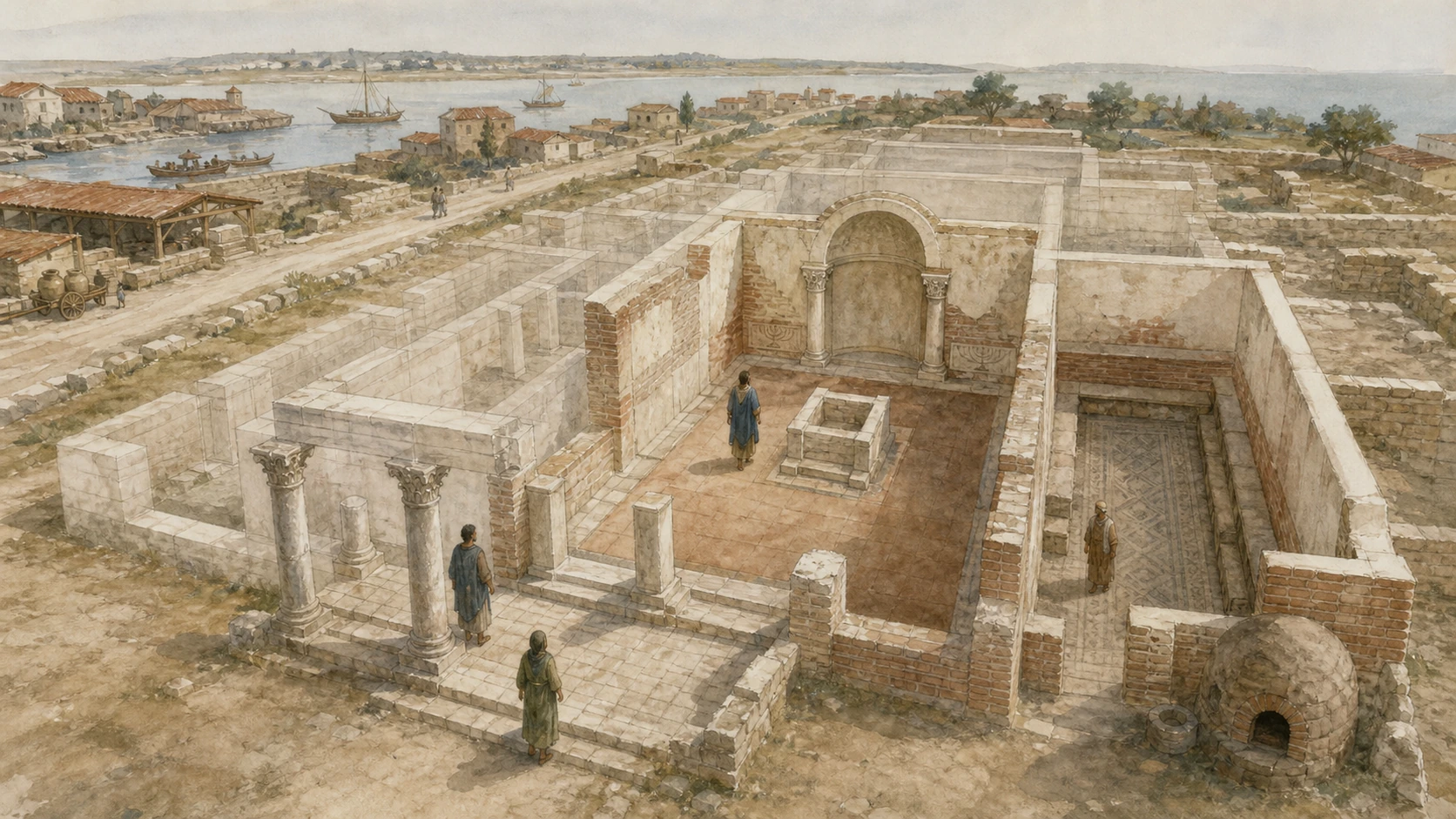
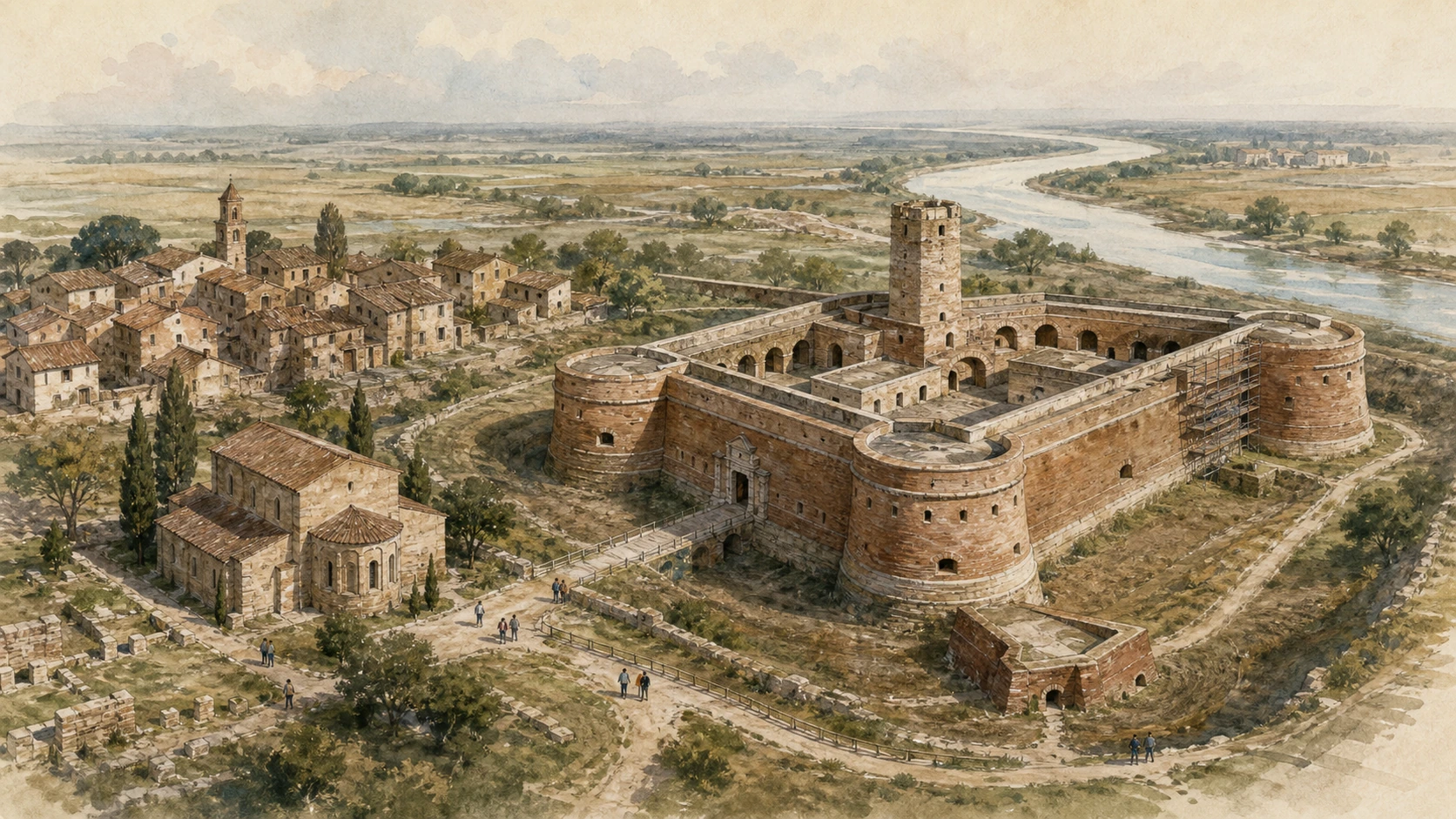
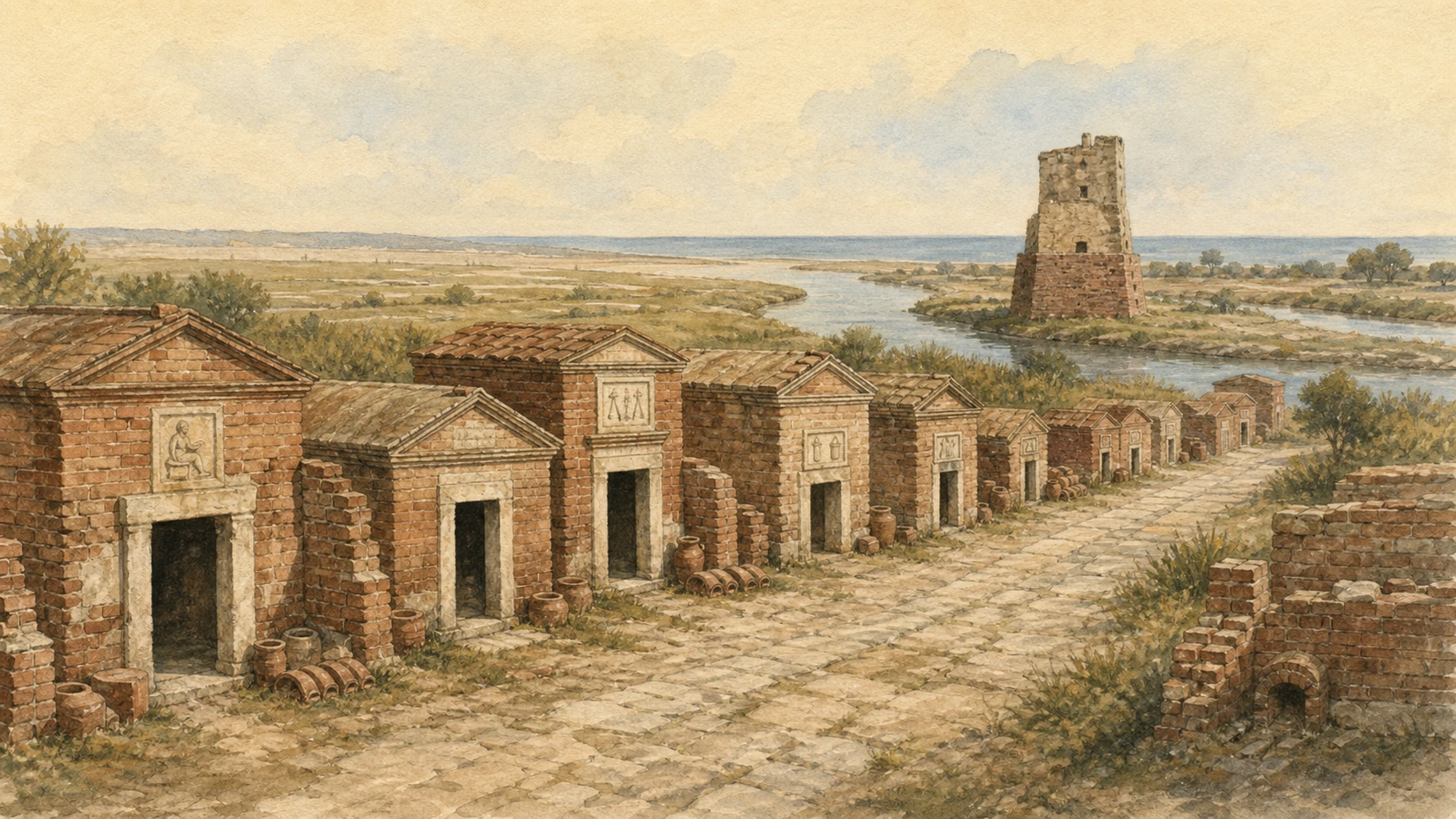
The landscape is an archaeological fact. The Tyrrhenian shore now lies kilometres from ancient Portus, the Tiber no longer runs beside Ostia's northern edge, and the flood of 1557 helped shift the active channel away from the Renaissance castle. Tor Boacciana, Isola Sacra and the Fossa Traiana make the changing delta visible. A complete visit cannot be compressed into one gate-to-gate stroll: Ostia, Portus, the ship museum, the Portus necropolis and the castle keep separate hours, entrances and access conditions. Use the combined ticket across days if the current rules still support it.
Read the excavated city first, then use Portus and Isola Sacra to restore the sea, river, ships, tomb roads and distances that modern roads and the airport have broken apart.