Italy · Regional journey 01

Aosta Valley

Roman roads, feudal castles and high Alpine cultures beneath Europe’s great peaks.

6historic layers
4editorial journeys
5detailed guides
A small valley can hold a continental history.
The regional idea

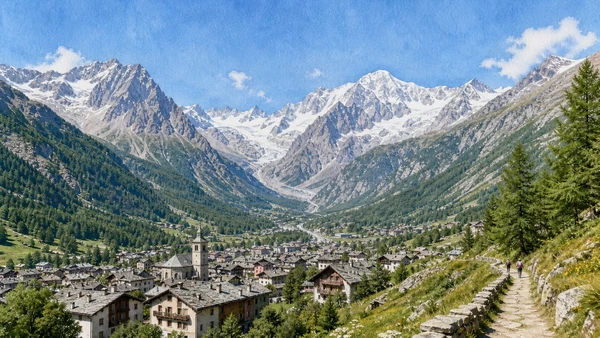
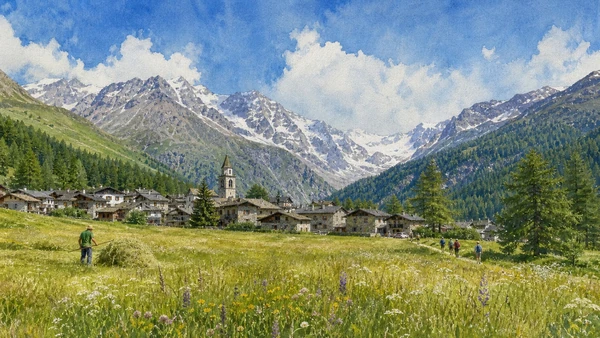
Aosta Valley is read as an Alpine corridor rather than a mountain backdrop: Salassi communities, Roman Augusta Praetoria, medieval lordships, Savoy power, transalpine pilgrimage and modern autonomy all meet along the Dora Baltea.

Time made visible

History in layers.

The valley’s strategic passes made it a place of encounter, taxation, defence and exchange. Its monuments are inseparable from the routes that cross the Alps.

01

Salassi and the Alpine corridor

Before Rome, Salassi communities controlled routes, pasture and mineral resources across the western Alps.

02

Augusta Praetoria

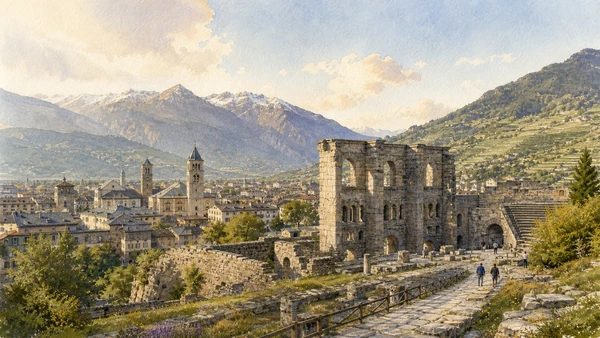
Rome founded Aosta in 25 BCE and monumentalised the road towards the Great and Little St Bernard passes.

03

Bishops, abbeys and pilgrimage

Early Christian institutions and the Via Francigena reshaped the valley’s sacred and civic geography.

04

Castles and local lordships

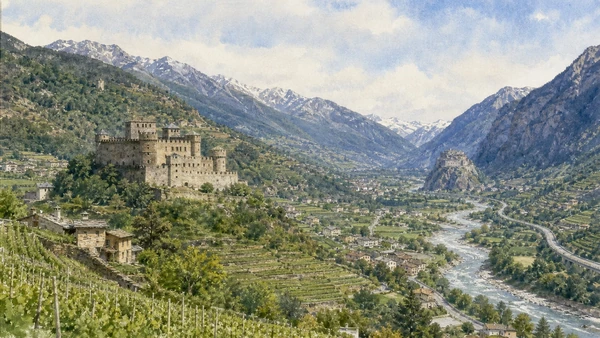
Fénis, Issogne, Verrès and other strongholds record the power of noble families, especially the Challant.

05

Savoy and the fortified frontier

The valley became a strategic hinge of Savoy territories; Bard still makes that frontier logic visible.

06

Autonomy and multilingual life

Italian, French and Francoprovençal traditions form part of the region’s contemporary autonomous identity.

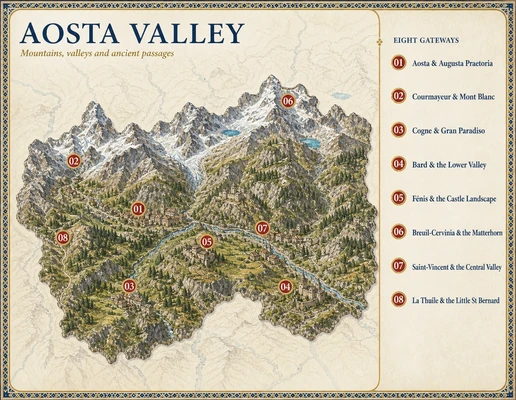
Illustrated map of Aosta Valley with eight numbered Merlintravel gateways
Merlintravel illustrated atlas · official ISTAT profile archived separately
The complete circuit

One valley, four great Alpine horizons.

The atlas follows the central valley, then opens towards Mont Blanc, Gran Paradiso, the Matterhorn and the historic passes. Castles and mountain communities belong to the same territorial system.

Map markers identify editorial gateways, not a ranking.

Four ways through

Journeys, not checklists.

Four circuits connect Roman archaeology, fortified landscapes, sacred roads and high-altitude ecology without reducing the region to ski resorts.

01

Roman valley

Aosta, Pont d’Ael, Donnas and the Via delle Gallie reveal engineering, settlement and imperial mobility.

02

The castle road

Bard, Verrès, Issogne, Fénis and Aymavilles turn the central valley into a sequence of changing medieval residences.

03

Passes and pilgrims

The Great St Bernard, the Little St Bernard and Francigena stages connect hospitality, devotion and border history.

04

Four mountain worlds

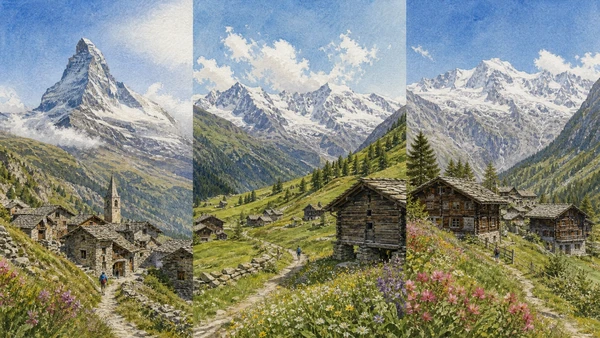
Mont Blanc, Gran Paradiso, Monte Rosa and the Matterhorn frame distinct valleys, ecosystems and cultures.

Living and monumental heritage

What the region keeps.

Monuments matter, but so do languages, crafts, routes, rituals and working landscapes.

01

Roman stone

Roads, arches, bridges and urban remains make imperial infrastructure legible across the valley.

02

Castle transformations

Fortresses became courts and residences, preserving frescoes, courtyards and changing ideas of power.

03

Francoprovençal and Walser voices

Local languages are cultural landscapes, not decorative survivals.

04

Alpine work

Viticulture, pastoralism, wood, mining and guiding connect material culture to difficult terrain.

Land and water

Nature is part of the archive.

Mountains, glaciers, rivers and forests are read together with the communities that have learned to inhabit them.

01

Gran Paradiso

Ibex conservation, glaciers and historic royal hunting routes shaped Italy’s first national park.

02

Mont Blanc valleys

Val Ferret and Val Veny join glacial landforms, forests, meadows and mountaineering routes.

03

Monte Rosa side valleys

Ayas and Gressoney preserve high Alpine habitats and cultural connections across passes.

04

Dora Baltea

The river binds settlements, vineyards, transport routes and the region’s long east–west axis.

A documented journey, still open.

Historical claims are checked against institutional archaeology and heritage sources; mountain access, park rules and seasonal conditions must be verified again when individual guides are produced.

The journey continues.

Return to the Italy regional atlas