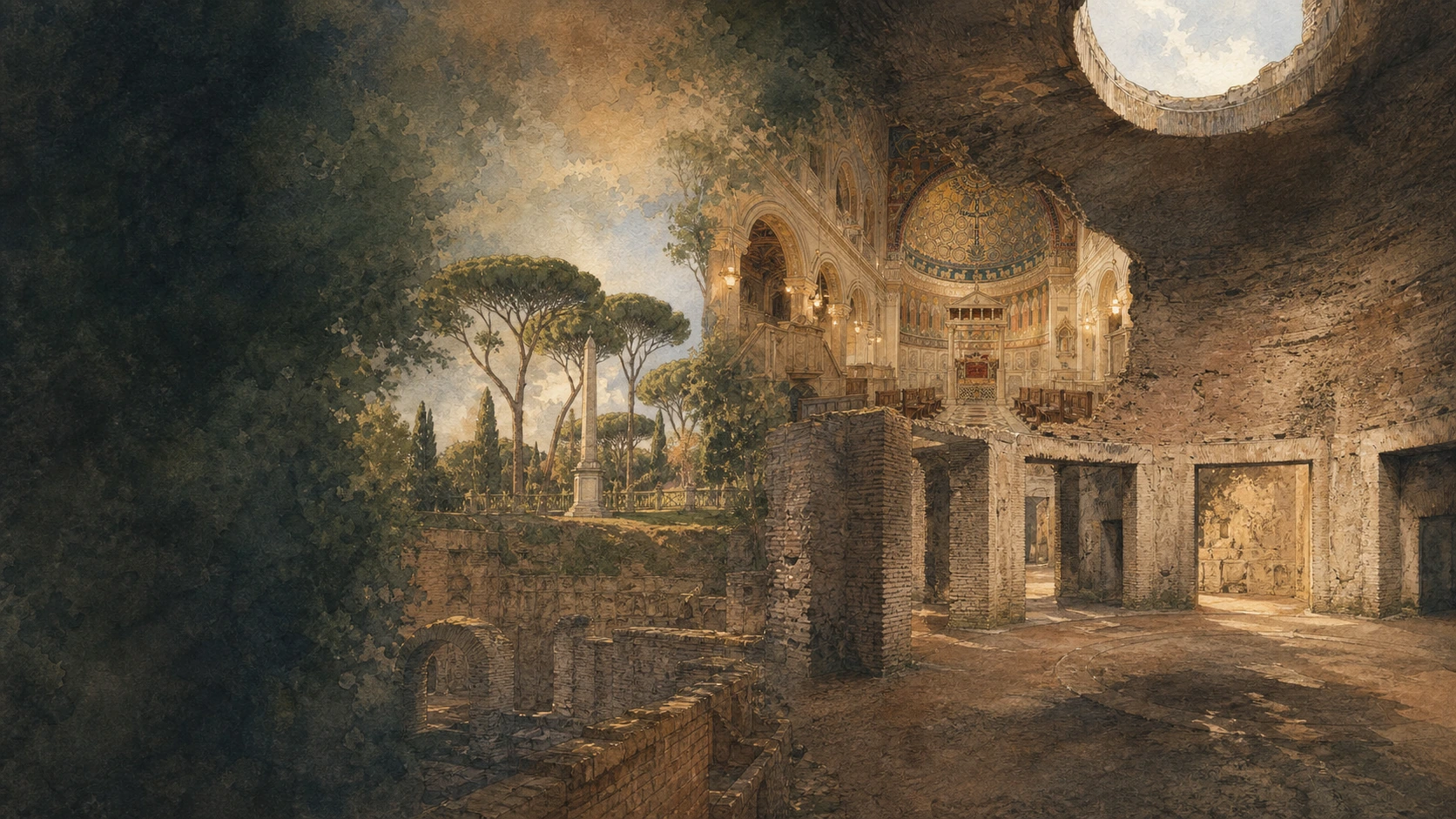
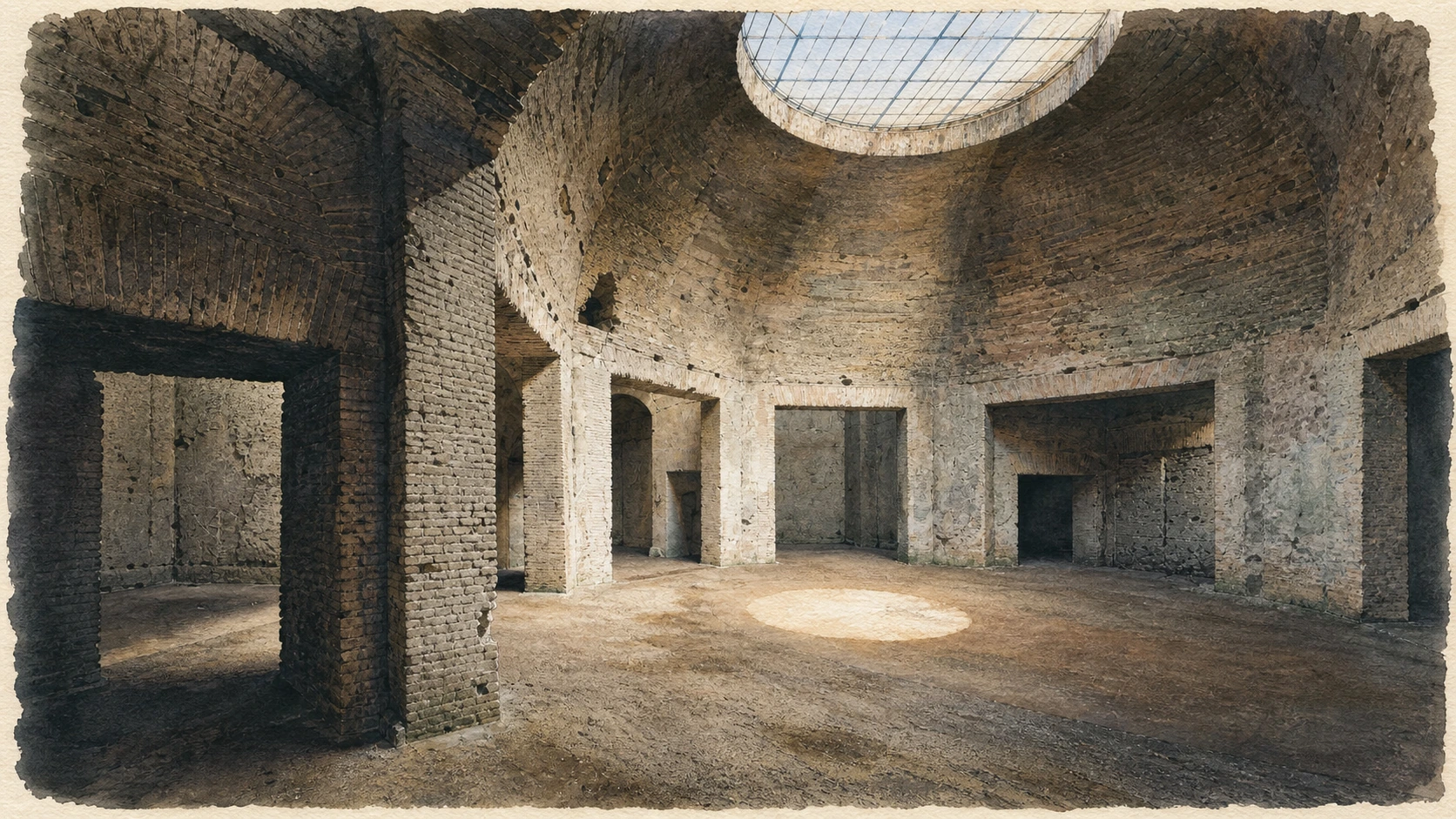
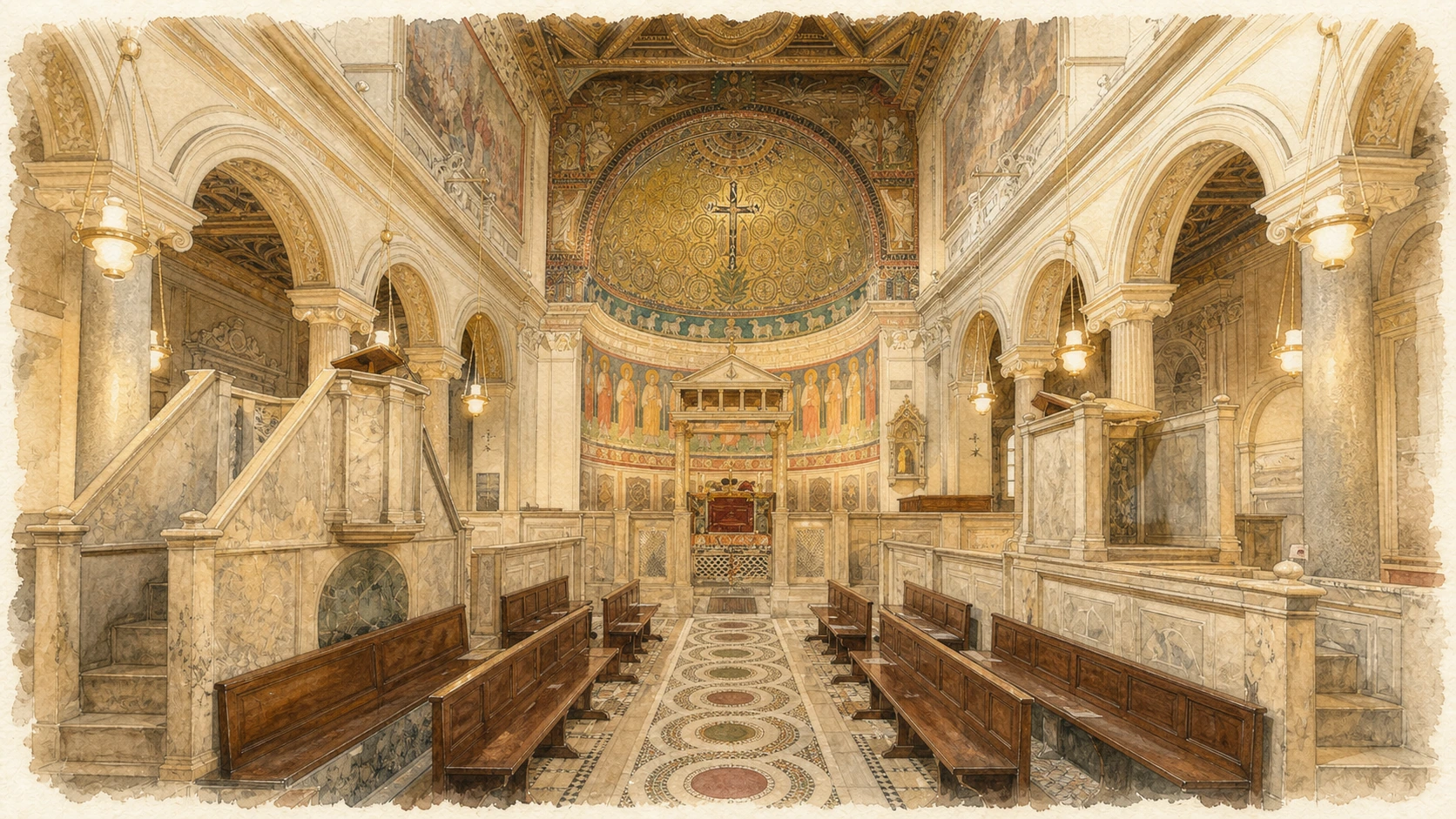
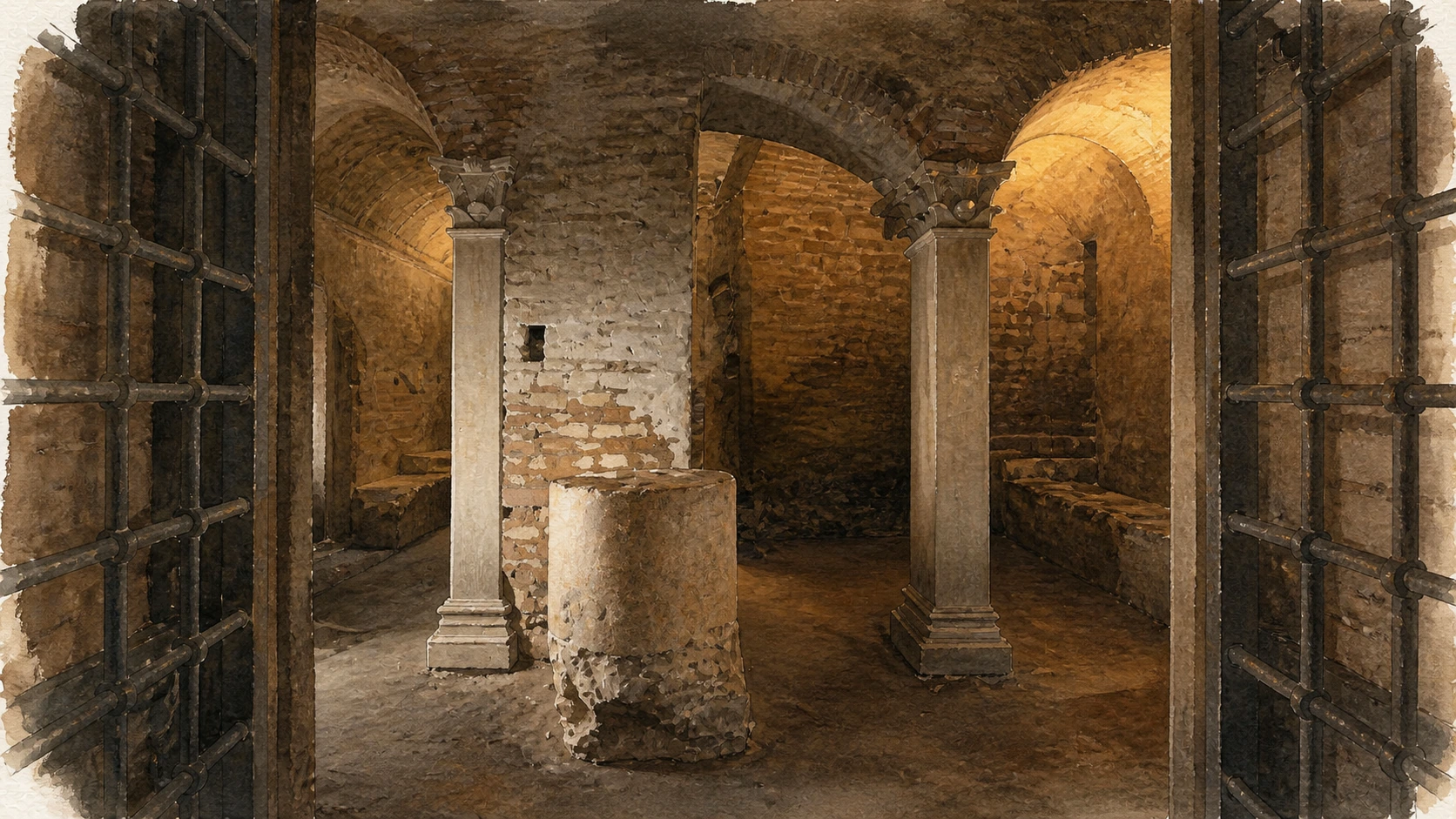
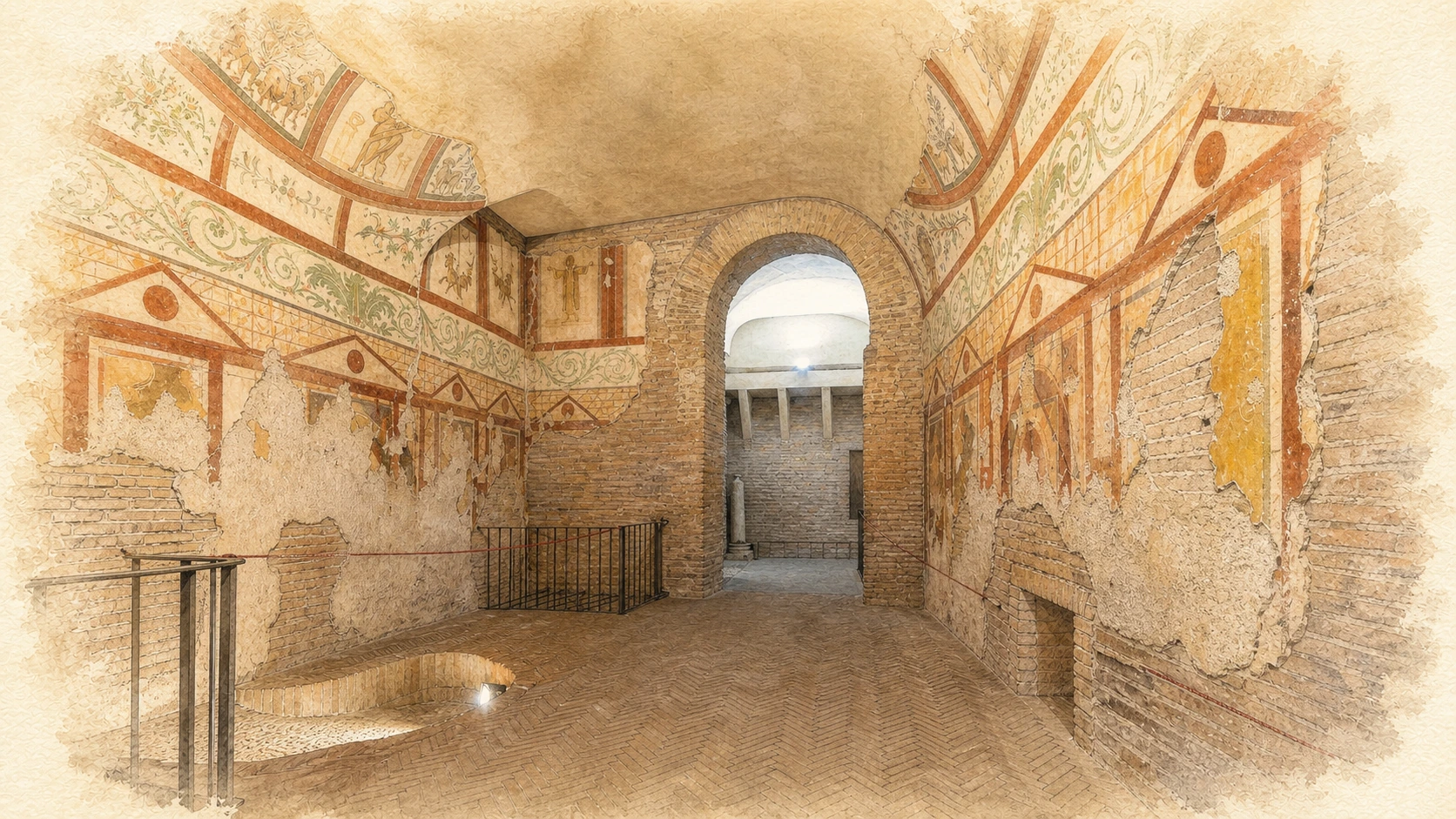
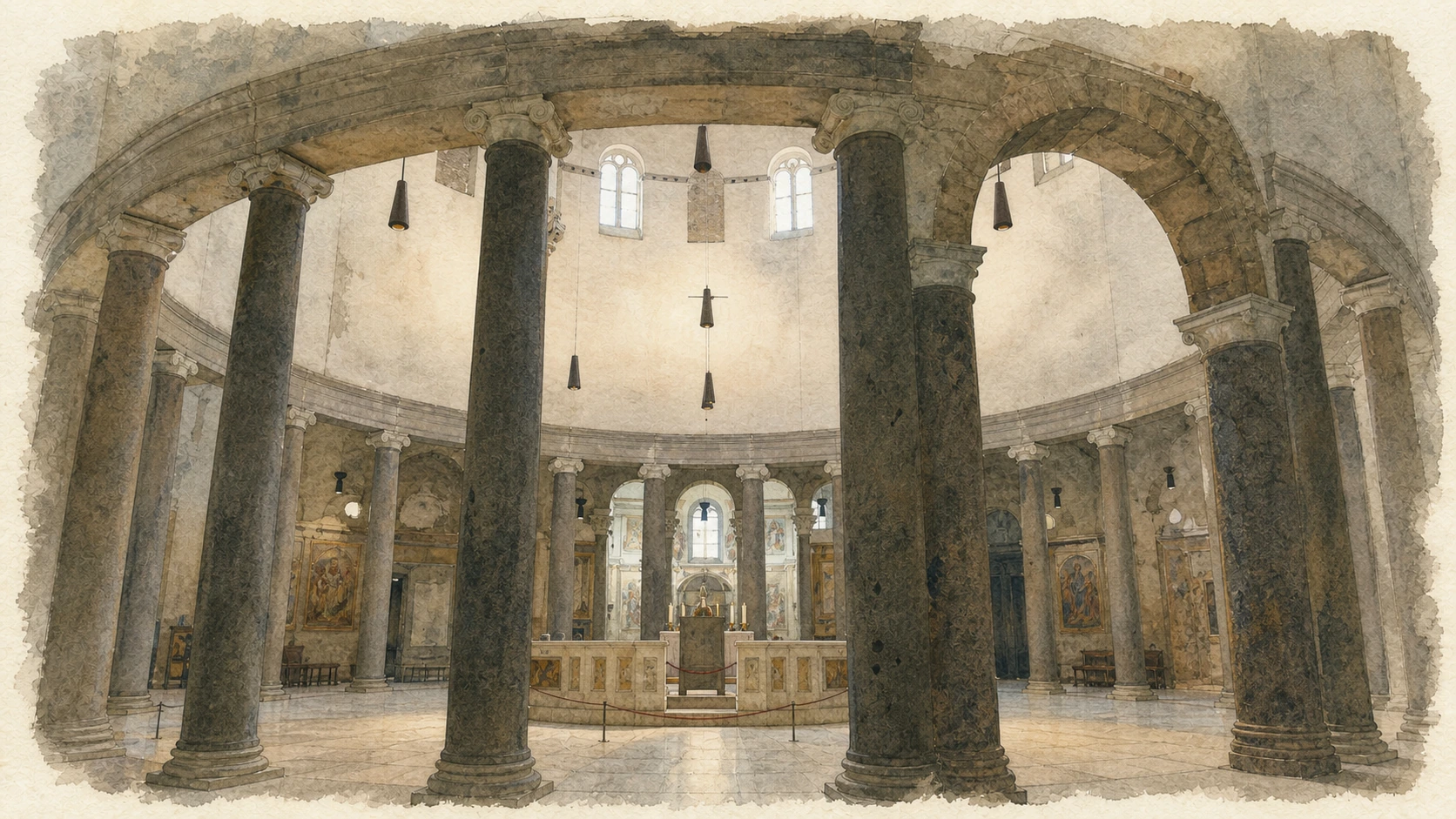
The Oppian and Caelian hills are not a conventional sequence of freestanding monuments. Nero's reception rooms became foundations for Trajan's public baths; Roman houses became a Christian titulus and then the platform of a basilica; a fourth-century church disappeared under its twelfth-century successor. The route repeatedly moves down in order to move back in time.
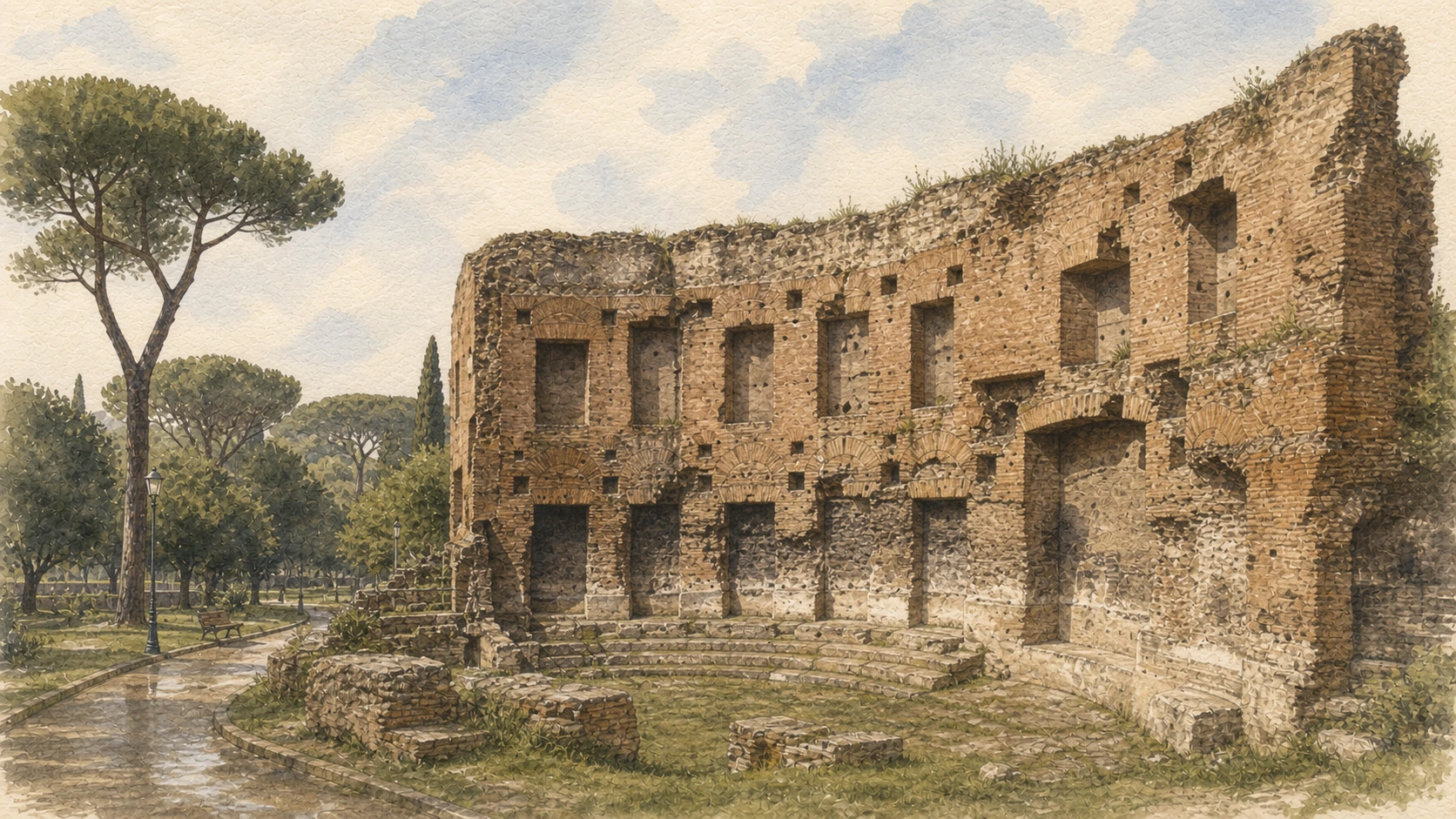
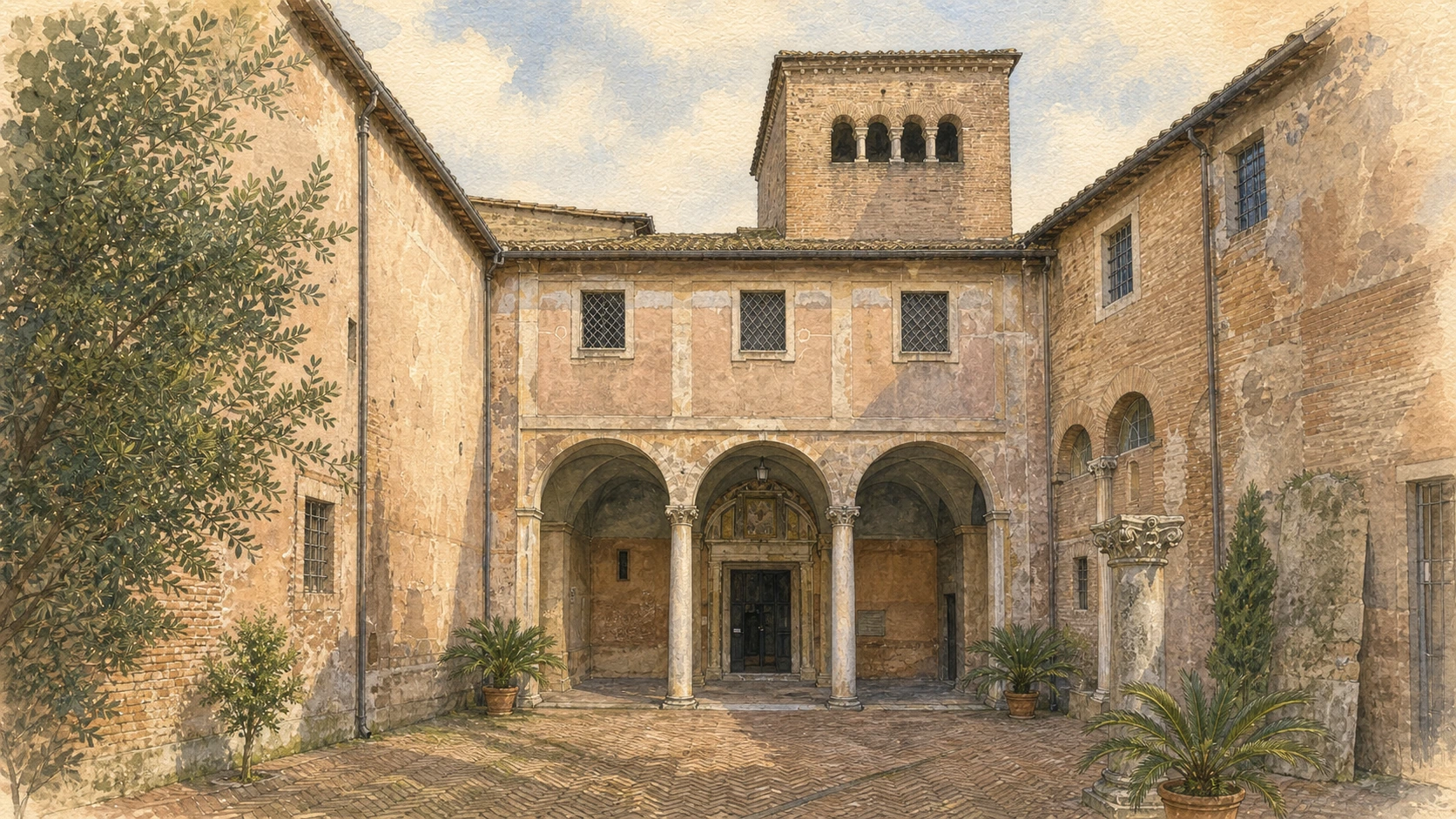
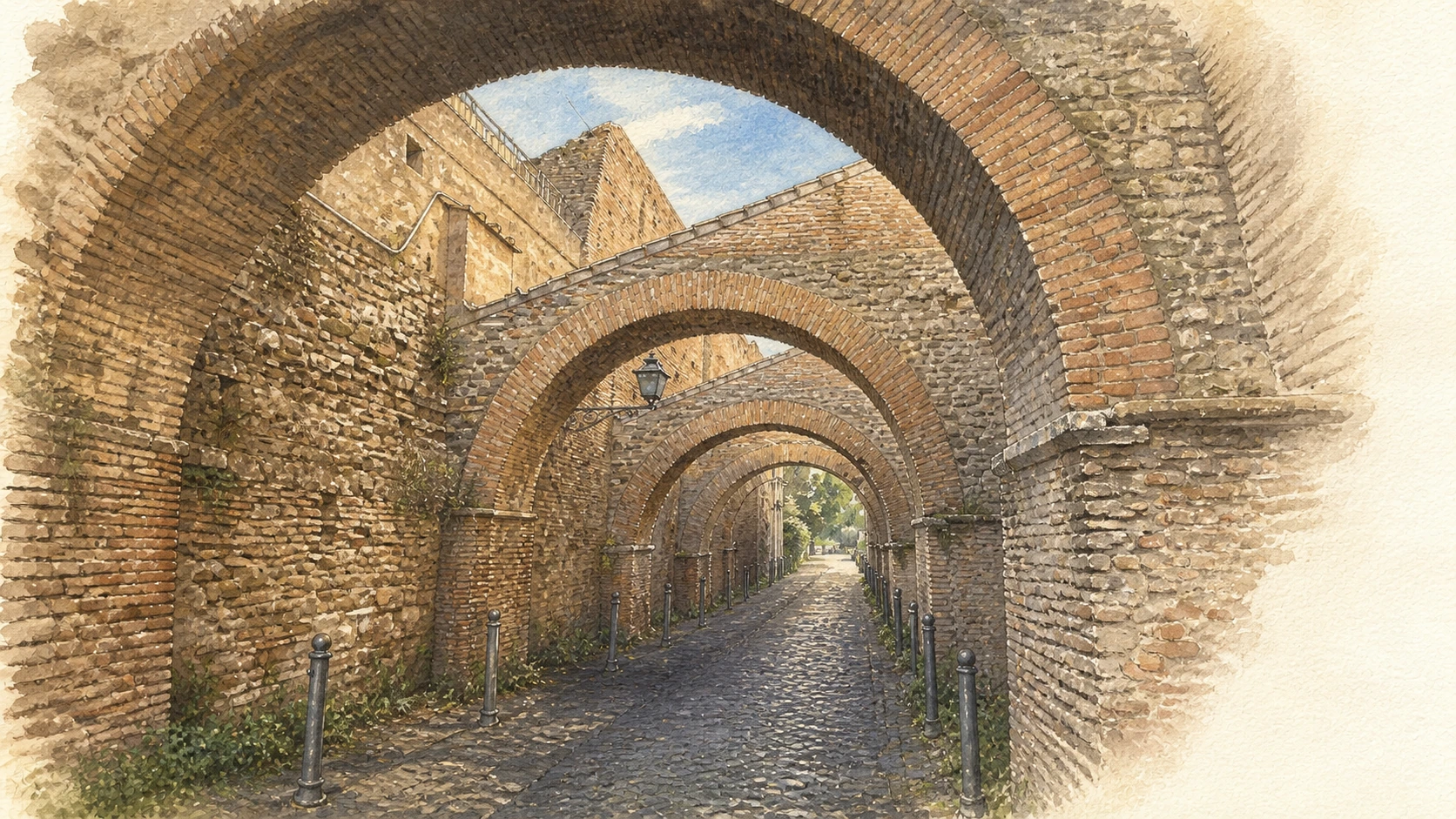
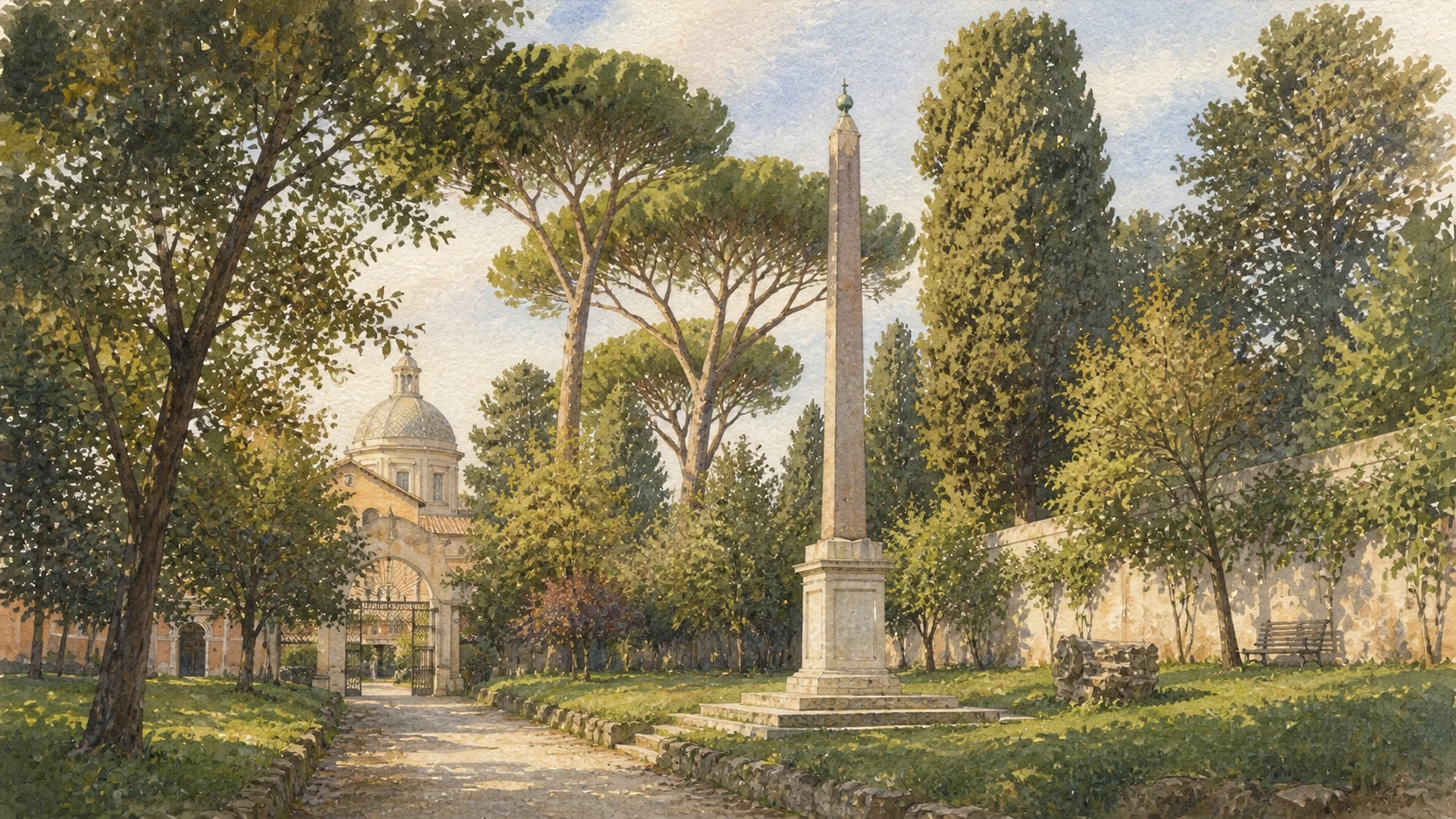
That vertical history is matched by a quieter landscape above ground. Medieval courtyards, monastic enclosures, sloping lanes, gardens and circular churches occupy a district beside the Colosseum that can still feel detached from the great ceremonial axis. The survival of these places depends as much on reuse, filling and enclosure as on deliberate conservation.
This guide treats every descent as an archaeological argument. It separates excavated fabric from tradition, modern access from ancient circulation and present decoration from earlier buildings. It also keeps practical conditions provisional: underground sites, churches and cloisters have independent schedules that can change without warning.
On these hills, absence is often the visible form of preservation.