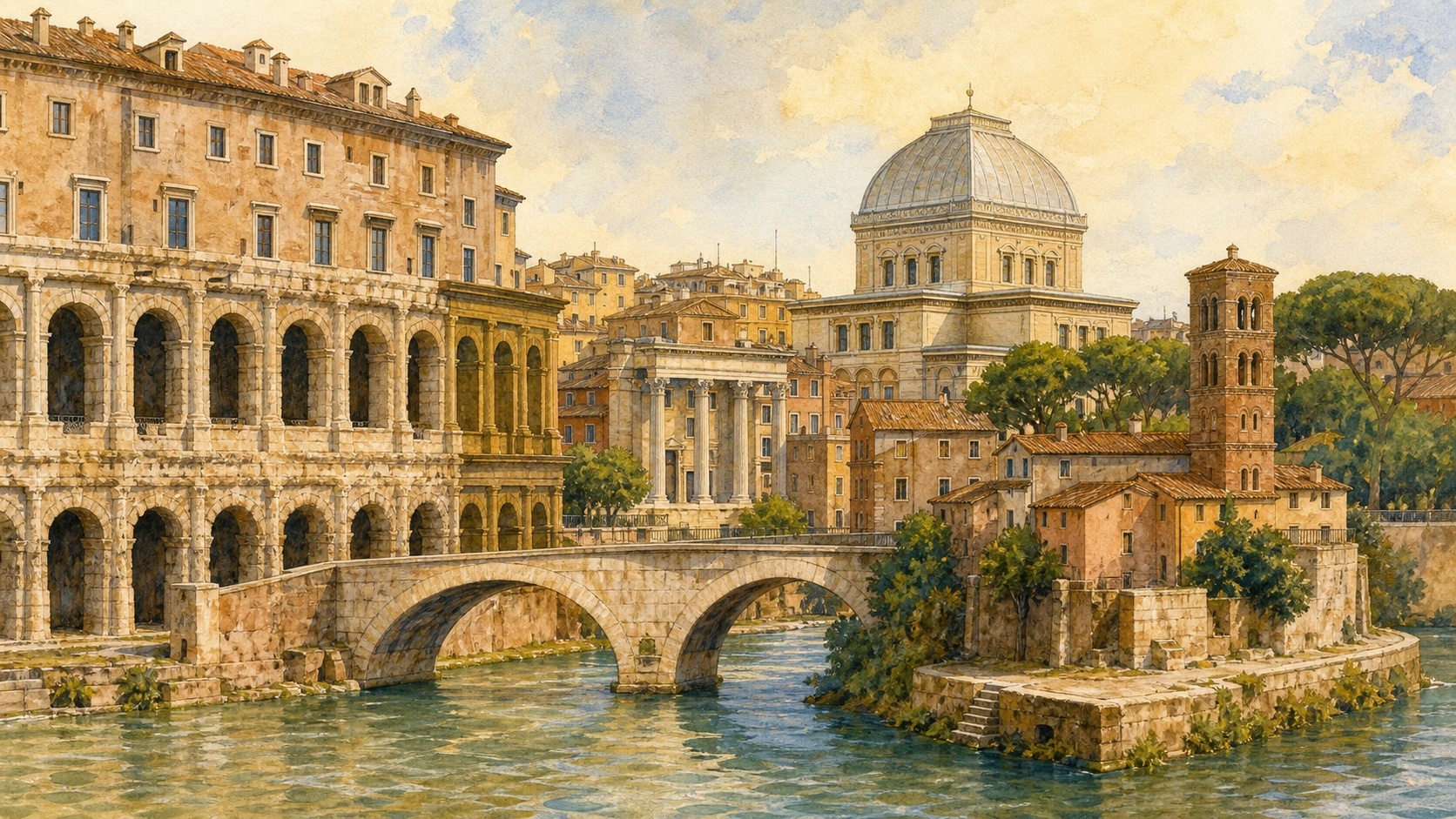
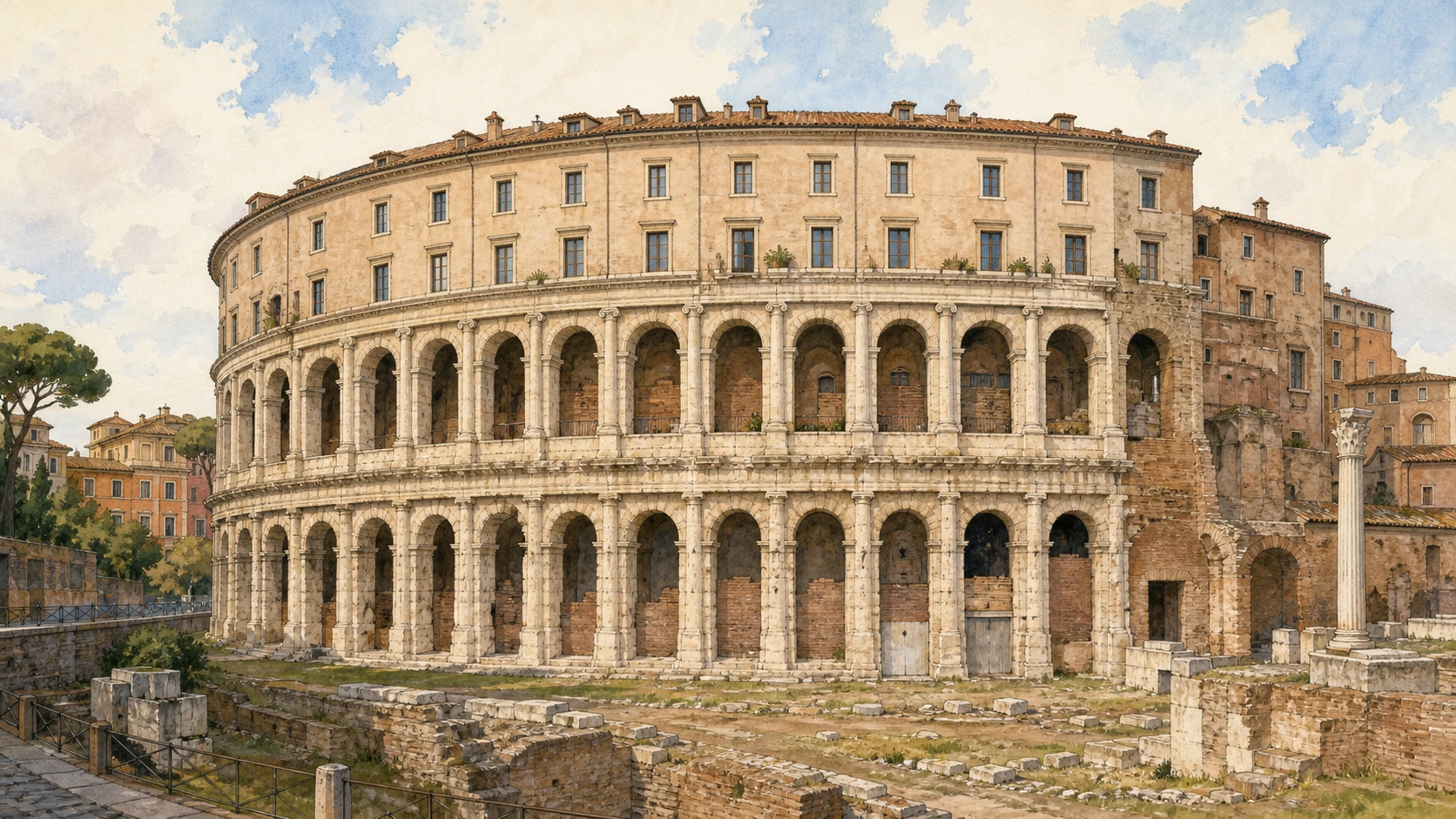
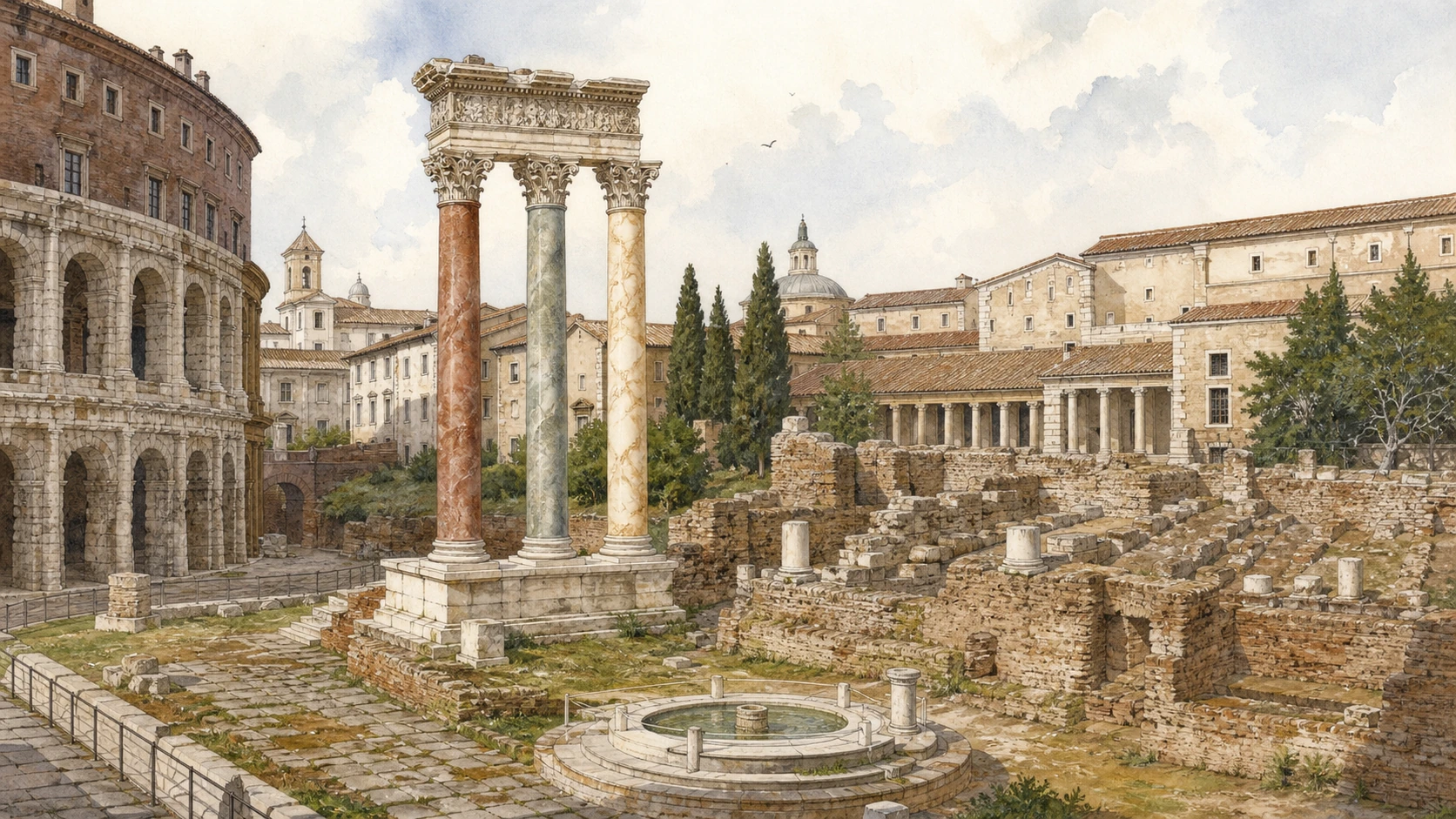
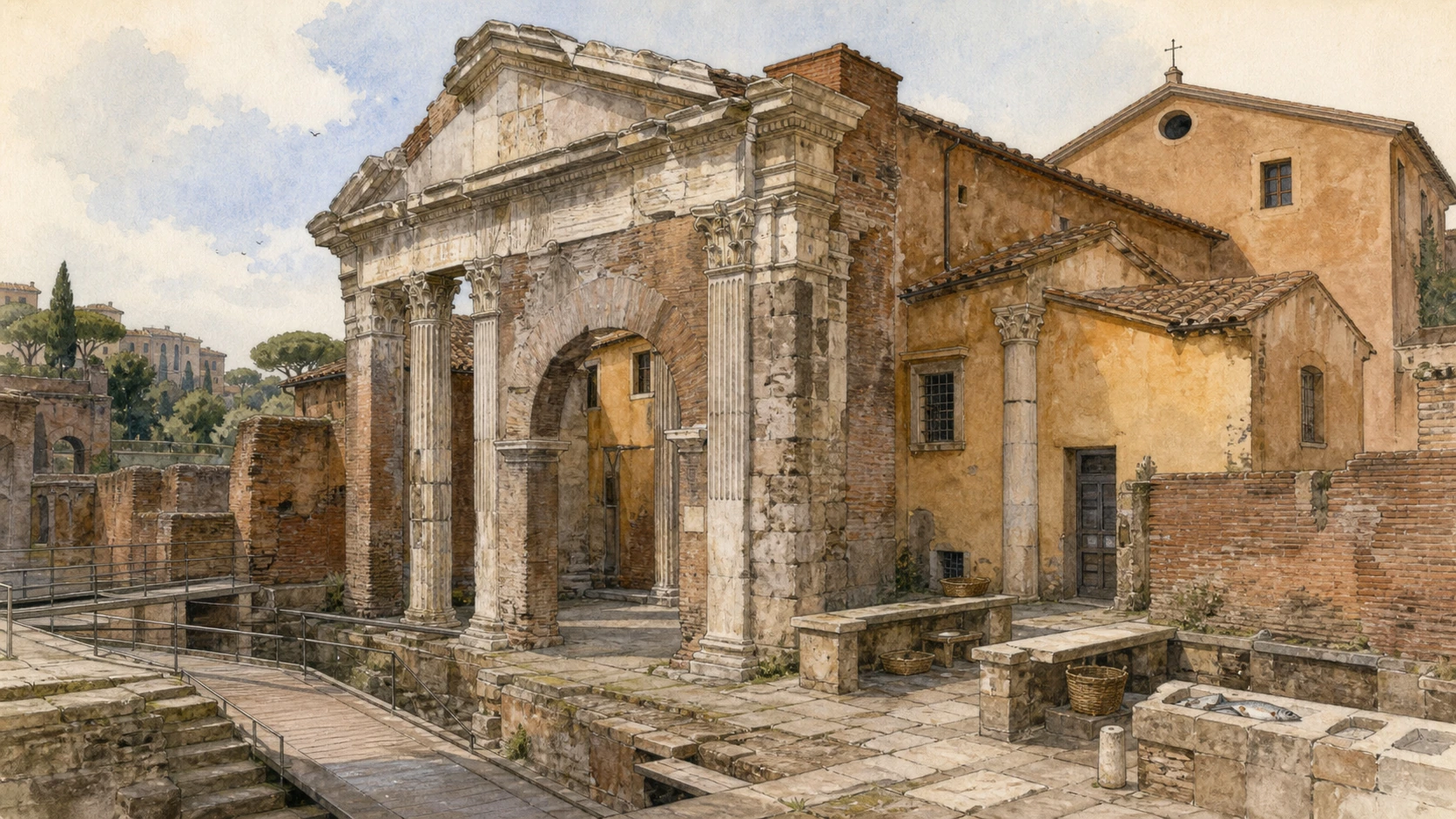
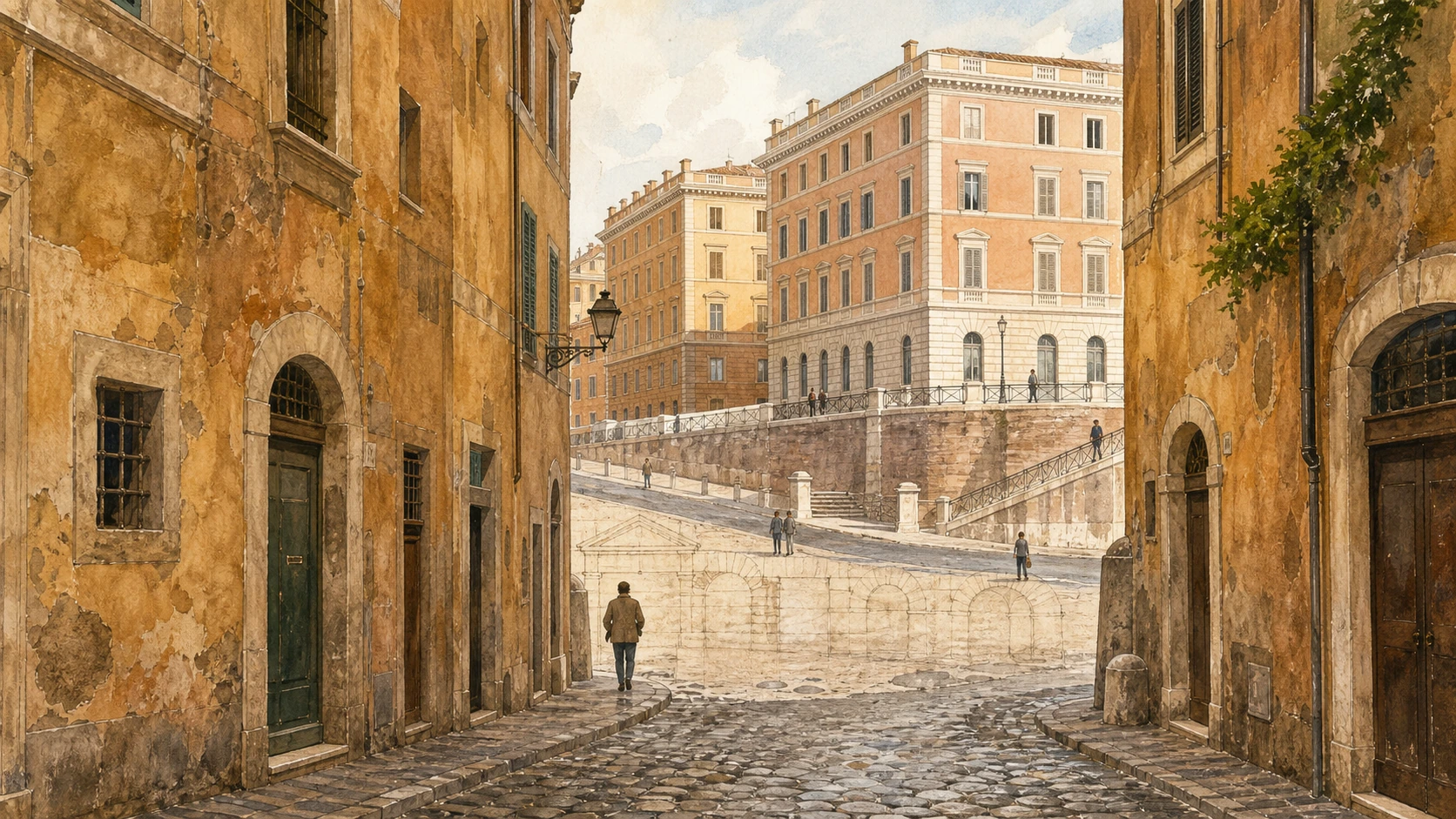
The Theatre of Marcellus, temples of Apollo and Bellona, and Portico of Octavia belonged to distinct complexes around the southern Campus Martius. Their present proximity is ancient, but their isolated appearance is largely modern. Medieval housing, fortification and worship occupied the monuments for centuries; the theatre still carries Peruzzi’s Renaissance palace. Archaeological clearance between the 1920s and 1930s exposed Roman forms by demolishing later urban fabric, so the open lawns and separated ruins are not an untouched classical landscape.
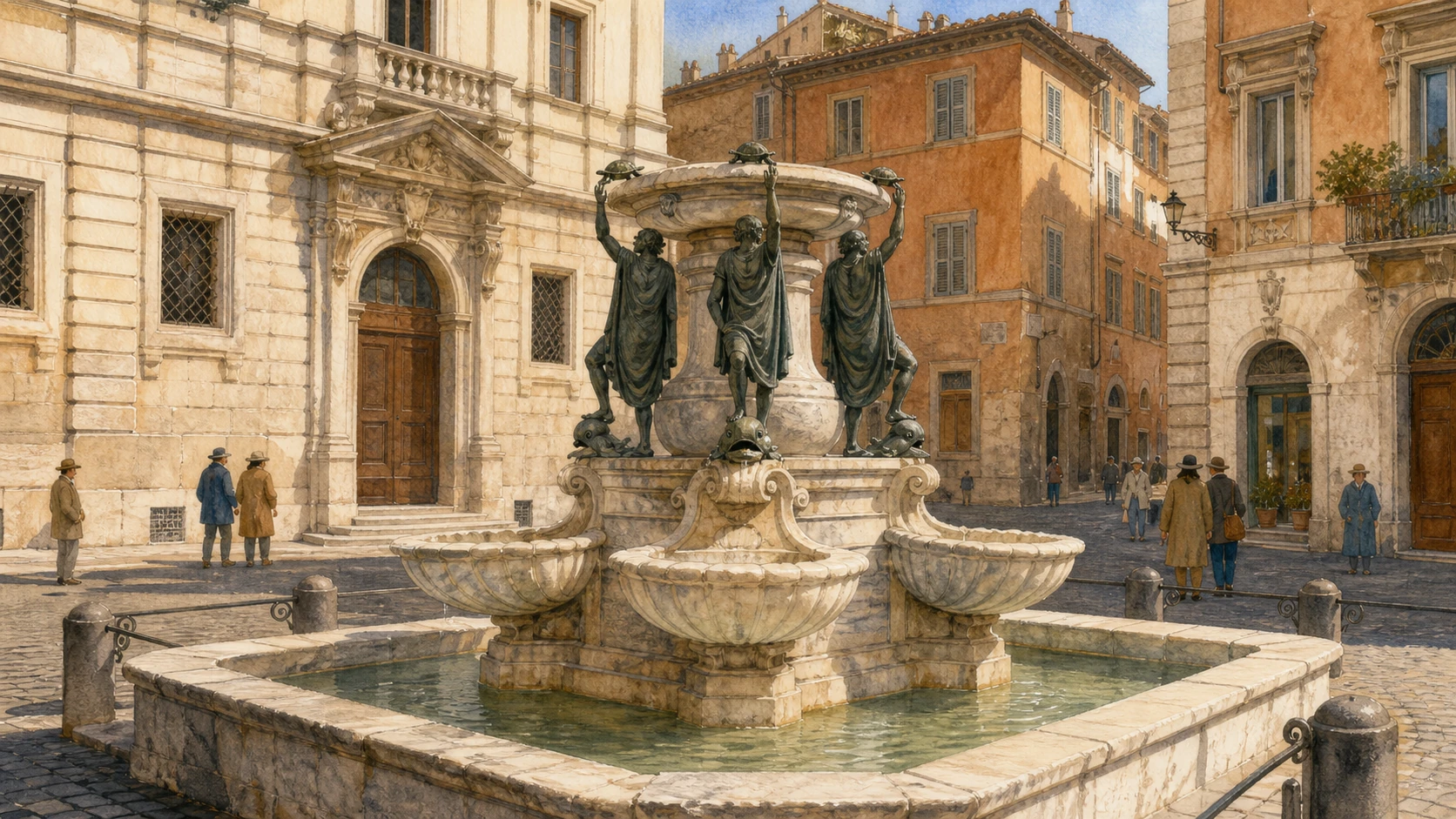
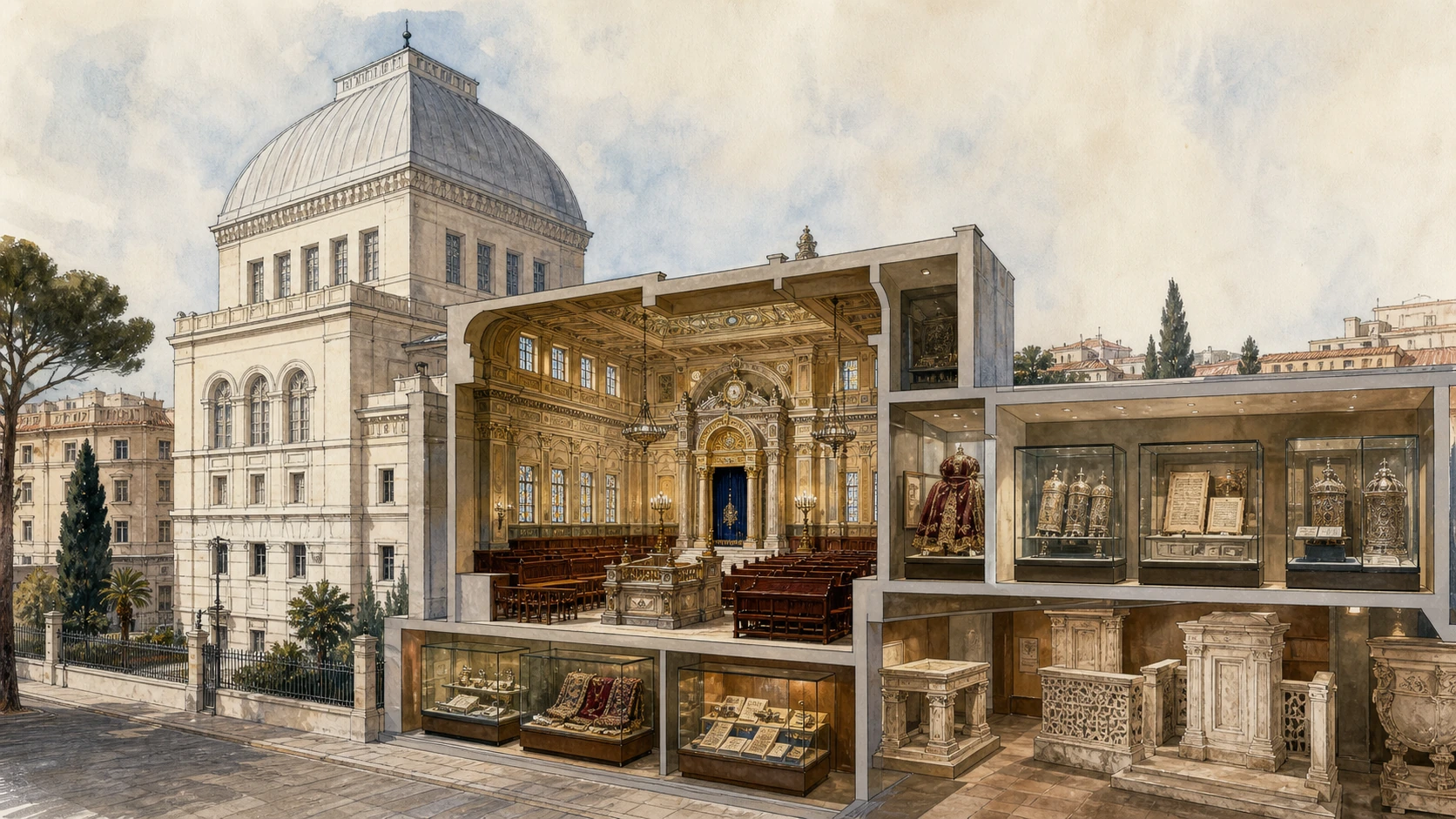
Rome’s Jewish community predates the papal ghetto by many centuries. Paul IV’s enclosure of 1555 forced Jews into a low, flood-prone district and imposed restrictions on residence, work and public life. Emancipation came with the end of papal rule in 1870, but it was followed by demolition and rebuilding that erased much of the enclosed quarter. The monumental Great Synagogue of 1904, the museum collections from the lost Cinque Scole and the surviving lanes must therefore be read together rather than as one preserved ghetto streetscape.
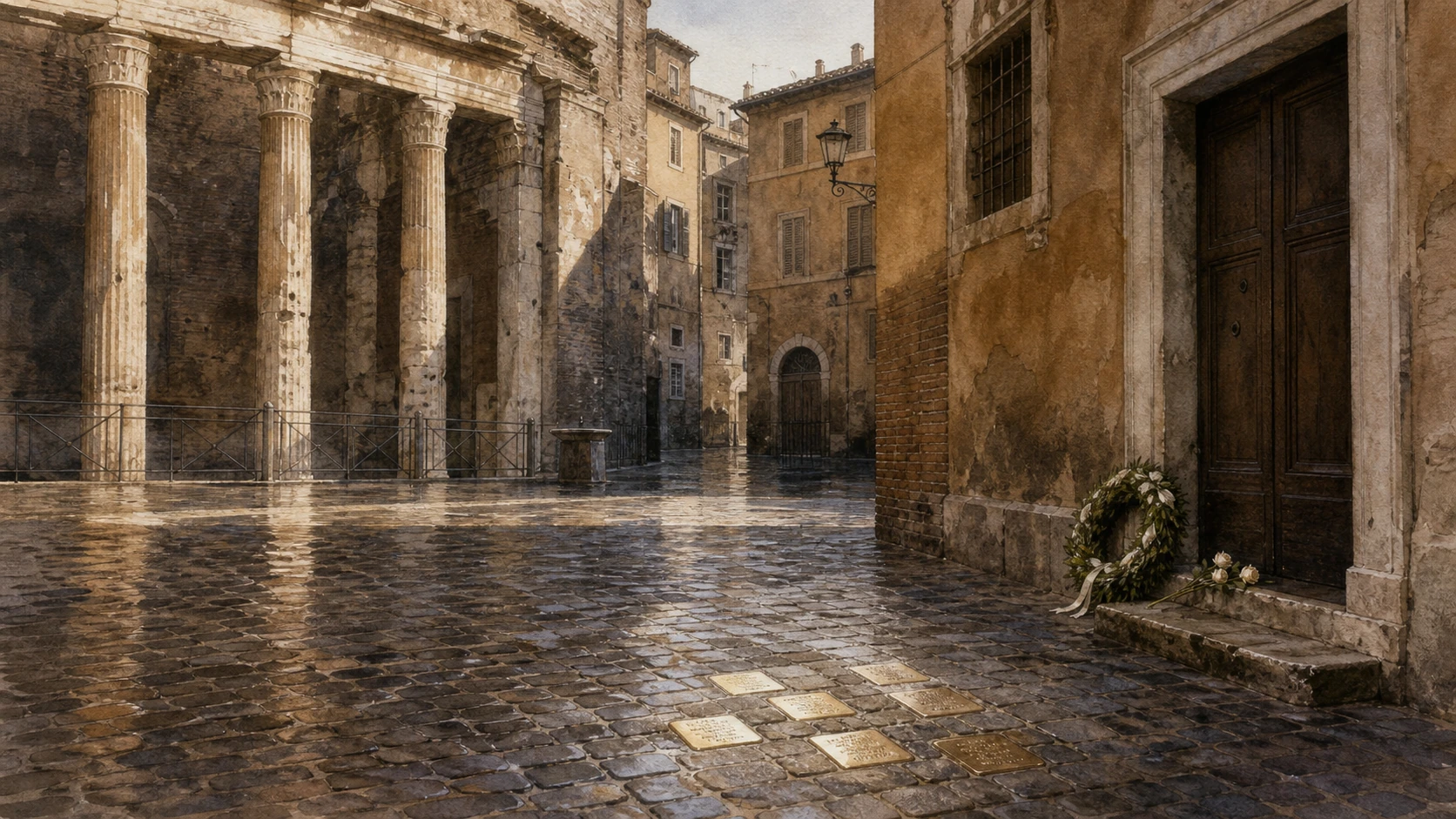
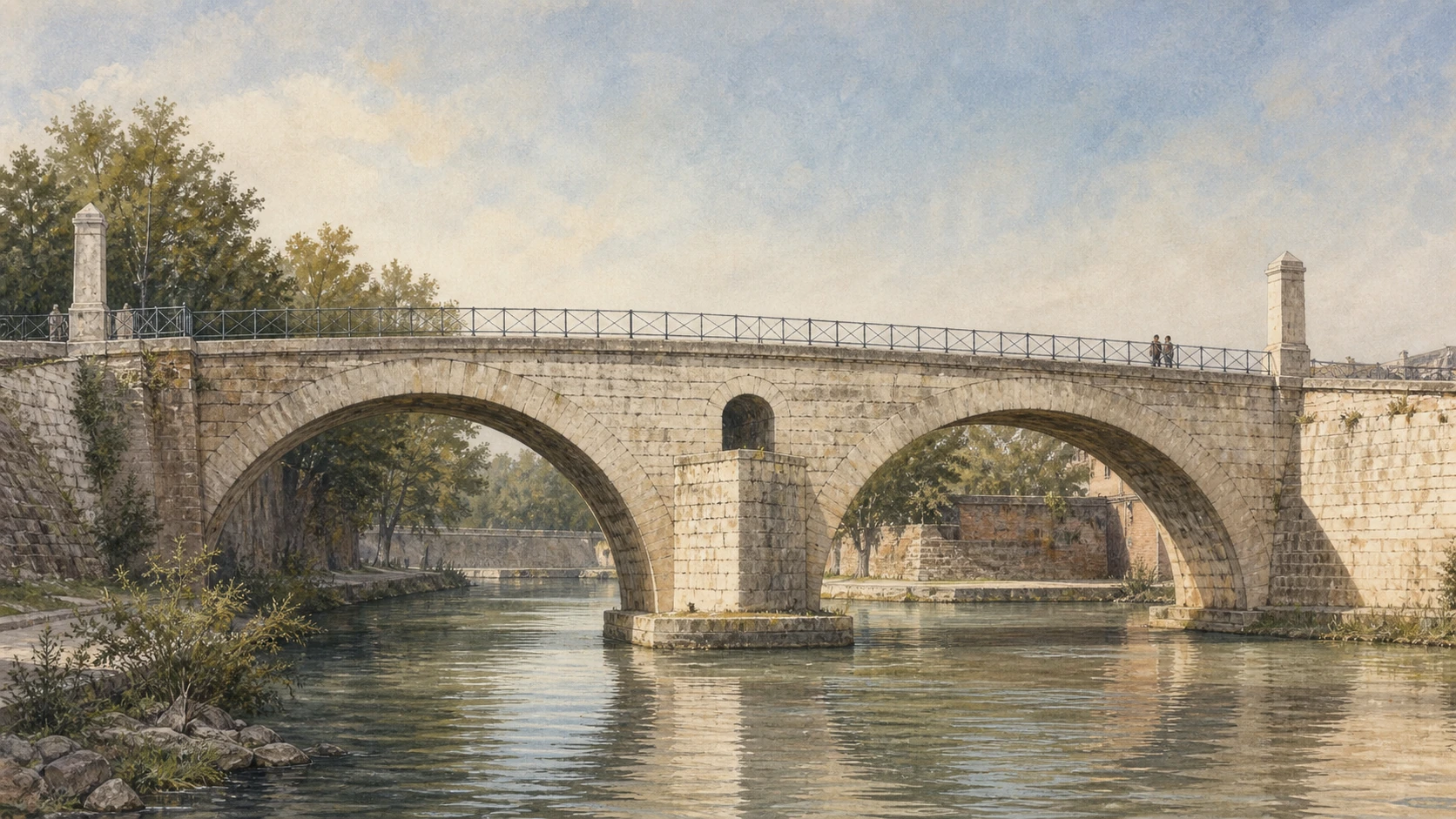
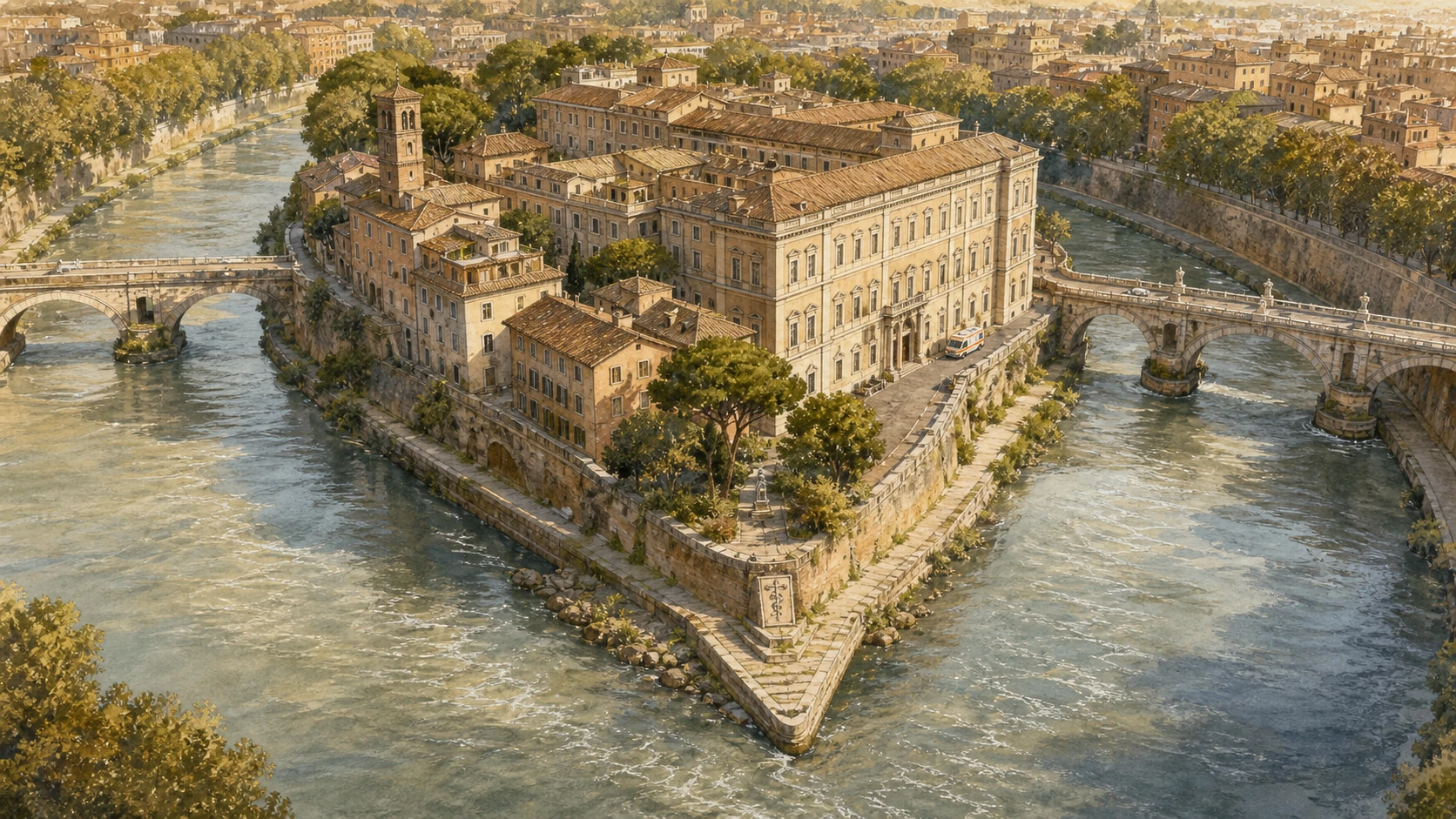
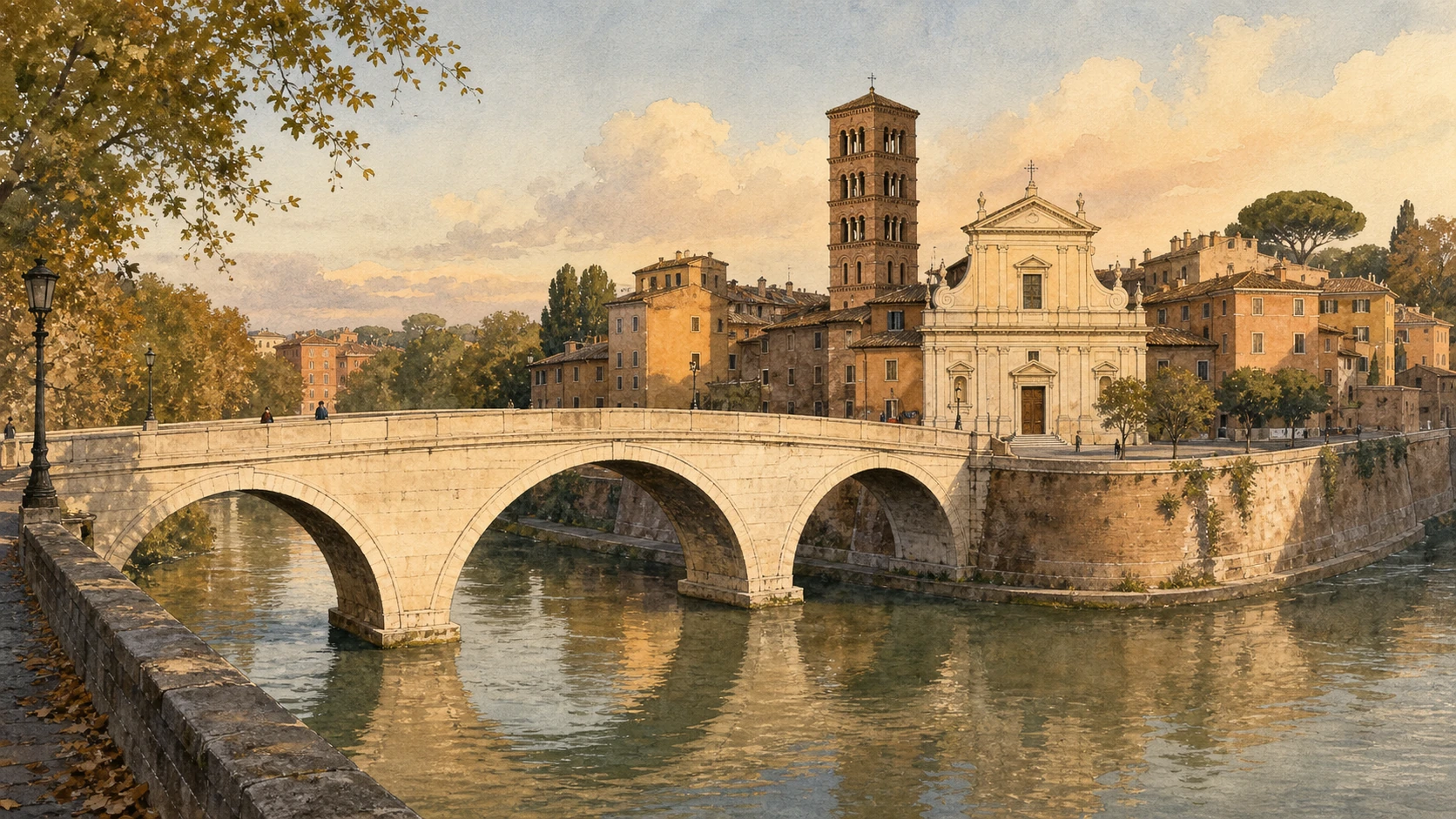
The district also carries the violence of fascist racial laws and Nazi occupation. The raid of 16 October 1943 reached beyond the former ghetto across Rome; more than a thousand Jewish residents were arrested and deported toward Auschwitz-Birkenau. Memorial stones and Largo 16 Ottobre return individual names to ordinary streets. Across Pons Fabricius, the Tiber Island adds another continuity: an ancient sanctuary of Aesculapius, medieval church, early-modern hospital and modern care institutions keep healing attached to the island without making every later building a direct survival of the Roman temple.
Read what remains and what was removed: monument, enclosure, emancipation, persecution and living community occupy the same short walk but must never be collapsed into one romantic image.