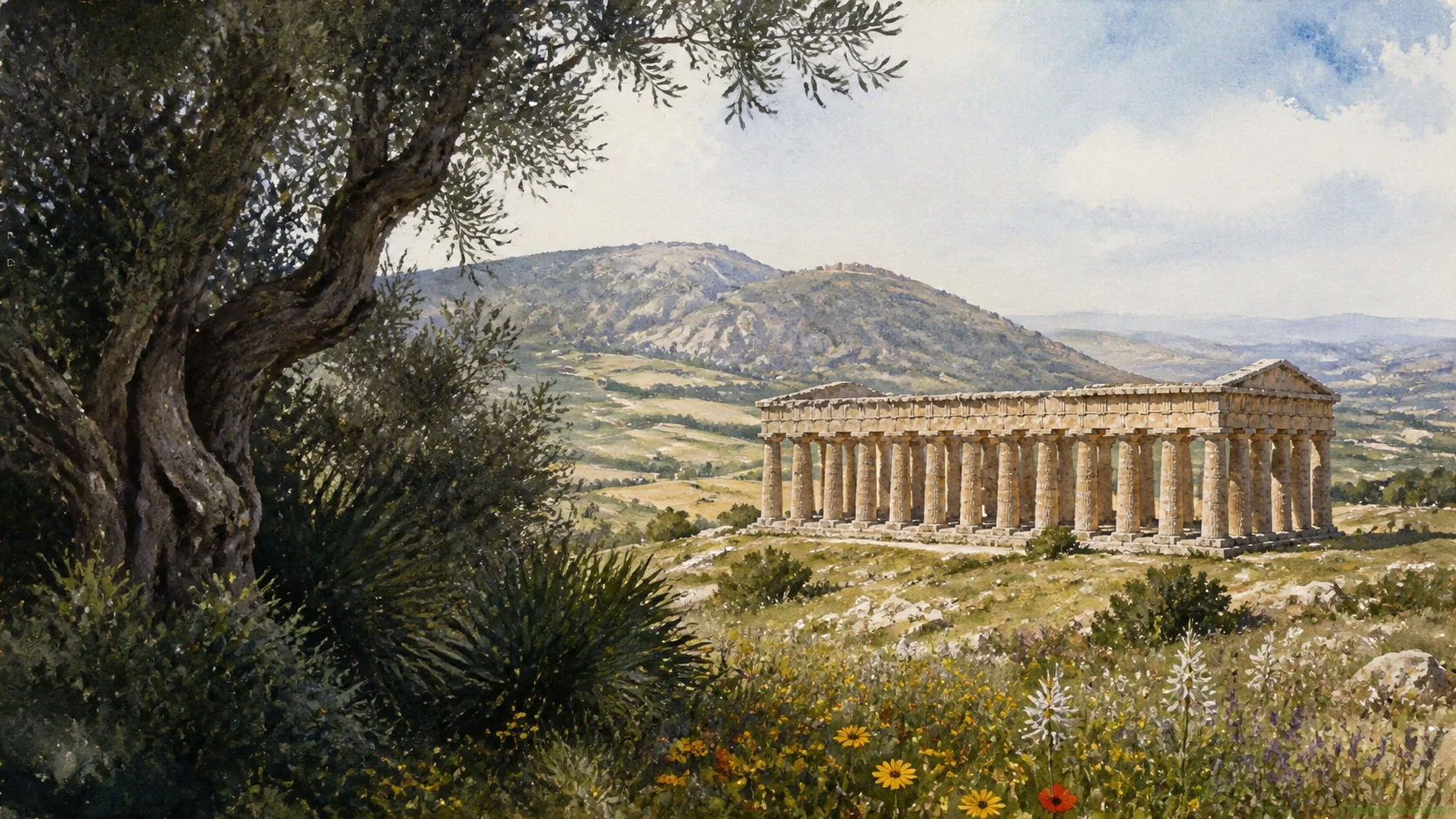
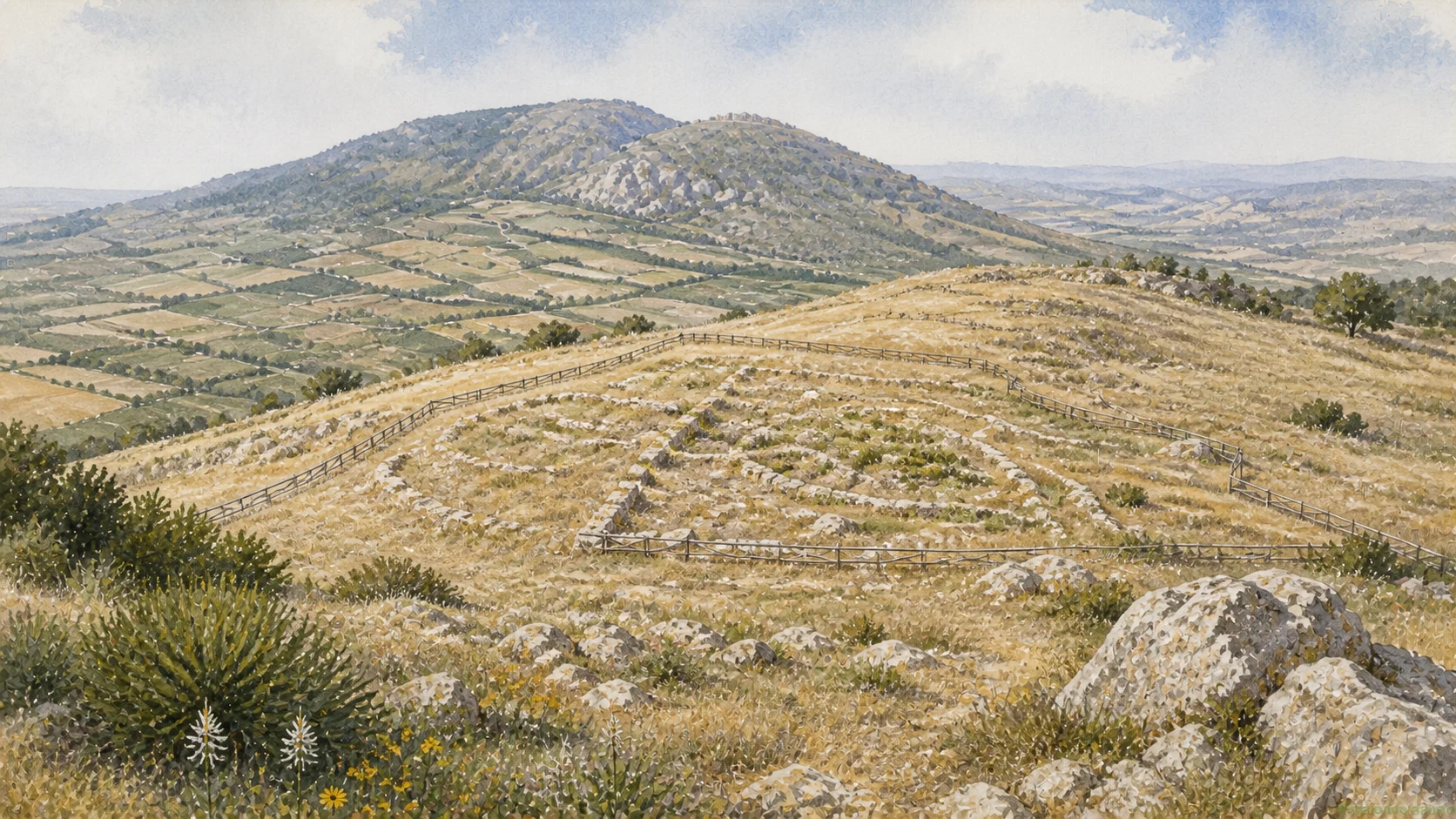
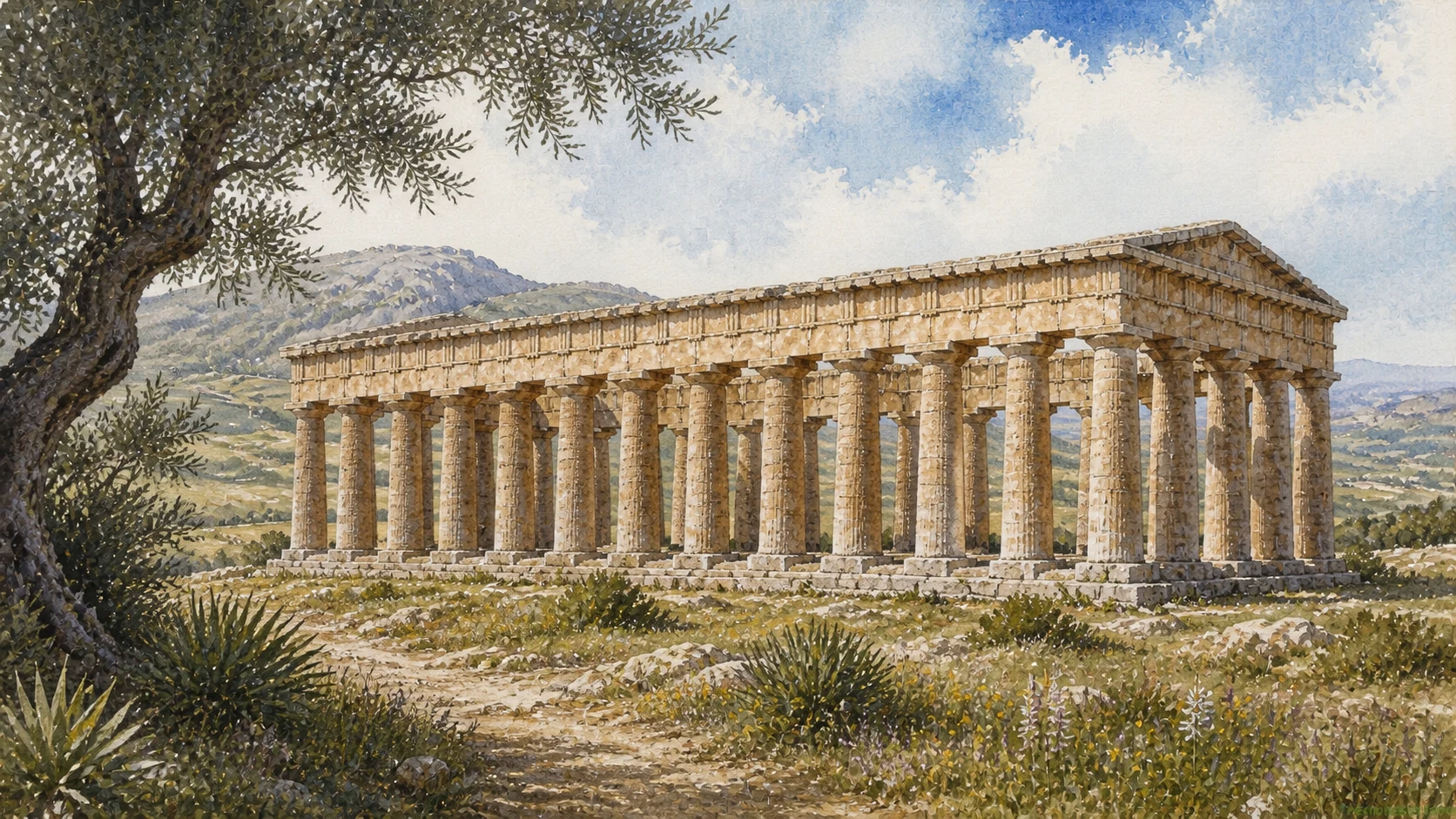
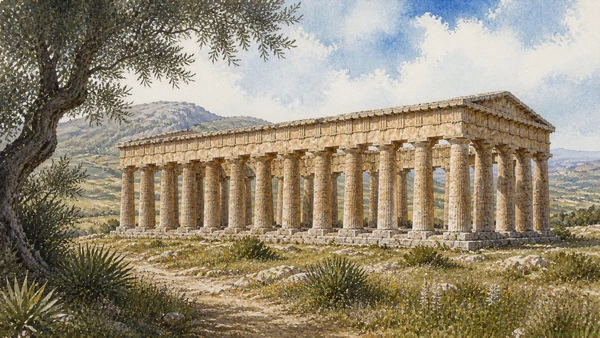
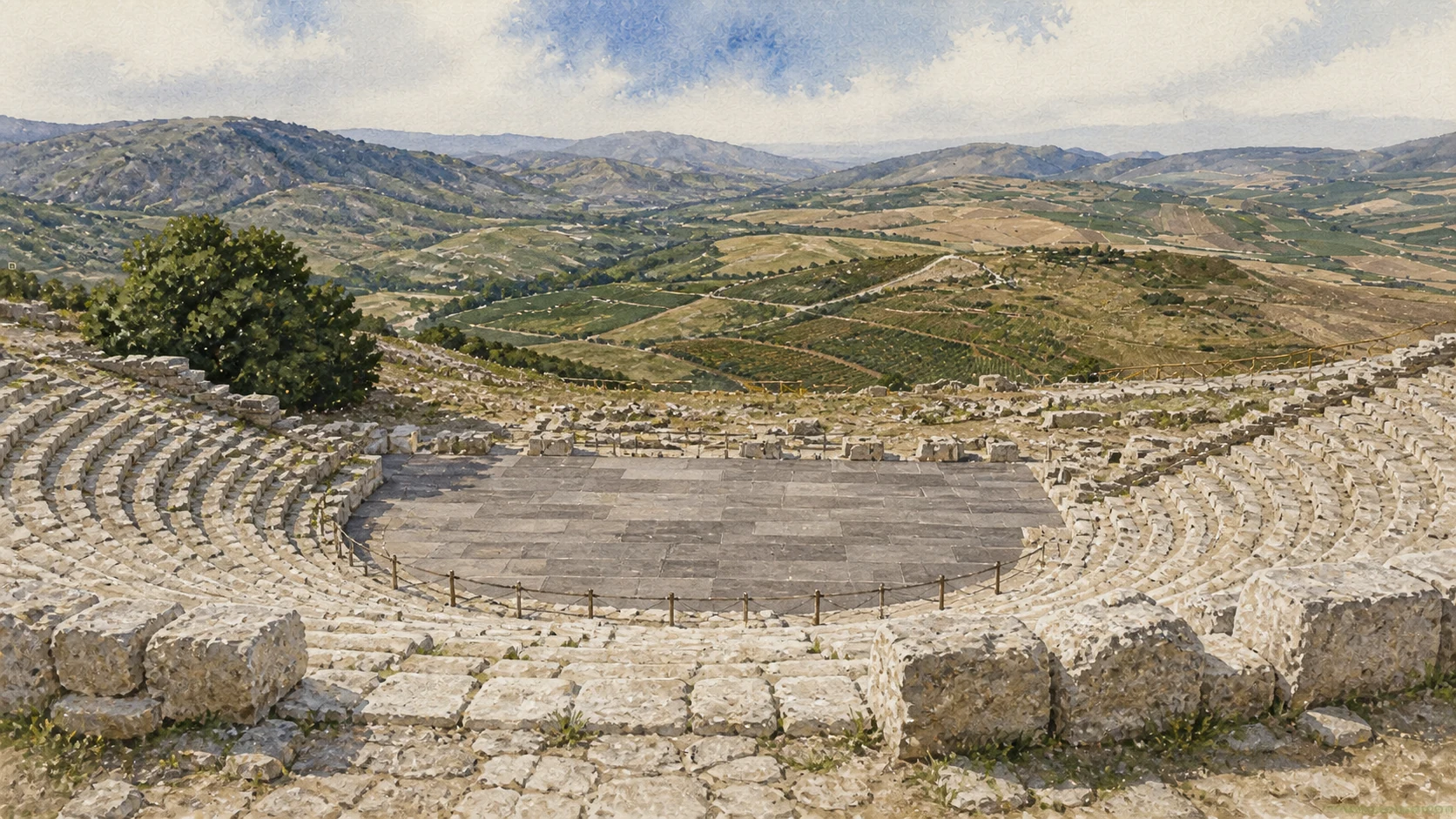
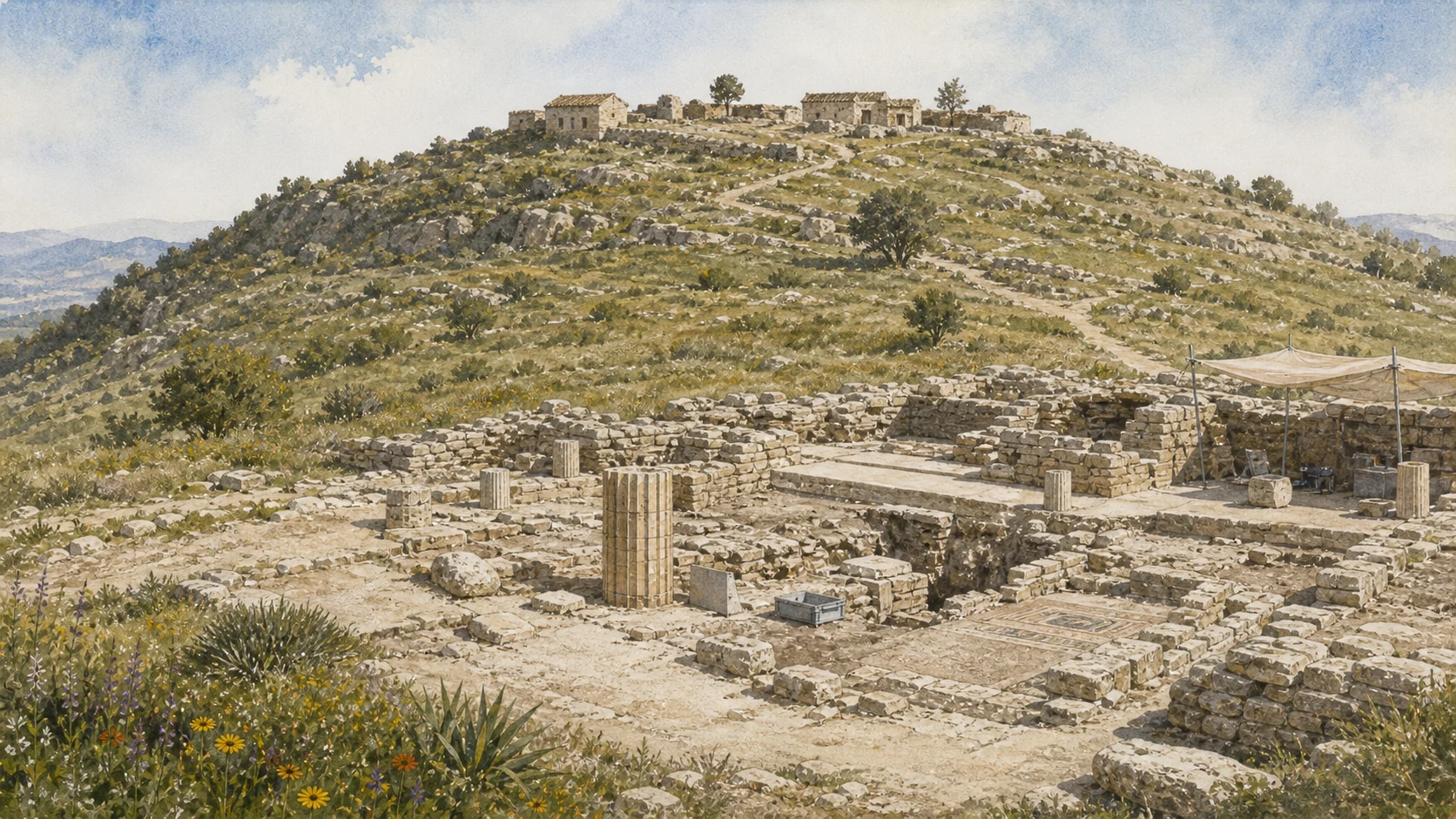
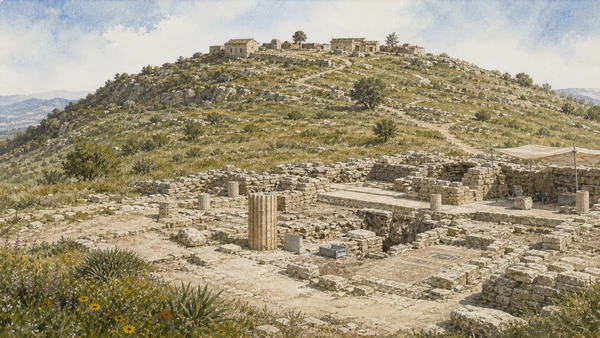
Segesta occupied the slopes and twin summits of Monte Barbaro in western Sicily. Natural scarps protected parts of the settlement; walls, gates and roads organised the other approaches. The western temple hill stood outside the main urban enclosure, while the public city, theatre and later medieval occupation concentrated on the northern acropolis and houses extended across the southern one.
Greek columns do not turn Segesta into a Greek colony. The city belonged to the Elymian world and adopted, adapted and commissioned forms circulating across the Mediterranean. Its long rivalry with Selinunte and appeals to Athens and Carthage made a local frontier dispute part of island-wide history, yet material culture also records trade, worship and shared craft rather than permanent ethnic separation.
The archaeological park preserves a dispersed landscape. Some areas are monumental and immediately visible; others survive as low foundations, reused blocks or excavated sectors opened only on special routes. A complete visit therefore requires both distance and caution: named buildings remain scholarly interpretations, current excavations can revise them, and seasonal events or conservation work can change access.