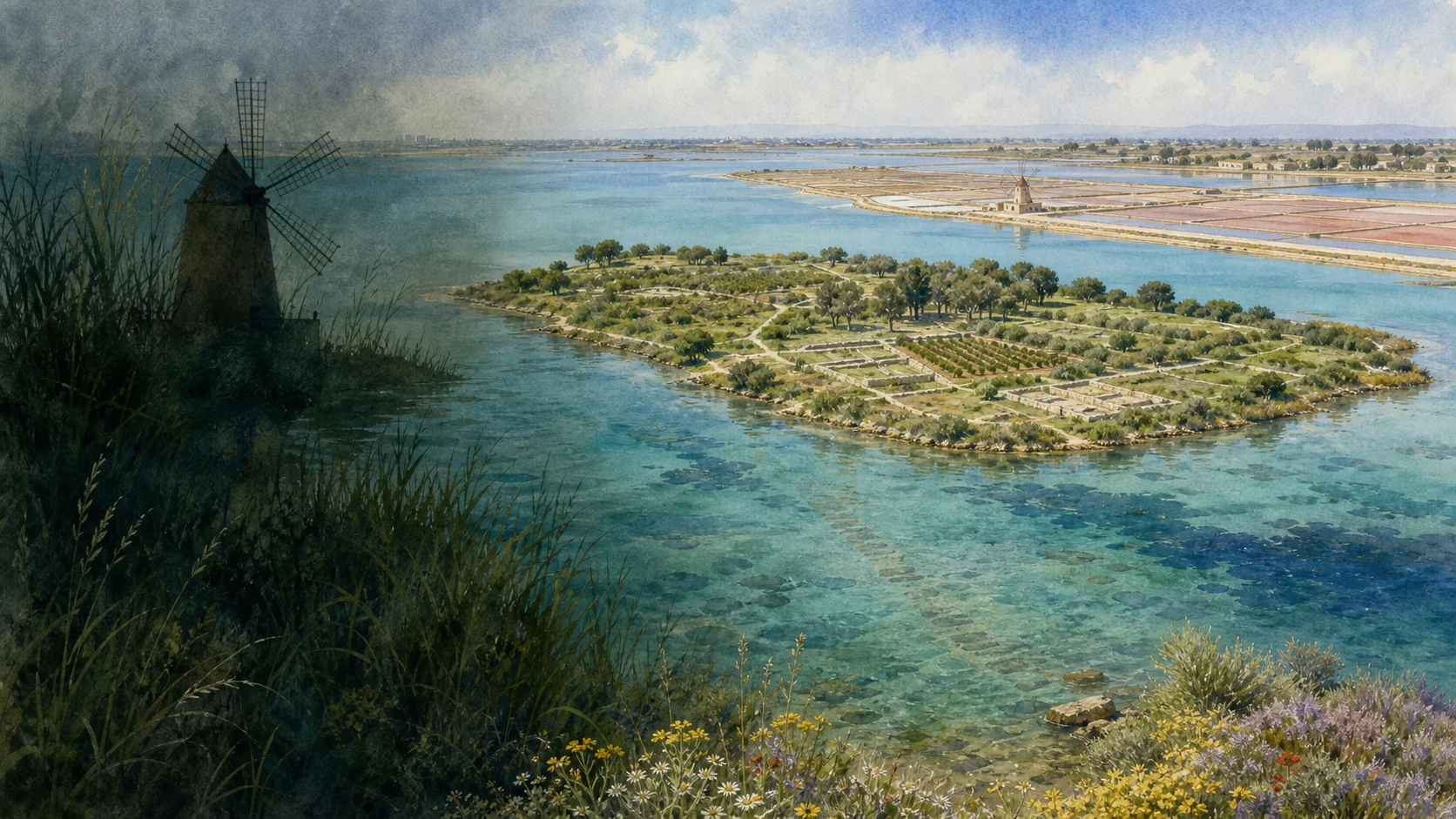
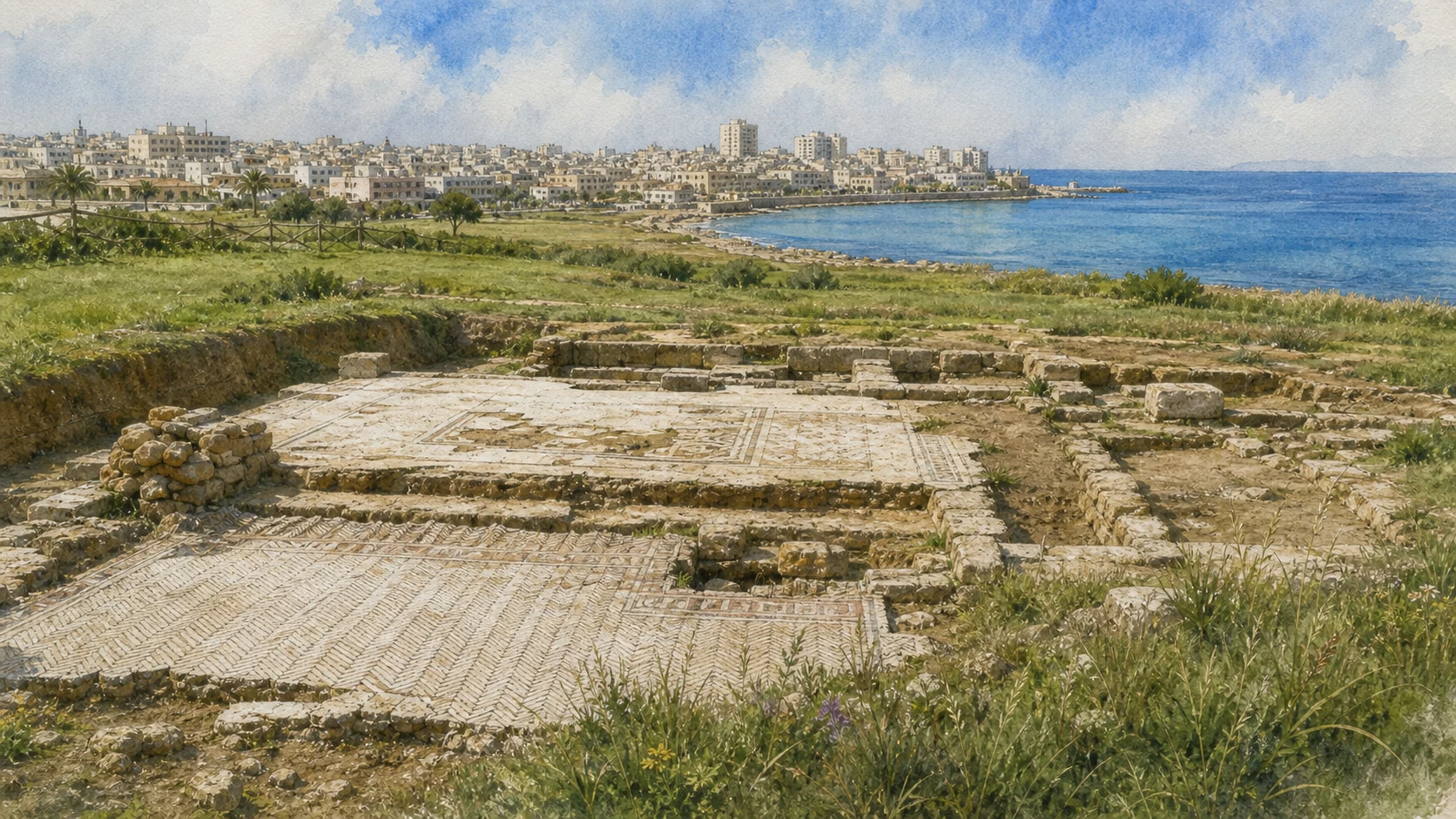
Mozia occupies the small island of San Pantaleo inside the Stagnone, while Marsala stands on Capo Boeo beyond the lagoon’s southern reach. The two places are historically linked but not spatially continuous: Motya was destroyed in 397 BC, and Punic Lilybaeum developed on the mainland as a new fortified city and African gateway.
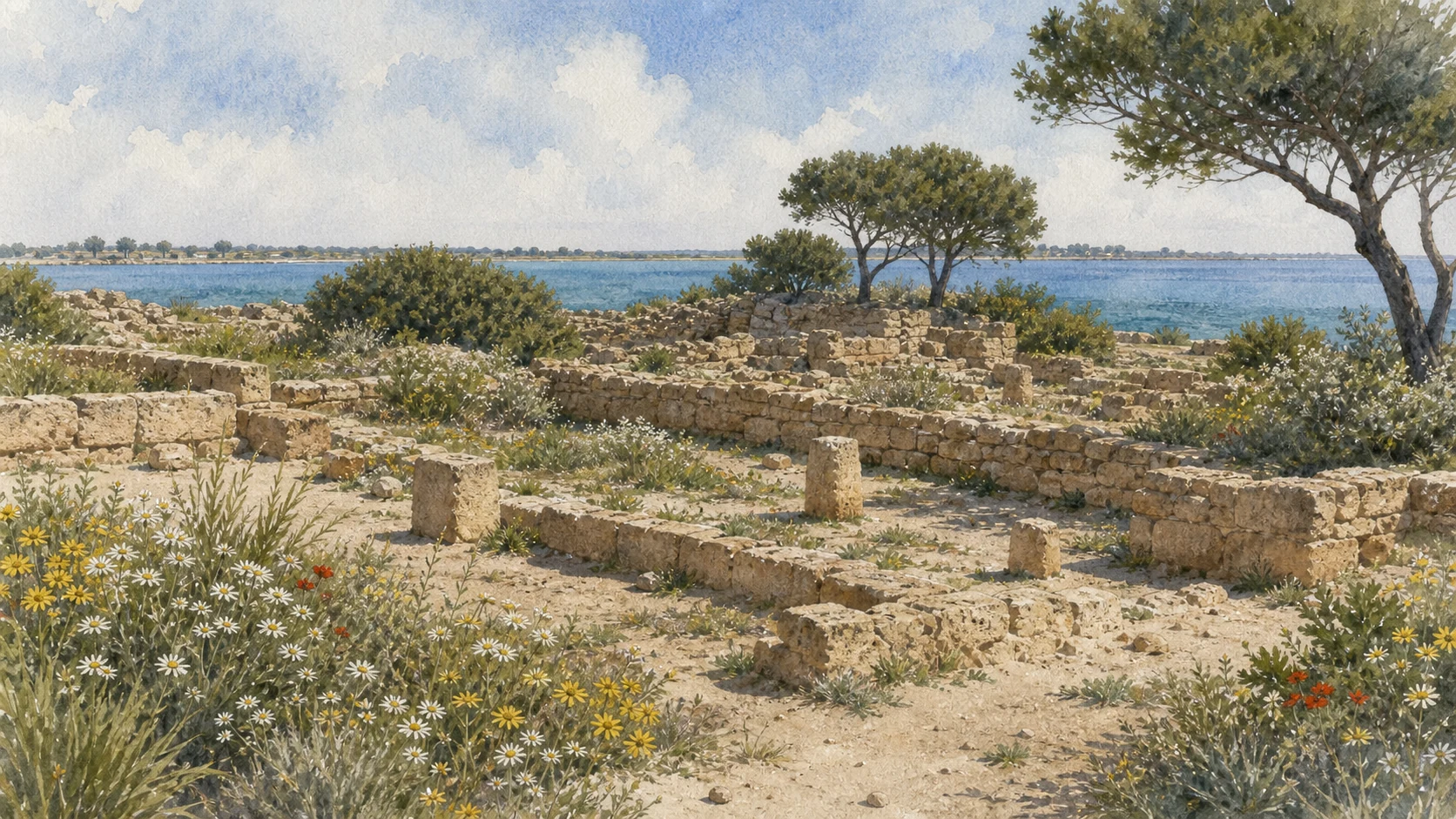
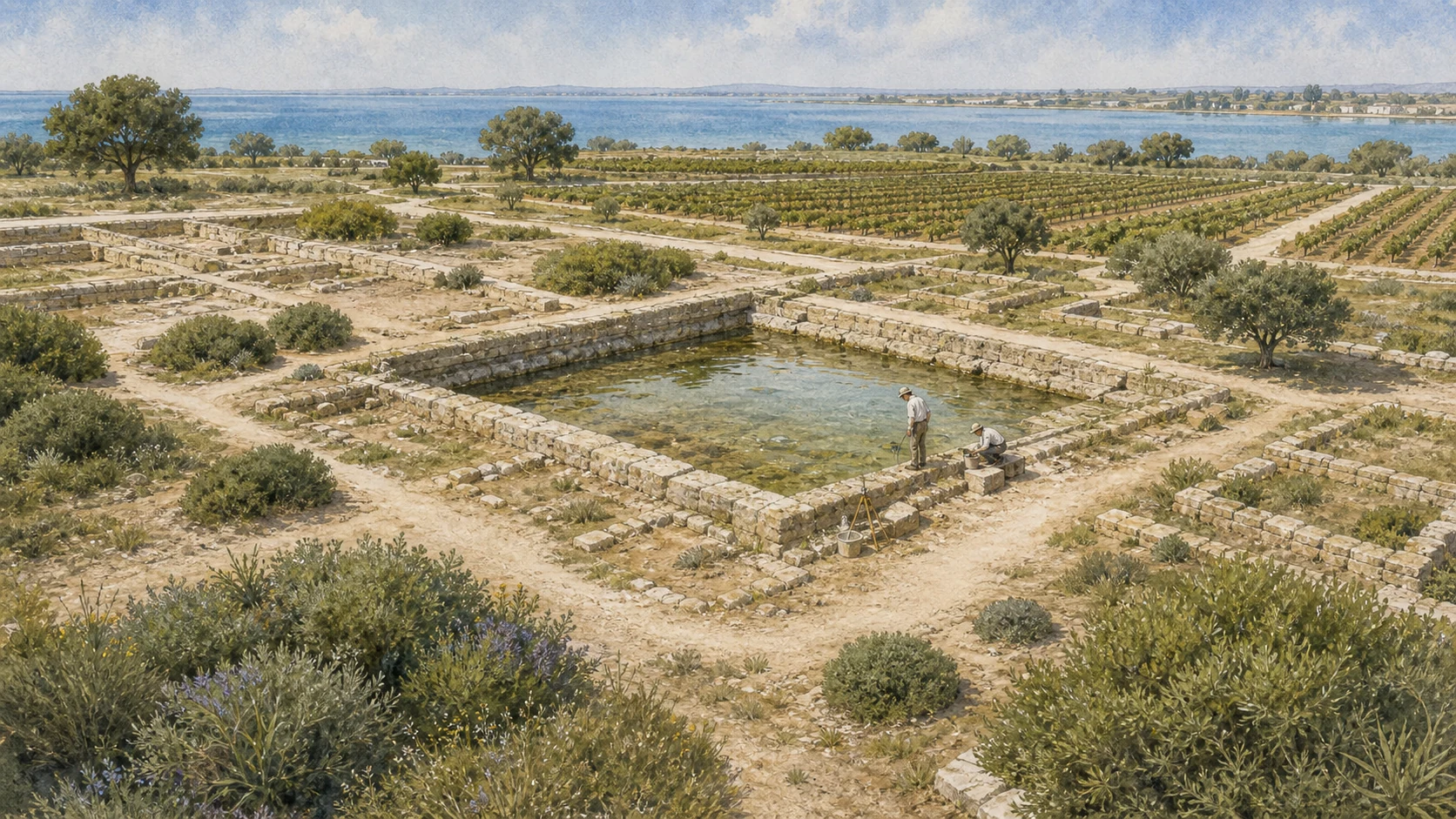
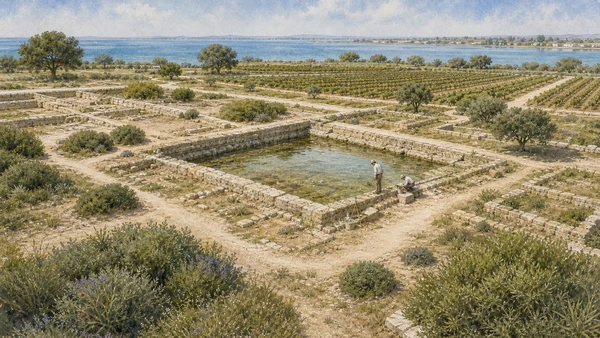
Recent research has changed familiar interpretations. The rectangular basin long called the Kothon is now understood by the Sapienza mission as a sacred freshwater pool within a circular sanctuary, not simply a military harbour. Houses, temples, gates, cemeteries and workshops make Mozia a complete island city; at Marsala, the 28-hectare Capo Boeo park preserves streets, baths, domus, sanctuaries and fortifications because the medieval and modern centre retreated from the ancient shoreline.
The Stagnone is also a protected ecological and productive system. Posidonia, halophytic plants and migratory birds share space with historic salt pans, causeways, boat routes, vineyards and contemporary recreation. Conditions change with wind, weather, transport and conservation, so practical information is deliberately linked to current institutions rather than frozen into permanent promises.