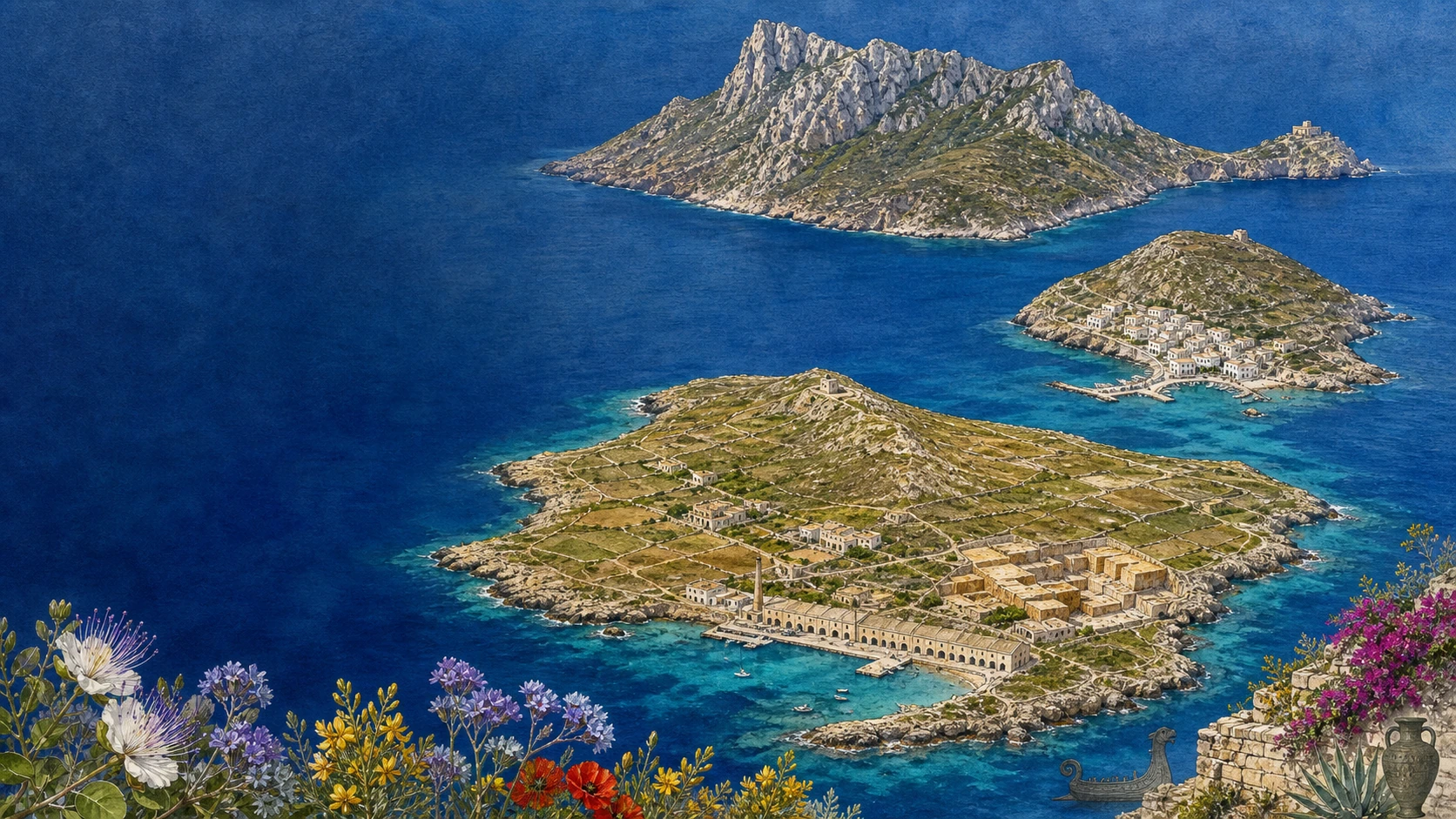
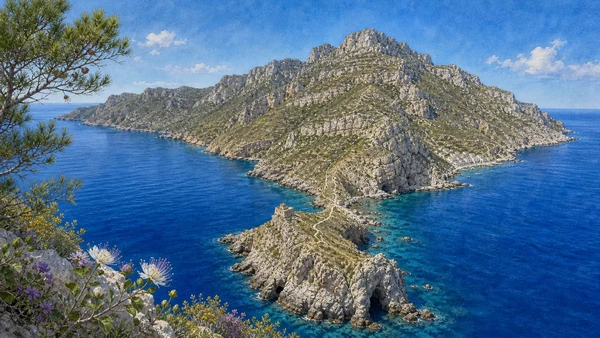
The opening chapters establish the Egadi as a western Sicilian archipelago formed by Favignana, Levanzo and Marettimo together with Formica, Maraone and smaller rocks. The seabed is part of the story: submerged cliffs, palaeobeaches, caves, Posidonia meadows and a 350-metre-deep channel explain why islands that appear close have very different geological and ecological histories.
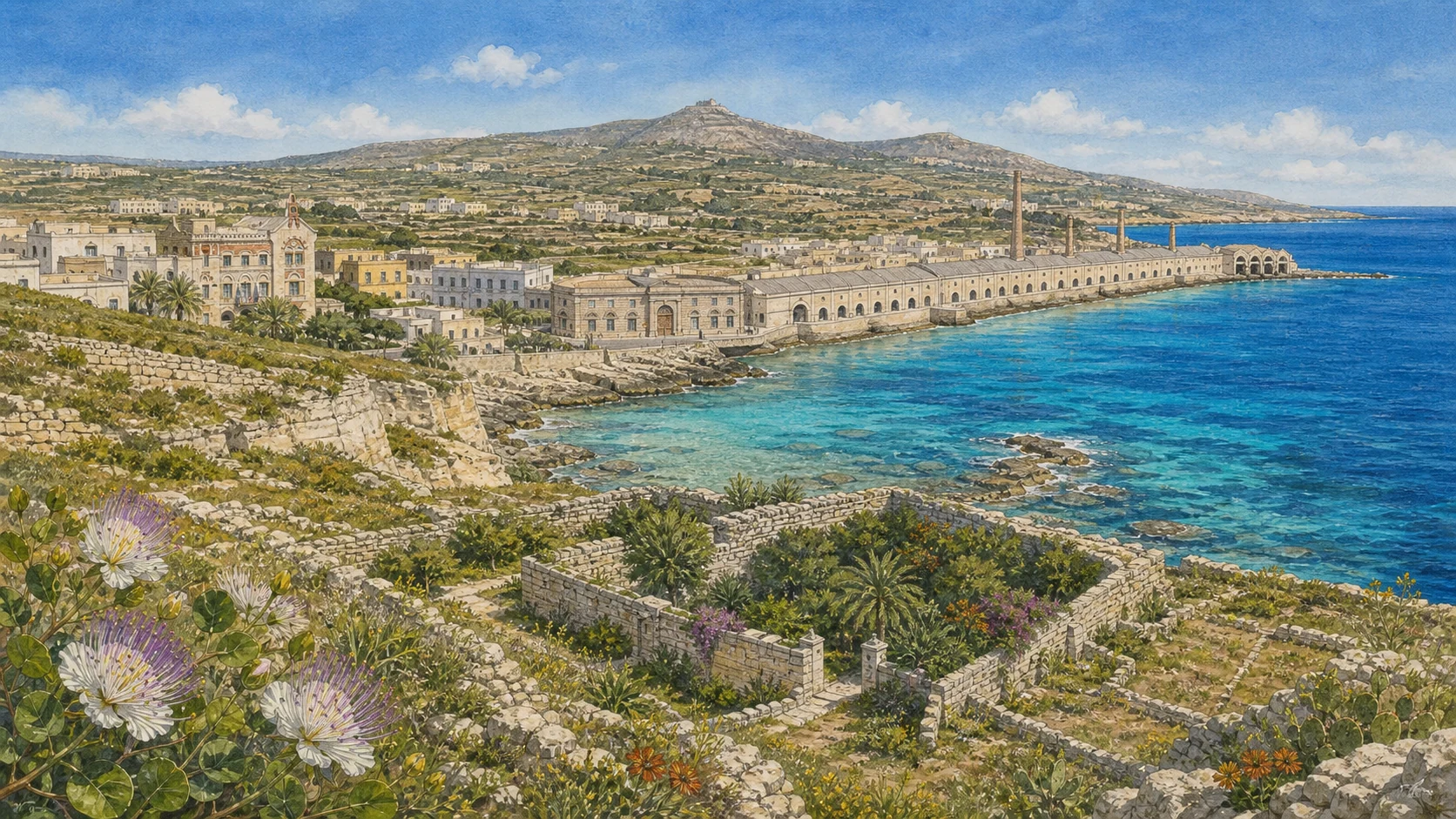
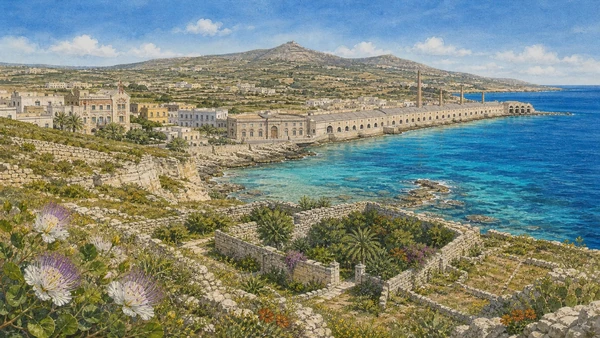
Favignana receives the longest sequence because its apparent ease conceals a layered cultural landscape. The town, Palazzo Florio and the former tuna works are linked to earlier fishing rights, industrial processing, the mattanza workforce and museum collections. The eastern plain is read through calcarenite quarries, cave gardens and rural walls; the western half through Monte Santa Caterina, the fort and a rougher coast.
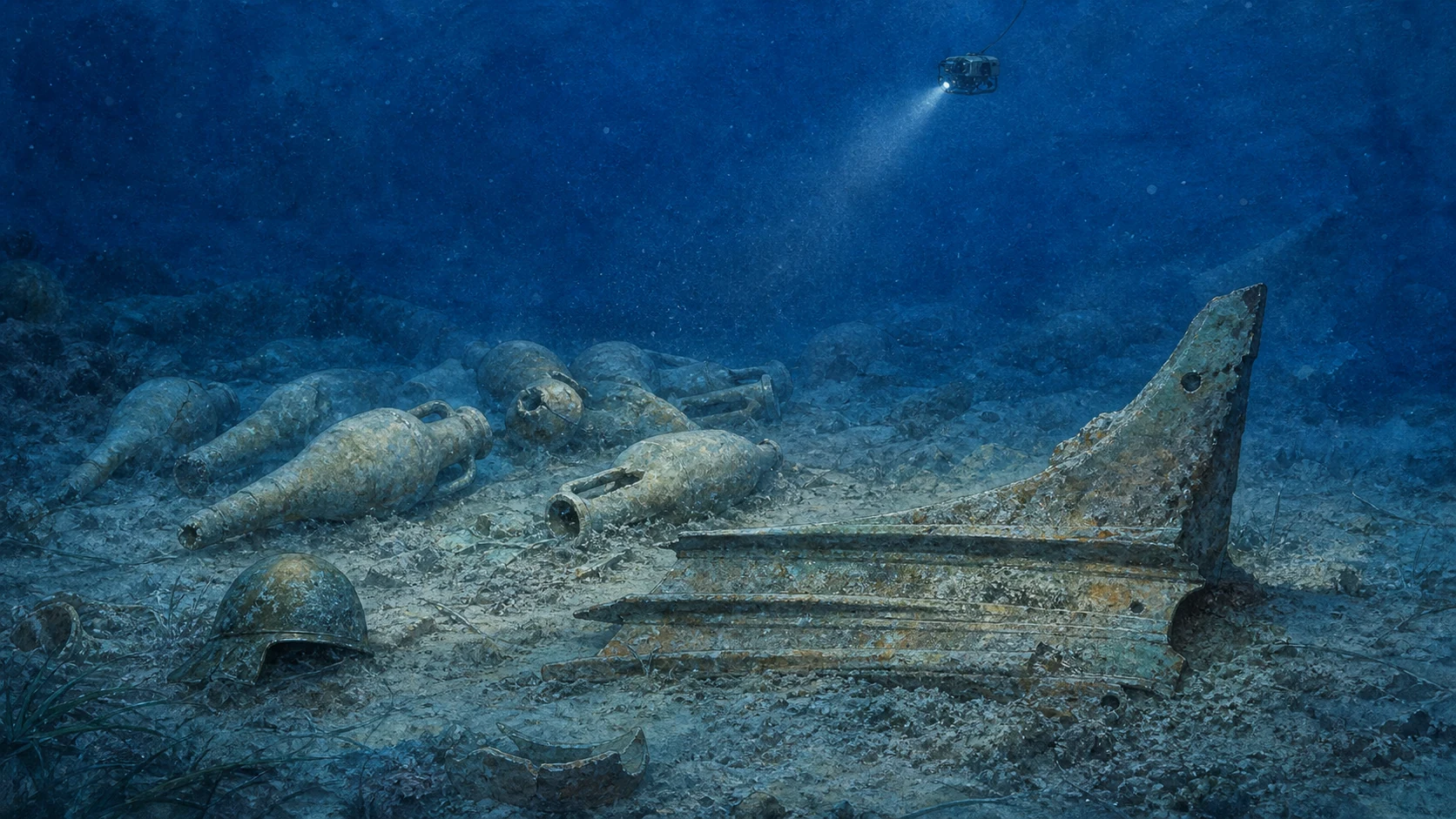
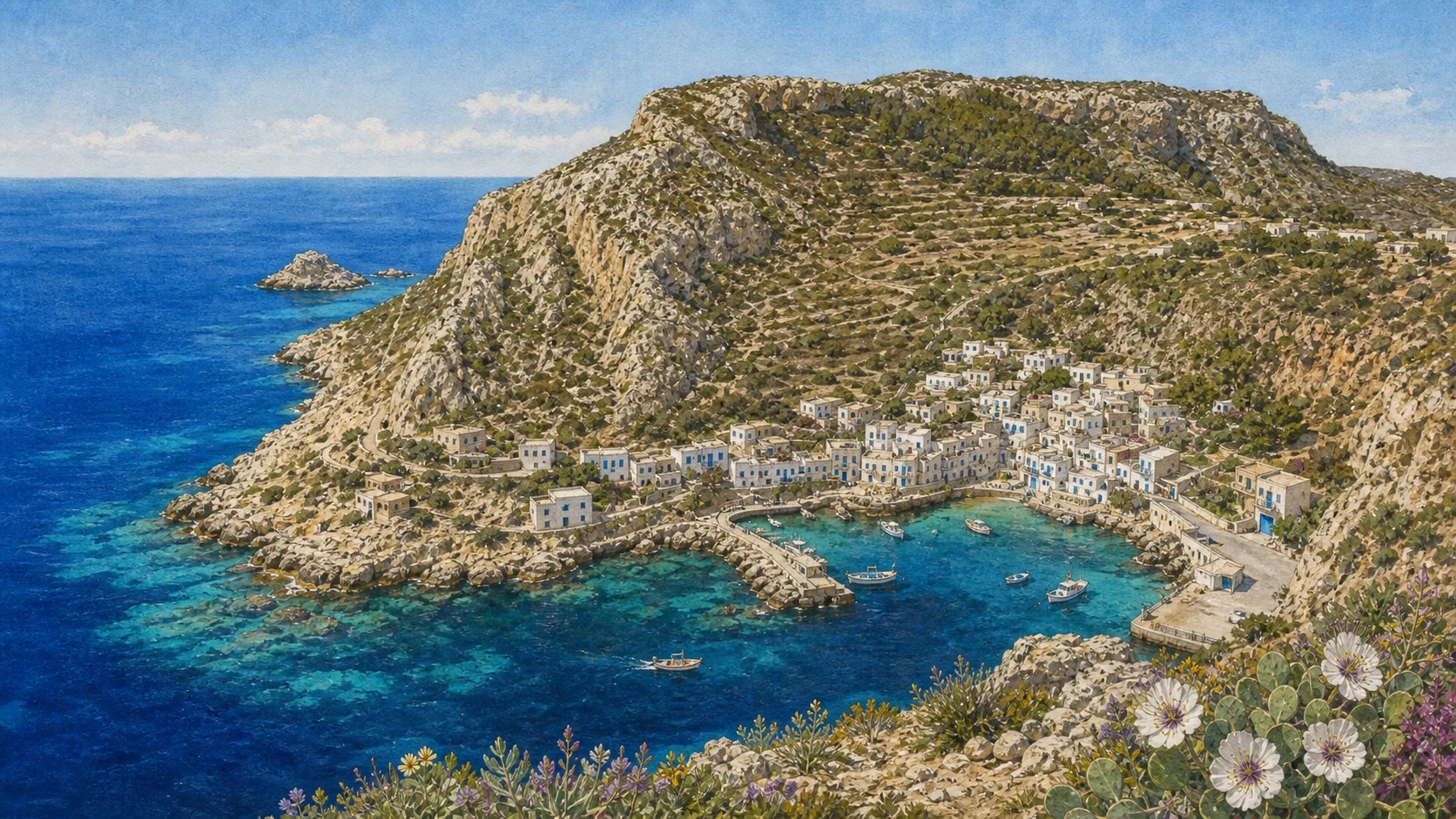
Levanzo is organised around evidence rather than size. Cala Dogana leads to the Grotta del Genovese, where Upper Palaeolithic engravings must be distinguished from later black and red paintings. Cala Minnola preserves a Roman cargo and fish-processing context, while Capo Grosso and the deep field to the north-west locate the Battle of the Egadi with anchors, helmets, amphorae and bronze rams.
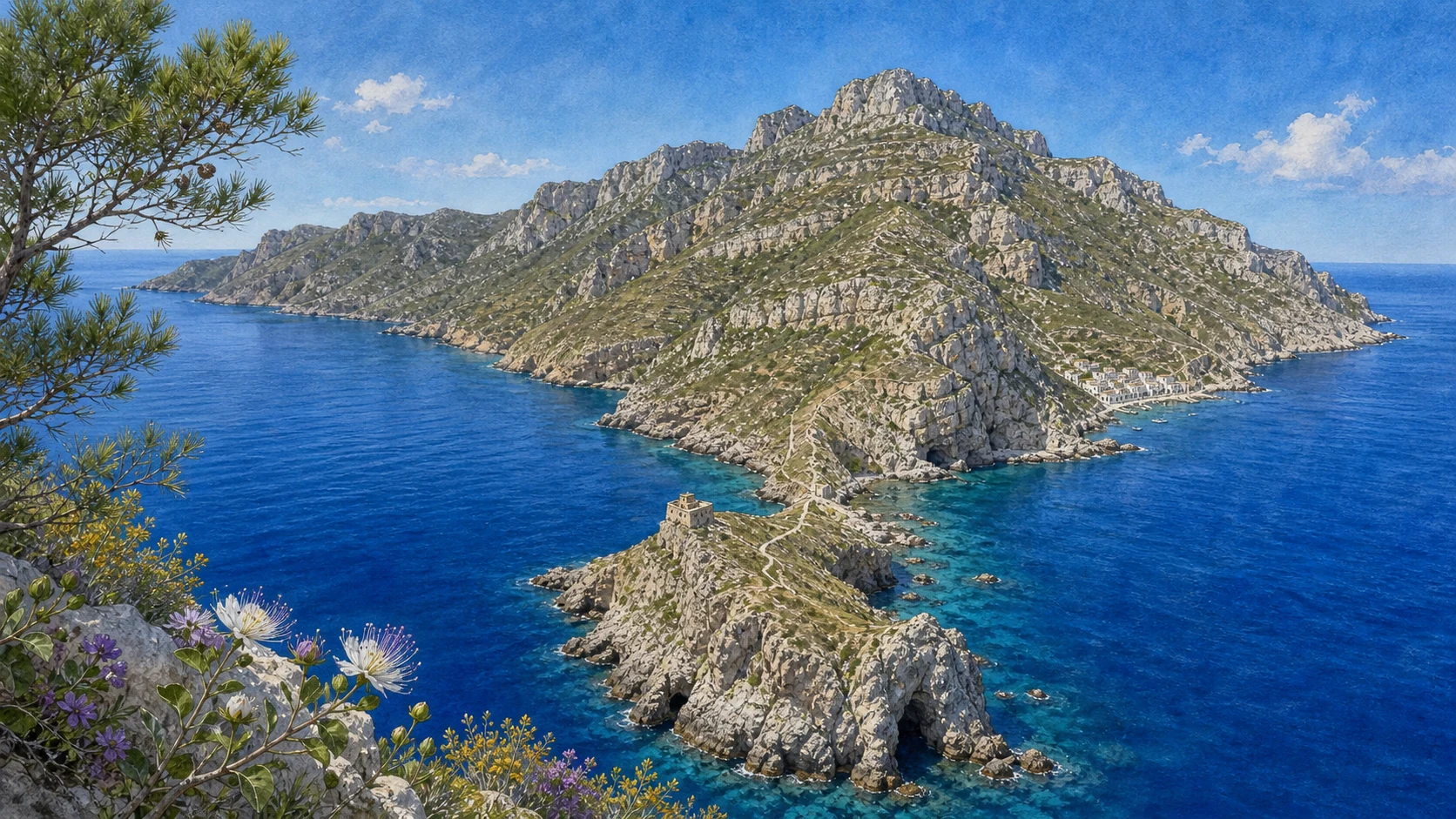
Marettimo is treated as a lived mountain. Its white village, migration museum, Roman complex, medieval church, Punta Troia fortress, lighthouse, high paths, sea caves and fishing knowledge form one connected system. All operational information was checked on 24 August 2026 and remains subject to weather, seasonal opening, municipal notices and the current rules of the marine protected area.