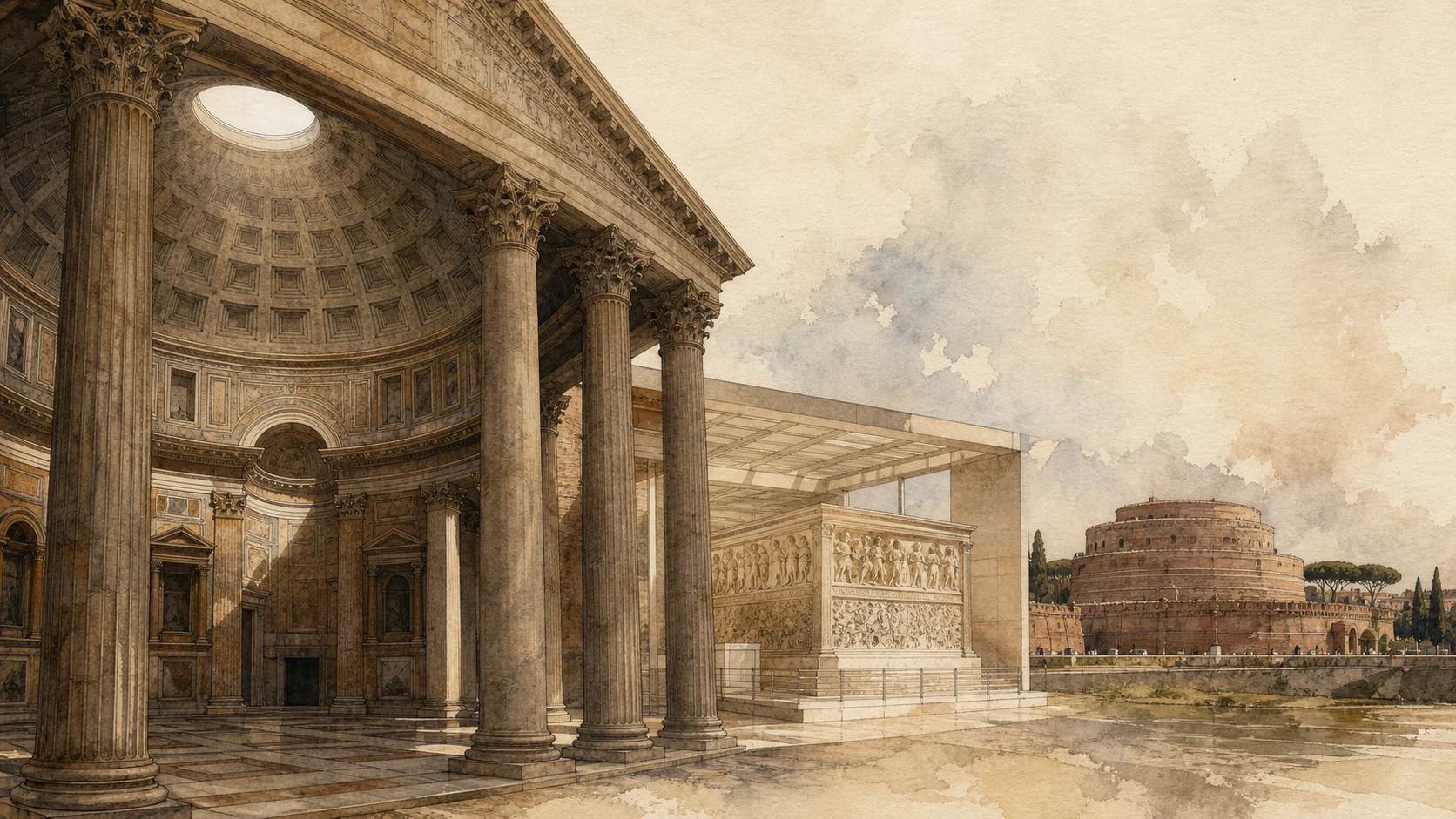
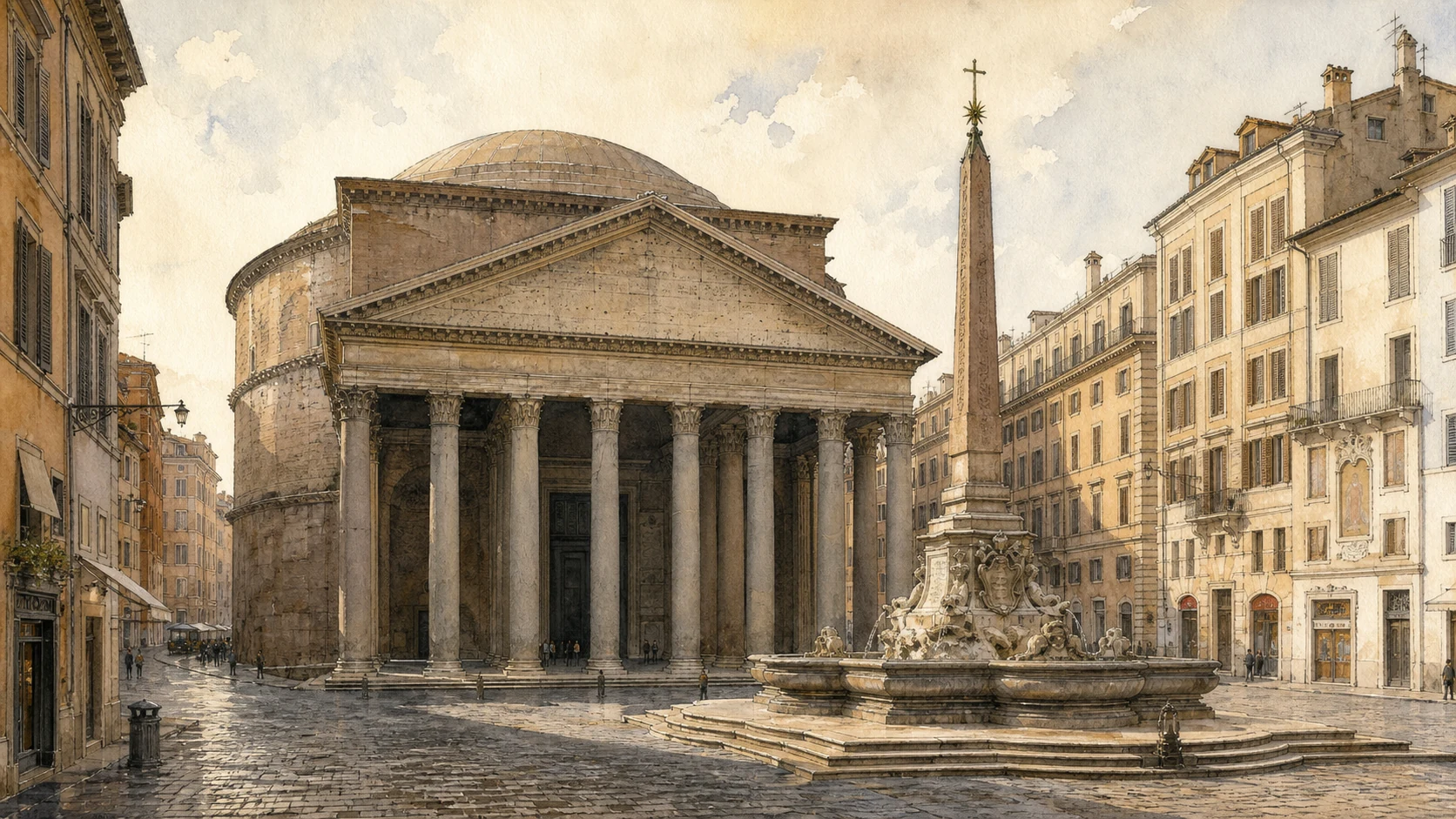
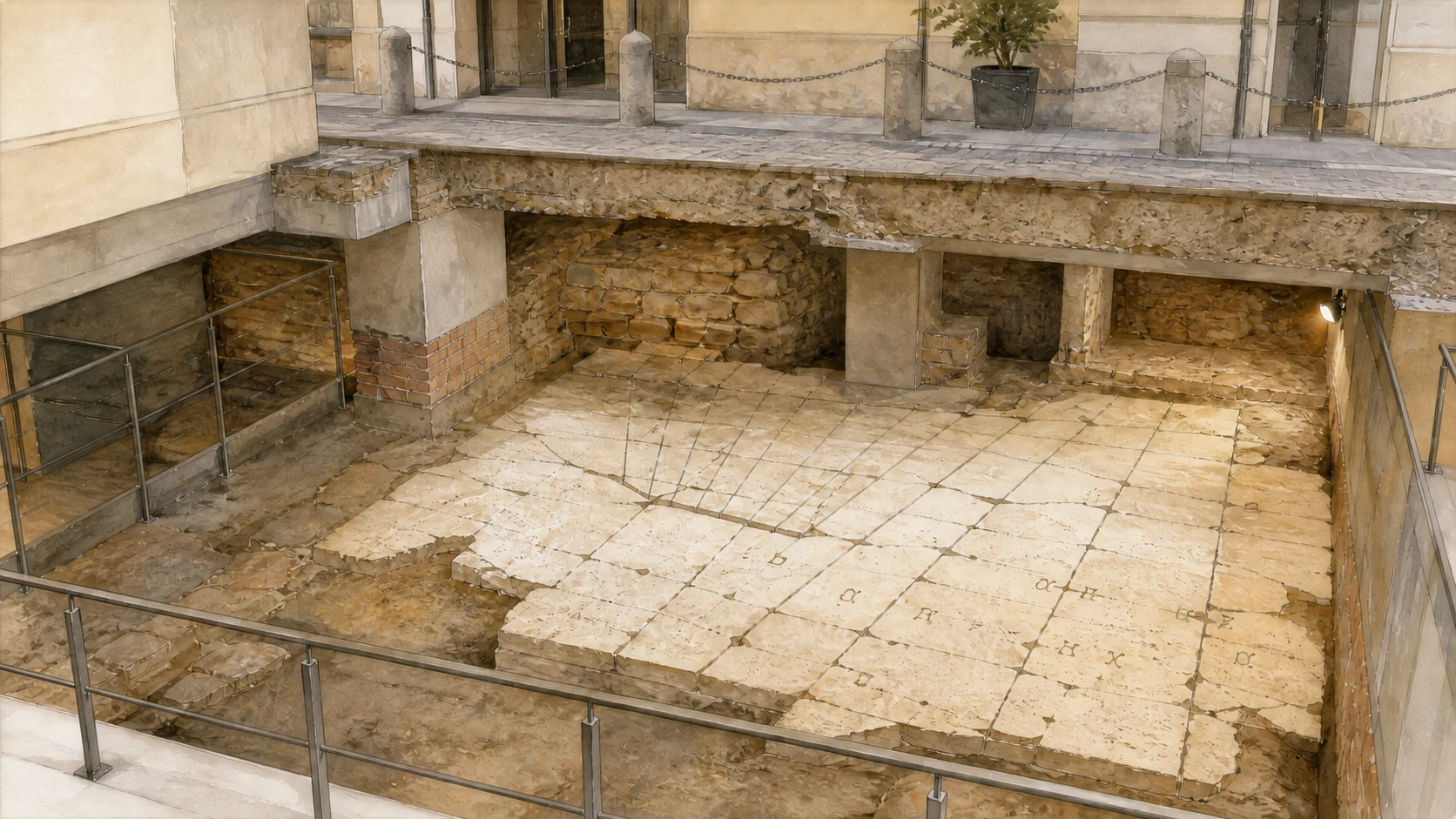
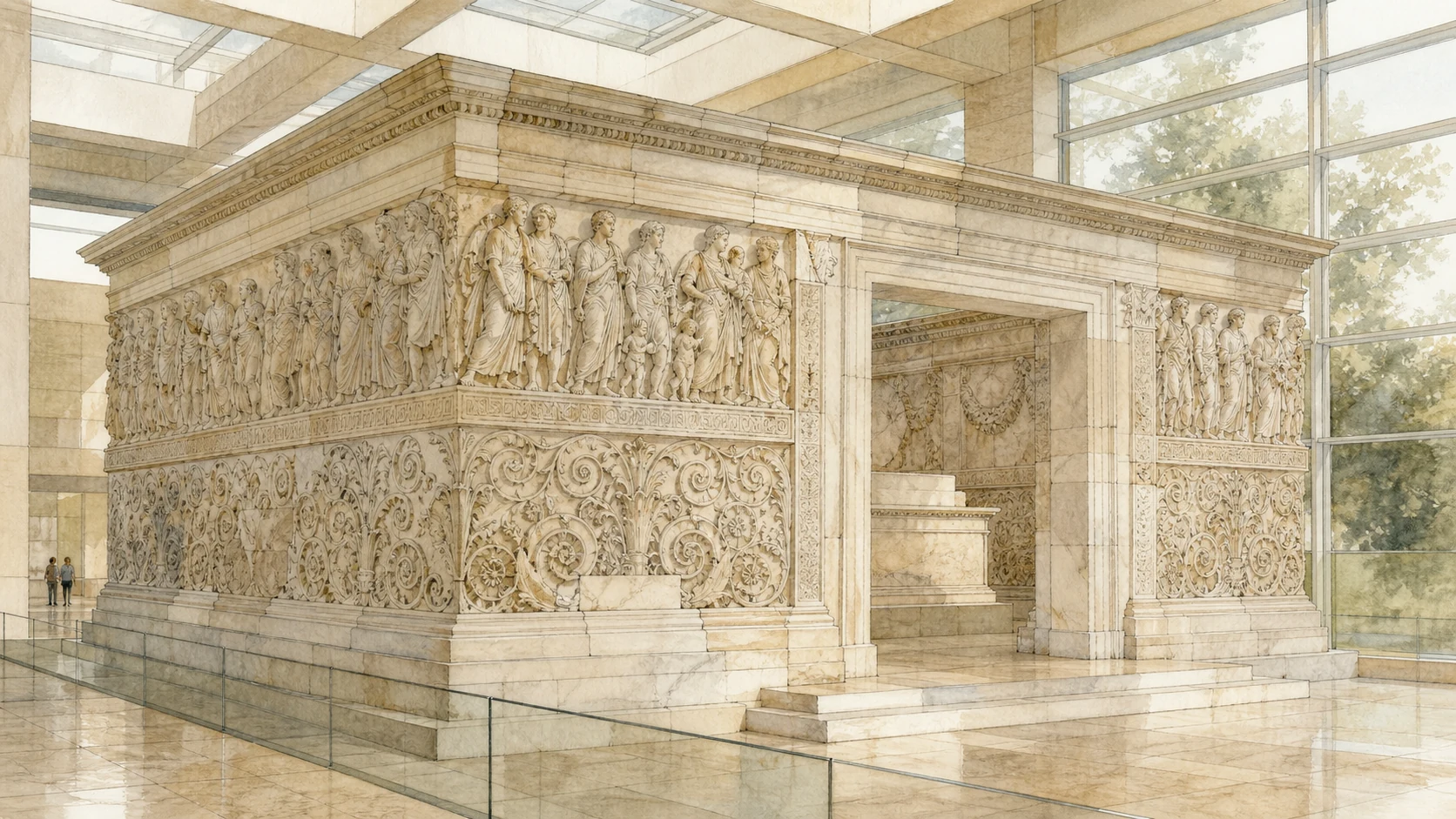
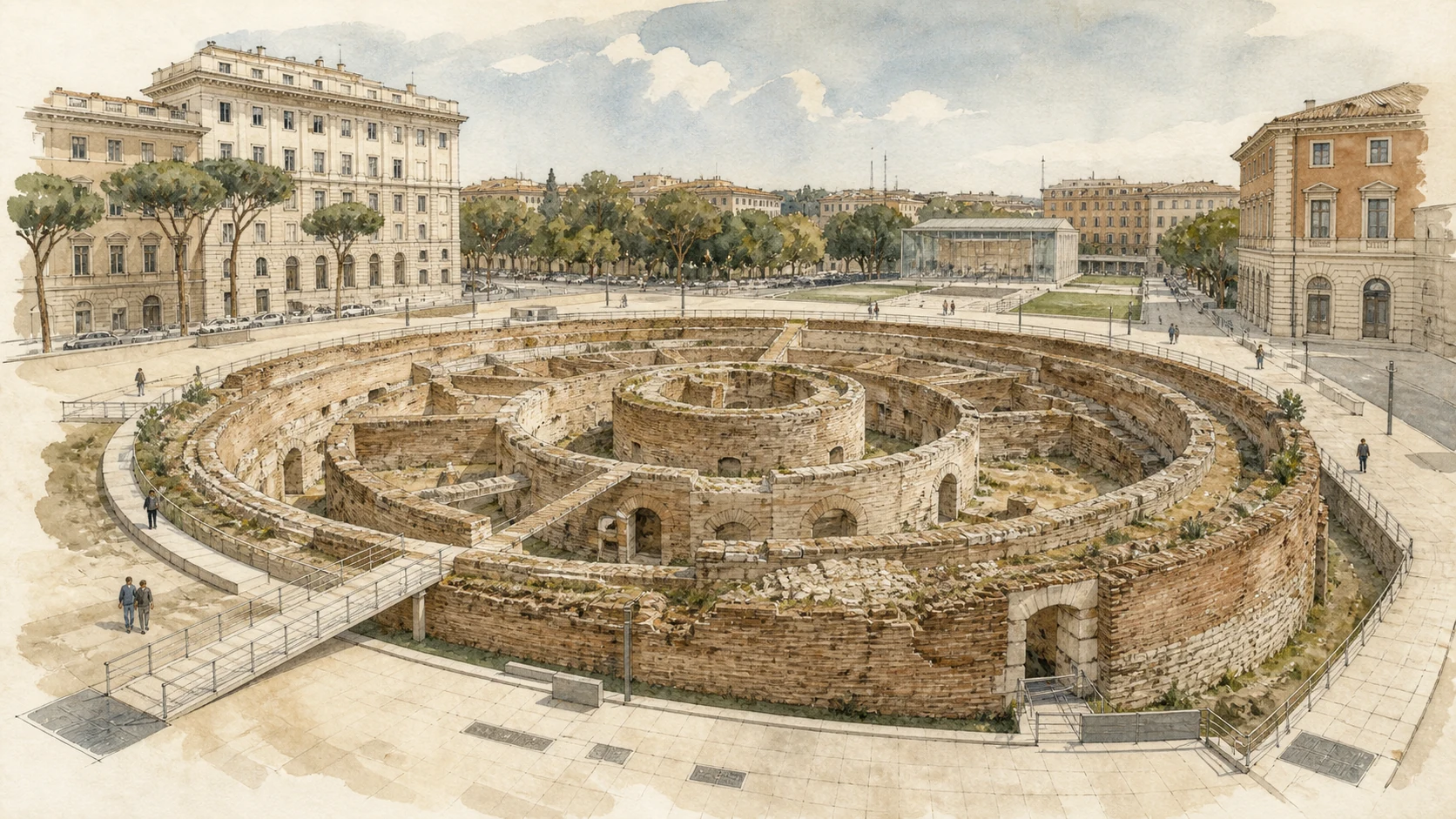
Ancient Rome's northern plain was first associated with military assembly, elections, exercise and burial beyond the early civic centre. Under Augustus and his successors it became a dense landscape of temples, porticoes, baths, gardens, commemorative monuments and dynastic claims. The Pantheon, Agrippa's baths, the Horologium, Ara Pacis and Mausoleum were not picturesque objects scattered through streets. They formed visual and political relationships across open ground.
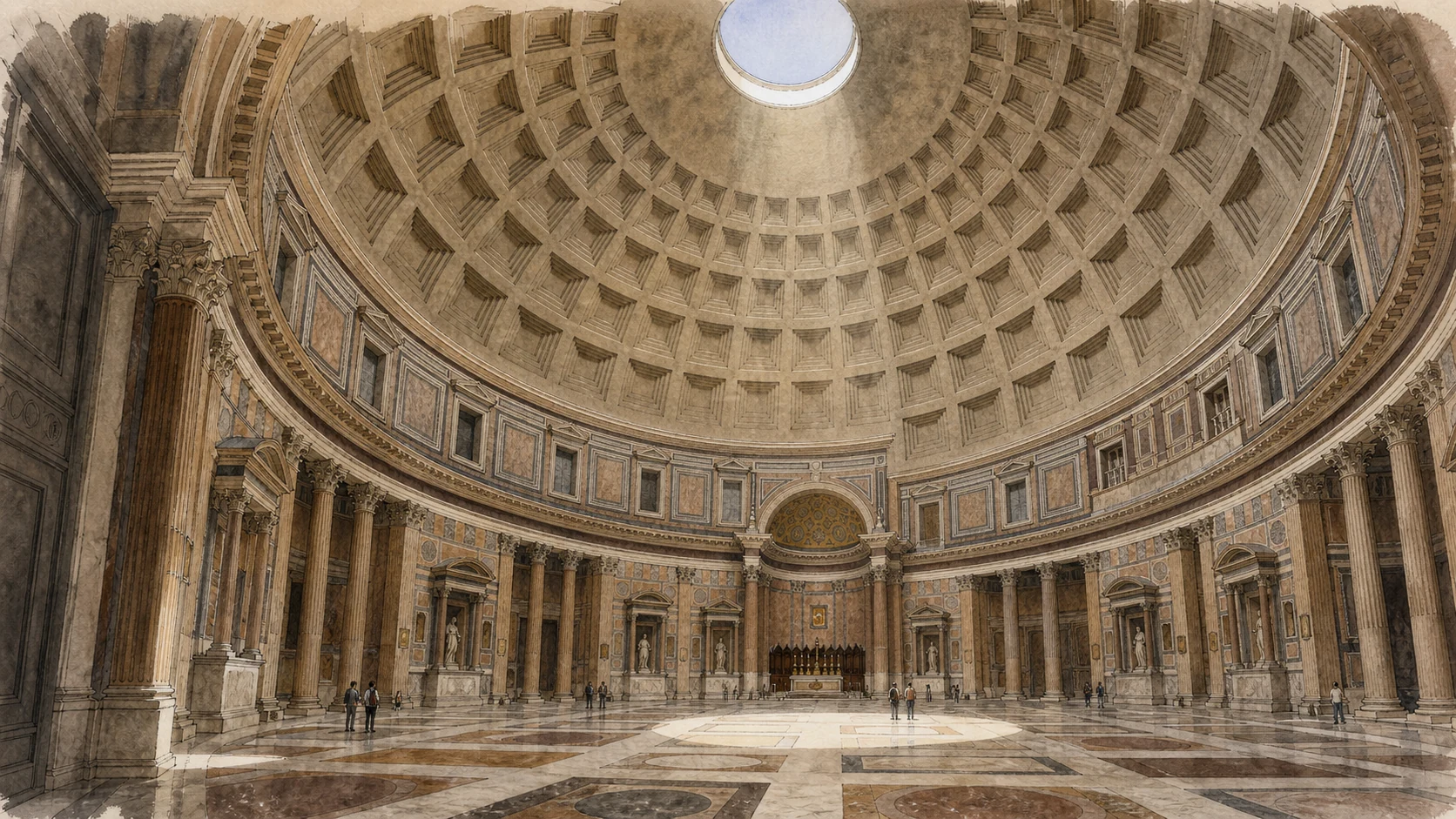
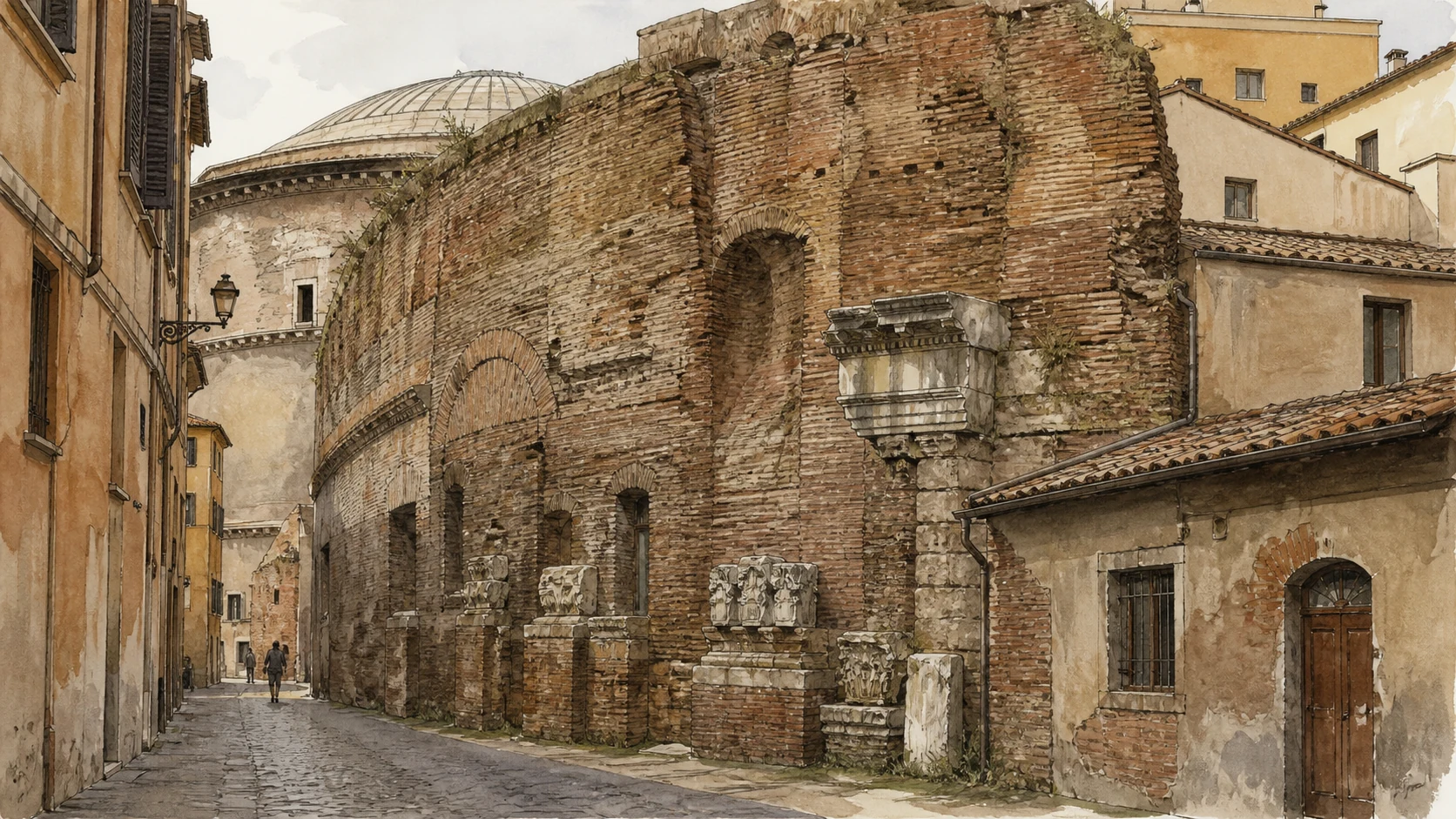
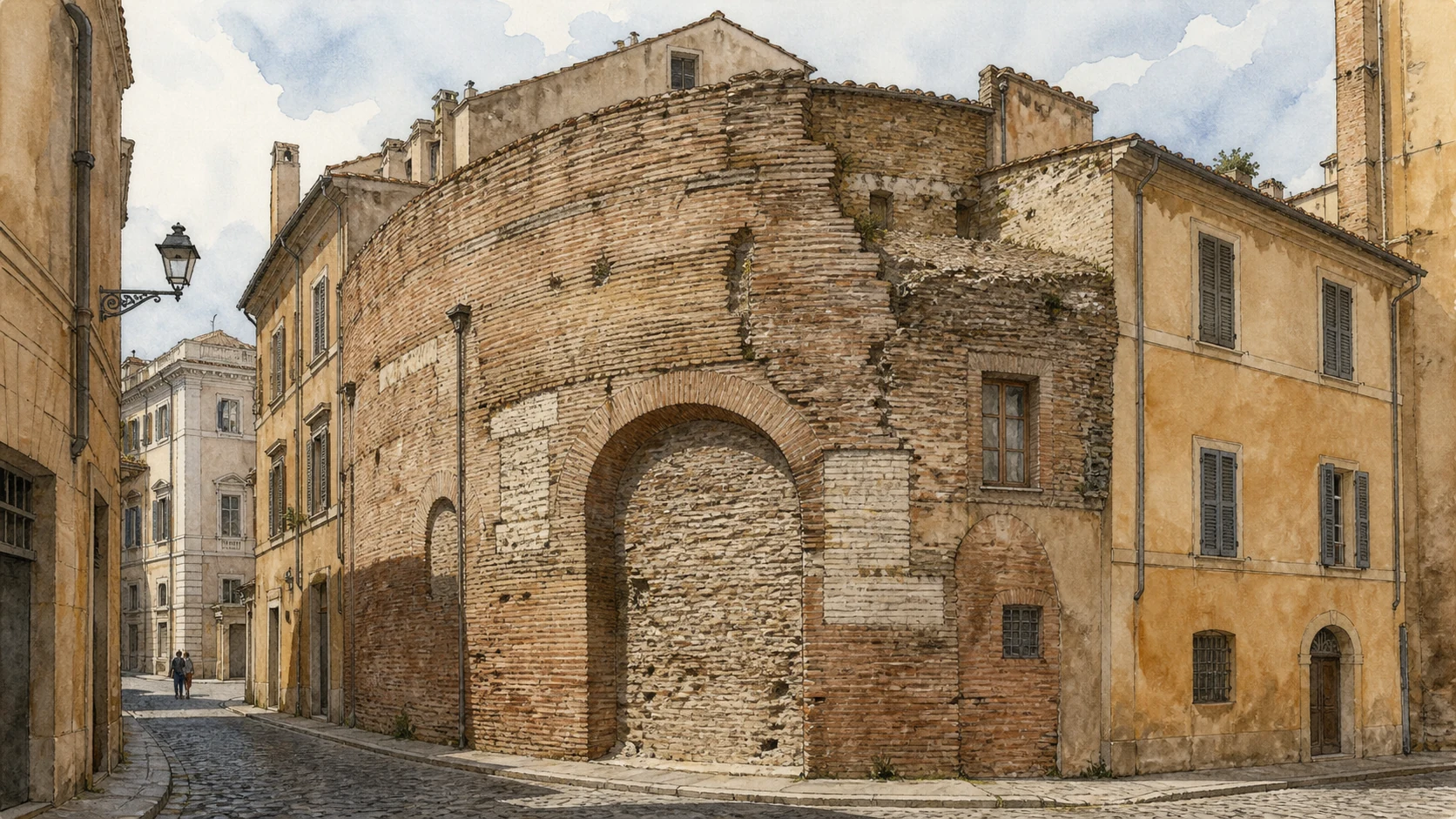
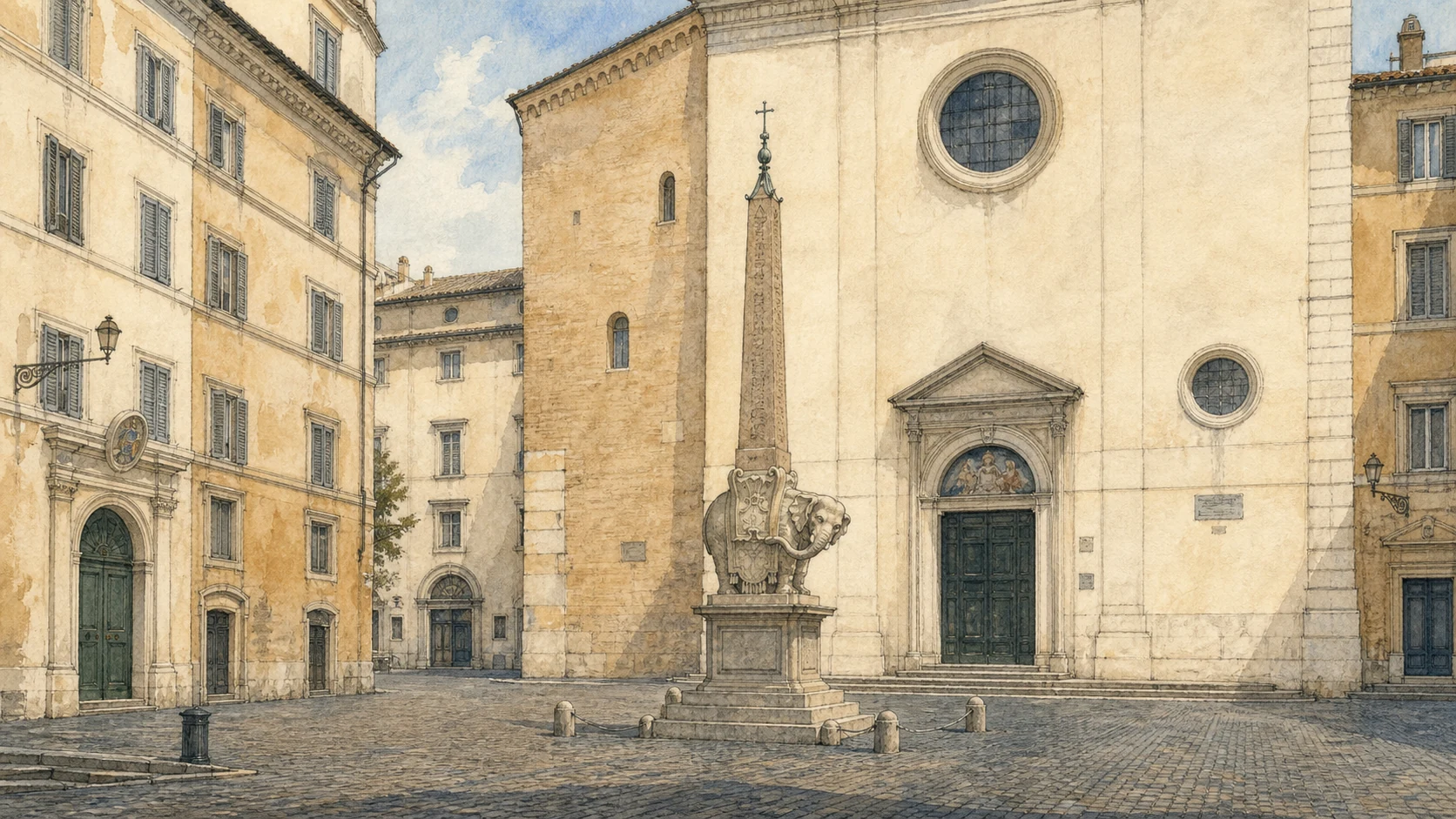
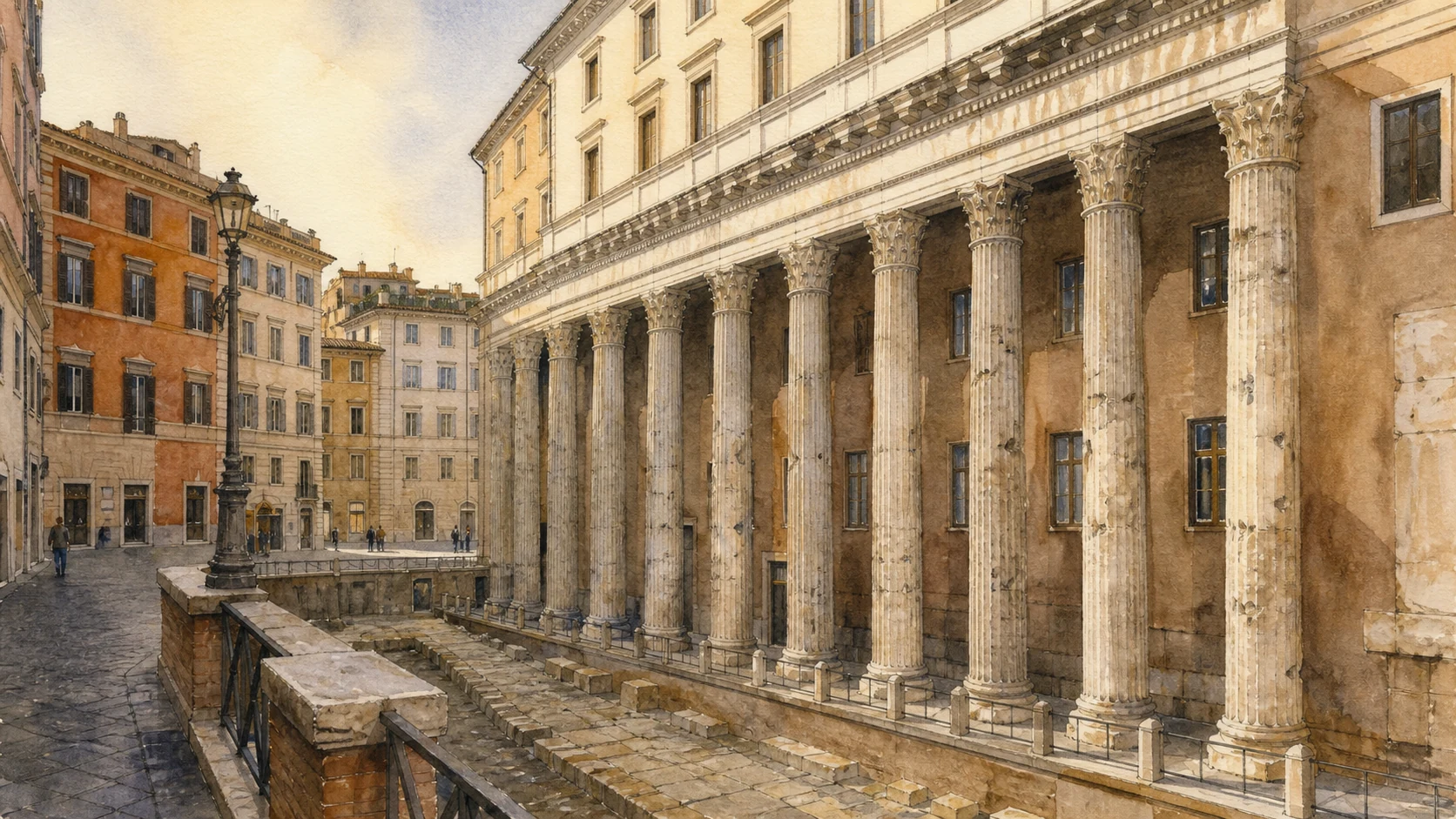
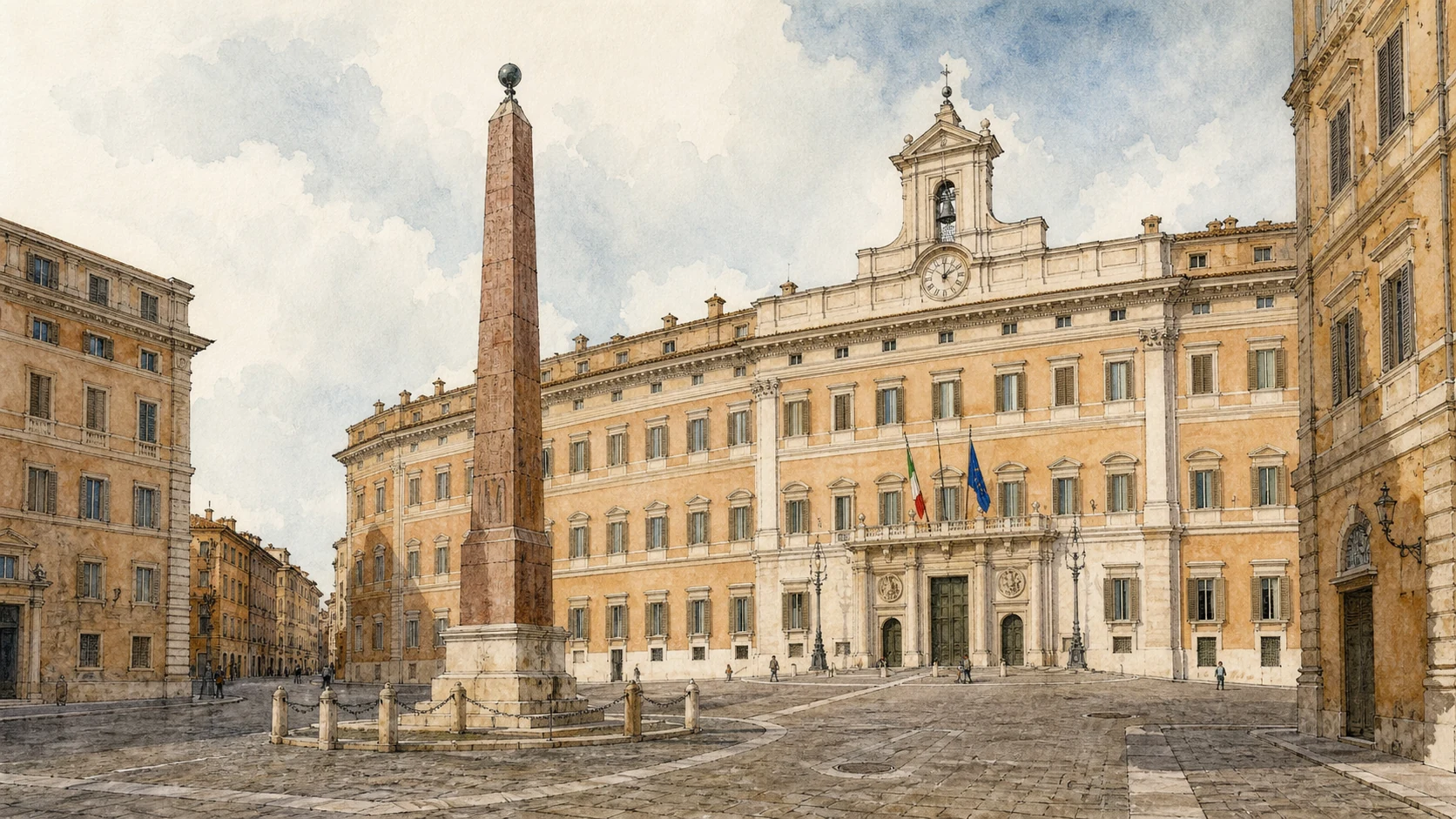
The modern city conceals most of those connections. The Pantheon remains nearly complete because it became a church; the Basilica of Neptune survives as a rear wall; Agrippa's baths appear as a curved brick fragment between houses; an Egyptian obelisk moved from its Augustan setting now stands before Parliament. Even the Ara Pacis is encountered in a modern reconstruction and museum beside, rather than at, its ancient location.
This guide therefore reads Campo Marzio through orientation, ground level and displacement. It distinguishes Agrippa's first Pantheon from Hadrian's present building, ancient structures from later façades, original sculpture from recomposed fragments and astronomical evidence from attractive but disputed simplifications. Current access conditions remain provisional and must be checked at the official sites.
In Campo Marzio, the missing distances between monuments are part of the monument.