San Giovanni in Laterano is the cathedral of the Diocese of Rome and therefore the episcopal church of the pope as bishop of the city. Its full dedication includes the Most Holy Saviour, Saint John the Baptist and Saint John the Evangelist. The familiar short name can make it seem like one saint’s later church; in reality, its institutional primacy begins with the fourth-century Christian basilica established on the Lateran property.
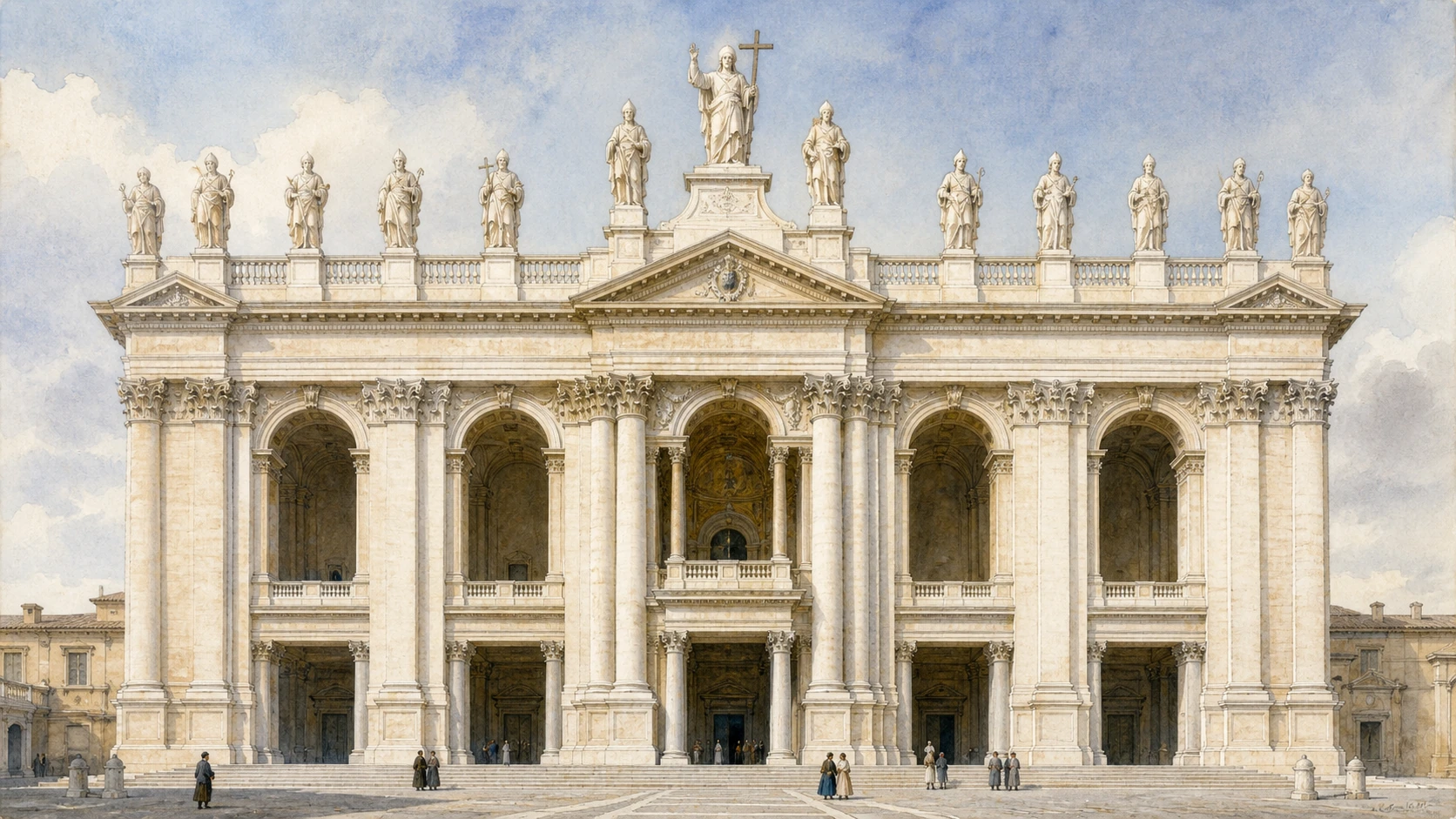
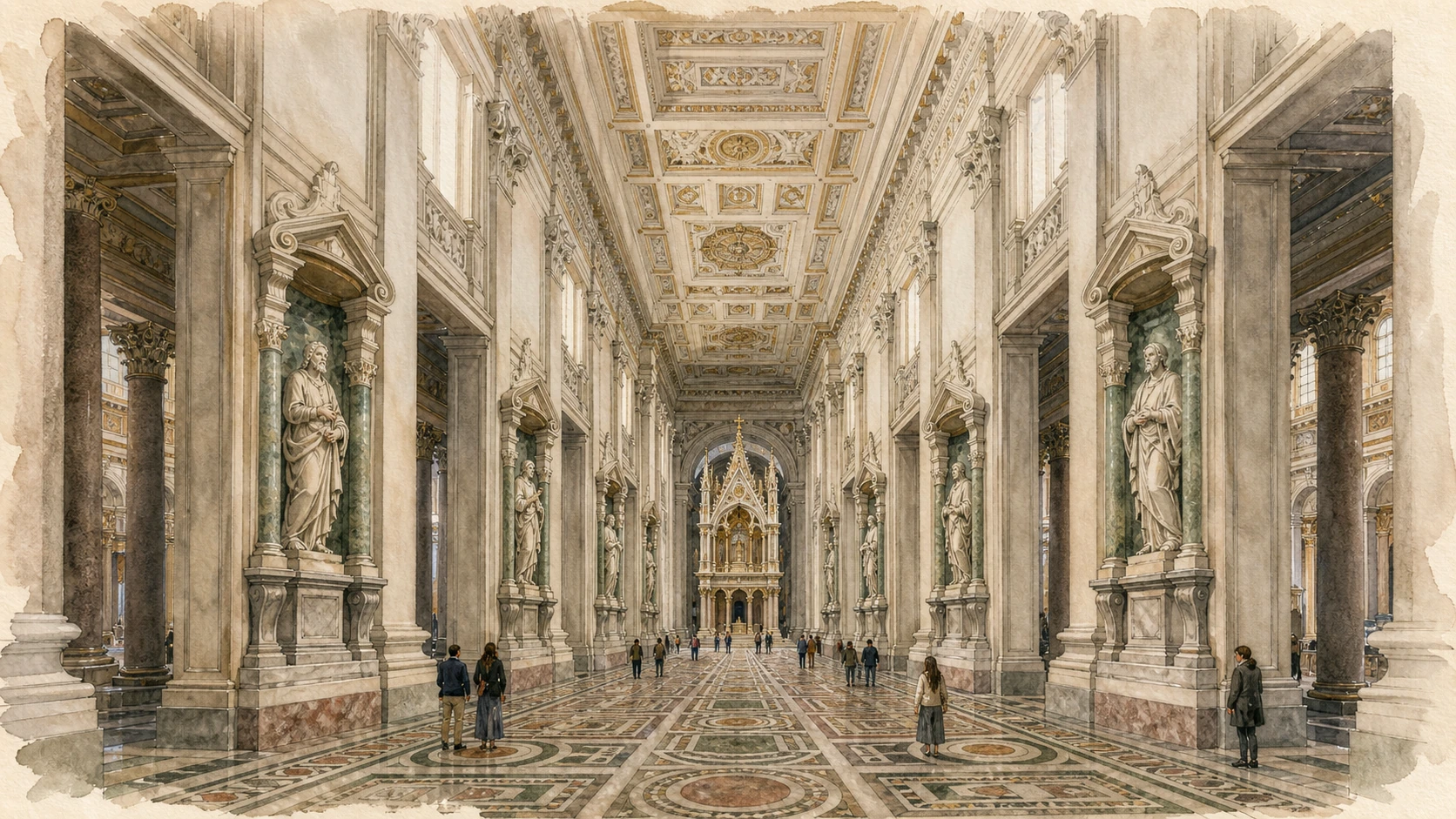
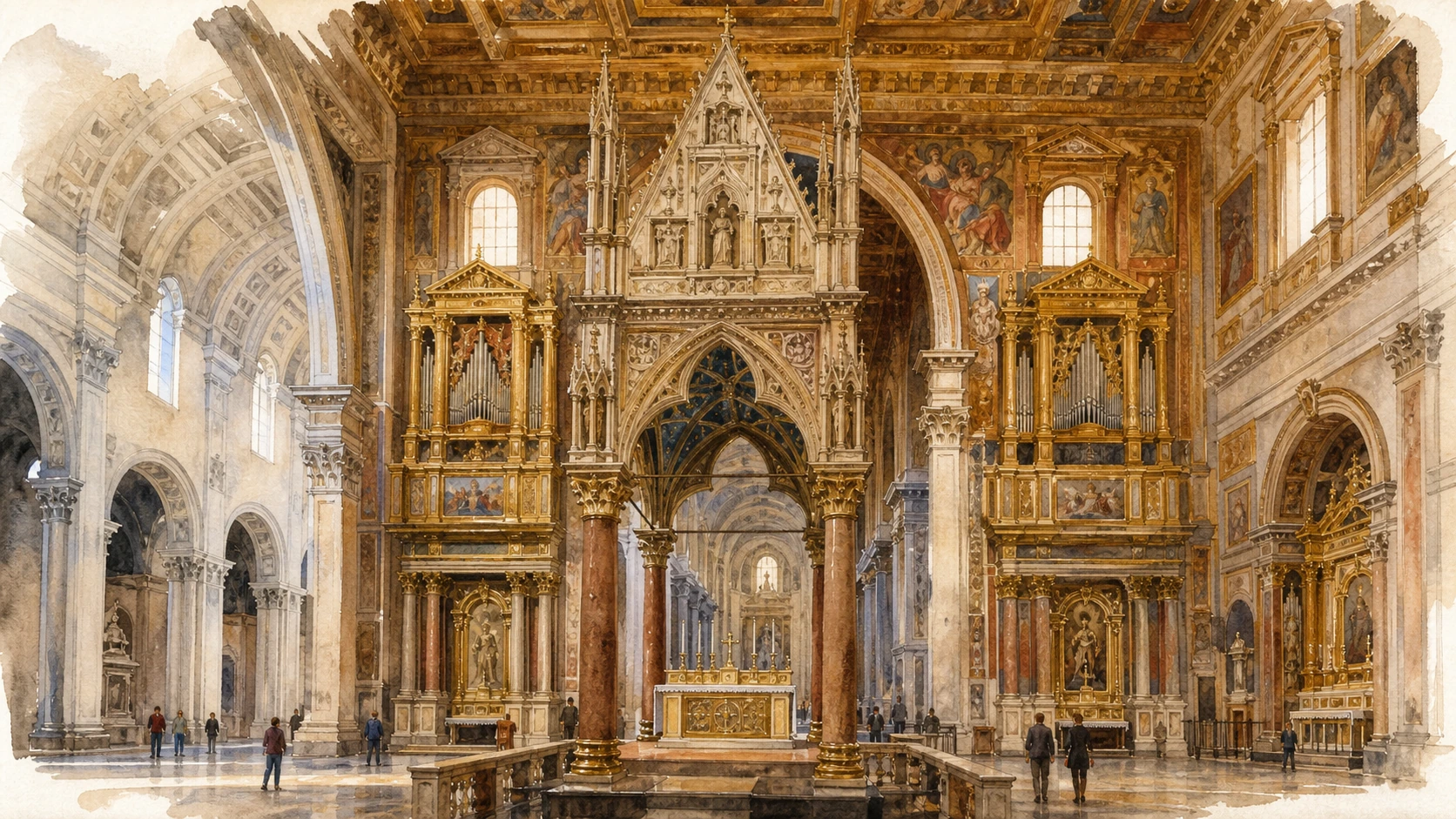
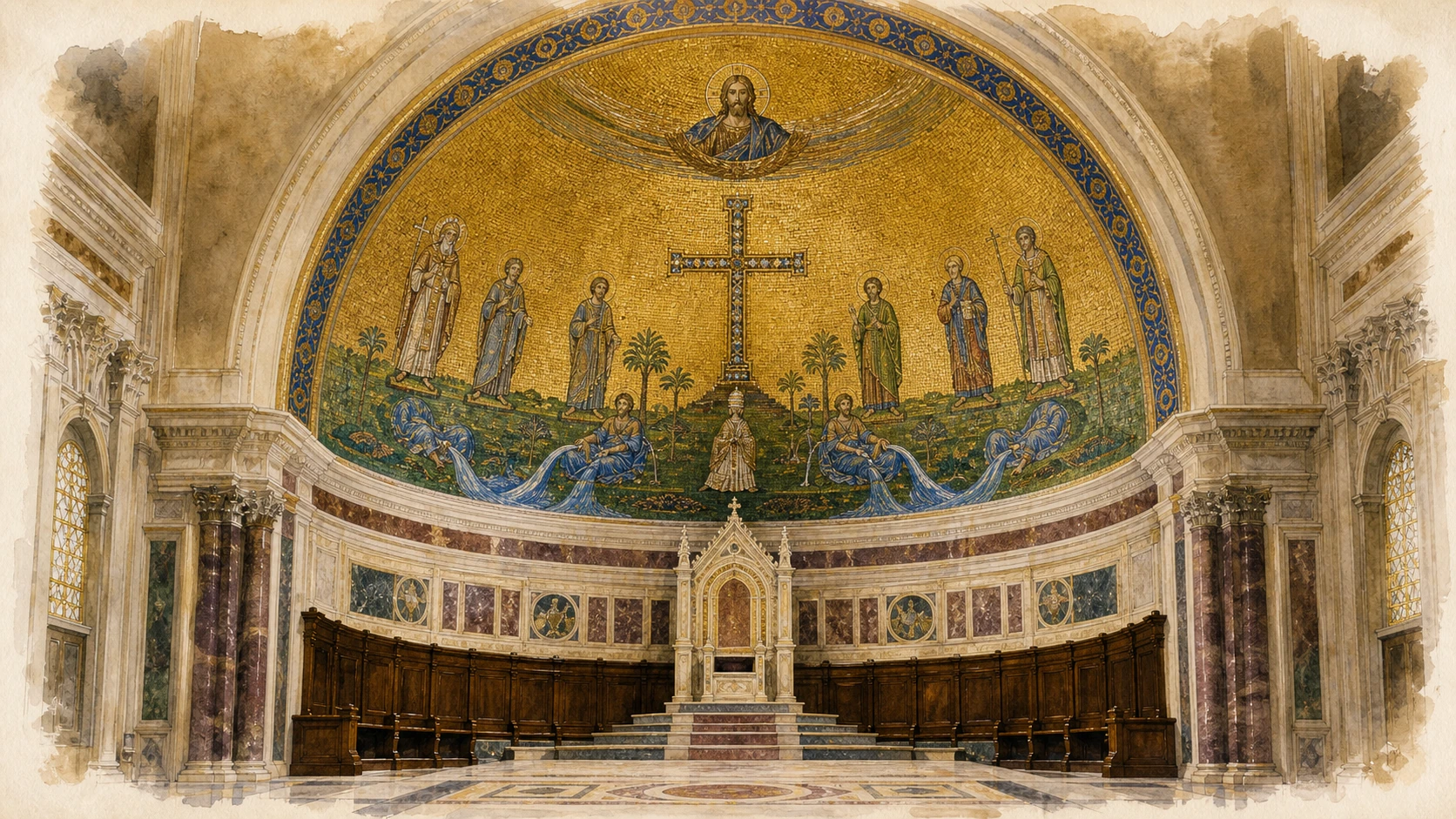
Almost none of the visible ensemble belongs to a single early-Christian moment. Fires, earthquakes, medieval rebuilding, Borromini’s transformation for the Jubilee of 1650, Alessandro Galilei’s eighteenth-century façade and a nineteenth-century apse extension all intervene. The surviving five-aisled organisation, ancient columns, mosaics, liturgical furnishings and archaeological levels make continuity legible, but continuity is not the same as untouched fabric.
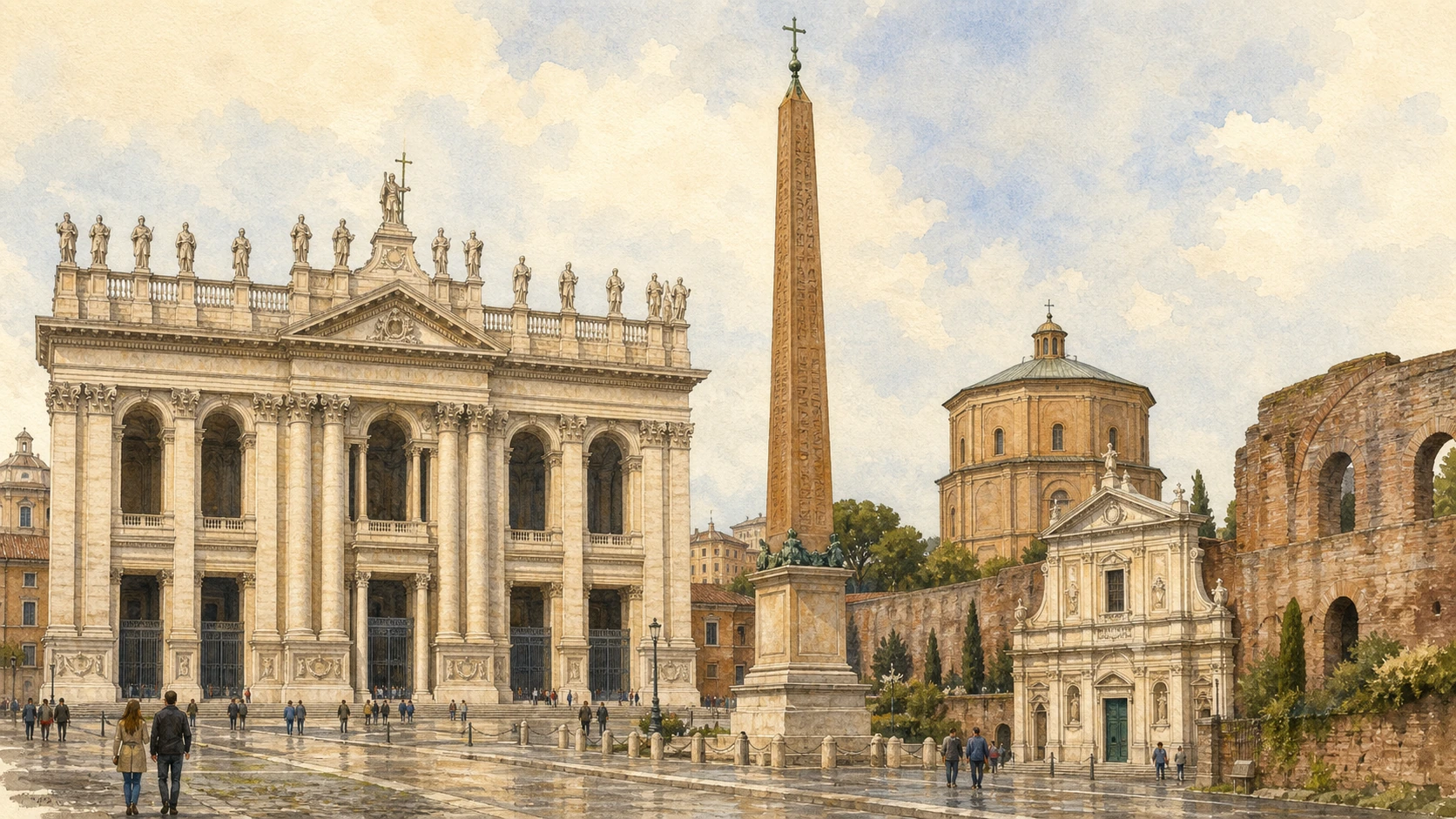
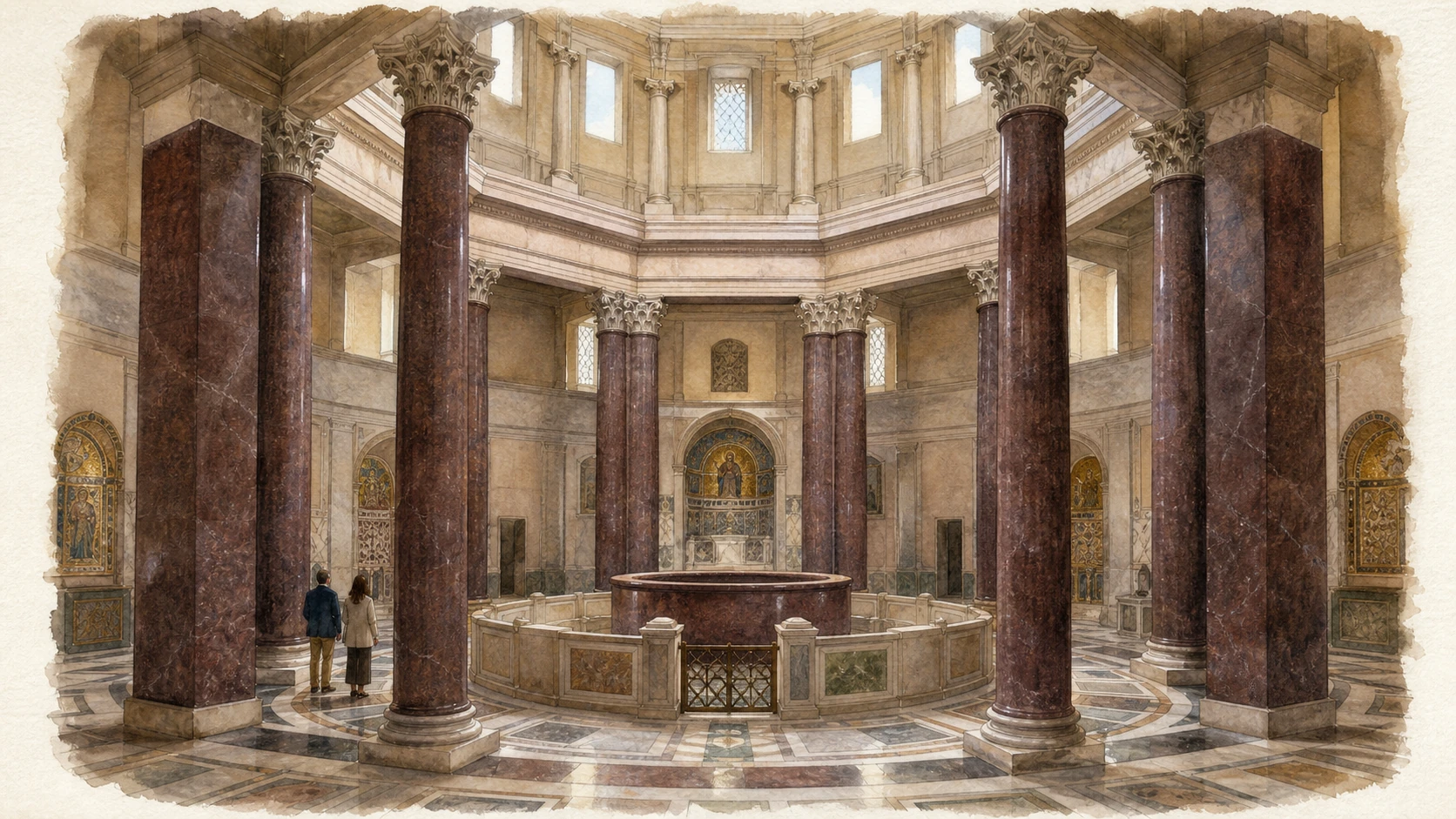
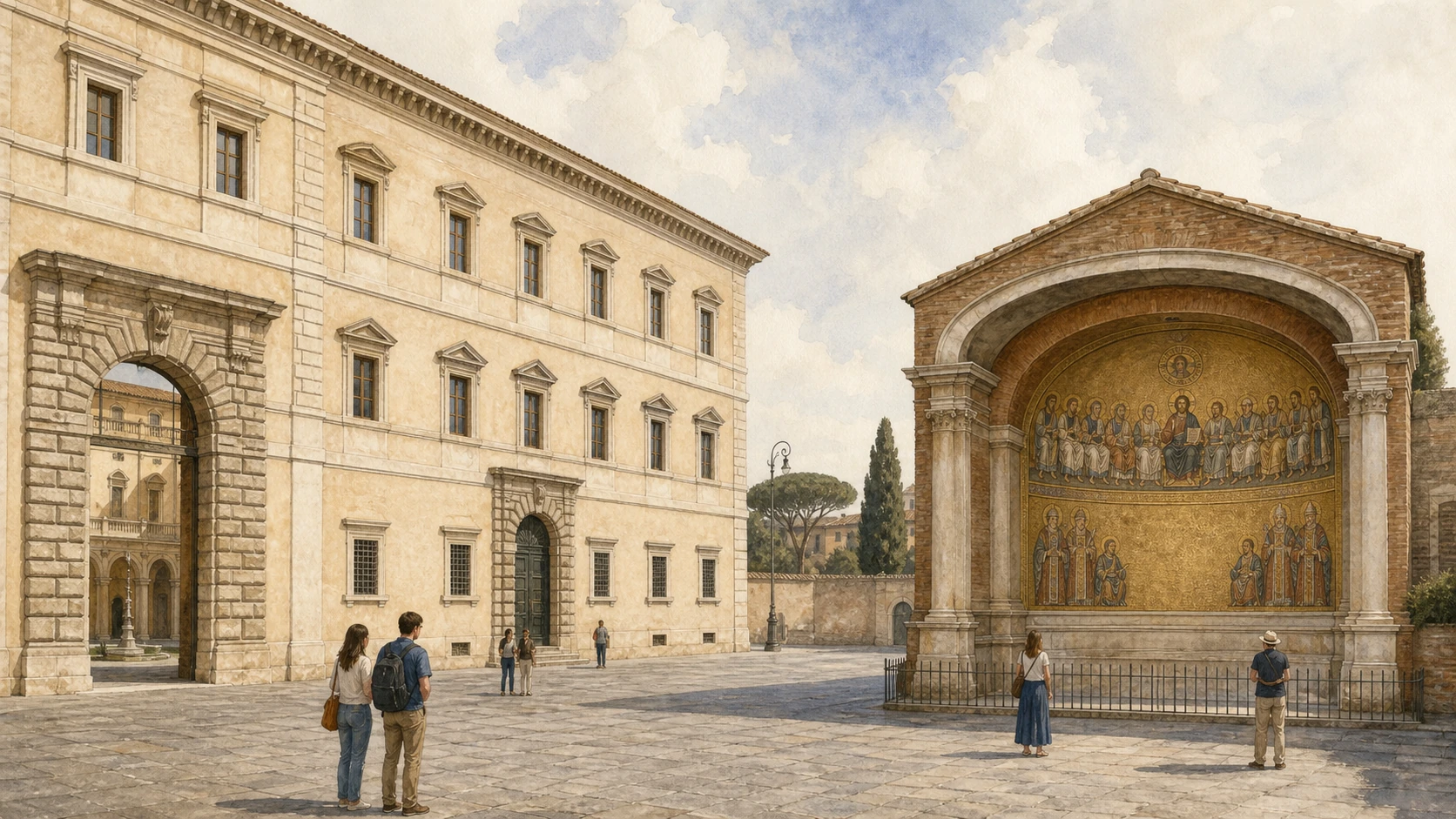
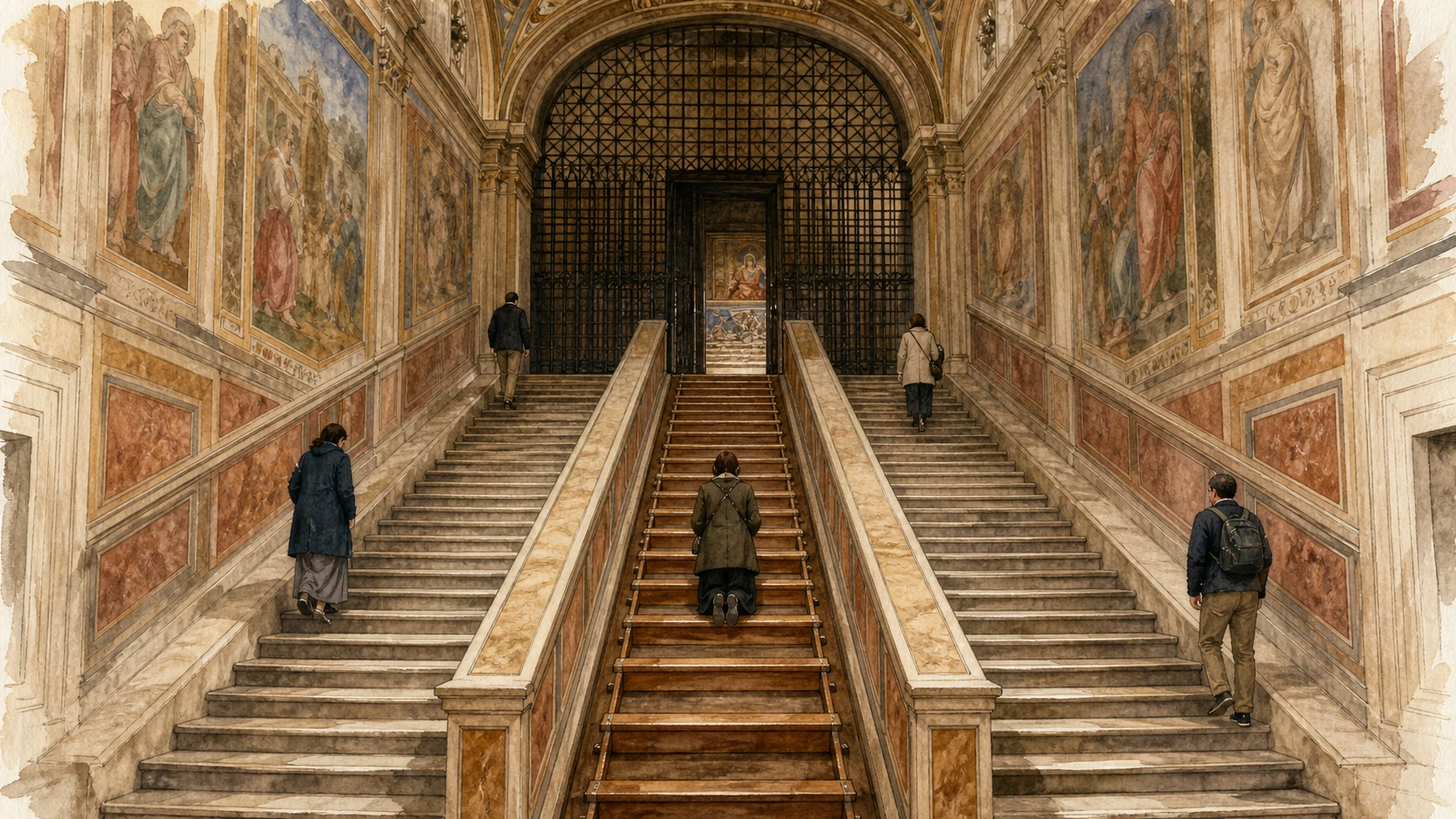
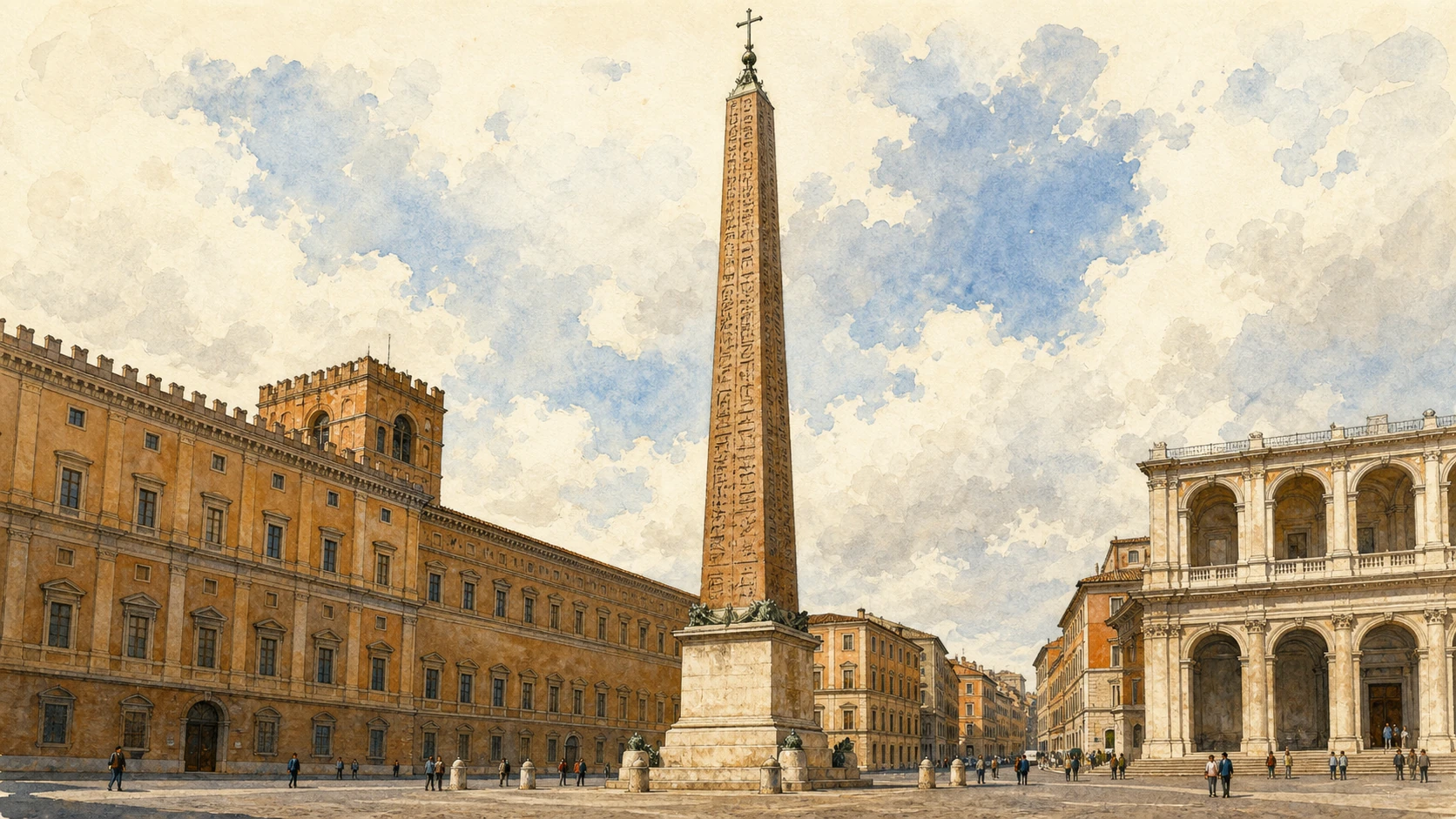
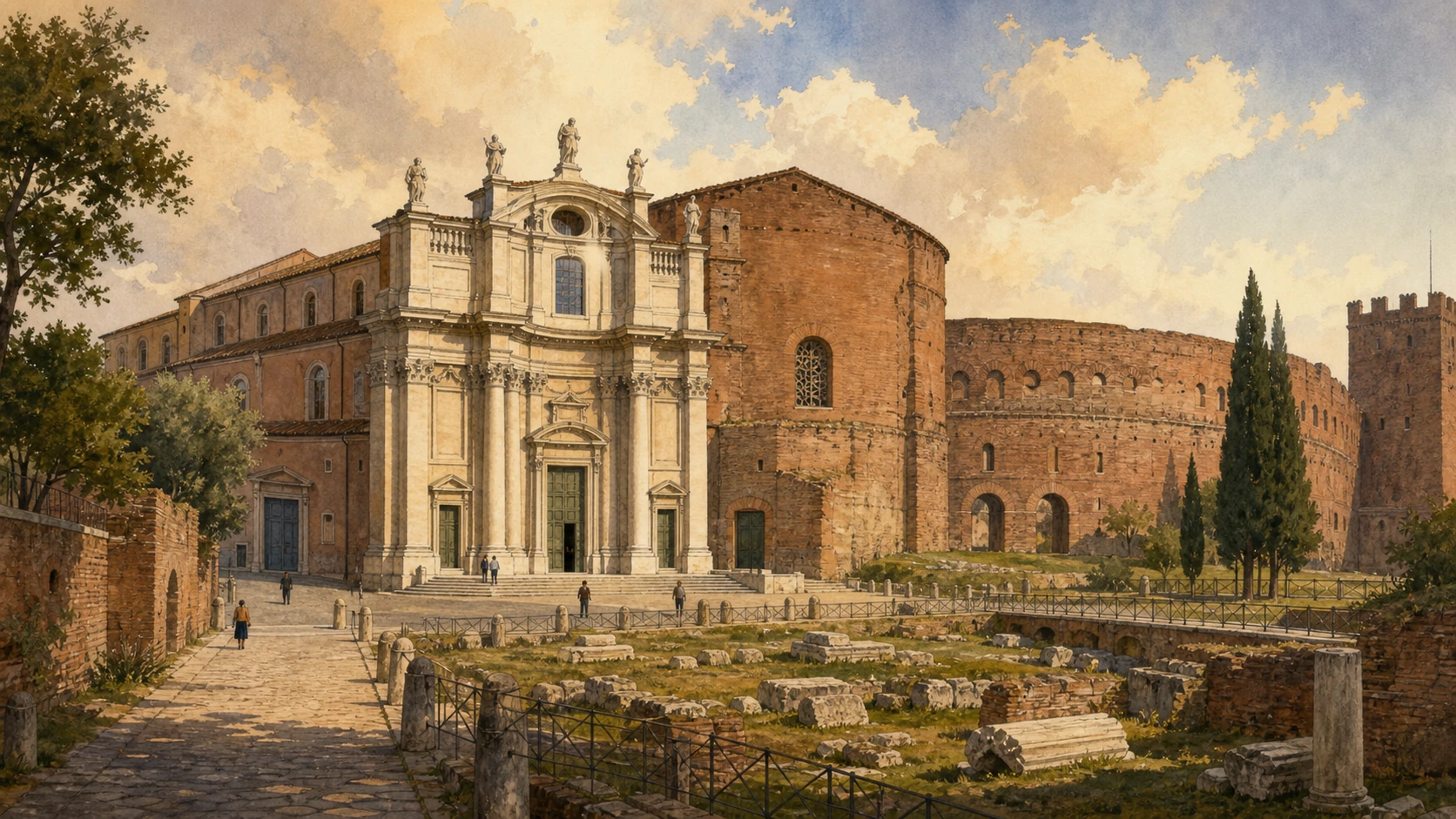
The larger district explains why the cathedral mattered. An octagonal baptistery organised initiation; a patriarchal palace housed popes; the Sancta Sanctorum served as private chapel; a monumental Egyptian obelisk converted imperial memory into Christian urban orientation. Farther east, Santa Croce occupies the Sessorian imperial residence and shows a different route by which palace space became Christian sanctuary.
Use the route to distinguish institutional continuity, inherited material and later historical reconstruction.