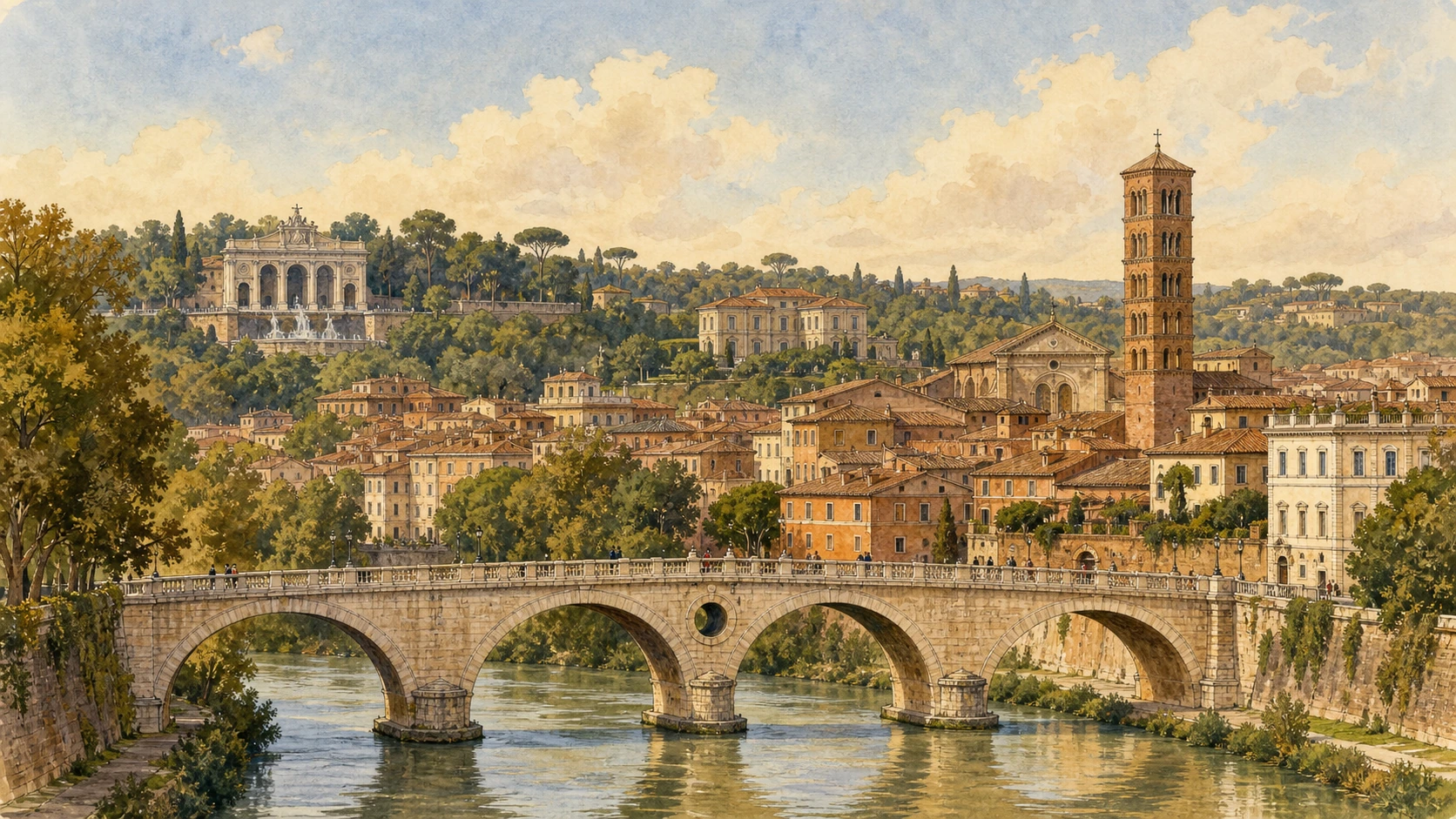
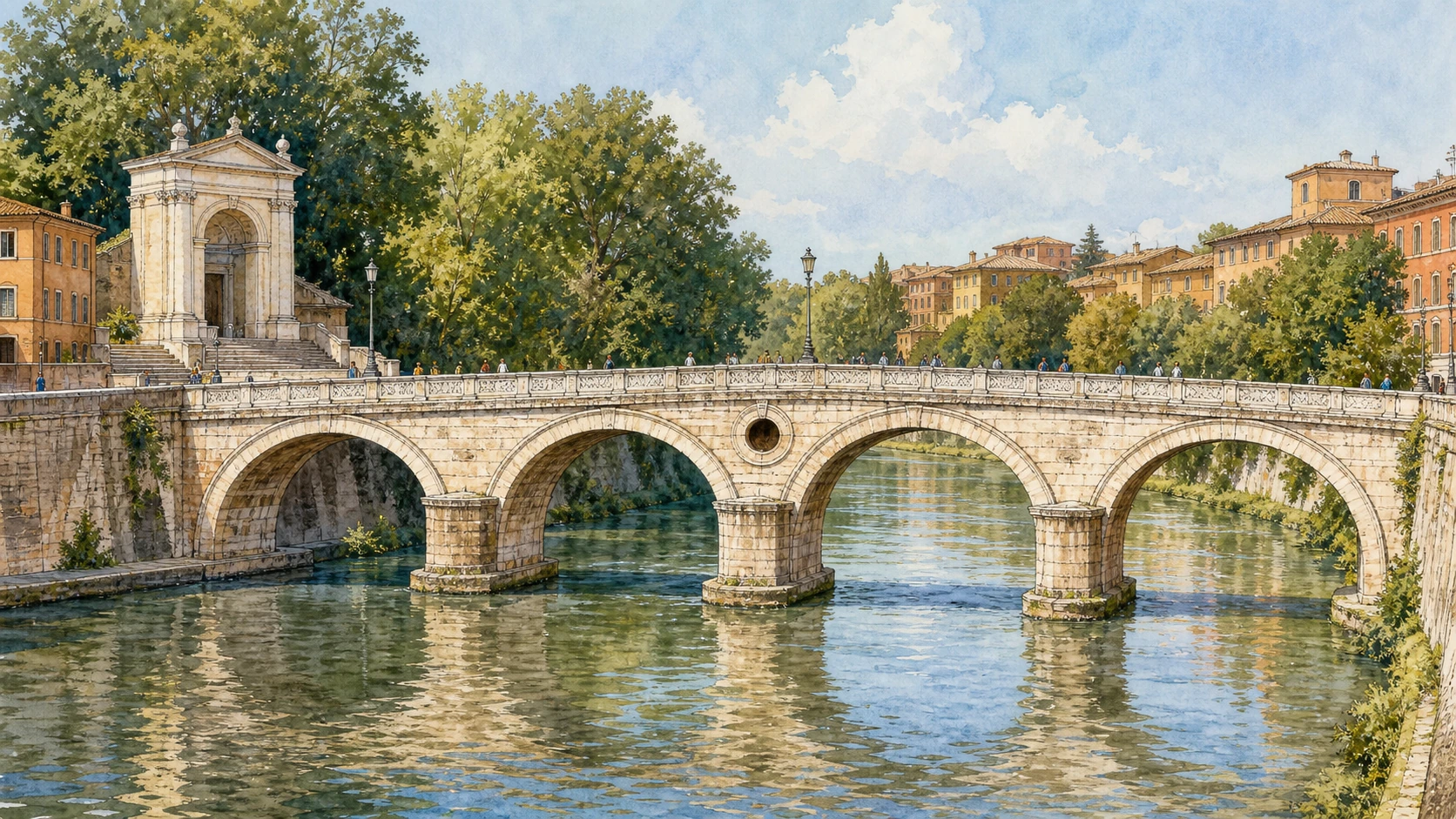
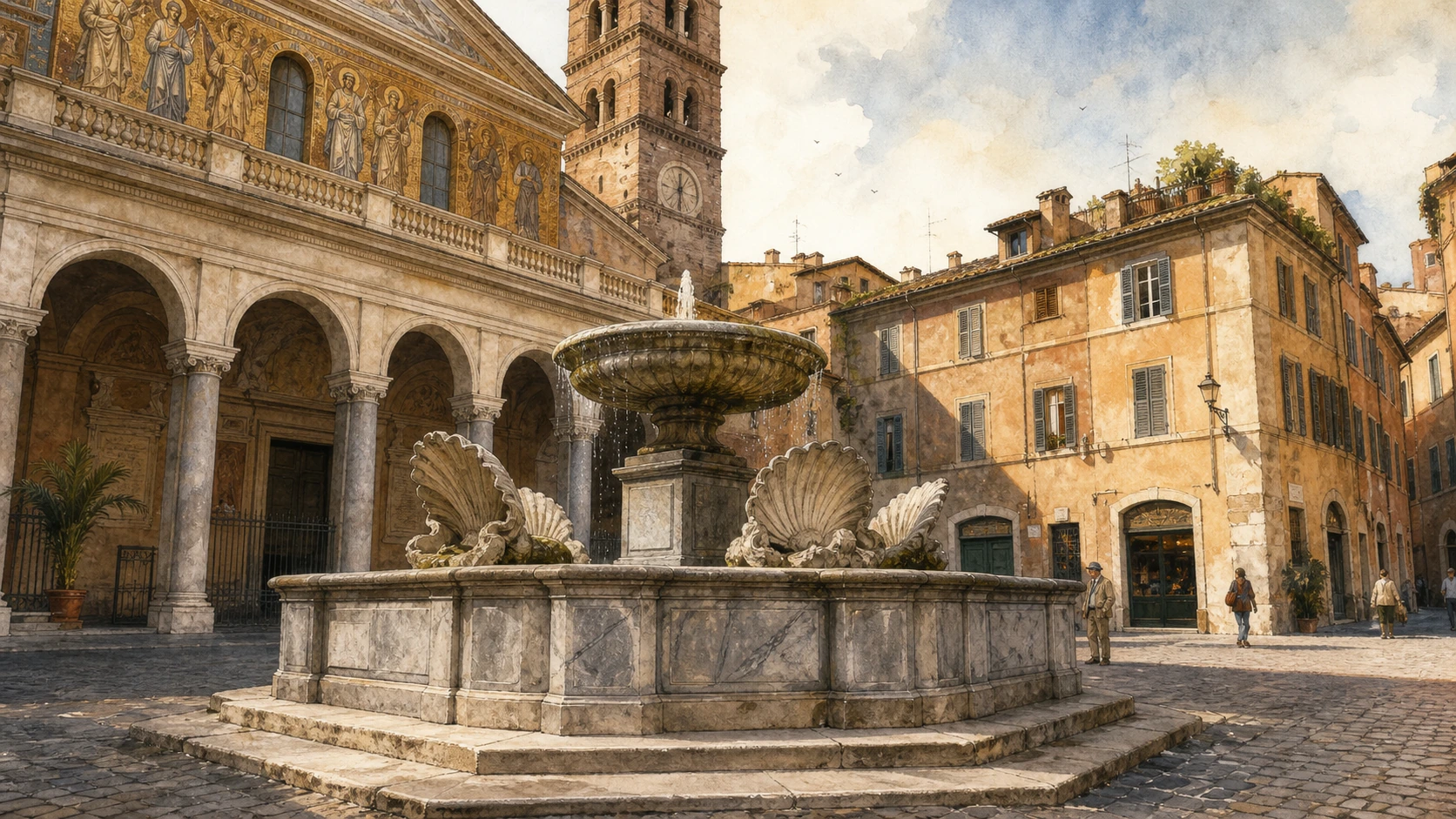
The name trans Tiberim describes a position beyond the river from ancient Rome’s civic centre, not a single social identity preserved unchanged. Ponte Sisto made that crossing monumental for the Jubilee of 1475, while its Roman predecessor, Renaissance rebuilding, nineteenth-century additions and modern restoration belong to different urban systems. Piazza Trilussa’s fountain is another displaced object: built for the opposite bank in 1613, dismantled for the Tiber embankments and reassembled here in 1898.
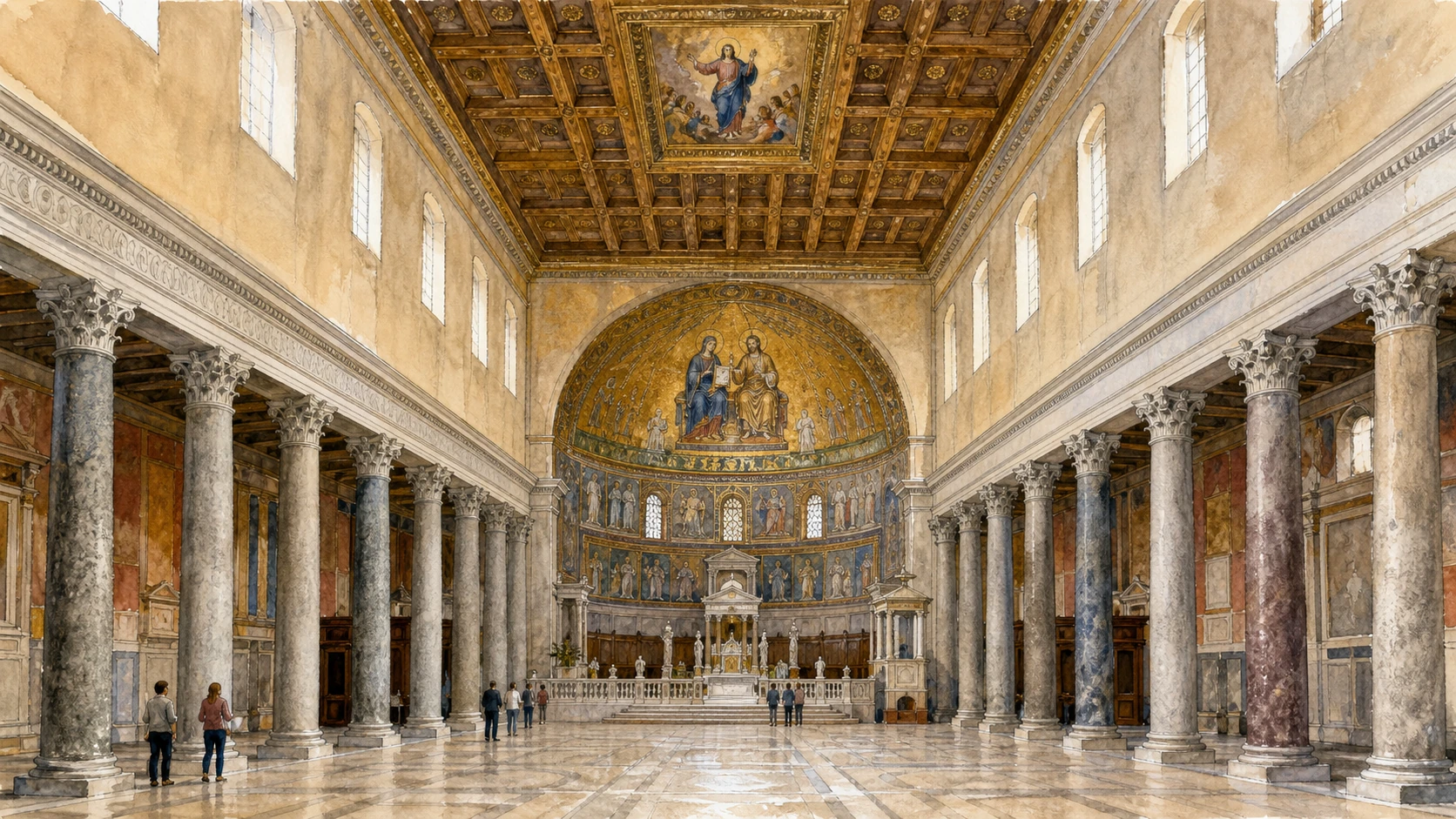
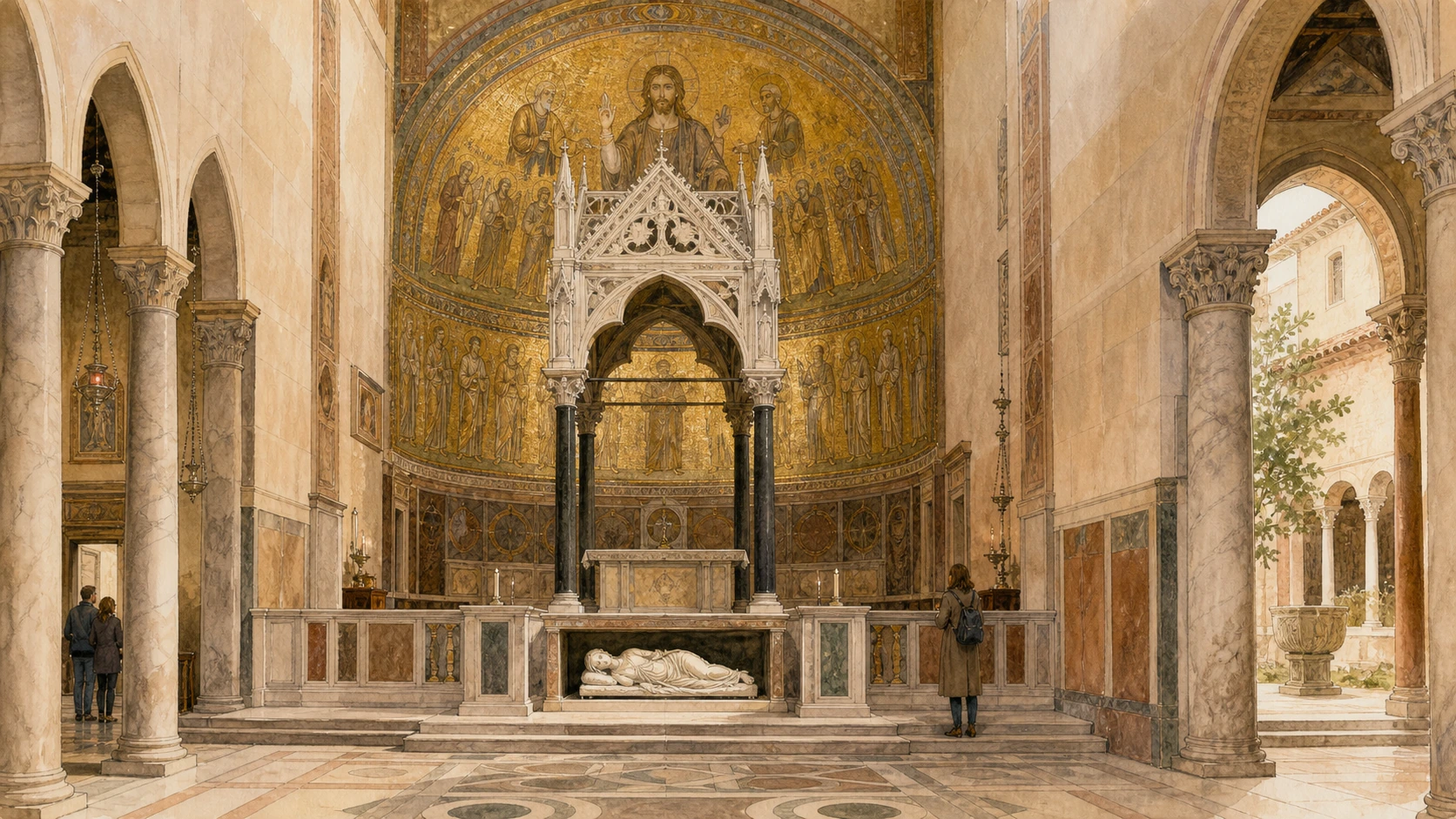
Inside the rione, Santa Maria in Trastevere and Santa Cecilia preserve sacred memory through structures that have changed for centuries. The first combines a twelfth-century basilican core, ancient columns, medieval mosaics and a Baroque portico. The second gathers ninth-century mosaic, medieval ciborium, Cavallini’s fragmentary fresco and Maderno’s sculpture inside later remodelling. Foundation stories and martyrs’ legends matter because they shaped the monuments, but they are not substitutes for material chronology.
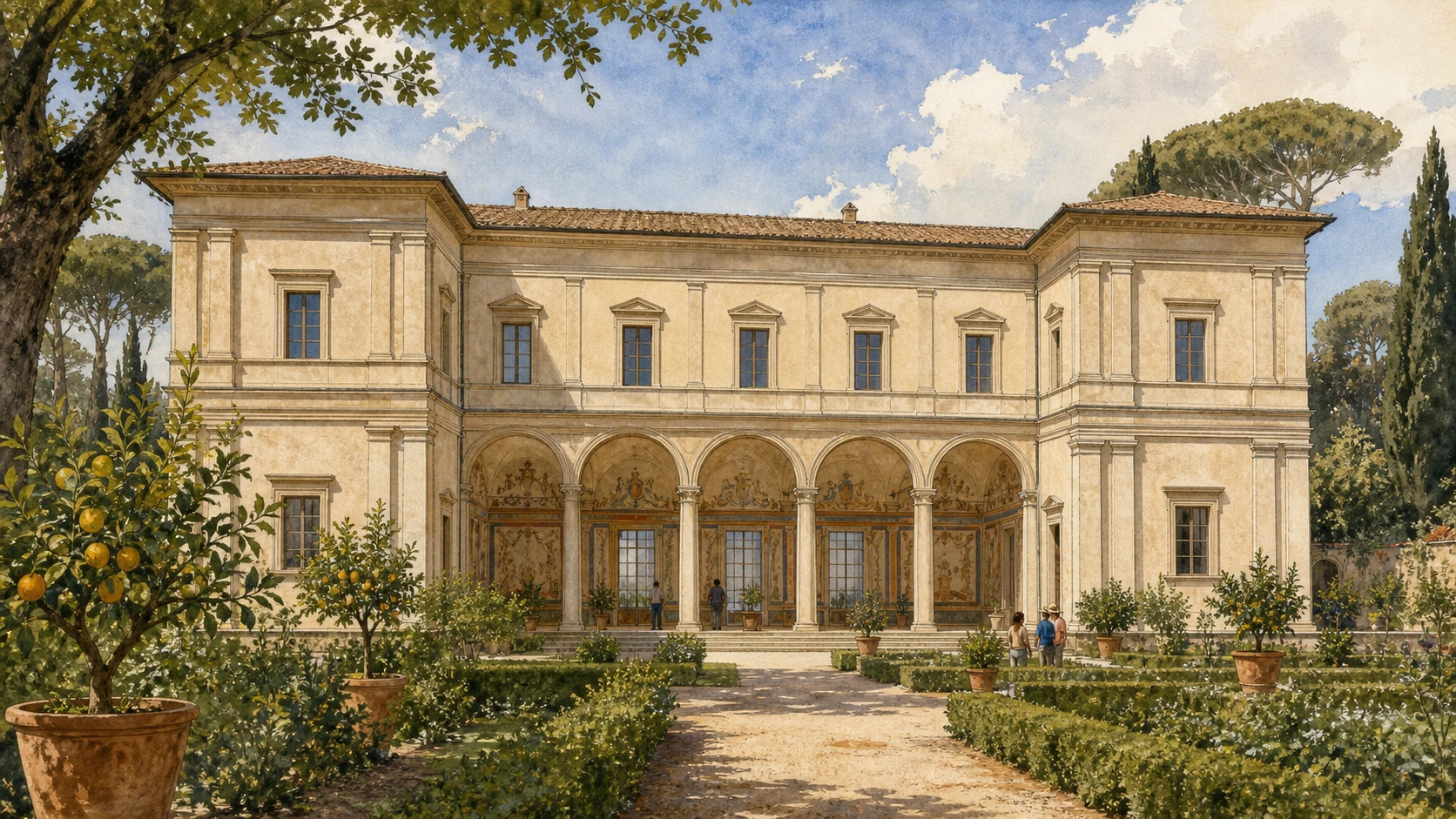
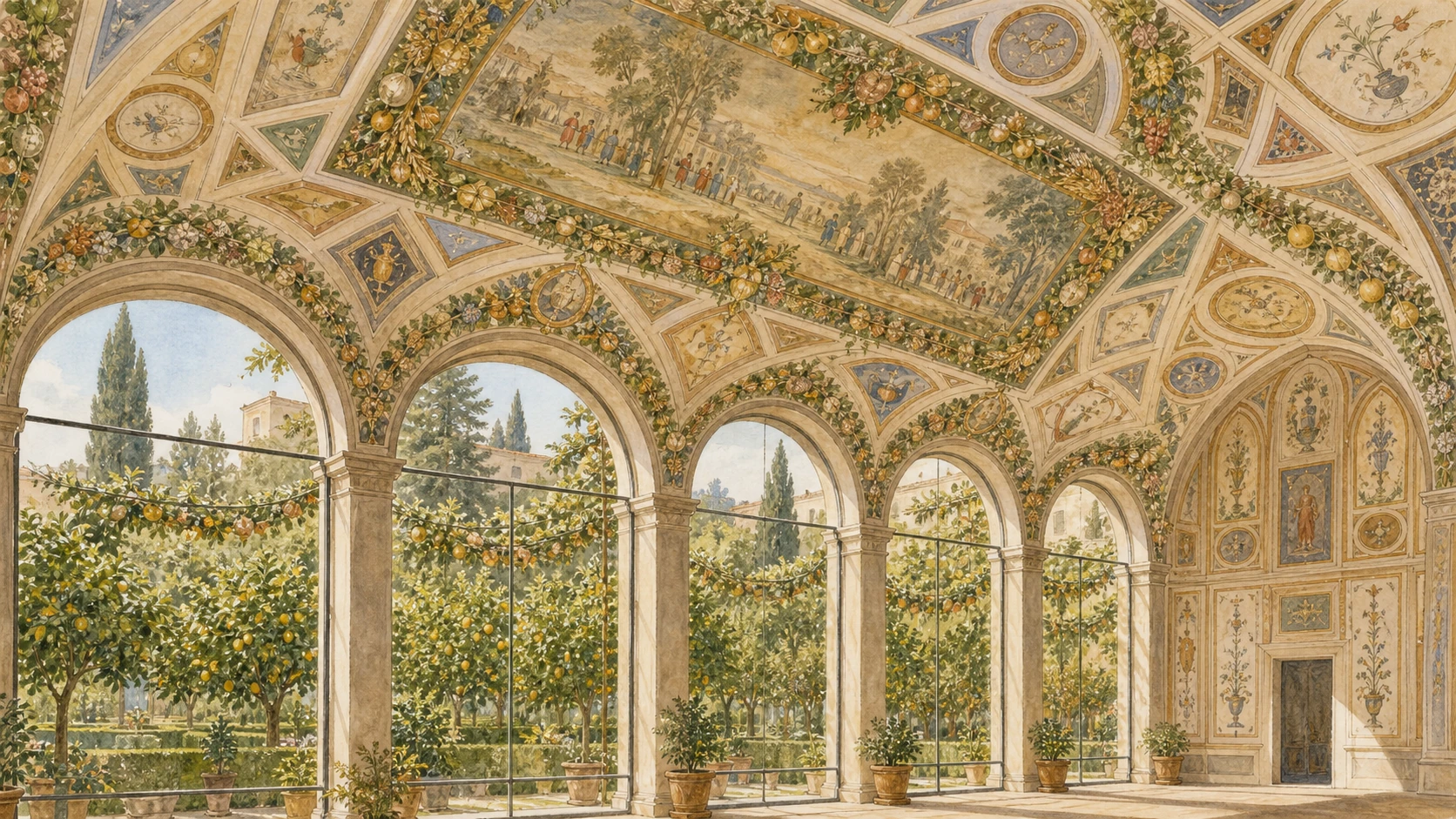
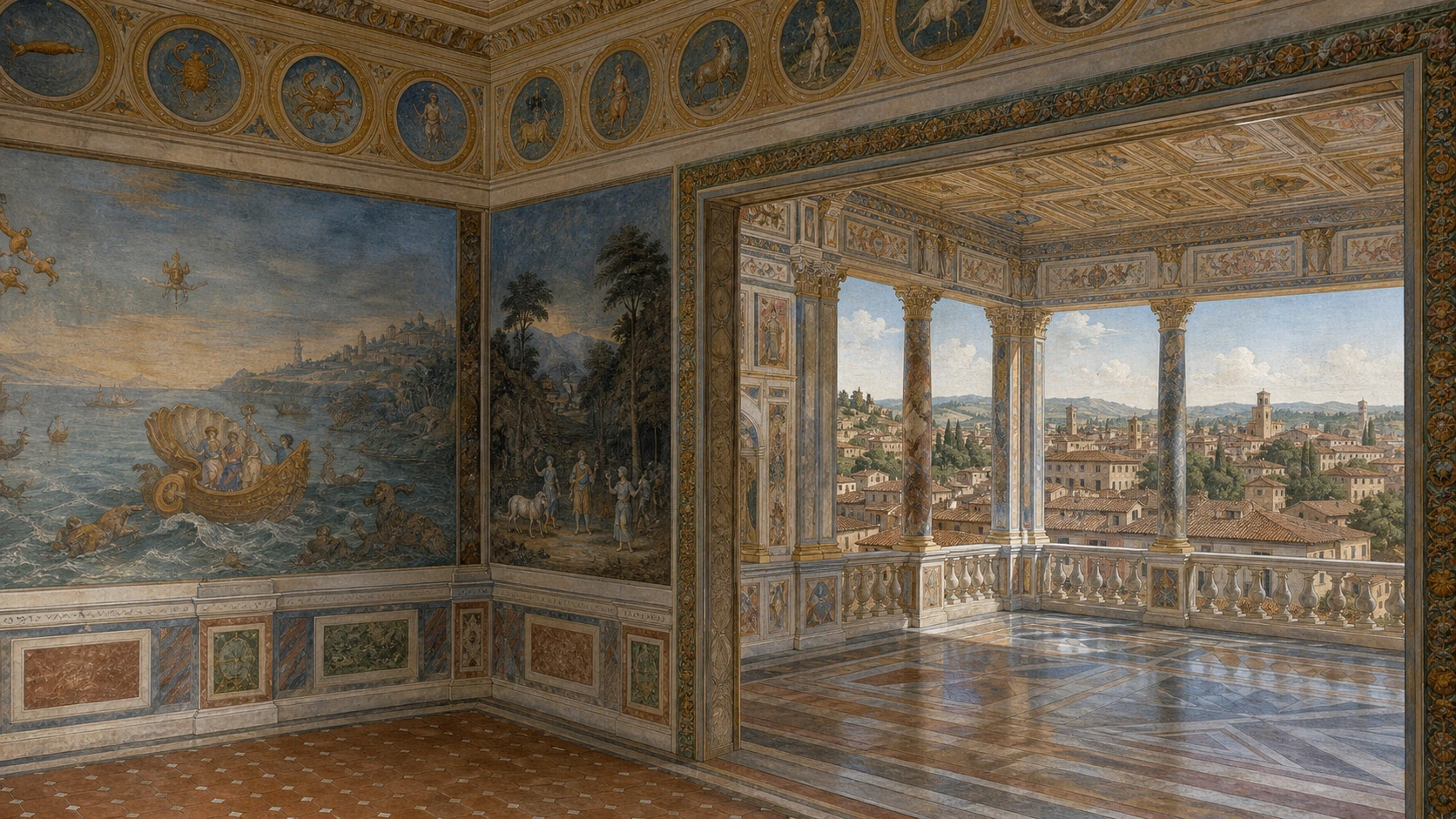
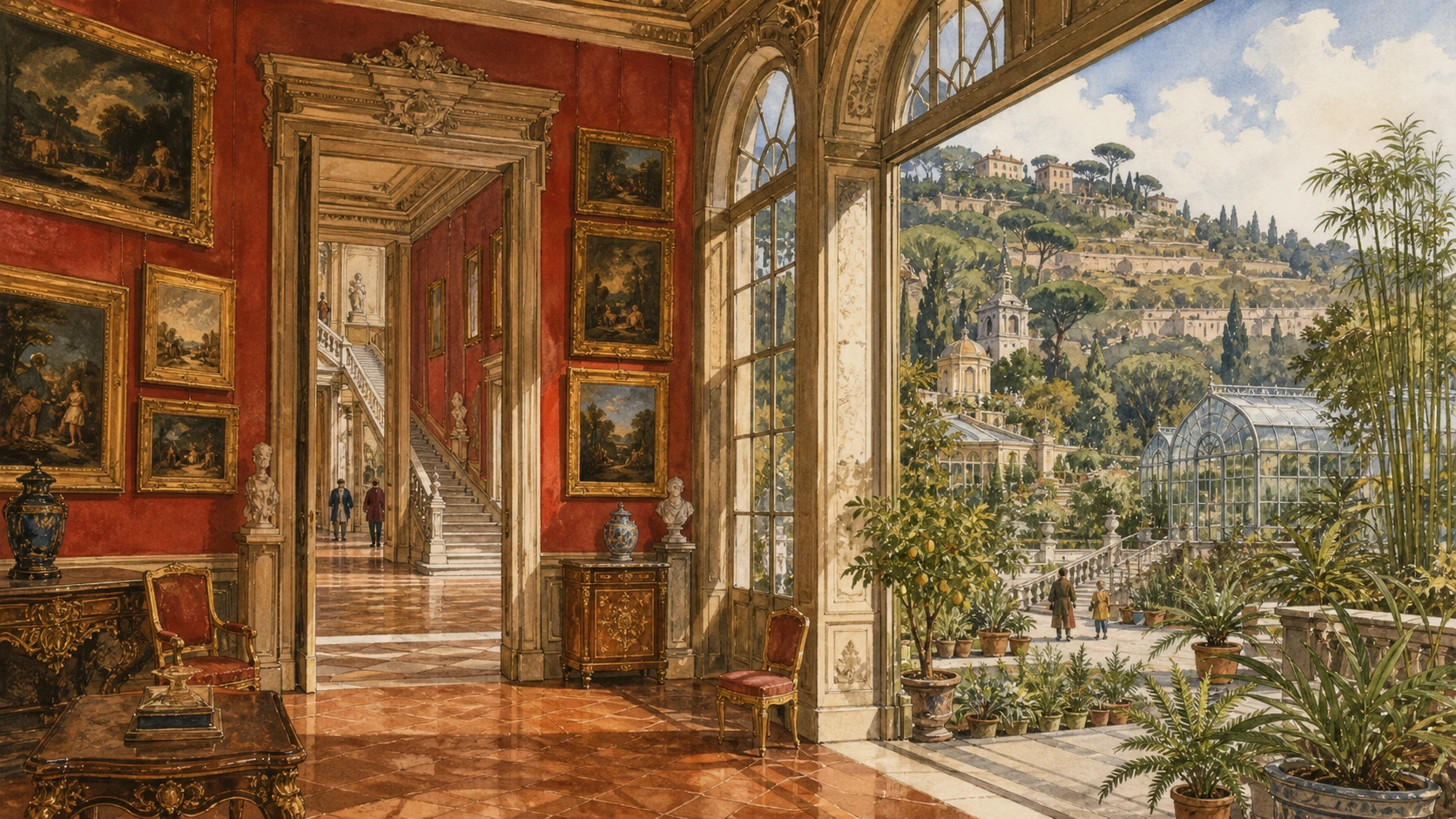
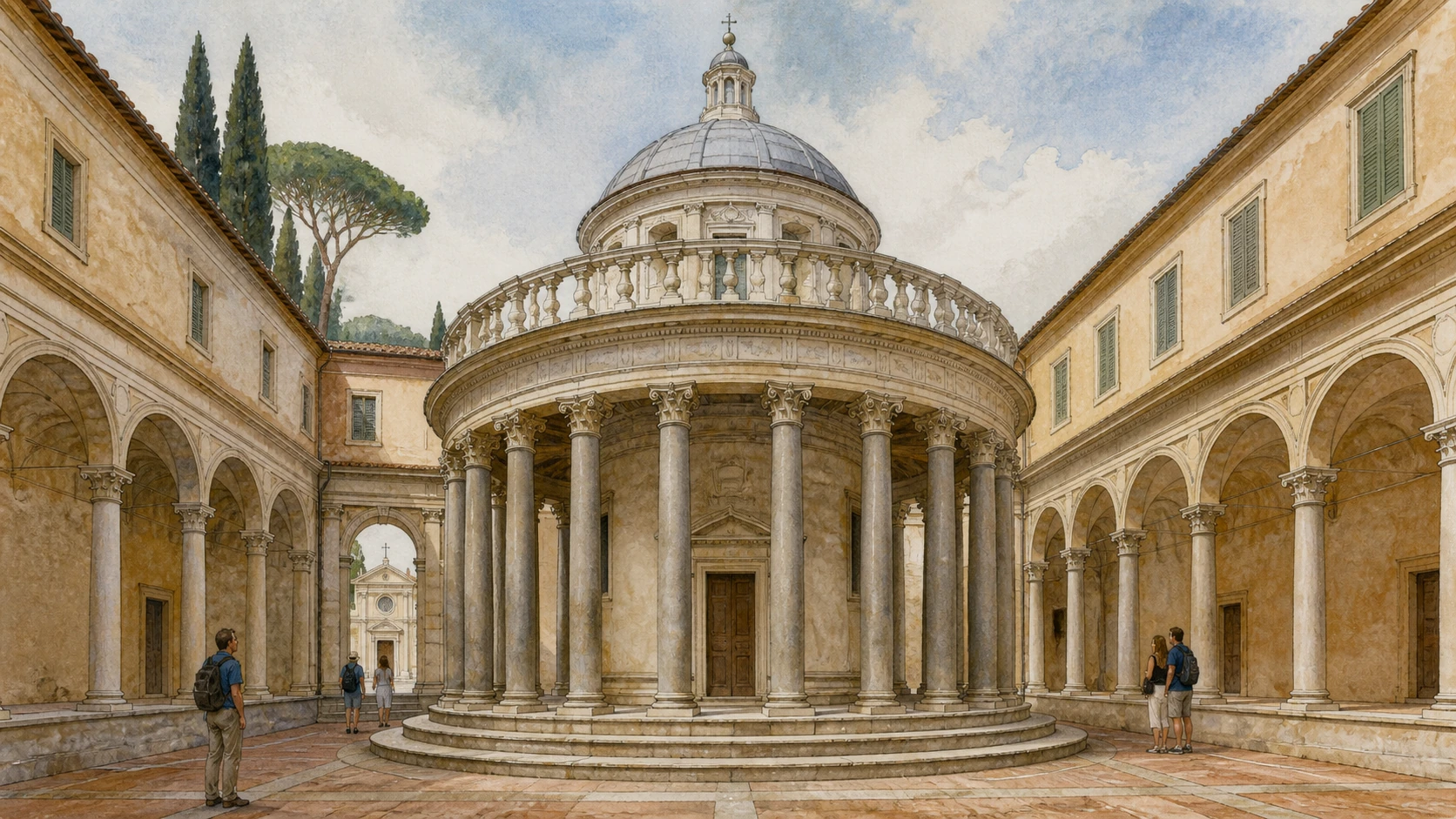
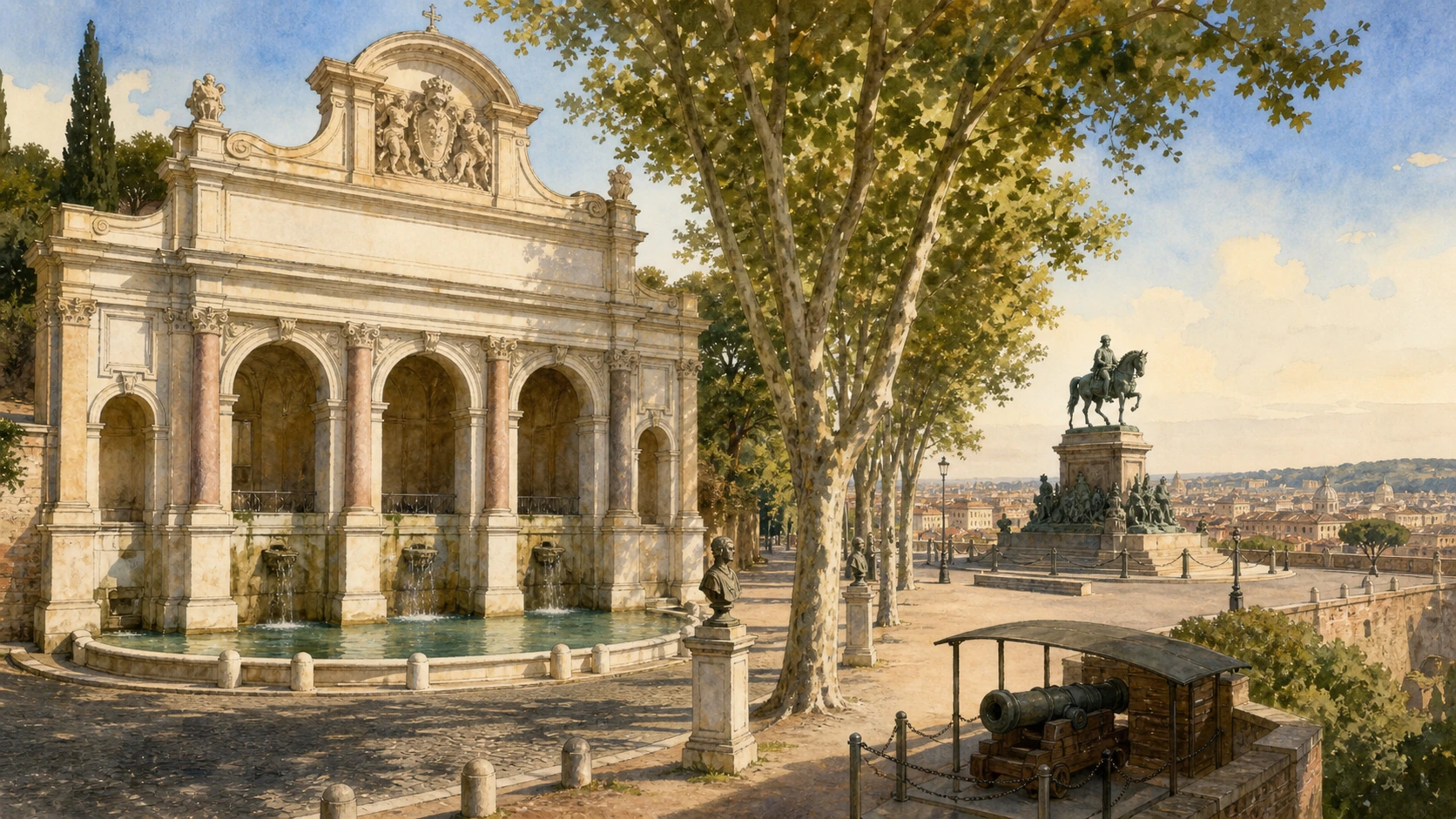
Along Via della Lungara, two elite complexes turn the river edge into a Renaissance and eighteenth-century cultural corridor. Agostino Chigi’s Villa Farnesina joined architecture, garden and painted loggias under Peruzzi, Raphael and their collaborators. Palazzo Corsini later formalised a princely gallery while its garden became Sapienza’s Botanical Garden. Above them, the Janiculum became a public memorial landscape after unification, overlaying Bramante’s Renaissance Tempietto, papal waterworks and the battlefield memory of 1849.
Cross, enter, climb: the route moves from river infrastructure to sacred interiors, from painted gardens to a hill where Rome deliberately staged its civic memory.