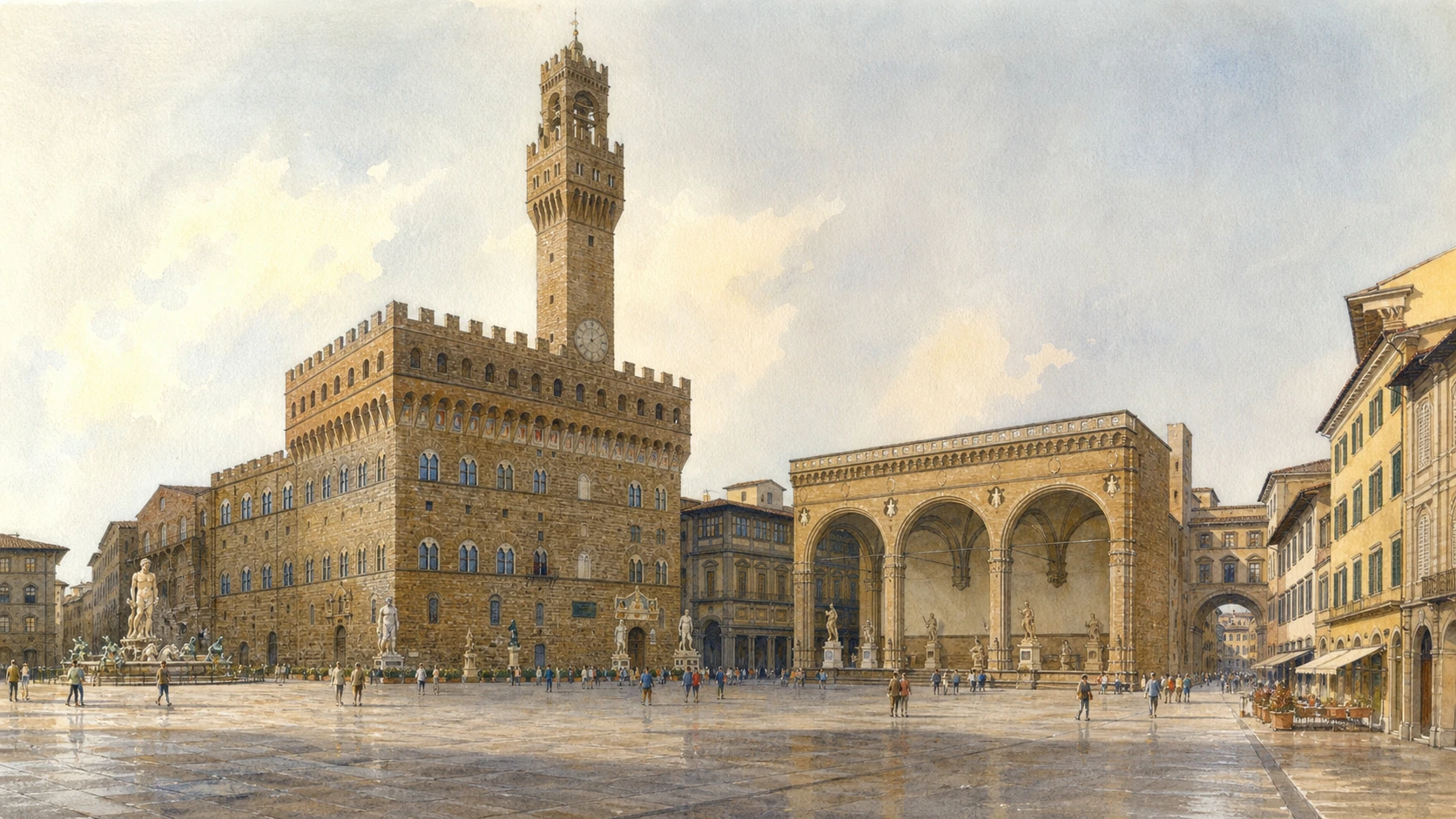
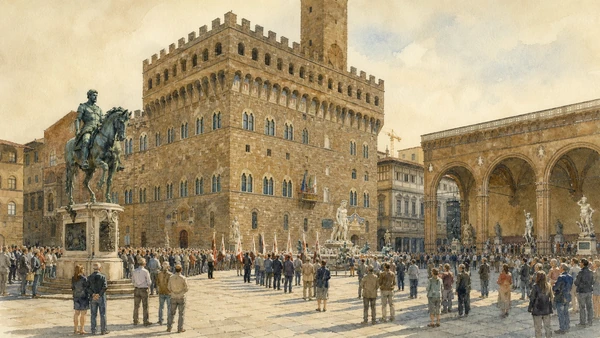
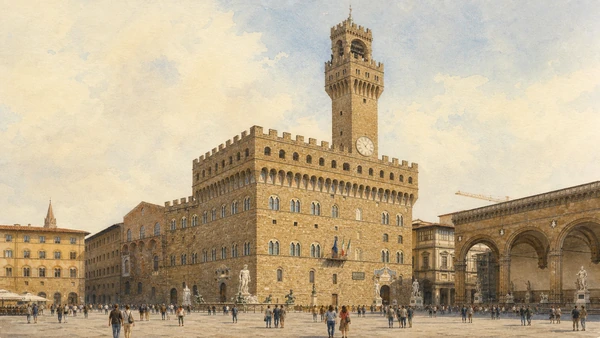
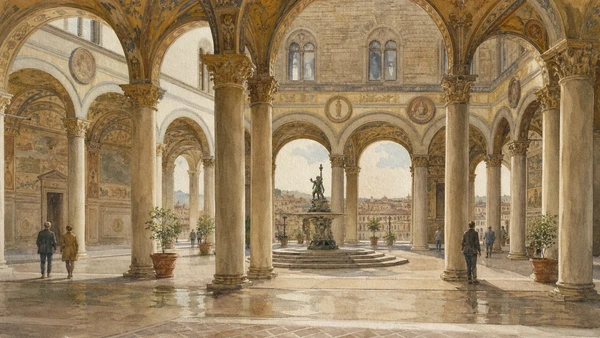
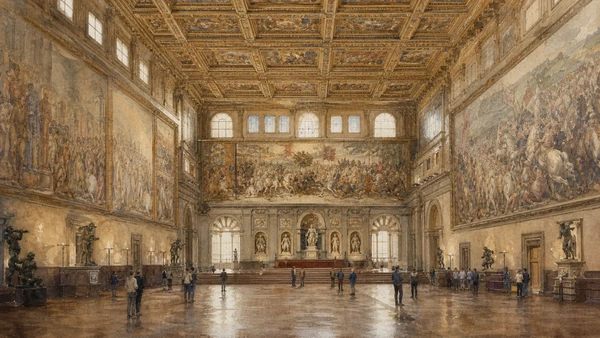
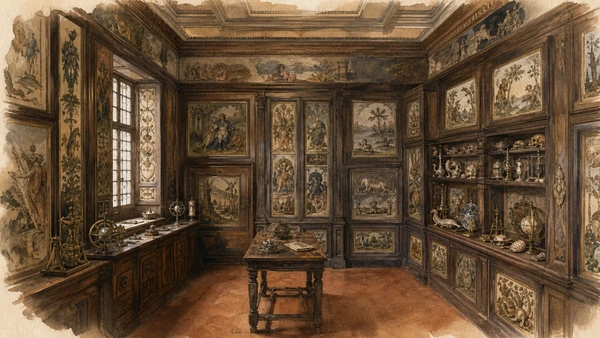
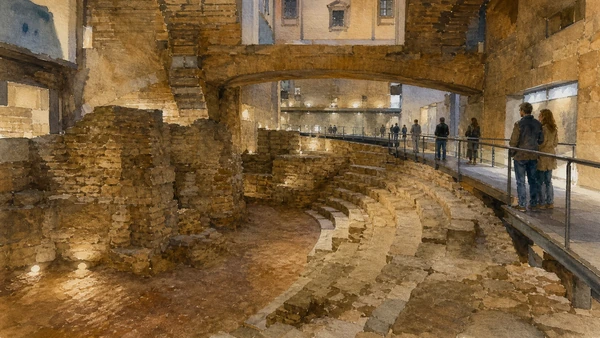
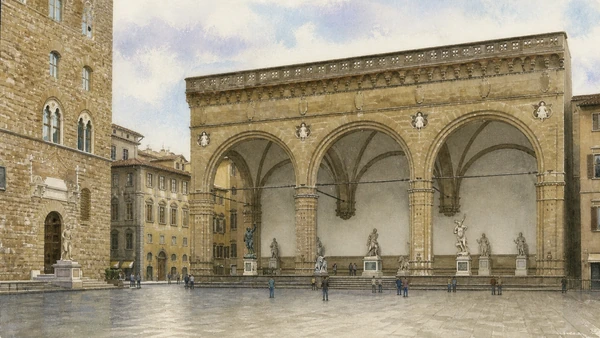
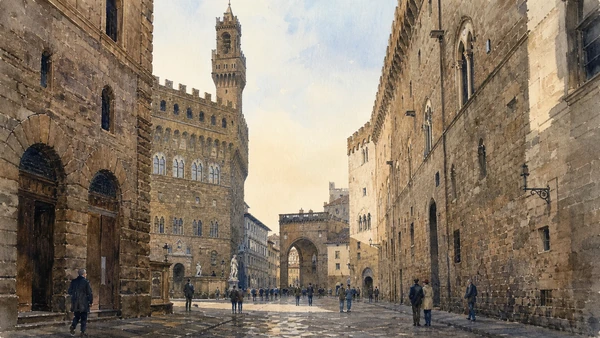
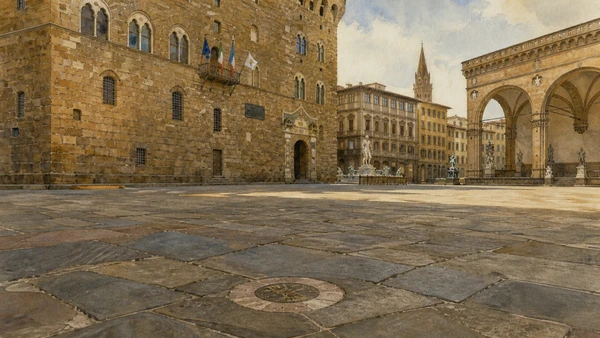
For more than seven centuries Palazzo della Signoria, now Palazzo Vecchio, has represented Florence’s civil power. Its severe communal exterior, high tower and public square were formed through demolition, defence and institutional need. The republican palace later became a Medici residence and ducal stage; rooms built for councils were enlarged and redecorated to celebrate dynastic rule. The building now operates simultaneously as museum, municipal seat and ceremonial venue.
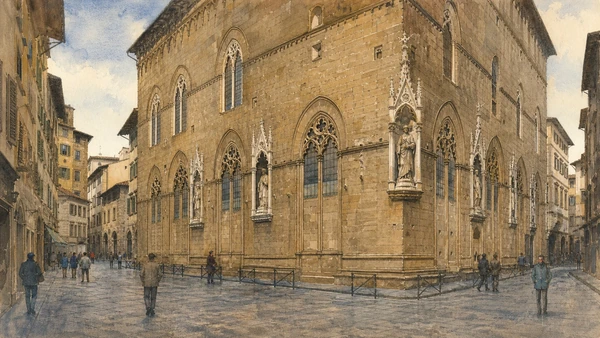
The surrounding square makes those changes public. The Loggia della Signoria shifted from assembly shelter to a grand-ducal display of sculpture. Orsanmichele bound grain supply, devotion and guild patronage into one building. Streets toward the Bargello recall justice and administration, while the Uffizi opened a controlled axis toward the Arno. Copies outside and originals inside museums add a modern conservation layer that must be stated, not concealed.
Current access is also divided. Palazzo Vecchio’s museum uses daily hours with a shorter Thursday; tower and battlements require a separate ticket, close in rain and remain inaccessible to many visitors. Secret rooms and archaeological levels use guided or controlled routes. Piazza della Signoria itself is always crossed, but civic ceremonies, municipal work and crowd management can change paths. A responsible visit reads public space before pursuing every interior.
Move from open square to fortified palace, from republican scale to Medici representation, then back to the pavement where civic memory remains debated.