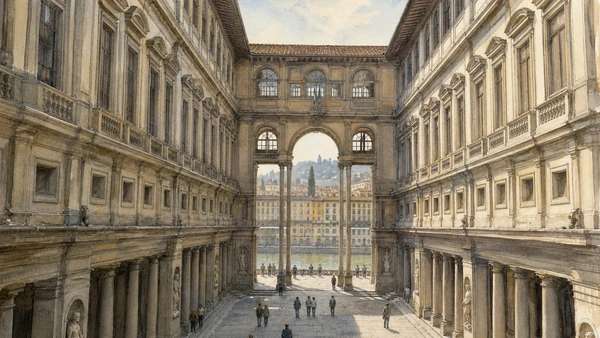
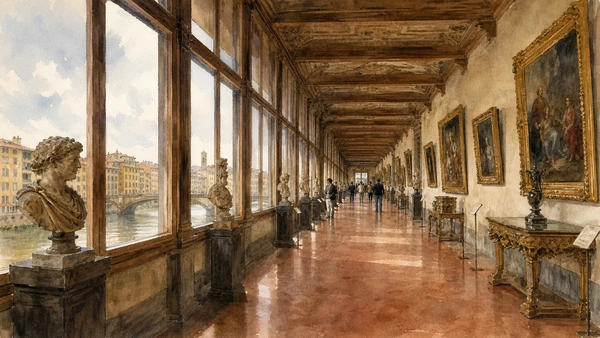
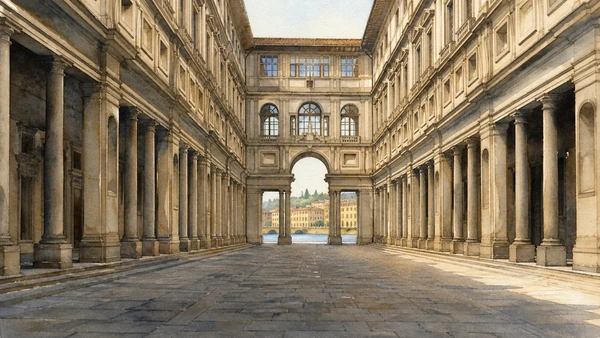
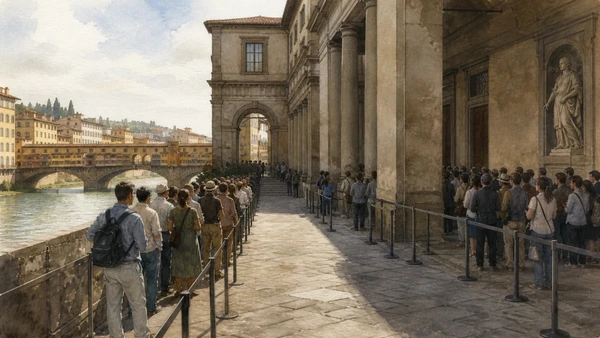
Cosimo I commissioned Giorgio Vasari to unite Florence’s magistracies in a new palace beside Palazzo Vecchio. The name Uffizi meant offices. Its disciplined wings created a bright public axis toward the Arno while upper spaces gradually received ancient sculpture, family portraits and rare objects. Under Francesco I, the east corridor and Tribuna became a privileged collecting environment. Only later did successive regimes turn this courtly apparatus into the public museum visitors recognise today.
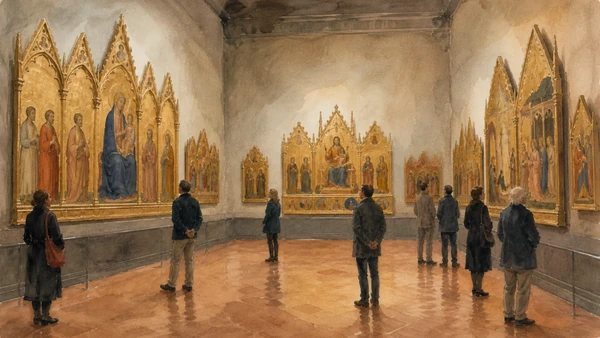
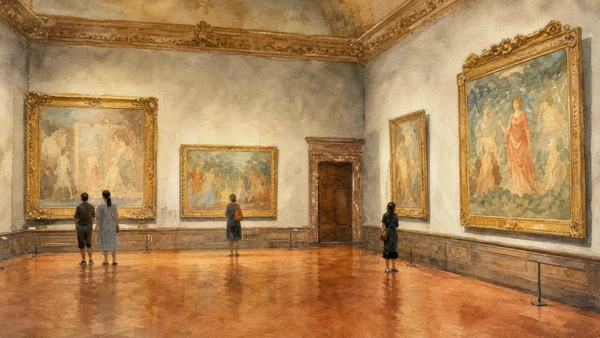
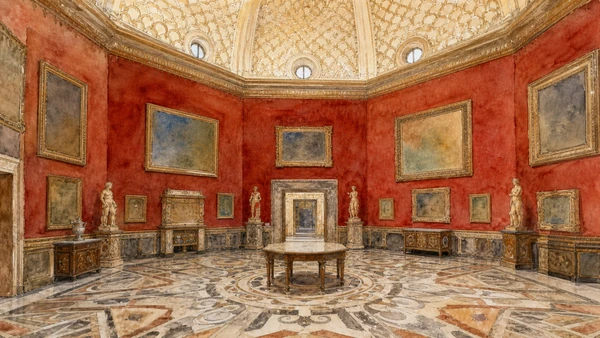
The collections should therefore be read chronologically and spatially. Giotto’s Ognissanti Maestà still belongs to the culture of a church altar even when compared in a museum room. Botticelli’s large mythologies came from Medici-associated domestic settings. Leonardo’s unfinished Adoration, Michelangelo’s Doni Tondo and Raphael’s Madonna of the Goldfinch reveal different Florentine experiments, patrons and object histories. The Tribuna organised rarity through materials, geometry and controlled access rather than modern art-historical categories.
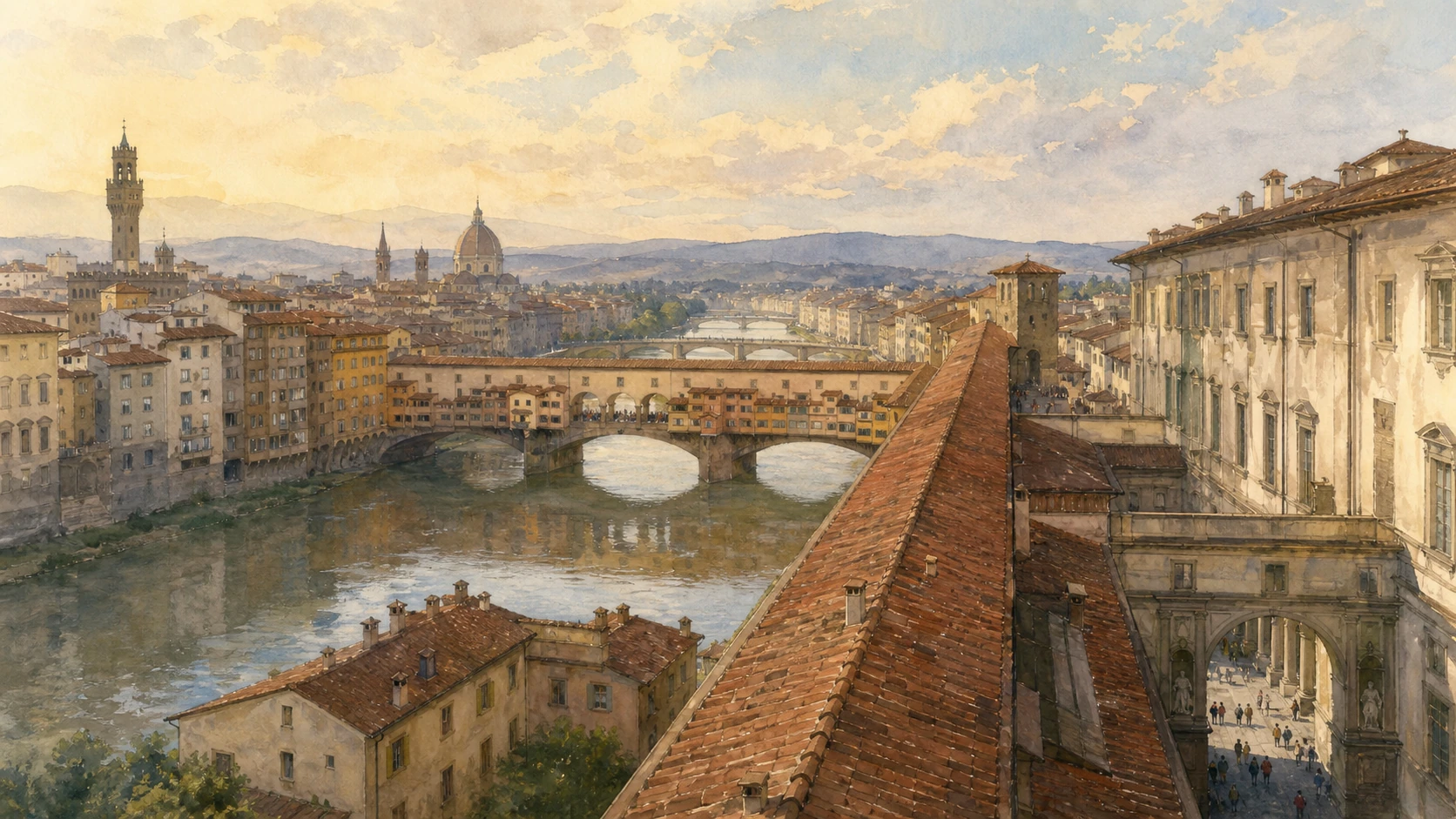
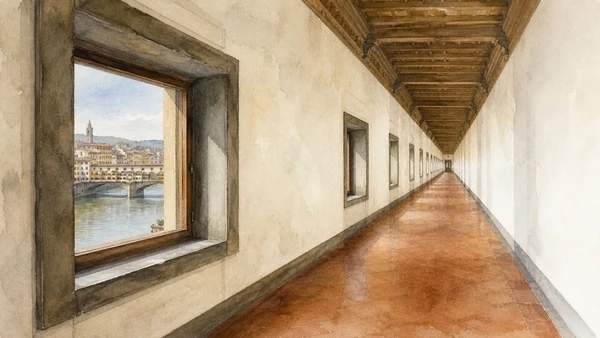
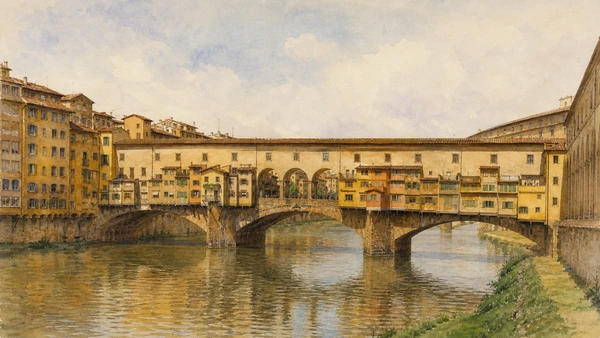
The route continues beyond the galleries. Built rapidly in 1565, the Vasari Corridor carried the court from the Uffizi over streets, shops and the river toward Pitti and Boboli. Its current visit is a separately reserved, staff-accompanied, one-way route ending on the Oltrarno side; it is not a shortcut back to the museum. Below it, Ponte Vecchio remains commercial urban fabric. Goldsmith windows, river views, wartime survival and daily congestion belong to its history as much as the postcard silhouette.
Move in layers: begin with the palace made for government, follow the collection’s chronology, read the Tribuna as a system, and only then cross from controlled court passage to the bridge’s open commercial life.