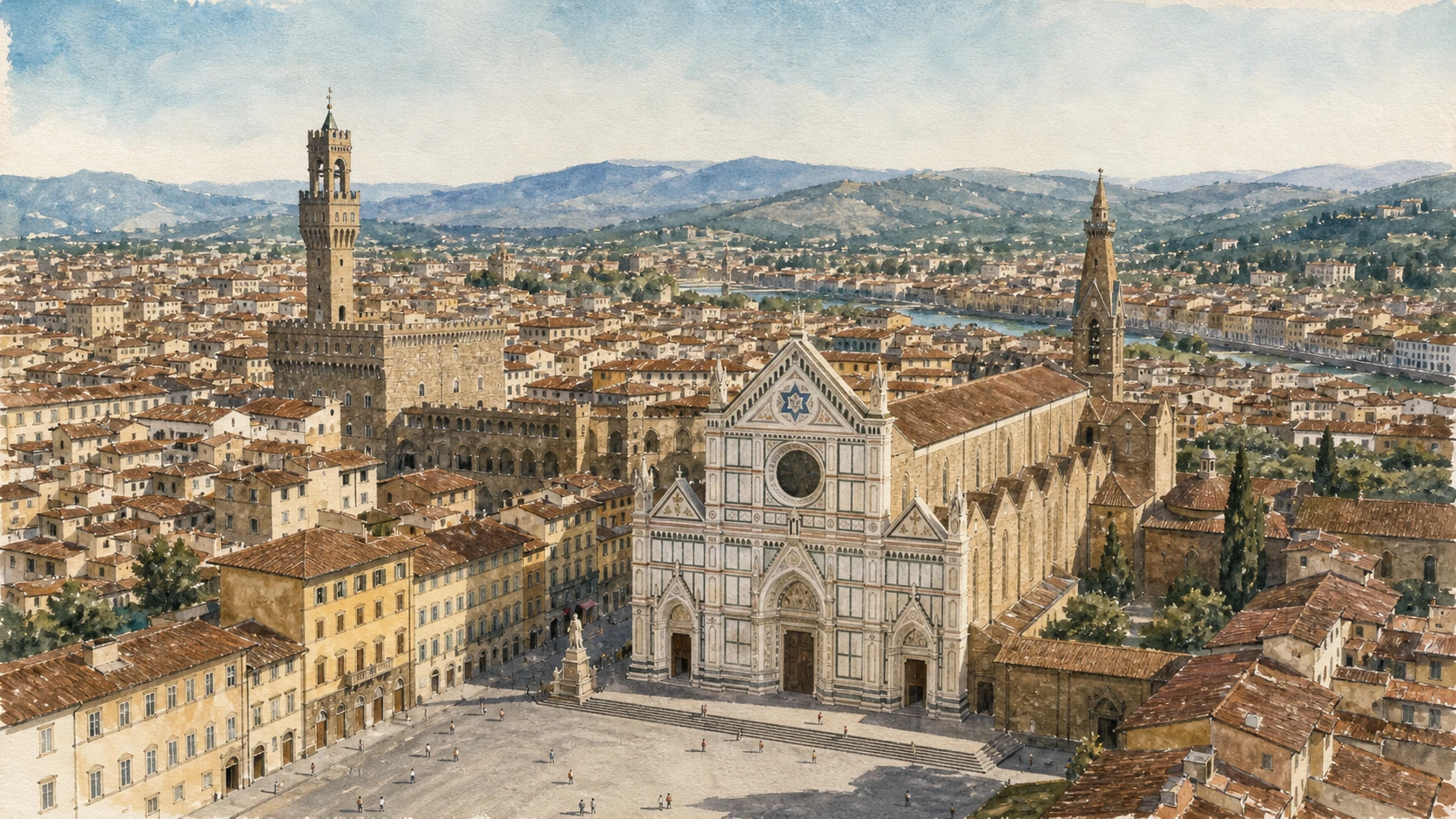
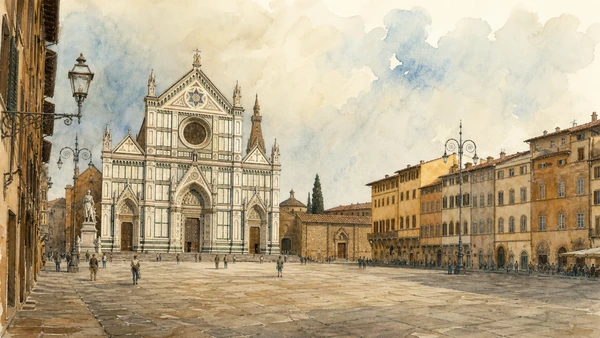
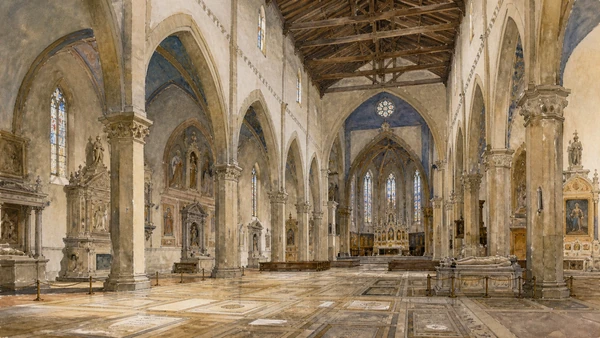
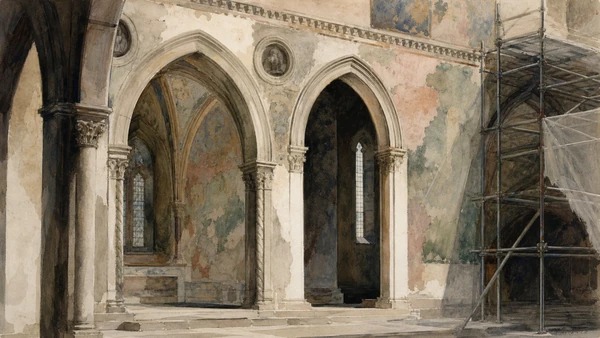
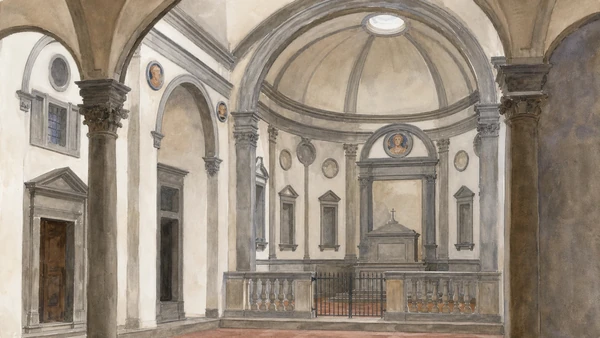
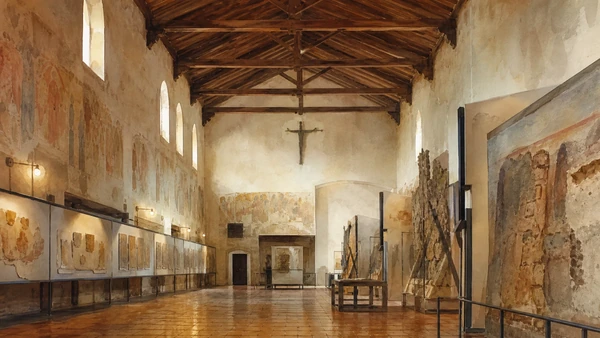
The Franciscans established their presence near Florence’s eastern edge, where a vast late-thirteenth-century church and piazza could address a growing urban population. Its timber roof, open nave, transept chapels and convent spaces joined worship with preaching, burial, education and patronage. Giotto’s damaged mural cycles, Cimabue’s flood-scarred Crucifix and the Pazzi Chapel now also record the history of conservation; their present condition is evidence, not a defect to hide.
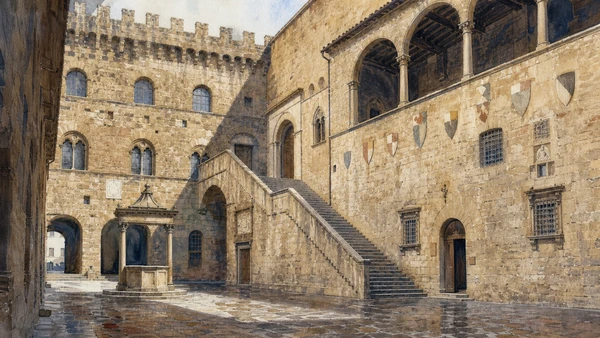
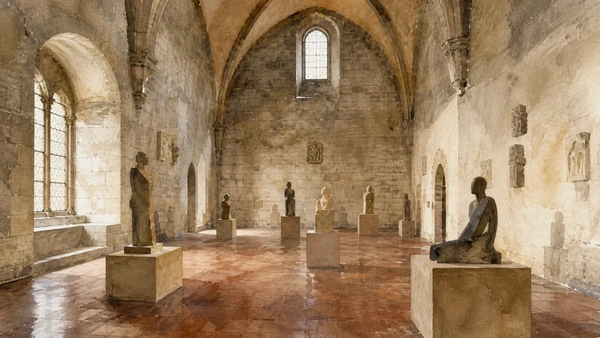
From the nineteenth century, monumental tombs and Dante’s public image turned Santa Croce into a stage for Italian civic memory. Yet many people commemorated there are buried elsewhere, and the façade and monument in the piazza belong to modern nation-building rather than medieval Florence. The Bargello offers a different transformation: a communal palace and prison became the first national museum of the new kingdom, gathering Renaissance sculpture and decorative arts within rooms shaped by law and coercion.
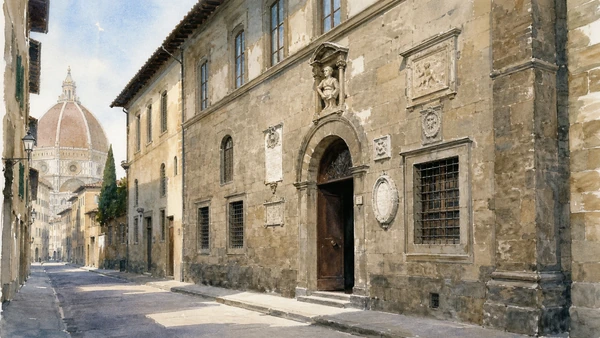
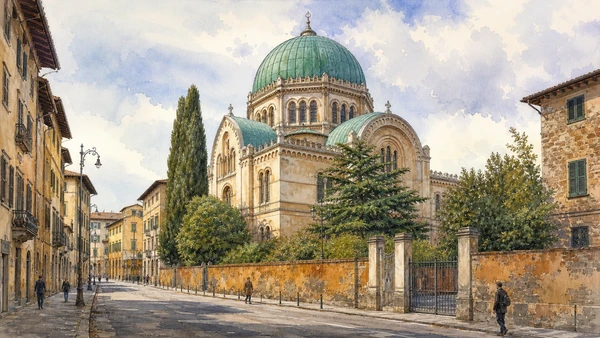
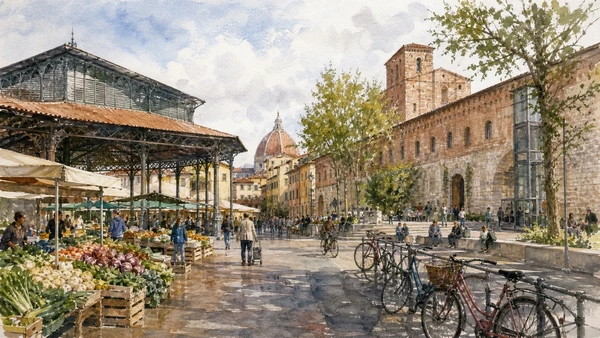
The district does not end at two monuments. Via Ghibellina carries the memory of Michelangelo through a family museum rather than his birthplace or studio preserved unchanged. Farther east, the nineteenth-century Synagogue, Sant’Ambrogio market and the reused Murate prison demonstrate a plural, working neighbourhood. Current worship, restoration, market hours, museum calendars and cultural events continue to alter how the area is entered.
Begin in the piazza, read Santa Croce from living church to conservation landscape, cross to the Bargello’s institutional stone, then continue east until monumental Florence becomes market, worship and daily neighbourhood.