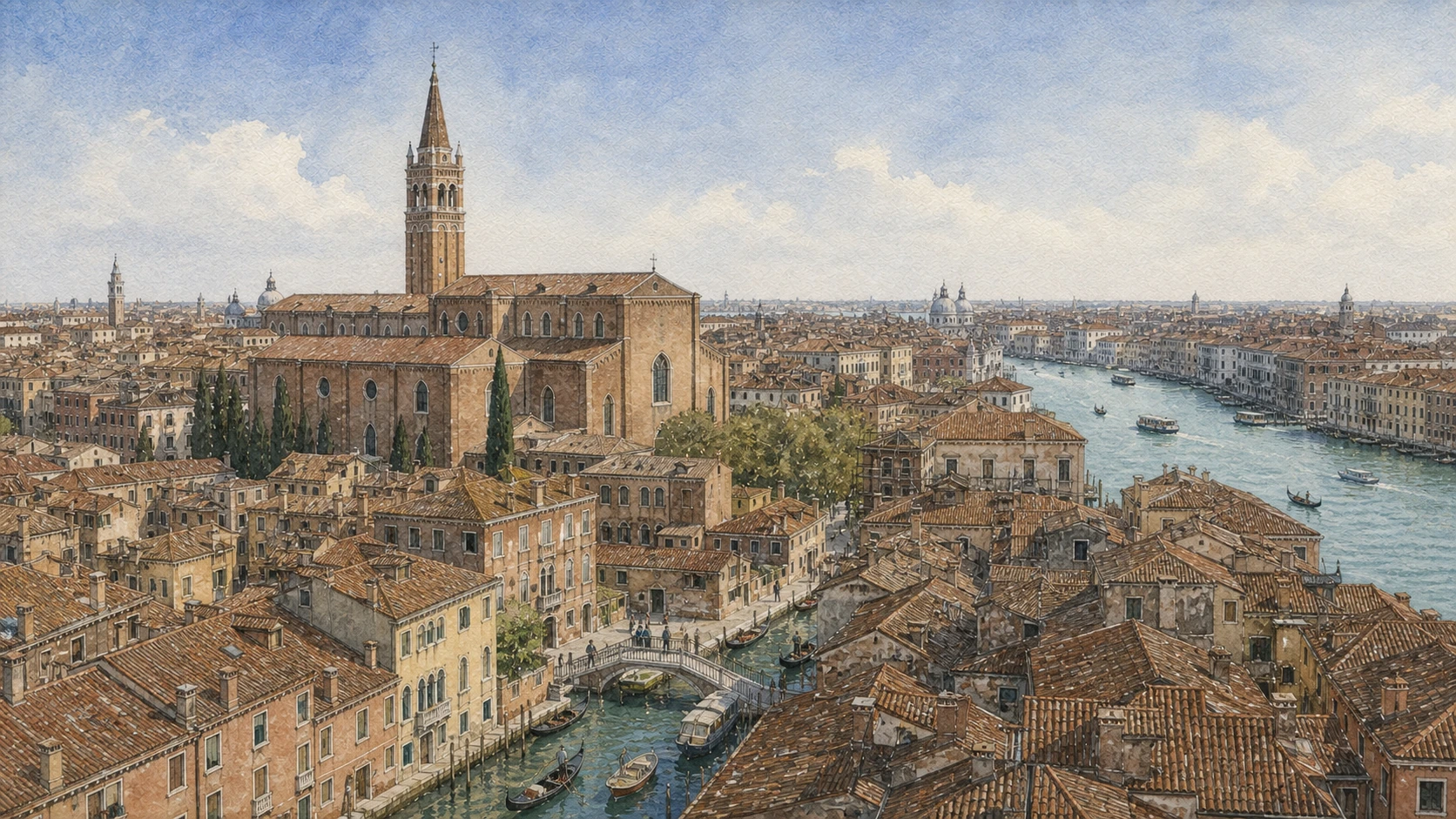
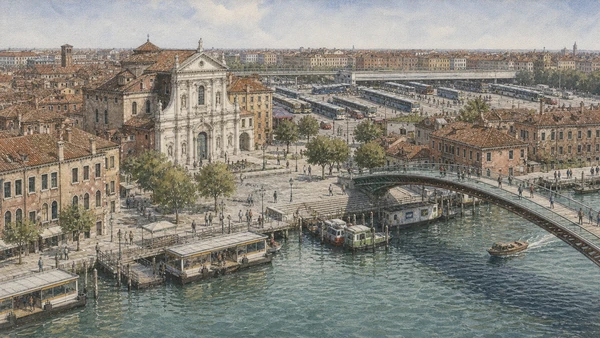
San Polo contains the Rialto market zone but extends into large campos, Franciscan and confraternal institutions, workshop streets and residential canals. Santa Croce reaches from the Grand Canal palaces around San Stae to Piazzale Roma, where buses and cars stop and movement is transferred to foot and water. Together they reveal Venice as a connected system rather than a chain of famous façades.
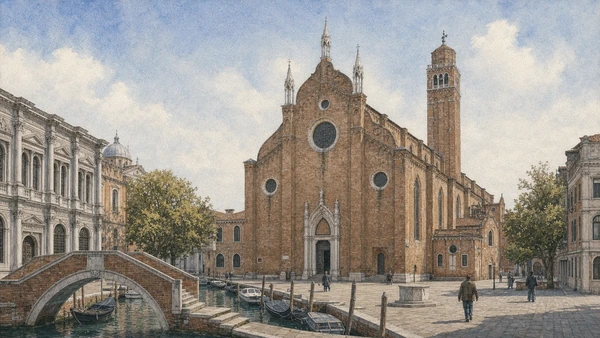
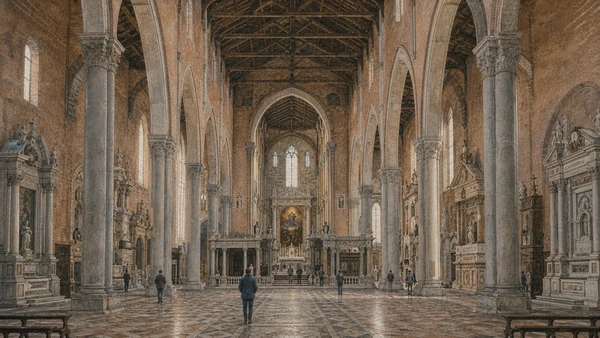
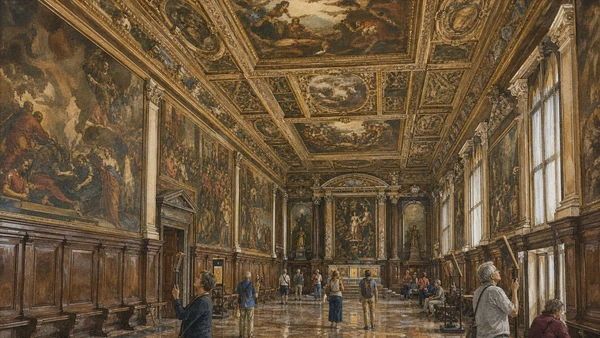
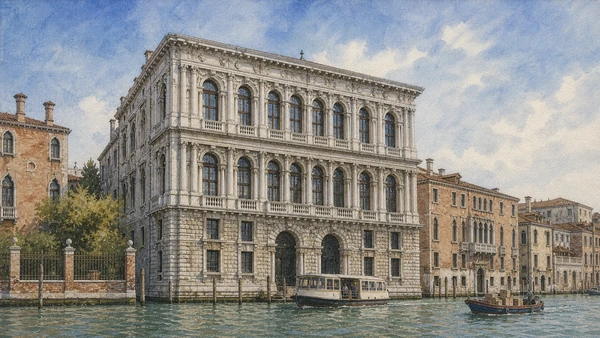
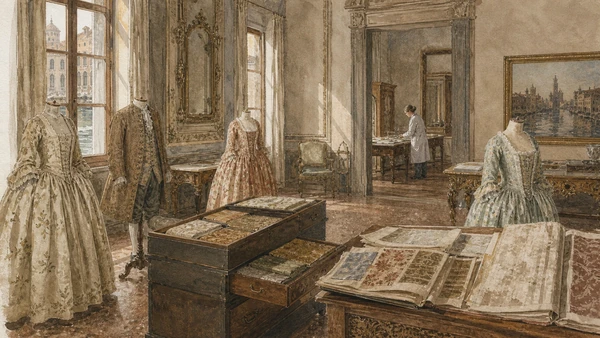
The Frari and Scuola Grande di San Rocco demonstrate different institutional forms. A mendicant church accumulated burials, altars, painting and civic memory across a vast liturgical interior. A lay confraternity organised devotion, charity, government and an exceptional cycle of paintings within meeting rooms. Ca’ Pesaro and Palazzo Mocenigo add later museum histories that reinterpret patrician residences through modern art, textiles, dress and conservation.
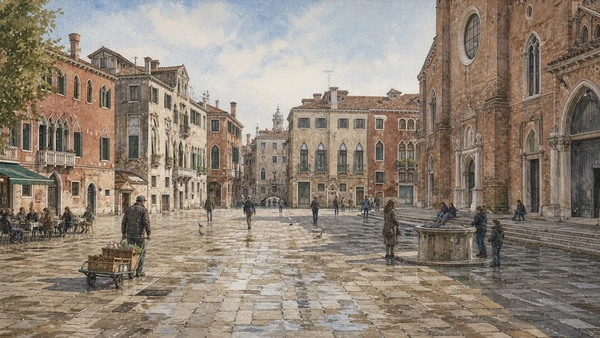
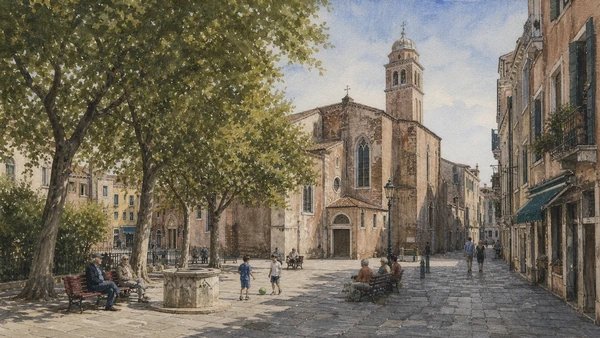
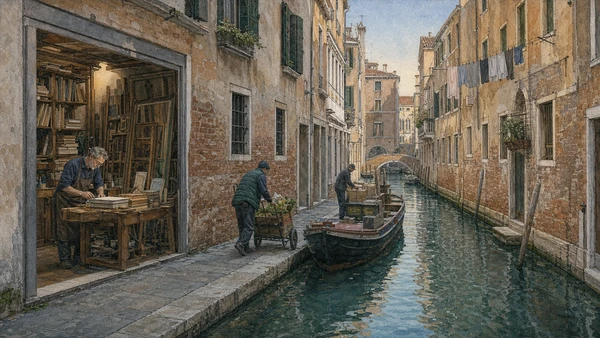
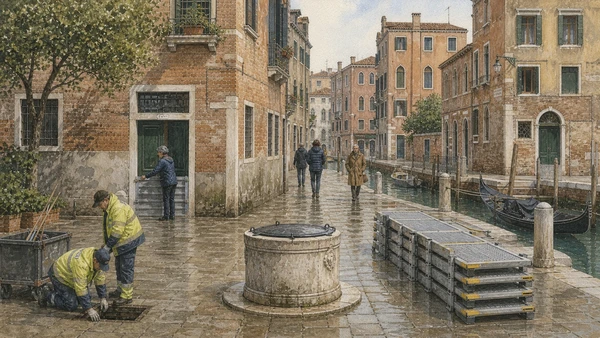
Residential campos and working canals are equally important. San Giacomo dall’Orio remains legible through trees, benches, shops and daily routes. Workshops and deliveries depend on narrow passages and low quays. At the western edge, the road terminal creates extraordinary pressure on pedestrian bridges and vaporetto stops. High water adds a time-dependent layer that must be checked through official forecasts rather than treated as permanent spectacle.
Move from large institution to ordinary threshold: the sestieri become coherent when church, confraternity, palace, workshop, canal and transport interchange are read as parts of one inhabited urban fabric.