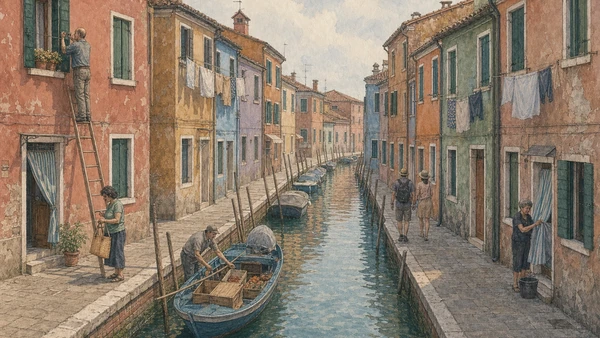
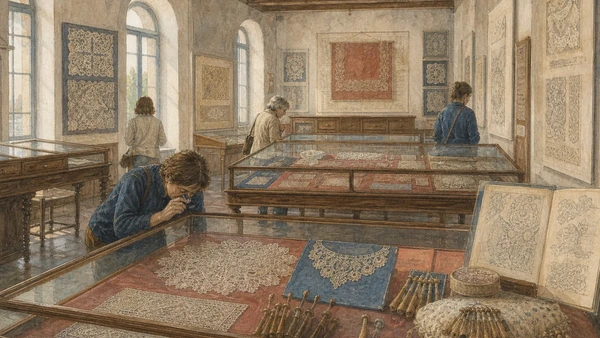
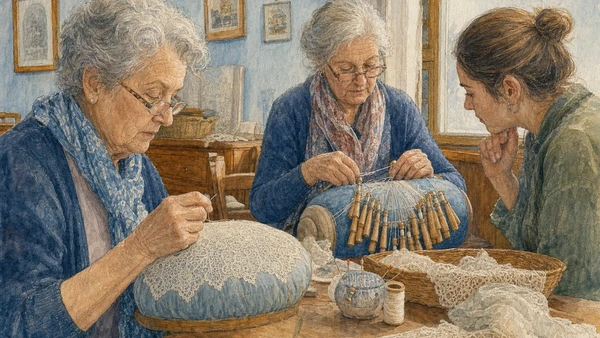
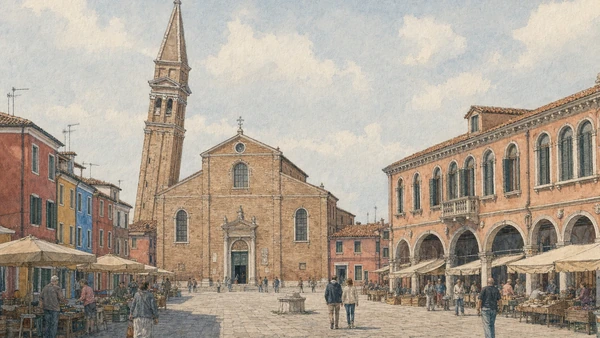
Burano’s painted houses are real homes arranged along narrow canals, not an open-air colour chart. Their surfaces are repaired within a regulated urban fabric while doors, bridges and fondamenta carry groceries, school journeys, waste, boats and visitors. Lace belongs to the same lived history. Needle lace demanded time, skill and distributed labour, and its museum record is more precise than the romantic image of every resident making an entire masterpiece alone.
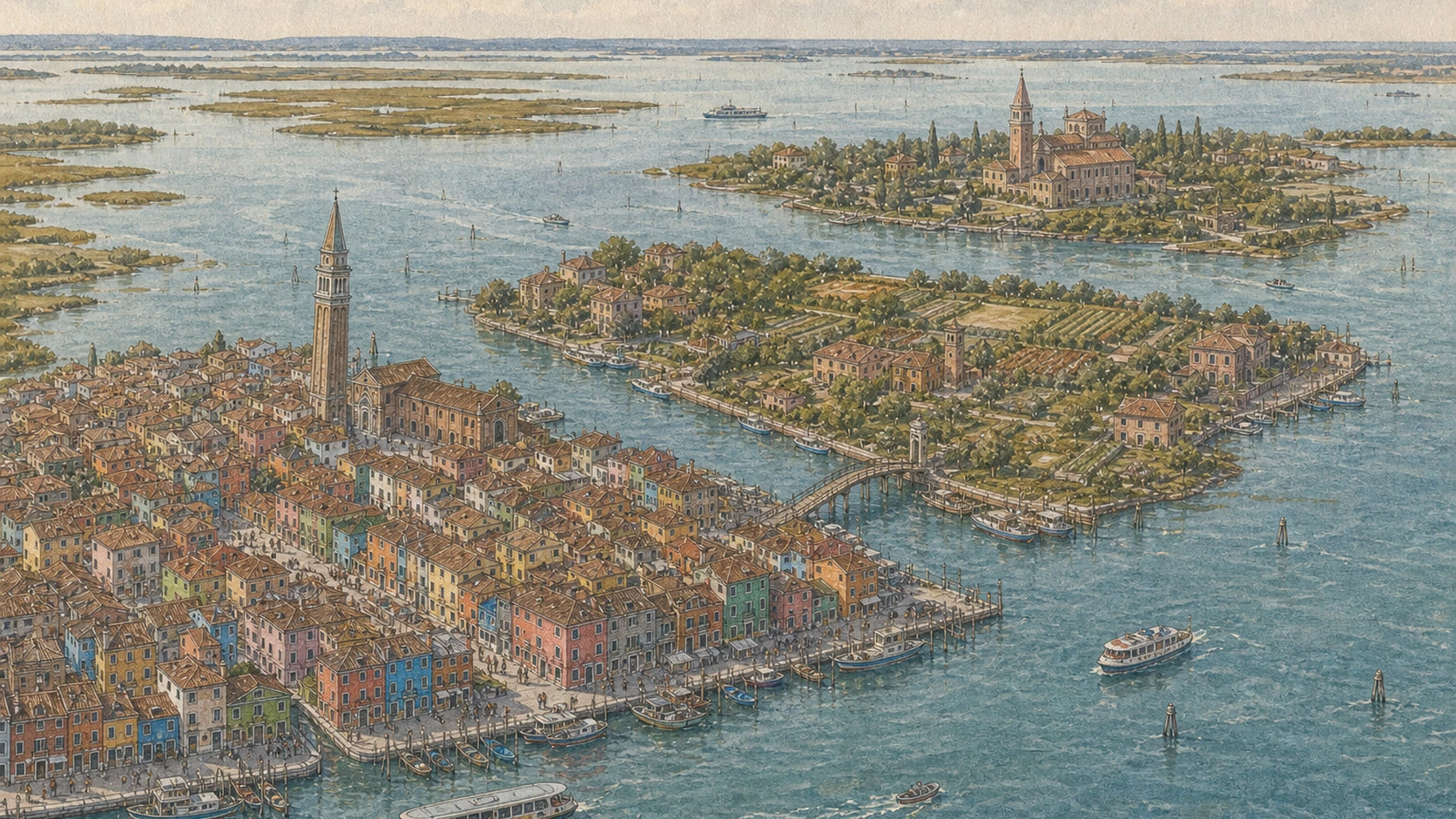
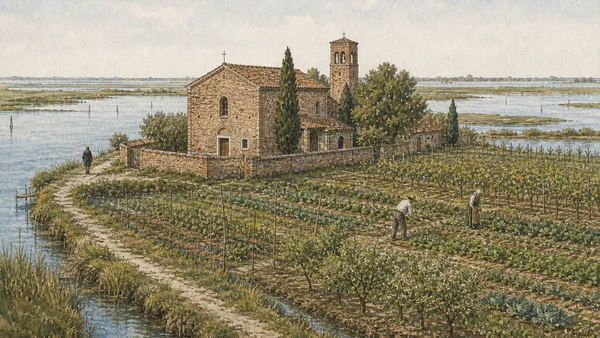
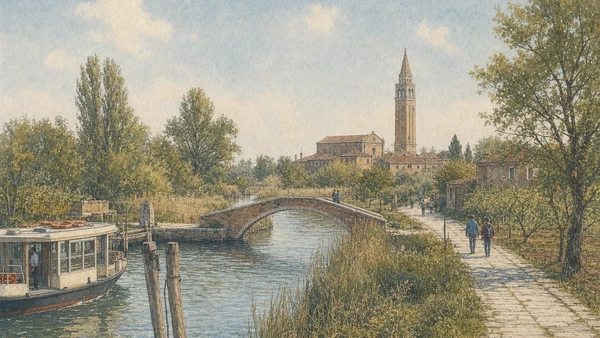
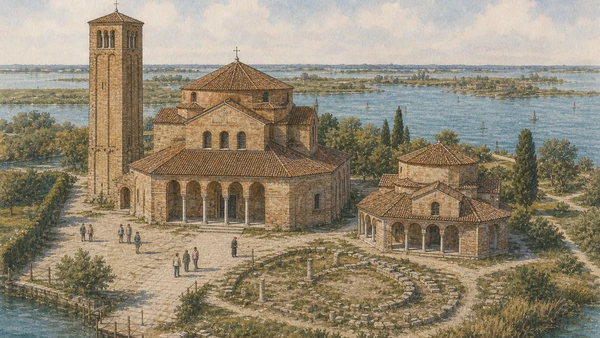
The footbridge to Mazzorbo changes the pace but not the human history. Fields, gardens, embankments, drainage and a surviving church occupy land continually negotiated with salt water. Torcello then reveals an early and important settlement of the Venetian lagoon without supporting the simplistic claim that one empty island single-handedly gave birth to Venice. Archaeology records several phases, shifting channels, institutions and population movement.
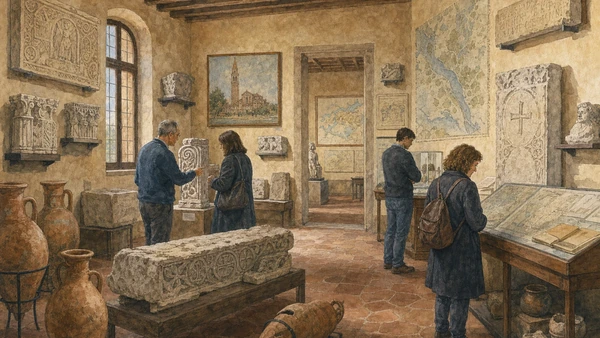
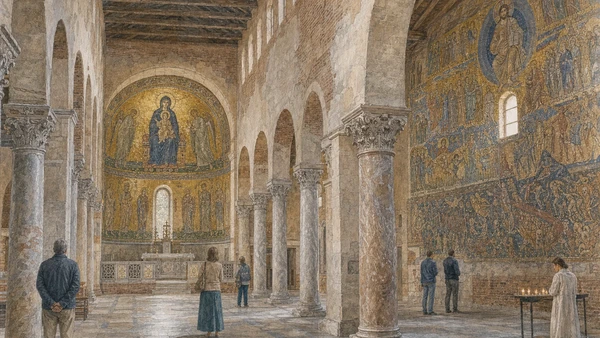
The route ends in two different forms of evidence. The Torcello Museum gathers material remains inside the Palazzo del Consiglio and Palazzo dell’Archivio; Santa Maria Assunta and Santa Fosca preserve architecture, worship and mosaics in place. Legends such as Attila’s throne can be enjoyed as later storytelling only when they are not mistaken for archaeological proof. A full day should therefore move from resident present to documented past, not from photo to photo.
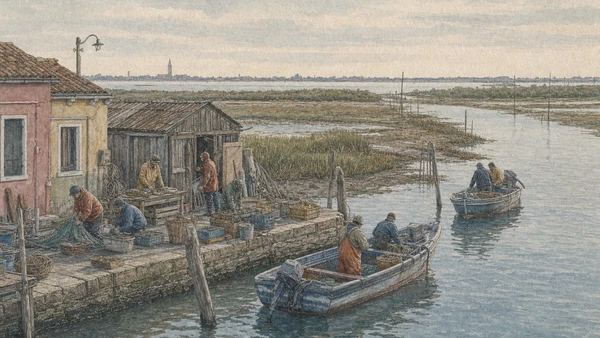
Travel early, keep bridges and thresholds clear, and read the lagoon between the islands as part of the monument rather than empty space between attractions.