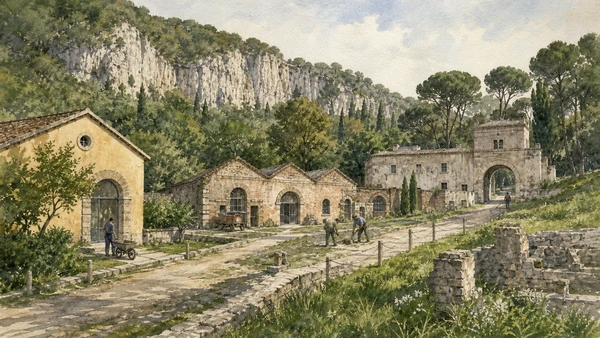
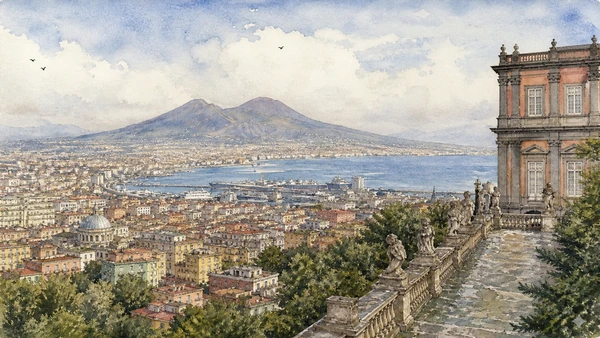
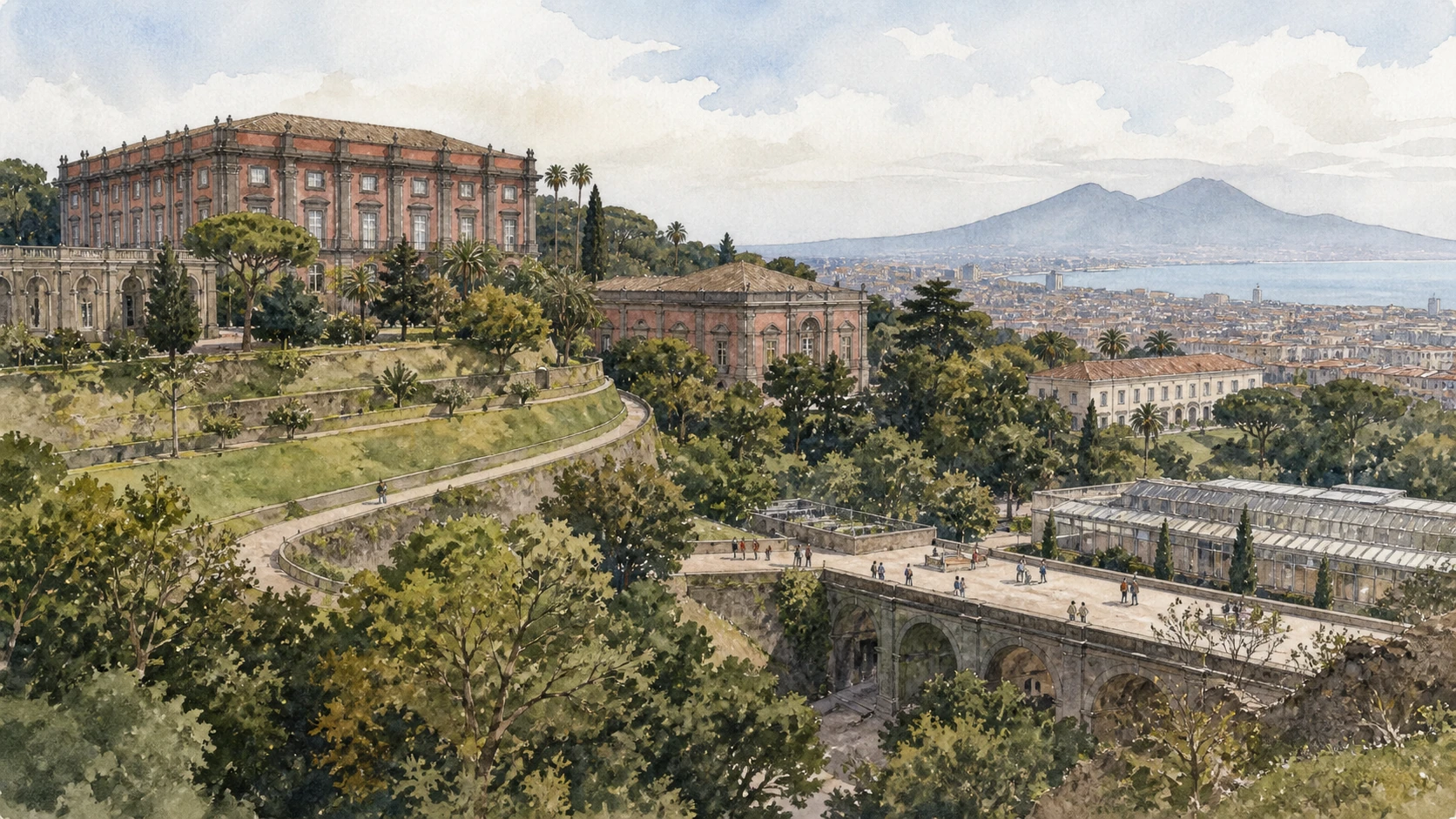
Original documentary watercolour panorama for Naples Capodimonte Museum, Royal Wood and Museum Hill: Complete Guide, with accurate Naples architecture and lived urban context

Naples Guide 05 · Royal palace, Farnese collection, Neapolitan art, porcelain and public landscape

Capodimonte
& the Museum Hill

A full-day reading of Capodimonte as a royal residence, national museum, working conservation institution and public wood above Naples, linking collections, palace rooms, porcelain production, gardens and access infrastructure.

Plan the route
Naples · Campania10 chapters · one full day

Why this Naples district must be read in layers

Capodimonte is not an art museum accidentally placed in a park: palace, collection and landscape were created through the same Bourbon project and repeatedly redefined after unification.

The hill offered air, hunting ground and distance from the crowded city, but it also demanded roads, service systems and controlled gates. The Real Bosco remains a public landscape with historic avenues, buildings, ecological care and ordinary recreation.

Inside, the Farnese collection joins Neapolitan painting, royal apartments, decorative arts and later acquisitions. Their arrangement records dynastic inheritance, national museum policy and ongoing curatorial change.

Capodimonte requires time. Gallery and floor openings can vary, while transport and the climb affect arrival. The route therefore treats the journey and the park as chapters rather than empty space around the collection.

Confirm the day’s open galleries, arrive early and alternate palace interiors with the Bosco: only then do collection, court and hill become one coherent institution.

The route

Plan your visit

Enter through the Bosco, understand the palace as architecture, then move through collection groups and royal industry before returning outside for the avenues, service buildings and long view over Naples.

Early morning

Arrival at Capodimonte · The Royal Palace · The Farnese collection

Move in the documented order: Arrival at Capodimonte: the museum begins with the climb; then The Royal Palace: collection architecture on a vast scale; then The Farnese collection: dynastic inheritance remade in Naples. Check live access before entering ticketed or liturgical spaces.

Late morning

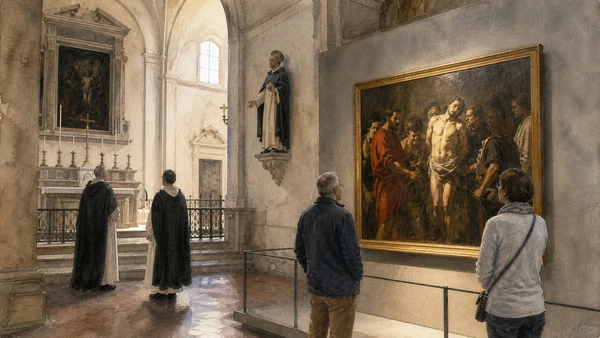
Neapolitan painting · Caravaggio’s Flagellation · Royal apartments

Move in the documented order: Neapolitan painting: city, workshop and patronage; then Caravaggio’s Flagellation: a church commission in museum care; then Royal apartments: ceremony, residence and later display. Check live access before entering ticketed or liturgical spaces.

Afternoon

Capodimonte porcelain · Real Bosco · Buildings in the Bosco

Move in the documented order: Capodimonte porcelain: royal industry and skilled labour; then Real Bosco: avenues, groves and public use; then Buildings in the Bosco: work behind the royal image. Check live access before entering ticketed or liturgical spaces.

Late afternoon

The view from Capodimonte

Move in the documented order: The view from Capodimonte: museum, city and volcano. Check live access before entering ticketed or liturgical spaces.

Ten chapters

Explore the places

The order follows terrain, institutions and present-day movement. Use the index to return to a chapter without reducing the district to isolated monuments.

  1. 01Arrival at Capodimonte: the museum begins with the climb
  2. 02The Royal Palace: collection architecture on a vast scale
  3. 03The Farnese collection: dynastic inheritance remade in Naples
  4. 04Neapolitan painting: city, workshop and patronage
  5. 05Caravaggio’s Flagellation: a church commission in museum care
  6. 06Royal apartments: ceremony, residence and later display
  7. 07Capodimonte porcelain: royal industry and skilled labour
  8. 08Real Bosco: avenues, groves and public use
  9. 09Buildings in the Bosco: work behind the royal image
  10. 10The view from Capodimonte: museum, city and volcano
01

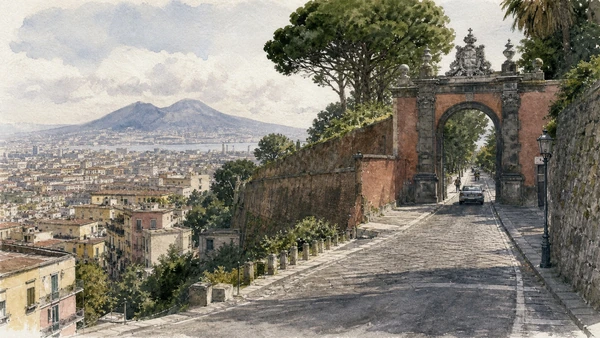
Roads, gates and steep terrain explain why the royal site developed as a separate hilltop world

Arrival at Capodimonte: the museum begins with the climb

Transport is part of access, not a minor logistical note.

Today

Check the current bus or shuttle information and allow extra time. Pedestrian approaches are steep and vehicular traffic can make some routes uncomfortable.

History

Bourbon rulers developed new connections between central Naples and the palace while the surrounding royal wood remained controlled territory. Later urban expansion pressed against the historic boundary.

How to read this place

At the gate, look back toward the city and map the change in elevation. The separation created both privilege and the present transport challenge.

What to notice

  • Gate marking transition from city to royal domain
  • Steep terrain shaping movement
  • Urban neighbourhoods meeting the historic boundary
Museo e Real Bosco di Capodimonte · Official site
Original documentary watercolour of Arrival at Capodimonte: the museum begins with the climb in Naples, showing architecture, people and present-day urban context
Arrival at Capodimonte: the museum begins with the climbOriginal Merlintravel documentary watercolour · 2026
02

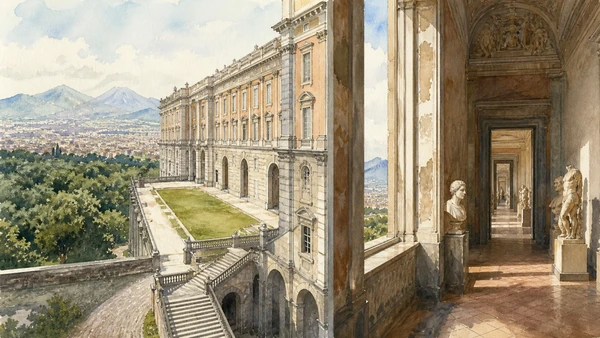
Long façades, courtyards and repeated rooms were built to house dynasty, court and collections

The Royal Palace: collection architecture on a vast scale

The building’s regularity hides changing uses and unfinished or altered campaigns.

Today

Visitor routes can open only part of the palace. Use the current plan and do not assume every courtyard or floor is public.

History

Construction began under Charles of Bourbon in the eighteenth century and continued through successive reigns. The building served royal residence, collection palace and later national museum functions.

How to read this place

Read courtyard depth, stair position and long gallery axes. Windows connect interior display to the landscape that justified the site.

What to notice

  • Large courtyards organising palace circulation
  • Long fronts overlooking the royal wood and city
  • Museum routes inserted into former court rooms
Museo e Real Bosco di Capodimonte · Official site
Original documentary watercolour of The Royal Palace: collection architecture on a vast scale in Naples, showing architecture, people and present-day urban context
The Royal Palace: collection architecture on a vast scaleOriginal Merlintravel documentary watercolour · 2026
03

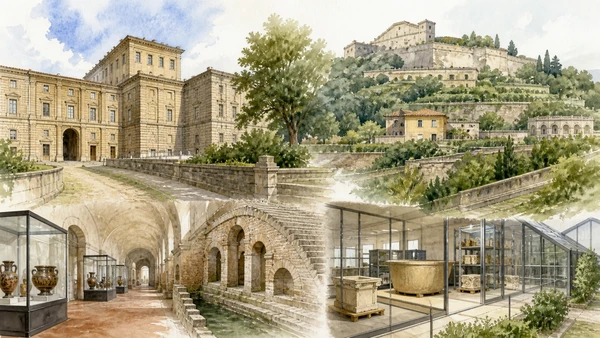
Paintings and objects assembled by the Farnese entered the Bourbon capital through family succession

The Farnese collection: dynastic inheritance remade in Naples

Their movement is central to the museum’s identity.

Today

Gallery order and works on view change for loans and conservation. Follow current labels and verify the open floor before planning around one painting.

History

Charles of Bourbon inherited the Farnese holdings through his mother, Elisabetta Farnese. Their transfer from Parma and Rome gave Capodimonte a collection of European importance.

How to read this place

Group works by former collection and patronage before grouping them by modern national school. The museum itself reflects both systems.

What to notice

  • Dynastic transfer shaping a royal museum
  • Old collection group surviving modern display
  • Loans and conservation changing visibility
Museo e Real Bosco di Capodimonte · Collections
Original documentary watercolour of The Farnese collection: dynastic inheritance remade in Naples in Naples, showing architecture, people and present-day urban context
The Farnese collection: dynastic inheritance remade in NaplesOriginal Merlintravel documentary watercolour · 2026
04

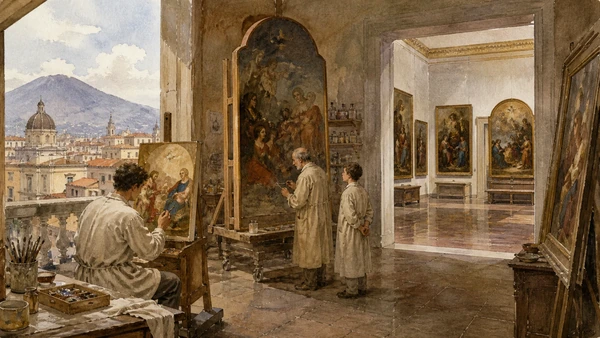
The galleries trace local production through churches, courts, collectors and modern institutions

Neapolitan painting: city, workshop and patronage

A regional school is a network of artists and commissions, not a fixed visual essence.

Today

Allow time to read provenance, especially for works transferred from religious institutions. Low light and room closures protect the collection.

History

Caravaggio’s impact, seventeenth-century workshops, late Baroque commissions and nineteenth-century developments are represented through works created for different Neapolitan settings.

How to read this place

Compare scale and intended viewing distance. An altarpiece in a palace gallery should be mentally returned to its original church architecture.

What to notice

  • Altarpieces separated from former sacred settings
  • Workshops transmitting technique across generations
  • Museum sequence creating a regional narrative
Museo e Real Bosco di Capodimonte · Collections
Original documentary watercolour of Neapolitan painting: city, workshop and patronage in Naples, showing architecture, people and present-day urban context
Neapolitan painting: city, workshop and patronageOriginal Merlintravel documentary watercolour · 2026
05

The painting combines forceful bodies, darkness and devotion while carrying a complex movement and conservation history

Caravaggio’s Flagellation: a church commission in museum care

Its fame should not erase the original Dominican context.

Today

The work can travel or undergo conservation. Check the official collection notice and never promise visibility from an old guide.

History

Caravaggio produced the painting for San Domenico Maggiore during his Neapolitan years. It later entered museum care, where restoration and study changed how its surface can be read.

How to read this place

Observe the compressed figures and light, then use provenance to recover altar height and devotional function. Avoid treating darkness as biography without evidence.

What to notice

  • Figures compressed into a shallow dramatic field
  • Light structuring action and devotion
  • Museum display separated from original altar
Museo e Real Bosco di Capodimonte · Collections
Original documentary watercolour of Caravaggio's Flagellation: a church commission in museum care in Naples, showing architecture, people and present-day urban context
Caravaggio’s Flagellation: a church commission in museum careOriginal Merlintravel documentary watercolour · 2026
06

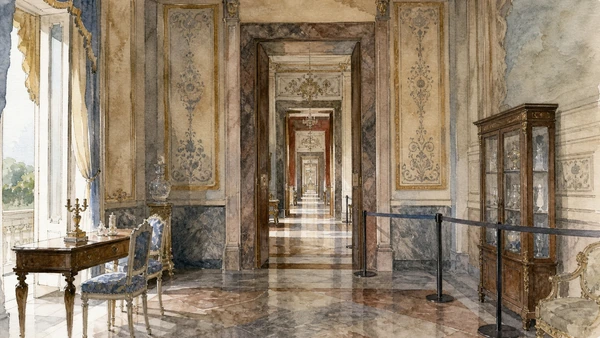
Furniture, textiles and decorated rooms reconstruct court life only partially

Royal apartments: ceremony, residence and later display

The apartments are historical interiors assembled through survival, movement and curatorial choice.

Today

Access may depend on staffing or restoration. Barriers protect floors and furnishings; follow the defined route.

History

Bourbon and later rulers used and altered rooms for representation and residence. After the end of monarchy, state museum policy preserved and rearranged surviving contents.

How to read this place

Read door sequences, sight lines and service separation before individual furnishings. Ask which objects are original to the room and which illustrate a period.

What to notice

  • Enfilade controlling ceremonial approach
  • Furnishings preserving partial room ensembles
  • Modern barriers marking conservation needs
Museo e Real Bosco di Capodimonte · Royal Apartments
Original documentary watercolour of Royal apartments: ceremony, residence and later display in Naples, showing architecture, people and present-day urban context
Royal apartments: ceremony, residence and later displayOriginal Merlintravel documentary watercolour · 2026
07

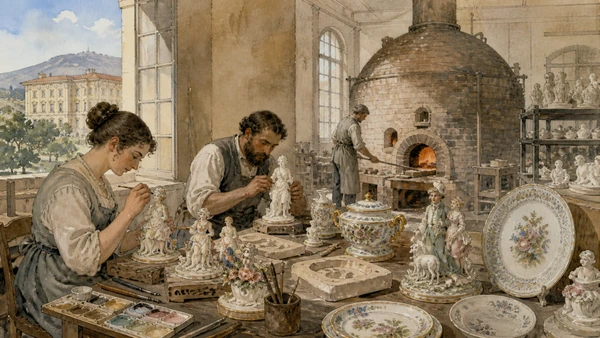
Porcelain connects court taste to chemistry, modelling, firing, labour and international competition

Capodimonte porcelain: royal industry and skilled labour

The label Capodimonte must be tied to documented factory history, not every later ceramic souvenir.

Today

Displays can rotate and delicate objects require controlled cases. Use object labels for maker, date and manufacture.

History

Charles of Bourbon founded a royal porcelain manufactory near the palace in the eighteenth century. Production developed distinctive figures and services before the original factory was transferred after his departure.

How to read this place

Compare clay body, glaze, modelling and marks. Separate original royal manufacture from later Naples traditions that reused the name.

What to notice

  • Small figures revealing modelling skill
  • Kiln technology behind courtly surfaces
  • Marks and provenance distinguishing production
Museo e Real Bosco di Capodimonte · Decorative arts
Original documentary watercolour of Capodimonte porcelain: royal industry and skilled labour in Naples, showing architecture, people and present-day urban context
Capodimonte porcelain: royal industry and skilled labourOriginal Merlintravel documentary watercolour · 2026
08

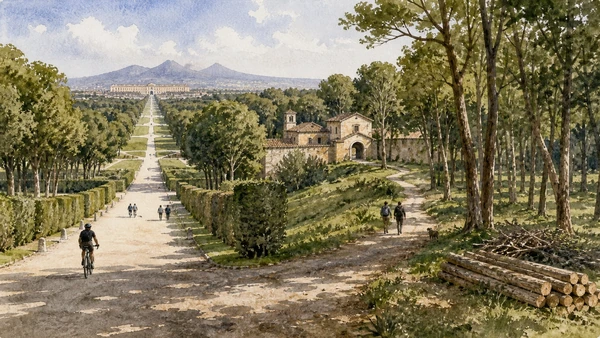
The wood is a designed royal landscape and a living urban park

Real Bosco: avenues, groves and public use

Formal axes, woodland management, recreation and biodiversity overlap.

Today

Opening depends on weather, maintenance and current park rules. Stay on permitted routes, respect planted areas and keep dogs under the published conditions.

History

The royal wood was organised for court use, hunting, production and ceremony. It later became a public asset while historic design and ecological systems required active management.

How to read this place

Follow one formal avenue and one quieter secondary route. Compare clipped geometry, woodland edge, service buildings and present recreation.

What to notice

  • Radial avenues expressing royal control
  • Woodland structure requiring active care
  • Everyday public recreation inside a historic domain
Real Bosco di Capodimonte · Official site
Original documentary watercolour of Real Bosco: avenues, groves and public use in Naples, showing architecture, people and present-day urban context
Real Bosco: avenues, groves and public useOriginal Merlintravel documentary watercolour · 2026
09

Churches, workshops, lodges and service structures reveal the productive life of the domain

Buildings in the Bosco: work behind the royal image

The park was never only a scenic frame.

Today

Many buildings have limited, event-based or non-public access. Read exteriors without entering restricted work zones.

History

Specialised buildings supported worship, craft, agriculture, maintenance and court activity. Their functions changed as the site moved from royal estate to public museum and park.

How to read this place

Map each structure to a former task and its relation to roads or gates. Condition and reuse are part of current heritage management.

What to notice

  • Service buildings distributed along planned routes
  • Craft and maintenance supporting court life
  • Adaptive reuse preserving selected structures
Real Bosco di Capodimonte · Official site
Original documentary watercolour of Buildings in the Bosco: work behind the royal image in Naples, showing architecture, people and present-day urban context
Buildings in the Bosco: work behind the royal imageOriginal Merlintravel documentary watercolour · 2026
10

Long views reconnect the elevated royal site to the dense city, bay and volcanic terrain below

The view from Capodimonte: museum, city and volcano

The panorama is evidence of geography and power rather than a detached scenic finale.

Today

Visibility changes with weather and air quality. Use designated viewpoints and keep garden edges protected.

History

The hilltop position offered symbolic distance, healthier air and control over a large domain while remaining connected to the capital. Later urban growth filled much of the intervening terrain.

How to read this place

Identify the historic centre, port, bay and Vesuvius, then turn back to the palace. The view explains both location and the social distance built into the site.

What to notice

  • Palace terrace overlooking dense Naples
  • Bay and volcano establishing regional geography
  • Modern neighbourhoods filling the royal approach
Museo e Real Bosco di Capodimonte · Official site
Original documentary watercolour of The view from Capodimonte: museum, city and volcano in Naples, showing architecture, people and present-day urban context
The view from Capodimonte: museum, city and volcanoOriginal Merlintravel documentary watercolour · 2026

Naples through time

A short chronology

From Greek Neapolis and Roman infrastructure to dynastic capitals, wartime rupture, UNESCO care and a living metropolitan centre.

  1. Greek settlements and Neapolis establish the coastal and gridded urban foundations later absorbed by Roman Naples.

  2. Walls, streets, sanctuaries and civic spaces consolidate the ancient city on the tuff plateau.

  3. Roman Naples expands its theatres, baths, water systems, port functions and elite residences.

  4. Christian worship, burial and episcopal institutions reshape the ancient city and its edges.

  5. The Duchy of Naples maintains a distinct Mediterranean political and cultural identity.

  6. Norman and Swabian rule integrate Naples into larger southern kingdoms while reusing existing institutions.

  7. Angevin rule makes Naples a royal capital and begins major castle, church and urban commissions.

  8. Aragonese rule adds court culture, fortification and monumental Renaissance patronage.

  9. Spanish viceregal government extends Via Toledo, military quarters, religious houses and administrative power.

  10. Bourbon rule restores Naples as a dynastic capital and expands royal, cultural and infrastructural projects.

  11. The brief Parthenopean Republic and its repression expose deep political and social conflict.

  12. French-period government reforms streets, institutions and public administration.

  13. Naples enters the unified Kingdom of Italy and its capital functions are reorganised.

  14. Bombing, occupation, the Four Days and post-war rebuilding transform the city and port.

  15. UNESCO inscription, restoration, tourism pressure and resident-led cultural work renew debate over a living historic centre.

Before your visit

Practical information

01

Reserve constrained interiors

Timed museums, underground routes and major chapels can sell out; use only their current official booking channels.

02

Respect worship

Church access can pause for liturgy, funerals or community events; a visitor ticket never overrides religious use.

03

Walk the terrain

Tuff ridges, steep stairs, uneven paving and dense traffic are part of the city; keep a shorter accessible alternative.

04

Do not turn residents into scenery

Keep doorways, workshops, market lanes and courtyards clear; photograph people only with consent.

05

Check live transport

Metro, funicular, port and bus service can change; verify the same-day operator notice before relying on a connection.

06

Read layers, not clichés

Religious devotion, poverty, theatricality and danger are not interchangeable labels for Naples; use documented sites and institutions.

Method and sources

Sources and image credits

This guide uses official museum, ministry, church, transport and UNESCO documentation checked on 29 August 2026. It separates durable historical interpretation from access details that can change; distinguishes surviving fabric from reconstruction, restoration and legend; and treats worship, work, residence and public movement as part of the evidence rather than visual interference. Every chapter links its principal institutional source, while current tickets, closures and transport must always be verified again on the day of the visit.

All ten images are original Merlintravel editorial watercolours based on documented present-day conditions. They are illustrations, not substitutes for archaeological plans. Opening hours, tickets, accessible routes, temporary exhibitions and conservation work can change; consult the linked official pages shortly before visiting.