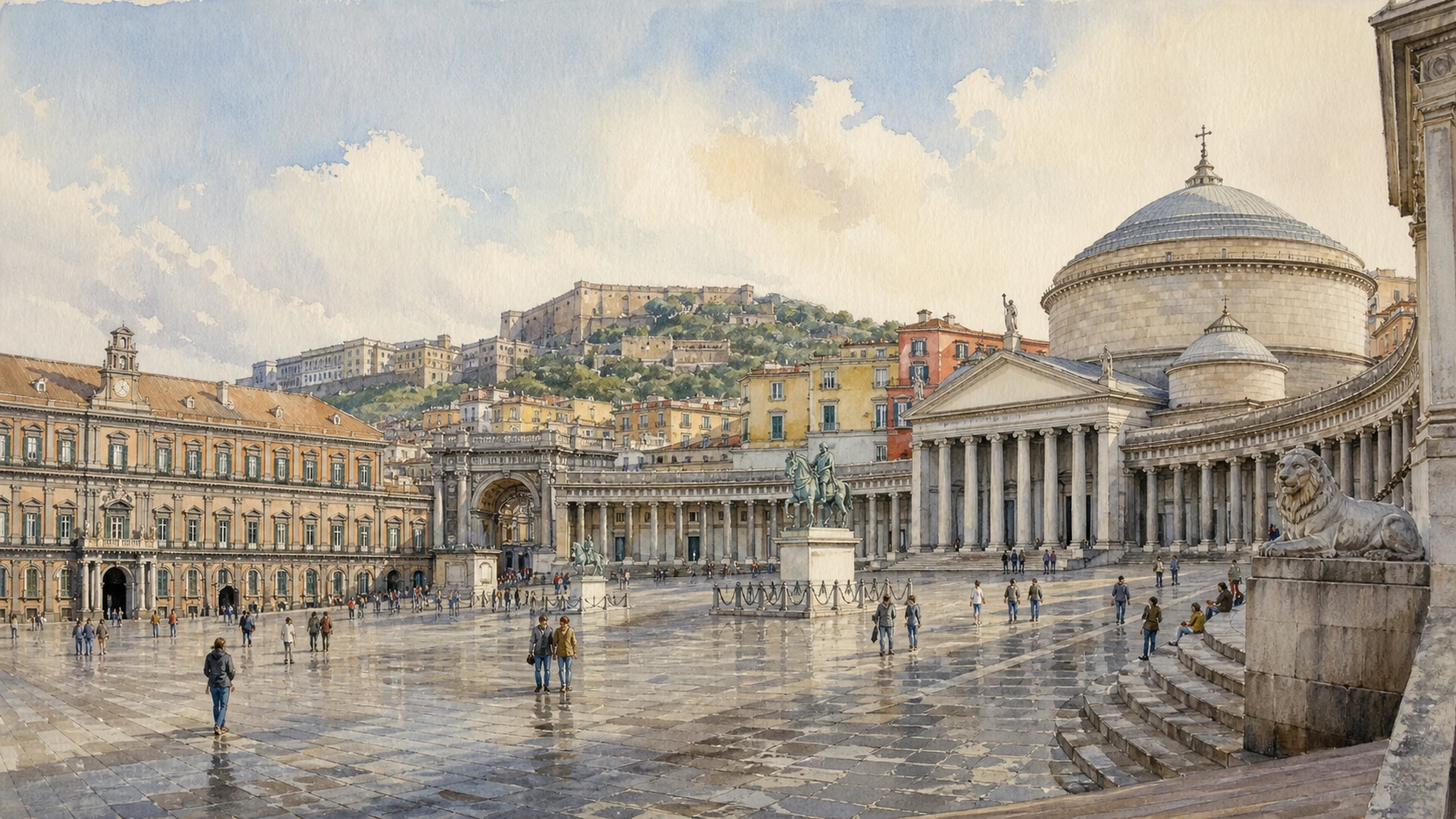
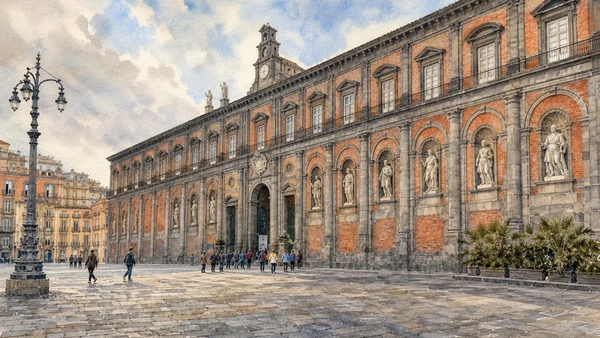
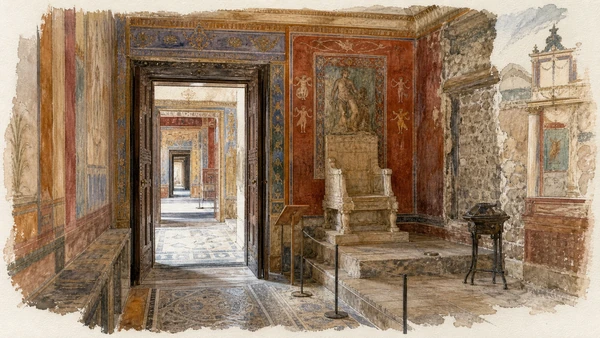
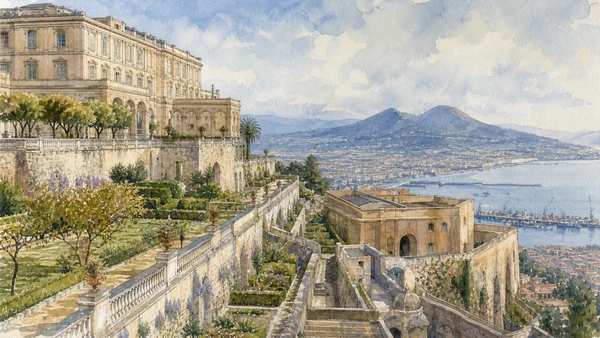
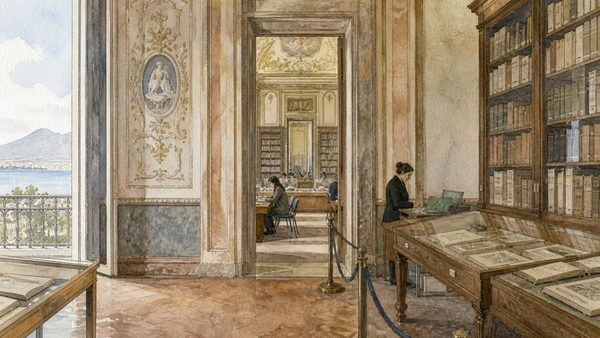
The Royal Palace originated under Spanish viceregal government and became a Bourbon residence. Its long façade, courtyards, ceremonial apartment, gardens and service connections preserve successive ideas of capital and dynasty.
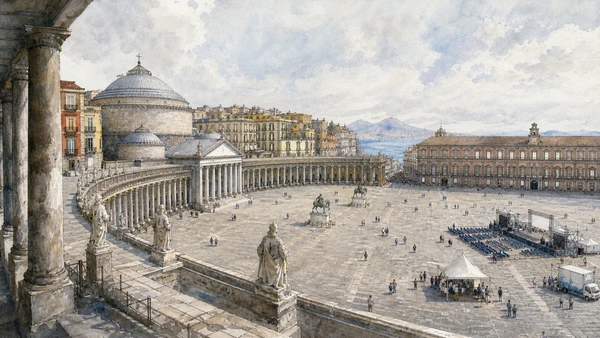
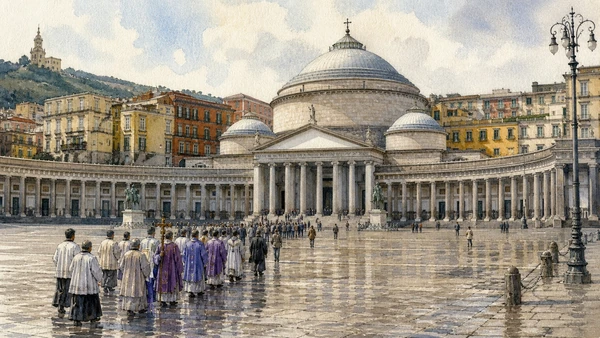
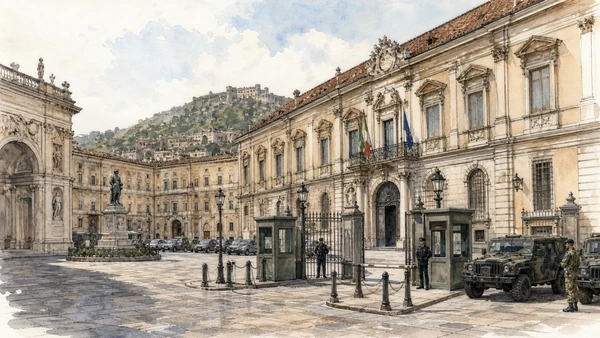
Piazza del Plebiscito acquired its present scale through demolition and early nineteenth-century planning. San Francesco di Paola, Palazzo Salerno and the prefectural edge produced a controlled room later reused for national ceremony, protest, concerts and everyday movement.
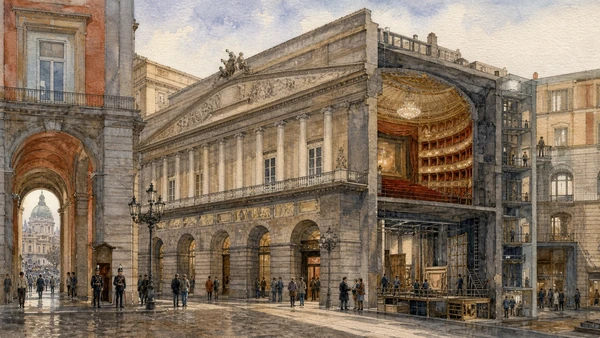
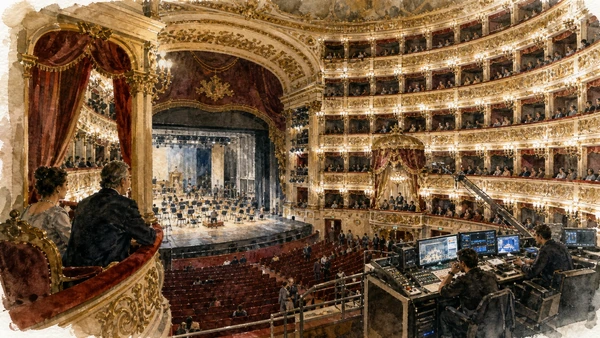
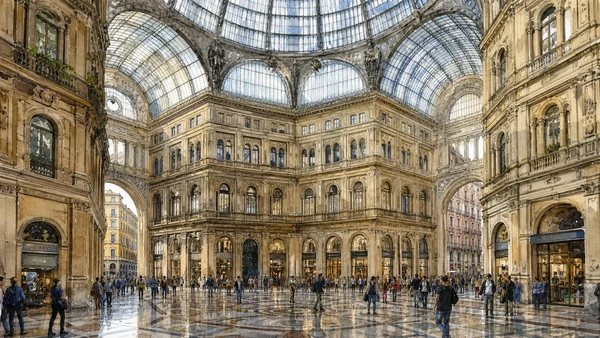
San Carlo and Galleria Umberto connect court theatre to modern commercial and cultural urbanism. Performance schedules, rehearsals, restoration and crowd management mean that their present use must guide the visit.
Read the square before entering, reserve palace and theatre access separately and keep ordinary civic life in view: monumentality is the setting for institutions that still work.