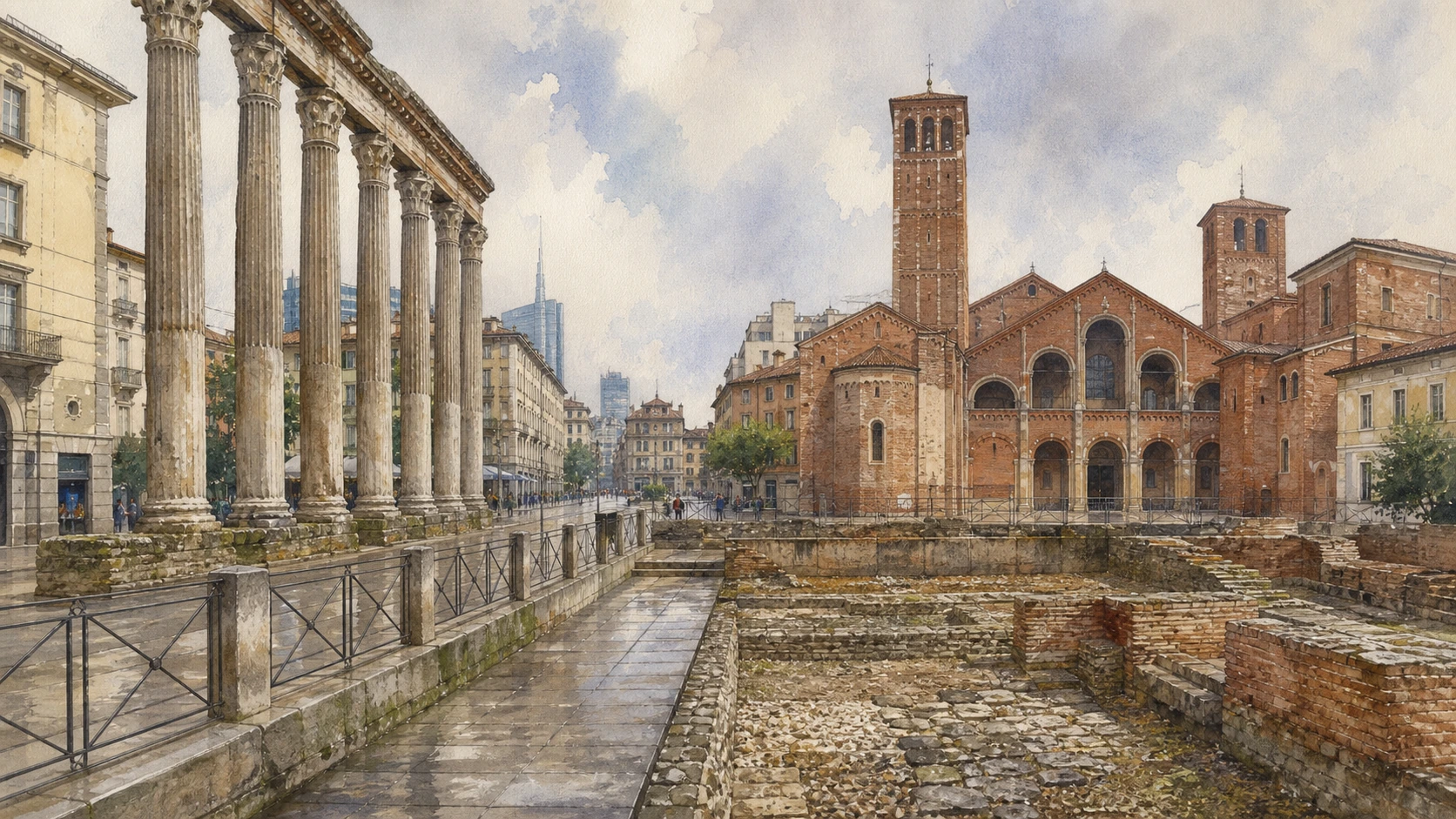
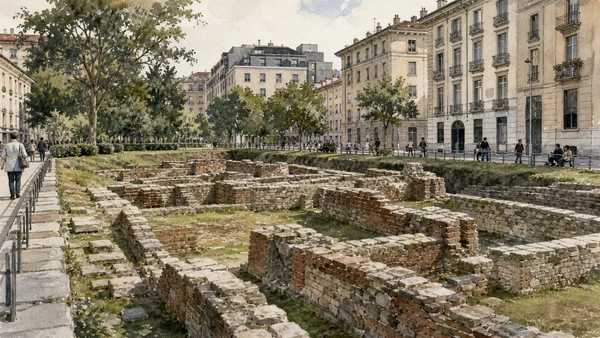
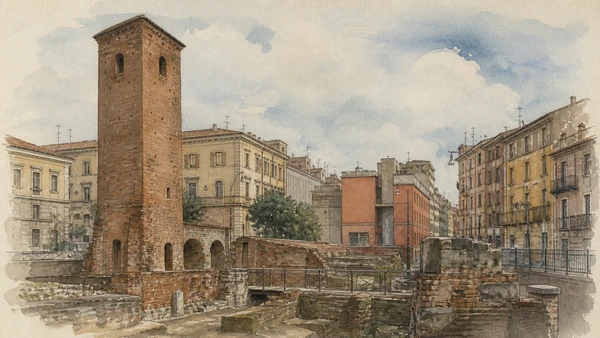
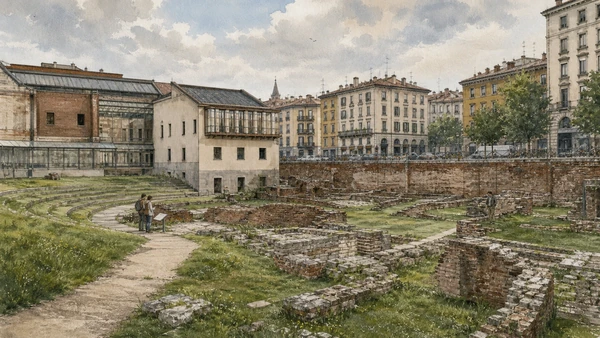
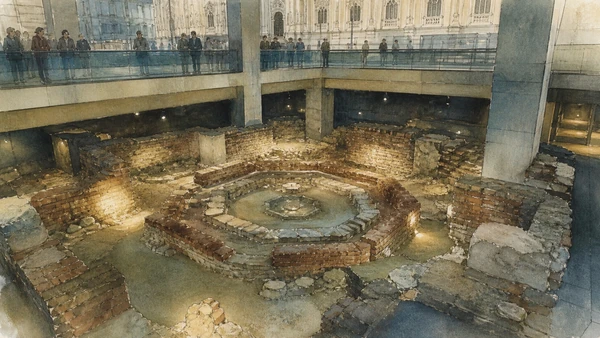
Milan’s elevation as an imperial residence brought palace, circus and administrative investment. Much of this fabric survives only in partial foundations because medieval and modern occupation repeatedly reused the same central ground.
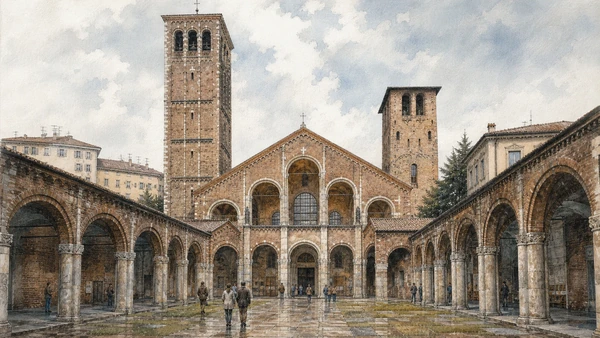
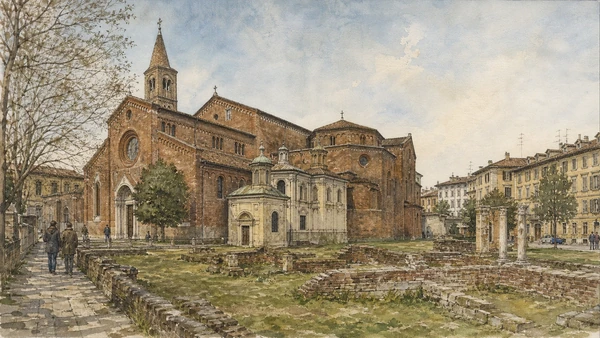
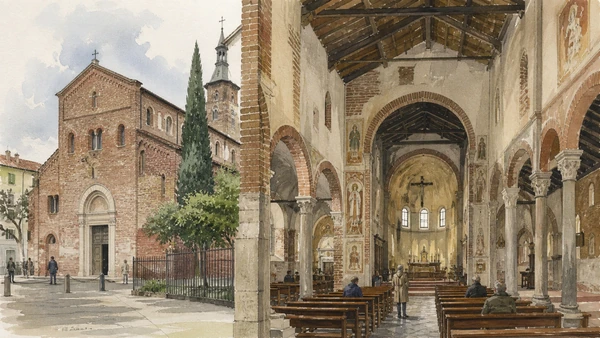
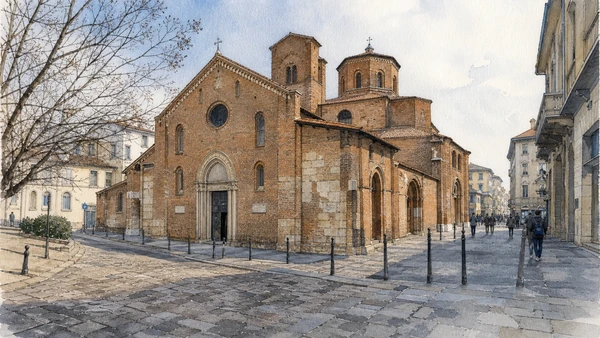
Christian institutions did not simply replace a vanished Roman city. Basilicas used roads, cemeteries, elite patronage and existing materials while creating new ceremonial geographies around bishops, martyrs and burial.
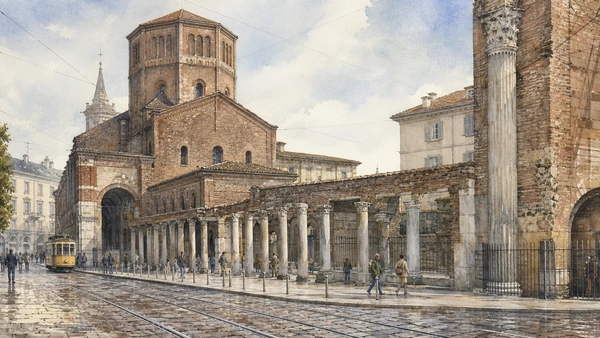
The route therefore moves between state archaeology and active churches. It distinguishes current dedications from ancient phases and avoids presenting every exposed column as if it remained in its first location.
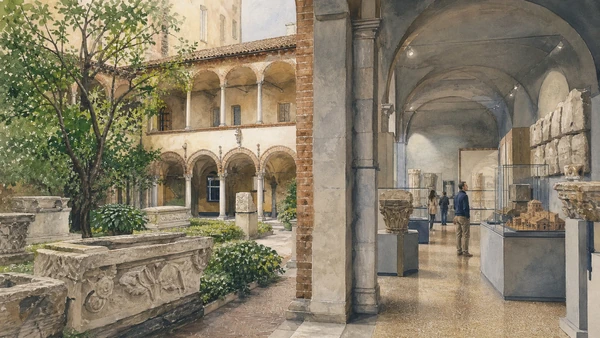
Use the museum to establish chronology, then map exterior fragments and basilicas in a broad loop; surface distance is part of understanding the scale of the late-antique capital.