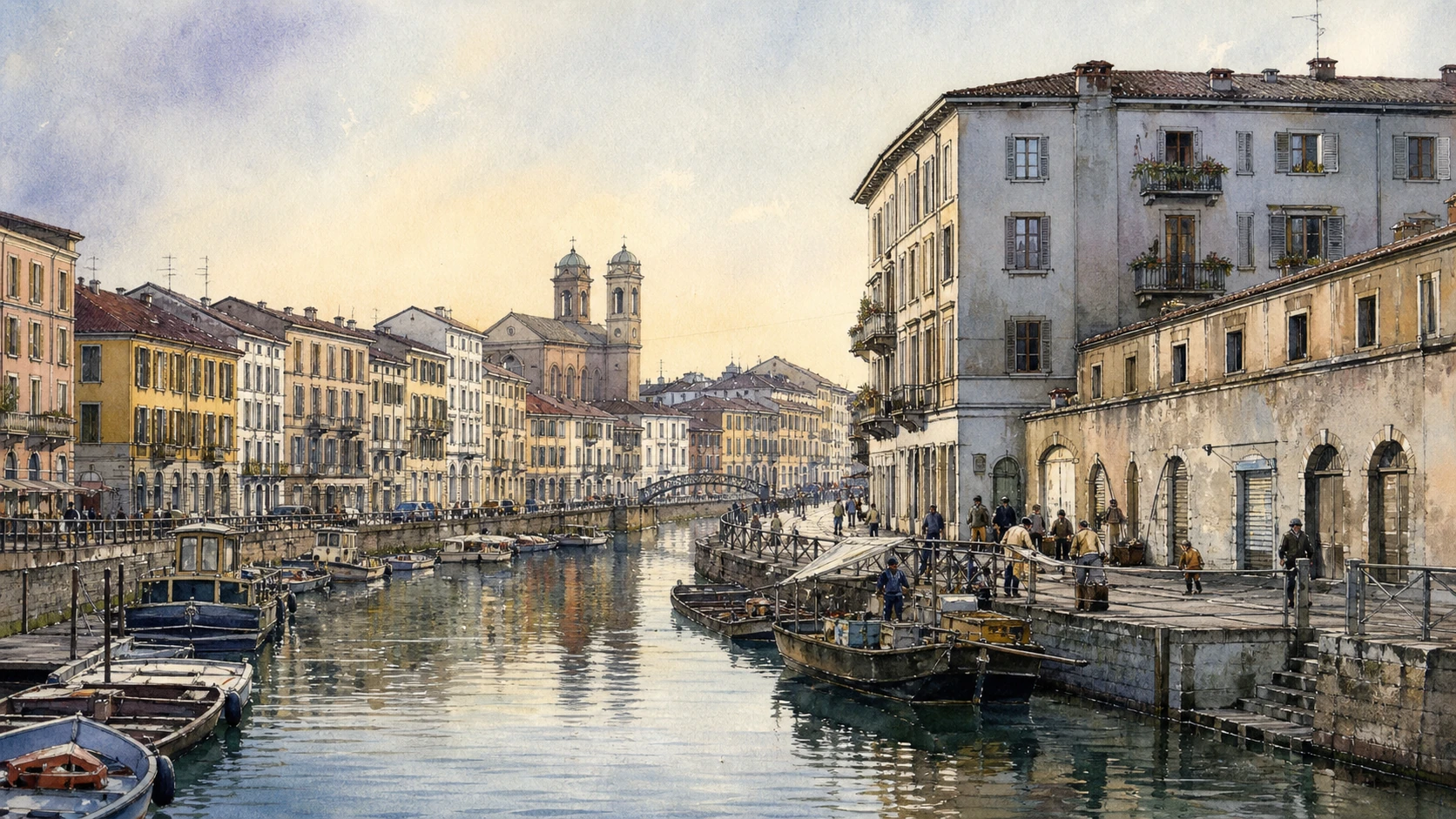
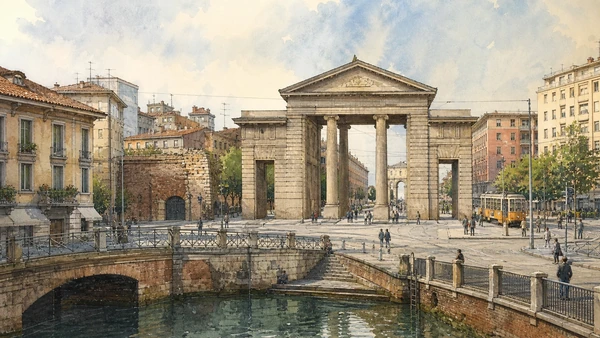
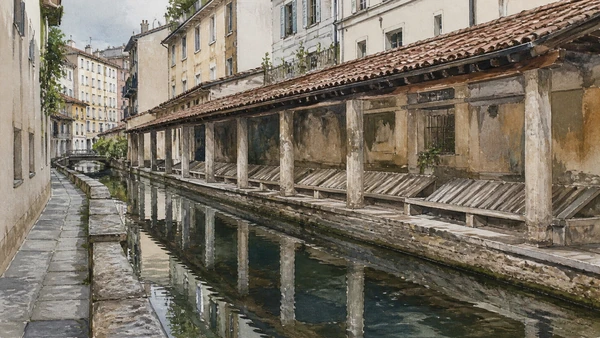
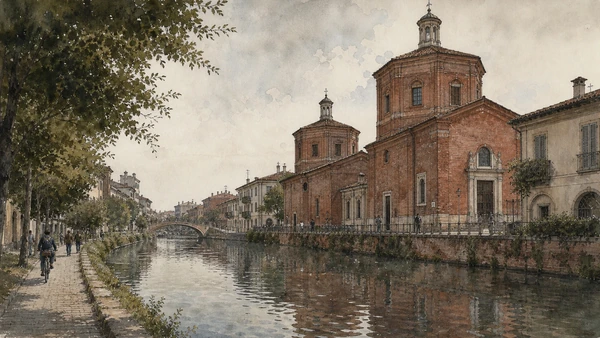
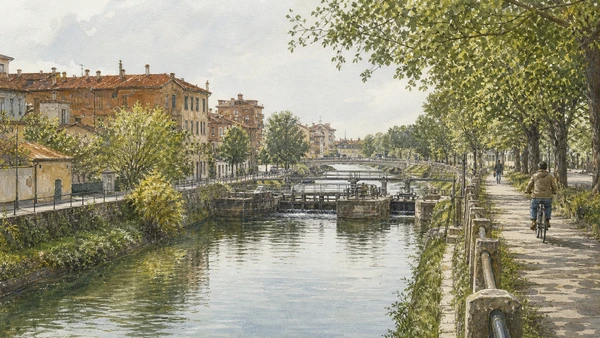
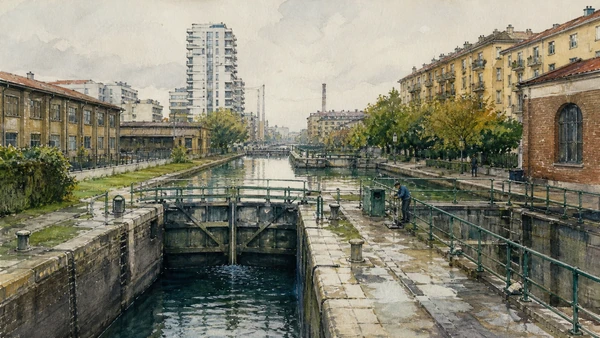
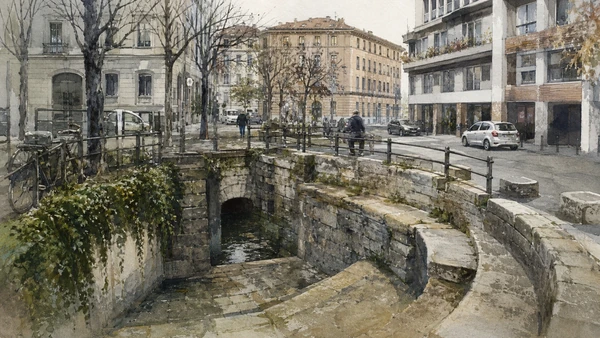
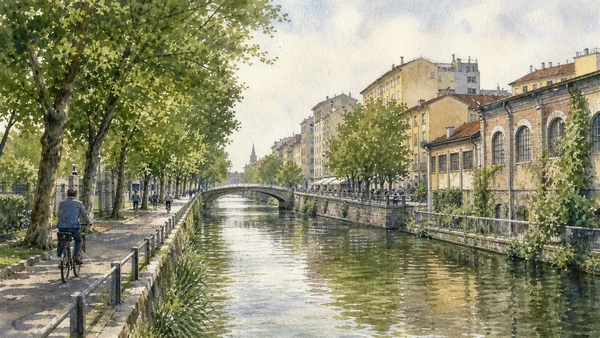
Milan’s canal system joined rivers, countryside and city through works developed over centuries. The surviving southern canals are fragments of a wider network once connected to internal waterways and productive territories.
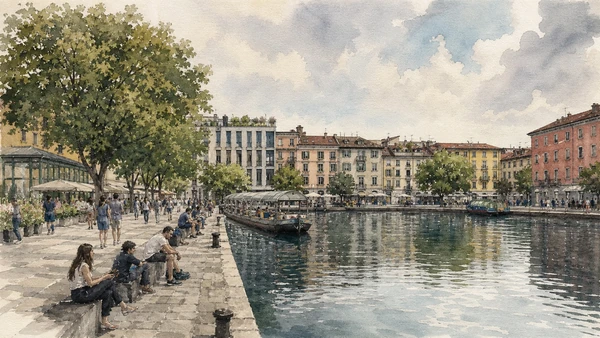
The Darsena functioned as a port basin and interface between routes. Restoration and public-realm works shaped the embankments and promenades visible today.
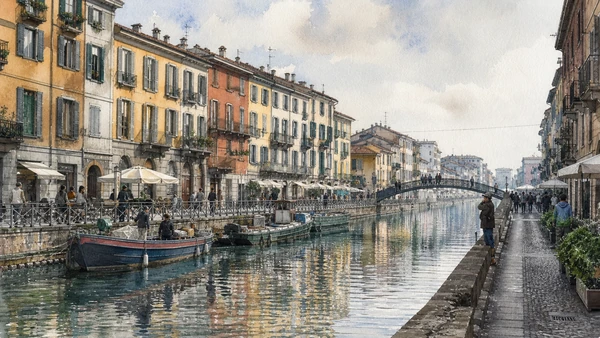
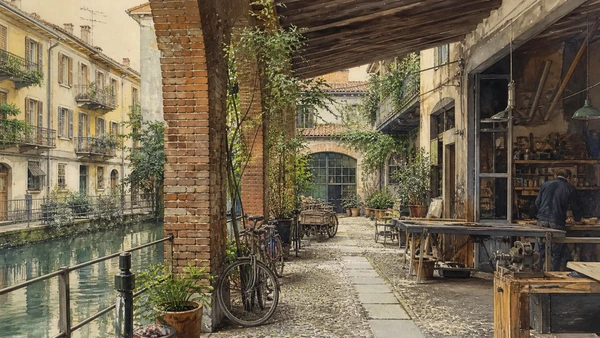
Canalside buildings remain homes, workshops, churches, clubs and delivery addresses. Reading water history therefore requires restraint at private thresholds and an honest account of noise, tourism pressure and seasonal environmental conditions.
Walk in daylight before the night economy takes over, keep both canal banks in view and use official water-network evidence to distinguish historic function from contemporary branding.