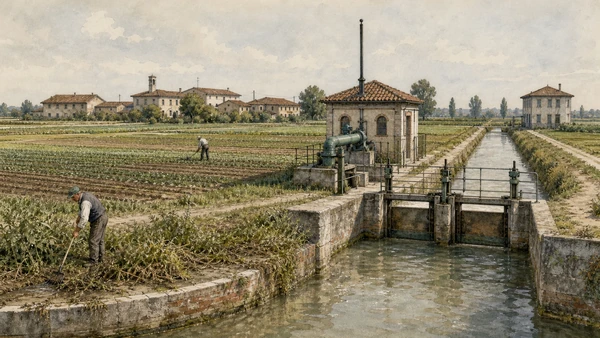
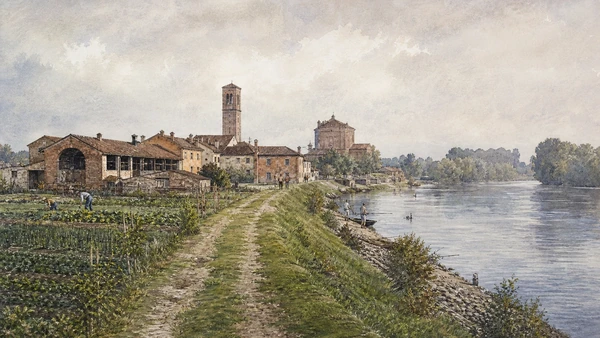
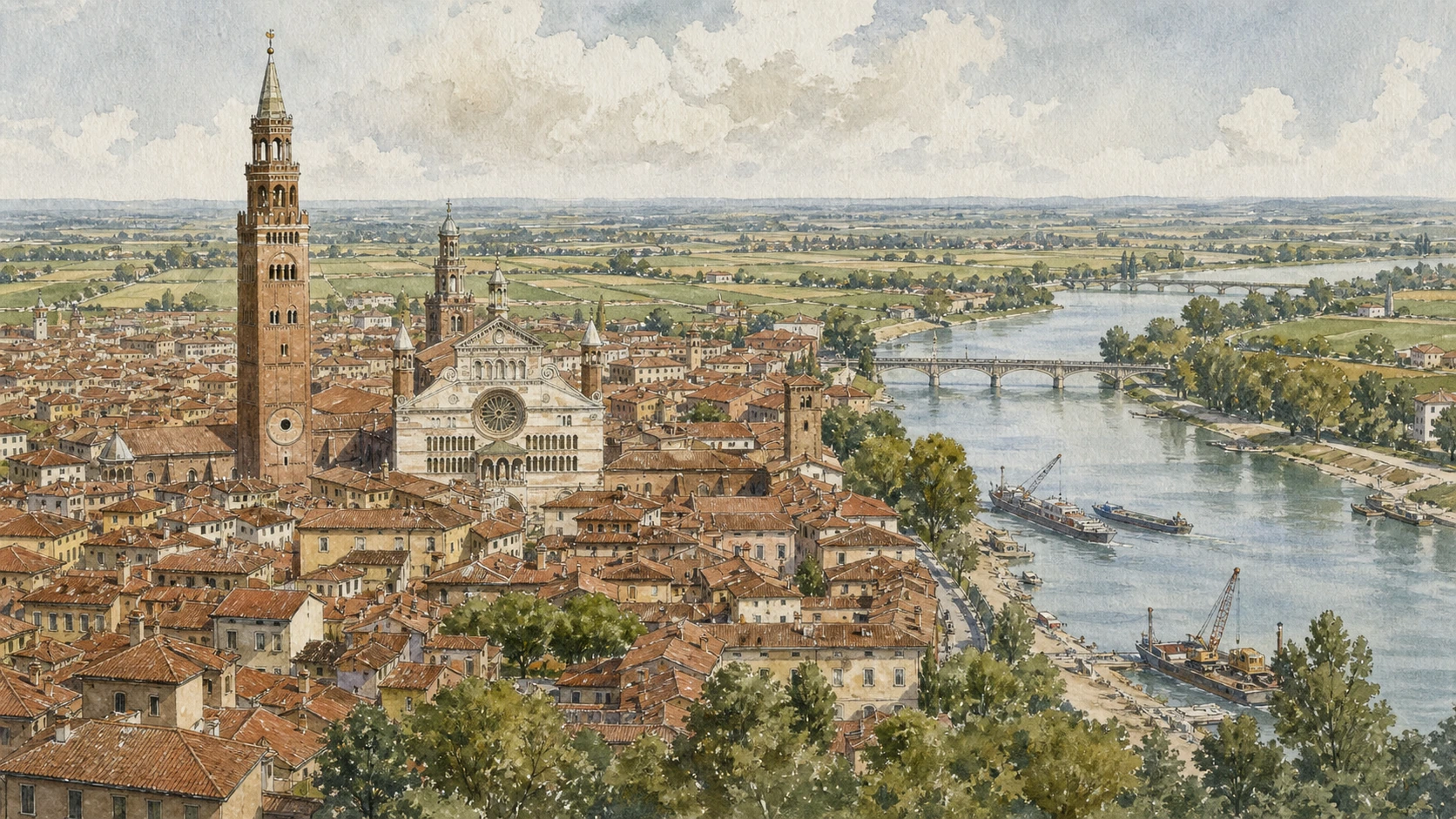
Original documentary watercolour panorama for Cremona and the Lower Po: Complete Guide, with accurate Lombardy architecture, landscape and lived context

Lombardy Guide 05 · Cathedral square, civic collections, violin making, river ecology, agriculture and hydraulic work

Cremona
& the Lower Po

A complete guide from Cremona’s cathedral, Torrazzo and communal square to violin-making workshops and museums, then outward to the Po, floodplain, canals, agricultural production and smaller working settlements.

Plan the route
Cremona and the Lower Po · Lombardy10 chapters · one complete route

Why this route must be read in layers

Cremona’s celebrated skyline and violin identity depend on a broader productive territory: river routes, timber and craft knowledge, farms, water control and civic institutions connect the historic centre to the Lower Po.

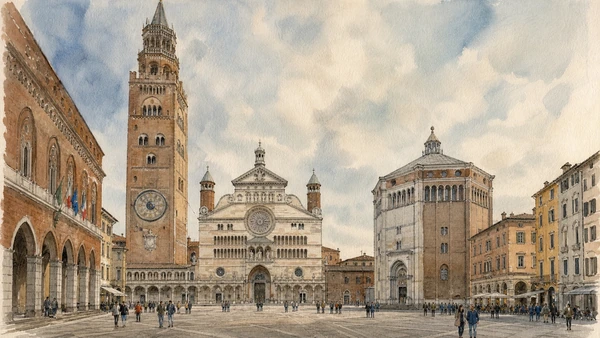
Piazza del Comune brings cathedral, baptistery, Torrazzo and civic palace into one compact ensemble formed across medieval communal history and later restoration.

Violin making is living specialised knowledge, not only a collection of historic instruments. Workshops, training, material selection, acoustics and performance keep the tradition active while museums document attribution and conservation.

The Po is an engineered and ecological river. Embankments, ports, drainage, agriculture and seasonal water levels require current safety information and resist a purely picturesque reading.

Give the historic centre a full day and approach the river and rural chapters separately, using authorised paths and appointments rather than entering workshops or fields uninvited.

The route

Plan your visit

Begin in Piazza del Comune, follow collections and living craft through the centre, then move to the Po edge and Lower Cremonese landscape with current river conditions.

Early morning

Piazza del Comune · Cremona Cathedral · Torrazzo

Move in the documented order: Piazza del Comune: cathedral and commune face to face; then Cremona Cathedral: Romanesque structure and painted interior; then Torrazzo: civic-religious tower and astronomical time. Recheck live access and transport before entering a controlled site.

Late morning

Baptistery · Museo del Violino · Violin-making workshops

Move in the documented order: Baptistery: octagonal geometry beside the cathedral; then Museo del Violino: instruments, attribution and acoustics; then Violin-making workshops: living knowledge behind private doors. Recheck live access and transport before entering a controlled site.

Afternoon

Museo Civico Ala Ponzone · The Po at Cremona · Canals and drainage

Move in the documented order: Museo Civico Ala Ponzone: civic art and local collecting; then The Po at Cremona: port, bridges and changing water; then Canals and drainage: engineered agriculture. Recheck live access and transport before entering a controlled site.

Late afternoon

Lower Po settlements

Move in the documented order: Lower Po settlements: work, food and river memory. Recheck live access and transport before entering a controlled site.

Ten chapters

Explore the places

The order follows terrain, institutions and present-day movement. Use the index to return to a chapter without reducing the route to isolated monuments.

  1. 01Piazza del Comune: cathedral and commune face to face
  2. 02Cremona Cathedral: Romanesque structure and painted interior
  3. 03Torrazzo: civic-religious tower and astronomical time
  4. 04Baptistery: octagonal geometry beside the cathedral
  5. 05Museo del Violino: instruments, attribution and acoustics
  6. 06Violin-making workshops: living knowledge behind private doors
  7. 07Museo Civico Ala Ponzone: civic art and local collecting
  8. 08The Po at Cremona: port, bridges and changing water
  9. 09Canals and drainage: engineered agriculture
  10. 10Lower Po settlements: work, food and river memory
01

Religious and civic buildings define a medieval square whose proportions still organise public life.

Piazza del Comune: cathedral and commune face to face

Religious and civic buildings define a medieval square whose proportions still organise public life. The site becomes clearer when its surviving fabric, later alterations and present use are read together.

Today

The exterior can usually be read from public space, but events, works and crowd management may change circulation. Keep access routes open and verify any interior visit with the responsible institution.

History

Cathedral, Torrazzo, baptistery and Palazzo Comunale developed through successive communal building campaigns and later interventions.

How to read this place

Begin with the dialogue between cathedral and civic palace. Then compare brick and marble material contrast with public circulation across the square; the differences are evidence, not visual noise.

What to notice

  • the dialogue between cathedral and civic palace
  • brick and marble material contrast
  • public circulation across the square
Turismo Cremona · Official destination site
Original documentary watercolour of Piazza del Comune: cathedral and commune face to face in Cremona and the Lower Po · Lombardy, showing accurate architecture, landscape, people and present-day use
Piazza del Comune: cathedral and commune face to faceOriginal Merlintravel documentary watercolour · 2026
02

Façade, porch, transepts and frescoed nave preserve multiple phases of architecture and religious patronage.

Cremona Cathedral: Romanesque structure and painted interior

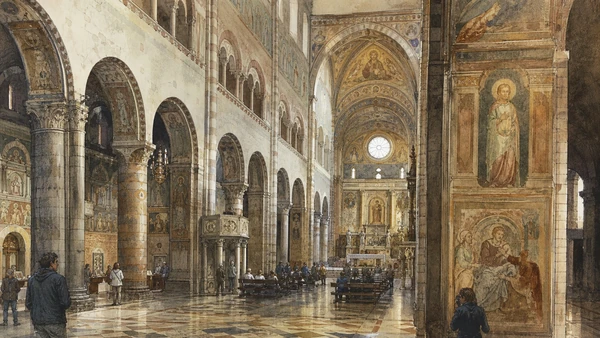
Façade, porch, transepts and frescoed nave preserve multiple phases of architecture and religious patronage. The site becomes clearer when its surviving fabric, later alterations and present use are read together.

Today

This is an active religious place as well as a historic building. Services, ceremonies and conservation can interrupt tourist access; dress appropriately, remain quiet and never treat a booked visit as priority over worship.

History

The cathedral was begun in the early twelfth century and rebuilt after earthquake, then enriched through Gothic, Renaissance and later campaigns.

How to read this place

Begin with the façade’s layered sculpture. Then compare transept and nave structure with sixteenth-century painting within the medieval church; the differences are evidence, not visual noise.

What to notice

  • the façade’s layered sculpture
  • transept and nave structure
  • sixteenth-century painting within the medieval church
Turismo Cremona · Official destination site
Original documentary watercolour of Cremona Cathedral: Romanesque structure and painted interior in Cremona and the Lower Po · Lombardy, showing accurate architecture, landscape, people and present-day use
Cremona Cathedral: Romanesque structure and painted interiorOriginal Merlintravel documentary watercolour · 2026
03

A very tall brick bell tower and astronomical clock make measurement, visibility and communal identity part of the cathedral ensemble.

Torrazzo: civic-religious tower and astronomical time

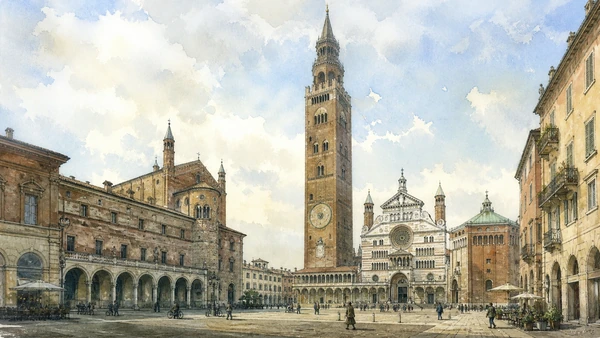
A very tall brick bell tower and astronomical clock make measurement, visibility and communal identity part of the cathedral ensemble. The site becomes clearer when its surviving fabric, later alterations and present use are read together.

Today

Opening, ticketing, room access and temporary displays can change. Check the institution’s official notice shortly before visiting, use the designated entrance and allow for security or conservation controls.

History

The tower rose through medieval phases and later received its celebrated astronomical dial, remaining an active bell and visitor structure.

How to read this place

Begin with changes in masonry up the tower. Then compare the astronomical clock face with the city and plain seen from controlled viewpoints; the differences are evidence, not visual noise.

What to notice

  • changes in masonry up the tower
  • the astronomical clock face
  • the city and plain seen from controlled viewpoints
Turismo Cremona · Official destination site
Original documentary watercolour of Torrazzo: civic-religious tower and astronomical time in Cremona and the Lower Po · Lombardy, showing accurate architecture, landscape, people and present-day use
Torrazzo: civic-religious tower and astronomical timeOriginal Merlintravel documentary watercolour · 2026
04

A centralised brick-and-stone building preserves medieval baptismal architecture and later completion within the square.

Baptistery: octagonal geometry beside the cathedral

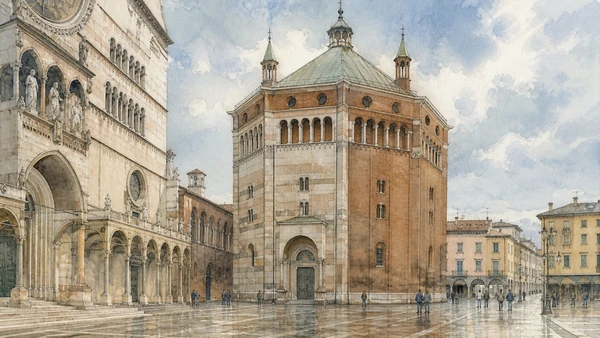
A centralised brick-and-stone building preserves medieval baptismal architecture and later completion within the square. The site becomes clearer when its surviving fabric, later alterations and present use are read together.

Today

This is an active religious place as well as a historic building. Services, ceremonies and conservation can interrupt tourist access; dress appropriately, remain quiet and never treat a booked visit as priority over worship.

History

Construction began in the twelfth century, with subsequent changes to materials, openings and interior fittings as liturgical practice evolved.

How to read this place

Begin with the octagonal exterior mass. Then compare alternation of brick and marble with the central interior and font; the differences are evidence, not visual noise.

What to notice

  • the octagonal exterior mass
  • alternation of brick and marble
  • the central interior and font
Turismo Cremona · Official destination site
Original documentary watercolour of Baptistery: octagonal geometry beside the cathedral in Cremona and the Lower Po · Lombardy, showing accurate architecture, landscape, people and present-day use
Baptistery: octagonal geometry beside the cathedralOriginal Merlintravel documentary watercolour · 2026
05

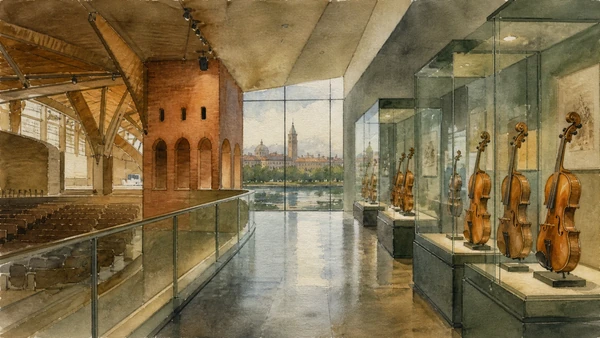
Historic violins, workshop evidence and an auditorium connect objects to making, sound and conservation.

Museo del Violino: instruments, attribution and acoustics

Historic violins, workshop evidence and an auditorium connect objects to making, sound and conservation. The site becomes clearer when its surviving fabric, later alterations and present use are read together.

Today

Opening, ticketing, room access and temporary displays can change. Check the institution’s official notice shortly before visiting, use the designated entrance and allow for security or conservation controls.

History

Civic collections and foundations tied to Cremonese lutherie were reorganised in Palazzo dell’Arte to present instruments associated with major makers and modern competitions.

How to read this place

Begin with labels explaining attribution and condition. Then compare construction tools and templates with the auditorium as part of living sound culture; the differences are evidence, not visual noise.

What to notice

  • labels explaining attribution and condition
  • construction tools and templates
  • the auditorium as part of living sound culture
Comune di Cremona · Museo del Violino
Original documentary watercolour of Museo del Violino: instruments, attribution and acoustics in Cremona and the Lower Po · Lombardy, showing accurate architecture, landscape, people and present-day use
Museo del Violino: instruments, attribution and acousticsOriginal Merlintravel documentary watercolour · 2026
06

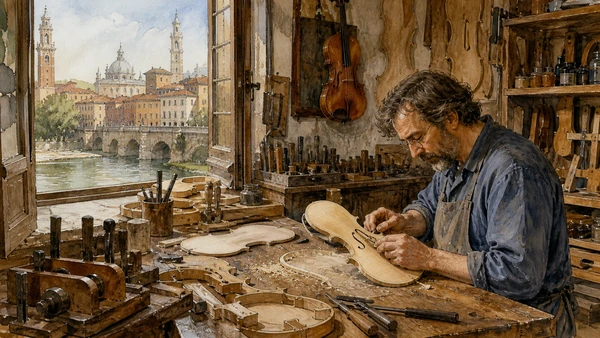
Small specialist workshops continue skills of wood selection, carving, varnishing, setup and repair within the historic city.

Violin-making workshops: living knowledge behind private doors

Small specialist workshops continue skills of wood selection, carving, varnishing, setup and repair within the historic city. The site becomes clearer when its surviving fabric, later alterations and present use are read together.

Today

The area is inhabited and worked, not staged for visitors. Keep doorways, pavements, cycle lanes and deliveries clear, ask before photographing people and use current municipal mobility information.

History

Cremonese violin making developed internationally influential traditions associated with Amati, Stradivari, Guarneri and many later makers; apprenticeship and schools sustain it today.

How to read this place

Begin with legitimate workshop demonstrations by appointment. Then compare hand tools and work stages with the difference between maker, dealer and souvenir branding; the differences are evidence, not visual noise.

What to notice

  • legitimate workshop demonstrations by appointment
  • hand tools and work stages
  • the difference between maker, dealer and souvenir branding
Comune di Cremona · Museo del Violino
Original documentary watercolour of Violin-making workshops: living knowledge behind private doors in Cremona and the Lower Po · Lombardy, showing accurate architecture, landscape, people and present-day use
Violin-making workshops: living knowledge behind private doorsOriginal Merlintravel documentary watercolour · 2026
07

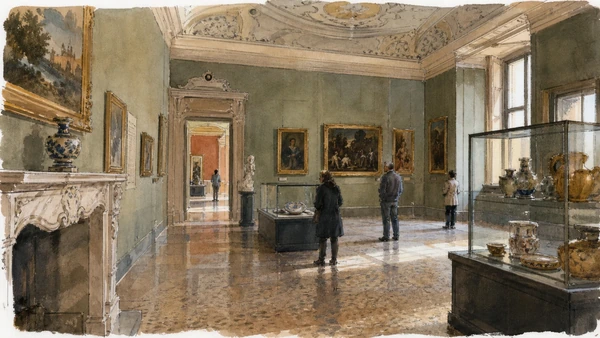
Paintings, applied arts and archaeological holdings broaden Cremona beyond the cathedral and violin narrative.

Museo Civico Ala Ponzone: civic art and local collecting

Paintings, applied arts and archaeological holdings broaden Cremona beyond the cathedral and violin narrative. The site becomes clearer when its surviving fabric, later alterations and present use are read together.

Today

Opening, ticketing, room access and temporary displays can change. Check the institution’s official notice shortly before visiting, use the designated entrance and allow for security or conservation controls.

History

The civic museum grew through aristocratic donation, local collecting and municipal stewardship in Palazzo Affaitati.

How to read this place

Begin with donor histories and local provenance. Then compare works connected to cremonese artists with palace rooms adapted to museum use; the differences are evidence, not visual noise.

What to notice

  • donor histories and local provenance
  • works connected to Cremonese artists
  • palace rooms adapted to museum use
Comune di Cremona · Museo Civico Ala Ponzone
Original documentary watercolour of Museo Civico Ala Ponzone: civic art and local collecting in Cremona and the Lower Po · Lombardy, showing accurate architecture, landscape, people and present-day use
Museo Civico Ala Ponzone: civic art and local collectingOriginal Merlintravel documentary watercolour · 2026
08

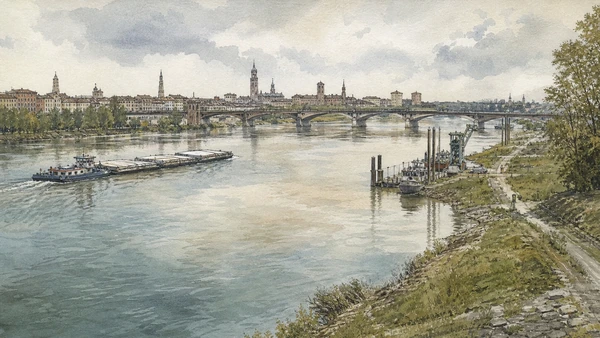
Navigation, industry, recreation and flood management share a broad river corridor whose conditions vary strongly by season.

The Po at Cremona: port, bridges and changing water

Navigation, industry, recreation and flood management share a broad river corridor whose conditions vary strongly by season. The site becomes clearer when its surviving fabric, later alterations and present use are read together.

Today

Weather, water levels, trail conditions and seasonal services can alter the route. Use official transport and park information, remain on authorised paths and do not enter farms, vineyards or private gardens without permission.

History

The river supported transport and settlement while embankments, bridges and modern port infrastructure altered channels and access.

How to read this place

Begin with active channel and exposed floodplain. Then compare bridge and port infrastructure with high-water marks and embankments; the differences are evidence, not visual noise.

What to notice

  • active channel and exposed floodplain
  • bridge and port infrastructure
  • high-water marks and embankments
Autorità di Bacino Distrettuale del Fiume Po
Original documentary watercolour of The Po at Cremona: port, bridges and changing water in Cremona and the Lower Po · Lombardy, showing accurate architecture, landscape, people and present-day use
The Po at Cremona: port, bridges and changing waterOriginal Merlintravel documentary watercolour · 2026
09

Irrigation, reclamation and flood-control structures make the plain productive while requiring continuous collective management.

Canals and drainage: engineered agriculture

Irrigation, reclamation and flood-control structures make the plain productive while requiring continuous collective management. The site becomes clearer when its surviving fabric, later alterations and present use are read together.

Today

Weather, water levels, trail conditions and seasonal services can alter the route. Use official transport and park information, remain on authorised paths and do not enter farms, vineyards or private gardens without permission.

History

Monastic, communal and later state works developed water networks across the Cremonese; modern consortia maintain channels and pumping systems.

How to read this place

Begin with canal levels and gates. Then compare fields organised by water access with maintenance tracks and restricted infrastructure; the differences are evidence, not visual noise.

What to notice

  • canal levels and gates
  • fields organised by water access
  • maintenance tracks and restricted infrastructure
Consorzio di Bonifica Dugali Naviglio Adda Serio
Original documentary watercolour of Canals and drainage: engineered agriculture in Cremona and the Lower Po · Lombardy, showing accurate architecture, landscape, people and present-day use
Canals and drainage: engineered agricultureOriginal Merlintravel documentary watercolour · 2026
10

Smaller towns and farmsteads connect processing, markets, religious landmarks and flood experience across the plain.

Lower Po settlements: work, food and river memory

Smaller towns and farmsteads connect processing, markets, religious landmarks and flood experience across the plain. The site becomes clearer when its surviving fabric, later alterations and present use are read together.

Today

The area is inhabited and worked, not staged for visitors. Keep doorways, pavements, cycle lanes and deliveries clear, ask before photographing people and use current municipal mobility information.

History

Agricultural estates, dairies, river trade and road or rail links shaped settlements differently; depopulation and mechanisation altered their social structure.

How to read this place

Begin with settlement raised or protected from water. Then compare working agricultural buildings with civic and religious centres serving dispersed communities; the differences are evidence, not visual noise.

What to notice

  • settlement raised or protected from water
  • working agricultural buildings
  • civic and religious centres serving dispersed communities
Turismo Cremona · Official destination site
Original documentary watercolour of Lower Po settlements: work, food and river memory in Cremona and the Lower Po · Lombardy, showing accurate architecture, landscape, people and present-day use
Lower Po settlements: work, food and river memoryOriginal Merlintravel documentary watercolour · 2026

Lombardy through time

A short chronology

From prehistoric settlement and Roman routes to communes, regional states, industrial transformation, heritage protection and climate-sensitive mobility.

  1. Settlements, ritual places and rock imagery document long human occupation from Alpine valleys to the Po plain.

  2. Camuni, Celts, Etruscan networks and other communities develop distinct territories before Roman expansion.

  3. Roman roads, colonies and municipia integrate the region while retaining different local settlement patterns.

  4. Cities, villas, farms, sanctuaries and Alpine routes connect the Po basin to transalpine and imperial systems.

  5. Christian institutions, new burial landscapes and political change reshape Roman urban centres.

  6. Lombard rule establishes courts, duchies and monasteries whose material traces survive unevenly across the region.

  7. Castles, monasteries, parishes and landed powers organise countryside, lakes and mountain routes.

  8. Communal cities expand public buildings, cathedrals, walls, trade and conflict across the Lombard plain.

  9. Visconti and then Sforza power links Milan to fortified towns, courts, canals and agricultural territories.

  10. Venetian expansion incorporates much of eastern Lombardy, creating a durable political and architectural frontier.

  11. The Peace of Lodi stabilises a territorial balance whose borders continue to shape cities and landscapes.

  12. Spanish and Austrian governments reorganise defence, taxation, institutions and infrastructure in different parts of Lombardy.

  13. Napoleonic and Austrian administrations alter civic institutions, roads, collections and territorial government before unification.

  14. Railways, factories, hydropower, migration, tourism, war and resistance transform urban and Alpine societies.

  15. Reconstruction, industrial growth, deindustrialisation, heritage protection, mass mobility and climate pressure repeatedly reshape the region.

Before your visit

Practical information

01

Check the live page

Opening hours, reservation systems, restoration, exhibitions and transport can change. Recheck the linked official institution shortly before departure.

02

Separate worship and tourism

Churches and sanctuaries remain religious spaces. Services, funerals and community use take priority over visitor itineraries.

03

Plan real distances

Cremona and the Lower Po · Lombardy combines dense urban routes with lakes, valleys and dispersed towns. Do not compress distant chapters into an unsafe or superficial day.

04

Keep thresholds open

Arcades, station halls, markets, courtyards, workshops and residential streets must continue to function while you observe or photograph them.

05

Use current mobility data

Check the responsible rail, navigation, bus, road or park operator on the day; replacement services and weather can change an otherwise sound route.

06

Read change honestly

Restoration, reconstruction, adaptive reuse and new development have all shaped the landscape visible today.

Method and sources

Sources and image credits

This guide uses official museum, ministry, municipal, transport, park and UNESCO documentation checked on 29 August 2026. It separates durable historical interpretation from access details that can change, distinguishes surviving fabric from restoration or reconstruction, and treats worship, work, residence and public movement as part of the evidence. Every chapter links its principal institutional source; tickets, closures, weather and transport must always be verified again on the day of the visit.

All ten images are original Merlintravel editorial watercolours based on documented present-day conditions. They are illustrations, not substitutes for archaeological plans. Opening hours, tickets, accessible routes, temporary exhibitions and conservation work can change; consult the linked official pages shortly before visiting.