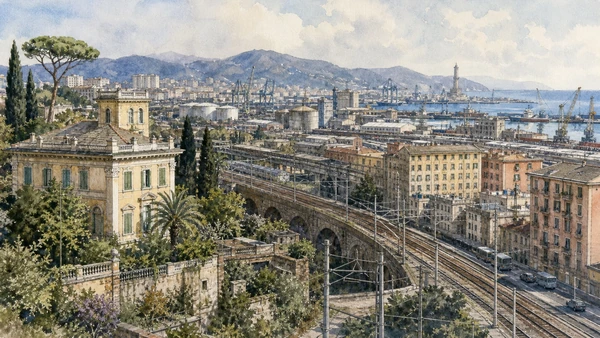
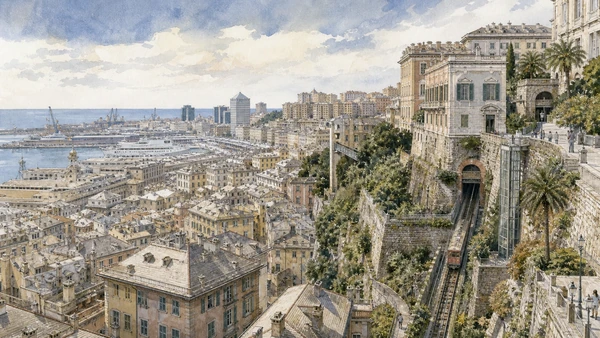
Original documentary watercolour panorama for Genoa: Complete Guide, with accurate Ligurian architecture, landscape and lived context

Liguria Guide 01 · Port, medieval lanes, maritime republic, aristocratic palaces, museums, industry and hillside city

Genoa
and its sea

A two-day reading of a vertical port city where medieval streets, global trade, aristocratic representation, migration and working infrastructure remain tightly interlocked.

Plan the route
Genoa · Liguria10 chapters · one complete route

Why this route must be read in layers

Genoa is not a waterfront postcard but a city built through exchange, conflict and steep terrain.

The historic centre compresses Roman traces, medieval churches, merchant houses, guild streets and later interventions into a dense fabric of caruggi. Its narrowness is evidence of land value, defence, slope and continuous occupation.

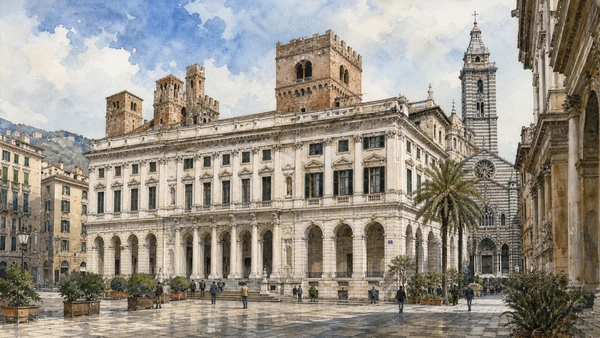
The Rolli palaces explain how a republic without a royal court hosted diplomats through a regulated network of private residences. Their splendour belongs beside banking, naval power and the labour that sustained the port.

Porto Antico, the Lanterna, Sampierdarena and hillside districts show different modern transformations. Regeneration did not replace the commercial harbour, migration or industrial memory; these systems still shape daily movement.

Give the old city and palace system one full day, then devote a second route to maritime museums, the Lanterna and the western port districts.

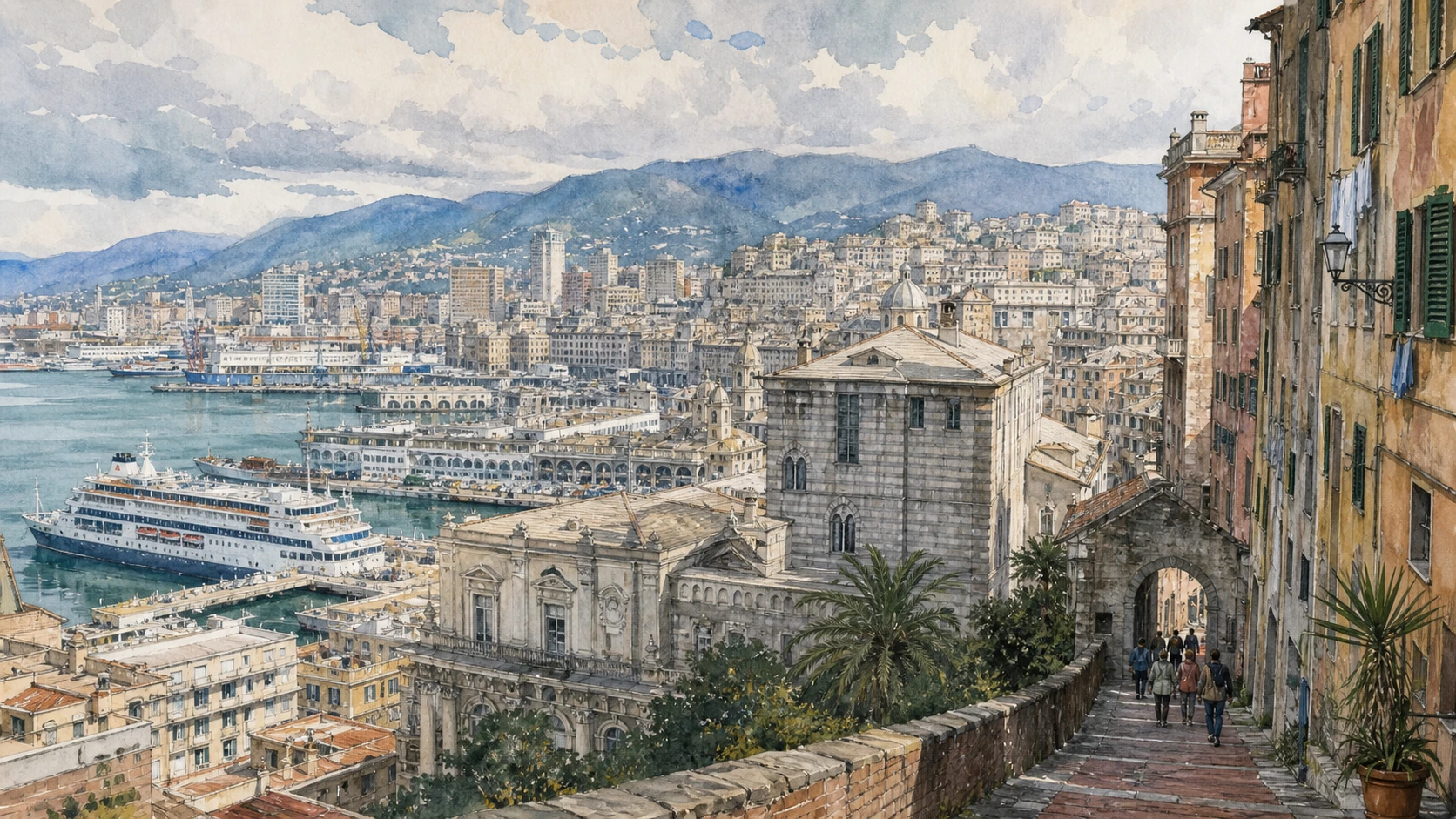
The route

Plan your visit

Begin at the harbour threshold, climb through cathedral and communal streets to the Strade Nuove, then use the second day for maritime collections, port infrastructure and hillside viewpoints.

Early morning

Porto Antico · San Lorenzo Cathedral · Caruggi and medieval fabric

Move in the documented order: Porto Antico: harbour transformed but still connected to work; then San Lorenzo Cathedral: civic church in a crowded centre; then Caruggi and medieval fabric: density as historical evidence. Recheck live access and transport before entering a controlled site.

Late morning

Strade Nuove and Rolli · Palazzo Ducale and Piazza Matteotti · Commenda di Pre and the migration quarter

Move in the documented order: Strade Nuove and Rolli: a distributed court; then Palazzo Ducale and Piazza Matteotti: government repeatedly rebuilt; then Commenda di Pre and the migration quarter. Recheck live access and transport before entering a controlled site.

Afternoon

Galata Museo del Mare · The Lanterna · Sampierdarena

Move in the documented order: Galata Museo del Mare: ships, emigration and maritime systems; then The Lanterna: lighthouse, symbol and port boundary; then Sampierdarena: villas, factories and port expansion. Recheck live access and transport before entering a controlled site.

Late afternoon

Castelletto and hillside lifts

Move in the documented order: Castelletto and hillside lifts: the city read vertically. Recheck live access and transport before entering a controlled site.

Ten chapters

Explore the places

The order follows terrain, institutions and present-day movement. Use the index to return to a chapter without reducing the route to isolated monuments.

  1. 01Porto Antico: harbour transformed but still connected to work
  2. 02San Lorenzo Cathedral: civic church in a crowded centre
  3. 03Caruggi and medieval fabric: density as historical evidence
  4. 04Strade Nuove and Rolli: a distributed court
  5. 05Palazzo Ducale and Piazza Matteotti: government repeatedly rebuilt
  6. 06Commenda di Pre and the migration quarter
  7. 07Galata Museo del Mare: ships, emigration and maritime systems
  8. 08The Lanterna: lighthouse, symbol and port boundary
  9. 09Sampierdarena: villas, factories and port expansion
  10. 10Castelletto and hillside lifts: the city read vertically
01

Quays, warehouses, public spaces and museums reveal layers of maritime use rather than a sealed leisure district.

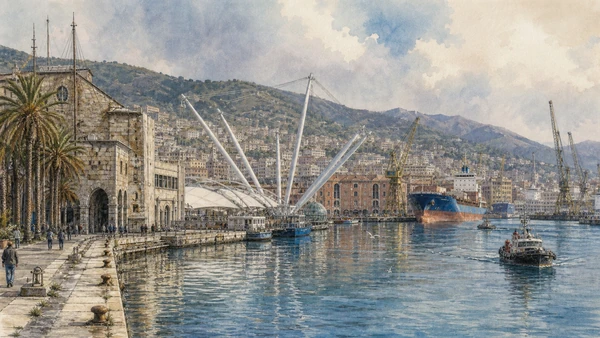
Porto Antico: harbour transformed but still connected to work

Quays, warehouses, public spaces and museums reveal layers of maritime use rather than a sealed leisure district. The site becomes clearer when its surviving fabric, later alterations and present use are read together.

Today

The area is inhabited and worked, not staged for visitors. Keep doorways, pavements, cycle lanes and deliveries clear, ask before photographing people and use current municipal mobility information.

History

The medieval harbour expanded through repeated engineering; late twentieth-century projects opened selected waterfront areas while commercial activity moved and intensified elsewhere.

How to read this place

Begin with historic quay alignments. Then compare reused port buildings with the visual relationship to active harbour infrastructure; the differences are evidence, not visual noise.

What to notice

  • historic quay alignments
  • reused port buildings
  • the visual relationship to active harbour infrastructure
Visit Genoa · Official city tourism
Original documentary watercolour of Porto Antico: harbour transformed but still connected to work in Genoa · Liguria, showing accurate architecture, landscape, people and present-day use
Porto Antico: harbour transformed but still connected to workOriginal Merlintravel documentary watercolour · 2026
02

Striped stone, portals, chapels and treasury connect communal identity, worship and long construction histories.

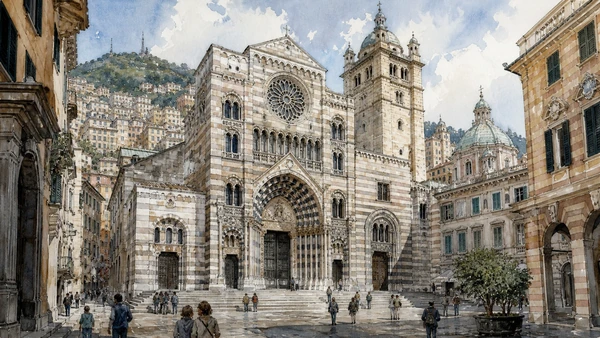
San Lorenzo Cathedral: civic church in a crowded centre

Striped stone, portals, chapels and treasury connect communal identity, worship and long construction histories. The site becomes clearer when its surviving fabric, later alterations and present use are read together.

Today

This is an active religious place as well as a historic building. Services, ceremonies and conservation can interrupt tourist access; dress appropriately, remain quiet and never treat a booked visit as priority over worship.

History

A cathedral developed from medieval phases on an earlier sacred site; later rebuilding and decoration preserved uneven evidence rather than one original state.

How to read this place

Begin with the layered façade. Then compare portal sculpture with liturgical circulation around chapels and treasury; the differences are evidence, not visual noise.

What to notice

  • the layered façade
  • portal sculpture
  • liturgical circulation around chapels and treasury
Visit Genoa · Official city tourism
Original documentary watercolour of San Lorenzo Cathedral: civic church in a crowded centre in Genoa · Liguria, showing accurate architecture, landscape, people and present-day use
San Lorenzo Cathedral: civic church in a crowded centreOriginal Merlintravel documentary watercolour · 2026
03

Lanes, small squares, shops, churches and housing show how movement and residence share limited ground.

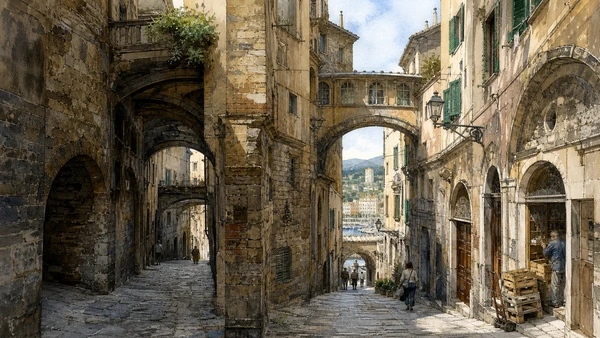
Caruggi and medieval fabric: density as historical evidence

Lanes, small squares, shops, churches and housing show how movement and residence share limited ground. The site becomes clearer when its surviving fabric, later alterations and present use are read together.

Today

The area is inhabited and worked, not staged for visitors. Keep doorways, pavements, cycle lanes and deliveries clear, ask before photographing people and use current municipal mobility information.

History

Medieval and early-modern building accumulated over Roman and harbour-related routes; later clearance, restoration and social change altered individual blocks.

How to read this place

Begin with changes in lane width. Then compare upper-storey bridges and façades with active doorways and deliveries; the differences are evidence, not visual noise.

What to notice

  • changes in lane width
  • upper-storey bridges and façades
  • active doorways and deliveries
Visit Genoa · Official city tourism
Original documentary watercolour of Caruggi and medieval fabric: density as historical evidence in Genoa · Liguria, showing accurate architecture, landscape, people and present-day use
Caruggi and medieval fabric: density as historical evidenceOriginal Merlintravel documentary watercolour · 2026
04

Palazzi Rosso, Bianco, Tursi and neighbouring residences made private architecture part of republican diplomacy.

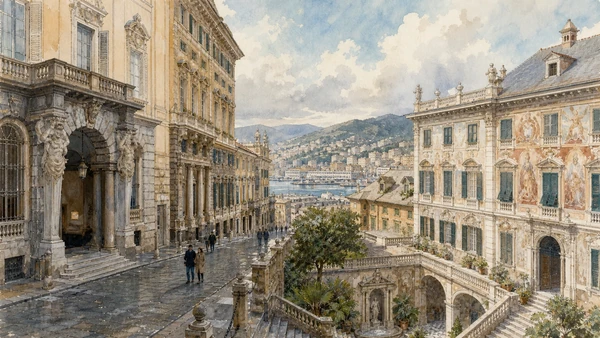
Strade Nuove and Rolli: a distributed court

Palazzi Rosso, Bianco, Tursi and neighbouring residences made private architecture part of republican diplomacy. The site becomes clearer when its surviving fabric, later alterations and present use are read together.

Today

Opening, ticketing, room access and temporary displays can change. Check the institution’s official notice shortly before visiting, use the designated entrance and allow for security or conservation controls.

History

From the sixteenth century the republic registered aristocratic palaces for hosting state visitors according to rank, creating an unusual public system of private representation.

How to read this place

Begin with street planning and palace entrances. Then compare courtyards and staircases with painted interiors tied to family display; the differences are evidence, not visual noise.

What to notice

  • street planning and palace entrances
  • courtyards and staircases
  • painted interiors tied to family display
UNESCO · Genoa, Strade Nuove and the Rolli Palaces
Original documentary watercolour of Strade Nuove and Rolli: a distributed court in Genoa · Liguria, showing accurate architecture, landscape, people and present-day use
Strade Nuove and Rolli: a distributed courtOriginal Merlintravel documentary watercolour · 2026
05

Courts, façades and exhibition spaces preserve a political centre altered after fires, regime change and modern reuse.

Palazzo Ducale and Piazza Matteotti: government repeatedly rebuilt

Courts, façades and exhibition spaces preserve a political centre altered after fires, regime change and modern reuse. The site becomes clearer when its surviving fabric, later alterations and present use are read together.

Today

Opening, ticketing, room access and temporary displays can change. Check the institution’s official notice shortly before visiting, use the designated entrance and allow for security or conservation controls.

History

The doges’ palace grew from medieval government buildings and was substantially transformed in later centuries, especially after the 1777 fire.

How to read this place

Begin with medieval towers within later fabric. Then compare neoclassical façade with connections to cathedral and civic squares; the differences are evidence, not visual noise.

What to notice

  • medieval towers within later fabric
  • neoclassical façade
  • connections to cathedral and civic squares
Visit Genoa · Official city tourism
Original documentary watercolour of Palazzo Ducale and Piazza Matteotti: government repeatedly rebuilt in Genoa · Liguria, showing accurate architecture, landscape, people and present-day use
Palazzo Ducale and Piazza Matteotti: government repeatedly rebuiltOriginal Merlintravel documentary watercolour · 2026
06

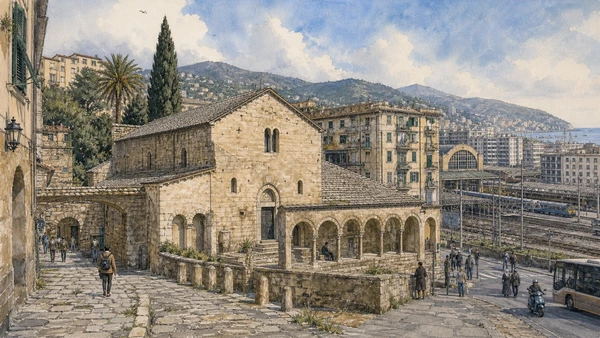
A medieval hospitaller complex stands within a district shaped by pilgrims, port labour, railway infrastructure and migration.

Commenda di Pre and the migration quarter

A medieval hospitaller complex stands within a district shaped by pilgrims, port labour, railway infrastructure and migration. The site becomes clearer when its surviving fabric, later alterations and present use are read together.

Today

Opening, ticketing, room access and temporary displays can change. Check the institution’s official notice shortly before visiting, use the designated entrance and allow for security or conservation controls.

History

The Commenda served travellers and crusading routes; later urban change around Pre added tenements, station approaches and new communities.

How to read this place

Begin with romanesque loggias. Then compare church and hospitality spaces with the living streets around the monument; the differences are evidence, not visual noise.

What to notice

  • Romanesque loggias
  • church and hospitality spaces
  • the living streets around the monument
Visit Genoa · Museums
Original documentary watercolour of Commenda di Pre and the migration quarter in Genoa · Liguria, showing accurate architecture, landscape, people and present-day use
Commenda di Pre and the migration quarterOriginal Merlintravel documentary watercolour · 2026
07

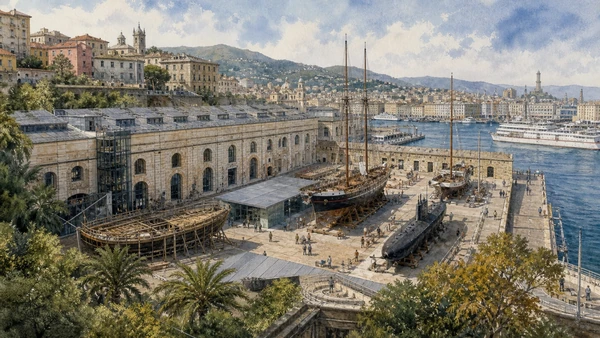
Collections link navigation technology and naval power to crews, forced movement and mass emigration.

Galata Museo del Mare: ships, emigration and maritime systems

Collections link navigation technology and naval power to crews, forced movement and mass emigration. The site becomes clearer when its surviving fabric, later alterations and present use are read together.

Today

Opening, ticketing, room access and temporary displays can change. Check the institution’s official notice shortly before visiting, use the designated entrance and allow for security or conservation controls.

History

A former arsenal area became a maritime museum whose interpretation extends beyond heroic voyages to labour, diaspora and contemporary migration.

How to read this place

Begin with arsenal scale. Then compare ship reconstructions and original objects with how labels distinguish memory from evidence; the differences are evidence, not visual noise.

What to notice

  • arsenal scale
  • ship reconstructions and original objects
  • how labels distinguish memory from evidence
Visit Genoa · Museums
Original documentary watercolour of Galata Museo del Mare: ships, emigration and maritime systems in Genoa · Liguria, showing accurate architecture, landscape, people and present-day use
Galata Museo del Mare: ships, emigration and maritime systemsOriginal Merlintravel documentary watercolour · 2026
08

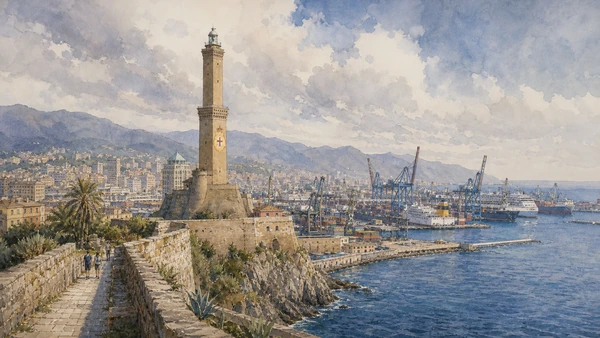
The historic lighthouse rises within an industrial landscape of roads, terminals and defensive remains.

The Lanterna: lighthouse, symbol and port boundary

The historic lighthouse rises within an industrial landscape of roads, terminals and defensive remains. The site becomes clearer when its surviving fabric, later alterations and present use are read together.

Today

The exterior can usually be read from public space, but events, works and crowd management may change circulation. Keep access routes open and verify any interior visit with the responsible institution.

History

Successive beacons occupied the western harbour approach; the present monumental tower reflects medieval and early-modern rebuilding within expanding fortifications.

How to read this place

Begin with tower profile against port cranes. Then compare surviving walls and access path with seaward and city sightlines; the differences are evidence, not visual noise.

What to notice

  • tower profile against port cranes
  • surviving walls and access path
  • seaward and city sightlines
Autorità di Sistema Portuale del Mar Ligure Occidentale
Original documentary watercolour of The Lanterna: lighthouse, symbol and port boundary in Genoa · Liguria, showing accurate architecture, landscape, people and present-day use
The Lanterna: lighthouse, symbol and port boundaryOriginal Merlintravel documentary watercolour · 2026
09

Aristocratic suburban residences survive amid railways, housing, industry and container-port infrastructure.

Sampierdarena: villas, factories and port expansion

Aristocratic suburban residences survive amid railways, housing, industry and container-port infrastructure. The site becomes clearer when its surviving fabric, later alterations and present use are read together.

Today

The area is inhabited and worked, not staged for visitors. Keep doorways, pavements, cycle lanes and deliveries clear, ask before photographing people and use current municipal mobility information.

History

A villa landscape west of Genoa became a major industrial and working-class district during nineteenth- and twentieth-century expansion.

How to read this place

Begin with isolated villa fragments. Then compare rail and road barriers with housing facing active port systems; the differences are evidence, not visual noise.

What to notice

  • isolated villa fragments
  • rail and road barriers
  • housing facing active port systems
Autorità di Sistema Portuale del Mar Ligure Occidentale
Original documentary watercolour of Sampierdarena: villas, factories and port expansion in Genoa · Liguria, showing accurate architecture, landscape, people and present-day use
Sampierdarena: villas, factories and port expansionOriginal Merlintravel documentary watercolour · 2026
10

Public lifts, funiculars, stairways and viewpoints explain how Genoa occupies steep slopes above the port.

Castelletto and hillside lifts: the city read vertically

Public lifts, funiculars, stairways and viewpoints explain how Genoa occupies steep slopes above the port. The site becomes clearer when its surviving fabric, later alterations and present use are read together.

Today

Timetables, engineering works, capacity and accessibility arrangements can change. Check the operator on the day, leave a realistic connection margin and never enter tracks, depots or restricted infrastructure.

History

Nineteenth- and twentieth-century transport opened hillside districts beyond earlier walls while demolition of fortifications created new urban terraces.

How to read this place

Begin with roofscape and harbour alignment. Then compare vertical transport entrances with walls, ridges and later apartment districts; the differences are evidence, not visual noise.

What to notice

  • roofscape and harbour alignment
  • vertical transport entrances
  • walls, ridges and later apartment districts
Visit Genoa · Official city tourism
Original documentary watercolour of Castelletto and hillside lifts: the city read vertically in Genoa · Liguria, showing accurate architecture, landscape, people and present-day use
Castelletto and hillside lifts: the city read verticallyOriginal Merlintravel documentary watercolour · 2026

Liguria through time

A short chronology

From prehistoric caves and Roman roads to the maritime republic, railways, port industry, protected landscapes and climate-sensitive travel.

  1. Caves and open sites in western Liguria preserve exceptionally long evidence of human occupation and environmental change.

  2. Ligurian communities occupy coastal and inland territories connected to Etruscan, Greek and Celtic exchange networks.

  3. Roman conquest and road building integrate ports, plains and passes into wider Mediterranean and Po-basin systems.

  4. Albingaunum, Genua, Luna and smaller centres develop through harbours, agriculture, Christianity and regional roads.

  5. Byzantine, Lombard and Carolingian powers reorganise settlements, bishoprics, monasteries and coastal defence.

  6. Genoa grows as a maritime commune while castles, churches and village territories consolidate along both Rivieras.

  7. Commercial expansion, crusading routes, colonies and banking enrich Genoa while factional conflict reshapes its government.

  8. Doge government, foreign interventions and powerful families contest control of the republic and its maritime system.

  9. The aristocratic Republic of Genoa develops the Rolli palace system, finance, naval infrastructure and territorial fortifications.

  10. Coastal defence, olive and wine landscapes, ports and inland routes continue to connect specialised local economies.

  11. French and Napoleonic rule ends the old republic before Liguria is incorporated into the Kingdom of Sardinia.

  12. Roads, railways, port works and unification transform mobility; the Genoa–La Spezia railway changes the eastern coast.

  13. Industry, emigration, resort culture, naval bases, war and resistance create sharply different modern landscapes.

  14. Port expansion, reconstruction, mass tourism, motorway infrastructure and deindustrialisation alter coast and cities.

  15. UNESCO recognition, park management, climate risk and overtourism intensify the need to maintain terraces, paths and living communities.

Before your visit

Practical information

01

Check the live page

Opening hours, reservation systems, restoration, exhibitions and transport can change. Recheck the linked official institution shortly before departure.

02

Separate worship and tourism

Churches and sanctuaries remain religious spaces. Services, funerals and community use take priority over visitor itineraries.

03

Plan real distances

Genoa · Liguria combines dense urban routes with lakes, valleys and dispersed towns. Do not compress distant chapters into an unsafe or superficial day.

04

Keep thresholds open

Arcades, station halls, markets, courtyards, workshops and residential streets must continue to function while you observe or photograph them.

05

Use current mobility data

Check the responsible rail, navigation, bus, road or park operator on the day; replacement services and weather can change an otherwise sound route.

06

Read change honestly

Restoration, reconstruction, adaptive reuse and new development have all shaped the landscape visible today.

Method and sources

Sources and image credits

This guide uses official museum, ministry, municipal, transport, park and UNESCO documentation checked on 31 August 2026. It separates durable historical interpretation from access details that can change, distinguishes surviving fabric from restoration or reconstruction, and treats worship, port work, residence, farming, fishing and public movement as part of the evidence. Every chapter links its principal institutional source; tickets, closures, weather, sea conditions, trails and transport must always be verified again on the day of the visit.

All ten images are original Merlintravel editorial watercolours based on documented present-day conditions. They are illustrations, not substitutes for archaeological plans. Opening hours, tickets, accessible routes, temporary exhibitions and conservation work can change; consult the linked official pages shortly before visiting.