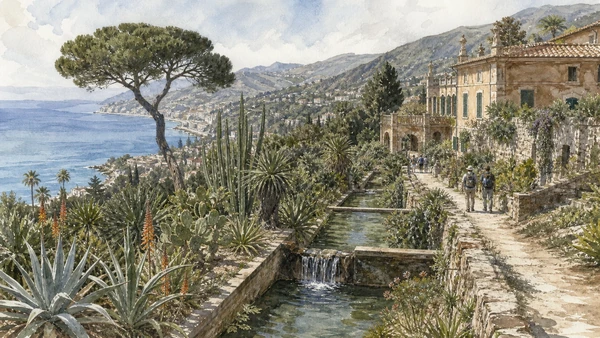
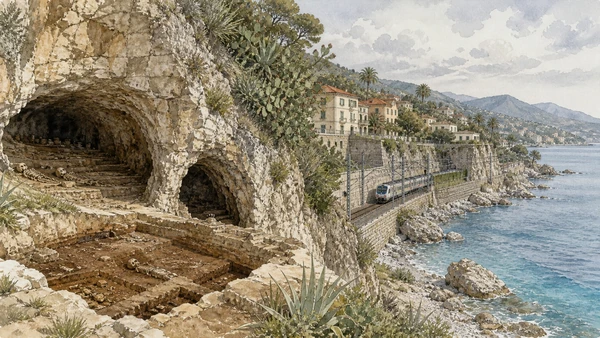
Original documentary watercolour panorama for Sanremo and the Western Riviera: Complete Guide, with accurate Ligurian architecture, landscape and lived context

Liguria Guide 05 · Sanremo old town, port, gardens, Belle Epoque, Bussana, Taggia, Ventimiglia and border archaeology

Sanremo
and the western arc

A multi-day guide from a resort and market city into medieval hill settlements, scientific gardens, Roman roads and prehistoric border caves.

Plan the route
Sanremo and Western Riviera · Liguria10 chapters · one complete route

Why this route must be read in layers

The western Riviera joins resort history to older ports, cultivated hills and one of Europe’s deepest archaeological sequences.

Sanremo’s casino and villas belong to a nineteenth- and twentieth-century international resort economy, but La Pigna, the port, churches and market reveal a much longer urban history.

Bussana Vecchia requires careful distinction between earthquake ruin, later artistic settlement and current legal or residential realities. Taggia and the Argentina valley add religious and agricultural systems beyond the coast.

At Ventimiglia and the French border, Roman Albintimilium, Hanbury Gardens and Balzi Rossi show three very different relationships between climate, mobility and collected or excavated evidence.

Plan Sanremo and Bussana as one route, then devote separate days to Taggia and the Ventimiglia–Hanbury–Balzi Rossi border landscape.

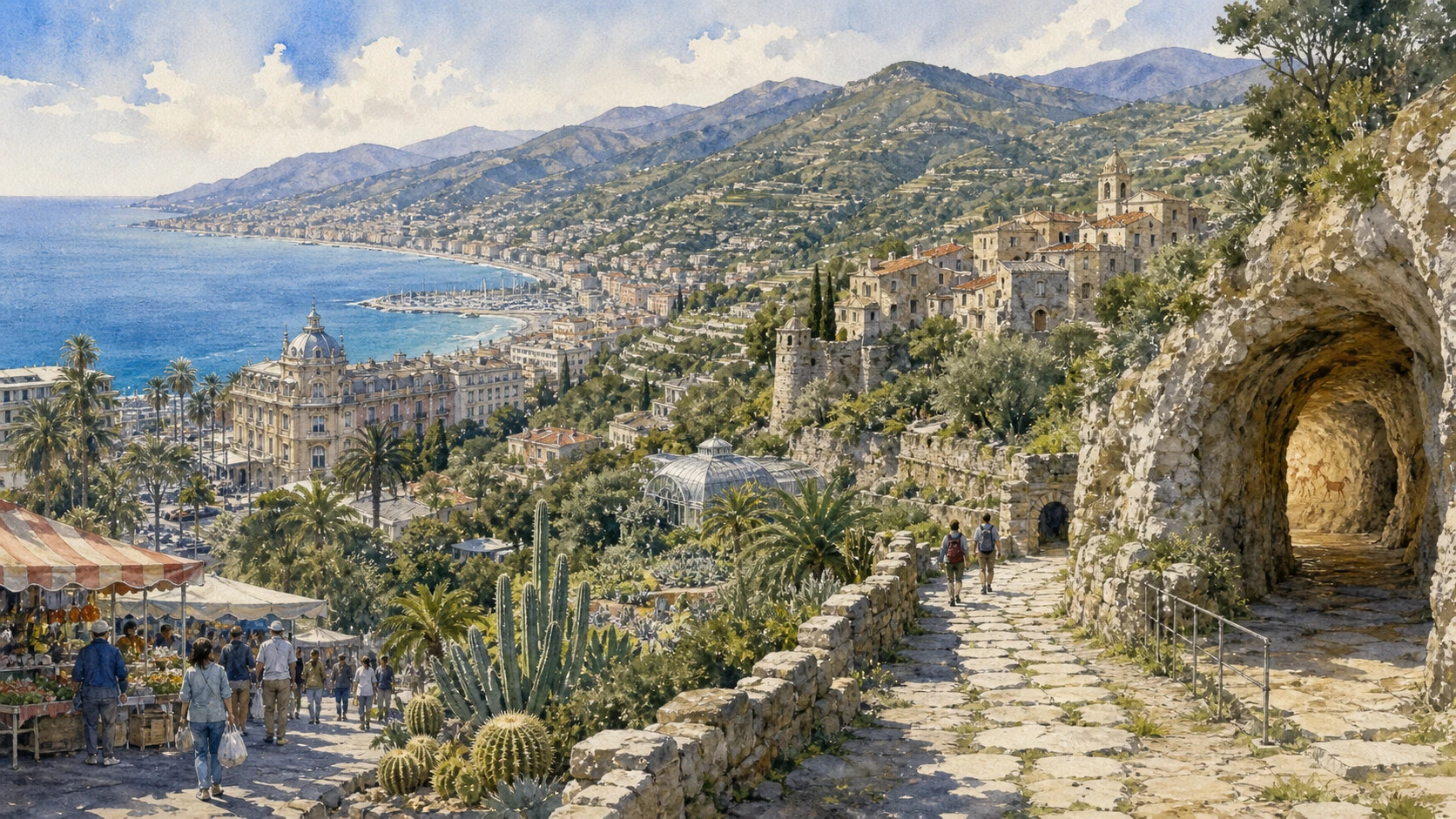
The route

Plan your visit

Begin in La Pigna and descend to the port, compare resort architecture with older civic fabric, then use rail or bus for the western archaeological and botanical sites.

Early morning

La Pigna · San Siro and the civic religious centre · Forte Santa Tecla

Move in the documented order: La Pigna: the compact town behind the resort façade; then San Siro and the civic religious centre; then Forte Santa Tecla: Genoese control at the harbour. Recheck live access and transport before entering a controlled site.

Late morning

Casino, Corso Matteotti and resort urbanism · Villa Nobel · Bussana Vecchia

Move in the documented order: Casino, Corso Matteotti and resort urbanism; then Villa Nobel: science, residence and museum display; then Bussana Vecchia: earthquake ruin and later community. Recheck live access and transport before entering a controlled site.

Afternoon

Taggia and the Argentina valley · Roman Albintimilium · Hanbury Gardens

Move in the documented order: Taggia and the Argentina valley: convent, bridges and olive landscape; then Roman Albintimilium: archaeology beside modern Ventimiglia; then Hanbury Gardens: acclimatisation, collecting and protected landscape. Recheck live access and transport before entering a controlled site.

Late afternoon

Balzi Rossi

Move in the documented order: Balzi Rossi: caves, burials and border archaeology. Recheck live access and transport before entering a controlled site.

Ten chapters

Explore the places

The order follows terrain, institutions and present-day movement. Use the index to return to a chapter without reducing the route to isolated monuments.

  1. 01La Pigna: the compact town behind the resort façade
  2. 02San Siro and the civic religious centre
  3. 03Forte Santa Tecla: Genoese control at the harbour
  4. 04Casino, Corso Matteotti and resort urbanism
  5. 05Villa Nobel: science, residence and museum display
  6. 06Bussana Vecchia: earthquake ruin and later community
  7. 07Taggia and the Argentina valley: convent, bridges and olive landscape
  8. 08Roman Albintimilium: archaeology beside modern Ventimiglia
  9. 09Hanbury Gardens: acclimatisation, collecting and protected landscape
  10. 10Balzi Rossi: caves, burials and border archaeology
01

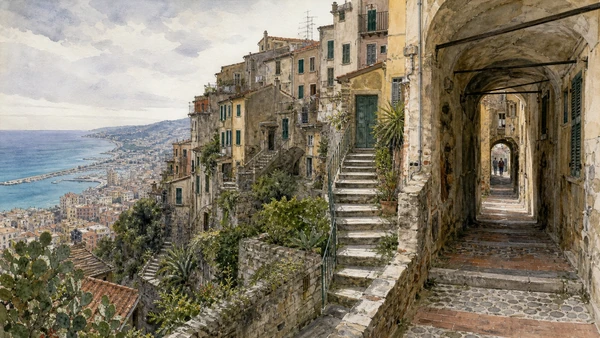
Arches, lanes, stairs and small squares climb from the commercial centre toward the sanctuary ridge.

La Pigna: the compact town behind the resort façade

Arches, lanes, stairs and small squares climb from the commercial centre toward the sanctuary ridge. The site becomes clearer when its surviving fabric, later alterations and present use are read together.

Today

The area is inhabited and worked, not staged for visitors. Keep doorways, pavements, cycle lanes and deliveries clear, ask before photographing people and use current municipal mobility information.

History

A fortified medieval settlement developed on constrained ground; later road cuts and modern city growth changed its edges but not its vertical circulation.

How to read this place

Begin with covered passages. Then compare changes in stair width with inhabited façades and service access; the differences are evidence, not visual noise.

What to notice

  • covered passages
  • changes in stair width
  • inhabited façades and service access
Comune di Sanremo · Official site
Original documentary watercolour of La Pigna: the compact town behind the resort façade in Sanremo and Western Riviera · Liguria, showing accurate architecture, landscape, people and present-day use
La Pigna: the compact town behind the resort façadeOriginal Merlintravel documentary watercolour · 2026
02

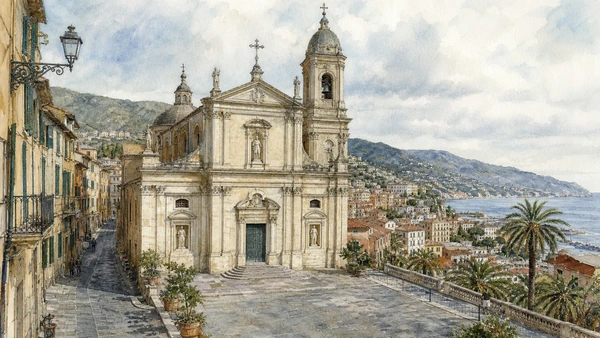
Romanesque and later church fabric anchors a district tied to medieval Sanremo rather than seaside resort culture.

San Siro and the civic religious centre

Romanesque and later church fabric anchors a district tied to medieval Sanremo rather than seaside resort culture. The site becomes clearer when its surviving fabric, later alterations and present use are read together.

Today

This is an active religious place as well as a historic building. Services, ceremonies and conservation can interrupt tourist access; dress appropriately, remain quiet and never treat a booked visit as priority over worship.

History

The cathedral developed through medieval construction and successive restoration, preserving evidence of civic devotion and later interventions.

How to read this place

Begin with stone façade. Then compare nave proportions with connection to surrounding lanes; the differences are evidence, not visual noise.

What to notice

  • stone façade
  • nave proportions
  • connection to surrounding lanes
Comune di Sanremo · Official site
Original documentary watercolour of San Siro and the civic religious centre in Sanremo and Western Riviera · Liguria, showing accurate architecture, landscape, people and present-day use
San Siro and the civic religious centreOriginal Merlintravel documentary watercolour · 2026
03

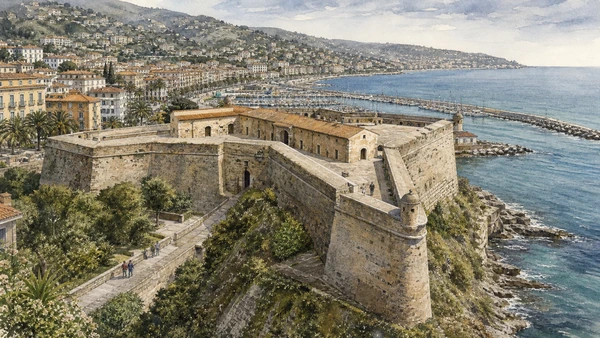
A triangular eighteenth-century fortress records conflict between the republic and the local community.

Forte Santa Tecla: Genoese control at the harbour

A triangular eighteenth-century fortress records conflict between the republic and the local community. The site becomes clearer when its surviving fabric, later alterations and present use are read together.

Today

Opening, ticketing, room access and temporary displays can change. Check the institution’s official notice shortly before visiting, use the designated entrance and allow for security or conservation controls.

History

Built after the 1753 uprising, the fort later became barracks and prison before restoration as a cultural site.

How to read this place

Begin with triangular plan and bastions. Then compare prison adaptations with position beside the old port; the differences are evidence, not visual noise.

What to notice

  • triangular plan and bastions
  • prison adaptations
  • position beside the old port
Comune di Sanremo · Forte Santa Tecla
Original documentary watercolour of Forte Santa Tecla: Genoese control at the harbour in Sanremo and Western Riviera · Liguria, showing accurate architecture, landscape, people and present-day use
Forte Santa Tecla: Genoese control at the harbourOriginal Merlintravel documentary watercolour · 2026
04

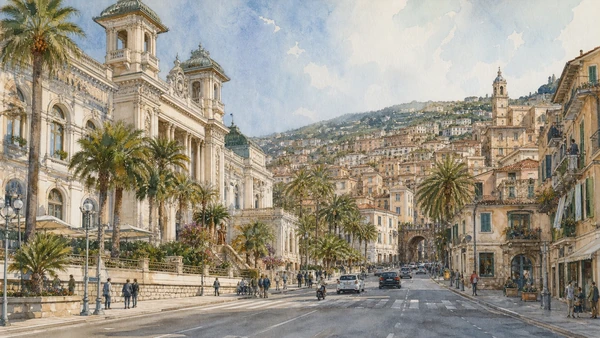
Entertainment architecture, hotels, shops and theatres show how winter tourism remade the modern centre.

Casino, Corso Matteotti and resort urbanism

Entertainment architecture, hotels, shops and theatres show how winter tourism remade the modern centre. The site becomes clearer when its surviving fabric, later alterations and present use are read together.

Today

The area is inhabited and worked, not staged for visitors. Keep doorways, pavements, cycle lanes and deliveries clear, ask before photographing people and use current municipal mobility information.

History

Rail access and a mild climate attracted international visitors; the 1905 casino and later cultural events reinforced a new civic image.

How to read this place

Begin with art nouveau and later façades. Then compare street width compared with la pigna with public and commercial use beyond events; the differences are evidence, not visual noise.

What to notice

  • Art Nouveau and later façades
  • street width compared with La Pigna
  • public and commercial use beyond events
Comune di Sanremo · Official site
Original documentary watercolour of Casino, Corso Matteotti and resort urbanism in Sanremo and Western Riviera · Liguria, showing accurate architecture, landscape, people and present-day use
Casino, Corso Matteotti and resort urbanismOriginal Merlintravel documentary watercolour · 2026
05

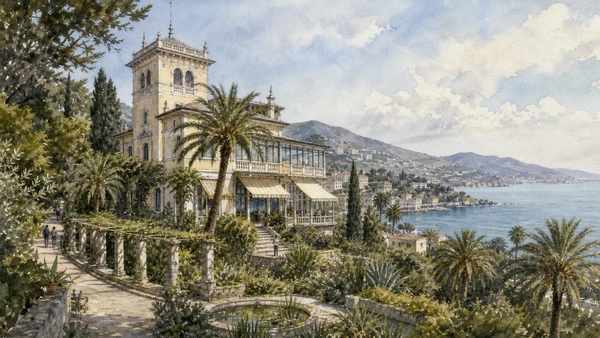
An eclectic villa and garden preserve the last Sanremo home of Alfred Nobel within a wider resort landscape.

Villa Nobel: science, residence and museum display

An eclectic villa and garden preserve the last Sanremo home of Alfred Nobel within a wider resort landscape. The site becomes clearer when its surviving fabric, later alterations and present use are read together.

Today

Opening, ticketing, room access and temporary displays can change. Check the institution’s official notice shortly before visiting, use the designated entrance and allow for security or conservation controls.

History

Built in the late nineteenth century and altered after Nobel’s purchase, the villa later became a museum and cultural venue.

How to read this place

Begin with tower and glazed verandas. Then compare garden relationship to the lost seafront context with museum interpretation of nobel’s work; the differences are evidence, not visual noise.

What to notice

  • tower and glazed verandas
  • garden relationship to the lost seafront context
  • museum interpretation of Nobel’s work
Comune di Sanremo · Villa Nobel
Original documentary watercolour of Villa Nobel: science, residence and museum display in Sanremo and Western Riviera · Liguria, showing accurate architecture, landscape, people and present-day use
Villa Nobel: science, residence and museum displayOriginal Merlintravel documentary watercolour · 2026
06

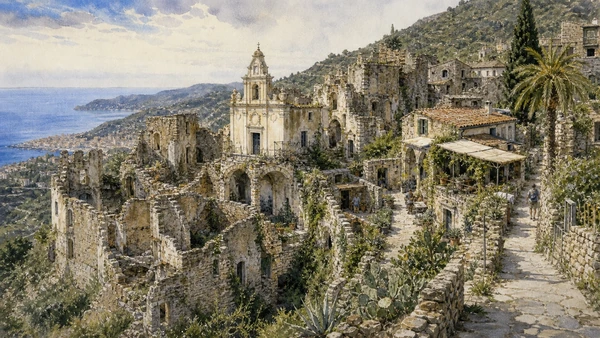
Damaged church, roofless structures and inhabited artistic spaces require respect for both disaster history and present residents.

Bussana Vecchia: earthquake ruin and later community

Damaged church, roofless structures and inhabited artistic spaces require respect for both disaster history and present residents. The site becomes clearer when its surviving fabric, later alterations and present use are read together.

Today

The area is inhabited and worked, not staged for visitors. Keep doorways, pavements, cycle lanes and deliveries clear, ask before photographing people and use current municipal mobility information.

History

The 1887 earthquake devastated the old village; resettlement and later occupation by artists produced a complex legal and social afterlife.

How to read this place

Begin with earthquake damage distinct from later alteration. Then compare new roofs and occupied spaces with safe public routes; the differences are evidence, not visual noise.

What to notice

  • earthquake damage distinct from later alteration
  • new roofs and occupied spaces
  • safe public routes
Comune di Sanremo · Official site
Original documentary watercolour of Bussana Vecchia: earthquake ruin and later community in Sanremo and Western Riviera · Liguria, showing accurate architecture, landscape, people and present-day use
Bussana Vecchia: earthquake ruin and later communityOriginal Merlintravel documentary watercolour · 2026
07

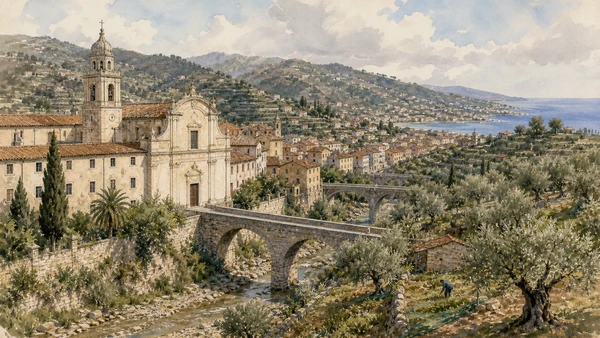
Historic streets, San Domenico, river crossings and cultivated slopes connect coastal trade to inland agriculture.

Taggia and the Argentina valley: convent, bridges and olive landscape

Historic streets, San Domenico, river crossings and cultivated slopes connect coastal trade to inland agriculture. The site becomes clearer when its surviving fabric, later alterations and present use are read together.

Today

The area is inhabited and worked, not staged for visitors. Keep doorways, pavements, cycle lanes and deliveries clear, ask before photographing people and use current municipal mobility information.

History

Medieval and early-modern institutions served a valley economy shaped by olives, routes and repeated flood risk.

How to read this place

Begin with convent architecture. Then compare bridge and river terrace with working olive groves beyond the town; the differences are evidence, not visual noise.

What to notice

  • convent architecture
  • bridge and river terrace
  • working olive groves beyond the town
Italia.it · Liguria
Original documentary watercolour of Taggia and the Argentina valley: convent, bridges and olive landscape in Sanremo and Western Riviera · Liguria, showing accurate architecture, landscape, people and present-day use
Taggia and the Argentina valley: convent, bridges and olive landscapeOriginal Merlintravel documentary watercolour · 2026
08

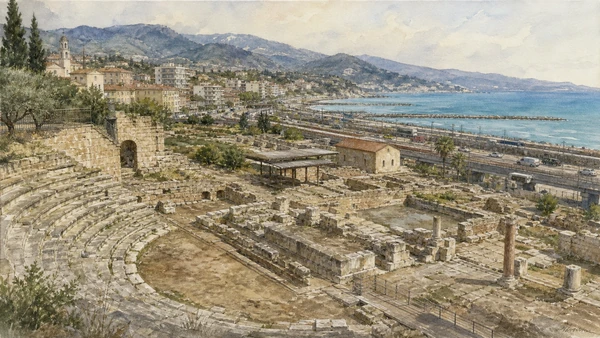
Theatre, baths and urban remains survive near railway, roads and contemporary settlement.

Roman Albintimilium: archaeology beside modern Ventimiglia

Theatre, baths and urban remains survive near railway, roads and contemporary settlement. The site becomes clearer when its surviving fabric, later alterations and present use are read together.

Today

Archaeological access may be limited to protected viewpoints, scheduled openings or guided routes. Stay outside barriers, distinguish original material from supports and reconstruction, and verify the official opening notice.

History

A Roman municipium grew along the Via Iulia Augusta; excavation reveals public buildings and neighbourhoods within a heavily transformed coastal plain.

How to read this place

Begin with theatre cavea. Then compare bath and street remains with modern infrastructure around the site; the differences are evidence, not visual noise.

What to notice

  • theatre cavea
  • bath and street remains
  • modern infrastructure around the site
Ministry of Culture · Balzi Rossi Museum and archaeological area
Original documentary watercolour of Roman Albintimilium: archaeology beside modern Ventimiglia in Sanremo and Western Riviera · Liguria, showing accurate architecture, landscape, people and present-day use
Roman Albintimilium: archaeology beside modern VentimigliaOriginal Merlintravel documentary watercolour · 2026
09

Terraced paths, collections and buildings descend toward the sea within a scientific and historical garden.

Hanbury Gardens: acclimatisation, collecting and protected landscape

Terraced paths, collections and buildings descend toward the sea within a scientific and historical garden. The site becomes clearer when its surviving fabric, later alterations and present use are read together.

Today

Weather, water levels, trail conditions and seasonal services can alter the route. Use official transport and park information, remain on authorised paths and do not enter farms, vineyards or private gardens without permission.

History

Created from 1867 by the Hanbury family with botanists and gardeners, the garden became a major acclimatisation site now managed by the University of Genoa.

How to read this place

Begin with plant labels and geographic groupings. Then compare water and terrace engineering with historic buildings within active conservation; the differences are evidence, not visual noise.

What to notice

  • plant labels and geographic groupings
  • water and terrace engineering
  • historic buildings within active conservation
Hanbury Botanical Gardens · University of Genoa
Original documentary watercolour of Hanbury Gardens: acclimatisation, collecting and protected landscape in Sanremo and Western Riviera · Liguria, showing accurate architecture, landscape, people and present-day use
Hanbury Gardens: acclimatisation, collecting and protected landscapeOriginal Merlintravel documentary watercolour · 2026
10

Caves and museum collections preserve evidence of human occupation extending deep into the Palaeolithic.

Balzi Rossi: caves, burials and border archaeology

Caves and museum collections preserve evidence of human occupation extending deep into the Palaeolithic. The site becomes clearer when its surviving fabric, later alterations and present use are read together.

Today

Archaeological access may be limited to protected viewpoints, scheduled openings or guided routes. Stay outside barriers, distinguish original material from supports and reconstruction, and verify the official opening notice.

History

Excavations uncovered burials, tools and environmental evidence of international importance; the modern border and railway now frame the archaeological coast.

How to read this place

Begin with cave mouths and stratigraphy. Then compare museum context for burials with border infrastructure around the protected site; the differences are evidence, not visual noise.

What to notice

  • cave mouths and stratigraphy
  • museum context for burials
  • border infrastructure around the protected site
Ministry of Culture · Balzi Rossi Museum and archaeological area
Original documentary watercolour of Balzi Rossi: caves, burials and border archaeology in Sanremo and Western Riviera · Liguria, showing accurate architecture, landscape, people and present-day use
Balzi Rossi: caves, burials and border archaeologyOriginal Merlintravel documentary watercolour · 2026

Liguria through time

A short chronology

From prehistoric caves and Roman roads to the maritime republic, railways, port industry, protected landscapes and climate-sensitive travel.

  1. Caves and open sites in western Liguria preserve exceptionally long evidence of human occupation and environmental change.

  2. Ligurian communities occupy coastal and inland territories connected to Etruscan, Greek and Celtic exchange networks.

  3. Roman conquest and road building integrate ports, plains and passes into wider Mediterranean and Po-basin systems.

  4. Albingaunum, Genua, Luna and smaller centres develop through harbours, agriculture, Christianity and regional roads.

  5. Byzantine, Lombard and Carolingian powers reorganise settlements, bishoprics, monasteries and coastal defence.

  6. Genoa grows as a maritime commune while castles, churches and village territories consolidate along both Rivieras.

  7. Commercial expansion, crusading routes, colonies and banking enrich Genoa while factional conflict reshapes its government.

  8. Doge government, foreign interventions and powerful families contest control of the republic and its maritime system.

  9. The aristocratic Republic of Genoa develops the Rolli palace system, finance, naval infrastructure and territorial fortifications.

  10. Coastal defence, olive and wine landscapes, ports and inland routes continue to connect specialised local economies.

  11. French and Napoleonic rule ends the old republic before Liguria is incorporated into the Kingdom of Sardinia.

  12. Roads, railways, port works and unification transform mobility; the Genoa–La Spezia railway changes the eastern coast.

  13. Industry, emigration, resort culture, naval bases, war and resistance create sharply different modern landscapes.

  14. Port expansion, reconstruction, mass tourism, motorway infrastructure and deindustrialisation alter coast and cities.

  15. UNESCO recognition, park management, climate risk and overtourism intensify the need to maintain terraces, paths and living communities.

Before your visit

Practical information

01

Check the live page

Opening hours, reservation systems, restoration, exhibitions and transport can change. Recheck the linked official institution shortly before departure.

02

Separate worship and tourism

Churches and sanctuaries remain religious spaces. Services, funerals and community use take priority over visitor itineraries.

03

Plan real distances

Sanremo and Western Riviera · Liguria combines dense urban routes with lakes, valleys and dispersed towns. Do not compress distant chapters into an unsafe or superficial day.

04

Keep thresholds open

Arcades, station halls, markets, courtyards, workshops and residential streets must continue to function while you observe or photograph them.

05

Use current mobility data

Check the responsible rail, navigation, bus, road or park operator on the day; replacement services and weather can change an otherwise sound route.

06

Read change honestly

Restoration, reconstruction, adaptive reuse and new development have all shaped the landscape visible today.

Method and sources

Sources and image credits

This guide uses official museum, ministry, municipal, transport, park and UNESCO documentation checked on 31 August 2026. It separates durable historical interpretation from access details that can change, distinguishes surviving fabric from restoration or reconstruction, and treats worship, port work, residence, farming, fishing and public movement as part of the evidence. Every chapter links its principal institutional source; tickets, closures, weather, sea conditions, trails and transport must always be verified again on the day of the visit.

All ten images are original Merlintravel editorial watercolours based on documented present-day conditions. They are illustrations, not substitutes for archaeological plans. Opening hours, tickets, accessible routes, temporary exhibitions and conservation work can change; consult the linked official pages shortly before visiting.