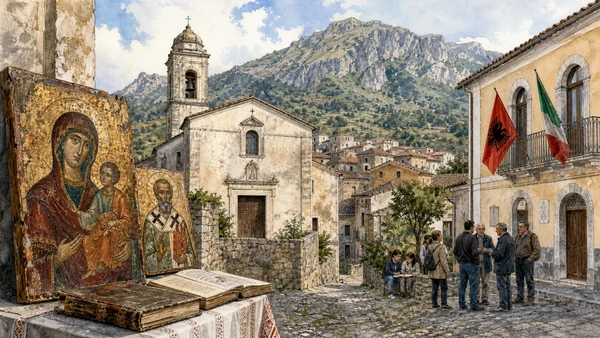
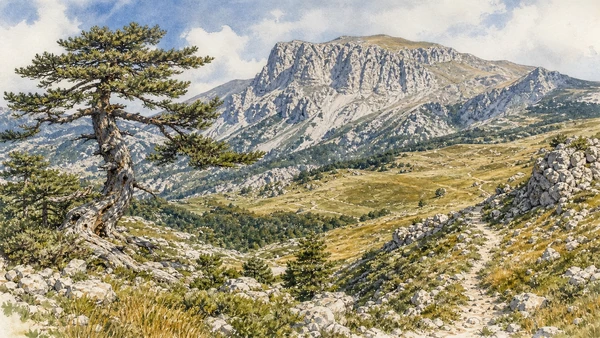
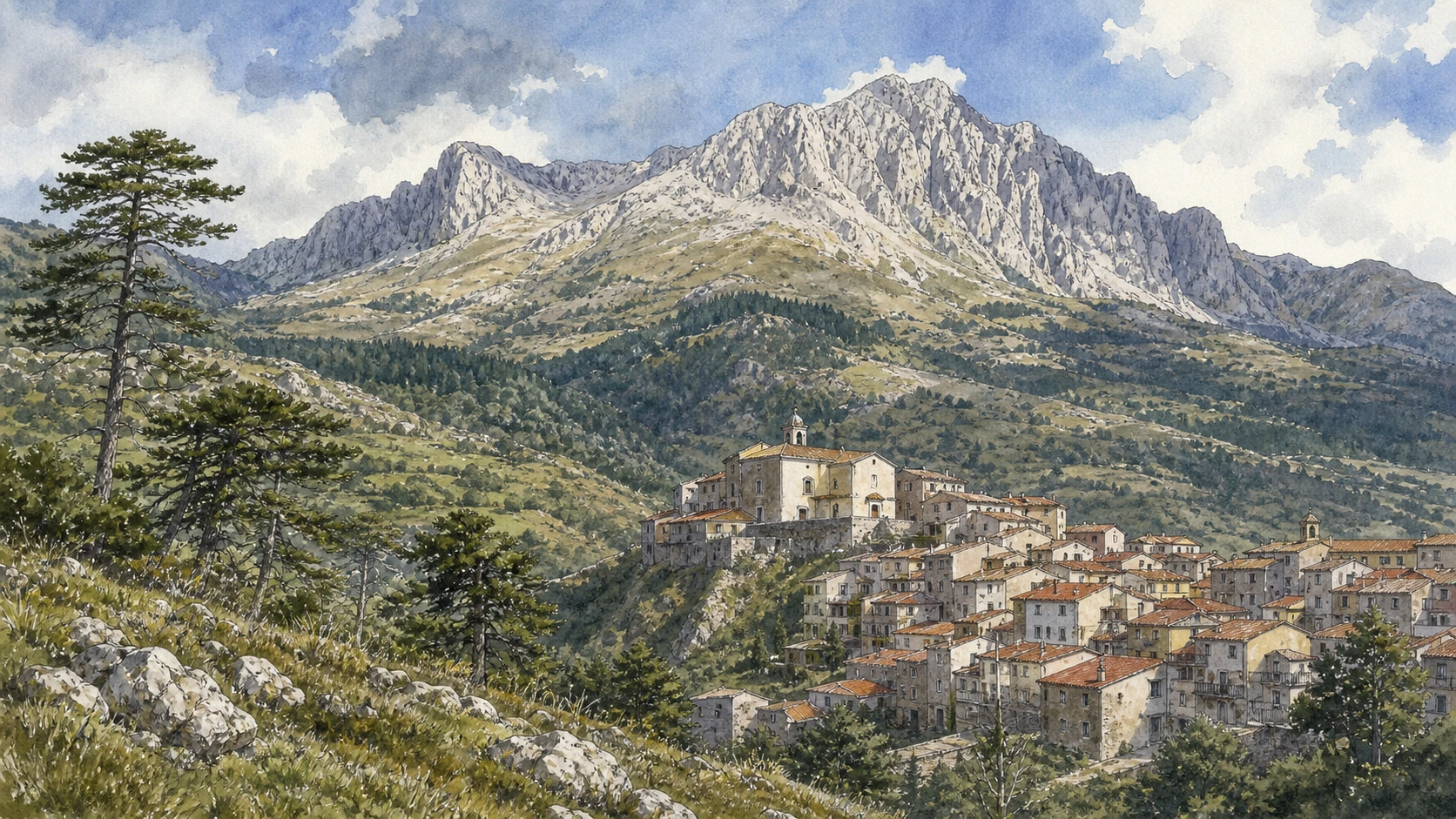
Original documentary watercolour panorama for Pollino and the Arbëreshë Towns: Complete Guide, with accurate Calabrian architecture, landscape and lived context

Calabria Guide 06 · UNESCO geopark, old-growth beech, Bosnian pines, gorges, prehistoric cave, sanctuaries and Albanian-speaking communities

Pollino across
mountains and languages

A four-day northern Calabria route where geology, high forests, Indigenous and Greek corridors, prehistoric evidence and Arbëreshë institutions must be read together.

Plan the route
Pollino and Arbëreshë Towns · Calabria10 chapters · one complete route

Why this route must be read in layers

Pollino is a transregional mountain system and living cultural landscape, not a single summit or adventure corridor.

The national park extends across Calabria and Basilicata and forms a UNESCO Global Geopark. Limestone, gorges, high plateaux, old-growth beech and Bosnian pine habitats require route choices based on authorised access and current fire and weather conditions.

Arbëreshë towns preserve Albanian language, Byzantine-rite institutions, dress, music and community memory through living organisations. They are modern municipalities connected to migration and change, not ethnographic exhibits.

Grotta del Romito, sanctuaries and historic towns add very different forms of evidence. Prehistoric rock art, medieval churches and village architecture cannot be treated as one generic mountain tradition.

Plan at least four days and separate high-mountain, gorge, prehistoric and community routes; never enter canyons or remote paths without live official conditions and suitable expertise.

The route

Plan your visit

Use Castrovillari and Morano as orientation points, visit Arbëreshë towns through their own institutions, then schedule high plateaux and cave archaeology as separate controlled excursions.

Early morning

Castrovillari and the Aragonese Castle · Morano Calabro · Civita

Move in the documented order: Castrovillari and the Aragonese Castle; then Morano Calabro: compact hill town beneath the massif; then Civita: Arbëreshë town and Raganello gateway. Recheck live access and transport before entering a controlled site.

Late morning

Raganello Gorge · Frascineto · Lungro

Move in the documented order: Raganello Gorge: geology, hazard and controlled access; then Frascineto: icons and Arbëreshë cultural institutions; then Lungro: eparchy and Byzantine-rite cathedral. Recheck live access and transport before entering a controlled site.

Afternoon

Acquaformosa · Grotta del Romito · Piani del Pollino and the Bosnian pines

Move in the documented order: Acquaformosa: mosaics, language and mountain streets; then Grotta del Romito: Palaeolithic evidence and protected access; then Piani del Pollino and the Bosnian pines. Recheck live access and transport before entering a controlled site.

Late afternoon

Madonna delle Armi

Move in the documented order: Madonna delle Armi: sanctuary attached to rock. Recheck live access and transport before entering a controlled site.

Ten chapters

Explore the places

The order follows terrain, institutions and present-day movement. Use the index to return to a chapter without reducing the route to isolated monuments.

  1. 01Castrovillari and the Aragonese Castle
  2. 02Morano Calabro: compact hill town beneath the massif
  3. 03Civita: Arbëreshë town and Raganello gateway
  4. 04Raganello Gorge: geology, hazard and controlled access
  5. 05Frascineto: icons and Arbëreshë cultural institutions
  6. 06Lungro: eparchy and Byzantine-rite cathedral
  7. 07Acquaformosa: mosaics, language and mountain streets
  8. 08Grotta del Romito: Palaeolithic evidence and protected access
  9. 09Piani del Pollino and the Bosnian pines
  10. 10Madonna delle Armi: sanctuary attached to rock
01

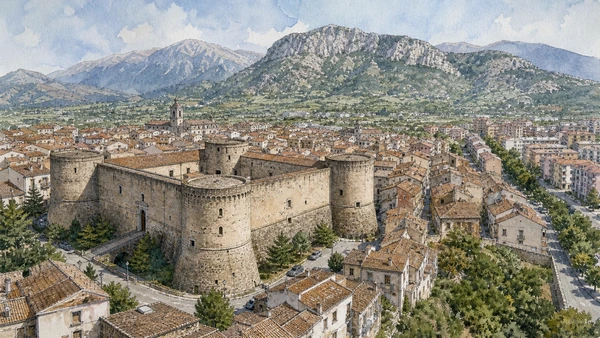
Fortification, old town and park institutions form a practical threshold between the Cosenza basin and Pollino massifs.

Castrovillari and the Aragonese Castle

Fortification, old town and park institutions form a practical threshold between the Cosenza basin and Pollino massifs. The site becomes clearer when its surviving fabric, later alterations and present use are read together.

Today

The area is inhabited and worked, not staged for visitors. Keep doorways, pavements, cycle lanes and deliveries clear, ask before photographing people and use current municipal mobility information.

History

The castle reflects late-medieval royal control; the town expanded beyond earlier quarters as roads and administrative functions changed.

How to read this place

Begin with four-tower castle geometry. Then compare older streets and newer expansion with mountain ridges framing the urban edge; the differences are evidence, not visual noise.

What to notice

  • four-tower castle geometry
  • older streets and newer expansion
  • mountain ridges framing the urban edge
Pollino National Park · Official portal
Original documentary watercolour of Castrovillari and the Aragonese Castle in Pollino and Arbëreshë Towns · Calabria, showing accurate architecture, landscape, people and present-day use
Castrovillari and the Aragonese CastleOriginal Merlintravel documentary watercolour · 2026
02

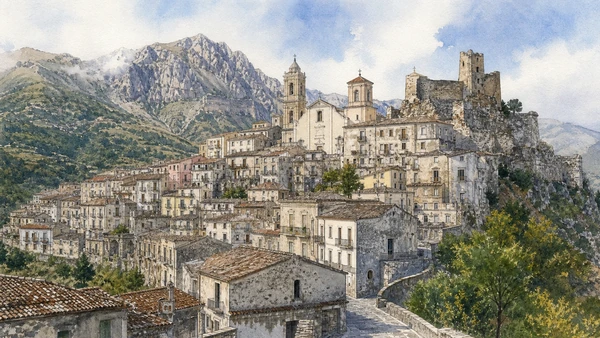
Layered houses, churches and castle ruins create a dense settlement adapted to a steep conical hill.

Morano Calabro: compact hill town beneath the massif

Layered houses, churches and castle ruins create a dense settlement adapted to a steep conical hill. The site becomes clearer when its surviving fabric, later alterations and present use are read together.

Today

The area is inhabited and worked, not staged for visitors. Keep doorways, pavements, cycle lanes and deliveries clear, ask before photographing people and use current municipal mobility information.

History

Medieval and early-modern institutions developed above older routes; later migration and conservation altered occupancy without erasing the town’s structure.

How to read this place

Begin with concentric street levels. Then compare church towers and ruined castle with inhabited and restored buildings within the same slope; the differences are evidence, not visual noise.

What to notice

  • concentric street levels
  • church towers and ruined castle
  • inhabited and restored buildings within the same slope
Pollino National Park · Official portal
Original documentary watercolour of Morano Calabro: compact hill town beneath the massif in Pollino and Arbëreshë Towns · Calabria, showing accurate architecture, landscape, people and present-day use
Morano Calabro: compact hill town beneath the massifOriginal Merlintravel documentary watercolour · 2026
03

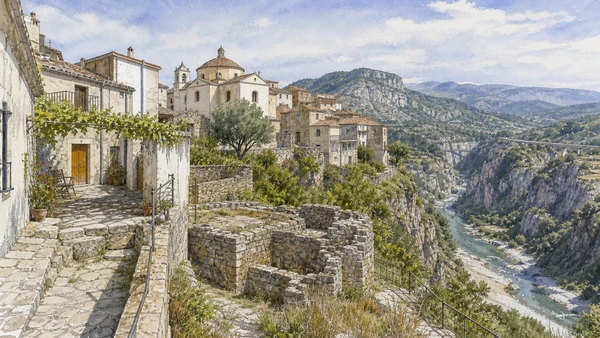
Architecture, community museums, Byzantine-rite worship and gorge access meet in one inhabited municipality.

Civita: Arbëreshë town and Raganello gateway

Architecture, community museums, Byzantine-rite worship and gorge access meet in one inhabited municipality. The site becomes clearer when its surviving fabric, later alterations and present use are read together.

Today

The area is inhabited and worked, not staged for visitors. Keep doorways, pavements, cycle lanes and deliveries clear, ask before photographing people and use current municipal mobility information.

History

Albanian-speaking settlers established the community in the late medieval and early-modern period; language and ritual continue through institutions shaped by modern life.

How to read this place

Begin with gjitonia neighbourhood spaces. Then compare church and community interpretation with the town’s position above the raganello; the differences are evidence, not visual noise.

What to notice

  • gjitonia neighbourhood spaces
  • church and community interpretation
  • the town’s position above the Raganello
Pollino National Park · Official portal
Original documentary watercolour of Civita: Arbëreshë town and Raganello gateway in Pollino and Arbëreshë Towns · Calabria, showing accurate architecture, landscape, people and present-day use
Civita: Arbëreshë town and Raganello gatewayOriginal Merlintravel documentary watercolour · 2026
04

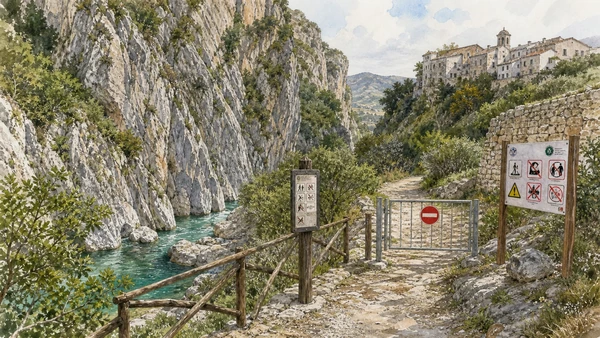
A spectacular canyon system is also a dynamic risk environment where permission, weather and trained guidance matter.

Raganello Gorge: geology, hazard and controlled access

A spectacular canyon system is also a dynamic risk environment where permission, weather and trained guidance matter. The site becomes clearer when its surviving fabric, later alterations and present use are read together.

Today

Weather, water levels, trail conditions and seasonal services can alter the route. Use official transport and park information, remain on authorised paths and do not enter farms, vineyards or private gardens without permission.

History

Water and tectonic structure shaped the gorge within the geopark; modern recreation has made rescue, closure and responsible access central to its interpretation.

How to read this place

Begin with limestone walls and river channel. Then compare official access points and closure notices with the difference between viewpoints and canyon entry; the differences are evidence, not visual noise.

What to notice

  • limestone walls and river channel
  • official access points and closure notices
  • the difference between viewpoints and canyon entry
Pollino National Park · Official portal
Original documentary watercolour of Raganello Gorge: geology, hazard and controlled access in Pollino and Arbëreshë Towns · Calabria, showing accurate architecture, landscape, people and present-day use
Raganello Gorge: geology, hazard and controlled accessOriginal Merlintravel documentary watercolour · 2026
05

Museums, parish life and bilingual community memory connect art objects to living Byzantine-rite practice.

Frascineto: icons and Arbëreshë cultural institutions

Museums, parish life and bilingual community memory connect art objects to living Byzantine-rite practice. The site becomes clearer when its surviving fabric, later alterations and present use are read together.

Today

Opening, ticketing, room access and temporary displays can change. Check the institution’s official notice shortly before visiting, use the designated entrance and allow for security or conservation controls.

History

The town belongs to the network of Albanian-speaking settlements founded after medieval migration; collections document both religious art and modern identity work.

How to read this place

Begin with icons as documented objects. Then compare church space and contemporary worship with bilingual public culture in the town; the differences are evidence, not visual noise.

What to notice

  • icons as documented objects
  • church space and contemporary worship
  • bilingual public culture in the town
Pollino National Park · Official portal
Original documentary watercolour of Frascineto: icons and Arbëreshë cultural institutions in Pollino and Arbëreshë Towns · Calabria, showing accurate architecture, landscape, people and present-day use
Frascineto: icons and Arbëreshë cultural institutionsOriginal Merlintravel documentary watercolour · 2026
06

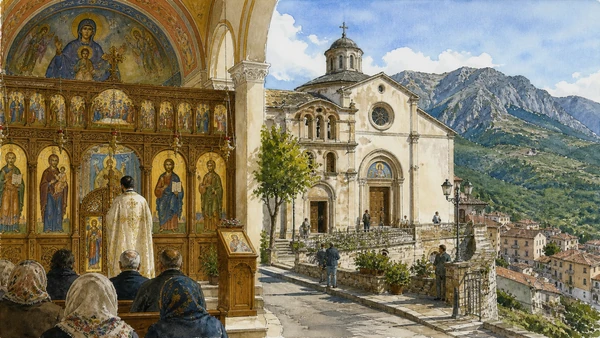
The cathedral and eparchial institutions make the town a major centre of Italo-Albanian religious life.

Lungro: eparchy and Byzantine-rite cathedral

The cathedral and eparchial institutions make the town a major centre of Italo-Albanian religious life. The site becomes clearer when its surviving fabric, later alterations and present use are read together.

Today

This is an active religious place as well as a historic building. Services, ceremonies and conservation can interrupt tourist access; dress appropriately, remain quiet and never treat a booked visit as priority over worship.

History

The Eparchy of Lungro was established in the twentieth century to serve Byzantine-rite Italo-Albanian communities, formalising traditions developed over previous centuries.

How to read this place

Begin with iconostasis and liturgical arrangement. Then compare urban position of the cathedral with active worship rather than staged ritual; the differences are evidence, not visual noise.

What to notice

  • iconostasis and liturgical arrangement
  • urban position of the cathedral
  • active worship rather than staged ritual
Regione Calabria · Official tourism
Original documentary watercolour of Lungro: eparchy and Byzantine-rite cathedral in Pollino and Arbëreshë Towns · Calabria, showing accurate architecture, landscape, people and present-day use
Lungro: eparchy and Byzantine-rite cathedralOriginal Merlintravel documentary watercolour · 2026
07

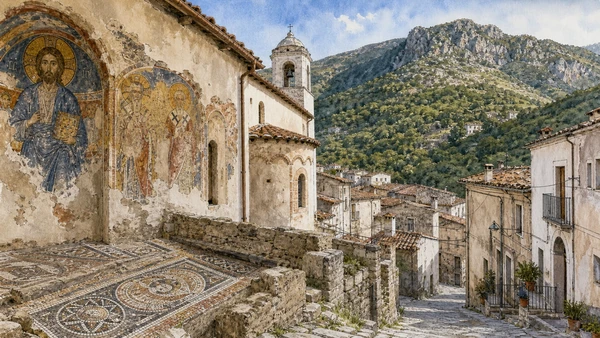
A small Arbëreshë town presents religious art and community space within a steep forest-edge setting.

Acquaformosa: mosaics, language and mountain streets

A small Arbëreshë town presents religious art and community space within a steep forest-edge setting. The site becomes clearer when its surviving fabric, later alterations and present use are read together.

Today

The area is inhabited and worked, not staged for visitors. Keep doorways, pavements, cycle lanes and deliveries clear, ask before photographing people and use current municipal mobility information.

History

Albanian-speaking settlement, Byzantine-rite practice and later church decoration form distinct but related phases of local identity.

How to read this place

Begin with mosaic programmes and church architecture. Then compare steep inhabited lanes with the relationship between town and wooded slopes; the differences are evidence, not visual noise.

What to notice

  • mosaic programmes and church architecture
  • steep inhabited lanes
  • the relationship between town and wooded slopes
Pollino National Park · Official portal
Original documentary watercolour of Acquaformosa: mosaics, language and mountain streets in Pollino and Arbëreshë Towns · Calabria, showing accurate architecture, landscape, people and present-day use
Acquaformosa: mosaics, language and mountain streetsOriginal Merlintravel documentary watercolour · 2026
08

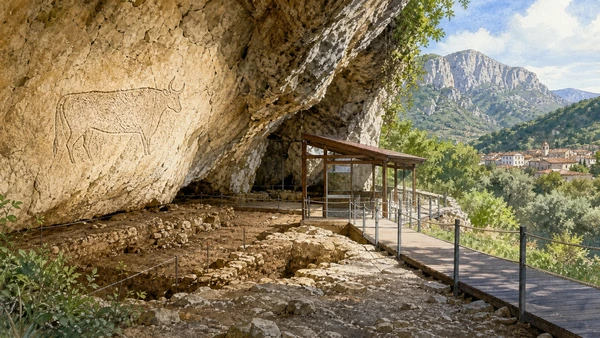
Rock engravings, burials and archaeological deposits preserve a deep chronology far older than the region’s historic towns.

Grotta del Romito: Palaeolithic evidence and protected access

Rock engravings, burials and archaeological deposits preserve a deep chronology far older than the region’s historic towns. The site becomes clearer when its surviving fabric, later alterations and present use are read together.

Today

Archaeological access may be limited to protected viewpoints, scheduled openings or guided routes. Stay outside barriers, distinguish original material from supports and reconstruction, and verify the official opening notice.

History

Upper Palaeolithic occupation and the celebrated aurochs engraving are documented through excavation; access and interpretation depend on the archaeological site.

How to read this place

Begin with the engraved figure in its rock context. Then compare excavated deposits and shelters with protective paths and viewing limits; the differences are evidence, not visual noise.

What to notice

  • the engraved figure in its rock context
  • excavated deposits and shelters
  • protective paths and viewing limits
Pollino National Park · Official portal
Original documentary watercolour of Grotta del Romito: Palaeolithic evidence and protected access in Pollino and Arbëreshë Towns · Calabria, showing accurate architecture, landscape, people and present-day use
Grotta del Romito: Palaeolithic evidence and protected accessOriginal Merlintravel documentary watercolour · 2026
09

High grasslands, limestone ridges and Pinus heldreichii habitats define the park’s emblematic but fragile upper landscape.

Piani del Pollino and the Bosnian pines

High grasslands, limestone ridges and Pinus heldreichii habitats define the park’s emblematic but fragile upper landscape. The site becomes clearer when its surviving fabric, later alterations and present use are read together.

Today

Weather, water levels, trail conditions and seasonal services can alter the route. Use official transport and park information, remain on authorised paths and do not enter farms, vineyards or private gardens without permission.

History

The Bosnian pine survives naturally in Italy in the Calabrian-Lucanian massif; old trees record climate and exposure rather than a timeless untouched forest.

How to read this place

Begin with isolated pine forms against ridges. Then compare grassland and rock transitions with marked routes and weather exposure; the differences are evidence, not visual noise.

What to notice

  • isolated pine forms against ridges
  • grassland and rock transitions
  • marked routes and weather exposure
Pollino National Park · Official portal
Original documentary watercolour of Piani del Pollino and the Bosnian pines in Pollino and Arbëreshë Towns · Calabria, showing accurate architecture, landscape, people and present-day use
Piani del Pollino and the Bosnian pinesOriginal Merlintravel documentary watercolour · 2026
10

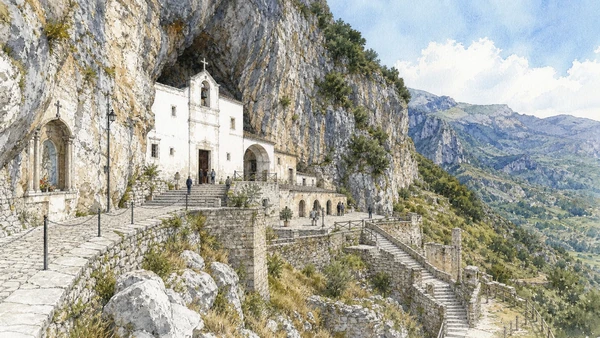
Church, caves and terraces occupy a dramatic limestone setting above the Sibari plain.

Madonna delle Armi: sanctuary attached to rock

Church, caves and terraces occupy a dramatic limestone setting above the Sibari plain. The site becomes clearer when its surviving fabric, later alterations and present use are read together.

Today

This is an active religious place as well as a historic building. Services, ceremonies and conservation can interrupt tourist access; dress appropriately, remain quiet and never treat a booked visit as priority over worship.

History

The sanctuary developed through late-medieval and early-modern phases around an older devotional site; buildings and rock form one managed religious complex.

How to read this place

Begin with architecture built into the cliff. Then compare terraces and pilgrimage routes with active worship and current access controls; the differences are evidence, not visual noise.

What to notice

  • architecture built into the cliff
  • terraces and pilgrimage routes
  • active worship and current access controls
Pollino National Park · Official portal
Original documentary watercolour of Madonna delle Armi: sanctuary attached to rock in Pollino and Arbëreshë Towns · Calabria, showing accurate architecture, landscape, people and present-day use
Madonna delle Armi: sanctuary attached to rockOriginal Merlintravel documentary watercolour · 2026

Calabria through time

A short chronology

From Indigenous and Greek landscapes to Byzantine continuity, Norman institutions, earthquakes, migration, protected parks and contemporary cultural recovery.

  1. Caves, shelters and river valleys preserve evidence of long human occupation before permanent coastal cities.

  2. Indigenous Oenotrian landscapes encounter Greek settlement; Rhegion, Sybaris, Kroton and Locri develop as distinct poleis.

  3. Coastal cities establish sanctuaries, workshops, farms and exchange systems while maintaining different relations with inland communities.

  4. Bruttian power expands across the interior and contests Greek territories before Roman intervention.

  5. Roman roads, colonies, estates and ports reorganise older urban and rural systems across the peninsula.

  6. Byzantine administration, monastic networks and Greek liturgy remain especially influential in southern and Ionian Calabria.

  7. Norman conquest reshapes bishoprics, castles and monasteries while incorporating Greek and Latin institutions.

  8. Swabian, Angevin and Aragonese rule modifies fortifications, towns and routes; Albanian-speaking communities settle in several northern districts.

  9. Coastal towers and inland refuges respond to maritime raids while feudal estates and religious houses organise land and labour.

  10. A devastating earthquake sequence transforms settlements throughout central and southern Calabria and prompts new planning and reconstruction.

  11. French rule suppresses feudal institutions and many religious houses before Bourbon restoration.

  12. Italian unification is followed by administrative change, conflict over land and accelerating migration.

  13. The Messina Strait earthquake and tsunami destroy much of Reggio Calabria and neighbouring communities, shaping modern reconstruction.

  14. Land reform, roads, dams, tourism, internal migration and emigration transform cities, plateaux and both coastlines.

  15. National parks, archaeological networks, minority-language initiatives and cultural recovery operate alongside fire, erosion, depopulation and climate risk.

Before your visit

Practical information

01

Check the live page

Opening hours, reservation systems, restoration, exhibitions and transport can change. Recheck the linked official institution shortly before departure.

02

Separate worship and tourism

Churches and sanctuaries remain religious spaces. Services, funerals and community use take priority over visitor itineraries.

03

Plan real distances

Pollino and Arbëreshë Towns · Calabria combines dense urban routes with lakes, valleys and dispersed towns. Do not compress distant chapters into an unsafe or superficial day.

04

Keep thresholds open

Arcades, station halls, markets, courtyards, workshops and residential streets must continue to function while you observe or photograph them.

05

Use current mobility data

Check the responsible rail, navigation, bus, road or park operator on the day; replacement services and weather can change an otherwise sound route.

06

Read change honestly

Restoration, reconstruction, adaptive reuse and new development have all shaped the landscape visible today.

Method and sources

Sources and image credits

This guide uses official museum, ministry, regional-tourism, park and UNESCO documentation checked on 1 September 2026. It separates Greek, Indigenous, Roman, Byzantine and later phases instead of using Magna Graecia as a generic label, distinguishes surviving fabric from post-earthquake reconstruction, and treats worship, minority languages, farming, fishing, residence and public movement as part of the evidence. Every chapter links its principal institutional source; tickets, closures, weather, fire risk, sea conditions, trails and transport must always be verified again on the day of the visit.

All ten images are original Merlintravel editorial watercolours based on documented present-day conditions. They are illustrations, not substitutes for archaeological plans. Opening hours, tickets, accessible routes, temporary exhibitions and conservation work can change; consult the linked official pages shortly before visiting.