Original documentary watercolour panorama for Castel del Monte and Alta Murgia: Complete Guide, with accurate Puglian architecture, landscape and lived context

Puglia Guide 04 · Archaeology, architecture, working landscapes and contemporary access

Stone
measures the plateau

A two-day circuit through Frederick II’s octagonal monument, steppe habitats, Romanesque cities, Peucetian collections, ravines and inland agricultural routes.

Plan the route
Alta Murgia · Puglia10 chapters · one complete route

Why this route must be read in layers

Castel del Monte is an architectural concentration inside a much larger plateau of towns, archaeology, pastoral work and protected habitat.

The route begins with documented fabric and institutional collections rather than a list of photogenic surfaces. Each chapter separates what survives, what was rebuilt and what remains in use.

Puglia’s ports, pilgrimage sites, farms, forests, archaeological parks and inhabited centres operate under different access conditions. Current notices therefore belong to the route rather than an appendix.

Each chapter includes an illustration of the place described. The images are watercolours rather than photographs.

A two-day circuit through Frederick II’s octagonal monument, steppe habitats, Romanesque cities, Peucetian collections, ravines and inland agricultural routes.

The route

Plan your visit

A two-day circuit through Frederick II’s octagonal monument, steppe habitats, Romanesque cities, Peucetian collections, ravines and inland agricultural routes.

Early morning

Castel del Monte · Alta Murgia · Andria

Move in the documented order: Castel del Monte: geometry without a simple label; then Alta Murgia: steppe, limestone and working land; then Andria: cathedral, ducal city and Frederick’s memory. Recheck live access and transport before entering a controlled site.

Late morning

Trani Cathedral · Trani Castle · Museo Jatta

Move in the documented order: Trani Cathedral: Romanesque stone at the harbour edge; then Trani Castle: royal control beside cathedral and port; then Museo Jatta: a nineteenth-century collection kept in place. Recheck live access and transport before entering a controlled site.

Afternoon

Altamura Cathedral and the planned medieval centre · Pulo di Altamura · Gravina in Puglia

Move in the documented order: Altamura Cathedral and the planned medieval centre; then Pulo di Altamura: karst, archaeology and fragile access; then Gravina in Puglia: ravine, bridge and rock settlement. Recheck live access and transport before entering a controlled site.

Late afternoon

Canosa di Puglia

Move in the documented order: Canosa di Puglia: Daunian, Roman and early Christian city. Recheck live access and transport before entering a controlled site.

Ten chapters

Explore the places

The order follows terrain, institutions and present-day movement. Use the index to return to a chapter without reducing the route to isolated monuments.

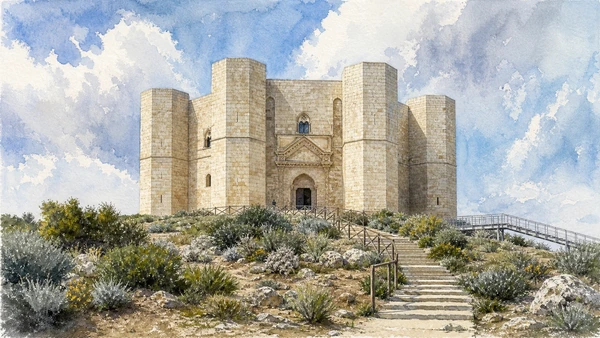
  1. 01Castel del Monte: geometry without a simple label
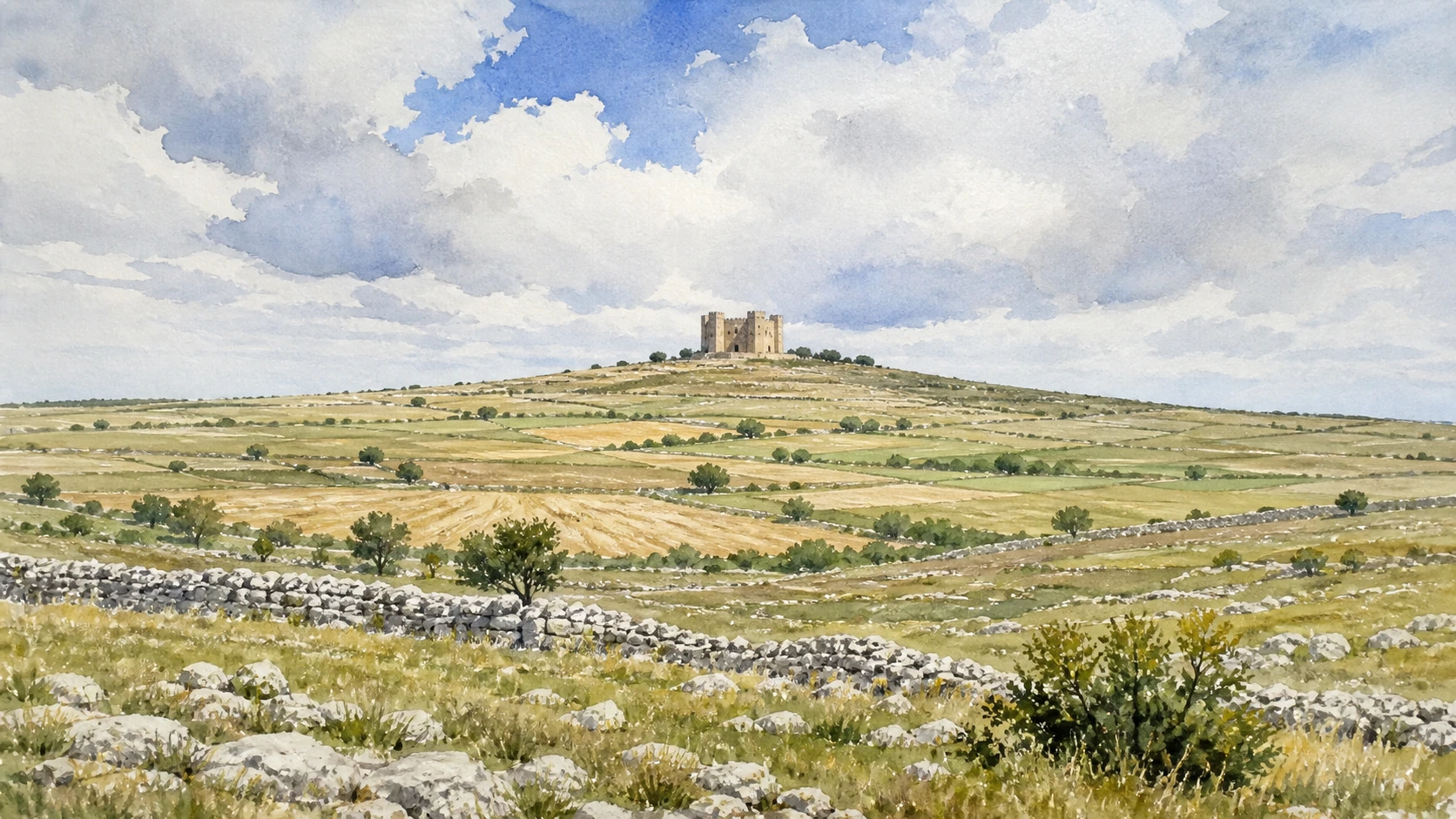
  2. 02Alta Murgia: steppe, limestone and working land
  3. 03Andria: cathedral, ducal city and Frederick’s memory
  4. 04Trani Cathedral: Romanesque stone at the harbour edge
  5. 05Trani Castle: royal control beside cathedral and port
  6. 06Museo Jatta: a nineteenth-century collection kept in place
  7. 07Altamura Cathedral and the planned medieval centre
  8. 08Pulo di Altamura: karst, archaeology and fragile access
  9. 09Gravina in Puglia: ravine, bridge and rock settlement
  10. 10Canosa di Puglia: Daunian, Roman and early Christian city
01

The octagonal building combines classical, northern European and Islamic references without yielding one certain function.

Castel del Monte: geometry without a simple label

The octagonal building combines classical, northern European and Islamic references without yielding one certain function. The place becomes clearer when surviving fabric, later change and present use are read together.

Today

Interior routes, exhibitions and controlled areas can change. Check the managing institution, respect barriers and distinguish surviving fabric from restoration.

History

Completed around 1240 for Frederick II, the monument retains its external form while much interior decoration was removed or lost.

How to read this place

Study circulation, light, materials and repeated geometry; avoid presenting numerology or a single functional theory as established fact.

What to notice

  • defensive geometry and controlled approaches
  • different masonry phases
  • present cultural or civic use
UNESCO · Castel del Monte
Original documentary watercolour of Castel del Monte: geometry without a simple label in Alta Murgia · Puglia, showing accurate architecture, landscape and present-day use
Castel del Monte: geometry without a simple labelOriginal Merlintravel documentary watercolour · 2026
02

Open grassland, rocky soils, farms and military or transport traces form a protected cultural landscape.

Alta Murgia: steppe, limestone and working land

Open grassland, rocky soils, farms and military or transport traces form a protected cultural landscape. The place becomes clearer when surviving fabric, later change and present use are read together.

Today

Weather, heat, fire risk, sea state and seasonal restrictions can alter access. Use official park or reserve information and remain on authorised routes.

History

Long pastoral and agricultural use shaped habitats that now depend on active management as well as conservation rules.

How to read this place

Notice dry grassland, sinkholes and farm boundaries; stay on authorised routes and respect livestock, crops and fire restrictions.

What to notice

  • geology and native vegetation
  • authorised paths and protected habitats
  • working land or water beside conservation zones
Parco Nazionale dell’Alta Murgia
Original documentary watercolour of Alta Murgia: steppe, limestone and working land in Alta Murgia · Puglia, showing accurate architecture, landscape and present-day use
Alta Murgia: steppe, limestone and working landOriginal Merlintravel documentary watercolour · 2026
03

A lived inland centre connects medieval institutions, later palaces and the routes leading toward Castel del Monte.

Andria: cathedral, ducal city and Frederick’s memory

A lived inland centre connects medieval institutions, later palaces and the routes leading toward Castel del Monte. The place becomes clearer when surviving fabric, later change and present use are read together.

Today

This is an inhabited place, not a visitor set. Keep doorways, pavements and deliveries clear, and use current municipal mobility information.

History

The city developed through Norman, Swabian, Angevin and later phases; Frederick II’s family memory is especially associated with the cathedral crypt.

How to read this place

Read the cathedral and streets within a modern city, then distinguish documentary associations from later civic mythology.

What to notice

  • street width and building materials
  • residential use behind historic facades
  • later infrastructure and adaptation
Comune di Andria
Original documentary watercolour of Andria: cathedral, ducal city and Frederick's memory in Alta Murgia · Puglia, showing accurate architecture, landscape and present-day use
Andria: cathedral, ducal city and Frederick’s memoryOriginal Merlintravel documentary watercolour · 2026
04

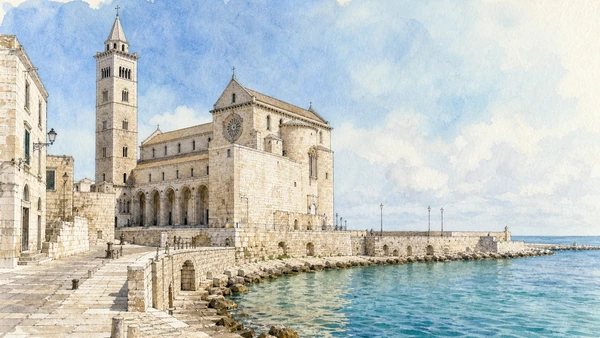
The cathedral, crypts and high campanile form a maritime religious complex built in pale local stone.

Trani Cathedral: Romanesque stone at the harbour edge

The cathedral, crypts and high campanile form a maritime religious complex built in pale local stone. The place becomes clearer when surviving fabric, later change and present use are read together.

Today

This is an active religious place. Services, ceremonies and conservation can interrupt tourist access; dress appropriately, remain quiet and verify the official notice.

History

Construction began in the late eleventh century around the cult of Saint Nicholas the Pilgrim and continued through later medieval phases.

How to read this place

Read the elevated church, lower levels and harbour approach together; sea exposure and restoration affect the monument’s surfaces.

What to notice

  • the relationship between worship and visitor circulation
  • older fabric and later rebuilding
  • objects still used in liturgy
Arcidiocesi Trani-Barletta-Bisceglie
Original documentary watercolour of Trani Cathedral: Romanesque stone at the harbour edge in Alta Murgia · Puglia, showing accurate architecture, landscape and present-day use
Trani Cathedral: Romanesque stone at the harbour edgeOriginal Merlintravel documentary watercolour · 2026
05

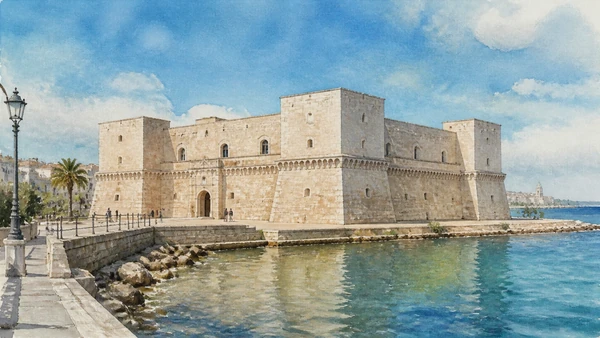
A Swabian fortress occupies the low shoreline and was repeatedly adapted for military, prison and visitor use.

Trani Castle: royal control beside cathedral and port

A Swabian fortress occupies the low shoreline and was repeatedly adapted for military, prison and visitor use. The place becomes clearer when surviving fabric, later change and present use are read together.

Today

Interior routes, exhibitions and controlled areas can change. Check the managing institution, respect barriers and distinguish surviving fabric from restoration.

History

Built under Frederick II in the thirteenth century, the castle changed under Angevin and later administrations.

How to read this place

Compare the medieval core, later defensive modifications and the modern waterfront; do not merge it visually with Castel del Monte.

What to notice

  • defensive geometry and controlled approaches
  • different masonry phases
  • present cultural or civic use
Direzione regionale Musei Puglia · Castello di Trani
Original documentary watercolour of Trani Castle: royal control beside cathedral and port in Alta Murgia · Puglia, showing accurate architecture, landscape and present-day use
Trani Castle: royal control beside cathedral and portOriginal Merlintravel documentary watercolour · 2026
06

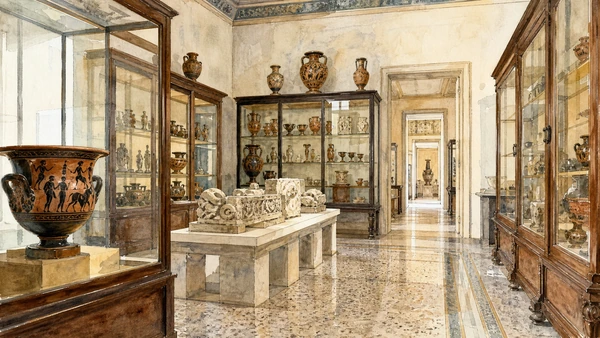
More than two thousand archaeological objects remain arranged within the family’s historic collecting environment.

Museo Jatta: a nineteenth-century collection kept in place

More than two thousand archaeological objects remain arranged within the family’s historic collecting environment. The place becomes clearer when surviving fabric, later change and present use are read together.

Today

Opening, ticketing, room access and temporary displays can change. Check the museum’s official notice shortly before visiting and allow for security or conservation controls.

History

The Ruvo collection formed through nineteenth-century excavation and collecting and later entered public ownership while retaining its distinctive rooms.

How to read this place

Separate ancient object, find history and nineteenth-century display; provenance and collecting practice are part of the museum’s evidence.

What to notice

  • the chronological order of the displays
  • finds tied to documented excavation contexts
  • modern conservation and interpretation
Direzione regionale Musei Puglia · Museo Jatta
Original documentary watercolour of Museo Jatta: a nineteenth-century collection kept in place in Alta Murgia · Puglia, showing accurate architecture, landscape and present-day use
Museo Jatta: a nineteenth-century collection kept in placeOriginal Merlintravel documentary watercolour · 2026
07

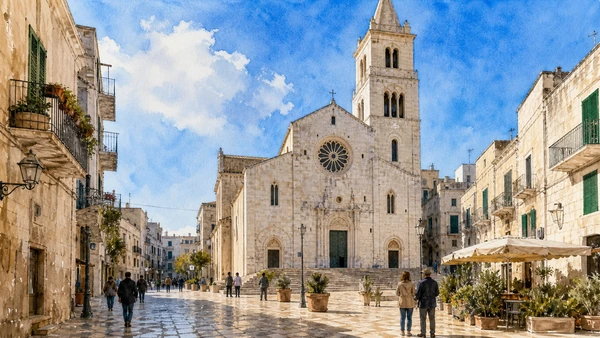
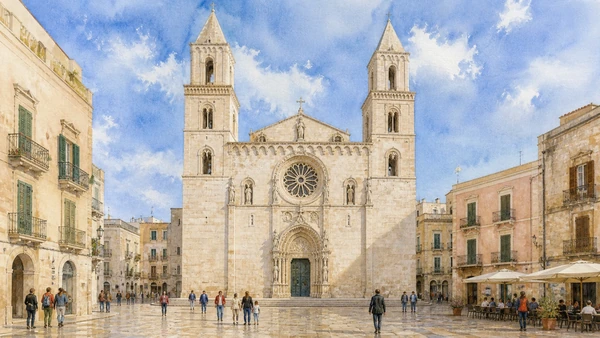
Frederick II’s cathedral anchors a dense city whose later facades and courtyards record continuing use.

Altamura Cathedral and the planned medieval centre

Frederick II’s cathedral anchors a dense city whose later facades and courtyards record continuing use. The place becomes clearer when surviving fabric, later change and present use are read together.

Today

This is an active religious place. Services, ceremonies and conservation can interrupt tourist access; dress appropriately, remain quiet and verify the official notice.

History

The cathedral was founded in the thirteenth century and repeatedly modified, especially after later earthquakes and building campaigns.

How to read this place

Compare portal sculpture, later facade work and the inhabited claustri nearby; the city is not an appendage to its bread tradition.

What to notice

  • the relationship between worship and visitor circulation
  • older fabric and later rebuilding
  • objects still used in liturgy
Comune di Altamura
Original documentary watercolour of Altamura Cathedral and the planned medieval centre in Alta Murgia · Puglia, showing accurate architecture, landscape and present-day use
Altamura Cathedral and the planned medieval centreOriginal Merlintravel documentary watercolour · 2026
08

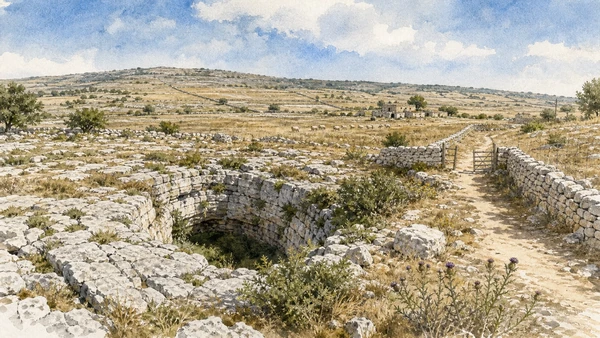
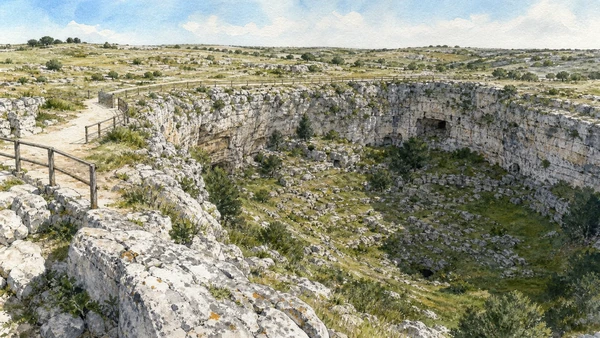
A large doline exposes the plateau’s geology and a long record of human presence in caves and shelters.

Pulo di Altamura: karst, archaeology and fragile access

A large doline exposes the plateau’s geology and a long record of human presence in caves and shelters. The place becomes clearer when surviving fabric, later change and present use are read together.

Today

Weather, heat, fire risk, sea state and seasonal restrictions can alter access. Use official park or reserve information and remain on authorised routes.

History

Karst processes created the depression; archaeological and palaeontological research links the wider territory to deep prehistory.

How to read this place

Observe from authorised paths and distinguish geological form, archaeological context and modern safety infrastructure.

What to notice

  • geology and native vegetation
  • authorised paths and protected habitats
  • working land or water beside conservation zones
Parco Nazionale dell’Alta Murgia
Original documentary watercolour of Pulo di Altamura: karst, archaeology and fragile access in Alta Murgia · Puglia, showing accurate architecture, landscape and present-day use
Pulo di Altamura: karst, archaeology and fragile accessOriginal Merlintravel documentary watercolour · 2026
09

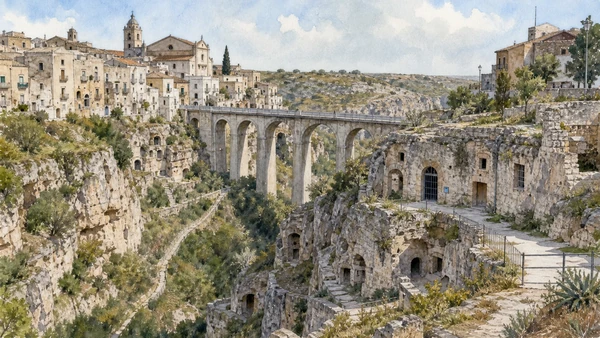
Urban streets, ravine edges, cave spaces and a later aqueduct bridge reveal settlement adapted to difficult limestone terrain.

Gravina in Puglia: ravine, bridge and rock settlement

Urban streets, ravine edges, cave spaces and a later aqueduct bridge reveal settlement adapted to difficult limestone terrain. The place becomes clearer when surviving fabric, later change and present use are read together.

Today

This is an inhabited place, not a visitor set. Keep doorways, pavements and deliveries clear, and use current municipal mobility information.

History

Occupation developed across both sides of the ravine; religious and domestic cave use, medieval institutions and later engineering created a layered landscape.

How to read this place

Read the bridge as later infrastructure, keep cave access controlled and compare the modern town with rock-cut spaces below.

What to notice

  • street width and building materials
  • residential use behind historic facades
  • later infrastructure and adaptation
Comune di Gravina in Puglia
Original documentary watercolour of Gravina in Puglia: ravine, bridge and rock settlement in Alta Murgia · Puglia, showing accurate architecture, landscape and present-day use
Gravina in Puglia: ravine, bridge and rock settlementOriginal Merlintravel documentary watercolour · 2026
10

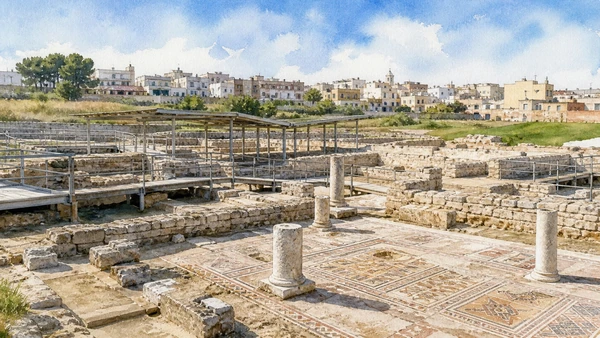
Tombs, museum collections, Roman monuments and basilica remains document a major inland centre over many centuries.

Canosa di Puglia: Daunian, Roman and early Christian city

Tombs, museum collections, Roman monuments and basilica remains document a major inland centre over many centuries. The place becomes clearer when surviving fabric, later change and present use are read together.

Today

Archaeological access can change because of conservation, excavation, weather or staffing. Stay outside barriers and verify the official opening notice.

History

Ancient Canusium grew through Daunian and Roman phases and remained important in late antiquity and the early Middle Ages.

How to read this place

Use museum and site sequence together; widely separated remains should not be compressed into one imaginary archaeological park.

What to notice

  • original masonry and later support work
  • the relation between excavation and modern surroundings
  • areas intentionally left unexcavated
Direzione regionale Musei Puglia · Canosa
Original documentary watercolour of Canosa di Puglia: Daunian, Roman and early Christian city in Alta Murgia · Puglia, showing accurate architecture, landscape and present-day use
Canosa di Puglia: Daunian, Roman and early Christian cityOriginal Merlintravel documentary watercolour · 2026

Puglia through time

A short chronology

From Daunian, Peucetian and Messapian landscapes to Greek Taras, Roman roads, medieval ports, modern cities, protected parks and contemporary cultural recovery.

  1. Coastal landings, cave occupation and Bronze Age communities connect Adriatic, Ionian and inland routes.

  2. Daunian, Peucetian and Messapian societies develop distinct settlements, funerary customs and material cultures.

  3. Greek Taras expands on the Ionian coast while Indigenous centres negotiate trade and conflict across the region.

  4. Fortified towns, sanctuaries and rural systems change under pressure from Taranto, neighbouring peoples and Roman expansion.

  5. Roman colonies, estates, ports and the Via Appia and Via Traiana reorganise Apulia’s movement and production.

  6. Byzantine, Lombard and local powers contest a frontier shaped by ports, cave settlements, bishoprics and monastic networks.

  7. Norman rule, pilgrimage and maritime commerce support cathedrals, castles and new Latin institutions.

  8. Frederick II and his administration reshape castles, towns and royal landscapes across the region.

  9. Angevin and Aragonese power changes fortified towns, estates and relations with the Adriatic and Balkan coasts.

  10. The Ottoman capture of Otranto and its aftermath become a lasting element of Salento’s civic and religious memory.

  11. Coastal towers, masserie, olive estates and urban rebuilding respond to insecurity, trade and landholding systems.

  12. Feudal abolition, Bourbon reforms and Italian unification alter institutions without resolving rural inequality.

  13. Ports, railways, industry, war and migration transform cities while archaeology and heritage protection acquire new public roles.

  14. Land reform, industrial development, tourism and mass mobility reshape plains, coastlines and historic centres.

  15. UNESCO sites, national parks and museum networks expand while overtourism, industrial transition, olive disease and climate risk demand new care.

Before your visit

Practical information

01

Check the live page

Opening hours, reservations, restoration, worship and seasonal services can change. Recheck the linked institution shortly before departure.

02

Plan the long geography

Puglia is a long region. Do not compress distant cities, headlands and archaeological parks into an unsafe or superficial day.

03

Separate worship and tourism

Basilicas, cathedrals, sanctuaries and chapels remain religious places. Services and community use take priority.

04

Protect inhabited centres

Old towns, trulli districts, fishing quarters and working ports are not stage sets. Keep access, homes and deliveries clear.

05

Use current environmental notices

Heat, fire risk, sea state, coastal erosion, forest restrictions and protected habitats can alter a route at short notice.

06

Read reconstruction honestly

Restoration, adaptive reuse, modern infrastructure and contemporary art are part of the documented landscape, not defects to hide.

Method and sources

Sources and image credits

This guide uses official museum, ministry, municipal, park, UNESCO and regional-tourism documentation checked on 1 September 2026. It distinguishes Daunian, Peucetian, Messapian, Greek, Roman, Byzantine, Lombard, Norman, Swabian and later phases rather than treating Puglia as one timeless Mediterranean image. Every chapter links its principal institutional source; tickets, services, worship, closures, heat, fire risk, sea conditions and transport must always be verified again on the day of the visit.

All ten images are original Merlintravel editorial watercolours based on documented present-day conditions. They are illustrations, not substitutes for archaeological plans. Opening hours, tickets, accessible routes, temporary exhibitions and conservation work can change; consult the linked official pages shortly before visiting.