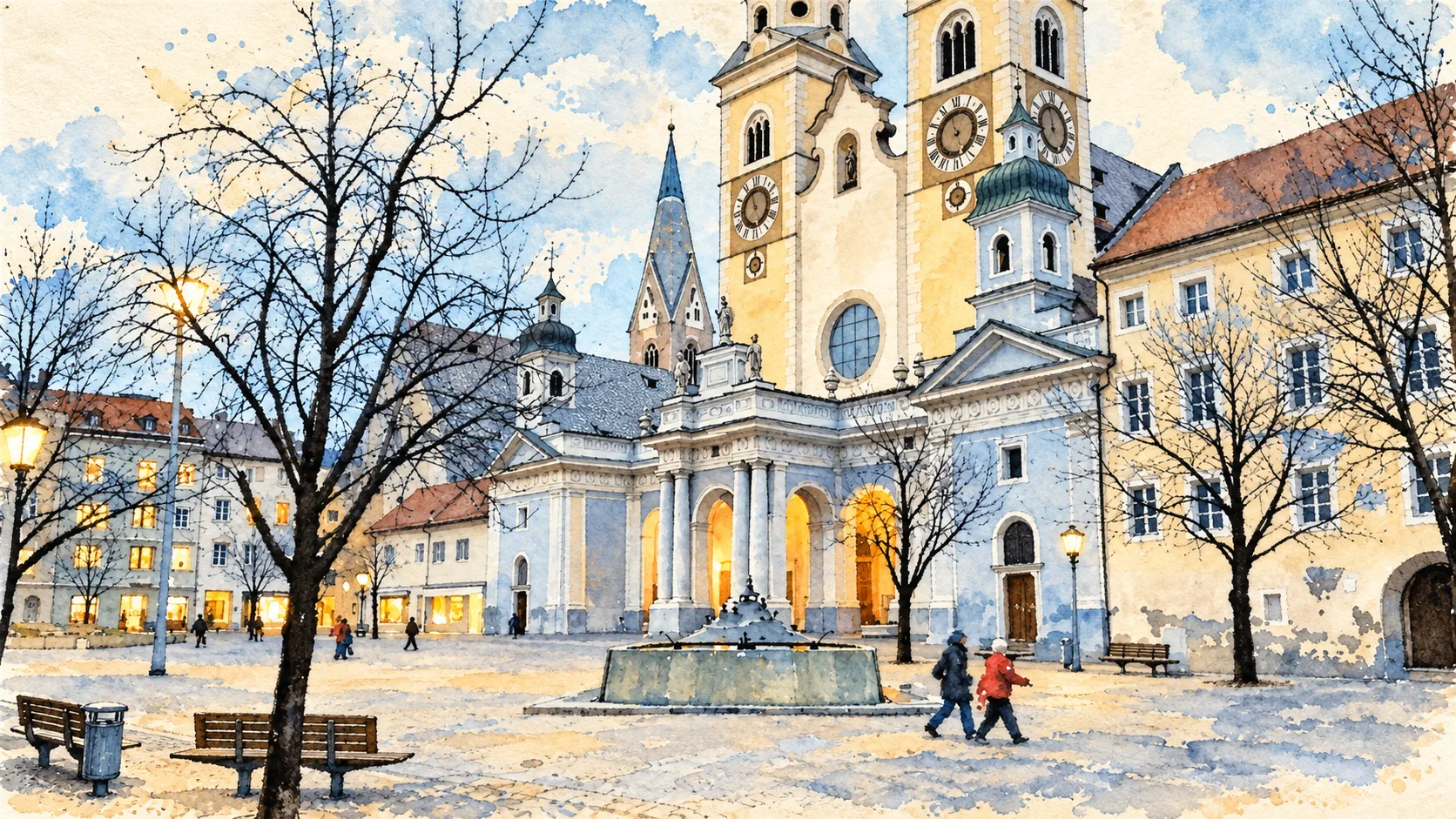
Editorial watercolour establishing view for Bressanone / Brixen

Trentino-Alto Adige · Guide 08

Bressanone
Brixen

The cathedral city, the meeting of two rivers and the abbey beyond it reveal an Alpine landscape organised by worship, trade and movement.

Plan the route
Bressanone / Brixen10 chapters · history, culture and landscape

Why this place matters

A bishop’s city at a river junction.

Brixen’s compact centre is best read through the proximity of cathedral, residence and trading streets. Novacella and Fortezza expand that story beyond the city, but each needs a separate journey. Plose adds a mountain perspective only when the weather and route make it appropriate.

The guide separates documented history from suggestions for reading the site. Named buildings and landscape relationships follow institutional sources; the illustrations are editorial interpretations, not measured surveys or records of current access.

The cathedral city, the meeting of two rivers and the abbey beyond it reveal an Alpine landscape organised by worship, trade and movement.

The route

Plan your visit

Spend a full day on the cathedral complex, Hofburg and old town rather than collecting façades. Use another day for Novacella, with Fortezza or Plose as separate optional excursions requiring transport planning.

Day 1 · cathedral district

Cathedral, cloister and Hofburg

Spend a full day on the cathedral complex, Hofburg and old town rather than collecting façades. Use another day for Novacella, with Fortezza or Plose as separate optional excursions requiring transport planning.

Day 1 · city

Arcades, pharmacy museum and Stufels

Day 2 · monastery

Novacella / Neustift

Separate outings

Fortezza or the Plose mountain area

Ten chapters

Explore the places

The chapters connect history and terrain. Mountain areas and outlying towns are separate options, not a single continuous walking route.

  1. 01Cathedral and Cathedral Square
  2. 02The cathedral cloister
  3. 03Hofburg: residence and museum
  4. 04Herrengarten and the palace setting
  5. 05Great and Small Arcades
  6. 06Pharmaziemuseum Brixen
  7. 07Stufels and the river junction
  8. 08Novacella / Neustift Abbey
  9. 09Fortezza / Franzensfeste
  10. 10Plose and the view back to the city
01

Worship and memory

Cathedral and Cathedral Square

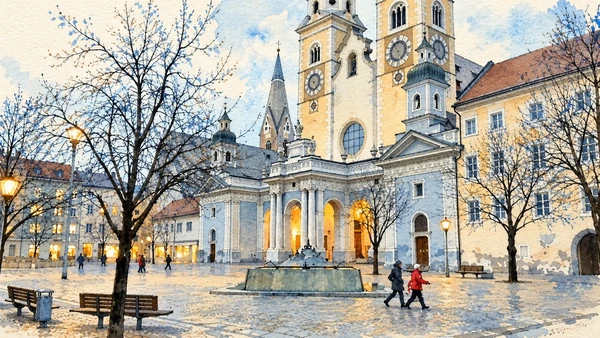
The cathedral’s twin towers give the central square its orientation. The interior is a major visit in its own right and remains a liturgical space.

Today

Worship and local religious life continue here. Visitor access may pause for services; consult the church or managing institution before planning an interior visit.

History

The present Baroque building was erected in the eighteenth century over a longer ecclesiastical history.

How to read this place

Separate the age of the institution from the appearance of the building. Look at how the façade addresses the square before entering.

What to notice

  • Separate the age of the institution from the appearance of the building.
  • The relationship between the site and its surrounding route.
  • The distinction between surviving evidence and modern interpretation.
Brixen Tourism · principal sights
Watercolour: Brixen Cathedral’s entrance portico, round window and clock towers.
Cathedral and Cathedral SquareOriginal Merlintravel documentary watercolour · 2026
02

Worship and memory

The cathedral cloister

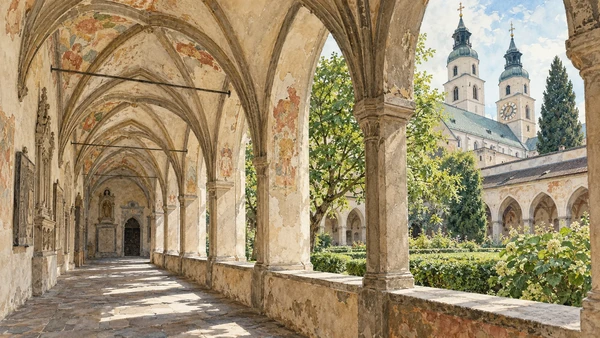
The cloister offers a quieter sequence of enclosed spaces close to the cathedral. Painted surfaces demand slow looking rather than a quick passage to the next sight.

Today

Worship and local religious life continue here. Visitor access may pause for services; consult the church or managing institution before planning an interior visit.

History

Medieval vaults and frescoes preserve an earlier artistic world beside the later Baroque cathedral.

How to read this place

Follow how images occupy the architectural bays. Do not date the whole cathedral complex from the style of one painted wall.

What to notice

  • Follow how images occupy the architectural bays.
  • The relationship between the site and its surrounding route.
  • The distinction between surviving evidence and modern interpretation.
Brixen Tourism · principal sights
Watercolour: The cathedral cloister’s vaulted arcade and painted surfaces.
The cathedral cloisterOriginal Merlintravel documentary watercolour · 2026
03

Evidence and interpretation

Hofburg: residence and museum

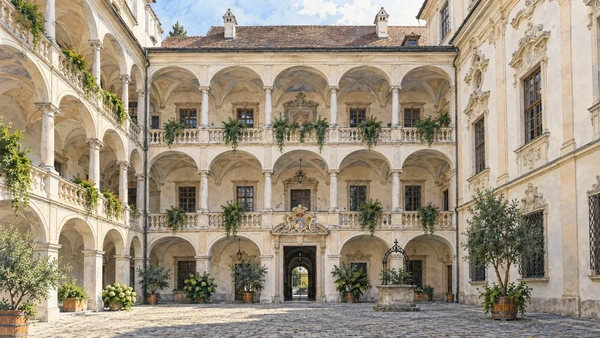
The former episcopal residence connects architecture, collections and the organisation of authority. Its courtyards deserve attention as well as the galleries.

Today

Check the institution’s current opening, booking arrangements and accessible route. Individual rooms, exhibitions and approaches may have separate conditions.

History

The complex reached its present Renaissance and Baroque appearance through successive campaigns, completed in 1711.

How to read this place

Compare the court with the rooms around it. A museum object may come from elsewhere in the diocese, not from this palace itself.

What to notice

  • Compare the court with the rooms around it.
  • The relationship between the site and its surrounding route.
  • The distinction between surviving evidence and modern interpretation.
Hofburg · architecture and history
Watercolour: Stacked arcades around the Hofburg courtyard.
Hofburg: residence and museumOriginal Merlintravel documentary watercolour · 2026
04

Terrain and access

Herrengarten and the palace setting

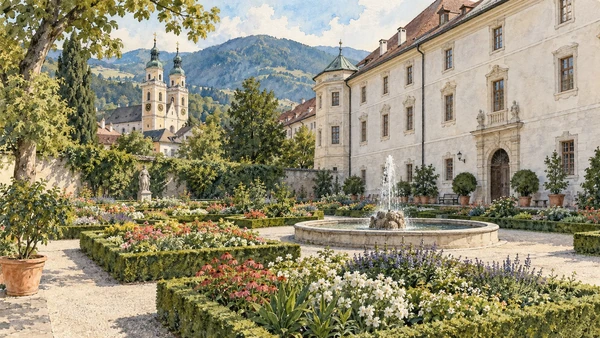
The garden provides an outdoor counterpart to the palace visit. Its position helps reveal how residence and open space occupied the edge of the historic town.

Today

Conditions depend on the exact route and the day. Check the responsible operator, weather and local access notices; a viewpoint is not the same undertaking as a mountain traverse.

History

Garden design belongs to the continuing use and reinterpretation of the episcopal district.

How to read this place

Keep this garden distinct from other palace grounds. Visible green space is not automatically public, and local access notices take precedence.

What to notice

  • Keep this garden distinct from other palace grounds.
  • The relationship between the site and its surrounding route.
  • The distinction between surviving evidence and modern interpretation.
Brixen Tourism · old town
Watercolour: Flowerbeds and a fountain near the Hofburg.
Herrengarten and the palace settingOriginal Merlintravel documentary watercolour · 2026
05

The inhabited landscape

Great and Small Arcades

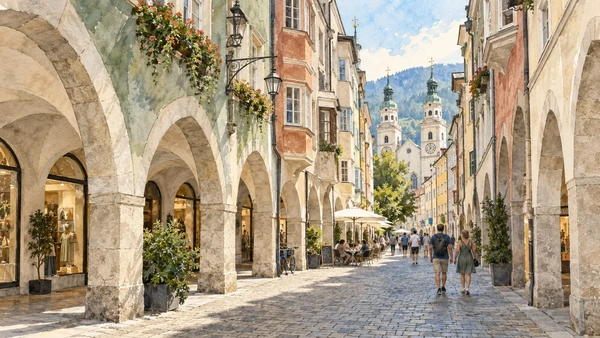
The arcades bring commerce and everyday movement into the route. They connect the monumental centre with a more intimate townscape.

Today

This remains an inhabited place. Use pedestrian routes, keep entrances clear and check municipal mobility notices for any restricted area.

History

Trading streets and ecclesiastical institutions occupied the same compact urban setting.

How to read this place

Look at plot width and covered circulation. Keep doorways and shop access clear while reading the architecture.

What to notice

  • Look at plot width and covered circulation.
  • The relationship between the site and its surrounding route.
  • The distinction between surviving evidence and modern interpretation.
Brixen Tourism · old town
Watercolour: Covered arcades along a narrow historic street in Brixen.
Great and Small ArcadesOriginal Merlintravel documentary watercolour · 2026
06

Evidence and interpretation

Pharmaziemuseum Brixen

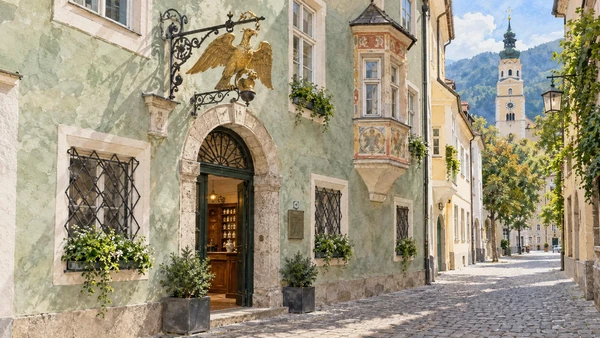
The museum uses the history of a local family of pharmacists to explore objects, knowledge and work. It is a small-scale visit rather than a general medical attraction.

Today

Check the institution’s current opening, booking arrangements and accessible route. Individual rooms, exhibitions and approaches may have separate conditions.

History

Its collections describe four centuries of pharmaceutical history and the changing equipment of the profession.

How to read this place

Read containers and instruments in their historical setting. Past remedies are museum evidence, not present-day health advice.

What to notice

  • Read containers and instruments in their historical setting.
  • The relationship between the site and its surrounding route.
  • The distinction between surviving evidence and modern interpretation.
Pharmaziemuseum Brixen
Watercolour: The historic pharmacy museum’s street frontage.
Pharmaziemuseum BrixenOriginal Merlintravel documentary watercolour · 2026
07

The inhabited landscape

Stufels and the river junction

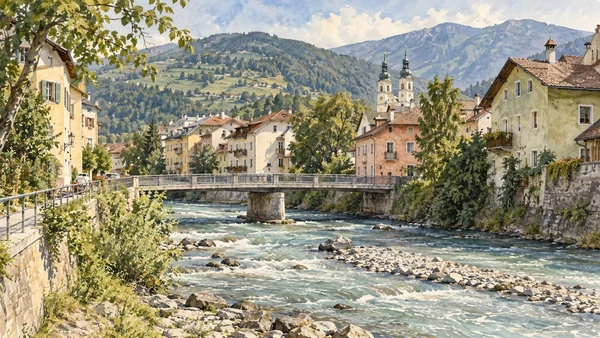
Crossing toward Stufels shifts the view from grand institutions to smaller inhabited streets. The meeting of the Eisack/Isarco and Rienz/Rienza helps explain the town’s geography.

Today

This remains an inhabited place. Use pedestrian routes, keep entrances clear and check municipal mobility notices for any restricted area.

History

Settlement and movement were organised around a position where valleys and watercourses meet.

How to read this place

Keep both rivers distinct on the map. Read the quarter as a living neighbourhood and respect residential entrances.

What to notice

  • Keep both rivers distinct on the map.
  • The relationship between the site and its surrounding route.
  • The distinction between surviving evidence and modern interpretation.
Brixen Tourism · old town
Watercolour: Riverside houses and a bridge by Stufels.
Stufels and the river junctionOriginal Merlintravel documentary watercolour · 2026
08

Worship and memory

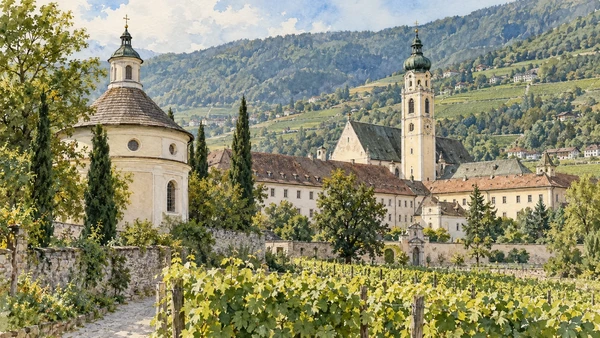
Novacella / Neustift Abbey

The abbey north of the town combines religious, cultural, educational and agricultural functions. It remains a working community of Augustinian canons.

Today

Worship and local religious life continue here. Visitor access may pause for services; consult the church or managing institution before planning an interior visit.

History

Founded in 1142 by Bishop Hartmann, the institution developed over centuries rather than belonging to a single architectural moment.

How to read this place

Separate the church, museum visit and winery arrangements. Check the abbey’s timetable and religious closures before making the journey.

What to notice

  • Separate the church, museum visit and winery arrangements.
  • The relationship between the site and its surrounding route.
  • The distinction between surviving evidence and modern interpretation.
Augustinian Abbey of Neustift
Watercolour: The round Engelsburg chapel and Neustift Abbey amid vineyards.
Novacella / Neustift AbbeyOriginal Merlintravel documentary watercolour · 2026
09

Evidence and interpretation

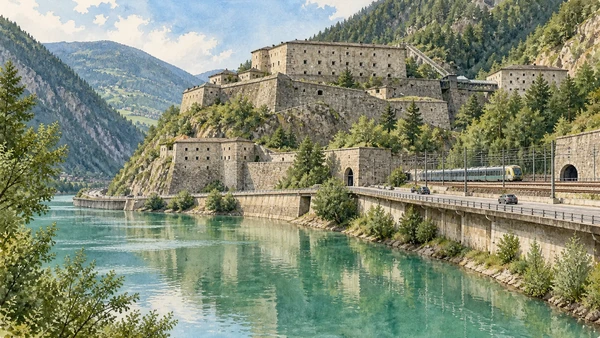
Fortezza / Franzensfeste

The fortress is a separate excursion up the valley, with a scale and visitor route very different from Brixen’s old town.

Today

Check the institution’s current opening, booking arrangements and accessible route. Individual rooms, exhibitions and approaches may have separate conditions.

History

Built between 1833 and 1838 for the Habsburg military system, it later served as a depot and became a public cultural site after military use ended.

How to read this place

Read the mass of masonry and the control of movement. Contemporary exhibitions are one layer in a structure originally intended to obstruct passage.

What to notice

  • Read the mass of masonry and the control of movement.
  • The relationship between the site and its surrounding route.
  • The distinction between surviving evidence and modern interpretation.
Franzensfeste museum · history
Watercolour: The granite blocks of Franzensfeste beside the reservoir and transport routes.
Fortezza / FranzensfesteOriginal Merlintravel documentary watercolour · 2026
10

Terrain and access

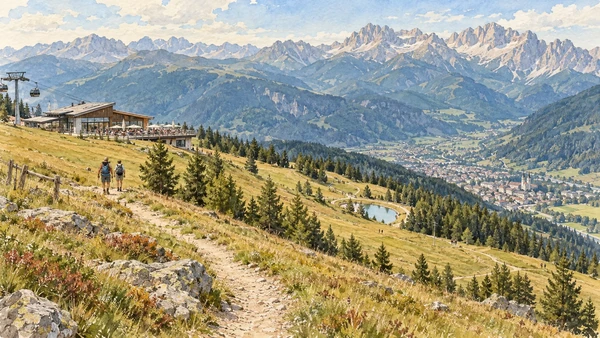
Plose and the view back to the city

The mountain area above Brixen offers an outward perspective on the valley. It requires its own transport and weather decision.

Today

Conditions depend on the exact route and the day. Check the responsible operator, weather and local access notices; a viewpoint is not the same undertaking as a mountain traverse.

History

Mountain access and recreation add a contemporary economic layer to the older episcopal and trading city.

How to read this place

Distinguish a lift-based viewpoint from a hike across higher terrain. Verify the route, operating period and return connection before leaving town.

What to notice

  • Distinguish a lift-based viewpoint from a hike across higher terrain.
  • The relationship between the site and its surrounding route.
  • The distinction between surviving evidence and modern interpretation.
Brixen Tourism · principal sights
Watercolour: Mountain meadows and the distant Dolomite skyline from Plose.
Plose and the view back to the cityOriginal Merlintravel documentary watercolour · 2026

The territory through time

A short chronology

A concise chronology linking the documented sites to the wider story.

  1. Ecclesiastical institutions, settlement and trade share a river-junction location.

  2. Bishop Hartmann founds Neustift Abbey.

  3. Cloister frescoes preserve important medieval artistic layers.

  4. The Hofburg reaches the Renaissance and Baroque appearance described by the museum.

  5. The cathedral is rebuilt in Baroque form.

  6. Franzensfeste is constructed farther up the valley.

  7. The fortress is adapted to cultural use and opens to the public.

  8. The city, abbey and mountain area remain distinct destinations linked by the valley.

Before your visit

Practical information

01

Plan separate days

Choose a manageable set of visits and allow for transport, booked entries and the return journey.

02

Use the exact place name

Italian, German and Ladin names may differ. Match the actual destination and province when reading signs, booking a visit or checking transport.

03

Check the institution

Opening hours, tickets, exhibitions and religious access change. Use the linked managing institution shortly before visiting.

04

Check the actual terrain

A town walk, gorge walkway, lift arrival and mountain path have different demands. Use current route information, weather and closures for the option you choose.

05

Arrange accessible visits

Historic interiors and mountain approaches can include steps, gradients or uneven surfaces. Ask about the specific route instead of assuming an entire destination is step-free.

06

Respect work and residence

Farms, workshops, churches and historic streets remain in use. Follow signs, keep entrances clear and ask permission before entering private spaces.

Method and sources

Sources and image credits

Prepared on 8 September 2026 from the institutional sources linked below. Historical claims are separated from editorial observations and itinerary suggestions. Older institutional brochures are used for stable cultural context, never as current timetables. Prices, lift schedules, trail status and admission are deliberately left to the responsible operators. Illustrations are not photographs, measured reconstructions or evidence of current conditions.

The eleven images are original Merlintravel editorial watercolours. They interpret named places and are not photographs or substitutes for measured plans. Opening hours, tickets, accessible routes, temporary exhibitions and conservation work can change; consult the linked official pages shortly before visiting.