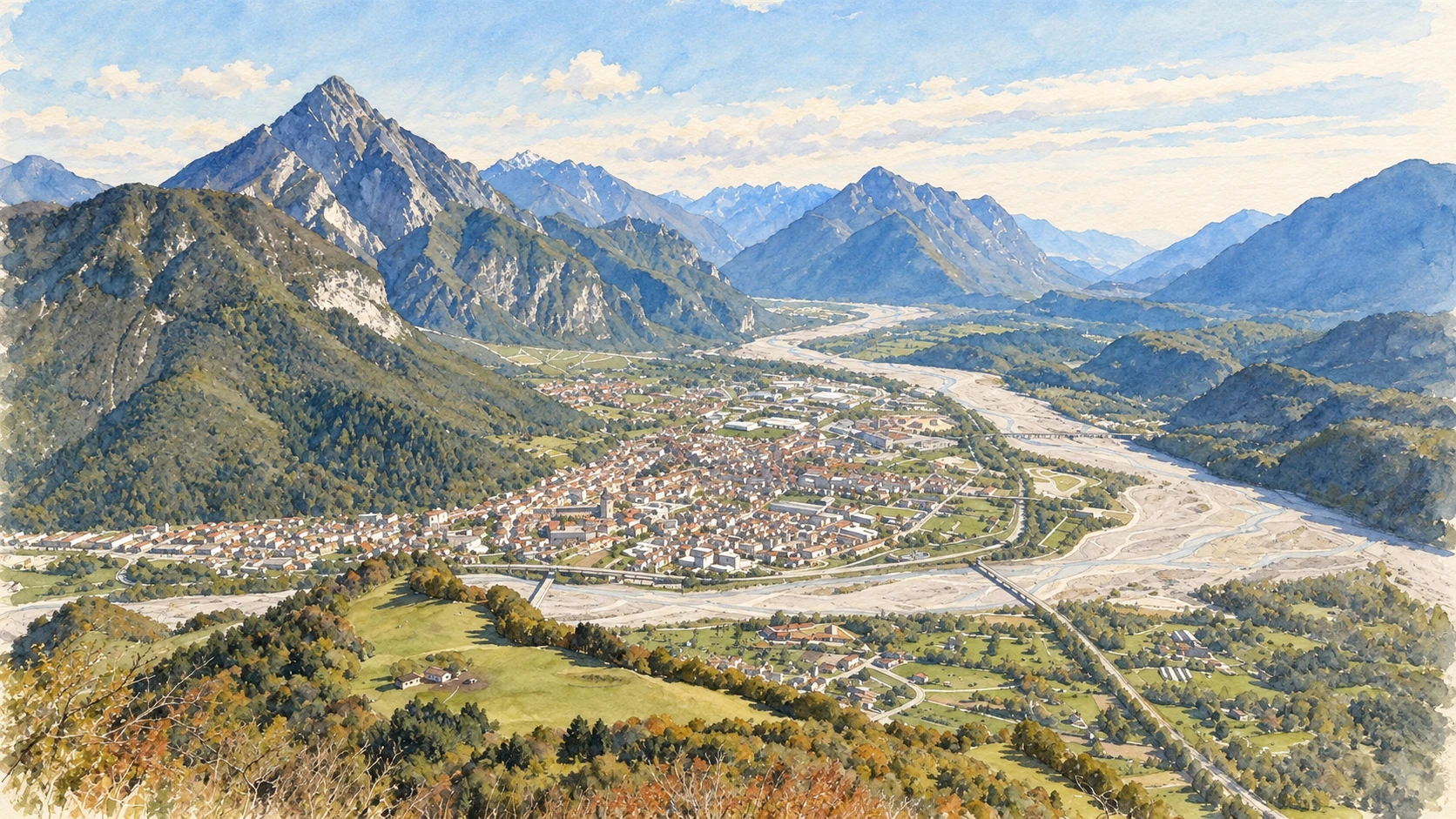
Watercolour: Carnia & the Friulian Dolomites establishing view

Friuli Venezia Giulia · Guide 06

Carnia & the
Friulian Dolomites

Valley towns, Roman remains, mountain churches and working traditions provide several ways into the mountains beyond the panoramic view.

Plan the route
Carnia & the Friulian Dolomites10 chapters · history, culture and landscape

Why this place matters

Let the valleys set the pace.

Carnia is a territory of separate valleys and communities. Tolmezzo provides a civic and museum starting point, Zuglio preserves Roman and ecclesiastical evidence, and Ampezzo introduces the deep geological history. Sauris adds a distinctive language, timber architecture and living crafts. Forni di Sopra stands at the eastern side of the Friulian Dolomites park. These places form a collection of visits across several days, not a continuous walking circuit.

The guide separates documented history from suggestions for reading the site. Named buildings and landscape relationships follow institutional sources; the illustrations are editorial interpretations, not measured surveys or records of current access.

Valley towns, Roman remains, mountain churches and working traditions provide several ways into the mountains beyond the panoramic view.
The route

Plan your visit

Group Tolmezzo and Zuglio according to museum access, then plan Ampezzo, Sauris and Forni di Sopra with separate journeys. Mountain roads and paths follow the terrain. A short distance on a map does not establish a quick transfer, and a village visit does not require a high-level hike.

Civic starting point

Tolmezzo and the Gortani museum

Group Tolmezzo and Zuglio according to museum access, then plan Ampezzo, Sauris and Forni di Sopra with separate journeys.

Older layers

Zuglio and San Pietro

Mountain culture

Ampezzo and Sauris

Park gateway

Forni di Sopra and its visitor centre

Ten chapters

Explore the places

The chapters connect history and terrain. Use the route notes to choose visits and plan transfers between separate sites.

  1. 01Tolmezzo
  2. 02Museo Carnico Michele Gortani
  3. 03Roman Zuglio
  4. 04Pieve di San Pietro above Zuglio
  5. 05Geology at Ampezzo
  6. 06Stone and timber in Sauris
  7. 07Sauris: objects and local memory
  8. 08Weaving and craft in Sauris
  9. 09Forni di Sopra
  10. 10The park visitor centre at Forni di Sopra
01

The inhabited landscape

Tolmezzo

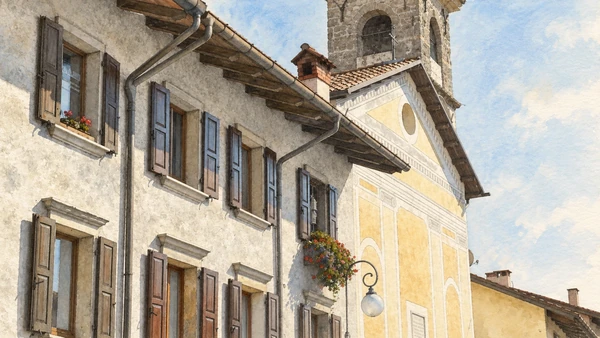
The historic centre offers a useful human scale before entering the surrounding valleys. Streets, church fronts and public buildings show Carnia as an inhabited region with administrative and commercial functions.

Today

This remains an inhabited place. Use pedestrian routes, keep entrances clear and check municipal mobility notices for any restricted area.

History

Tolmezzo developed under the Patriarchs of Aquileia and later Venetian rule. Its eighteenth-century textile economy was associated with Jacopo Linussio. Surviving urban fabric includes much older and later layers.

How to read this place

Compare the central streets with the enclosing mountain slopes. Look for the different scales of residence, worship and trade. Treat hillside viewpoints as separate routes with their own gradient and access, rather than as compulsory additions to the town visit.

What to notice

  • Compare the central streets with the enclosing mountain slopes.
  • Look for the different scales of residence, worship and trade.
  • Treat hillside viewpoints as separate routes with their own gradient and access, rather than as compulsory additions to the town visit.
Tolmezzo · PromoTurismoFVG
Watercolour: Tolmezzo historic street and church facade with bell tower
TolmezzoEditorial watercolour · AI-generated · 2026
02

Evidence and interpretation

Museo Carnico Michele Gortani

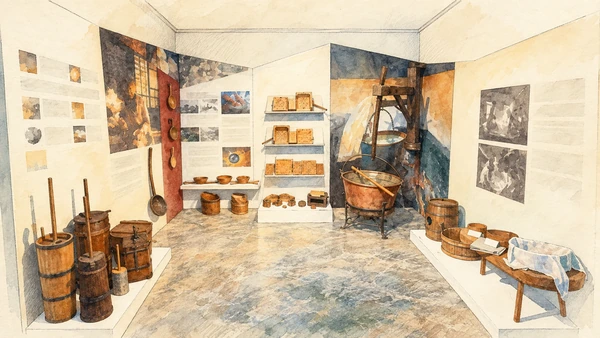
Tools, furniture and domestic objects put work and everyday life at the centre of the visit. They provide evidence for reading houses and craft practices encountered elsewhere in the valleys.

Today

Check the institution’s current opening, booking arrangements and accessible route. Individual rooms, exhibitions and approaches may have separate conditions.

History

Michele Gortani’s research and collecting helped create the museum’s ethnographic holdings. The institution preserves and interprets material from Carnia’s communities rather than presenting one household as representative of every valley.

How to read this place

Choose a group of objects with a documented function. Consider how materials, repair and repeated use shaped their form. A museum display is an interpretation: compare the labels and photographs with the objects rather than imagining an unchanged mountain past.

What to notice

  • Choose a group of objects with a documented function.
  • Consider how materials, repair and repeated use shaped their form.
  • A museum display is an interpretation: compare the labels and photographs with the objects rather than imagining an unchanged mountain past.
Museo Carnico · Michele Gortani and the collection
Watercolour: Museo Carnico actual modern display of wooden household and farming tools
Museo Carnico Michele GortaniEditorial watercolour · AI-generated · 2026
03

Evidence and interpretation

Roman Zuglio

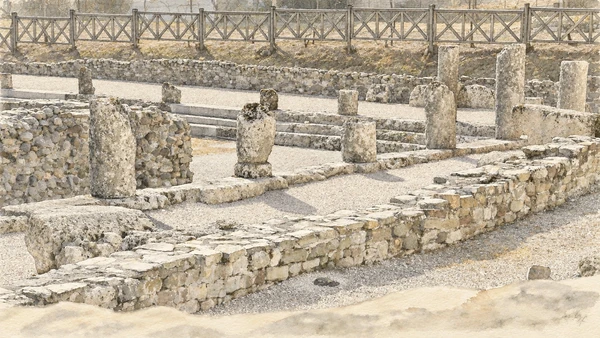
Low foundations and fragments of columns outline the public centre of Iulium Carnicum. The modest height of the remains makes the plan and the relationship between spaces more useful than a search for monumental façades.

Today

The regional visitor source describes organised guided access to the archaeological area by arrangement. Confirm the current possibility with the Iulium Carnicum museum before travelling specifically to enter the remains.

History

The archaeological area preserves elements of the Roman forum complex, including a civic basilica, a paved square, a portico and the temple podium. These are urban remains within a mountain setting, not an isolated military outpost.

How to read this place

Use the museum interpretation to distinguish a foundation from a complete standing element. Follow the authorised access route and avoid stepping onto low walls. The area and the archaeological museum have related but distinct visiting arrangements.

What to notice

  • Use the museum interpretation to distinguish a foundation from a complete standing element.
  • Follow the authorised access route and avoid stepping onto low walls.
  • The area and the archaeological museum have related but distinct visiting arrangements.
Area archeologica di Zuglio · PromoTurismoFVG
Watercolour: Zuglio Roman forum actual low stone foundations and column fragments
Roman ZuglioEditorial watercolour · AI-generated · 2026
04

Worship and memory

Pieve di San Pietro above Zuglio

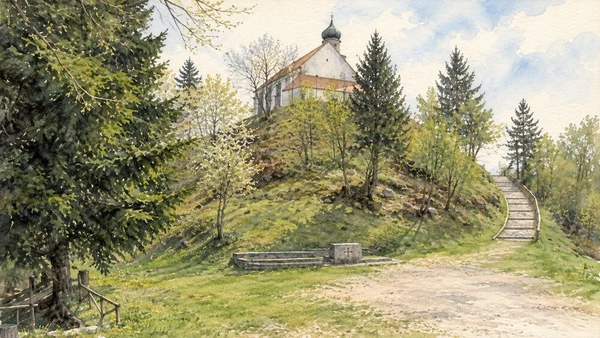
The hilltop church shifts attention from the Roman civic centre to the religious organisation of the valleys. Its position is part of the experience, but the ascent needs to be planned independently of the museum visit below.

Today

Check church opening and the chosen approach locally. The uphill routes involve gradients, and visitor access may depend on weather and seasonal arrangements.

History

The present Gothic church was commissioned in 1312 and incorporates earlier fabric. Successive alterations produced an asymmetrical complex. Its history connects ecclesiastical institutions, local communities and works of sacred art.

How to read this place

Compare the church’s massing with the slope and valley. Inside, rely on current interpretation to locate works and distinguish originals, recovered pieces and later arrangements. Do not use an old seasonal opening notice as a timetable for the present visit.

What to notice

  • Compare the church’s massing with the slope and valley.
  • Inside, rely on current interpretation to locate works and distinguish originals, recovered pieces and later arrangements.
  • Do not use an old seasonal opening notice as a timetable for the present visit.
Pieve di Zuglio · PromoTurismoFVG
Watercolour: Pieve San Pietro above Zuglio, hilltop church and bell tower among trees
Pieve di San Pietro above ZuglioEditorial watercolour · AI-generated · 2026
05

Evidence and interpretation

Geology at Ampezzo

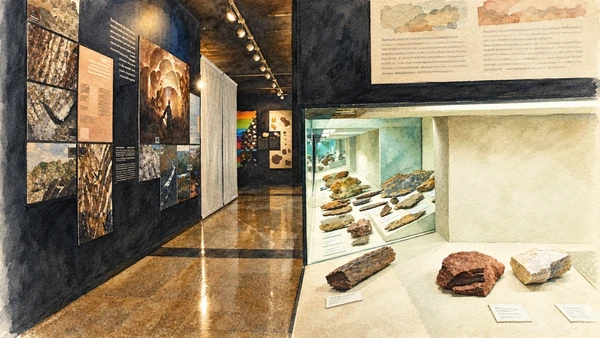
The geological museum provides a way to read the surrounding mountains through fossils and rock rather than scenery alone. The specimens connect small visible details to processes operating over immense spans of time.

Today

Check the institution’s current opening, booking arrangements and accessible route. Individual rooms, exhibitions and approaches may have separate conditions.

History

The collection documents more than 400 million years of geological history in the Carnic Alps. Marine fossils record environments that existed long before the present mountain chain formed.

How to read this place

Choose one fossil and locate its period and environment on the museum’s explanation. Separate the age of the organism from the much later uplift of the rock. This indoor introduction can make a subsequent landscape visit more attentive without requiring collection of specimens outdoors.

What to notice

  • Choose one fossil and locate its period and environment on the museum’s explanation.
  • Separate the age of the organism from the much later uplift of the rock.
  • This indoor introduction can make a subsequent landscape visit more attentive without requiring collection of specimens outdoors.
Museo Geologico della Carnia · PromoTurismoFVG
Watercolour: Ampezzo Museo Geologico della Carnia actual fossil and rock display
Geology at AmpezzoEditorial watercolour · AI-generated · 2026
06

The inhabited landscape

Stone and timber in Sauris

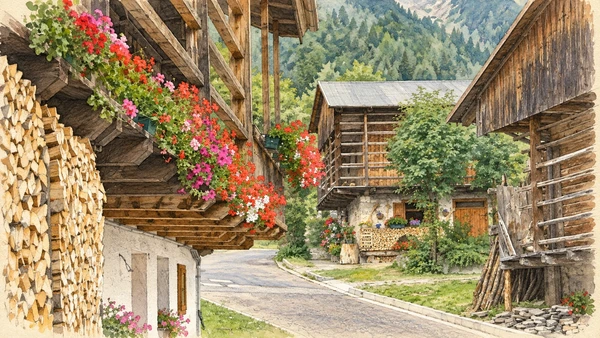
Balconies, stacked timber and substantial lower walls give the village lanes their material character. These are lived-in buildings; the details are best observed from public space.

Today

This remains an inhabited place. Use pedestrian routes, keep entrances clear and check municipal mobility notices for any restricted area.

History

Traditional construction combines stone lower levels with timber upper structures, including interlocking logs. Restoration programmes from the 1980s adapted many surviving buildings while retaining important architectural features.

How to read this place

Look at the junction between stone and wood and the protection offered by the roof. Compare buildings individually instead of assuming every timber façade has the same age. Keep private stairs, balconies and yards outside the visitor route.

What to notice

  • Look at the junction between stone and wood and the protection offered by the roof.
  • Compare buildings individually instead of assuming every timber façade has the same age.
  • Keep private stairs, balconies and yards outside the visitor route.
Sauris Zahre · Traditions, architecture and museums
Watercolour: Sauris actual lane with timber balconies stone bases stacked firewood and flowers
Stone and timber in SaurisEditorial watercolour · AI-generated · 2026
07

Evidence and interpretation

Sauris: objects and local memory

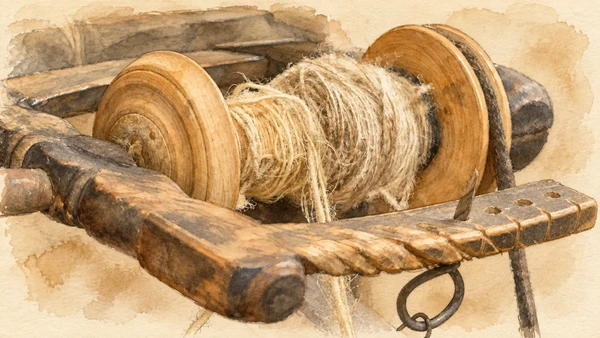
A museum visit adds context to the architecture outside. Spinning equipment, household materials and local interpretation can reveal forms of work that a picturesque village view alone cannot explain.

Today

Check the institution’s current opening, booking arrangements and accessible route. Individual rooms, exhibitions and approaches may have separate conditions.

History

The ethnographic centre in Sauris di Sopra documents local culture, while the historiographic museum in Sauris di Sotto focuses on community history and the cult of Saint Oswald. They are separate institutions in different hamlets.

How to read this place

Choose which collection matches your interests and confirm that it is open. Relate a tool to its material and action. Avoid treating the community’s distinctive language and traditions as static relics detached from the people who maintain them.

What to notice

  • Choose which collection matches your interests and confirm that it is open.
  • Relate a tool to its material and action.
  • Avoid treating the community’s distinctive language and traditions as static relics detached from the people who maintain them.
Sauris Zahre · Traditions, architecture and museums
Watercolour: Sauris ethnographic reference detail of wooden spinning equipment and fibre
Sauris: objects and local memoryEditorial watercolour · AI-generated · 2026
08

Materials and work

Weaving and craft in Sauris

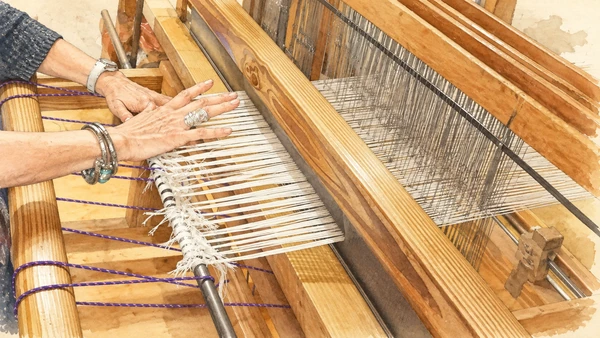
The movement of thread through a loom makes craft intelligible as skilled work. Watching a demonstration, where offered, can be more revealing than looking only at a finished textile.

Today

Workshops are places of work. Arrange a visit where offered and ask permission before entering private spaces or photographing a maker.

History

Weaving and woodwork remain part of Sauris’s cultural life. Contemporary workshops combine inherited techniques with present-day production.

How to read this place

Ask how a material is prepared and how the tool controls the result. Distinguish a scheduled workshop from ordinary production time. Purchases, demonstrations and photography should follow the maker’s own arrangements.

What to notice

  • Ask how a material is prepared and how the tool controls the result.
  • Distinguish a scheduled workshop from ordinary production time.
  • Purchases, demonstrations and photography should follow the maker’s own arrangements.
Sauris Zahre · Traditions, architecture and museums
Watercolour: Hands working on an actual wooden handloom in Sauris
Weaving and craft in SaurisEditorial watercolour · AI-generated · 2026
09

The inhabited landscape

Forni di Sopra

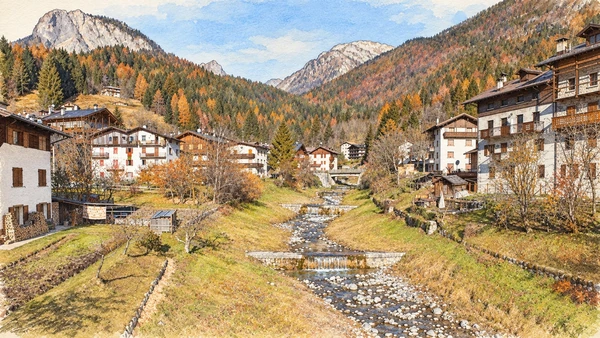
The village provides an inhabited foreground to the surrounding Dolomite peaks. Stone lower storeys, timber galleries and the watercourse help explain the relationship between settlement and mountain terrain.

Today

This remains an inhabited place. Use pedestrian routes, keep entrances clear and check municipal mobility notices for any restricted area.

History

Forni di Sopra contains several historic hamlets. Its buildings combine domestic and agricultural functions, while the churches preserve important late medieval art. The nearby protected mountain landscape is distinct from the built-up village.

How to read this place

Begin with the village streets and identify the different hamlets before choosing an excursion. The church of San Floriano at Cella holds works by Bellunello and Gianfrancesco da Tolmezzo; arrange access separately if an interior visit is part of the plan.

What to notice

  • Begin with the village streets and identify the different hamlets before choosing an excursion.
  • The church of San Floriano at Cella holds works by Bellunello and Gianfrancesco da Tolmezzo; arrange access separately if an interior visit is part of the plan.
Forni di Sopra · PromoTurismoFVG
Watercolour: Forni di Sopra actual village beside watercourse beneath Dolomite peaks
Forni di SopraEditorial watercolour · AI-generated · 2026
10

Evidence and interpretation

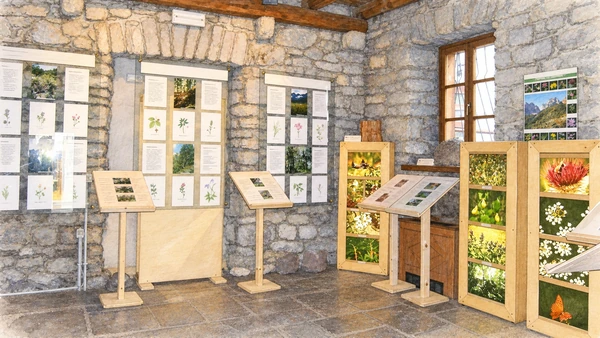
The park visitor centre at Forni di Sopra

The visitor centre is a practical place to turn a mountain panorama into a more informed visit. Its botanical interpretation introduces the vegetation of the park and its relationship with people.

Today

Consult the park for visitor-centre opening and the exact route you intend to take outdoors. Guided activities and trails require their own current checks; the exhibition does not certify access to the entire mountain area.

History

The exhibition explains mountain plant communities, adaptation and the long relationship between local inhabitants and vegetation. It belongs to the park’s network of interpretation centres rather than functioning as a trailhead for every route.

How to read this place

Use the exhibits to choose one aspect to observe outside. Before walking, obtain information for the exact path, weather and season. An indoor visit, a valley walk and a high mountain itinerary have very different demands.

What to notice

  • Use the exhibits to choose one aspect to observe outside.
  • Before walking, obtain information for the exact path, weather and season.
  • An indoor visit, a valley walk and a high mountain itinerary have very different demands.
Parco Dolomiti Friulane · Forni di Sopra visitor centre
Watercolour: Forni di Sopra park visitor centre actual botanical exhibition in stone-walled room
The park visitor centre at Forni di SopraEditorial watercolour · AI-generated · 2026

The territory through time

A short chronology

A concise chronology linking the documented sites to the wider story.

  1. Marine environments leave fossils preserved in the Carnic Alps.

  2. Iulium Carnicum develops a civic centre at Zuglio.

  3. Valley communities and religious institutions shape settlement.

  4. A new Gothic church is commissioned at San Pietro above Zuglio.

  5. Sacred art enriches churches including San Floriano at Forni di Sopra.

  6. Textile production becomes important to Tolmezzo’s economy.

  7. Collecting and research help preserve evidence of Carnia’s everyday life.

  8. Restoration and new uses support the survival of traditional buildings in Sauris.

Before your visit

Practical information

01

Plan separate days

Choose a manageable set of visits and allow for transport, booked entries and the return journey.

02

Use the exact place name

Friuli Venezia Giulia contains separate valleys, towns and coastal approaches; some guides also include nearby places in Slovenia. Confirm the precise locality and route rather than treating nearby names as one destination.

03

Check the institution

Opening hours, tickets, exhibitions and religious access change. Use the linked managing institution shortly before visiting.

04

Check the actual terrain

Steps, gradients and uneven ground vary between the individual sites. Use current route information, weather and closures for the option you choose.

05

Arrange accessible visits

Historic interiors and outdoor approaches can include steps, gradients or uneven surfaces. Ask about the specific route instead of assuming an entire destination is step-free.

06

Respect work and residence

Farms, workshops, churches and historic streets remain in use. Follow signs, keep entrances clear and ask permission before entering private spaces.

Method and sources

Sources and image credits

Prepared on 9 September 2026 from the institutional sources linked below. Historical claims are separated from editorial observations and itinerary suggestions. Older institutional brochures are used for stable cultural context, never as current timetables. Prices, transport schedules, trail status and admission are deliberately left to the responsible operators. Illustrations are not photographs, measured reconstructions or evidence of current conditions.

The eleven images are AI-generated editorial watercolours guided by photographic references. They interpret named places and are not photographs or substitutes for measured plans. Opening hours, tickets, accessible routes, temporary exhibitions and conservation work can change; consult the linked official pages shortly before visiting.

Illustration references and credits