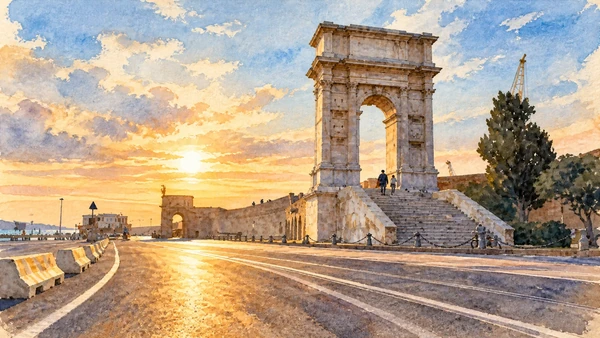
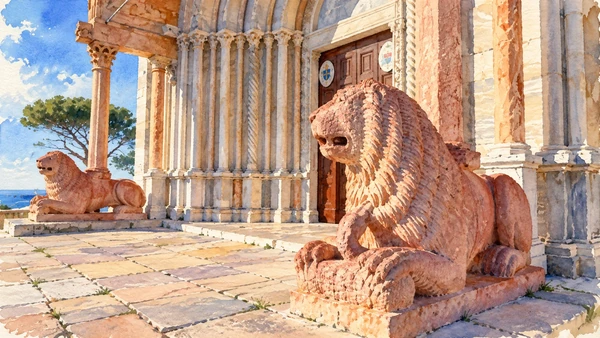
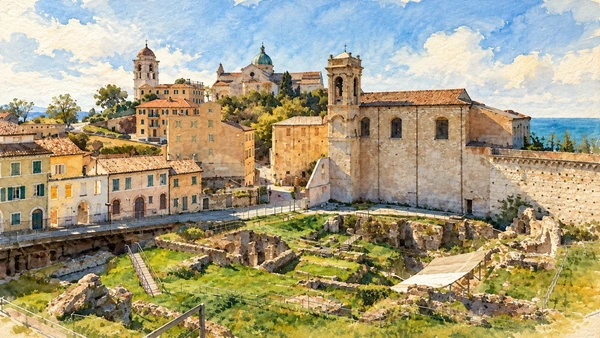
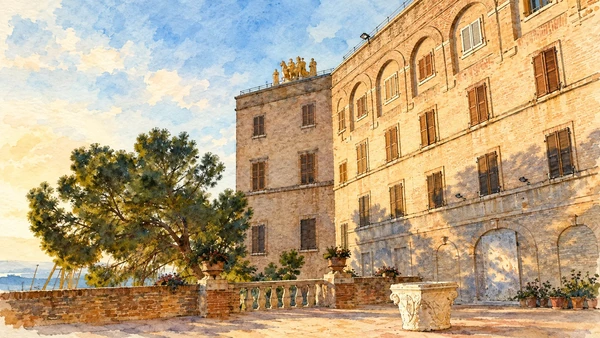
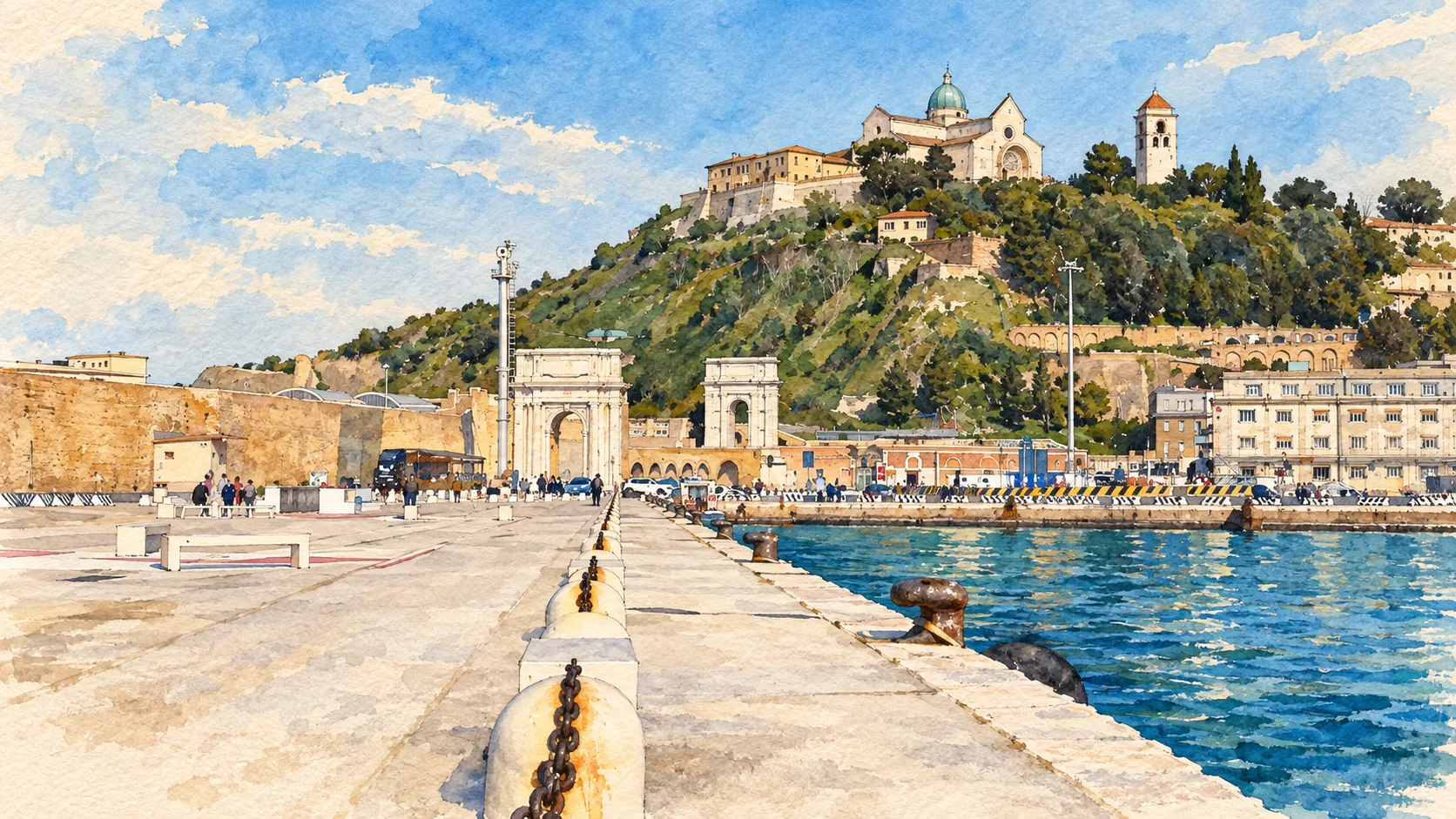
Watercolour: Ancona establishing view

Marche · Guide 02

Ancona

A cathedral above a working harbour, Roman monuments and mercantile streets reveal a city shaped by its relationship with the Adriatic.

Plan the route
Ancona10 chapters · history, culture and landscape

Why this place matters

Start with the shape of the harbour.

Ancona cannot be understood from the beach alone. The old harbour curves below the Guasco hill, while steep streets link churches, civic buildings and collections. Trade has brought goods, people and artistic connections here for centuries. The port remains a workplace: distinguish public waterfront routes from operational areas, and make time for the climb into the older city.

The guide separates documented history from suggestions for reading the site. Named buildings and landscape relationships follow institutional sources; the illustrations are editorial interpretations, not measured surveys or records of current access.

A cathedral above a working harbour, Roman monuments and mercantile streets reveal a city shaped by its relationship with the Adriatic.
The route

Plan your visit

Choose an upper-town walk around the cathedral and archaeological museum, then a separate lower-town route. The Mole is a distinct waterfront extension. Port access, museum rooms and event spaces have their own arrangements.

Old harbour

Trajan’s arch and the waterfront

Choose an upper-town walk around the cathedral and archaeological museum, then a separate lower-town route. The Mole is a distinct waterfront extension. Port access, museum rooms and event spaces have their own arrangements.

Upper town

San Ciriaco and the amphitheatre

Museums and churches

Palazzo Ferretti and the mercantile streets

Separate extension

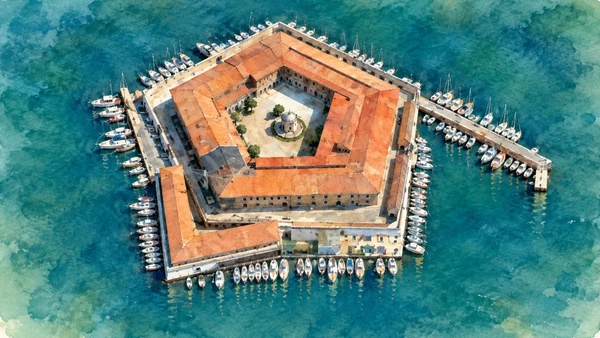
Mole Vanvitelliana

Ten chapters

Explore the places

The chapters connect history and terrain. Mountain areas and outlying towns are separate options, not a single continuous walking route.

  1. 01The old harbour
  2. 02Arco di Traiano
  3. 03Cathedral of San Ciriaco
  4. 04The Roman amphitheatre
  5. 05Museo Archeologico Nazionale delle Marche
  6. 06Palazzo degli Anziani
  7. 07Santa Maria della Piazza
  8. 08Loggia dei Mercanti
  9. 09San Francesco alle Scale
  10. 10Mole Vanvitelliana
01

The inhabited landscape

The old harbour

Watch the relationship between quay, hill and city before selecting a monument. The water explains the alignment of the older streets and the cathedral’s commanding position.

Today

This remains an inhabited place. Use pedestrian routes, keep entrances clear and check municipal mobility notices for any restricted area.

History

Ancona’s history is closely tied to maritime exchange. Its harbour connects ancient settlement with the continuing activities of a modern Adriatic port.

How to read this place

Follow signed public routes and avoid operational quays. A picturesque ship in a view may be part of active work rather than a visitor attraction.

What to notice

  • Follow signed public routes and avoid operational quays.
  • The relationship between the site and its surrounding route.
  • The distinction between surviving evidence and modern interpretation.
Ancona Tourism · the old town and harbour
Watercolour: The old harbour
The old harbourEditorial watercolour · AI-generated · 2026
02

Evidence and interpretation

Arco di Traiano

The slender marble arch stands on the ancient harbour edge. Its narrow opening and elevated proportions distinguish it from the larger triumphal arches of Rome.

Today

Check the institution’s current opening, booking arrangements and accessible route. Individual rooms, exhibitions and approaches may have separate conditions.

History

The monument honours Trajan and the harbour improvements he financed. It belongs to the early second century CE and to the infrastructure of maritime movement.

How to read this place

Look at the relation between the arch and the quay. The missing upper statues should be explained through museum reconstructions rather than invented in a present-day illustration.

What to notice

  • Look at the relation between the arch and the quay.
  • The relationship between the site and its surrounding route.
  • The distinction between surviving evidence and modern interpretation.
Italia.it · Arco di Traiano
Watercolour: Arco di Traiano
Arco di TraianoEditorial watercolour · AI-generated · 2026
03

Worship and memory

Cathedral of San Ciriaco

The climb to the Guasco hill ends at a church with a broad view over the port. The exterior makes the building’s layered forms easier to read than an isolated façade photograph.

Today

Worship and local religious life continue here. Visitor access may pause for services; consult the church or managing institution before planning an interior visit.

History

The medieval cathedral combines a cross-shaped plan with a many-sided dome and a sculpted entrance porch. Its site preserves a longer history than the standing medieval church alone.

How to read this place

Read the porch, roof masses and dome separately. Allow worship and current visitor arrangements to determine the interior visit.

What to notice

  • Read the porch, roof masses and dome separately.
  • The relationship between the site and its surrounding route.
  • The distinction between surviving evidence and modern interpretation.
Ancona Tourism · San Ciriaco
Watercolour: Porch detail and red stone lions at San Ciriaco
Cathedral of San CiriacoEditorial watercolour · AI-generated · 2026
04

Evidence and interpretation

The Roman amphitheatre

Near the summit streets, the archaeological remains introduce a different kind of urban space. The ancient enclosure survives within a city that grew around and over it.

Today

Check the institution’s current opening, booking arrangements and accessible route. Individual rooms, exhibitions and approaches may have separate conditions.

History

The amphitheatre belongs to Roman Ancona. Later building and excavation changed how its surviving structures can be seen.

How to read this place

Distinguish the arena’s inferred outline from masonry actually visible. Use the authorised viewpoint or visit arrangements; do not enter fenced remains for a clearer photograph.

What to notice

  • Distinguish the arena’s inferred outline from masonry actually visible.
  • The relationship between the site and its surrounding route.
  • The distinction between surviving evidence and modern interpretation.
Ancona Tourism · the old town and harbour
Watercolour: The Roman amphitheatre
The Roman amphitheatreEditorial watercolour · AI-generated · 2026
05

Evidence and interpretation

Museo Archeologico Nazionale delle Marche

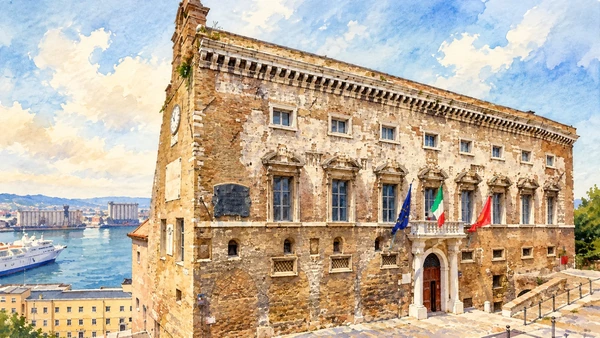
Palazzo Ferretti houses evidence from across the region. A collection visit helps place Ancona within networks extending well beyond its own harbour.

Today

Check the institution’s current opening, booking arrangements and accessible route. Individual rooms, exhibitions and approaches may have separate conditions.

History

The museum traces cultures of the Marche through archaeological finds, including Picene material and evidence of contacts with other Mediterranean societies.

How to read this place

Choose one group of objects and ask about excavation context, date and use. A beautiful object removed from its context can conceal the connections that make it historically useful.

What to notice

  • Choose one group of objects and ask about excavation context, date and use.
  • The relationship between the site and its surrounding route.
  • The distinction between surviving evidence and modern interpretation.
Regione Marche · cultural itineraries
Watercolour: Exterior of Palazzo Ferretti, home of the archaeological museum
Museo Archeologico Nazionale delle MarcheEditorial watercolour · AI-generated · 2026
06

The inhabited landscape

Palazzo degli Anziani

The civic palace mediates between different levels of the old city. Its relation to the slope is as revealing as its principal frontage.

Today

This remains an inhabited place. Use pedestrian routes, keep entrances clear and check municipal mobility notices for any restricted area.

History

The building belongs to the history of Ancona’s communal government. Its fabric and later uses connect civic authority with the harbour-side settlement.

How to read this place

Compare the uphill and downhill sides where public routes permit. A façade that looks compact from one approach may conceal a much taller building below.

What to notice

  • Compare the uphill and downhill sides where public routes permit.
  • The relationship between the site and its surrounding route.
  • The distinction between surviving evidence and modern interpretation.
Ancona Tourism · the old town and harbour
Watercolour: Palazzo degli Anziani
Palazzo degli AnzianiEditorial watercolour · AI-generated · 2026
07

Worship and memory

Santa Maria della Piazza

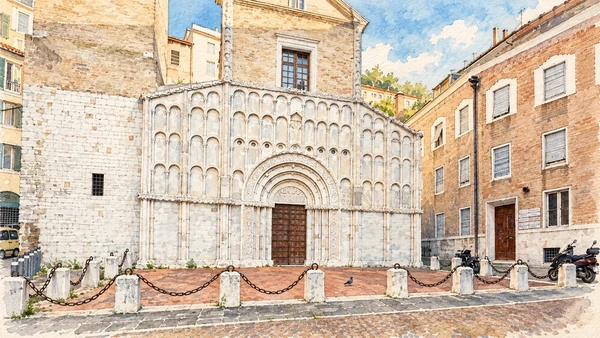
The small church near the waterfront concentrates architectural detail into a façade that rewards close attention. It offers a quieter counterpoint to the larger cathedral above.

Today

Worship and local religious life continue here. Visitor access may pause for services; consult the church or managing institution before planning an interior visit.

History

The Romanesque church stands over earlier Christian remains. Its visible medieval fabric and the archaeological evidence beneath it belong to different periods.

How to read this place

Follow the repeated blind arcades and carved doorway. Confirm whether the lower archaeological level is included in the available visit.

What to notice

  • Follow the repeated blind arcades and carved doorway.
  • The relationship between the site and its surrounding route.
  • The distinction between surviving evidence and modern interpretation.
Regione Marche · cultural itineraries
Watercolour: Santa Maria della Piazza
Santa Maria della PiazzaEditorial watercolour · AI-generated · 2026
08

The inhabited landscape

Loggia dei Mercanti

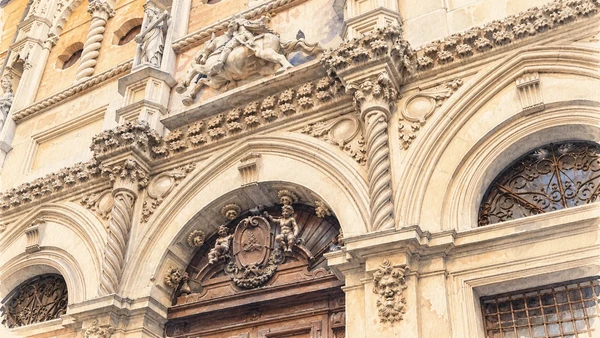
A highly worked frontage marks the presence of merchants in the city’s ceremonial life. Read it within its relatively narrow street rather than imagining an isolated palace.

Today

This remains an inhabited place. Use pedestrian routes, keep entrances clear and check municipal mobility notices for any restricted area.

History

The Loggia expresses Ancona’s mercantile identity. Its fifteenth-century sculptural façade is associated with Giorgio da Sebenico.

How to read this place

Notice how carved figures and openings give a public face to commerce. Interior events and institutional use may follow different access rules from the street outside.

What to notice

  • Notice how carved figures and openings give a public face to commerce.
  • The relationship between the site and its surrounding route.
  • The distinction between surviving evidence and modern interpretation.
Regione Marche · cultural itineraries
Watercolour: Carved architectural detail at the Loggia dei Mercanti
Loggia dei MercantiEditorial watercolour · AI-generated · 2026
09

Worship and memory

San Francesco alle Scale

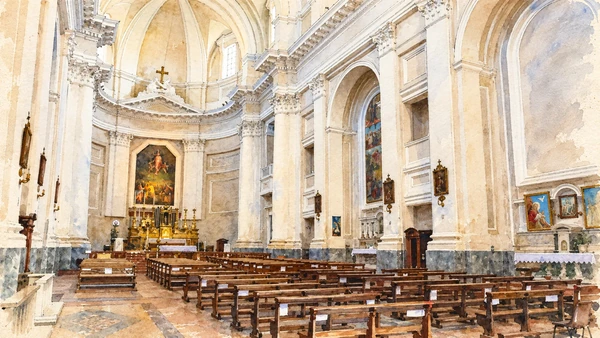
The elevated entrance turns a church doorway into an urban event. Steps, portal and street create a sequence that is best appreciated from more than one level.

Today

Worship and local religious life continue here. Visitor access may pause for services; consult the church or managing institution before planning an interior visit.

History

The sculpted portal is another important work associated with Giorgio da Sebenico. The church’s history includes later alterations and changing uses.

How to read this place

Compare the portal’s detailed stonework with the larger, plainer wall. The stairs are part of the real approach; ask about an alternative entrance when needed.

What to notice

  • Compare the portal’s detailed stonework with the larger, plainer wall.
  • The relationship between the site and its surrounding route.
  • The distinction between surviving evidence and modern interpretation.
Regione Marche · cultural itineraries
Watercolour: Interior nave and altar at San Francesco alle Scale
San Francesco alle ScaleEditorial watercolour · AI-generated · 2026
10

Evidence and interpretation

Mole Vanvitelliana

The pentagonal complex occupies a purpose-built island within the harbour. Its geometry becomes clear when the outer walls, water and central courtyard are read together.

Today

Check the institution’s current opening, booking arrangements and accessible route. Individual rooms, exhibitions and approaches may have separate conditions.

History

Designed by Luigi Vanvitelli in the eighteenth century, the former lazaretto served quarantine and port functions. Later reuse gave it cultural roles.

How to read this place

Keep the building’s quarantine history distinct from its current programme. Museum entry, exhibitions and courtyard access need not share the same ticket or opening.

What to notice

  • Keep the building’s quarantine history distinct from its current programme.
  • The relationship between the site and its surrounding route.
  • The distinction between surviving evidence and modern interpretation.
Ancona Tourism · Mole Vanvitelliana
Watercolour: Mole Vanvitelliana
Mole VanvitellianaEditorial watercolour · AI-generated · 2026

The territory through time

A short chronology

A concise chronology linking the documented sites to the wider story.

  1. The natural harbour gives the city a lasting maritime orientation.

  2. Public monuments and spectacle buildings develop in the city.

  3. Trajan’s arch commemorates imperial investment in the harbour.

  4. The cathedral and lower-town churches express distinct religious communities.

  5. Civic government and trade shape the streets above the port.

  6. Sculpted portals and the Loggia dei Mercanti give commerce and devotion public faces.

  7. Vanvitelli’s lazaretto introduces a new organised island complex.

  8. A working port and cultural institutions continue to share the waterfront city.

Before your visit

Practical information

01

Plan separate days

Choose a manageable set of visits and allow for transport, booked entries and the return journey.

02

Use the exact place name

The Marche contain separate valleys, towns and coastal approaches. Confirm the precise locality and route rather than treating nearby names as one destination.

03

Check the institution

Opening hours, tickets, exhibitions and religious access change. Use the linked managing institution shortly before visiting.

04

Check the actual terrain

A town walk, gorge walkway, lift arrival and mountain path have different demands. Use current route information, weather and closures for the option you choose.

05

Arrange accessible visits

Historic interiors and mountain approaches can include steps, gradients or uneven surfaces. Ask about the specific route instead of assuming an entire destination is step-free.

06

Respect work and residence

Farms, workshops, churches and historic streets remain in use. Follow signs, keep entrances clear and ask permission before entering private spaces.

Method and sources

Sources and image credits

Prepared on 9 September 2026 from the institutional sources linked below. Historical claims are separated from editorial observations and itinerary suggestions. Older institutional brochures are used for stable cultural context, never as current timetables. Prices, transport schedules, trail status and admission are deliberately left to the responsible operators. Illustrations are not photographs, measured reconstructions or evidence of current conditions.

The eleven images are AI-generated editorial watercolours guided by photographic references. They interpret named places and are not photographs or substitutes for measured plans. Opening hours, tickets, accessible routes, temporary exhibitions and conservation work can change; consult the linked official pages shortly before visiting.

Illustration references and credits
  • San Francesco alle Scale — reference: anconatourism.it. Transformed into an AI-generated watercolour.
  • Santa Maria della Piazza — reference: anconatourism.it. Transformed into an AI-generated watercolour.
  • Museo Archeologico Nazionale delle Marche — reference: anconatourism.it. Transformed into an AI-generated watercolour.
  • Loggia dei Mercanti — reference: anconatourism.it. Transformed into an AI-generated watercolour.
  • Opening image — reference: anconatourism.it. Transformed into an AI-generated watercolour.
  • The old harbour — reference: anconatourism.it. Transformed into an AI-generated watercolour.
  • Arco di Traiano — reference: anconatourism.it. Transformed into an AI-generated watercolour.
  • Cathedral of San Ciriaco — reference: anconatourism.it. Transformed into an AI-generated watercolour.
  • The Roman amphitheatre — reference: anconatourism.it. Transformed into an AI-generated watercolour.
  • Palazzo degli Anziani — reference: anconatourism.it. Transformed into an AI-generated watercolour.
  • Mole Vanvitelliana — reference: backoffice.turismo.marche.it. Transformed into an AI-generated watercolour.