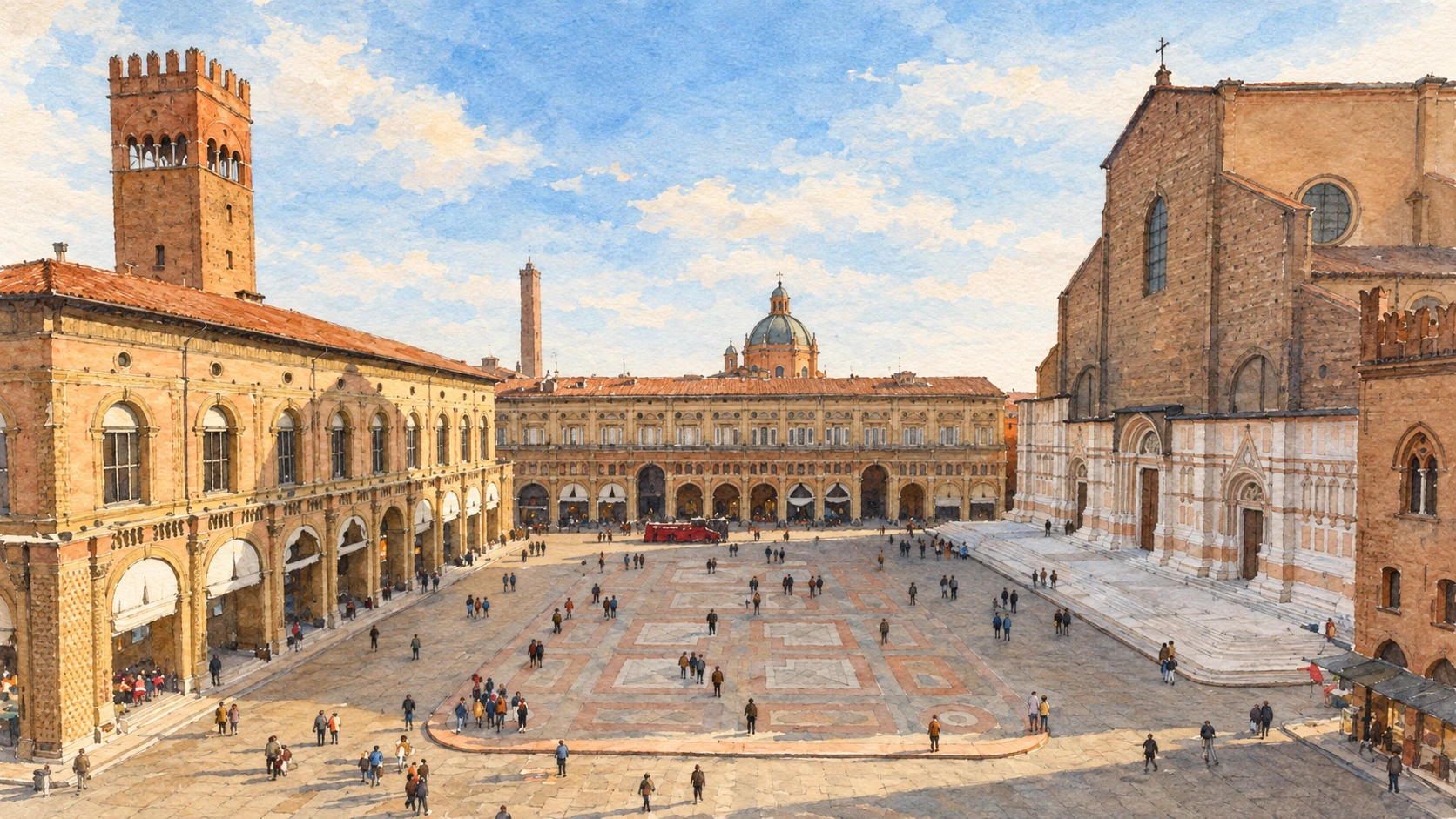
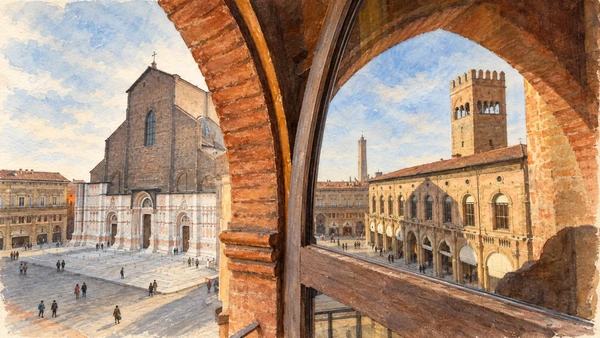
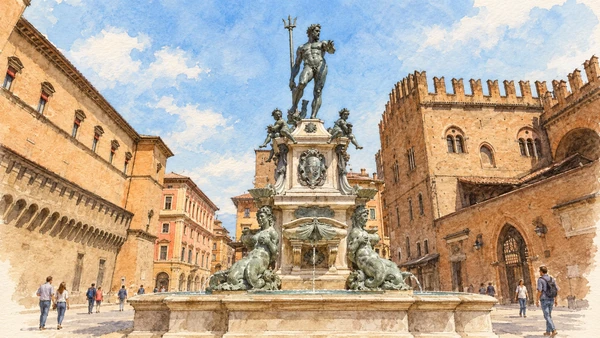
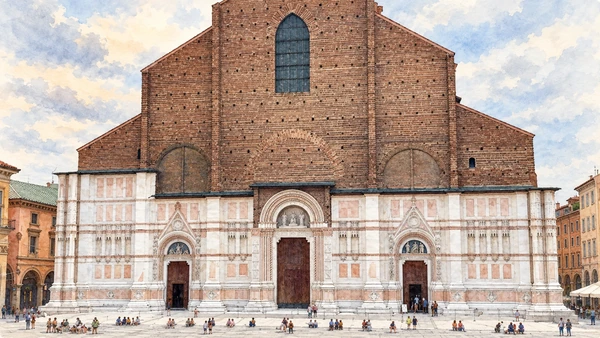
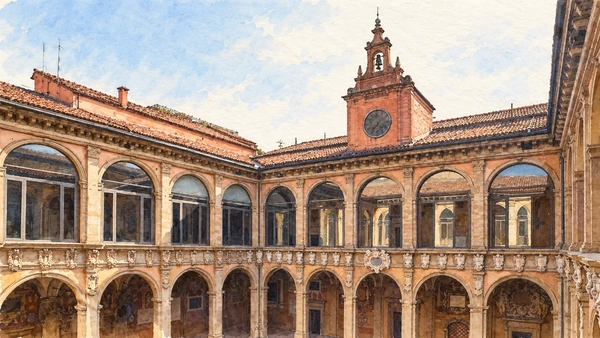
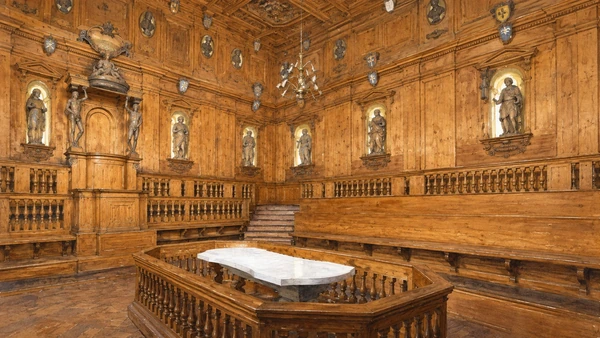
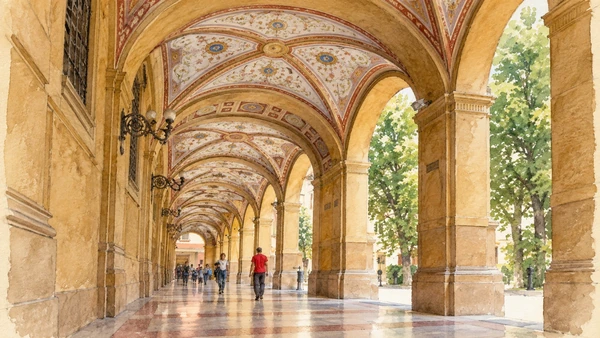
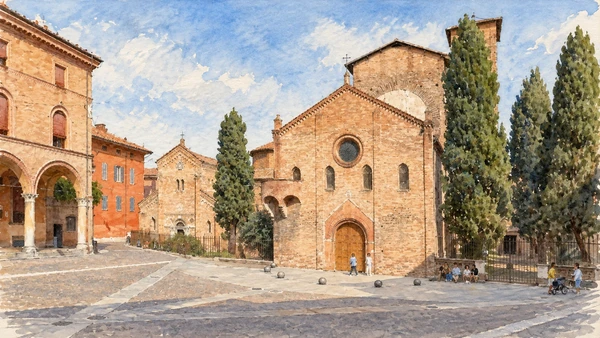
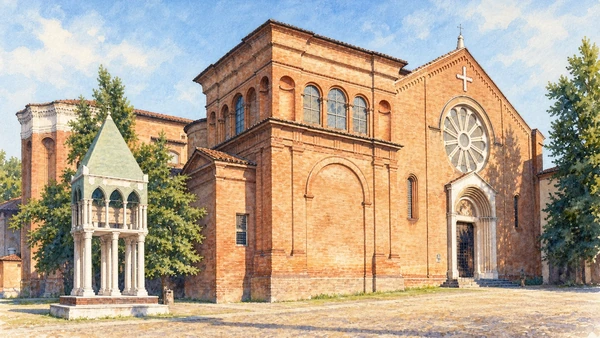
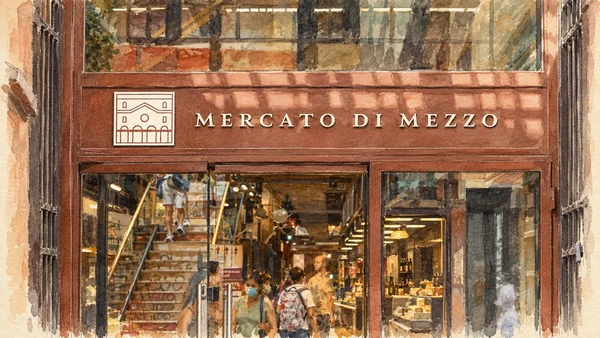
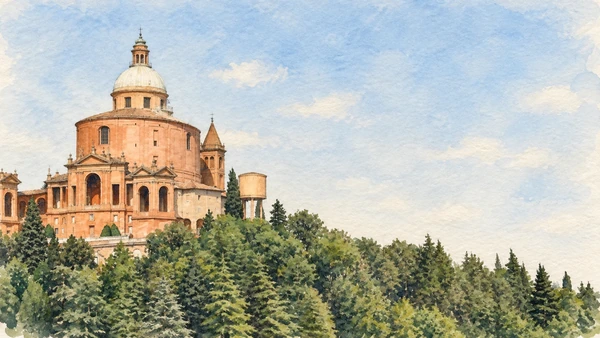
Bologna becomes legible through its shared spaces. Piazza Maggiore gathers institutions around an open centre; porticoes carry everyday movement beneath private buildings; the Archiginnasio gives teaching a ceremonial setting. Churches and markets add different rhythms to the same streets. This guide connects those relationships without treating the historic city as an untouched medieval scene. Reconstruction, changing use and continued religious life are part of what is visible. San Luca belongs to another scale of visit, where the covered route leaves the plain and climbs towards the sanctuary.
The guide separates documented history from suggestions for reading the site. Named buildings and landscape relationships follow institutional sources; the illustrations are editorial interpretations, not measured surveys or records of current access.
Civic squares, covered streets and university rooms reveal a city built through public life, scholarship, worship and trade.