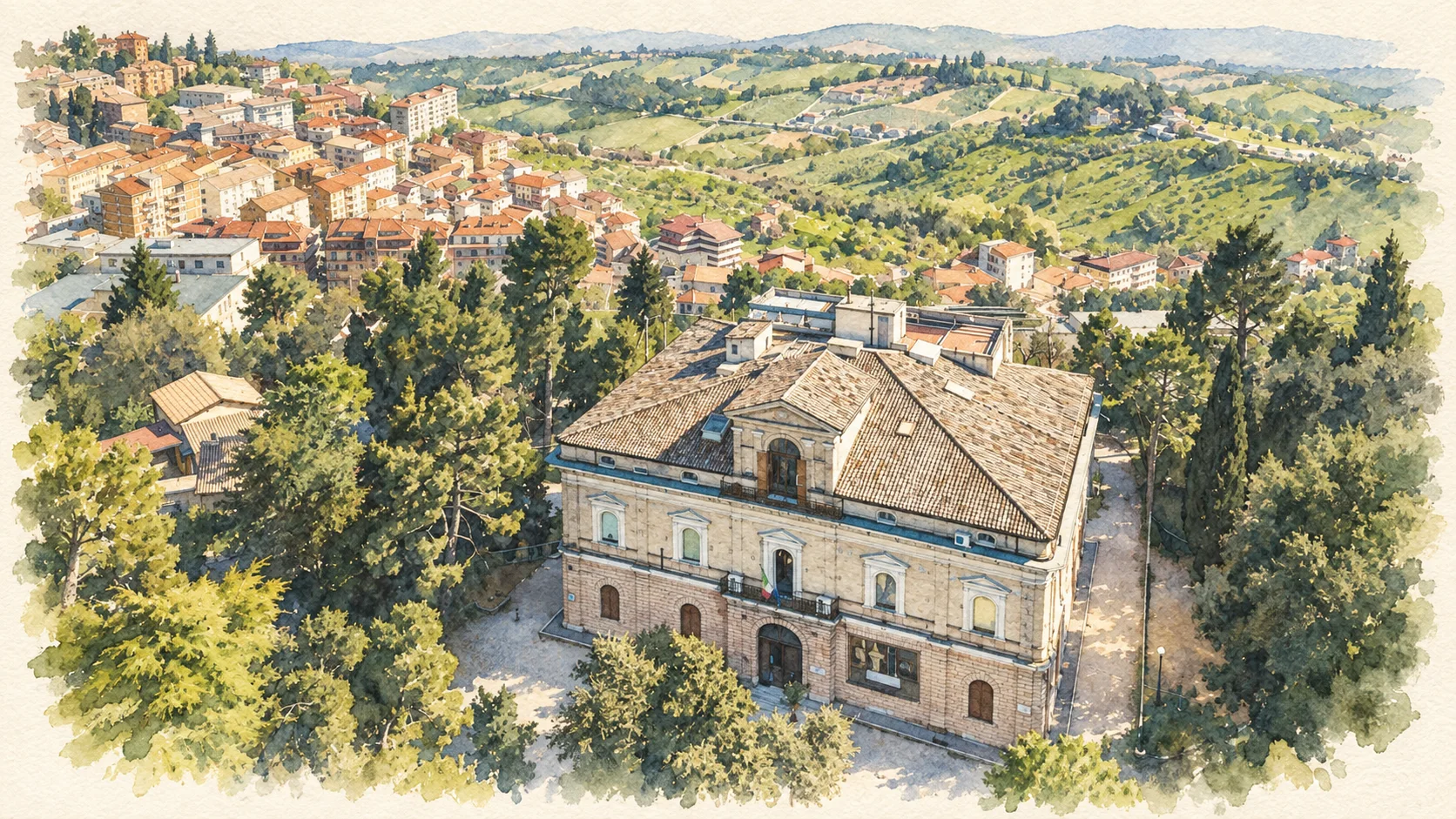
Watercolour: An elevated view of Villa Frigerj within the green public gardens.

Abruzzo · Guide 04

Chieti

Ancient Teate, regional archaeological collections, a hilltop civic centre and a living theatre connect several scales of history.

Plan the route
Chieti10 chapters · history, culture and landscape

Why this place matters

An archaeological city, not one archaeological site.

Chieti’s museums and urban remains tell related but different stories. Villa Frigerj interprets a wider region, while La Civitella gives particular attention to the city and Marrucinian territory. The streets between them add later religious, civic and artistic layers. Begin by distinguishing the hill city from Chieti Scalo: the names share a municipality but are not interchangeable destinations on foot.

The guide separates documented history from suggestions for reading the site. Named buildings and landscape relationships follow institutional sources; the illustrations are editorial interpretations, not measured surveys or records of current access.

Ancient Teate, regional archaeological collections, a hilltop civic centre and a living theatre connect several scales of history.
The route

Plan your visit

Allow substantial time for one museum and the central streets. Add the second museum on another visit if needed. Check separate access to archaeological areas and book a theatre visit when offered.

Museum morning

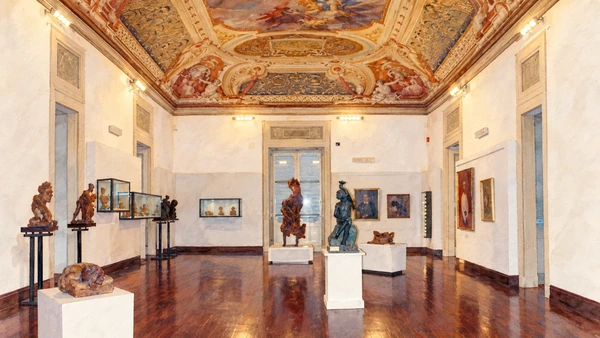
Villa Frigerj and its collections

Allow substantial time for one museum and the central streets. Add the second museum on another visit if needed. Check separate access to archaeological areas and book a theatre visit when offered.

Urban archaeology

La Civitella and Roman remains

Historic centre

San Giustino and Corso Marrucino

Cultural extension

Theatre and Barbella museum

Ten chapters

Explore the places

The chapters connect history and terrain. Mountain areas and outlying towns are separate options, not a single continuous walking route.

  1. 01Villa Frigerj
  2. 02The Warrior of Capestrano
  3. 03Villa Comunale
  4. 04La Civitella museum
  5. 05The Roman amphitheatre
  6. 06The Roman temples
  7. 07San Giustino cathedral
  8. 08Corso Marrucino
  9. 09Teatro Marrucino
  10. 10Costantino Barbella museum
01

Evidence and interpretation

Villa Frigerj

The museum’s villa setting changes the pace of arrival. Inside, regional finds allow visitors to compare communities and periods that cannot be understood from one excavation alone.

Today

Check the institution’s current opening, booking arrangements and accessible route. Individual rooms, exhibitions and approaches may have separate conditions.

History

The nineteenth-century residence became a state museum in 1959. Its archaeological collections range across Abruzzo, including important evidence from pre-Roman societies.

How to read this place

Read findspots and contexts before grouping objects by visual similarity. The museum’s location in Chieti does not mean that every object originated in ancient Teate.

What to notice

  • Read findspots and contexts before grouping objects by visual similarity.
  • The relationship between the site and its surrounding route.
  • The distinction between surviving evidence and modern interpretation.
Regione Abruzzo · Villa Frigerj
Watercolour: An elevated view of Villa Frigerj within the green public gardens.
Villa FrigerjEditorial watercolour · AI-generated · 2026
02

Evidence and interpretation

The Warrior of Capestrano

A single celebrated object can hold attention without standing for an entire ancient people. Give the sculpture time, then return to the surrounding evidence.

Today

Check the institution’s current opening, booking arrangements and accessible route. Individual rooms, exhibitions and approaches may have separate conditions.

History

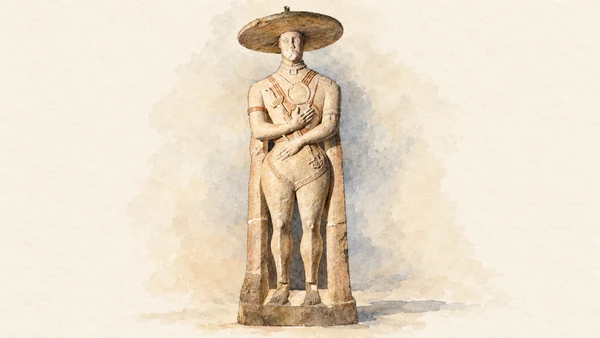
The Warrior of Capestrano is a major work in the Villa Frigerj collection. Its archaeological origin is Capestrano, not the hill on which the museum now stands.

How to read this place

Consider the relationship between body, costume, equipment and display. Interpretations of identity and power depend on evidence beyond the figure’s appearance.

What to notice

  • Consider the relationship between body, costume, equipment and display.
  • The relationship between the site and its surrounding route.
  • The distinction between surviving evidence and modern interpretation.
Regione Abruzzo · Villa Frigerj
Watercolour: The stone Warrior of Capestrano with its distinctive broad circular headgear.
The Warrior of CapestranoEditorial watercolour · AI-generated · 2026
03

The inhabited landscape

Villa Comunale

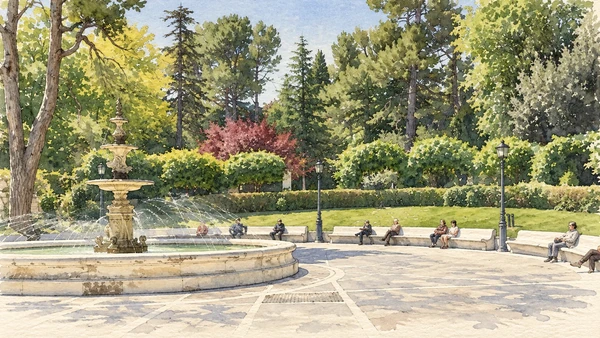
The public gardens offer an interval between close looking in the museum and walking through the hill city. Terraces and paths reveal how public space adapts to the slope.

Today

This remains an inhabited place. Use pedestrian routes, keep entrances clear and check municipal mobility notices for any restricted area.

History

The gardens form part of the setting around Villa Frigerj and the later civic landscape. Their layout belongs to a different historical layer from the objects in the museum.

How to read this place

Notice changes in level, shade and outlook. Follow accessible routes according to actual gradients and surfaces rather than assuming that every garden path is equivalent.

What to notice

  • Notice changes in level, shade and outlook.
  • The relationship between the site and its surrounding route.
  • The distinction between surviving evidence and modern interpretation.
Italia.it · Chieti
Watercolour: A fountain and paths among the trees of Chieti’s Villa Comunale.
Villa ComunaleEditorial watercolour · AI-generated · 2026
04

Evidence and interpretation

La Civitella museum

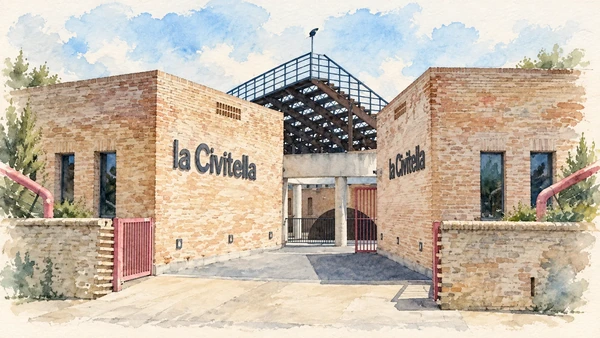
This museum is an important place to understand the ancient city before interpreting the remains outside. Its displays connect architectural fragments with urban development.

Today

Check the institution’s current opening, booking arrangements and accessible route. Individual rooms, exhibitions and approaches may have separate conditions.

History

The museum includes material from the Republican temples on Teate’s acropolis and explains the city’s relationship with Marrucinian territory.

How to read this place

Distinguish reconstructed arrangements of fragments from surviving buildings in place. Check current institutional notices: a permanent collection description does not guarantee that all rooms are open.

What to notice

  • Distinguish reconstructed arrangements of fragments from surviving buildings in place.
  • The relationship between the site and its surrounding route.
  • The distinction between surviving evidence and modern interpretation.
Ministry of Culture · La Civitella
Watercolour: The modern entrance architecture of La Civitella museum.
La Civitella museumEditorial watercolour · AI-generated · 2026
05

Evidence and interpretation

The Roman amphitheatre

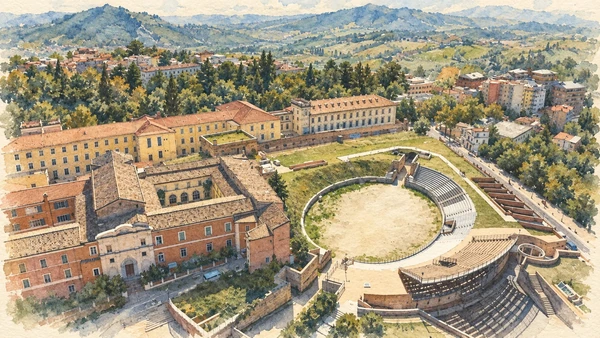
The excavated arena makes ancient entertainment architecture visible within a later city. Its scale becomes clearer when read together with the museum’s urban interpretation.

Today

Check the institution’s current opening, booking arrangements and accessible route. Individual rooms, exhibitions and approaches may have separate conditions.

History

The amphitheatre belongs to Roman Teate’s monumental public landscape. Archaeological investigation recovered remains that had ceased to function as a complete ancient building.

How to read this place

Identify the oval footprint without filling every gap with imagined upper tiers. The illustration includes modern performance seating: this should be distinguished from surviving Roman fabric. The exposed remains and estimates of ancient capacity are different kinds of information.

What to notice

  • Identify the oval footprint without filling every gap with imagined upper tiers.
  • The relationship between the site and its surrounding route.
  • The distinction between surviving evidence and modern interpretation.
Soprintendenza Chieti–Pescara · Teate Marrucinorum
Watercolour: The amphitheatre area at La Civitella, including modern performance seating beside archaeological remains.
The Roman amphitheatreEditorial watercolour · AI-generated · 2026
06

Evidence and interpretation

The Roman temples

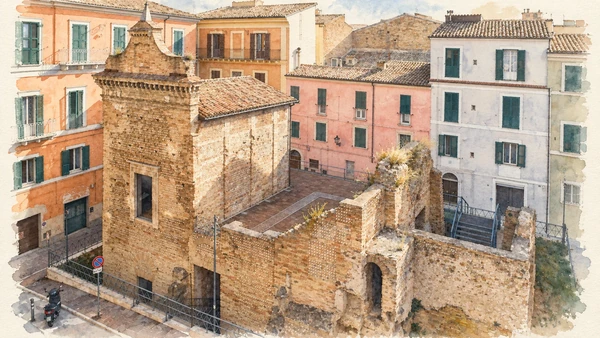
The temple area is a reminder that religious topography can survive in fragments and reused structures. It requires attention to what remains rather than an expectation of intact classical columns.

Today

Check the institution’s current opening, booking arrangements and accessible route. Individual rooms, exhibitions and approaches may have separate conditions.

History

Teate’s sacred buildings formed part of the Roman city. Later uses and the surrounding modern fabric complicate the reading of the ancient ensemble.

How to read this place

Look for the contrast between podium, surviving wall and later construction. Consult the site interpretation before assigning a deity to an individual structure.

What to notice

  • Look for the contrast between podium, surviving wall and later construction.
  • The relationship between the site and its surrounding route.
  • The distinction between surviving evidence and modern interpretation.
Soprintendenza Chieti–Pescara · Teate Marrucinorum
Watercolour: An elevated view of the reused masonry and buildings of Chieti’s Roman temple area.
The Roman templesEditorial watercolour · AI-generated · 2026
07

Worship and memory

San Giustino cathedral

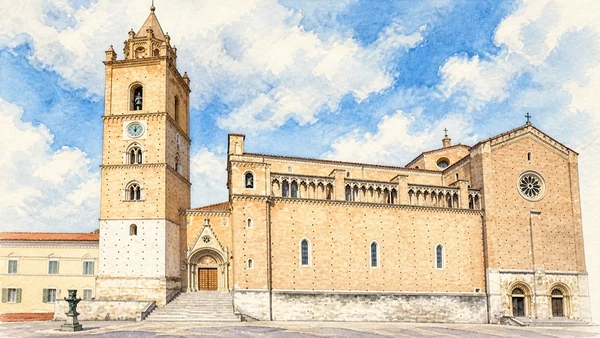
The cathedral gives the historic centre a religious focus beyond the archaeological collections. Its exterior, tower and interior need to be read as a layered building.

Today

Worship and local religious life continue here. Visitor access may pause for services; consult the church or managing institution before planning an interior visit.

History

Successive religious and architectural phases shaped the church and its crypt. The cathedral’s continuing role means that worship remains part of the visitor context.

How to read this place

Do not assign one date to every visible feature. When the crypt is accessible, compare its scale and atmosphere with the spaces above without disturbing services.

What to notice

  • Do not assign one date to every visible feature.
  • The relationship between the site and its surrounding route.
  • The distinction between surviving evidence and modern interpretation.
Italia.it · Chieti
Watercolour: San Giustino cathedral and its square bell tower above the piazza.
San Giustino cathedralEditorial watercolour · AI-generated · 2026
08

The inhabited landscape

Corso Marrucino

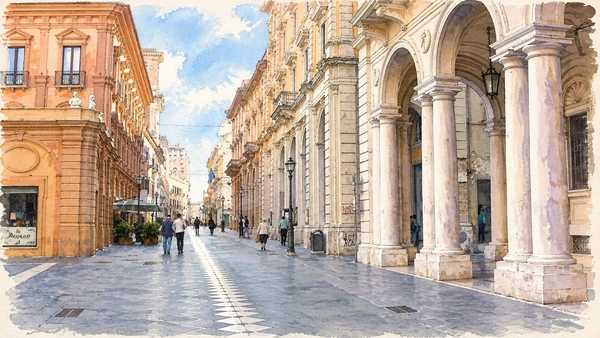
The principal street joins civic, commercial and cultural destinations. Walking it slowly gives the museum objects a setting within a still-active town.

Today

This remains an inhabited place. Use pedestrian routes, keep entrances clear and check municipal mobility notices for any restricted area.

History

Later palaces, institutions and public spaces developed along the city’s inherited topography. The street links periods without making them one continuous architectural style.

How to read this place

Look at entrances, shop fronts and the relationship between street width and building height. Historic centres remain places of work and residence as well as visits.

What to notice

  • Look at entrances, shop fronts and the relationship between street width and building height.
  • The relationship between the site and its surrounding route.
  • The distinction between surviving evidence and modern interpretation.
Italia.it · Chieti
Watercolour: The arcaded street frontage along Corso Marrucino.
Corso MarrucinoEditorial watercolour · AI-generated · 2026
09

Evidence and interpretation

Teatro Marrucino

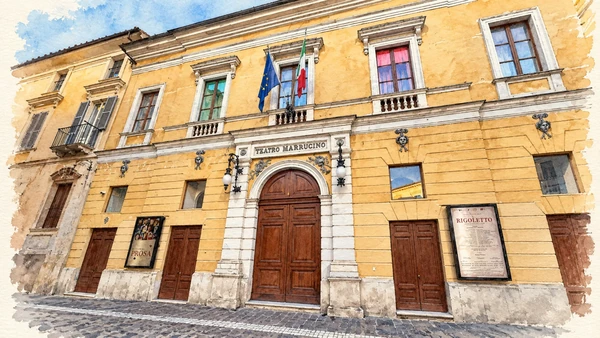
The theatre is a working cultural institution whose interior deserves a planned visit. Its scale can be missed when attention is confined to the street façade.

Today

Check the institution’s current opening, booking arrangements and accessible route. Individual rooms, exhibitions and approaches may have separate conditions.

History

The city authorised a new theatre in the early nineteenth century in response to demand for performance space. It remains a centre for theatre, opera and concerts.

How to read this place

Compare the auditorium’s arrangement with the civic intention behind the building. A performance ticket and a guided architectural visit are different forms of access.

What to notice

  • Compare the auditorium’s arrangement with the civic intention behind the building.
  • The relationship between the site and its surrounding route.
  • The distinction between surviving evidence and modern interpretation.
Teatro Marrucino · history
Watercolour: The pale yellow facade of Teatro Marrucino.
Teatro MarrucinoEditorial watercolour · AI-generated · 2026
10

Evidence and interpretation

Costantino Barbella museum

The art museum shifts the route from ancient material culture to later artistic choices. Sculpture and painting offer another way of examining how the region represented itself.

Today

Check the institution’s current opening, booking arrangements and accessible route. Individual rooms, exhibitions and approaches may have separate conditions.

History

The collection includes works by the Chieti sculptor Costantino Barbella, including terracottas and studies associated with rural and pastoral subjects.

How to read this place

Read these works as artistic representations rather than transparent records of every rural life. Check the museum’s current visiting arrangements before planning an interior stop.

What to notice

  • Read these works as artistic representations rather than transparent records of every rural life.
  • The relationship between the site and its surrounding route.
  • The distinction between surviving evidence and modern interpretation.
Ministry of Culture · Costantino Barbella museum
Watercolour: Sculptures displayed inside the Costantino Barbella museum.
Costantino Barbella museumEditorial watercolour · AI-generated · 2026

The territory through time

A short chronology

A concise chronology linking the documented sites to the wider story.

  1. The Warrior of Capestrano belongs to the sixth century BCE and was found outside ancient Teate.

  2. Temples, public buildings and an amphitheatre organise the ancient city.

  3. Surviving temple fabric becomes part of a changing built environment.

  4. San Giustino provides a religious focus within the historic centre.

  5. Villa Frigerj and the public gardens add a different scale of urban space.

  6. Teatro Marrucino becomes a setting for the city’s performance culture.

  7. Villa Frigerj and La Civitella offer complementary archaeological interpretations.

  8. Corso Marrucino, museums and public gardens remain part of daily city life.

Before your visit

Practical information

01

Plan separate days

Choose a manageable set of visits and allow for transport, booked entries and the return journey.

02

Use the exact place name

Similar religious names can refer to different sites. Santo Spirito al Morrone near Sulmona and Santo Spirito a Maiella near Roccamorice require separate journeys.

03

Check the institution

Opening hours, tickets, exhibitions and religious access change. Use the linked managing institution shortly before visiting.

04

Check the actual terrain

A town walk, gorge walkway, lift arrival and mountain path have different demands. Use current route information, weather and closures for the option you choose.

05

Arrange accessible visits

Historic interiors and mountain approaches can include steps, gradients or uneven surfaces. Ask about the specific route instead of assuming an entire destination is step-free.

06

Respect work and residence

Farms, workshops, churches and historic streets remain in use. Follow signs, keep entrances clear and ask permission before entering private spaces.

Method and sources

Sources and image credits

Prepared on 8 September 2026 from the institutional sources linked below. Historical claims are separated from editorial observations and itinerary suggestions. Older institutional brochures are used for stable cultural context, never as current timetables. Prices, transport schedules, trail status and admission are deliberately left to the responsible operators. Illustrations are not photographs, measured reconstructions or evidence of current conditions.

The eleven images are AI-generated editorial watercolours guided by photographic references. They interpret named places and are not photographs or substitutes for measured plans. Opening hours, tickets, accessible routes, temporary exhibitions and conservation work can change; consult the linked official pages shortly before visiting.