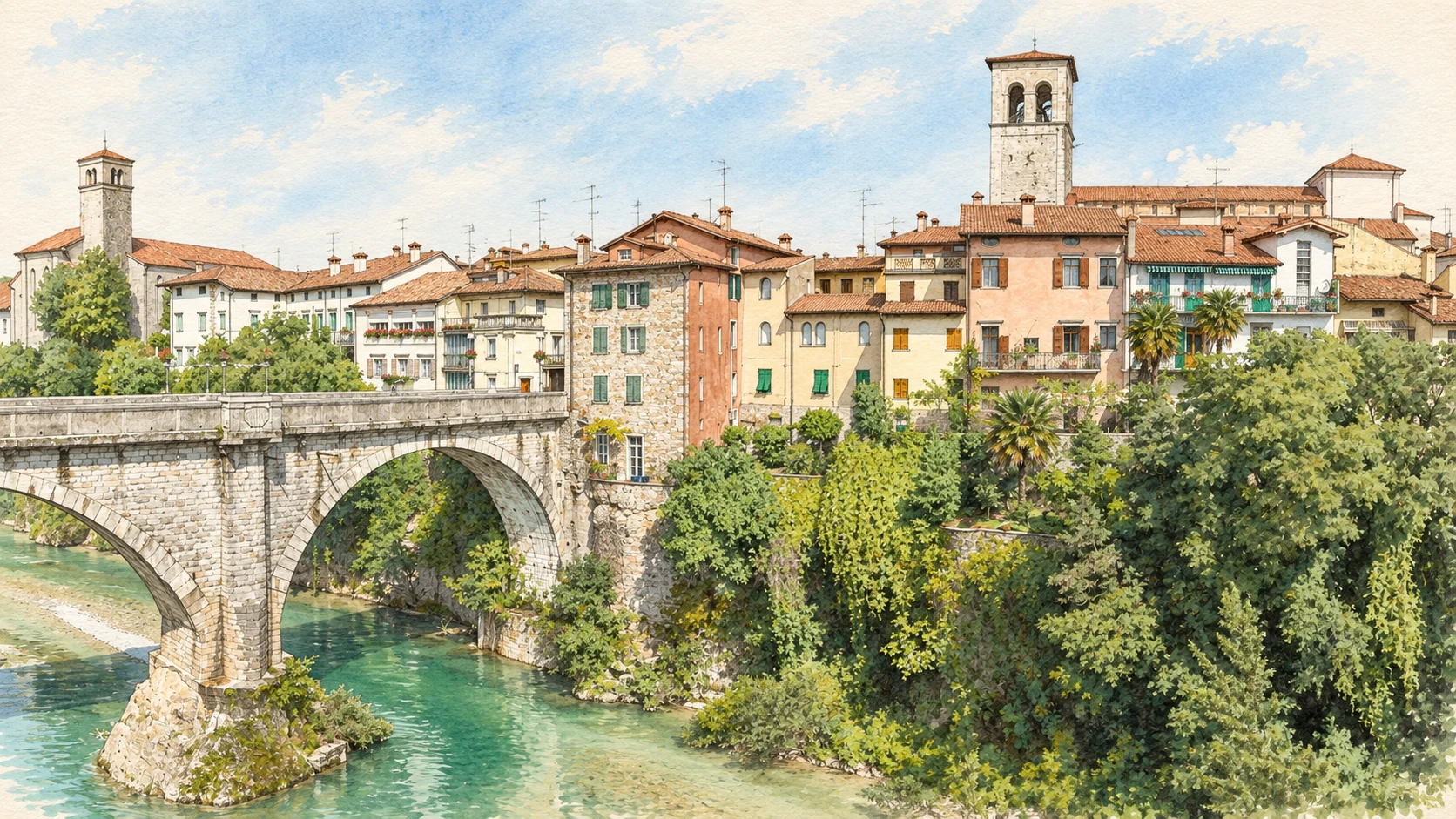
Watercolour: Cividale del Friuli establishing view

Friuli Venezia Giulia · Guide 04

Cividale del Friuli

Above the Natisone, a compact town preserves extraordinary early medieval sculpture, a small sanctuary and the changing institutions of a former Lombard centre.

Plan the route
Cividale del Friuli10 chapters · history, culture and landscape

Why this place matters

Begin with the river, then look closely at the surviving objects.

The river gives Cividale a clear edge and a memorable approach. Its most important historical evidence, however, often asks for close attention indoors: carved stone, stucco figures, burial objects and painted surfaces. The Tempietto and the Christian Museum are complementary visits, while the archaeological museum explains the wider population and its material culture. Leave time between collections to understand their different settings. The present town includes much later churches, palaces and a bridge rebuilt after wartime destruction.

The guide separates documented history from suggestions for reading the site. Named buildings and landscape relationships follow institutional sources; the illustrations are editorial interpretations, not measured surveys or records of current access.

Above the Natisone, a compact town preserves extraordinary early medieval sculpture, a small sanctuary and the changing institutions of a former Lombard centre.
The route

Plan your visit

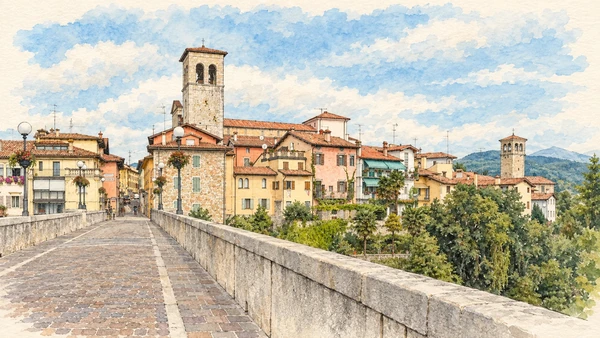
Use the central streets to connect the bridge, cathedral area and Santa Maria in Valle. The museums require separate opening checks. The hypogeum is a guided visit with its own arrangements; it should be planned in advance rather than treated as an always-open passage.

River edge

Ponte del Diavolo and the Natisone

Use the central streets to connect the bridge, cathedral area and Santa Maria in Valle.

Sacred quarter

Tempietto and Santa Maria in Valle

Early medieval evidence

Archaeological and Christian Museums

Later cultural life

Cathedral, treasury and puppet collections

Ten chapters

Explore the places

The chapters connect history and terrain. Use the route notes to choose visits and plan transfers between separate sites.

  1. 01Ponte del Diavolo
  2. 02Tempietto Longobardo
  3. 03Santa Maria in Valle
  4. 04Museo Archeologico Nazionale
  5. 05Santa Maria Assunta
  6. 06The baptistery of Callisto
  7. 07The altar of Ratchis
  8. 08Treasury of the Christian Museum
  9. 09Ipogeo Celtico
  10. 10Podrecca and Signorelli puppet collections
01

The inhabited landscape

Ponte del Diavolo

The two unequal arches span a narrow river corridor, with the central pier resting on a natural rock. From the public approaches, the bridge reveals how topography shaped the town’s crossing and the fronts of its riverside buildings.

Today

This remains an inhabited place. Use pedestrian routes, keep entrances clear and check municipal mobility notices for any restricted area.

History

Work on the stone predecessor began in 1442. It was destroyed during the retreat after Caporetto in October 1917 and rebuilt, reopening in May 1918. The current crossing therefore retains the earlier outline through reconstruction rather than uninterrupted survival.

How to read this place

Look at the central rock and unequal spans. The devil story belongs to local legend, not the documented construction history. Use the upper public viewpoints; a riverbed descent is a separate choice dependent on access and water conditions.

What to notice

  • Look at the central rock and unequal spans.
  • The devil story belongs to local legend, not the documented construction history.
  • Use the upper public viewpoints; a riverbed descent is a separate choice dependent on access and water conditions.
Cividale · Ponte del Diavolo
Watercolour: Cividale real Ponte del Diavolo two unequal stone arches over Natisone and central natural rock
Ponte del DiavoloEditorial watercolour · AI-generated · 2026
02

Evidence and interpretation

Tempietto Longobardo

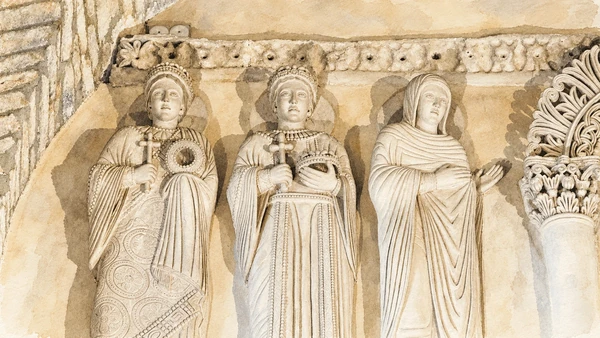
A small interior carries an exceptional concentration of decoration. The stucco figures and vine ornament reward a slow visit in which the relationship between wall, opening and sculpture matters as much as any individual detail.

Today

Check the institution’s current opening, booking arrangements and accessible route. Individual rooms, exhibitions and approaches may have separate conditions.

History

The building belongs to the early medieval complex by the Natisone. Its precise origins and original function remain debated; a late eighth-century context is widely proposed. It is part of the serial World Heritage property devoted to Lombard places of power.

How to read this place

Observe the six female figures and the arch with vine ornament without assigning every figure a definite identity. Separate the surviving decoration from later repairs and from hypotheses about the original users of the room.

What to notice

  • Observe the six female figures and the arch with vine ornament without assigning every figure a definite identity.
  • Separate the surviving decoration from later repairs and from hypotheses about the original users of the room.
Tempietto Longobardo e Monastero di Santa Maria in Valle · PromoTurismoFVG
Watercolour: Detail of three stucco female figures in the Tempietto Longobardo
Tempietto LongobardoEditorial watercolour · AI-generated · 2026
03

Evidence and interpretation

Santa Maria in Valle

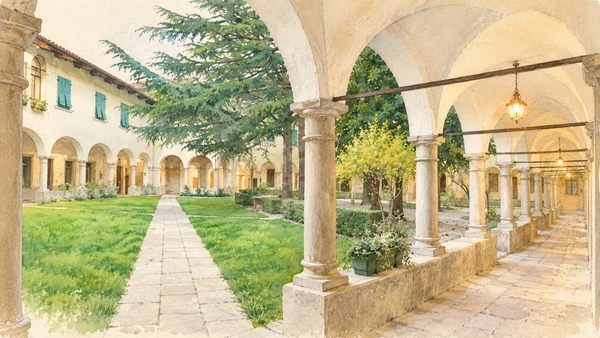
The monastery provides the architectural setting for the Tempietto. Moving through its quieter spaces makes the difference between an isolated masterpiece and a long-lived religious complex easier to understand.

Today

Check the institution’s current opening, booking arrangements and accessible route. Individual rooms, exhibitions and approaches may have separate conditions.

History

The complex developed through successive periods of religious occupation and alteration. Its association with the early medieval administrative quarter does not mean that every wall or opening visible today dates from Lombard rule.

How to read this place

Compare circulation spaces and the small sanctuary. Use the visitor interpretation to distinguish building phases. The historical enclosure and the present museum route organise movement differently; follow the contemporary access arrangements.

What to notice

  • Compare circulation spaces and the small sanctuary.
  • Use the visitor interpretation to distinguish building phases.
  • The historical enclosure and the present museum route organise movement differently; follow the contemporary access arrangements.
Tempietto Longobardo e Monastero di Santa Maria in Valle · PromoTurismoFVG
Watercolour: Cividale Santa Maria in Valle actual monastery cloister courtyard
Santa Maria in ValleEditorial watercolour · AI-generated · 2026
04

Evidence and interpretation

Museo Archeologico Nazionale

Objects from graves and settlement contexts give the early medieval town a human scale. Jewellery, weapons and everyday materials should be read through their find contexts rather than as a collection of spectacular treasures.

Today

Check the institution’s current opening, booking arrangements and accessible route. Individual rooms, exhibitions and approaches may have separate conditions.

History

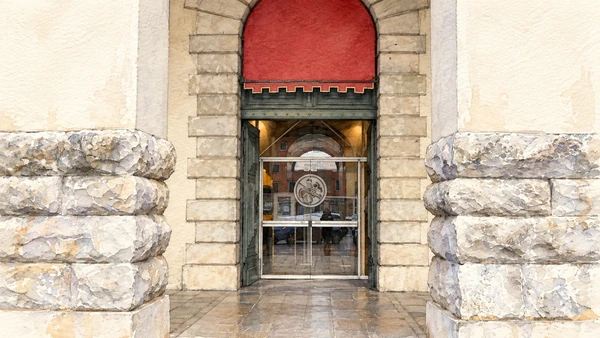
The museum occupies the Palazzo dei Provveditori Veneti, a sixteenth-century building on Piazza Duomo. Its collections include Roman and later material, with an important account of Lombard funerary evidence from the early medieval period.

How to read this place

Choose one burial assemblage and read its interpretation as a group. An object can suggest status, exchange or craft, but does not by itself provide a complete biography. Compare the date of the finds with that of the palace containing them.

What to notice

  • Choose one burial assemblage and read its interpretation as a group.
  • An object can suggest status, exchange or craft, but does not by itself provide a complete biography.
  • Compare the date of the finds with that of the palace containing them.
Museo Archeologico Nazionale di Cividale del Friuli · PromoTurismoFVG
Watercolour: Entrance to the National Archaeological Museum at Palazzo dei Provveditori Veneti
Museo Archeologico NazionaleEditorial watercolour · AI-generated · 2026
05

Worship and memory

Santa Maria Assunta

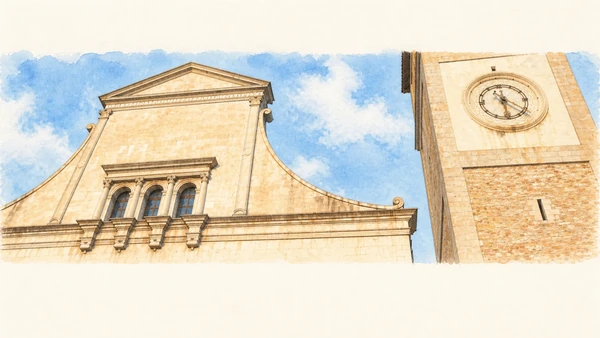
The cathedral brings a much later architectural scale to the central square. Its broad front and interior contain evidence of campaigns that followed the early medieval institutions for which the town is best known.

Today

Worship and local religious life continue here. Visitor access may pause for services; consult the church or managing institution before planning an interior visit.

History

The present building developed from a fifteenth-century rebuilding and work by Pietro Lombardo after a collapse in 1502. Later alterations changed the interior. The result combines Gothic and Renaissance elements rather than representing a single untouched design.

How to read this place

Compare the exterior openings with the interior’s later fittings. The cathedral remains a place of worship; museum access and church visiting are distinct. Use the building’s interpretation to place individual works within the changing sacred space.

What to notice

  • Compare the exterior openings with the interior’s later fittings.
  • The cathedral remains a place of worship; museum access and church visiting are distinct.
  • Use the building’s interpretation to place individual works within the changing sacred space.
Cividale · Santa Maria Assunta
Watercolour: Upper facade detail of Santa Maria Assunta, with the adjacent clock tower
Santa Maria AssuntaEditorial watercolour · AI-generated · 2026
06

Evidence and interpretation

The baptistery of Callisto

An octagonal architectural object brings together columns, arches and carved stone in the Christian Museum. Its compact scale allows sculpture, structure and liturgical purpose to be considered together.

Today

Check the institution’s current opening, booking arrangements and accessible route. Individual rooms, exhibitions and approaches may have separate conditions.

History

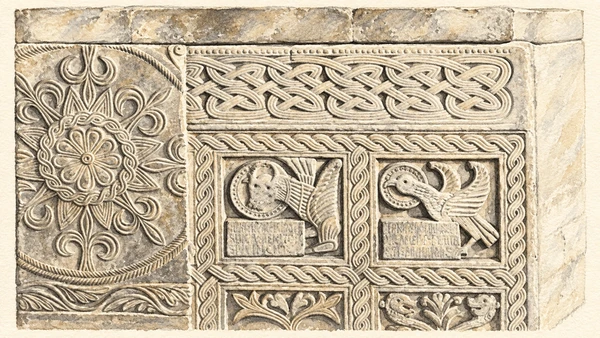
The monument is associated with the patriarch Callisto and the eighth-century ecclesiastical centre at Cividale. Its surviving components and later history form part of the museum’s account of patriarchal patronage. The illustrated eighth- to ninth-century panel was reused in its parapet in the modern period, according to the regional cultural-heritage catalogue.

How to read this place

Walk around the object where the museum route permits. Compare carved surfaces with structural members, and use the labels to distinguish components and their dates. This is a museum presentation of a historic baptismal monument, not a currently operating baptistery.

What to notice

  • Walk around the object where the museum route permits.
  • Compare carved surfaces with structural members, and use the labels to distinguish components and their dates.
  • This is a museum presentation of a historic baptismal monument, not a currently operating baptistery.
Museo Cristiano e Tesoro del Duomo di Cividale del Friuli · PromoTurismoFVG
Watercolour: Detail of a carved panel reused in the parapet of the Baptistery of Callisto
The baptistery of CallistoEditorial watercolour · AI-generated · 2026
07

Evidence and interpretation

The altar of Ratchis

The carved figures have an expressive clarity that differs from naturalistic Roman sculpture. Looking across more than one face of the altar helps reveal the object as a coherent programme rather than a single famous image.

Today

Check the institution’s current opening, booking arrangements and accessible route. Individual rooms, exhibitions and approaches may have separate conditions.

History

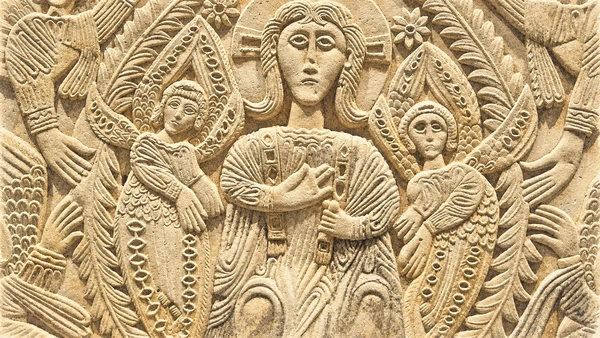
The altar belongs to the years 737–744 and the patronage of Duke Ratchis. It was originally coloured. Modern projections used to explain its appearance are reconstructions of polychromy, not surviving paint on all the visible stone.

How to read this place

Read the figures, borders and arrangement of each relief before moving to another face. When colour is presented through interpretation, keep the ancient object and the modern explanatory layer distinct.

What to notice

  • Read the figures, borders and arrangement of each relief before moving to another face.
  • When colour is presented through interpretation, keep the ancient object and the modern explanatory layer distinct.
Museo Cristiano e Tesoro del Duomo di Cividale del Friuli · PromoTurismoFVG
Watercolour: Carved relief detail from the altar of Ratchis, showing the surviving stone
The altar of RatchisEditorial watercolour · AI-generated · 2026
08

Evidence and interpretation

Treasury of the Christian Museum

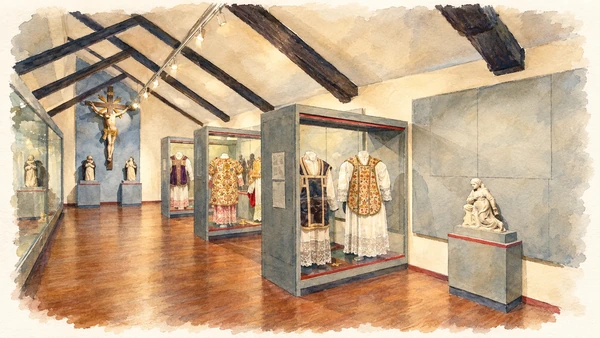
Embroidered vestments, metalwork, manuscripts and paintings extend the museum beyond its best-known early medieval stone monuments. Their materials and functions connect worship to skilled work, patronage and the preservation of objects over time.

Today

Check the institution’s current opening, booking arrangements and accessible route. Individual rooms, exhibitions and approaches may have separate conditions.

History

The treasury brings together works from different periods in the history of the cathedral and its institutions. Paintings by artists including Pordenone and Veronese sit within this longer history of collecting and religious use.

How to read this place

Choose an object whose original purpose is explained on its label. Consider how handling, ceremony and later display change its meaning. The collection should not be read as though everything was commissioned for the same room or generation.

What to notice

  • Choose an object whose original purpose is explained on its label.
  • Consider how handling, ceremony and later display change its meaning.
  • The collection should not be read as though everything was commissioned for the same room or generation.
Museo Cristiano e Tesoro del Duomo di Cividale del Friuli · PromoTurismoFVG
Watercolour: Christian Museum treasury hall with historic liturgical vestments
Treasury of the Christian MuseumEditorial watercolour · AI-generated · 2026
09

Evidence and interpretation

Ipogeo Celtico

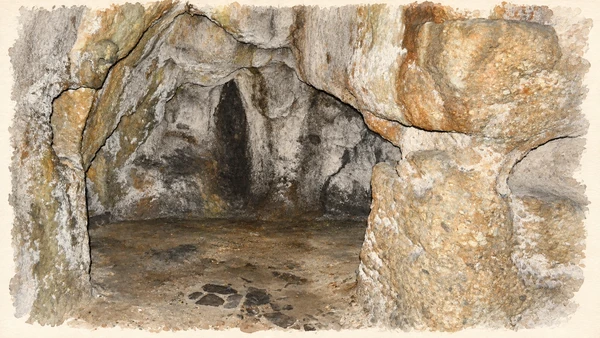
A rock-cut underground space opens a different and unresolved chapter. Low passages, niches and carved faces make it unusual, but the atmosphere should not substitute for evidence about its origin.

Today

Visits follow guided arrangements organised locally with specialist accompaniment. Check booking and the exact access route with the municipal visitor service before planning this chapter.

History

The conventional name “Celtic Hypogeum” does not establish a Celtic date or function. Several interpretations have been proposed for the excavated space; its original purpose remains uncertain.

How to read this place

Visit through the authorised guided arrangements. Distinguish what can be directly observed in the rock from explanations that remain hypotheses. Ask about steps, narrow passages and the specific route before booking.

What to notice

  • Visit through the authorised guided arrangements.
  • Distinguish what can be directly observed in the rock from explanations that remain hypotheses.
  • Ask about steps, narrow passages and the specific route before booking.
Ipogeo Celtico · PromoTurismoFVG
Watercolour: Cividale actual Ipogeo Celtico rock-cut chamber niches low passage
Ipogeo CelticoEditorial watercolour · AI-generated · 2026
10

Evidence and interpretation

Podrecca and Signorelli puppet collections

Puppets introduce movement, performance and the work behind a stage. Their carved bodies, costumes and mechanisms invite attention to both visual invention and practical craft.

Today

Check the institution’s current opening, booking arrangements and accessible route. Individual rooms, exhibitions and approaches may have separate conditions.

History

The centre brings together material associated with Vittorio Podrecca’s Teatro dei Piccoli and the puppet collection of Maria Signorelli. It connects Cividale to a theatrical tradition whose performances travelled far beyond the town.

How to read this place

Compare a puppet’s visible character with its mechanism and scale. Read the accompanying documentation to distinguish makers, performers and collectors. The presence of a collection does not imply that a live performance is scheduled during an ordinary museum visit.

What to notice

  • Compare a puppet’s visible character with its mechanism and scale.
  • Read the accompanying documentation to distinguish makers, performers and collectors.
  • The presence of a collection does not imply that a live performance is scheduled during an ordinary museum visit.
Centro Internazionale Vittorio Podrecca -Teatro delle Meraviglie di Maria Signorelli · PromoTurismoFVG
Watercolour: Cividale Centro Vittorio Podrecca Maria Signorelli actual puppet museum display
Podrecca and Signorelli puppet collectionsEditorial watercolour · AI-generated · 2026

The territory through time

A short chronology

A concise chronology linking the documented sites to the wider story.

  1. Forum Iulii establishes an earlier urban layer.

  2. Cividale becomes an important Lombard centre.

  3. The altar of Ratchis belongs to ducal patronage.

  4. Callisto and the Tempietto belong to the town’s early medieval cultural setting.

  5. Construction of the stone predecessor of Ponte del Diavolo begins.

  6. Rebuilding following a collapse shapes the present cathedral.

  7. The bridge is destroyed and rebuilt during the First World War.

  8. The Lombard places of power are inscribed as a serial World Heritage property.

Before your visit

Practical information

01

Plan separate days

Choose a manageable set of visits and allow for transport, booked entries and the return journey.

02

Use the exact place name

Friuli Venezia Giulia contains separate valleys, towns and coastal approaches; some guides also include nearby places in Slovenia. Confirm the precise locality and route rather than treating nearby names as one destination.

03

Check the institution

Opening hours, tickets, exhibitions and religious access change. Use the linked managing institution shortly before visiting.

04

Check the actual terrain

Steps, gradients and uneven ground vary between the individual sites. Use current route information, weather and closures for the option you choose.

05

Arrange accessible visits

Historic interiors and outdoor approaches can include steps, gradients or uneven surfaces. Ask about the specific route instead of assuming an entire destination is step-free.

06

Respect work and residence

Farms, workshops, churches and historic streets remain in use. Follow signs, keep entrances clear and ask permission before entering private spaces.

Method and sources

Sources and image credits

Prepared on 9 September 2026 from the institutional sources linked below. Historical claims are separated from editorial observations and itinerary suggestions. Older institutional brochures are used for stable cultural context, never as current timetables. Prices, transport schedules, trail status and admission are deliberately left to the responsible operators. Illustrations are not photographs, measured reconstructions or evidence of current conditions.

The eleven images are AI-generated editorial watercolours guided by photographic references. They interpret named places and are not photographs or substitutes for measured plans. Opening hours, tickets, accessible routes, temporary exhibitions and conservation work can change; consult the linked official pages shortly before visiting.

Illustration references and credits