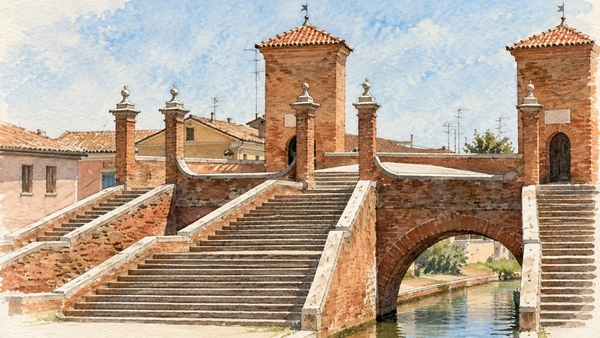
Watercolour: Comacchio & the Po Delta establishing view

Emilia-Romagna · Guide 08

Comacchio and the Po Delta

Canal streets, fishing landscapes and an Adriatic history shaped by changing water, work and settlement.

Plan the route
Comacchio & the Po Delta10 chapters · history, culture and landscape

Why this place matters

Follow the connections between town and wetland.

Comacchio is a useful starting point for understanding the southern Po Delta, but the surrounding landscape cannot be reduced to a backdrop for its bridges. Water management, fishing, salt production and land reclamation have repeatedly changed the balance between land and lagoon. Museums preserve evidence of ancient exchange, while working traditions and protected habitats reveal continuing relationships with this environment. The ten chapters move from the town to Lido di Spina, the valli, Pomposa and Mesola. These are distinct destinations requiring planned travel between them, not ten stops on one short walking circuit.

The guide separates documented history from suggestions for reading the site. Named buildings and landscape relationships follow institutional sources; the illustrations are editorial interpretations, not measured surveys or records of current access.

Canal streets, fishing landscapes and an Adriatic history shaped by changing water, work and settlement.
The route

Plan your visit

Reserve a town visit for the bridges, cathedral and two central museums. Arrange a separate excursion from Stazione Foce or a guided Salina visit, and allow additional travel for Casa Museo Remo Brindisi at Lido di Spina. Pomposa and Bosco della Mesola form a northern extension. Check seasonal calendars, boat departures and authorised routes; consult Comacchio’s accessibility map for alternatives to stepped bridges.

Historic Comacchio

Trepponti, canal bridges and San Cassiano

Reserve a town visit for the bridges, cathedral and two central museums.

Objects and work

Museo Delta Antico and Manifattura dei Marinati

Lagoon and coast

Valli, Salina and Casa Museo Remo Brindisi

Northern extension

Pomposa and Bosco della Mesola

Ten chapters

Explore the places

The chapters connect history and terrain. Use the route notes to choose visits and plan transfers between separate sites.

  1. 01Trepponti: a gateway from the water
  2. 02The smaller bridges and inhabited canals
  3. 03San Cassiano: scale and rebuilding
  4. 04Museo Delta Antico: exchange across the Adriatic
  5. 05Manifattura dei Marinati: rooms for work
  6. 06Casa Museo Remo Brindisi: living with modern art
  7. 07The valli and the fishing stations
  8. 08The Salina: production and habitat
  9. 09Pomposa: a monastery in a changing Delta
  10. 10Bosco della Mesola: a varied lowland forest
01

The inhabited landscape

Trepponti: a gateway from the water

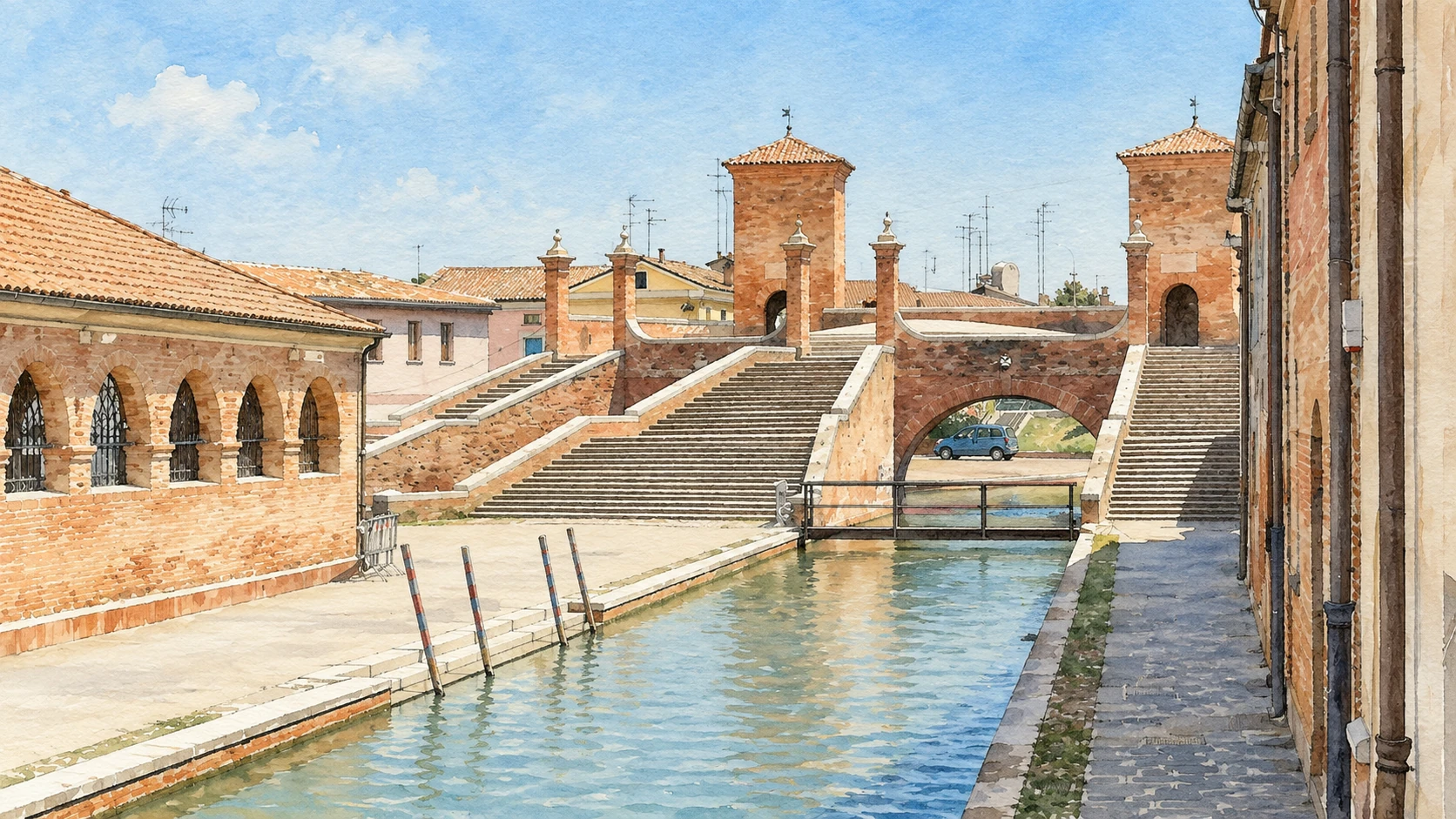
Broad stairways rise above the canal junction to create a crossing that is also a small elevated public space. Its brick walls and pale stone edges connect movement over land with the water routes beneath.

Today

This remains an inhabited place. Use pedestrian routes, keep entrances clear and check municipal mobility notices for any restricted area.

History

Designed by Luca Danese in the seventeenth century, the bridge belonged to a wider programme associated with Cardinal Pallotta. It served as an entrance for arrivals from the sea. Later additions and adaptations, including the guard towers, shaped the familiar monument.

How to read this place

View the crossing from canal level before climbing where suitable. Follow the stairways and parapets to understand their relationship with the waterways. The nearby fishmarket reinforces the connection between monumental architecture and everyday trade. Steps are fundamental to this design, so use the local accessibility map when planning an alternative route.

What to notice

  • View the crossing from canal level before climbing where suitable.
  • Follow the stairways and parapets to understand their relationship with the waterways.
  • The nearby fishmarket reinforces the connection between monumental architecture and everyday trade.
Trepponti
Watercolour: Trepponti Comacchio, close view of broad stairs, brick towers and canal arch
Trepponti: a gateway from the waterEditorial watercolour · AI-generated · 2026
02

The inhabited landscape

The smaller bridges and inhabited canals

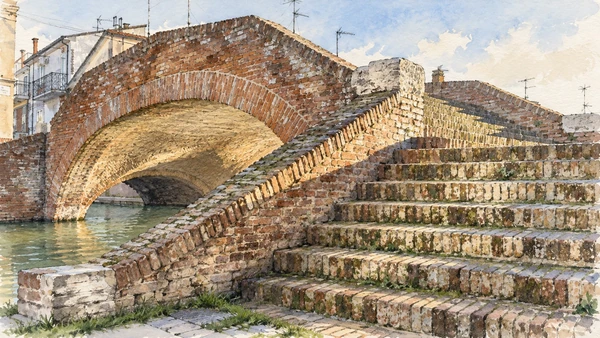
Away from the monumental crossing, smaller bridges reveal the scale of daily movement through Comacchio. Worn steps, brick arches and houses close to the water create a more intimate setting.

Today

This remains an inhabited place. Use pedestrian routes, keep entrances clear and check municipal mobility notices for any restricted area.

History

The town developed through a close relationship with lagoon channels and islands. Bridges joined neighbourhoods while commercial and domestic uses shared the waterside. Restoration and changing services have altered these streets; their present appeal does not imply that they remain unchanged from an ancient origin.

How to read this place

The illustrated Ponte di San Pietro offers a close study of masonry and ascent. Continue only along public streets and signed routes, respecting house entrances and working areas. A canal walk can also include the Ponte degli Sbirri and civic landmarks, with pauses to compare how crossings meet the surrounding buildings.

What to notice

  • The illustrated Ponte di San Pietro offers a close study of masonry and ascent.
  • Continue only along public streets and signed routes, respecting house entrances and working areas.
  • A canal walk can also include the Ponte degli Sbirri and civic landmarks, with pauses to compare how crossings meet the surrounding buildings.
In cammino sui ponti di Comacchio
Watercolour: Ponte di San Pietro Comacchio, worn brick staircase beside a canal arch
The smaller bridges and inhabited canalsEditorial watercolour · AI-generated · 2026
03

Worship and memory

San Cassiano: scale and rebuilding

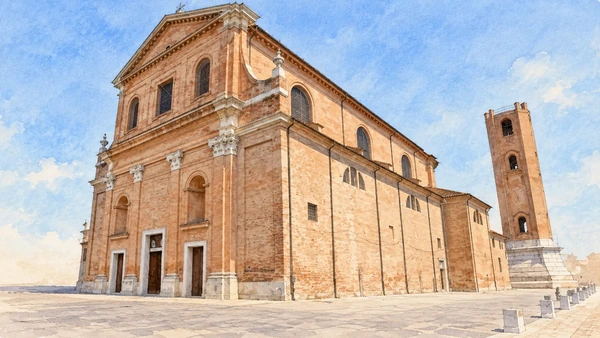
The cathedral’s large brick volume establishes a different scale from the nearby canal houses. Pale stone details articulate the facade, while the separate bell tower tells a visibly different construction story.

Today

Worship and local religious life continue here. Visitor access may pause for services; consult the church or managing institution before planning an interior visit.

History

The present cathedral, designed by Angelo Cerruti, was consecrated in 1740 on a site with older religious associations. The original bell-tower project suffered a collapse in 1757; a lower reconstruction followed in the nineteenth century. The visible tower should not be treated as the complete original design.

How to read this place

Compare the facade with the long side wall before entering the single nave and chapels. Allow the interior’s scale and furnishings to explain the church’s civic importance. This is an active place of worship, so cultural visits should follow services and any temporary restrictions.

What to notice

  • Compare the facade with the long side wall before entering the single nave and chapels.
  • Allow the interior’s scale and furnishings to explain the church’s civic importance.
  • This is an active place of worship, so cultural visits should follow services and any temporary restrictions.
Basilica Concattedrale di San Cassiano
Watercolour: San Cassiano Cathedral Comacchio, brick facade and long side elevation with detached bell tower
San Cassiano: scale and rebuildingEditorial watercolour · AI-generated · 2026
04

Evidence and interpretation

Museo Delta Antico: exchange across the Adriatic

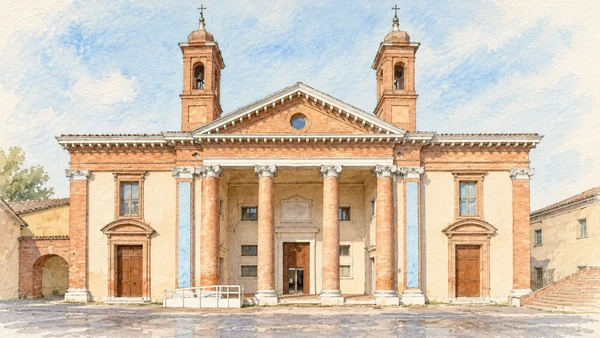
The former hospital’s neoclassical facade now introduces an archaeological account of the Delta. Its collections connect changing environments with settlement, navigation and trade across several periods.

Today

Check the institution’s current opening, booking arrangements and accessible route. Individual rooms, exhibitions and approaches may have separate conditions.

History

Objects from the Etruscan port of Spina, Roman material and evidence of medieval Comacchio reveal different networks of exchange. The cargo of a Roman merchant vessel is a particularly coherent group, including containers and everyday objects that travelled together.

How to read this place

Read objects through their contexts rather than treating every find as evidence of the same city. Spina and medieval Comacchio belong to different historical phases. The separate open-air section at Stazione Foce presents reconstructed Etruscan houses through experimental archaeology; these are interpretative structures, not surviving original homes.

What to notice

  • Read objects through their contexts rather than treating every find as evidence of the same city.
  • Spina and medieval Comacchio belong to different historical phases.
  • The separate open-air section at Stazione Foce presents reconstructed Etruscan houses through experimental archaeology; these are interpretative structures, not surviving original homes.
Museo Delta Antico
Watercolour: Museo Delta Antico Comacchio, former hospital facade with classical portico and twin rooftop towers
Museo Delta Antico: exchange across the AdriaticEditorial watercolour · AI-generated · 2026
05

Materials and work

Manifattura dei Marinati: rooms for work

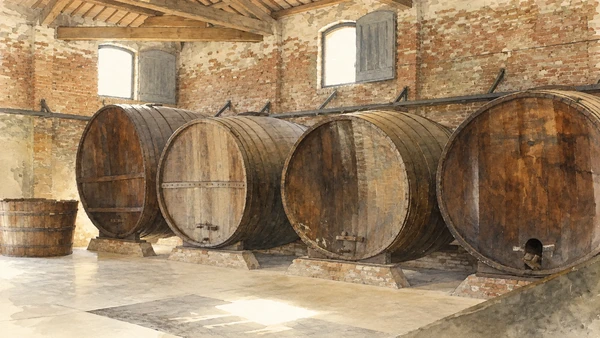
Large barrels in the Sala degli Aceti introduce the material requirements of preserving fish. Elsewhere, the fireplaces and landing spaces explain other stages of a production process tied to the lagoon.

Today

Workshops are places of work. Arrange a visit where offered and ask permission before entering private spaces or photographing a maker.

History

The Manifattura preserves and continues traditions of processing eel and other local fish. Its rooms separate functions: unloading, preparing the preserving mixture and cooking. This is both a place of interpretation and a setting where seasonal work can still be demonstrated or carried out.

How to read this place

Distinguish the barrel room shown here from the Sala dei Fuochi with its fireplaces. Follow how ingredients, heat and movement through the building supported production. Autumn working activity depends on the actual schedule; a museum visit at another time does not guarantee seeing the complete process in operation.

What to notice

  • Distinguish the barrel room shown here from the Sala dei Fuochi with its fireplaces.
  • Follow how ingredients, heat and movement through the building supported production.
  • Autumn working activity depends on the actual schedule; a museum visit at another time does not guarantee seeing the complete process in operation.
Manifattura dei Marinati
Watercolour: Sala degli Aceti at Manifattura dei Marinati Comacchio, large wooden barrels beneath timber beams
Manifattura dei Marinati: rooms for workEditorial watercolour · AI-generated · 2026
06

Evidence and interpretation

Casa Museo Remo Brindisi: living with modern art

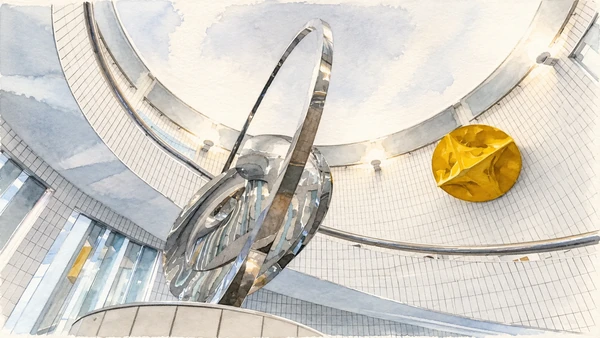
White curved surfaces and a central cylindrical space make the house an architectural experience as well as a collection. Artworks inhabit a setting designed to connect domestic life, study and display.

Today

Check the institution’s current opening, booking arrangements and accessible route. Individual rooms, exhibitions and approaches may have separate conditions.

History

Nanda Vigo designed the building at Lido di Spina for Remo Brindisi in the early 1970s. Opened to the public in 1973, it combined a summer residence with a museum for his collection. The relationship between architecture and different artistic media was central to the project.

How to read this place

Read the central volume and changing levels before concentrating on individual works. The illustrated interior detail shows how sculpture and reflective surfaces interact with the white setting. This coastal museum is separate from the museums in Comacchio’s centre and follows a seasonal calendar.

What to notice

  • Read the central volume and changing levels before concentrating on individual works.
  • The illustrated interior detail shows how sculpture and reflective surfaces interact with the white setting.
  • This coastal museum is separate from the museums in Comacchio’s centre and follows a seasonal calendar.
Casa Museo Remo Brindisi.
Watercolour: Casa Museo Remo Brindisi Lido di Spina, white cylindrical interior with polished abstract sculpture
Casa Museo Remo Brindisi: living with modern artEditorial watercolour · AI-generated · 2026
07

Terrain and access

The valli and the fishing stations

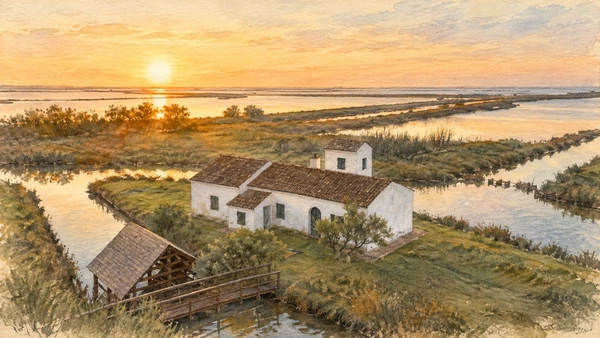
Thin embankments, reeds and water create a landscape in which small buildings have an outsized presence. Fishing stations such as the illustrated Casone Coccalino explain how people occupied and worked these open spaces.

Today

Conditions depend on the exact route and the day. Check the responsible operator, weather and local access notices; use the designated routes and confirm the return journey.

History

The valli record an extended history of fishing, water control and adaptation. Restored casoni preserve evidence of former working arrangements, while today’s visitor routes bring a new use to the same landscape. The wetland is neither an untouched wilderness nor merely an abandoned industrial setting.

How to read this place

Begin with the visitor information at Stazione Foce and choose an authorised walking, cycling or boat route. View fishing structures through the guides’ explanation of their operation. Wildlife varies with season and conditions; observe quietly from a distance rather than approaching birds or entering closed banks.

What to notice

  • Begin with the visitor information at Stazione Foce and choose an authorised walking, cycling or boat route.
  • View fishing structures through the guides’ explanation of their operation.
  • Wildlife varies with season and conditions; observe quietly from a distance rather than approaching birds or entering closed banks.
Valli di Comacchio
Watercolour: Casone Coccalino in the Valli di Comacchio, white fishing-station buildings among canals at sunset
The valli and the fishing stationsEditorial watercolour · AI-generated · 2026
08

Terrain and access

The Salina: production and habitat

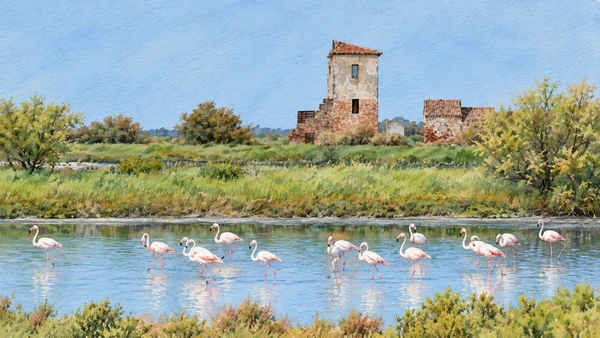
Shallow basins, embankments and salt-tolerant vegetation form a managed environment used by many waterbirds. The illustrated tower and flamingos connect visible human structures with present ecological life.

Today

Entry is permitted only with authorised guides or Salina staff. Reserve according to the current calendar and follow the visitor rules; the surrounding public roads do not confer free access to protected basins.

History

The modern saltworks layout originated in the nineteenth century, with industrial production continuing until 1984. Later conservation projects recovered habitat and visitor access. A smaller demonstration saltworks maintains manual techniques, distinct from the former large-scale operation.

How to read this place

Read the basins as designed spaces whose water and salinity require management. Flamingos are one part of a broader ecosystem, not the only reason to visit. The illustration records a documented scene and does not promise the same flock, water level or light on another day.

What to notice

  • Read the basins as designed spaces whose water and salinity require management.
  • Flamingos are one part of a broader ecosystem, not the only reason to visit.
  • The illustration records a documented scene and does not promise the same flock, water level or light on another day.
Salina di Comacchio
Watercolour: Salina di Comacchio, flamingos in shallow water with an old square tower beyond the marsh
The Salina: production and habitatEditorial watercolour · AI-generated · 2026
09

Evidence and interpretation

Pomposa: a monastery in a changing Delta

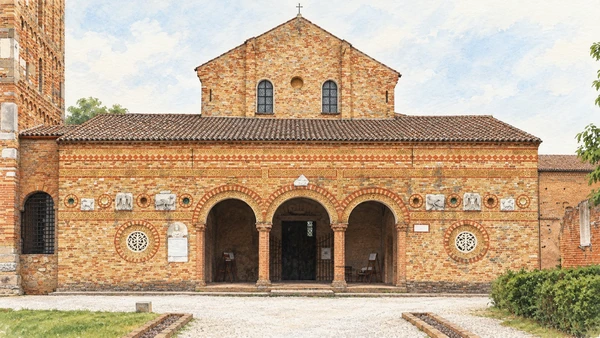
The brick atrium’s three arches form a concentrated lesson in medieval materials and decoration. Reused stone, ceramic details and patterned masonry reward close attention before the church interior is entered.

Today

Check the current monument and museum access notices. Religious services affect entry to the church, and individual areas may have different accessibility or opening arrangements.

History

The atrium was added during the abbacy of Guido before the church’s reconsecration in 1026. The campanile was begun in 1063 under the master Deusdedit. Surviving monastic spaces preserve only part of a larger complex whose fortunes were tied to the changing Delta landscape.

How to read this place

Compare the entrance with the church and the available monastic rooms, allowing time for the frescoes and museum interpretation. The illustration deliberately concentrates on the atrium and includes only an edge of the tower. A description of the tower’s internal stairs does not establish that a public ascent is available on your chosen date.

What to notice

  • Compare the entrance with the church and the available monastic rooms, allowing time for the frescoes and museum interpretation.
  • The illustration deliberately concentrates on the atrium and includes only an edge of the tower.
  • A description of the tower’s internal stairs does not establish that a public ascent is available on your chosen date.
Abbazia di Pomposa · Ministero della Cultura
Watercolour: Pomposa Abbey, frontal brick atrium with three entrance arches and decorated round windows
Pomposa: a monastery in a changing DeltaEditorial watercolour · AI-generated · 2026
10

Terrain and access

Bosco della Mesola: a varied lowland forest

Dense trunks and undergrowth replace the open horizons of the lagoon. Subtle changes in ground level support different vegetation, revealing that this apparently uniform woodland contains several distinct habitats.

Today

Reserve rules and seasonal opening days apply. Confirm the available route with the visitor service; protected forest sectors are not all freely accessible, and wildlife sightings cannot be guaranteed.

History

The forest developed on older coastal dune ridges and was preserved within an Este hunting estate. Later changes reduced its extent and transformed neighbouring land. Holm oak, mesophilous woodland and wetter ash-dominated depressions form different parts of the protected site.

How to read this place

The illustration records the Bassa dei Frassini environment as a habitat study; it is not an invitation to enter restricted reserve areas. Use the authorised visitor routes and their current seasonal arrangements. Keep distance from deer and other wildlife, and do not feed animals or leave paths to improve a photograph.

What to notice

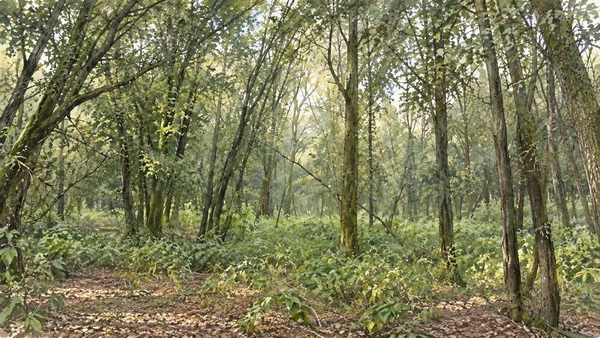
  • The illustration records the Bassa dei Frassini environment as a habitat study; it is not an invitation to enter restricted reserve areas.
  • Use the authorised visitor routes and their current seasonal arrangements.
  • Keep distance from deer and other wildlife, and do not feed animals or leave paths to improve a photograph.
Sito di Interesse Comunitario e Zona di Protezione Speciale Bosco della Mesola, Bosco Panfilia, Bosco di Santa Giustina, Valle Falce, La Goara
Watercolour: Woodland in the Bassa dei Frassini area of Bosco della Mesola, slender trunks and dense green undergrowth
Bosco della Mesola: a varied lowland forestEditorial watercolour · AI-generated · 2026

The territory through time

A short chronology

A concise chronology linking the documented sites to the wider story.

  1. Spina participates in Adriatic trade networks.

  2. Water routes carry goods through the Delta.

  3. Pomposa’s church is reconsecrated after expansion.

  4. Work begins on the abbey campanile.

  5. Trepponti becomes a monumental water gateway.

  6. The present San Cassiano Cathedral is consecrated.

  7. Casa Museo Remo Brindisi opens at Lido di Spina.

  8. Large-scale salt production at Comacchio ends.

Before your visit

Practical information

01

Plan separate days

Choose a manageable set of visits and allow for transport, booked entries and the return journey.

02

Use the exact place name

Emilia-Romagna contains separate cities, hill routes and coastal approaches. Confirm the precise locality and route rather than treating nearby names as one destination.

03

Check the institution

Opening hours, tickets, exhibitions and religious access change. Use the linked managing institution shortly before visiting.

04

Check the actual terrain

Steps, gradients and uneven ground vary between the individual sites. Use current route information, weather and closures for the option you choose.

05

Arrange accessible visits

Historic interiors and outdoor approaches can include steps, gradients or uneven surfaces. Ask about the specific route instead of assuming an entire destination is step-free.

06

Respect work and residence

Farms, workshops, churches and historic streets remain in use. Follow signs, keep entrances clear and ask permission before entering private spaces.

Method and sources

Sources and image credits

Prepared on 9 September 2026 from the institutional sources linked below. Historical claims are separated from editorial observations and itinerary suggestions. Older institutional brochures are used for stable cultural context, never as current timetables. Prices, transport schedules, trail status and admission are deliberately left to the responsible operators. Illustrations are not photographs, measured reconstructions or evidence of current conditions.

The eleven images are AI-generated editorial watercolours guided by photographic references. They interpret named places and are not photographs or substitutes for measured plans. Opening hours, tickets, accessible routes, temporary exhibitions and conservation work can change; consult the linked official pages shortly before visiting.

Illustration references and credits