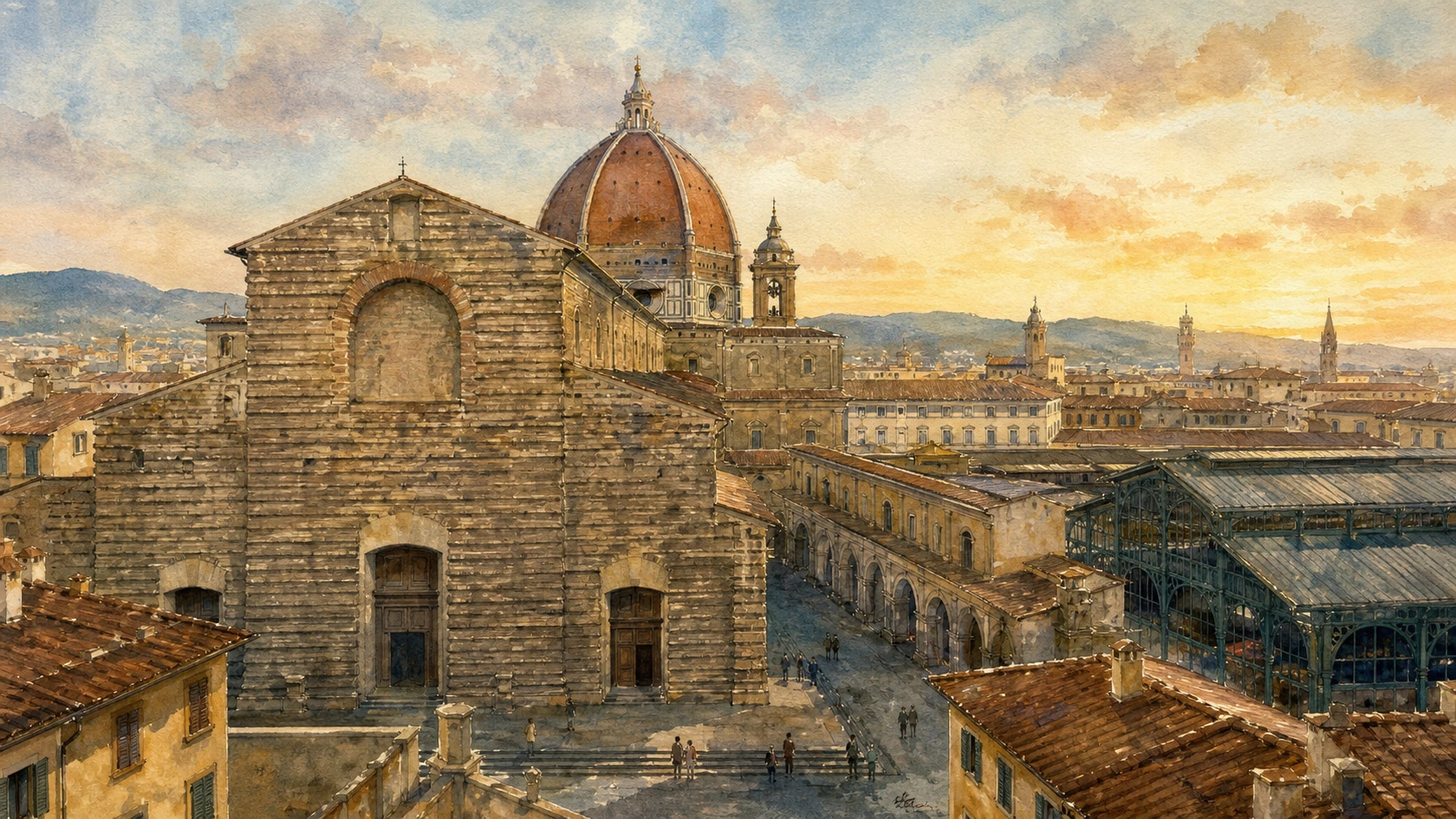
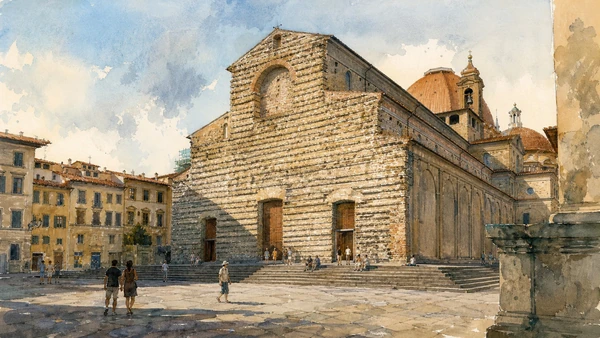
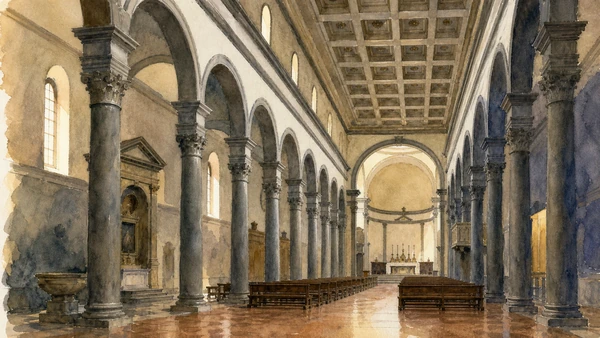
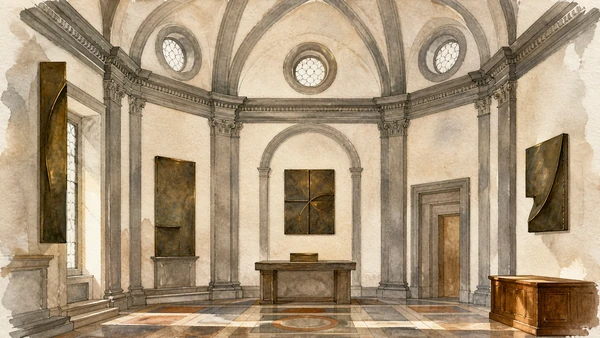
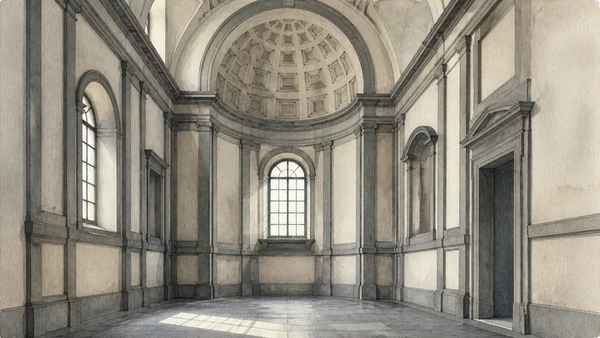
San Lorenzo grew from an early Christian church beyond the Roman city into the parish associated with the Medici. Filippo Brunelleschi gave its rebuilt interior a measured architectural language, yet the rough unfinished façade keeps the church’s long, interrupted construction visible. The Old Sacristy joined proportion, burial and Donatello’s work before Michelangelo answered it a century later with the New Sacristy.
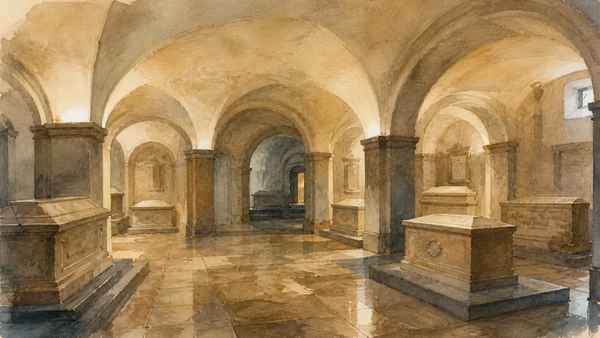
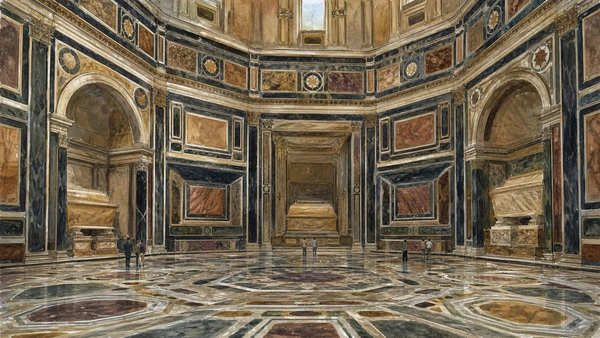
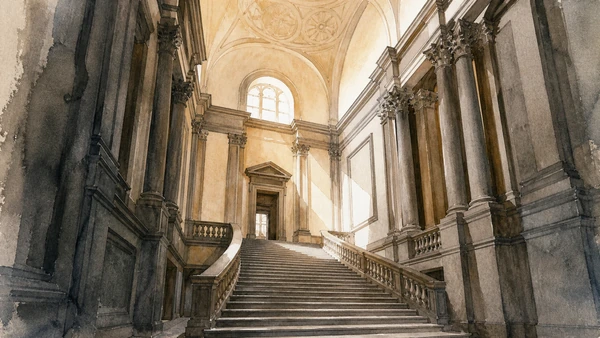
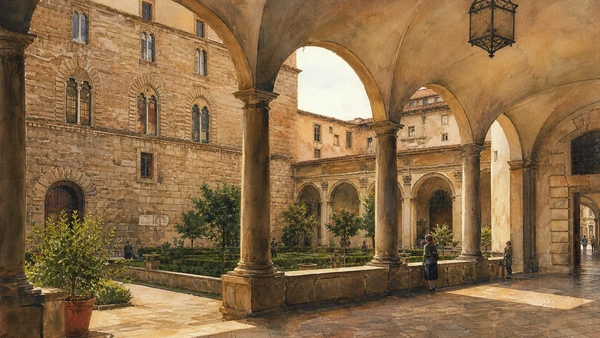
The modern visitor encounters a divided complex. The basilica ticket includes the church, Old Sacristy, cloisters, Treasury museum, crypt and monumental underground, but excludes both the state-run Medici Chapels and the Laurentian Library. The Medici Chapels route moves from lower burial spaces into the dark inlaid splendour of the Chapel of the Princes and Michelangelo’s New Sacristy. The library uses another entrance and a short weekday timetable.
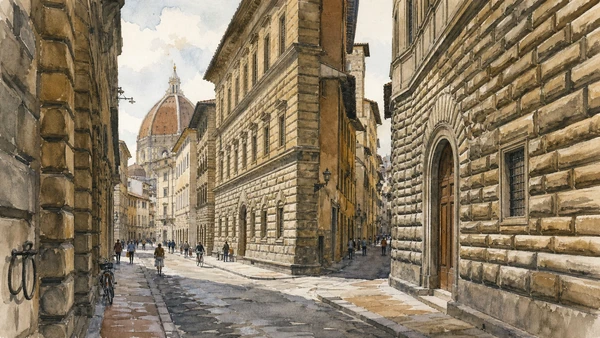
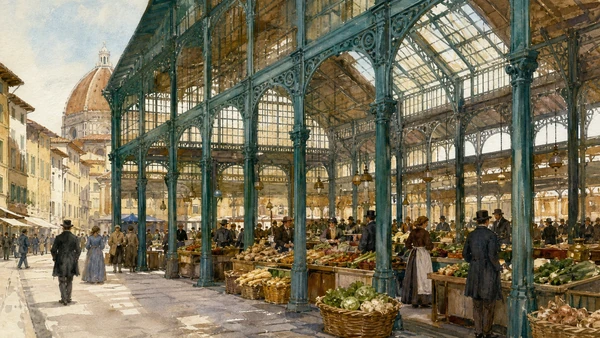
Across the former Via Larga, Palazzo Medici made domestic architecture a political instrument. Nearby houses, chapels and workshops extended family influence through the street rather than inside one palace alone. Giuseppe Mengoni’s iron-and-glass Mercato Centrale later imposed a new public economy on the quarter while the outdoor leather market and food hall continue to reshape its daily atmosphere.
Begin with the unfinished public face, read Brunelleschi’s interior at walking pace, separate the three ticket systems, then follow the Medici network from burial and books to palace street and market hall.