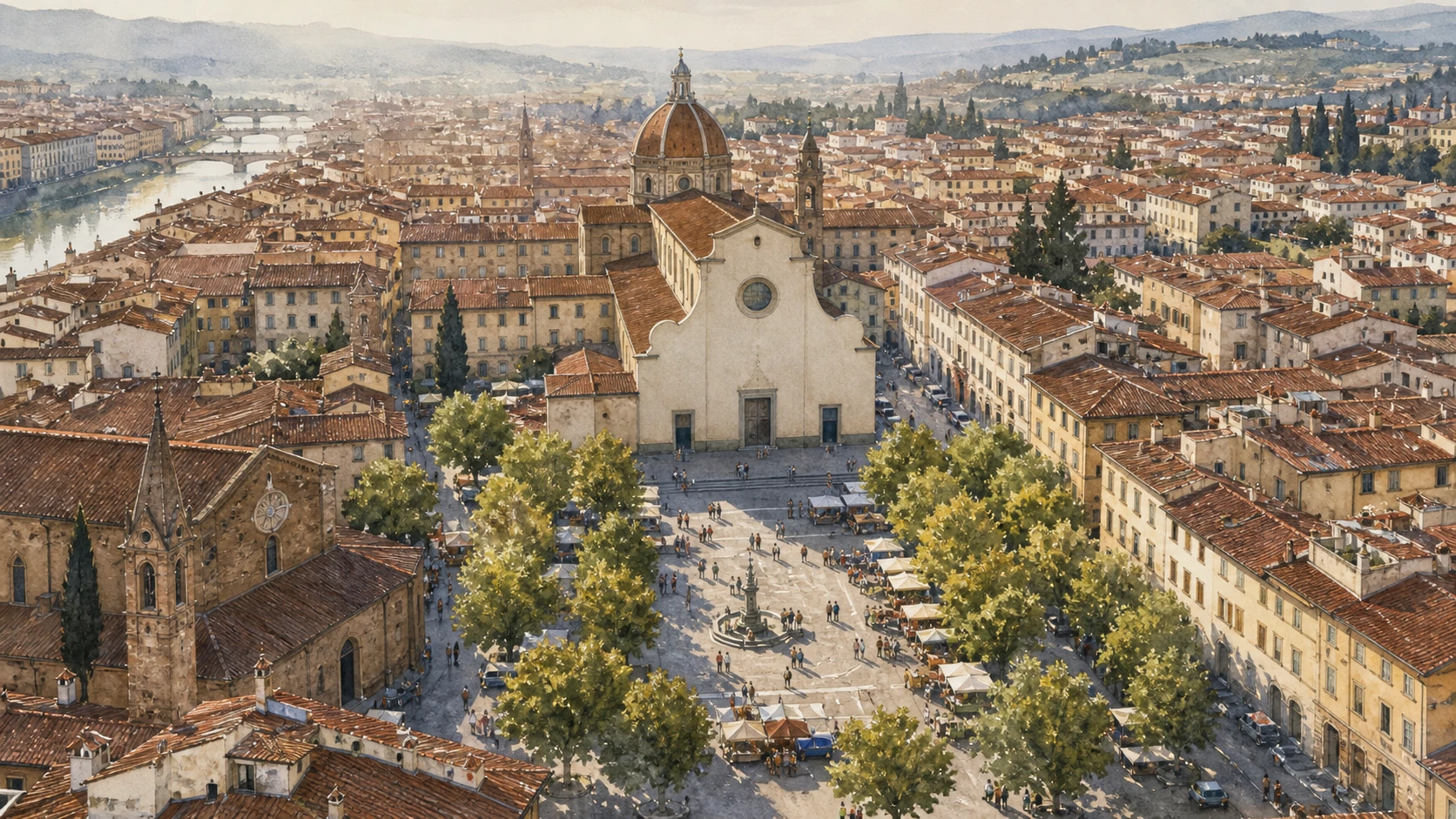
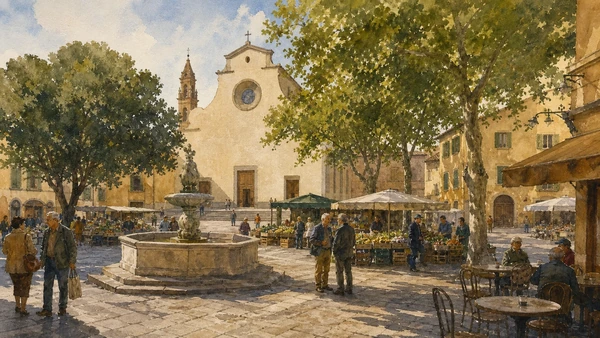
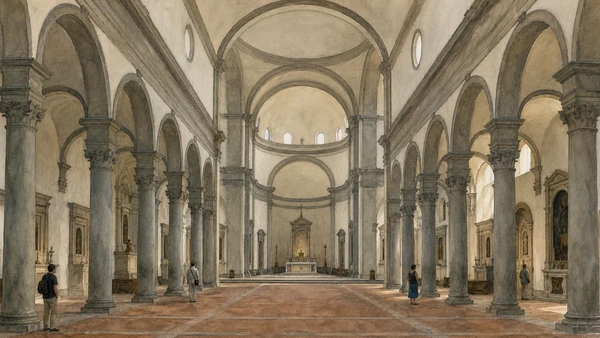
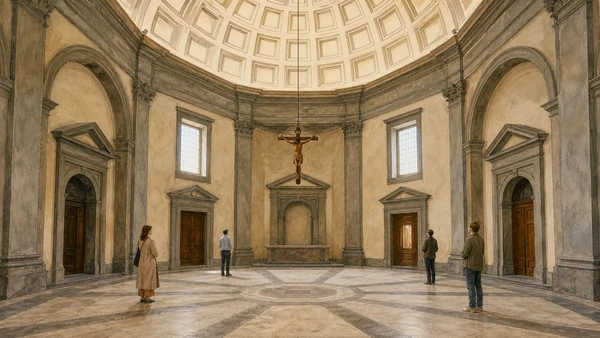
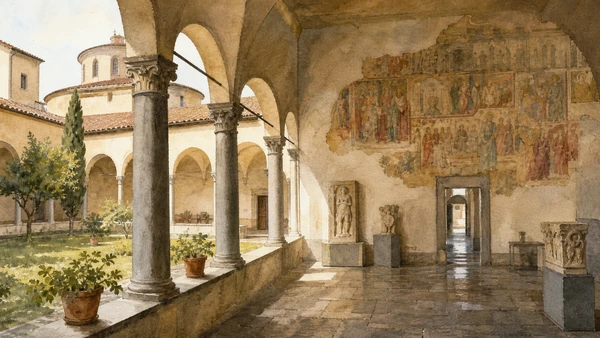
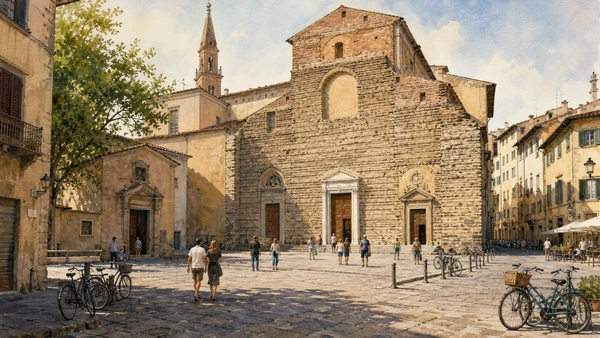
Santo Spirito remains a living Augustinian basilica rather than an architectural diagram. Brunelleschi’s repeated columns and chapels organise worship, family memory and major works of art. A separate museum path enters Giuliano da Sangallo’s sacristy, Michelangelo’s youthful wooden Crucifix, cloister and refectory. Next door, the former cenacolo became the Salvatore Romano Foundation, preserving fragments according to a collector’s 1946 arrangement.
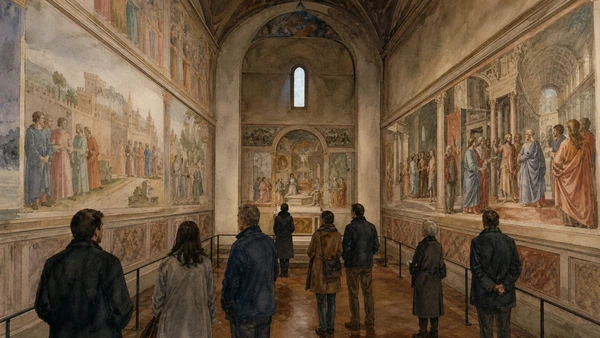
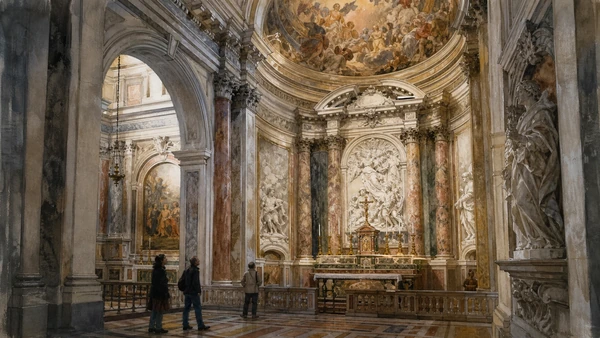
At Santa Maria del Carmine, the unfinished façade opens into an interior remade after the fire of 1771. The Brancacci Chapel survived and preserves an incomplete, altered and later finished cycle by Masolino, Masaccio and Filippino Lippi. Its current municipal entrance, timed capacity and thirty-minute stay are separate from the church door. The Corsini Chapel represents a different seventeenth-century language that should not be treated as a lesser detour from the Renaissance.
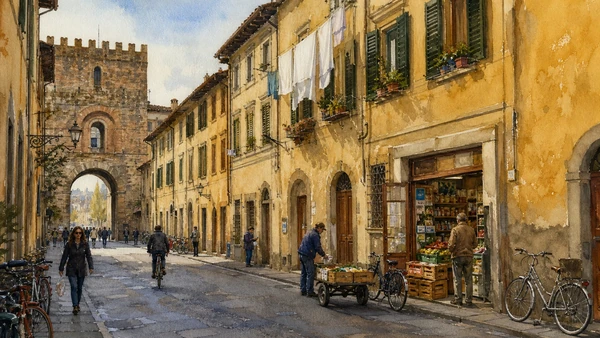
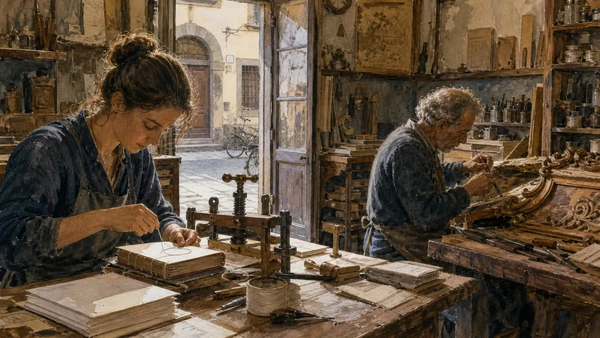
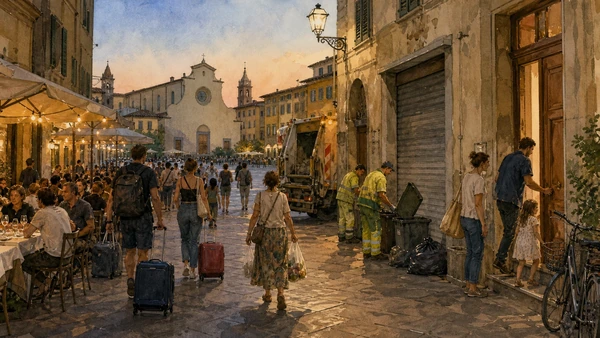
Between and beyond these churches, San Frediano’s workshops make leather, books, wood, metal and surfaces through contemporary labour. Some are production spaces, not open museums; some sell directly, others work by commission. Their presence coexists with rising commercial rents, short stays, restaurant expansion, waste and night-time noise. The respectful route buys carefully, asks before entering or photographing and leaves space for ordinary life.
Enter Santo Spirito in its morning window, match the limited opening days of the Salvatore Romano Foundation, reserve the Brancacci Chapel, then use the afternoon for San Frediano and workshops without turning every open door into a tourist attraction.