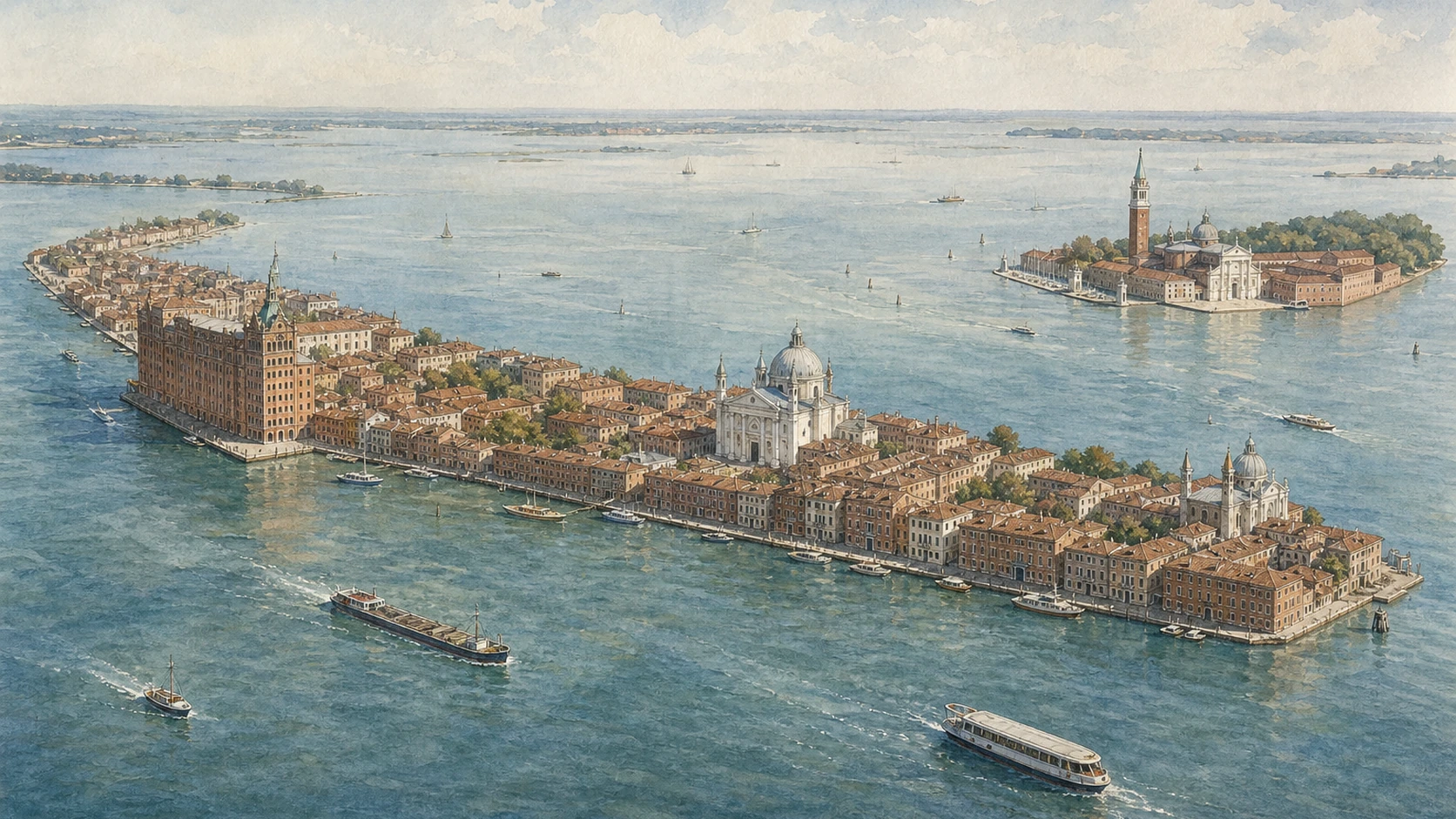
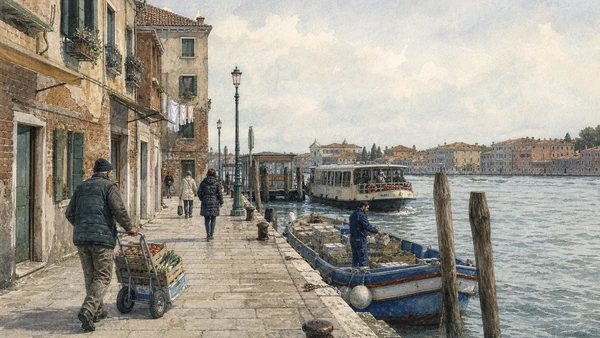
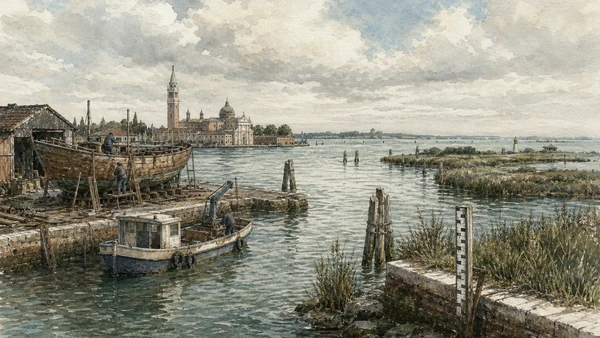
Giudecca faces the historic centre across one of Venice’s broadest working canals but differs from a central-city itinerary. Its continuous northern fondamenta connects vaporetto stops, homes, groceries, churches, former factories, student spaces and hotels. Behind that public edge, calli and canals reach gardens, social housing and the exposed southern shore. The island’s name has competing explanations; repeating one confident derivation from a supposed Jewish settlement obscures the lack of decisive documentary proof.
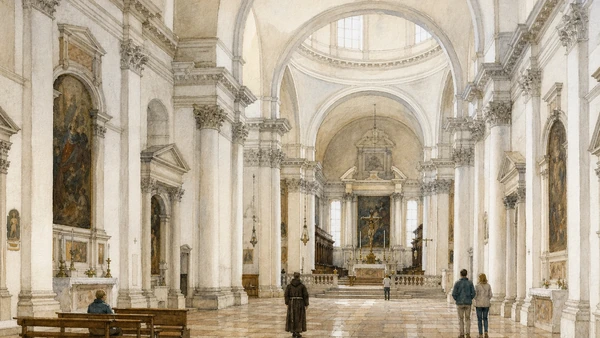
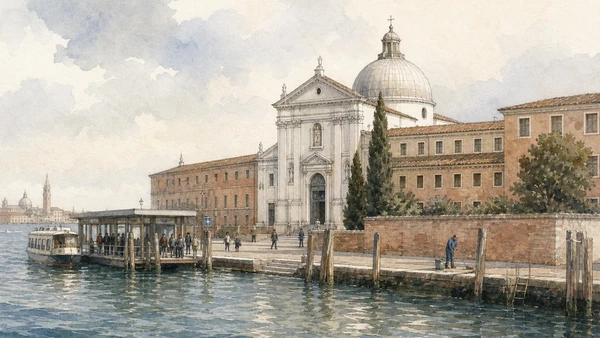
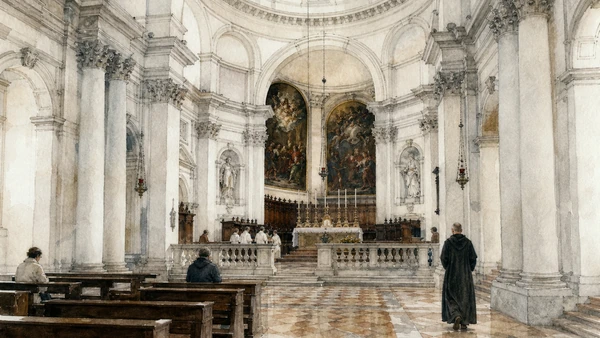
Two white churches organise the eastern skyline but emerged from different institutions. The Redentore was the Republic’s votive response to the plague of 1575–77 and remains the destination of a living annual procession. Le Zitelle belonged to a residential and educational institution for vulnerable young women. Palladian design matters in both, yet architecture should not erase the Capuchins, women, administrators, artists and worshippers who used the buildings.
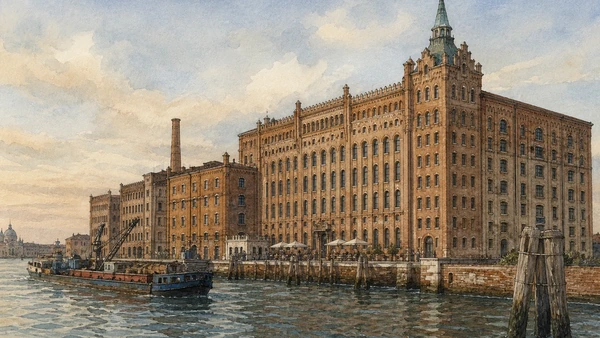
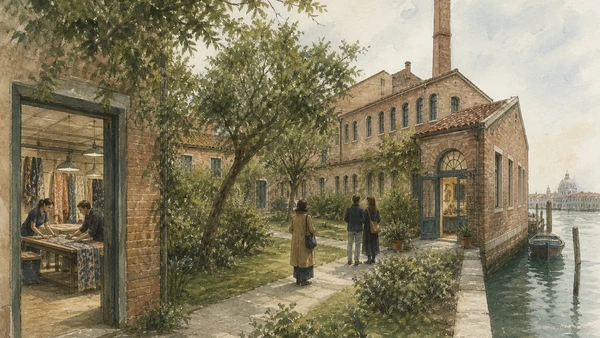
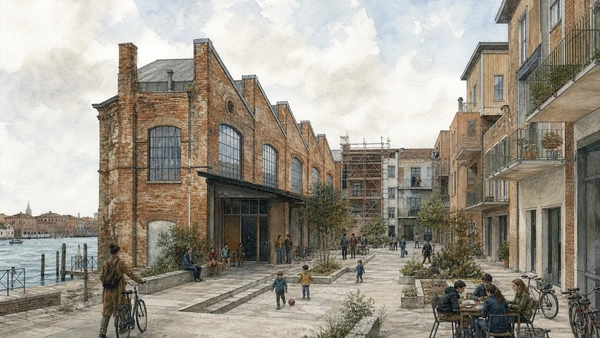
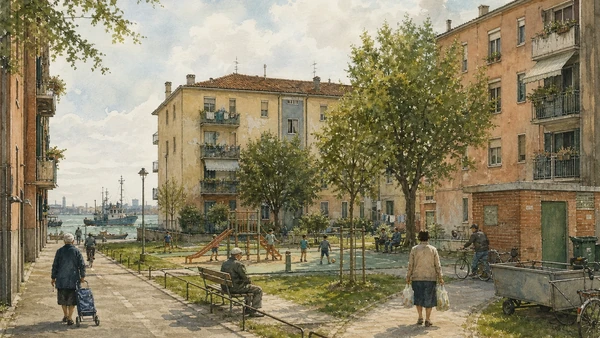
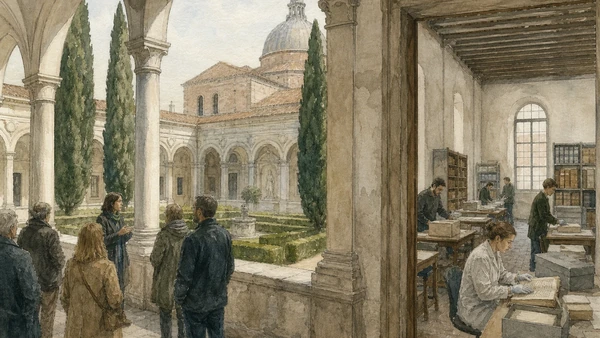
Farther west, Molino Stucky, Fortuny and the ex-Junghans area record several kinds of industrial production and afterlife: monumental grain processing converted to hospitality, textile manufacture that continues privately, and a factory precinct reused for housing, culture and education. Sacca Fisola then makes civic housing and ordinary services impossible to omit. San Giorgio Maggiore adds a Benedictine church, postwar foundation, archives and exhibitions — not an empty island built only to complete the view from the Riva.
Move by public boat, give resident and freight movement priority, and compare who can enter, work in and benefit from each historic conversion.