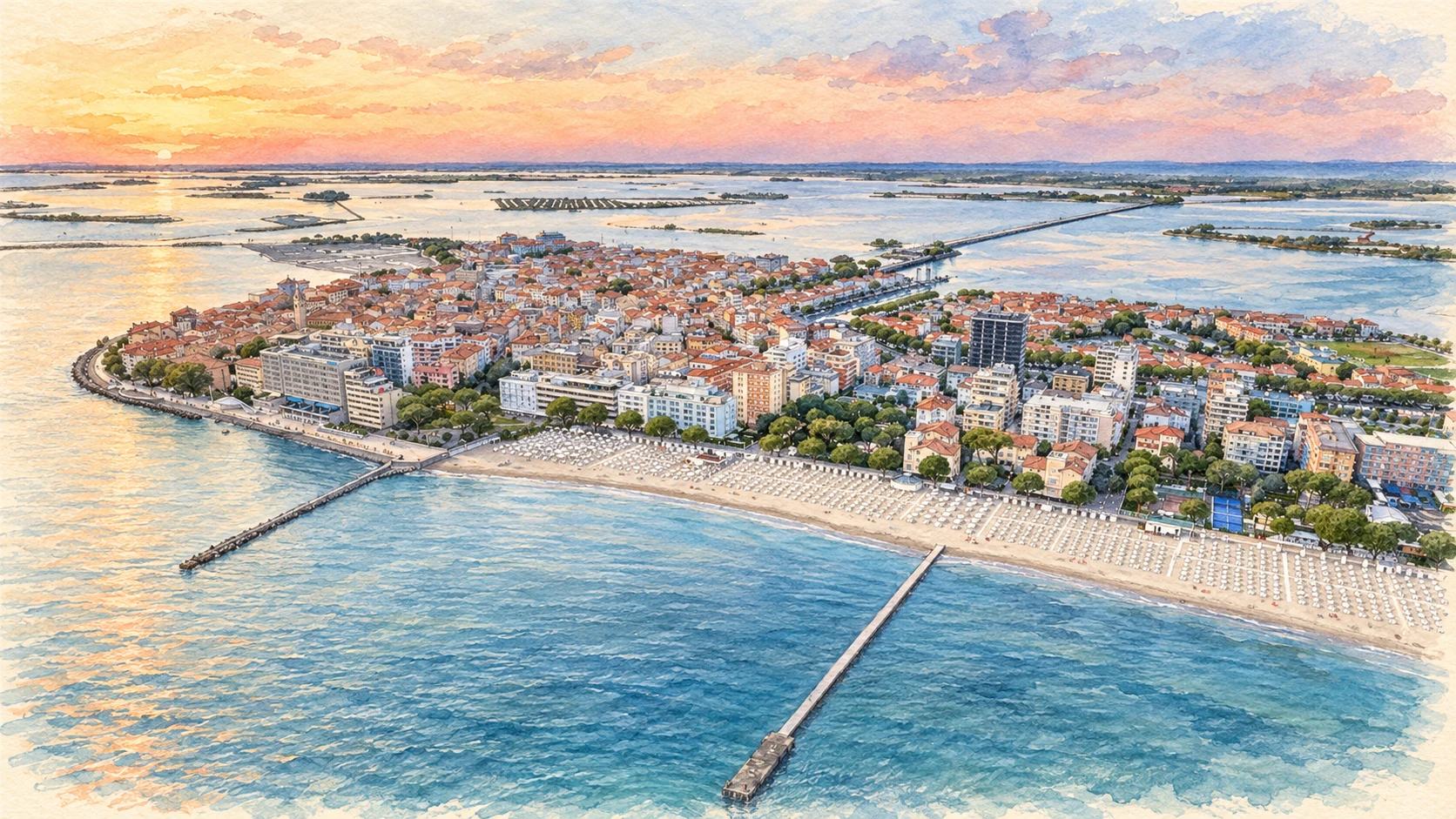
Watercolour: Grado & the Lagoon establishing view

Friuli Venezia Giulia · Guide 07

Grado &
the Lagoon

Early Christian buildings, a working waterfront and managed wetlands reveal an Adriatic landscape shaped by worship, fishing and changing water.

Plan the route
Grado & the Lagoon10 chapters · history, culture and landscape

Why this place matters

Begin with the stones, then follow the water.

Grado rewards two different speeds of attention. In the old town, churches and excavated remains sit close together, allowing a careful comparison of floors, columns and masonry. Outside this compact centre, the lagoon opens into channels, islands and wetlands. Barbana requires a boat journey; Valle Cavanata and the Isonzo mouth are separate mainland excursions. Their routes and visiting arrangements should determine the day rather than an attempt to combine every setting into one circuit.

The guide separates documented history from suggestions for reading the site. Named buildings and landscape relationships follow institutional sources; the illustrations are editorial interpretations, not measured surveys or records of current access.

Early Christian buildings, a working waterfront and managed wetlands reveal an Adriatic landscape shaped by worship, fishing and changing water.
The route

Plan your visit

Explore the church group and Basilica della Corte on foot. Plan the lagoon crossing, Valle Cavanata and Isola della Cona as distinct outings, allowing for transport and the conditions of the day.

Town and water

Historic centre and harbour

Explore the church group and Basilica della Corte on foot. Plan the lagoon crossing, Valle Cavanata and Isola della Cona as distinct outings, allowing for transport and the conditions of the day.

Sacred buildings

Sant’Eufemia, baptistery and Santa Maria

Material evidence

Lapidary and Basilica della Corte

Separate excursions

Lagoon, Barbana and two reserves

Ten chapters

Explore the places

The chapters connect history and terrain. Use the route notes to choose visits and plan transfers between separate sites.

  1. 01The old town and harbour
  2. 02Basilica of Sant’Eufemia
  3. 03The baptistery
  4. 04Santa Maria delle Grazie
  5. 05The basilica lapidary
  6. 06Basilica della Corte
  7. 07Channels, islands and casoni
  8. 08Barbana island and sanctuary
  9. 09Valle Cavanata
  10. 10Isola della Cona and the Isonzo mouth
01

The inhabited landscape

The old town and harbour

Narrow passages and small squares lead towards a waterfront where boats and buildings face one another. Moving between these scales makes the island town more legible than following the seafront alone.

Today

This remains an inhabited place. Use pedestrian routes, keep entrances clear and check municipal mobility notices for any restricted area.

History

Grado’s relationship with Aquileia, its ecclesiastical institutions and its later maritime connections preceded the development of the modern seaside resort. The harbour and beach districts belong to different functions and phases of the town.

How to read this place

Compare a sheltered lane with the open harbour. Look for the relationship between doors, ground levels and water. Boats, quays and service areas remain working spaces; observe from public routes rather than assuming every edge is a promenade.

What to notice

  • Compare a sheltered lane with the open harbour.
  • Look for the relationship between doors, ground levels and water.
  • Boats, quays and service areas remain working spaces; observe from public routes rather than assuming every edge is a promenade.
Grado · PromoTurismoFVG
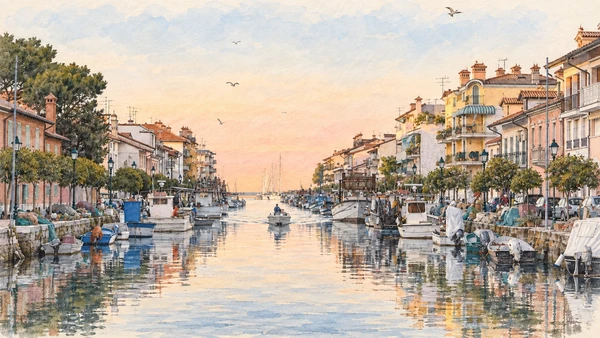
Watercolour: Grado actual harbour channel between waterfront buildings and moored boats
The old town and harbourEditorial watercolour · AI-generated · 2026
02

Worship and memory

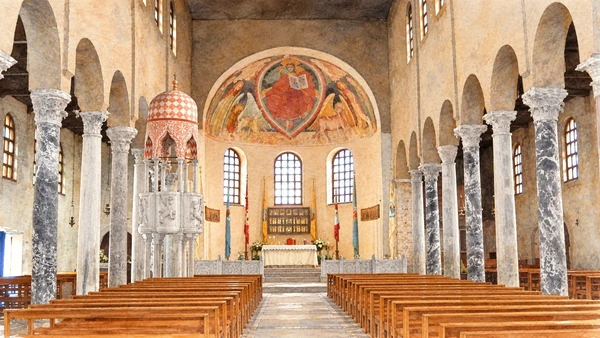
Basilica of Sant’Eufemia

The colonnaded nave draws the eye towards the apse, while mosaics and reused architectural elements reward a much closer view. The interior has accumulated additions across many centuries.

Today

Worship and local religious life continue here. Visitor access may pause for services; consult the church or managing institution before planning an interior visit.

History

The basilica was completed under Bishop Elia in 579 above earlier Christian structures. Later furnishings, the pulpit and the fifteenth-century bell tower belong to other phases and should not be read as one sixth-century ensemble.

How to read this place

Follow the floor’s geometric patterns and look for the inscriptions commemorating contributors. Compare the capitals before turning to the pulpit and apse. Allow worship to determine movement and photography, and use the church interpretation to distinguish later work.

What to notice

  • Follow the floor’s geometric patterns and look for the inscriptions commemorating contributors.
  • Compare the capitals before turning to the pulpit and apse.
  • Allow worship to determine movement and photography, and use the church interpretation to distinguish later work.
Basilica di Santa Eufemia di Grado · PromoTurismoFVG
Watercolour: Sant’Eufemia actual nave with columns, raised pulpit and painted apse
Basilica of Sant’EufemiaEditorial watercolour · AI-generated · 2026
03

Worship and memory

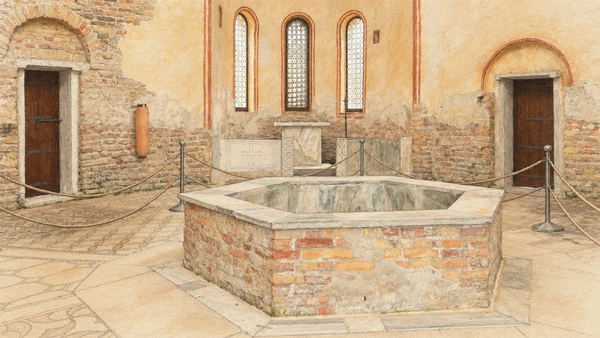
The baptistery

The octagonal exterior encloses a space organised around the baptismal basin. Its smaller scale makes the relationship between architecture and ritual especially clear after the larger basilica.

Today

Worship and local religious life continue here. Visitor access may pause for services; consult the church or managing institution before planning an interior visit.

History

The sixth-century building is associated with Bishop Probino. The hexagonal basin seen inside has been reconstructed; surviving and restored material need to be distinguished rather than described as wholly untouched.

How to read this place

Compare the eight-sided building with the six-sided basin. Notice the windows, the masonry and changes in surface. Read the available interpretation before assigning an age to every visible element.

What to notice

  • Compare the eight-sided building with the six-sided basin.
  • Notice the windows, the masonry and changes in surface.
  • Read the available interpretation before assigning an age to every visible element.
Battistero di Grado · PromoTurismoFVG
Watercolour: Grado baptistery interior with reconstructed hexagonal basin and tall narrow windows
The baptisteryEditorial watercolour · AI-generated · 2026
04

Worship and memory

Santa Maria delle Grazie

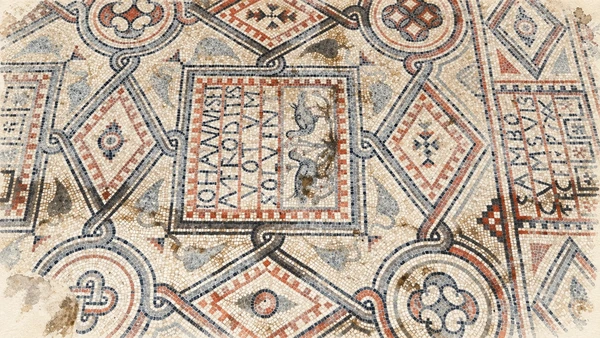
This smaller basilica preserves evidence at different floor levels. The surviving mosaics make construction history visible beneath the visitor’s feet rather than only in the elevation of the walls.

Today

Worship and local religious life continue here. Visitor access may pause for services; consult the church or managing institution before planning an interior visit.

History

A fifth-century church was rebuilt in the sixth century. The two principal phases can be compared through the layered mosaic floors and the arrangement of the three-aisled interior.

How to read this place

Look closely at geometric borders and surviving figures, then locate each exposed area in the plan of the church. Different column materials reflect reuse; a change in stone does not by itself establish a precise date.

What to notice

  • Look closely at geometric borders and surviving figures, then locate each exposed area in the plan of the church.
  • Different column materials reflect reuse; a change in stone does not by itself establish a precise date.
Basilica di Santa Maria delle Grazie di Grado · PromoTurismoFVG
Watercolour: Santa Maria delle Grazie actual geometric mosaic floor detail
Santa Maria delle GrazieEditorial watercolour · AI-generated · 2026
05

Evidence and interpretation

The basilica lapidary

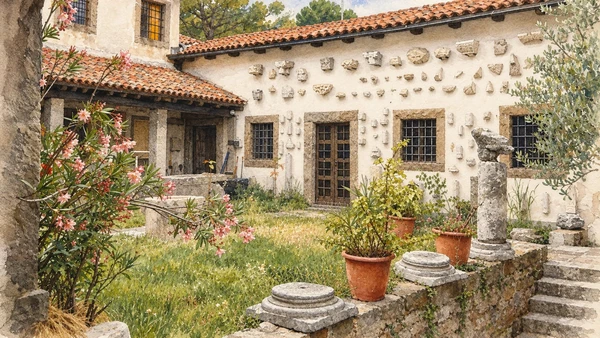
Fragments gathered beside the cathedral place inscriptions and sculpture within reach of sustained observation. Their present arrangement is a collection, separate from the original settings in which the stones were used.

Today

Check the institution’s current opening, booking arrangements and accessible route. Individual rooms, exhibitions and approaches may have separate conditions.

History

The holdings include Roman material and a substantial group from the early Christian and early medieval periods. They were recovered within Grado’s historic settlement and help connect individual buildings to a wider material history.

How to read this place

Choose a carved fragment and identify what is actually preserved: a border, a figure, an inscription or a structural profile. Use labels for provenance. Resist mentally rebuilding an entire lost monument from a single surviving piece.

What to notice

  • Choose a carved fragment and identify what is actually preserved: a border, a figure, an inscription or a structural profile.
  • Use labels for provenance.
  • Resist mentally rebuilding an entire lost monument from a single surviving piece.
Lapidario della Basilica di Santa Eufemia di Grado · PromoTurismoFVG
Watercolour: Grado lapidary courtyard with carved stones fixed to walls and fragments at ground level
The basilica lapidaryEditorial watercolour · AI-generated · 2026
06

Evidence and interpretation

Basilica della Corte

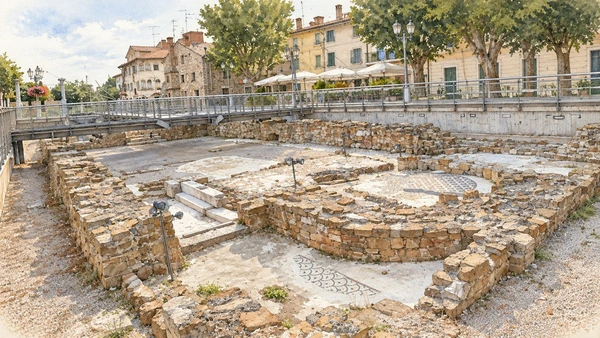
The excavated remains in Piazza Biagio Marin reveal an older sacred building within a modern public square. Contemporary walkways and railings are part of the way the archaeology is now presented.

Today

Check the institution’s current opening, booking arrangements and accessible route. Individual rooms, exhibitions and approaches may have separate conditions.

History

Early Christian remains came to light in 1902. Walls, mosaic areas and sarcophagi help recover the building’s plan; a separate outline in the square marks the position of its baptistery.

How to read this place

Read the low walls as a plan rather than expecting a complete church elevation. Distinguish ancient fabric from the modern supports and viewing structures. Notice how the surrounding town continues around the exposed archaeological area.

What to notice

  • Read the low walls as a plan rather than expecting a complete church elevation.
  • Distinguish ancient fabric from the modern supports and viewing structures.
  • Notice how the surrounding town continues around the exposed archaeological area.
Area archeologica di Grado · PromoTurismoFVG
Watercolour: Basilica della Corte actual excavated low walls and mosaic areas below modern square level
Basilica della CorteEditorial watercolour · AI-generated · 2026
07

Terrain and access

Channels, islands and casoni

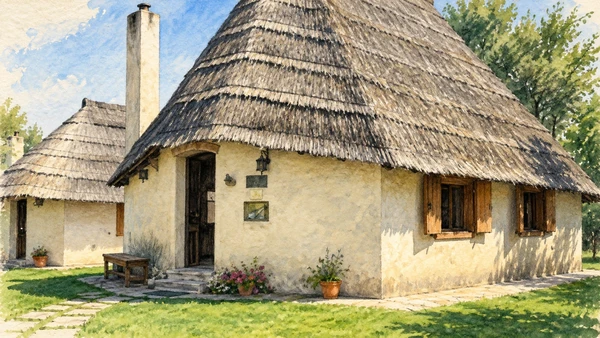
Low islands and shallow water change the scale of the landscape. Channels guide navigation between vegetated edges, while fishing buildings record work adapted to this watery environment.

Today

Choose an authorised operator and confirm the itinerary, landing arrangements and return journey. Wind, tides and operating conditions may change a planned excursion.

History

The lagoon is a changing coastal system with a long history of fishing and settlement. Its casoni belong to that working history, although individual structures may have been restored or adapted to new uses.

How to read this place

From an authorised boat trip, compare navigable channels with shallower water and vegetated ground. Ask about the specific island and building in view. Do not assume a visible bank or hut is open for landing or that water colour indicates safe depth.

What to notice

  • From an authorised boat trip, compare navigable channels with shallower water and vegetated ground.
  • Ask about the specific island and building in view.
  • Do not assume a visible bank or hut is open for landing or that water colour indicates safe depth.
Grado official tourism · The casoni
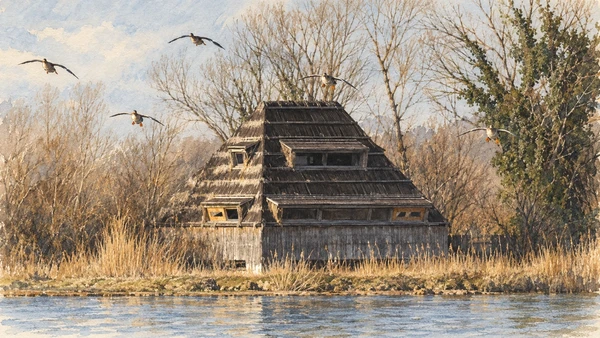
Watercolour: A documented Grado casone with a steep reed roof, plaster walls and wooden shutters
Channels, islands and casoniEditorial watercolour · AI-generated · 2026
08

Worship and memory

Barbana island and sanctuary

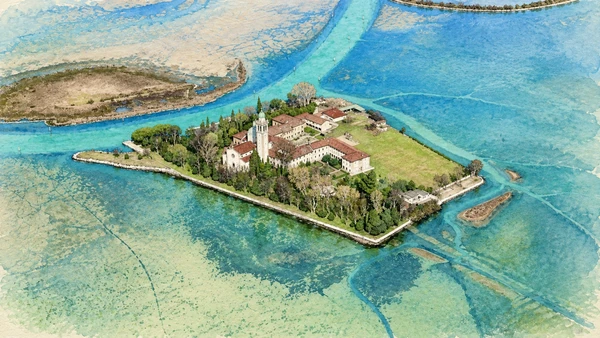
The church and monastic buildings occupy a small wooded island. The crossing makes the separation from Grado tangible and gives the visit a different rhythm from the town’s church group.

Today

Confirm the current ferry service from Grado and the return sailing before departure. Sanctuary access and services have their own arrangements; a ticket for the crossing does not establish access to monastic spaces.

History

The sanctuary’s foundation is traditionally linked to a storm in 582. The present church was developed in the early twentieth century; it is not the survival of that first shrine. A Benedictine community founded its monastery here in 2020.

How to read this place

Compare the present building with the older devotional history described by the sanctuary. Treat the foundation account as religious tradition. Keep to visitor areas and allow time for a quiet visit compatible with the community’s worship.

What to notice

  • Compare the present building with the older devotional history described by the sanctuary.
  • Treat the foundation account as religious tradition.
  • Keep to visitor areas and allow time for a quiet visit compatible with the community’s worship.
Santuario di Barbana · History
Watercolour: Barbana actual sanctuary island seen from above with church, trees, landing and lagoon
Barbana island and sanctuaryEditorial watercolour · AI-generated · 2026
09

Terrain and access

Valle Cavanata

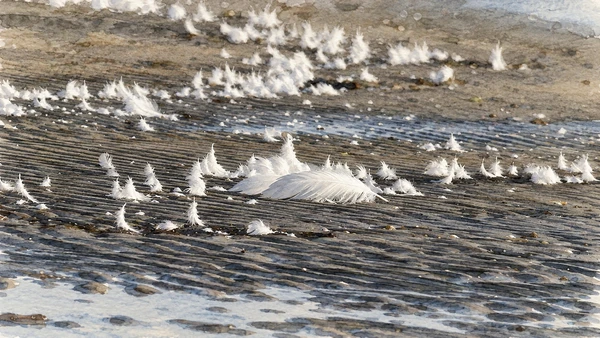
Water-control structures and bird habitat belong to the same landscape here. The reserve offers a chance to recognise how a former fish-farming area has been managed for conservation.

Today

Consult the reserve for the current path and visitor-centre arrangements. Remain on authorised routes and use observation points without approaching resting or nesting birds.

History

The fishing valley operated until 1995. The regional nature reserve was established in 1996, following decades of embankment and land-reclamation works that changed its extent and its relationship with surrounding water.

How to read this place

Follow the designated viewing route and look for sluices and embankments alongside vegetation and birds. The valley path helps explain the old system of fish capture. Wildlife sightings depend on season and conditions; quiet observation is more useful than pursuing a particular species.

What to notice

  • Follow the designated viewing route and look for sluices and embankments alongside vegetation and birds.
  • The valley path helps explain the old system of fish capture.
  • Wildlife sightings depend on season and conditions; quiet observation is more useful than pursuing a particular species.
Valle Cavanata Nature Reserve · Landscape history
Watercolour: White bird feathers on wet sediment in Valle Cavanata
Valle CavanataEditorial watercolour · AI-generated · 2026
10

Terrain and access

Isola della Cona and the Isonzo mouth

The reserve brings river, wetland and coastal habitats together. Its hides and visitor facilities allow observation without treating the entire river mouth as freely accessible ground.

Today

Check the condition board at the entrance. Paths can become muddy or flood when rain, river levels and tides combine. Bicycles are left outside the Isola della Cona visitor routes; ask staff about access suited to your mobility needs.

History

Habitat-restoration work has shaped the visitor area at Isola della Cona. The reserve protects a broader stretch of the lower Isonzo, so the equipped island route represents only one part of the protected landscape.

How to read this place

Start with the visitor centre’s current observations and path information. Compare shallow pools, reeds and grassland from the designated points. The longer route towards the mouth is a separate choice, not an automatic continuation of the shorter circuit.

What to notice

  • Start with the visitor centre’s current observations and path information.
  • Compare shallow pools, reeds and grassland from the designated points.
  • The longer route towards the mouth is a separate choice, not an automatic continuation of the shorter circuit.
Foce dell’Isonzo Nature Reserve · Isola della Cona
Watercolour: The stepped roof of the Marinetta observatory at Isola della Cona, with ducks in flight
Isola della Cona and the Isonzo mouthEditorial watercolour · AI-generated · 2026

The territory through time

A short chronology

A concise chronology linking the documented sites to the wider story.

  1. Grado’s coastal setting is connected with the wider territory of Aquileia.

  2. Successive Christian buildings leave layered floors and masonry.

  3. Bishop Elia completes the basilica of Sant’Eufemia.

  4. Ecclesiastical and maritime connections shape the town.

  5. The basilica’s bell tower adds a later vertical landmark.

  6. The remains of Basilica della Corte come to light.

  7. Fishing operations cease at Valle Cavanata and the regional reserve is established.

  8. A Benedictine community founds the present monastery on Barbana.

Before your visit

Practical information

01

Plan separate days

Choose a manageable set of visits and allow for transport, booked entries and the return journey.

02

Use the exact place name

Friuli Venezia Giulia contains separate valleys, towns and coastal approaches; some guides also include nearby places in Slovenia. Confirm the precise locality and route rather than treating nearby names as one destination.

03

Check the institution

Opening hours, tickets, exhibitions and religious access change. Use the linked managing institution shortly before visiting.

04

Check the actual terrain

Steps, gradients and uneven ground vary between the individual sites. Use current route information, weather and closures for the option you choose.

05

Arrange accessible visits

Historic interiors and outdoor approaches can include steps, gradients or uneven surfaces. Ask about the specific route instead of assuming an entire destination is step-free.

06

Respect work and residence

Farms, workshops, churches and historic streets remain in use. Follow signs, keep entrances clear and ask permission before entering private spaces.

Method and sources

Sources and image credits

Prepared on 9 September 2026 from the institutional sources linked below. Historical claims are separated from editorial observations and itinerary suggestions. Older institutional brochures are used for stable cultural context, never as current timetables. Prices, transport schedules, trail status and admission are deliberately left to the responsible operators. Illustrations are not photographs, measured reconstructions or evidence of current conditions.

The eleven images are AI-generated editorial watercolours guided by photographic references. They interpret named places and are not photographs or substitutes for measured plans. Opening hours, tickets, accessible routes, temporary exhibitions and conservation work can change; consult the linked official pages shortly before visiting.

Illustration references and credits