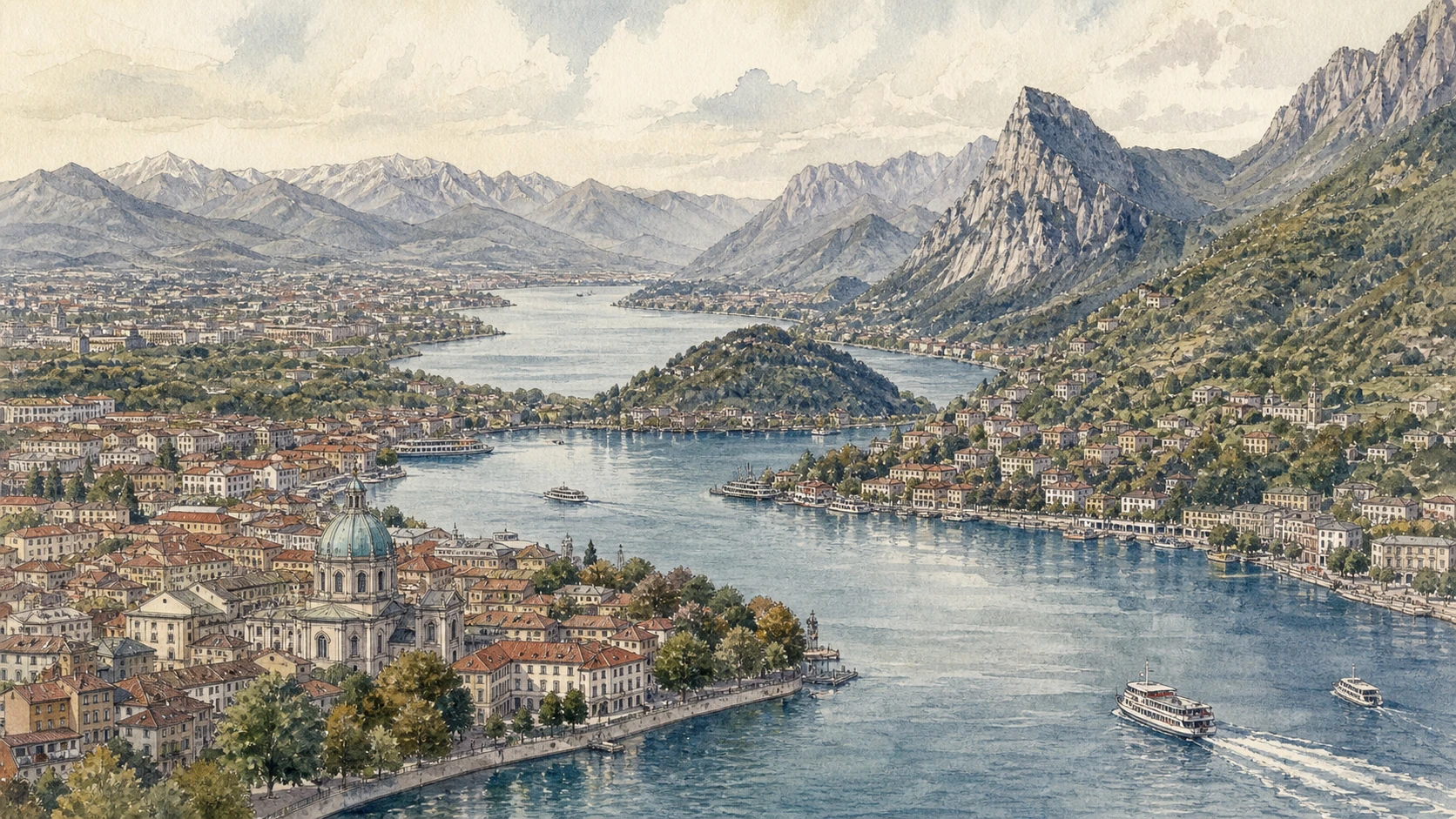
Original documentary watercolour panorama for Lake Como, Lecco, Monza and Brianza: Complete Guide, with accurate Lombardy architecture, landscape and lived context

Lombardy Guide 07 · Lake cities, public navigation, villas, silk, Volta, Manzoni, cathedral, royal estate and productive Brianza

Lake Como, Lecco,
Monza & Brianza

A multi-day guide from Como’s civic and religious centre into the public navigation network, villas and lakeside towns, then across Lecco’s industrial-literary landscape to Monza’s cathedral, royal villa, park and productive Brianza.

Plan the route
Lake Como, Lecco, Monza and Brianza · Lombardy10 chapters · one complete route

Why this route must be read in layers

The famous lake view depends on working transport, steep settlement, industry, gardens and environmental limits; Como, Lecco and Monza are distinct civic centres, not interchangeable bases for a scenic itinerary.

Como joins cathedral and communal buildings to the memory of Alessandro Volta and a silk economy that linked rural production, industrial skill and international markets.

Public navigation is part of the lake’s social infrastructure. Villas and gardens should be visited through official landings and tickets, while ordinary shore settlements retain private paths, schools and services.

Lecco and Brianza restore the industrial and literary territory beyond the central basin. Monza’s cathedral and royal estate combine medieval authority, Habsburg and Napoleonic court history, public park and motor-racing infrastructure.

Choose one lake branch per day, check boat and rail connections live, and reserve a separate day for Monza; a complete guide means acknowledging distance rather than racing between icons.

The route

Plan your visit

Begin in Como, use public navigation for one controlled villa-and-town sequence, then assign separate routes to Lecco and the Monza-Brianza system.

Early morning

Como Cathedral and Broletto · Alessandro Volta and the civic lakefront · Como silk

Move in the documented order: Como Cathedral and Broletto: sacred and communal centre; then Alessandro Volta and the civic lakefront; then Como silk: design, machinery and global production. Recheck live access and transport before entering a controlled site.

Late morning

Lake navigation · Villa Carlotta · Bellagio and Varenna

Move in the documented order: Lake navigation: public transport across difficult terrain; then Villa Carlotta: collection and botanical garden at Tremezzina; then Bellagio and Varenna: two hubs, not one postcard. Recheck live access and transport before entering a controlled site.

Afternoon

Lecco · Manzoni’s Lecco · Monza Cathedral and the Iron Crown

Move in the documented order: Lecco: industry, lake and Alpine gateway; then Manzoni’s Lecco: literature anchored to documented places; then Monza Cathedral and the Iron Crown: royal and civic memory. Recheck live access and transport before entering a controlled site.

Late afternoon

Royal Villa and Monza Park

Move in the documented order: Royal Villa and Monza Park: court estate, public landscape and modern uses. Recheck live access and transport before entering a controlled site.

Ten chapters

Explore the places

The order follows terrain, institutions and present-day movement. Use the index to return to a chapter without reducing the route to isolated monuments.

  1. 01Como Cathedral and Broletto: sacred and communal centre
  2. 02Alessandro Volta and the civic lakefront
  3. 03Como silk: design, machinery and global production
  4. 04Lake navigation: public transport across difficult terrain
  5. 05Villa Carlotta: collection and botanical garden at Tremezzina
  6. 06Bellagio and Varenna: two hubs, not one postcard
  7. 07Lecco: industry, lake and Alpine gateway
  8. 08Manzoni’s Lecco: literature anchored to documented places
  9. 09Monza Cathedral and the Iron Crown: royal and civic memory
  10. 10Royal Villa and Monza Park: court estate, public landscape and modern uses
01

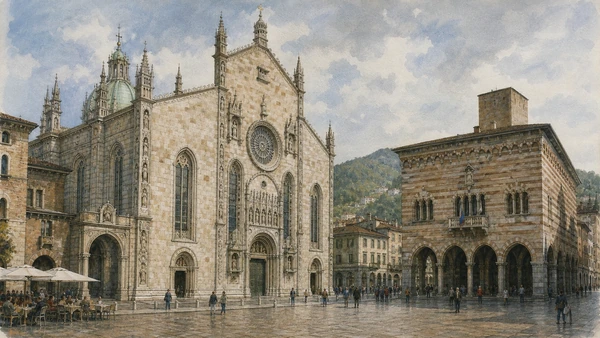
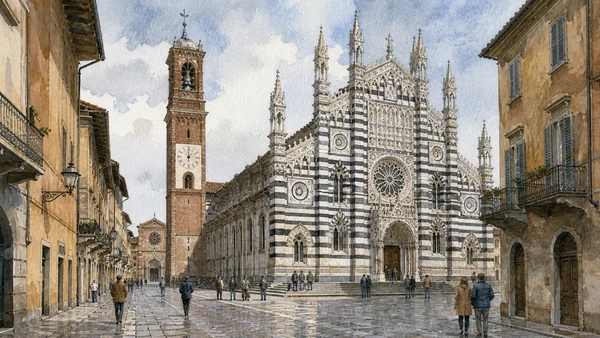
Cathedral, civic arcade and tower occupy a compact square linking medieval government to a church built across centuries.

Como Cathedral and Broletto: sacred and communal centre

Cathedral, civic arcade and tower occupy a compact square linking medieval government to a church built across centuries. The site becomes clearer when its surviving fabric, later alterations and present use are read together.

Today

This is an active religious place as well as a historic building. Services, ceremonies and conservation can interrupt tourist access; dress appropriately, remain quiet and never treat a booked visit as priority over worship.

History

The cathedral began in the late fourteenth century and absorbed Gothic, Renaissance and later campaigns beside the earlier Broletto and civic tower.

How to read this place

Begin with the cathedral façade and side portals. Then compare the broletto’s striped arcades with the narrow connections toward lake and roman grid; the differences are evidence, not visual noise.

What to notice

  • the cathedral façade and side portals
  • the Broletto’s striped arcades
  • the narrow connections toward lake and Roman grid
Lake Como · Official destination site
Original documentary watercolour of Como Cathedral and Broletto: sacred and communal centre in Lake Como, Lecco, Monza and Brianza · Lombardy, showing accurate architecture, landscape, people and present-day use
Como Cathedral and Broletto: sacred and communal centreOriginal Merlintravel documentary watercolour · 2026
02

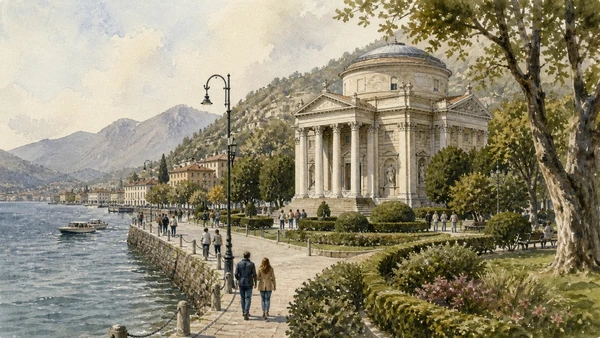
Monument, museum and educational institutions connect the physicist’s work to Como’s modern civic identity.

Alessandro Volta and the civic lakefront

Monument, museum and educational institutions connect the physicist’s work to Como’s modern civic identity. The site becomes clearer when its surviving fabric, later alterations and present use are read together.

Today

Opening, ticketing, room access and temporary displays can change. Check the institution’s official notice shortly before visiting, use the designated entrance and allow for security or conservation controls.

History

Volta was born in Como and developed foundational electrical research. The city later collected instruments and commemorative material, especially around the Tempio Voltiano.

How to read this place

Begin with original instruments and documentation. Then compare commemorative architecture on the lakefront with the distinction between experiment and later celebration; the differences are evidence, not visual noise.

What to notice

  • original instruments and documentation
  • commemorative architecture on the lakefront
  • the distinction between experiment and later celebration
Comune di Como · Tempio Voltiano
Original documentary watercolour of Alessandro Volta and the civic lakefront in Lake Como, Lecco, Monza and Brianza · Lombardy, showing accurate architecture, landscape, people and present-day use
Alessandro Volta and the civic lakefrontOriginal Merlintravel documentary watercolour · 2026
03

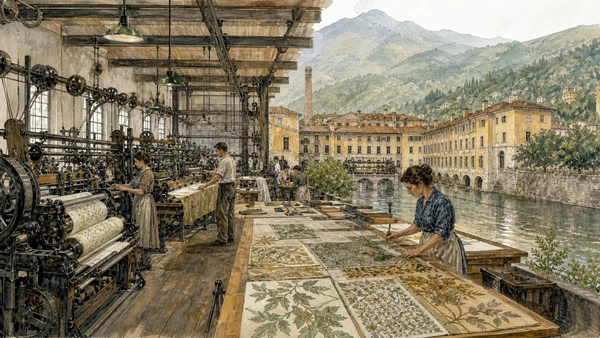
Museum collections and surviving firms connect textile design to machinery, labour, trade and contemporary manufacturing.

Como silk: design, machinery and global production

Museum collections and surviving firms connect textile design to machinery, labour, trade and contemporary manufacturing. The site becomes clearer when its surviving fabric, later alterations and present use are read together.

Today

Opening, ticketing, room access and temporary displays can change. Check the institution’s official notice shortly before visiting, use the designated entrance and allow for security or conservation controls.

History

Silk production expanded through domestic, artisanal and industrial systems, making the Como district internationally significant while importing raw material through global networks.

How to read this place

Begin with pattern archives and design stages. Then compare looms and industrial machinery with labour and trade behind the finished textile; the differences are evidence, not visual noise.

What to notice

  • pattern archives and design stages
  • looms and industrial machinery
  • labour and trade behind the finished textile
Museo della Seta di Como · Official site
Original documentary watercolour of Como silk: design, machinery and global production in Lake Como, Lecco, Monza and Brianza · Lombardy, showing accurate architecture, landscape, people and present-day use
Como silk: design, machinery and global productionOriginal Merlintravel documentary watercolour · 2026
05

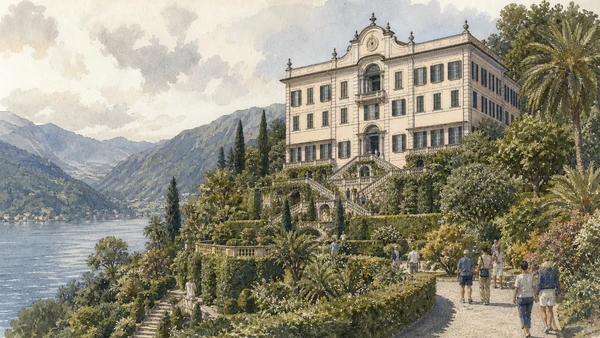
A historic villa, sculpture and terraced botanical garden combine elite residence with a managed cultural landscape.

Villa Carlotta: collection and botanical garden at Tremezzina

A historic villa, sculpture and terraced botanical garden combine elite residence with a managed cultural landscape. The site becomes clearer when its surviving fabric, later alterations and present use are read together.

Today

Opening, ticketing, room access and temporary displays can change. Check the institution’s official notice shortly before visiting, use the designated entrance and allow for security or conservation controls.

History

The property developed through successive owners from the late seventeenth century, gaining important art and garden collections before becoming a public institution.

How to read this place

Begin with the villa’s relationship to lake and mountain. Then compare terraces and specialised planting with collection rooms tied to owner histories; the differences are evidence, not visual noise.

What to notice

  • the villa’s relationship to lake and mountain
  • terraces and specialised planting
  • collection rooms tied to owner histories
Villa Carlotta · Official site
Original documentary watercolour of Villa Carlotta: collection and botanical garden at Tremezzina in Lake Como, Lecco, Monza and Brianza · Lombardy, showing accurate architecture, landscape, people and present-day use
Villa Carlotta: collection and botanical garden at TremezzinaOriginal Merlintravel documentary watercolour · 2026
06

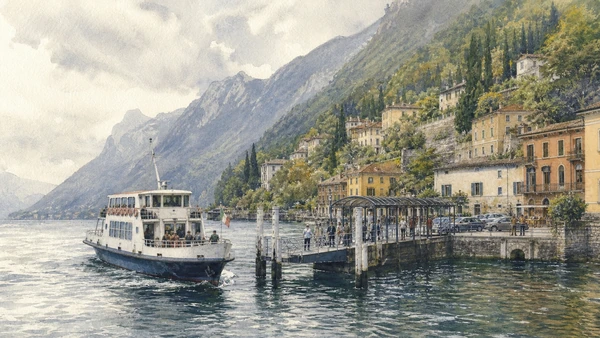
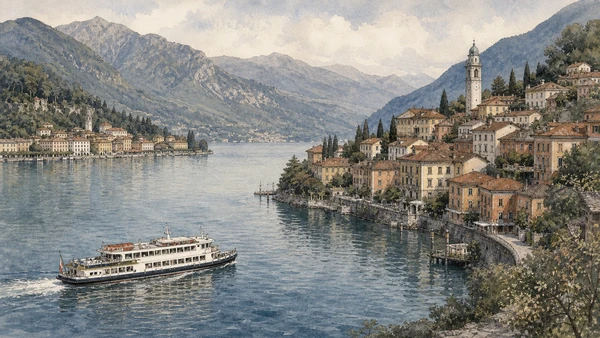
Promontory and eastern-shore settlements connect boat landings, steep lanes, gardens, homes and intense seasonal tourism.

Bellagio and Varenna: two hubs, not one postcard

Promontory and eastern-shore settlements connect boat landings, steep lanes, gardens, homes and intense seasonal tourism. The site becomes clearer when its surviving fabric, later alterations and present use are read together.

Today

The area is inhabited and worked, not staged for visitors. Keep doorways, pavements, cycle lanes and deliveries clear, ask before photographing people and use current municipal mobility information.

History

Historic fishing, craft, religious and transport functions preceded the hotel and villa economy that made both towns internationally recognised destinations.

How to read this place

Begin with landing-to-street gradients. Then compare public routes distinguished from private garden access with resident services operating amid visitors; the differences are evidence, not visual noise.

What to notice

  • landing-to-street gradients
  • public routes distinguished from private garden access
  • resident services operating amid visitors
Lake Como · Official destination site
Original documentary watercolour of Bellagio and Varenna: two hubs, not one postcard in Lake Como, Lecco, Monza and Brianza · Lombardy, showing accurate architecture, landscape, people and present-day use
Bellagio and Varenna: two hubs, not one postcardOriginal Merlintravel documentary watercolour · 2026
07

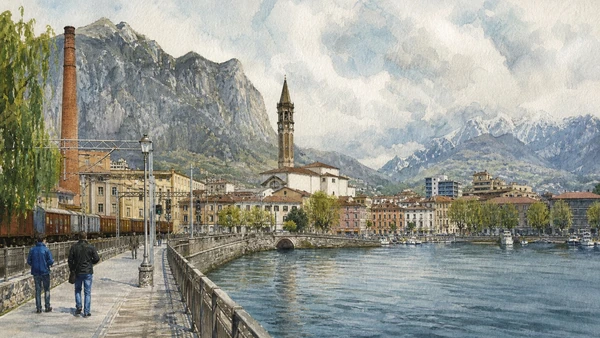
A city at the Adda outlet combines metalworking history, transport and mountain access with a waterfront identity.

Lecco: industry, lake and Alpine gateway

A city at the Adda outlet combines metalworking history, transport and mountain access with a waterfront identity. The site becomes clearer when its surviving fabric, later alterations and present use are read together.

Today

The area is inhabited and worked, not staged for visitors. Keep doorways, pavements, cycle lanes and deliveries clear, ask before photographing people and use current municipal mobility information.

History

Lecco grew through trade and manufacturing at a strategic water-and-road junction, expanding substantially during industrialisation.

How to read this place

Begin with the adda and lake junction. Then compare rail and road infrastructure with industrial and residential fabric beyond the promenade; the differences are evidence, not visual noise.

What to notice

  • the Adda and lake junction
  • rail and road infrastructure
  • industrial and residential fabric beyond the promenade
Lecco Tourism · Official site
Original documentary watercolour of Lecco: industry, lake and Alpine gateway in Lake Como, Lecco, Monza and Brianza · Lombardy, showing accurate architecture, landscape, people and present-day use
Lecco: industry, lake and Alpine gatewayOriginal Merlintravel documentary watercolour · 2026
08

Museum, landscapes and named sites illuminate The Betrothed without proving every popular identification as historical fact.

Manzoni’s Lecco: literature anchored to documented places

Museum, landscapes and named sites illuminate The Betrothed without proving every popular identification as historical fact. The site becomes clearer when its surviving fabric, later alterations and present use are read together.

Today

Opening, ticketing, room access and temporary displays can change. Check the institution’s official notice shortly before visiting, use the designated entrance and allow for security or conservation controls.

History

Alessandro Manzoni spent formative years at the family residence in the Lecco area; the city later organised literary memory around his biography and novel.

How to read this place

Begin with documented rooms and family history. Then compare landscape relationships described in the novel with later commemorative naming; the differences are evidence, not visual noise.

What to notice

  • documented rooms and family history
  • landscape relationships described in the novel
  • later commemorative naming
Comune di Lecco · Musei Civici
Original documentary watercolour of Manzoni's Lecco: literature anchored to documented places in Lake Como, Lecco, Monza and Brianza · Lombardy, showing accurate architecture, landscape, people and present-day use
Manzoni’s Lecco: literature anchored to documented placesOriginal Merlintravel documentary watercolour · 2026
09

A richly decorated cathedral and treasury connect Lombard Queen Theodelinda, later coronation traditions and the city’s religious centre.

Monza Cathedral and the Iron Crown: royal and civic memory

A richly decorated cathedral and treasury connect Lombard Queen Theodelinda, later coronation traditions and the city’s religious centre. The site becomes clearer when its surviving fabric, later alterations and present use are read together.

Today

This is an active religious place as well as a historic building. Services, ceremonies and conservation can interrupt tourist access; dress appropriately, remain quiet and never treat a booked visit as priority over worship.

History

An early foundation associated with Theodelinda preceded Gothic rebuilding and later decoration. Treasury objects accumulated complex devotional and political meanings.

How to read this place

Begin with the gothic façade and bell tower. Then compare theodelinda chapel and controlled viewing with treasury labels separating object history from legend; the differences are evidence, not visual noise.

What to notice

  • the Gothic façade and bell tower
  • Theodelinda Chapel and controlled viewing
  • treasury labels separating object history from legend
Museo e Tesoro del Duomo di Monza · Iron Crown
Original documentary watercolour of Monza Cathedral and the Iron Crown: royal and civic memory in Lake Como, Lecco, Monza and Brianza · Lombardy, showing accurate architecture, landscape, people and present-day use
Monza Cathedral and the Iron Crown: royal and civic memoryOriginal Merlintravel documentary watercolour · 2026
10

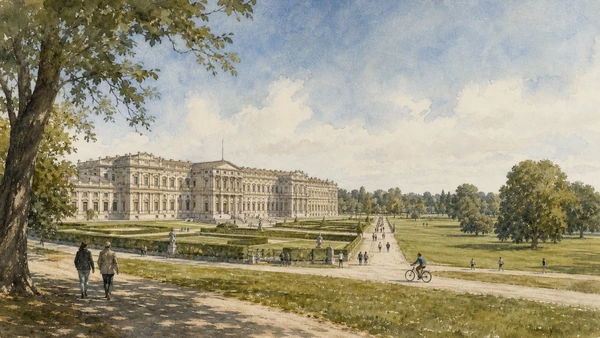
Palace, gardens and a vast enclosed park record Habsburg and Napoleonic residence, later royal ownership and civic reuse.

Royal Villa and Monza Park: court estate, public landscape and modern uses

Palace, gardens and a vast enclosed park record Habsburg and Napoleonic residence, later royal ownership and civic reuse. The site becomes clearer when its surviving fabric, later alterations and present use are read together.

Today

Opening, ticketing, room access and temporary displays can change. Check the institution’s official notice shortly before visiting, use the designated entrance and allow for security or conservation controls.

History

Piermarini designed the villa for the Austrian archduke in the eighteenth century. The estate changed under Napoleonic and Savoy rule before public and cultural uses expanded.

How to read this place

Begin with palace axis and ceremonial rooms. Then compare formal gardens meeting the larger park with roads, farms and sports infrastructure within the estate; the differences are evidence, not visual noise.

What to notice

  • palace axis and ceremonial rooms
  • formal gardens meeting the larger park
  • roads, farms and sports infrastructure within the estate
Reggia di Monza · Official site
Original documentary watercolour of Royal Villa and Monza Park: court estate, public landscape and modern uses in Lake Como, Lecco, Monza and Brianza · Lombardy, showing accurate architecture, landscape, people and present-day use
Royal Villa and Monza Park: court estate, public landscape and modern usesOriginal Merlintravel documentary watercolour · 2026

Lombardy through time

A short chronology

From prehistoric settlement and Roman routes to communes, regional states, industrial transformation, heritage protection and climate-sensitive mobility.

  1. Settlements, ritual places and rock imagery document long human occupation from Alpine valleys to the Po plain.

  2. Camuni, Celts, Etruscan networks and other communities develop distinct territories before Roman expansion.

  3. Roman roads, colonies and municipia integrate the region while retaining different local settlement patterns.

  4. Cities, villas, farms, sanctuaries and Alpine routes connect the Po basin to transalpine and imperial systems.

  5. Christian institutions, new burial landscapes and political change reshape Roman urban centres.

  6. Lombard rule establishes courts, duchies and monasteries whose material traces survive unevenly across the region.

  7. Castles, monasteries, parishes and landed powers organise countryside, lakes and mountain routes.

  8. Communal cities expand public buildings, cathedrals, walls, trade and conflict across the Lombard plain.

  9. Visconti and then Sforza power links Milan to fortified towns, courts, canals and agricultural territories.

  10. Venetian expansion incorporates much of eastern Lombardy, creating a durable political and architectural frontier.

  11. The Peace of Lodi stabilises a territorial balance whose borders continue to shape cities and landscapes.

  12. Spanish and Austrian governments reorganise defence, taxation, institutions and infrastructure in different parts of Lombardy.

  13. Napoleonic and Austrian administrations alter civic institutions, roads, collections and territorial government before unification.

  14. Railways, factories, hydropower, migration, tourism, war and resistance transform urban and Alpine societies.

  15. Reconstruction, industrial growth, deindustrialisation, heritage protection, mass mobility and climate pressure repeatedly reshape the region.

Before your visit

Practical information

01

Check the live page

Opening hours, reservation systems, restoration, exhibitions and transport can change. Recheck the linked official institution shortly before departure.

02

Separate worship and tourism

Churches and sanctuaries remain religious spaces. Services, funerals and community use take priority over visitor itineraries.

03

Plan real distances

Lake Como, Lecco, Monza and Brianza · Lombardy combines dense urban routes with lakes, valleys and dispersed towns. Do not compress distant chapters into an unsafe or superficial day.

04

Keep thresholds open

Arcades, station halls, markets, courtyards, workshops and residential streets must continue to function while you observe or photograph them.

05

Use current mobility data

Check the responsible rail, navigation, bus, road or park operator on the day; replacement services and weather can change an otherwise sound route.

06

Read change honestly

Restoration, reconstruction, adaptive reuse and new development have all shaped the landscape visible today.

Method and sources

Sources and image credits

This guide uses official museum, ministry, municipal, transport, park and UNESCO documentation checked on 29 August 2026. It separates durable historical interpretation from access details that can change, distinguishes surviving fabric from restoration or reconstruction, and treats worship, work, residence and public movement as part of the evidence. Every chapter links its principal institutional source; tickets, closures, weather and transport must always be verified again on the day of the visit.

All ten images are original Merlintravel editorial watercolours based on documented present-day conditions. They are illustrations, not substitutes for archaeological plans. Opening hours, tickets, accessible routes, temporary exhibitions and conservation work can change; consult the linked official pages shortly before visiting.