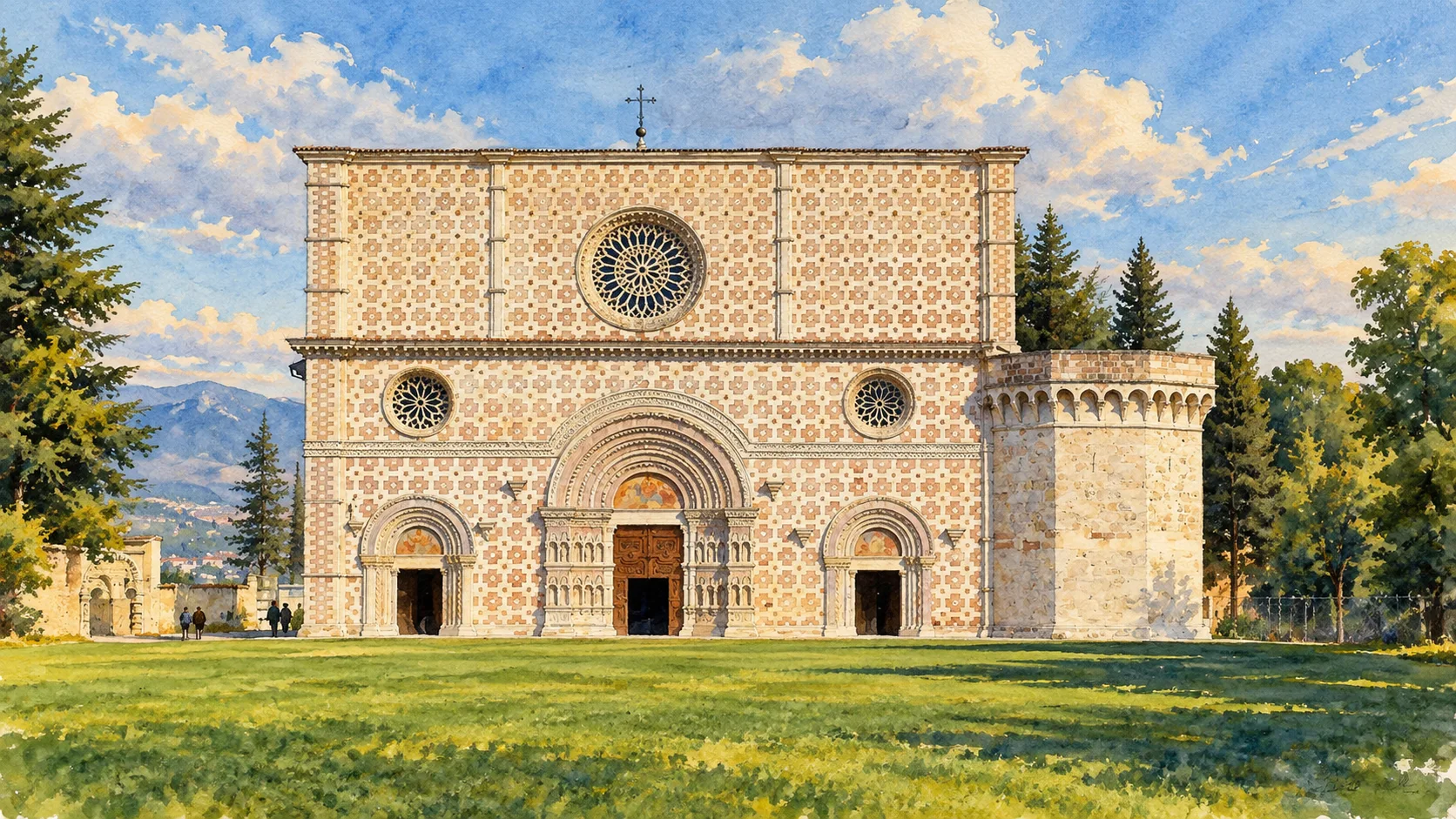
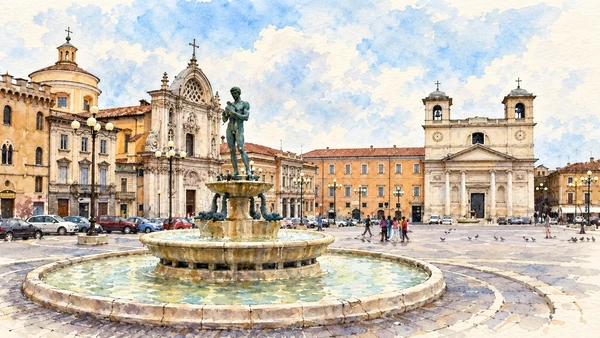
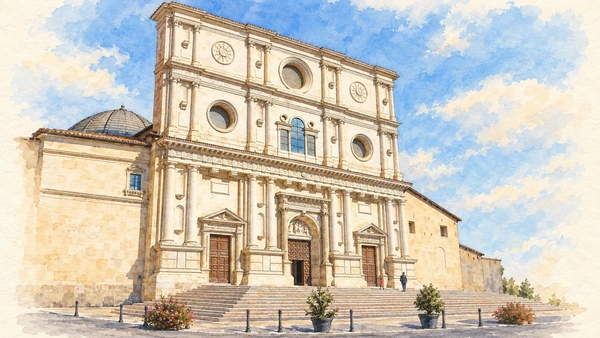
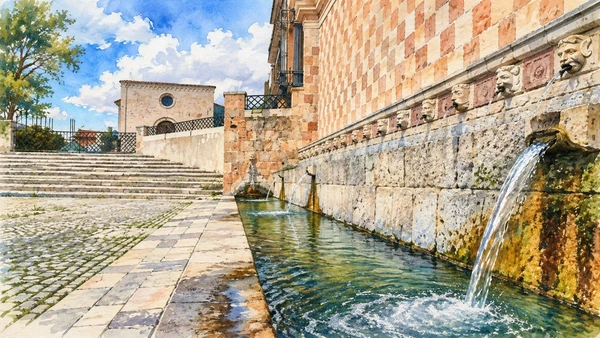
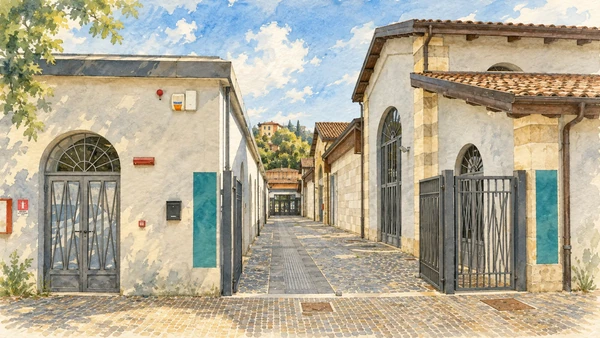
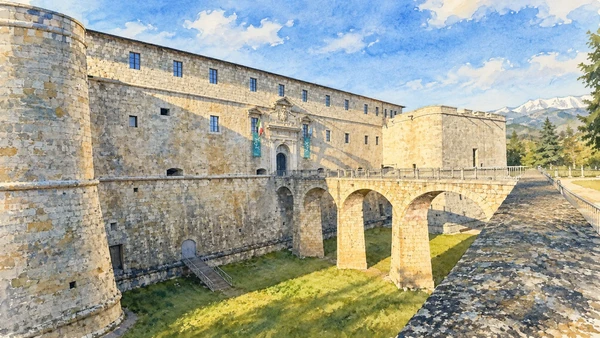
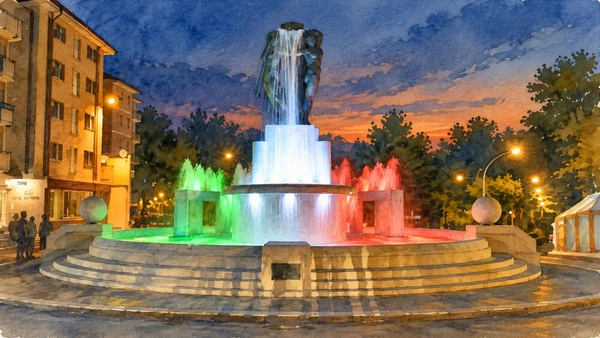
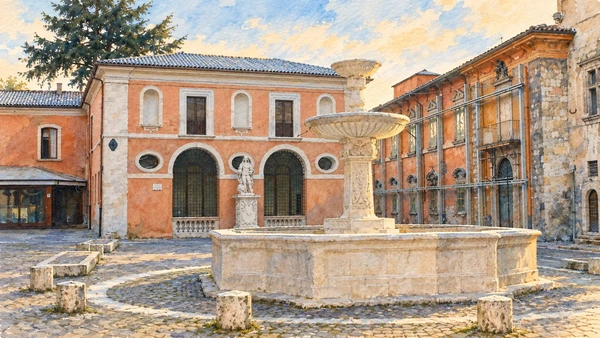
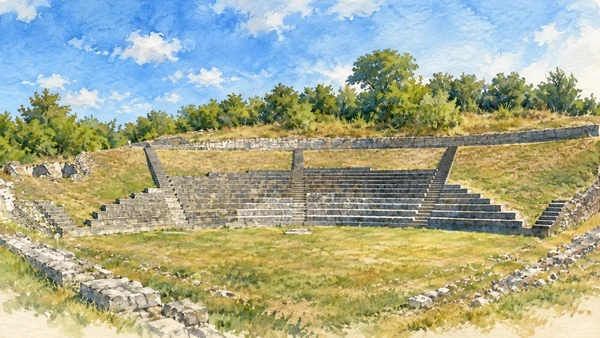
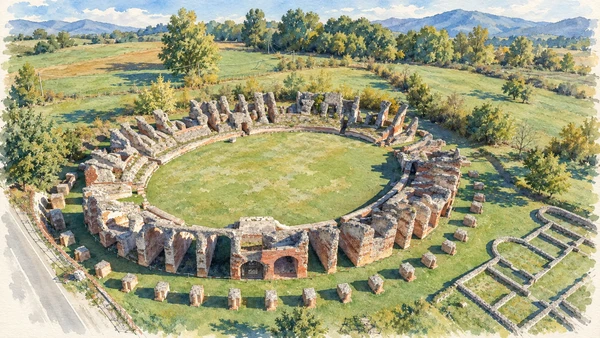
L’Aquila is an inhabited capital, not a frozen image of the 2009 earthquake. Its squares connect worship, public life and the changing work of restoration. This guide starts with the city and then moves to Amiternum, an ancient settlement outside the central walking circuit. The distance between these places matters: medieval L’Aquila did not simply replace a Roman city on the same footprint.
The guide separates documented history from suggestions for reading the site. Named buildings and landscape relationships follow institutional sources; the illustrations are editorial interpretations, not measured surveys or records of current access.
Civic fountains, basilicas, museum collections and the Aterno valley reveal a city whose history continues through reconstruction.