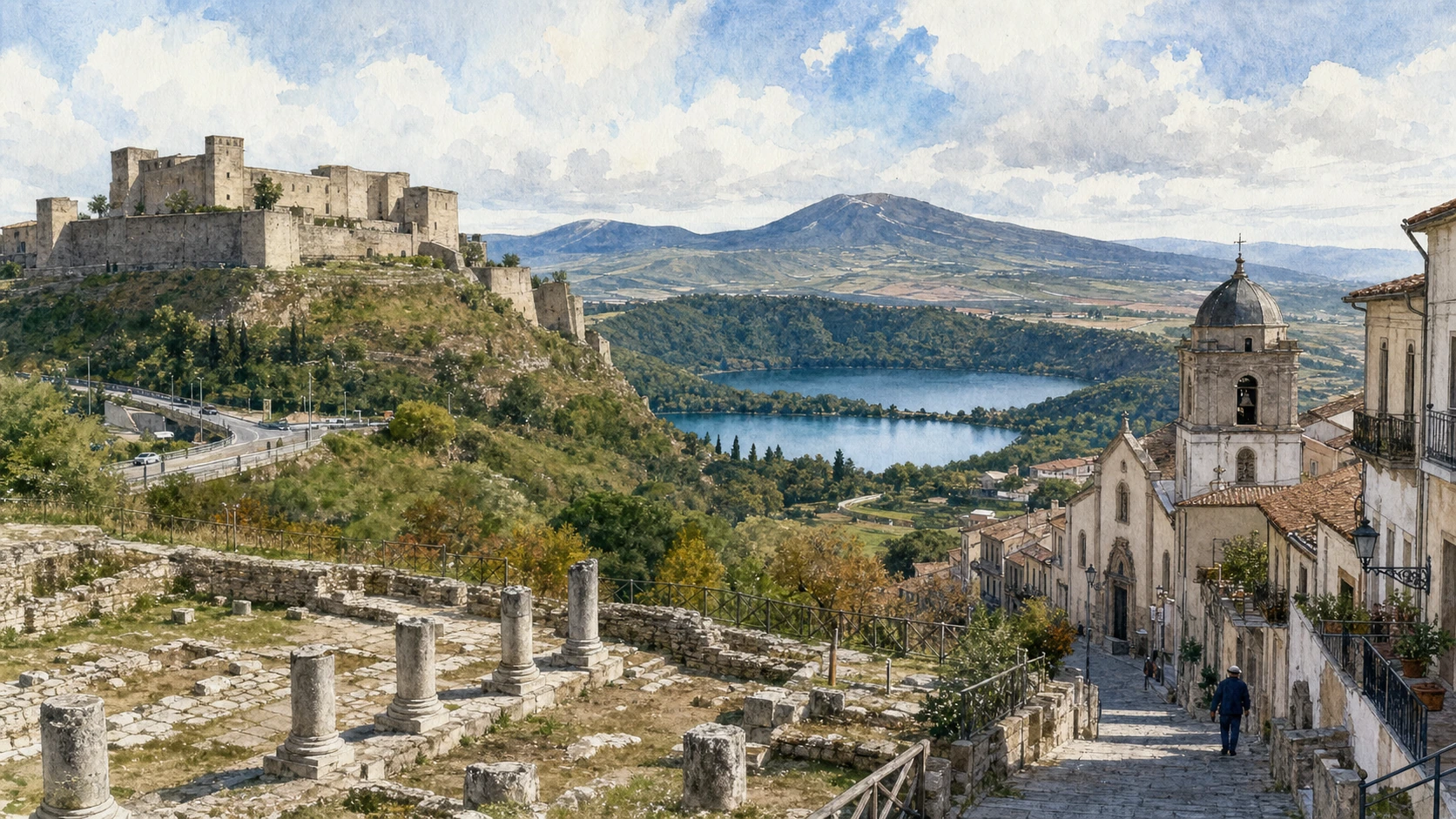
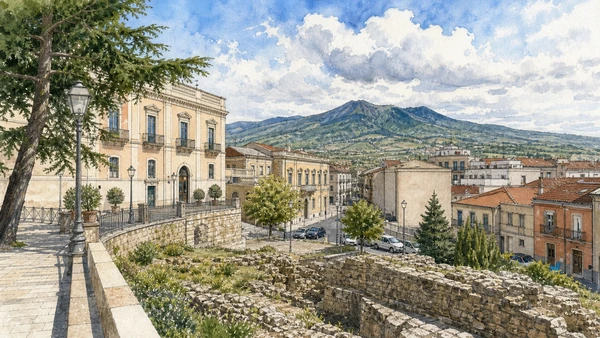
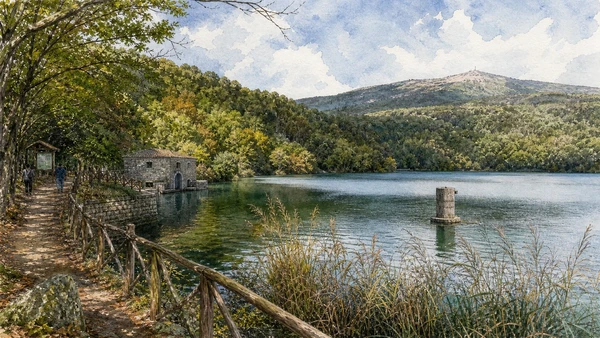
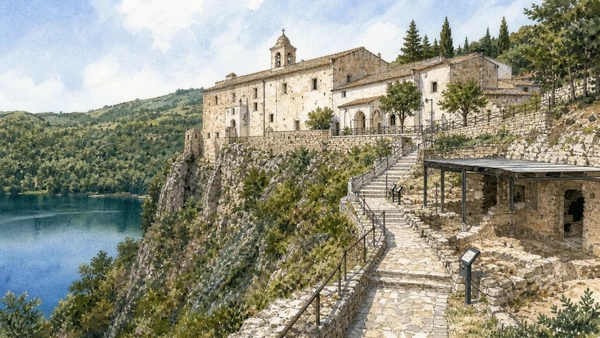
Original documentary watercolour panorama for Melfi, Monticchio and the Vulture: Complete Guide, with accurate Lucanian architecture, landscape and lived context

Basilicata Guide 03 · Archaeology, architecture, working landscapes and contemporary access

Melfi
guards a volcanic country

A two-day route through Norman and Swabian government, archaeology, rock churches, Arbëreshë settlements, volcanic lakes, monastic sites and cultivated slopes.

Plan the route
Melfi and the Vulture · Basilicata10 chapters · one complete route

Why this route must be read in layers

The Vulture is not only castle and wine: geology, biodiversity, migration, religious institutions and royal government occupy the same northern landscape.

The route begins with documented fabric and institutional collections rather than a list of photogenic surfaces. Each chapter separates what survives, what was rebuilt and what remains in use.

Basilicata’s ravines, archaeological parks, forests, villages, religious sites and two coastlines operate under different access conditions. Current notices therefore belong to the route rather than an appendix.

Each chapter includes an illustration of the place described. The images are watercolours rather than photographs.

A two-day route through Norman and Swabian government, archaeology, rock churches, Arbëreshë settlements, volcanic lakes, monastic sites and cultivated slopes.

The route

Plan your visit

A two-day route through Norman and Swabian government, archaeology, rock churches, Arbëreshë settlements, volcanic lakes, monastic sites and cultivated slopes.

Early morning

Melfi Castle and the Massimo Pallottino Museum · The Sarcophagus of Rapolla · Melfi Cathedral

Move in the documented order: Melfi Castle and the Massimo Pallottino Museum; then The Sarcophagus of Rapolla: an object with a documented journey; then Melfi Cathedral: medieval foundation and Baroque rebuilding. Recheck live access, weather and transport before entering a controlled place.

Late morning

Porta Venosina and the surviving walls · Santa Margherita · Rapolla

Move in the documented order: Porta Venosina and the surviving walls; then Santa Margherita: a painted rock church outside the walls; then Rapolla: cathedral, thermal landscape and Vulture slopes. Recheck live access, weather and transport before entering a controlled place.

Afternoon

Barile and the cellar district · Rionero in Vulture · The Monticchio Lakes

Move in the documented order: Barile and the cellar district: Arbëreshë history in volcanic tuff; then Rionero in Vulture: civic history and agricultural transformation; then The Monticchio Lakes: two basins in an ancient volcanic system. Recheck live access, weather and transport before entering a controlled place.

Late afternoon

San Michele at Monticchio

Move in the documented order: San Michele at Monticchio: abbey above the smaller lake. Recheck live access, weather and transport before entering a controlled place.

Ten chapters

Explore the places

The order follows terrain, institutions and present-day movement. Use the index to return to a chapter without reducing the route to isolated monuments.

  1. 01Melfi Castle and the Massimo Pallottino Museum
  2. 02The Sarcophagus of Rapolla: an object with a documented journey
  3. 03Melfi Cathedral: medieval foundation and Baroque rebuilding
  4. 04Porta Venosina and the surviving walls
  5. 05Santa Margherita: a painted rock church outside the walls
  6. 06Rapolla: cathedral, thermal landscape and Vulture slopes
  7. 07Barile and the cellar district: Arbëreshë history in volcanic tuff
  8. 08Rionero in Vulture: civic history and agricultural transformation
  9. 09The Monticchio Lakes: two basins in an ancient volcanic system
  10. 10San Michele at Monticchio: abbey above the smaller lake
01

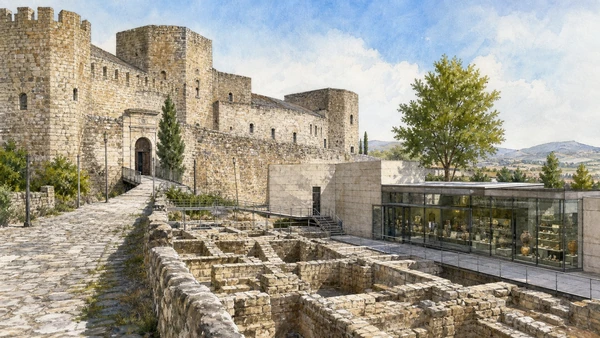
The fortress and national museum connect medieval power to archaeology from the Vulture-Melfese territory.

Melfi Castle and the Massimo Pallottino Museum

The fortress and national museum connect medieval power to archaeology from the Vulture-Melfese territory. The place becomes clearer when surviving fabric, later change and present use are read together.

Today

Interior routes, exhibitions and controlled areas can change. Check the managing institution, respect barriers and distinguish surviving fabric from restoration.

History

Norman foundations, Frederick II’s court and later Angevin and seigneurial changes created a complex enclosure now used as a museum.

How to read this place

Follow defensive and residential phases separately, then connect museum objects to their excavation contexts rather than to the castle itself.

What to notice

  • defensive geometry and controlled approaches
  • different masonry phases
  • present cultural or civic use
Musei e Parchi Archeologici di Melfi e Venosa
Original documentary watercolour of Melfi Castle and the Massimo Pallottino Museum in Melfi and the Vulture · Basilicata, showing accurate architecture, landscape and present-day use
Melfi Castle and the Massimo Pallottino MuseumOriginal Merlintravel documentary watercolour · 2026
02

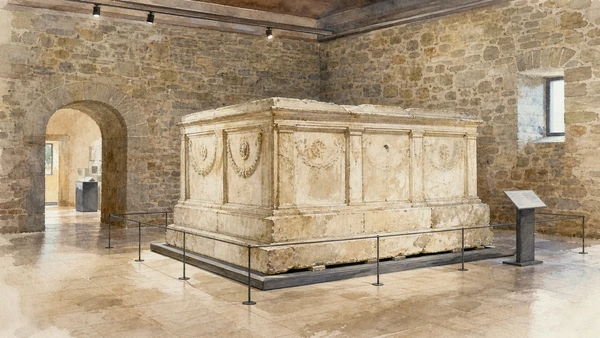
A richly carved Roman marble sarcophagus is displayed at Melfi but came from the wider territory and must be read through its find context.

The Sarcophagus of Rapolla: an object with a documented journey

A richly carved Roman marble sarcophagus is displayed at Melfi but came from the wider territory and must be read through its find context. The place becomes clearer when surviving fabric, later change and present use are read together.

Today

Opening, ticketing, room access and temporary displays can change. Check the museum’s official notice shortly before visiting and allow for security or conservation controls.

History

Produced in the Roman imperial period and recovered near Rapolla, the monument entered the archaeological collection now housed in the castle.

How to read this place

Study carving, restoration and museum supports without treating the imagery as a portrait with a certain identity beyond the evidence.

What to notice

  • the chronological order of the displays
  • finds tied to documented excavation contexts
  • modern conservation and interpretation
Musei e Parchi Archeologici di Melfi e Venosa
Original documentary watercolour of The Sarcophagus of Rapolla: an object with a documented journey in Melfi and the Vulture · Basilicata, showing accurate architecture, landscape and present-day use
The Sarcophagus of Rapolla: an object with a documented journeyOriginal Merlintravel documentary watercolour · 2026
03

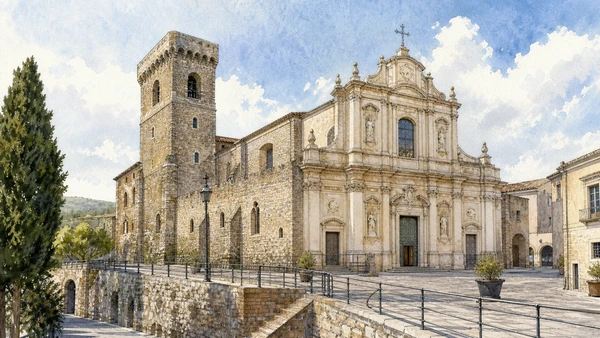
A tall Norman-era bell tower stands beside a cathedral whose visible body reflects major later reconstruction.

Melfi Cathedral: medieval foundation and Baroque rebuilding

A tall Norman-era bell tower stands beside a cathedral whose visible body reflects major later reconstruction. The place becomes clearer when surviving fabric, later change and present use are read together.

Today

This is an active religious place. Services, ceremonies and conservation can interrupt tourist access; dress appropriately, remain quiet and verify the official notice.

History

The episcopal complex originated under Norman rule, but earthquakes and seventeenth- and eighteenth-century rebuilding transformed the church.

How to read this place

Separate tower masonry from the later facade and interior, and remember that the cathedral remains an active religious institution.

What to notice

  • the relationship between worship and visitor circulation
  • older fabric and later rebuilding
  • objects still used in liturgy
Basilicata Turistica · Melfi
Original documentary watercolour of Melfi Cathedral: medieval foundation and Baroque rebuilding in Melfi and the Vulture · Basilicata, showing accurate architecture, landscape and present-day use
Melfi Cathedral: medieval foundation and Baroque rebuildingOriginal Merlintravel documentary watercolour · 2026
04

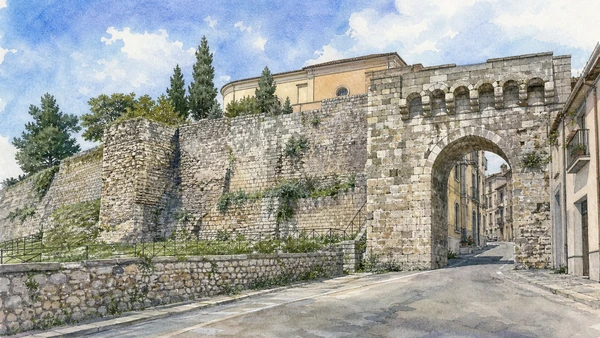
The gate preserves the direction of the route toward Venosa and a fragment of Melfi’s controlled urban perimeter.

Porta Venosina and the surviving walls

The gate preserves the direction of the route toward Venosa and a fragment of Melfi’s controlled urban perimeter. The place becomes clearer when surviving fabric, later change and present use are read together.

Today

Interior routes, exhibitions and controlled areas can change. Check the managing institution, respect barriers and distinguish surviving fabric from restoration.

History

Medieval fortification changed under successive rulers and later urban development removed or absorbed much of the wall circuit.

How to read this place

Read road alignment, masonry phases and the missing sections of wall rather than imagining a complete unchanged enclosure.

What to notice

  • defensive geometry and controlled approaches
  • different masonry phases
  • present cultural or civic use
Basilicata Turistica · Melfi
Original documentary watercolour of Porta Venosina and the surviving walls in Melfi and the Vulture · Basilicata, showing accurate architecture, landscape and present-day use
Porta Venosina and the surviving wallsOriginal Merlintravel documentary watercolour · 2026
05

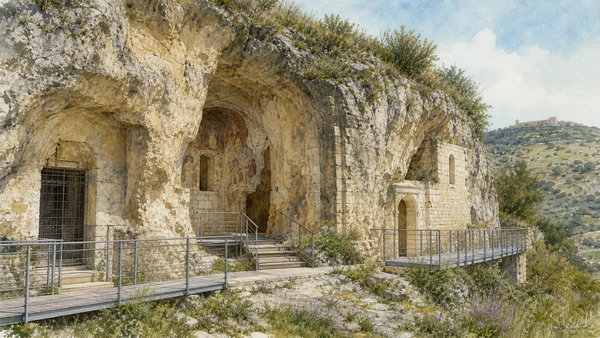
A cave chapel preserves medieval frescoes, including a rare encounter between sacred imagery and the memory of imperial power.

Santa Margherita: a painted rock church outside the walls

A cave chapel preserves medieval frescoes, including a rare encounter between sacred imagery and the memory of imperial power. The place becomes clearer when surviving fabric, later change and present use are read together.

Today

This is an active religious place. Services, ceremonies and conservation can interrupt tourist access; dress appropriately, remain quiet and verify the official notice.

History

The rupestrian church developed in the medieval landscape outside Melfi and its paintings have survived with losses and later interpretation.

How to read this place

Use controlled access and conservation lighting, distinguishing painted evidence from popular identifications that remain debated.

What to notice

  • the relationship between worship and visitor circulation
  • older fabric and later rebuilding
  • objects still used in liturgy
Basilicata Turistica · Melfi
Original documentary watercolour of Santa Margherita: a painted rock church outside the walls in Melfi and the Vulture · Basilicata, showing accurate architecture, landscape and present-day use
Santa Margherita: a painted rock church outside the wallsOriginal Merlintravel documentary watercolour · 2026
06

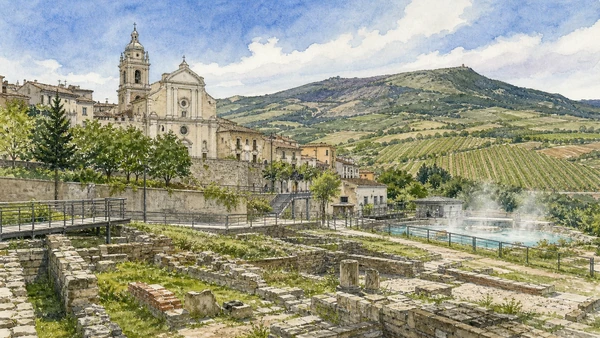
A compact hill town combines religious architecture, cultivated volcanic ground and routes descending toward springs and valleys.

Rapolla: cathedral, thermal landscape and Vulture slopes

A compact hill town combines religious architecture, cultivated volcanic ground and routes descending toward springs and valleys. The place becomes clearer when surviving fabric, later change and present use are read together.

Today

This is an inhabited place, not a visitor set. Keep doorways, pavements and deliveries clear, and use current municipal mobility information.

History

Rapolla developed through ancient and medieval phases and later became part of the agricultural and settlement system around the Vulture.

How to read this place

Read the town as inhabited fabric and connect the cathedral and landscape without collapsing archaeology, viticulture and thermal use into one period.

What to notice

  • street width and building materials
  • residential use behind historic facades
  • later infrastructure and adaptation
Basilicata Turistica · Rapolla
Original documentary watercolour of Rapolla: cathedral, thermal landscape and Vulture slopes in Melfi and the Vulture · Basilicata, showing accurate architecture, landscape and present-day use
Rapolla: cathedral, thermal landscape and Vulture slopesOriginal Merlintravel documentary watercolour · 2026
07

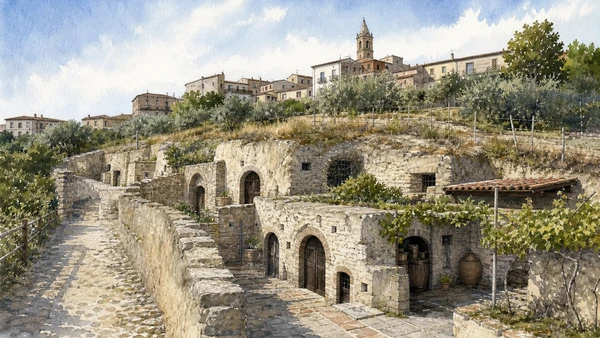
A community of Albanian origin preserves cultural memory beside excavated wine cellars cut into the slope.

Barile and the cellar district: Arbëreshë history in volcanic tuff

A community of Albanian origin preserves cultural memory beside excavated wine cellars cut into the slope. The place becomes clearer when surviving fabric, later change and present use are read together.

Today

This is an inhabited place, not a visitor set. Keep doorways, pavements and deliveries clear, and use current municipal mobility information.

History

Arbëreshë settlement added new language, religious and social traditions, while the cellar landscape developed through agricultural production and storage.

How to read this place

Keep private and working cellars distinct from public routes, and do not treat community identity as folklore performed for visitors.

What to notice

  • street width and building materials
  • residential use behind historic facades
  • later infrastructure and adaptation
Basilicata Turistica · Barile
Original documentary watercolour of Barile and the cellar district: Arbëreshë history in volcanic tuff in Melfi and the Vulture · Basilicata, showing accurate architecture, landscape and present-day use
Barile and the cellar district: Arbëreshë history in volcanic tuffOriginal Merlintravel documentary watercolour · 2026
08

The modern town provides a base for reading landholding, political history, emigration and the cultivated volcanic slopes.

Rionero in Vulture: civic history and agricultural transformation

The modern town provides a base for reading landholding, political history, emigration and the cultivated volcanic slopes. The place becomes clearer when surviving fabric, later change and present use are read together.

Today

This is an inhabited place, not a visitor set. Keep doorways, pavements and deliveries clear, and use current municipal mobility information.

History

Rionero expanded in the early modern and modern periods, and the work of Giustino Fortunato made it central to debates about southern Italy.

How to read this place

Read palaces, streets and cultural institutions together with present residence and commerce rather than searching for a medieval monument centre.

What to notice

  • street width and building materials
  • residential use behind historic facades
  • later infrastructure and adaptation
Basilicata Turistica · Rionero
Original documentary watercolour of Rionero in Vulture: civic history and agricultural transformation in Melfi and the Vulture · Basilicata, showing accurate architecture, landscape and present-day use
Rionero in Vulture: civic history and agricultural transformationOriginal Merlintravel documentary watercolour · 2026
09

Lago Grande and Lago Piccolo occupy volcanic depressions within forests and protected habitats on the Vulture’s south-western side.

The Monticchio Lakes: two basins in an ancient volcanic system

Lago Grande and Lago Piccolo occupy volcanic depressions within forests and protected habitats on the Vulture’s south-western side. The place becomes clearer when surviving fabric, later change and present use are read together.

Today

Weather, heat, fire risk, snow, sea state and seasonal restrictions can alter access. Use official park or reserve information and remain on authorised routes.

History

Geological processes created the basins long before monastic, agricultural and modern recreational use developed along their shores.

How to read this place

Use park paths and current notices, noticing water level, forest, visitor infrastructure and conservation rather than presenting the lakes as untouched wilderness.

What to notice

  • geology and native vegetation
  • authorised paths and protected habitats
  • working land or water beside conservation zones
Parco Naturale Regionale del Vulture
Original documentary watercolour of The Monticchio Lakes: two basins in an ancient volcanic system in Melfi and the Vulture · Basilicata, showing accurate architecture, landscape and present-day use
The Monticchio Lakes: two basins in an ancient volcanic systemOriginal Merlintravel documentary watercolour · 2026
10

A monastic complex occupies the crater wall above Lago Piccolo and incorporates a rock-cut sacred place, later buildings and museum use.

San Michele at Monticchio: abbey above the smaller lake

A monastic complex occupies the crater wall above Lago Piccolo and incorporates a rock-cut sacred place, later buildings and museum use. The place becomes clearer when surviving fabric, later change and present use are read together.

Today

This is an active religious place. Services, ceremonies and conservation can interrupt tourist access; dress appropriately, remain quiet and verify the official notice.

History

Religious occupation and construction changed over centuries, with Benedictine and Capuchin phases contributing to the present complex.

How to read this place

Approach from authorised paths and separate the natural cliff, excavated spaces, built abbey and modern displays.

What to notice

  • the relationship between worship and visitor circulation
  • older fabric and later rebuilding
  • objects still used in liturgy
Parco Naturale Regionale del Vulture
Original documentary watercolour of San Michele at Monticchio: abbey above the smaller lake in Melfi and the Vulture · Basilicata, showing accurate architecture, landscape and present-day use
San Michele at Monticchio: abbey above the smaller lakeOriginal Merlintravel documentary watercolour · 2026

Basilicata through time

A short chronology

From Palaeolithic evidence and Greek cities to Roman roads, Norman government, Arbëreshë communities, modern displacement, protected parks and contemporary cultural recovery.

  1. Sites including Notarchirico document very early human presence and changing environments in inland Basilicata.

  2. Neolithic villages, cave use and exchange networks develop across the Matera plateau, valleys and Ionian approaches.

  3. Oenotrian and other Indigenous communities organise hill settlements, burial grounds and routes before and during Greek colonisation.

  4. Siris and Metapontum connect the Ionian plain to the Greek world while maintaining complex relations with inland societies.

  5. Lucanian communities, Greek cities and regional elites reshape fortified settlements, sanctuaries and agricultural territories.

  6. Rome establishes a colony at Venusia, strengthening control of routes between Apulia, Lucania and Campania.

  7. Roman towns, estates, roads and production systems link Venusia, Grumentum and the Ionian coast to wider imperial networks.

  8. Gothic, Byzantine, Lombard and local powers contest frontiers marked by bishoprics, monasteries and rock-cut religious places.

  9. Melfi becomes central to Norman rule while castles, dioceses and monastic complexes reorganise the region.

  10. The Constitutions of Melfi express Frederick II’s programme of royal government in the Kingdom of Sicily.

  11. Aragonese and seigneurial rule, Arbëreshë settlement and changing religious institutions add new layers to towns and valleys.

  12. Feudal abolition, Bourbon reform and Italian unification alter institutions without resolving land inequality.

  13. Civil conflict labelled brigandage reveals contested state formation, rural hardship and violence across inland Basilicata.

  14. Emigration, poverty, malaria, land reform and the compulsory displacement of residents from the Sassi define a difficult modern transition.

  15. Earthquake reconstruction, the 1993 UNESCO inscription, Matera 2019, park systems and museum renewal expand access while depopulation and climate risk continue.

Before your visit

Practical information

01

Check the live institution

Opening hours, guided routes, restoration, worship and seasonal services can change. Recheck the linked official page shortly before departure.

02

Respect long distances

Mountain roads, valley crossings and the two coasts make travel slower than the map suggests. Do not compress distant territories into one superficial day.

03

Keep living places liveable

The Sassi, hill towns, Arbëreshë villages, farms and port districts remain inhabited. Keep homes, doorways, work and local movement clear.

04

Treat archaeology as evidence

Stay behind barriers. Surviving remains, excavated foundations and later reconstructions reveal different stages of the sites’ histories.

05

Use current park notices

Heat, fire risk, snow, storms, river conditions and protected habitats can alter access. Follow the responsible park or reserve authority.

06

Read modern intervention honestly

Displacement, reconstruction, industrial change, adaptive reuse and contemporary art belong to Basilicata’s documented history rather than sitting outside it.

Method and sources

Sources and image credits

This guide uses official museum, ministry, municipal, park, UNESCO and regional-tourism documentation checked on 1 September 2026. It distinguishes prehistoric, Oenotrian, Greek, Lucanian, Roman, Byzantine, Lombard, Norman, Swabian and later phases rather than treating Basilicata as one timeless southern landscape. Every chapter links its principal institutional source; tickets, worship, closures, heat, fire risk, snow, sea conditions and transport must always be verified again on the day of the visit.

All ten images are original Merlintravel editorial watercolours based on documented present-day conditions. They are illustrations, not substitutes for archaeological plans. Opening hours, tickets, accessible routes, temporary exhibitions and conservation work can change; consult the linked official pages shortly before visiting.