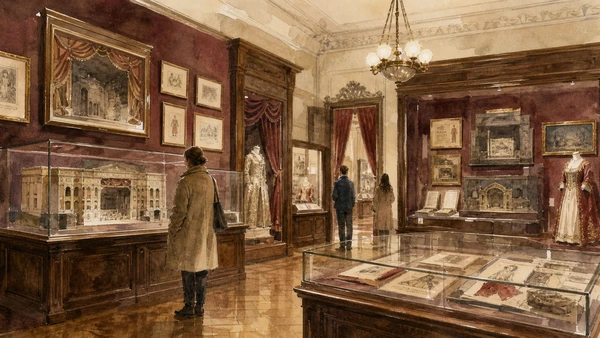
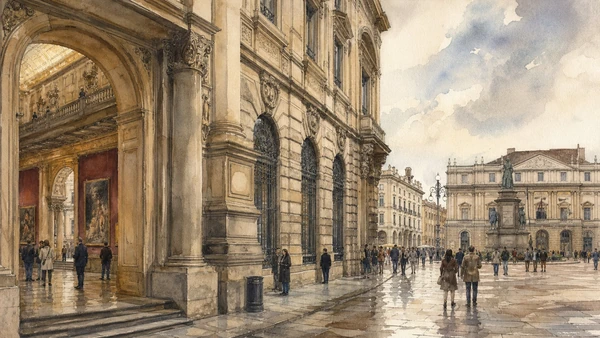
Original documentary watercolour panorama for Milan Brera, La Scala and the Enlightenment City: Complete Guide, with accurate Lombardy architecture, landscape and lived context

Milan Guide 03 · Academy, gallery, library, observatory, botanical garden, theatre and Napoleonic civic culture

Brera, La Scala
& the Enlightenment City

A complete institutional route through Palazzo Brera and the expanded Grande Brera, then across the learned district to Teatro alla Scala, its museum and the modern cultural-financial spaces around Piazza della Scala.

Plan the route
Milan · Lombardy10 chapters · one complete route

Why this route must be read in layers

Brera is an ecosystem of knowledge rather than a single picture gallery: academy, library, observatory, botanical garden and collections grew together before modern Milan redistributed them across new spaces.

The palace’s religious origins and later state use shaped an unusually dense institutional complex. Enlightenment and Napoleonic policies enlarged collections and used art, science and education to construct a public capital.

The Pinacoteca’s works came through suppression, transfer, donation and acquisition, so provenance matters as much as visual fame. Palazzo Citterio extends the story into modern collecting and contemporary museum organisation.

La Scala forms a second institutional pole. Theatre, museum, banking collections and municipal government occupy the route between Brera and Piazza della Scala, revealing how culture, finance and civic representation reinforce one another.

Read labels, provenance and institutional thresholds before chasing masterpieces: the district’s strongest story is how knowledge was organised and made public.

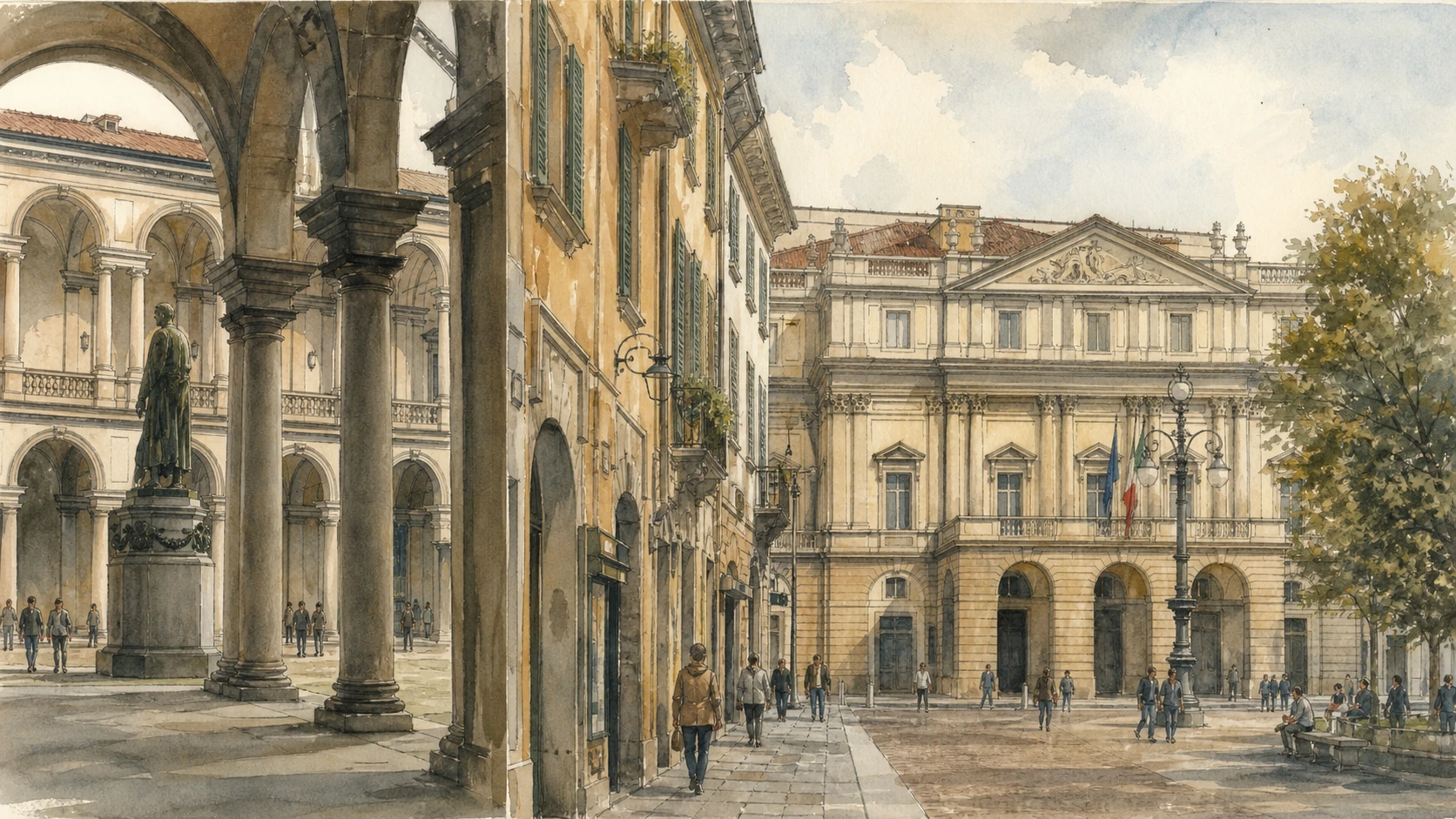
The route

Plan your visit

Begin inside the Brera complex, follow its specialised institutions and surrounding streets, then continue toward La Scala and the collections facing the municipal centre.

Early morning

Palazzo Brera · Pinacoteca di Brera · Palazzo Citterio

Move in the documented order: Palazzo Brera: one building, many institutions; then Pinacoteca di Brera: collection, state formation and display; then Palazzo Citterio: modern collections within Grande Brera. Recheck live access and transport before entering a controlled site.

Late morning

Biblioteca Nazionale Braidense · Orto Botanico di Brera · Brera Observatory

Move in the documented order: Biblioteca Nazionale Braidense: books inside the institutional palace; then Orto Botanico di Brera: scientific study in a hidden garden; then Brera Observatory: measurement above the city. Recheck live access and transport before entering a controlled site.

Afternoon

Brera streets · Teatro alla Scala · Museo Teatrale alla Scala

Move in the documented order: Brera streets: residence, workshops and cultural branding; then Teatro alla Scala: performance behind a restrained façade; then Museo Teatrale alla Scala: objects, artists and theatre memory. Recheck live access and transport before entering a controlled site.

Late afternoon

Gallerie d’Italia and Piazza Scala

Move in the documented order: Gallerie d’Italia and Piazza Scala: banking collections in civic space. Recheck live access and transport before entering a controlled site.

Ten chapters

Explore the places

The order follows terrain, institutions and present-day movement. Use the index to return to a chapter without reducing the route to isolated monuments.

  1. 01Palazzo Brera: one building, many institutions
  2. 02Pinacoteca di Brera: collection, state formation and display
  3. 03Palazzo Citterio: modern collections within Grande Brera
  4. 04Biblioteca Nazionale Braidense: books inside the institutional palace
  5. 05Orto Botanico di Brera: scientific study in a hidden garden
  6. 06Brera Observatory: measurement above the city
  7. 07Brera streets: residence, workshops and cultural branding
  8. 08Teatro alla Scala: performance behind a restrained façade
  9. 09Museo Teatrale alla Scala: objects, artists and theatre memory
  10. 10Gallerie d’Italia and Piazza Scala: banking collections in civic space
01

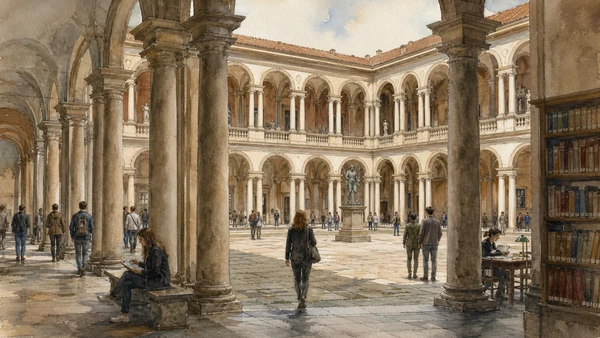
Courtyards and corridors connect art education, library, gallery, science and botanical study within a former religious complex.

Palazzo Brera: one building, many institutions

Courtyards and corridors connect art education, library, gallery, science and botanical study within a former religious complex. The site becomes clearer when its surviving fabric, later alterations and present use are read together.

Today

The exterior can usually be read from public space, but events, works and crowd management may change circulation. Keep access routes open and verify any interior visit with the responsible institution.

History

The Umiliati and Jesuit phases preceded state reforms that concentrated academies and collections here during Austrian, Napoleonic and later governments.

How to read this place

Begin with the main courtyard and richini architecture. Then compare institutional entrances sharing the palace with students and visitors using the same circulation; the differences are evidence, not visual noise.

What to notice

  • the main courtyard and Richini architecture
  • institutional entrances sharing the palace
  • students and visitors using the same circulation
Pinacoteca di Brera · Official site
Original documentary watercolour of Palazzo Brera: one building, many institutions in Milan · Lombardy, showing accurate architecture, landscape, people and present-day use
Palazzo Brera: one building, many institutionsOriginal Merlintravel documentary watercolour · 2026
02

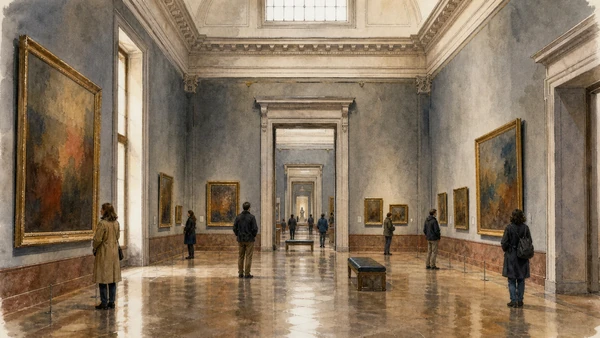
Major Italian paintings are organised through a museum history shaped by academies, suppression and national cultural policy.

Pinacoteca di Brera: collection, state formation and display

Major Italian paintings are organised through a museum history shaped by academies, suppression and national cultural policy. The site becomes clearer when its surviving fabric, later alterations and present use are read together.

Today

Opening, ticketing, room access and temporary displays can change. Check the institution’s official notice shortly before visiting, use the designated entrance and allow for security or conservation controls.

History

The gallery’s roots lie in the Academy collection of 1776; it opened as a national museum in 1809 and expanded through transfers, donations and acquisitions.

How to read this place

Begin with provenance and acquisition labels. Then compare the dialogue between works in each room with the architecture and lighting of the display; the differences are evidence, not visual noise.

What to notice

  • provenance and acquisition labels
  • the dialogue between works in each room
  • the architecture and lighting of the display
Pinacoteca di Brera · Official site
Original documentary watercolour of Pinacoteca di Brera: collection, state formation and display in Milan · Lombardy, showing accurate architecture, landscape, people and present-day use
Pinacoteca di Brera: collection, state formation and displayOriginal Merlintravel documentary watercolour · 2026
03

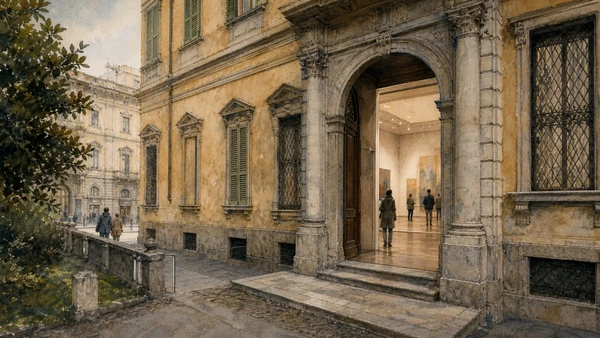
A historic palace adapted for twentieth-century art extends the Pinacoteca beyond its original building.

Palazzo Citterio: modern collections within Grande Brera

A historic palace adapted for twentieth-century art extends the Pinacoteca beyond its original building. The site becomes clearer when its surviving fabric, later alterations and present use are read together.

Today

Opening, ticketing, room access and temporary displays can change. Check the institution’s official notice shortly before visiting, use the designated entrance and allow for security or conservation controls.

History

Acquired for Brera in the twentieth century, the palace passed through long restoration and museum-planning phases before becoming a key part of the expanded institution.

How to read this place

Begin with the relationship between historic rooms and new display. Then compare modern collections and donor histories with the route back toward palazzo brera; the differences are evidence, not visual noise.

What to notice

  • the relationship between historic rooms and new display
  • modern collections and donor histories
  • the route back toward Palazzo Brera
Pinacoteca di Brera · Official site
Original documentary watercolour of Palazzo Citterio: modern collections within Grande Brera in Milan · Lombardy, showing accurate architecture, landscape, people and present-day use
Palazzo Citterio: modern collections within Grande BreraOriginal Merlintravel documentary watercolour · 2026
04

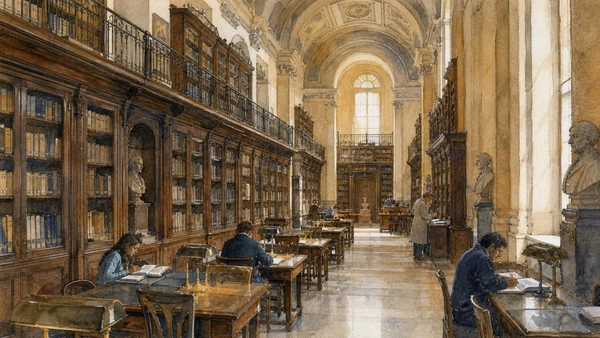
Historic reading rooms and collections preserve the library dimension of Brera’s public knowledge system.

Biblioteca Nazionale Braidense: books inside the institutional palace

Historic reading rooms and collections preserve the library dimension of Brera’s public knowledge system. The site becomes clearer when its surviving fabric, later alterations and present use are read together.

Today

Opening, ticketing, room access and temporary displays can change. Check the institution’s official notice shortly before visiting, use the designated entrance and allow for security or conservation controls.

History

Founded under Austrian rule in the eighteenth century, the library grew through suppressed institutions, legal deposit and specialist collections.

How to read this place

Begin with the monumental reading-room structure. Then compare cataloguing and controlled consultation with the shared palace context; the differences are evidence, not visual noise.

What to notice

  • the monumental reading-room structure
  • cataloguing and controlled consultation
  • the shared palace context
Pinacoteca di Brera · Official site
Original documentary watercolour of Biblioteca Nazionale Braidense: books inside the institutional palace in Milan · Lombardy, showing accurate architecture, landscape, people and present-day use
Biblioteca Nazionale Braidense: books inside the institutional palaceOriginal Merlintravel documentary watercolour · 2026
05

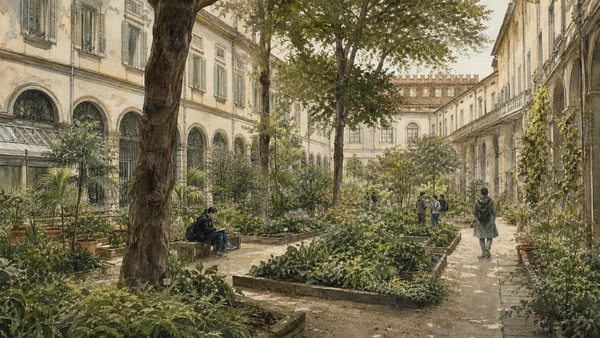
Plant collections and teaching plots survive behind dense streets as part of the palace’s scientific history.

Orto Botanico di Brera: scientific study in a hidden garden

Plant collections and teaching plots survive behind dense streets as part of the palace’s scientific history. The site becomes clearer when its surviving fabric, later alterations and present use are read together.

Today

Opening, ticketing, room access and temporary displays can change. Check the institution’s official notice shortly before visiting, use the designated entrance and allow for security or conservation controls.

History

The garden was reorganised in the eighteenth century for education and research, linking botanical classification to wider Enlightenment institutions.

How to read this place

Begin with the ordered beds and paths. Then compare mature specimens and specialist collections with palace walls enclosing the garden; the differences are evidence, not visual noise.

What to notice

  • the ordered beds and paths
  • mature specimens and specialist collections
  • palace walls enclosing the garden
Pinacoteca di Brera · Official site
Original documentary watercolour of Orto Botanico di Brera: scientific study in a hidden garden in Milan · Lombardy, showing accurate architecture, landscape, people and present-day use
Orto Botanico di Brera: scientific study in a hidden gardenOriginal Merlintravel documentary watercolour · 2026
06

Astronomical instruments and research history connect the palace to navigation, timekeeping, geodesy and modern science.

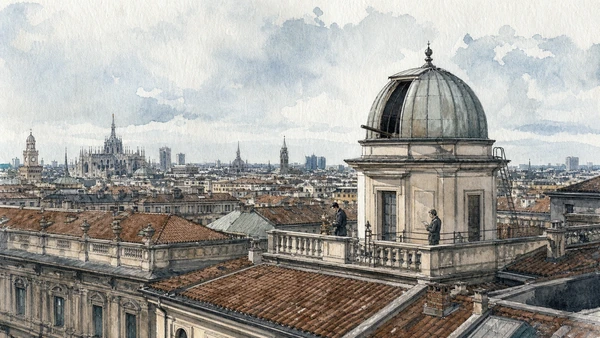
Brera Observatory: measurement above the city

Astronomical instruments and research history connect the palace to navigation, timekeeping, geodesy and modern science. The site becomes clearer when its surviving fabric, later alterations and present use are read together.

Today

Opening, ticketing, room access and temporary displays can change. Check the institution’s official notice shortly before visiting, use the designated entrance and allow for security or conservation controls.

History

Jesuit scientific activity preceded the formal eighteenth-century observatory, which developed through state patronage and later national research structures.

How to read this place

Begin with the observatory volumes above the palace. Then compare historic instruments and measurement with the urban sky surrounding the site; the differences are evidence, not visual noise.

What to notice

  • the observatory volumes above the palace
  • historic instruments and measurement
  • the urban sky surrounding the site
Pinacoteca di Brera · Official site
Original documentary watercolour of Brera Observatory: measurement above the city in Milan · Lombardy, showing accurate architecture, landscape, people and present-day use
Brera Observatory: measurement above the cityOriginal Merlintravel documentary watercolour · 2026
07

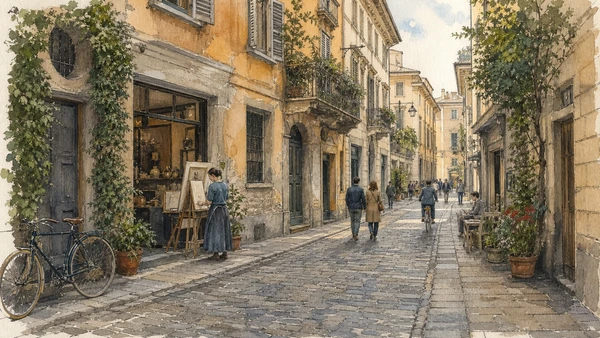
Narrow streets around the institutions mix historic fabric, homes, commerce and an increasingly curated district identity.

Brera streets: residence, workshops and cultural branding

Narrow streets around the institutions mix historic fabric, homes, commerce and an increasingly curated district identity. The site becomes clearer when its surviving fabric, later alterations and present use are read together.

Today

The area is inhabited and worked, not staged for visitors. Keep doorways, pavements, cycle lanes and deliveries clear, ask before photographing people and use current municipal mobility information.

History

Religious houses, artisans, students and residents shaped the quarter before galleries, fashion and visitor economies intensified its cultural brand.

How to read this place

Begin with building plots and internal courtyards. Then compare working and residential thresholds with new commercial display against older fabric; the differences are evidence, not visual noise.

What to notice

  • building plots and internal courtyards
  • working and residential thresholds
  • new commercial display against older fabric
Comune di Milano · Official city portal
Original documentary watercolour of Brera streets: residence, workshops and cultural branding in Milan · Lombardy, showing accurate architecture, landscape, people and present-day use
Brera streets: residence, workshops and cultural brandingOriginal Merlintravel documentary watercolour · 2026
08

Auditorium, stage, workshops and audience rituals form a working opera house rather than a static monument.

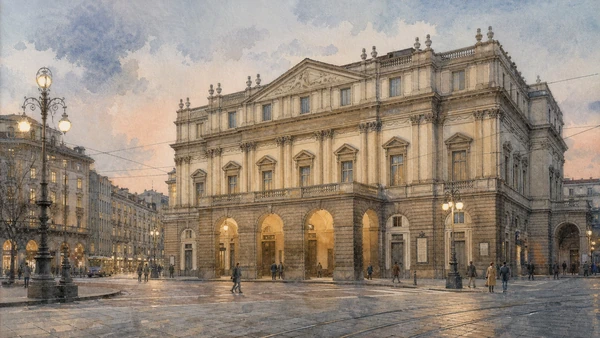
Teatro alla Scala: performance behind a restrained façade

Auditorium, stage, workshops and audience rituals form a working opera house rather than a static monument. The site becomes clearer when its surviving fabric, later alterations and present use are read together.

Today

Opening, ticketing, room access and temporary displays can change. Check the institution’s official notice shortly before visiting, use the designated entrance and allow for security or conservation controls.

History

Opened in 1778 to a design by Giuseppe Piermarini, La Scala was rebuilt after wartime damage and repeatedly updated for modern production.

How to read this place

Begin with the theatre’s relationship to the square. Then compare auditorium geometry when legitimately visible with the technical and public systems that support performance; the differences are evidence, not visual noise.

What to notice

  • the theatre’s relationship to the square
  • auditorium geometry when legitimately visible
  • the technical and public systems that support performance
Museo Teatrale alla Scala · Official visit information
Original documentary watercolour of Teatro alla Scala: performance behind a restrained façade in Milan · Lombardy, showing accurate architecture, landscape, people and present-day use
Teatro alla Scala: performance behind a restrained façadeOriginal Merlintravel documentary watercolour · 2026
09

Portraits, instruments, costumes and documents reconstruct performance histories while access to the theatre depends on rehearsals.

Museo Teatrale alla Scala: objects, artists and theatre memory

Portraits, instruments, costumes and documents reconstruct performance histories while access to the theatre depends on rehearsals. The site becomes clearer when its surviving fabric, later alterations and present use are read together.

Today

Opening, ticketing, room access and temporary displays can change. Check the institution’s official notice shortly before visiting, use the designated entrance and allow for security or conservation controls.

History

The museum opened in the early twentieth century and grew through collecting and donation around composers, singers, stagecraft and the institution.

How to read this place

Begin with objects tied to named performances. Then compare portraits and celebrity memory with the conditional view into the auditorium; the differences are evidence, not visual noise.

What to notice

  • objects tied to named performances
  • portraits and celebrity memory
  • the conditional view into the auditorium
Museo Teatrale alla Scala · Official visit information
Original documentary watercolour of Museo Teatrale alla Scala: objects, artists and theatre memory in Milan · Lombardy, showing accurate architecture, landscape, people and present-day use
Museo Teatrale alla Scala: objects, artists and theatre memoryOriginal Merlintravel documentary watercolour · 2026
10

Historic bank buildings adapted as galleries connect art patronage and financial power directly to the municipal square.

Gallerie d’Italia and Piazza Scala: banking collections in civic space

Historic bank buildings adapted as galleries connect art patronage and financial power directly to the municipal square. The site becomes clearer when its surviving fabric, later alterations and present use are read together.

Today

Opening, ticketing, room access and temporary displays can change. Check the institution’s official notice shortly before visiting, use the designated entrance and allow for security or conservation controls.

History

Nineteenth- and twentieth-century banking premises were joined and converted to display collections, adding another institutional layer around La Scala and Palazzo Marino.

How to read this place

Begin with the sequence of former bank interiors. Then compare works connected to milan and italian modernity with the exit back into piazza della scala; the differences are evidence, not visual noise.

What to notice

  • the sequence of former bank interiors
  • works connected to Milan and Italian modernity
  • the exit back into Piazza della Scala
Gallerie d’Italia · Milano
Original documentary watercolour of Gallerie d'Italia and Piazza Scala: banking collections in civic space in Milan · Lombardy, showing accurate architecture, landscape, people and present-day use
Gallerie d’Italia and Piazza Scala: banking collections in civic spaceOriginal Merlintravel documentary watercolour · 2026

Milan through time

A short chronology

From Insubrian settlement and imperial Mediolanum to the ducal court, industrial metropolis, wartime rupture and contemporary redevelopment.

  1. An Insubrian settlement develops on the plain at the crossing of routes later absorbed by Roman Mediolanum.

  2. Roman forces take Mediolanum, which grows into a major Cisalpine administrative and commercial centre.

  3. Milan becomes an imperial residence in the western Roman Empire and gains palace, circus, baths and monumental infrastructure.

  4. The agreement associated with Constantine and Licinius establishes religious toleration and becomes inseparable from Milan’s Christian memory.

  5. Ambrose serves as bishop; basilicas, burial places and episcopal authority reshape the late-antique city.

  6. Frederick Barbarossa’s forces destroy much of Milan; reconstruction and communal institutions subsequently re-form the city.

  7. Visconti power becomes dominant, beginning a long phase of ducal patronage, fortification and territorial government.

  8. Construction of the Duomo begins, creating a building site and civic-religious institution that continue across centuries.

  9. Sforza rule renews the castle and court while artists, engineers and scholars, including Leonardo, work within ducal networks.

  10. Spanish Habsburg administration reshapes government, defence, religion and the social geography of the city.

  11. French and Napoleonic rule reorganises institutions, collections, ceremonial space and Milan’s role in northern Italy.

  12. Austrian rule ends and Milan enters the Kingdom of Italy, accelerating railway, industrial and civic expansion.

  13. The present Milano Centrale opens as a monumental transport complex within a rapidly expanding metropolis.

  14. Bombing, occupation, resistance and liberation damage monuments, housing and industry and leave a difficult memorial landscape.

  15. Post-war migration, design and manufacturing, deindustrialisation, Expo 2015 and metropolitan redevelopment repeatedly transform the city.

Before your visit

Practical information

01

Check the live page

Opening hours, reservation systems, restoration, exhibitions and transport can change. Recheck the linked official institution shortly before departure.

02

Separate worship and tourism

Churches and sanctuaries remain religious spaces. Services, funerals and community use take priority over visitor itineraries.

03

Plan real distances

Milan · Lombardy combines dense urban routes with lakes, valleys and dispersed towns. Do not compress distant chapters into an unsafe or superficial day.

04

Keep thresholds open

Arcades, station halls, markets, courtyards, workshops and residential streets must continue to function while you observe or photograph them.

05

Use current mobility data

Check the responsible rail, navigation, bus, road or park operator on the day; replacement services and weather can change an otherwise sound route.

06

Read change honestly

Restoration, reconstruction, adaptive reuse and new development have all shaped the landscape visible today.

Method and sources

Sources and image credits

This guide uses official museum, ministry, municipal, transport, park and UNESCO documentation checked on 29 August 2026. It separates durable historical interpretation from access details that can change, distinguishes surviving fabric from restoration or reconstruction, and treats worship, work, residence and public movement as part of the evidence. Every chapter links its principal institutional source; tickets, closures, weather and transport must always be verified again on the day of the visit.

All ten images are original Merlintravel editorial watercolours based on documented present-day conditions. They are illustrations, not substitutes for archaeological plans. Opening hours, tickets, accessible routes, temporary exhibitions and conservation work can change; consult the linked official pages shortly before visiting.