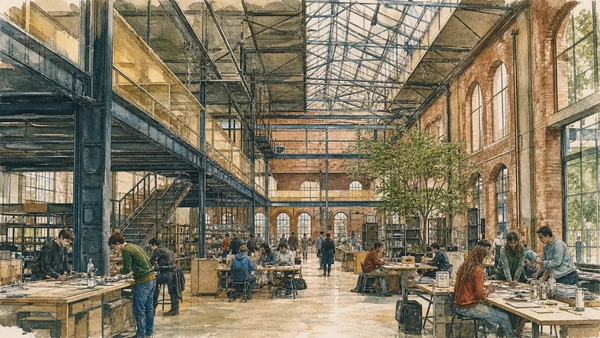
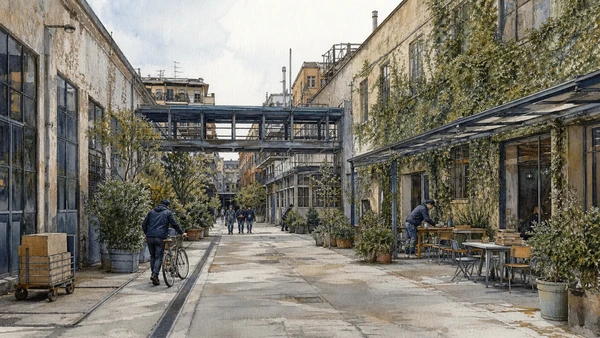
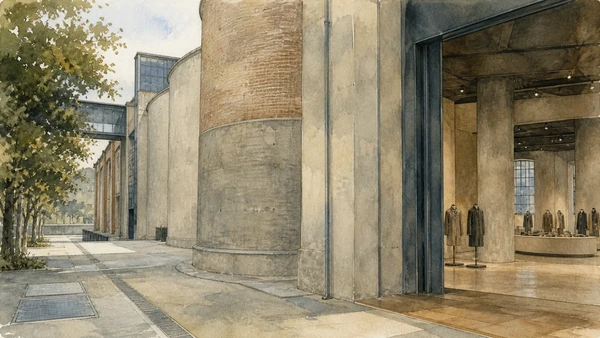
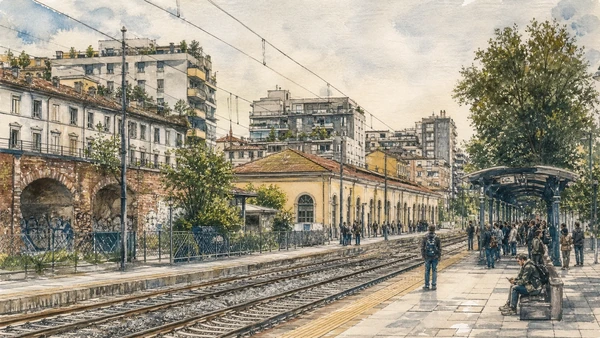
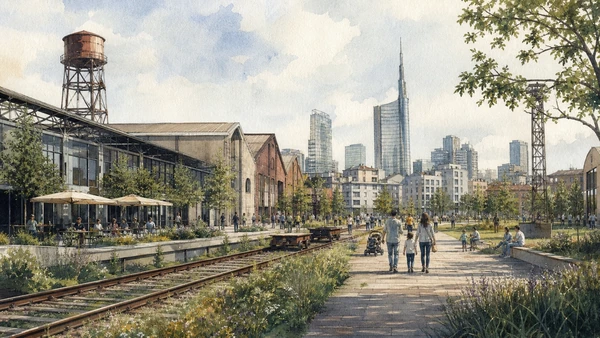
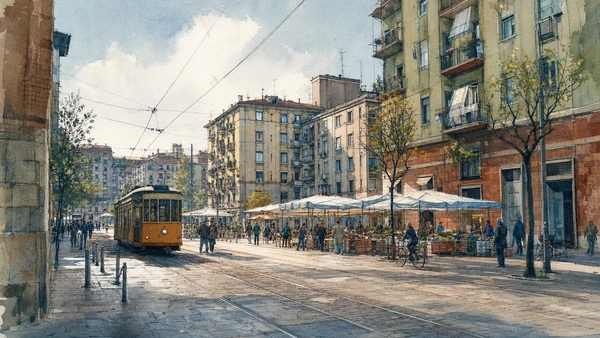
Original documentary watercolour panorama for Milan Tortona, MUDEC, Design and Industrial Memory: Complete Guide, with accurate Lombardy architecture, landscape and lived context

Milan Guide 09 · Ansaldo industry, global collections, provenance, design production, fashion and working neighbourhoods

Tortona, MUDEC
& Industrial Memory

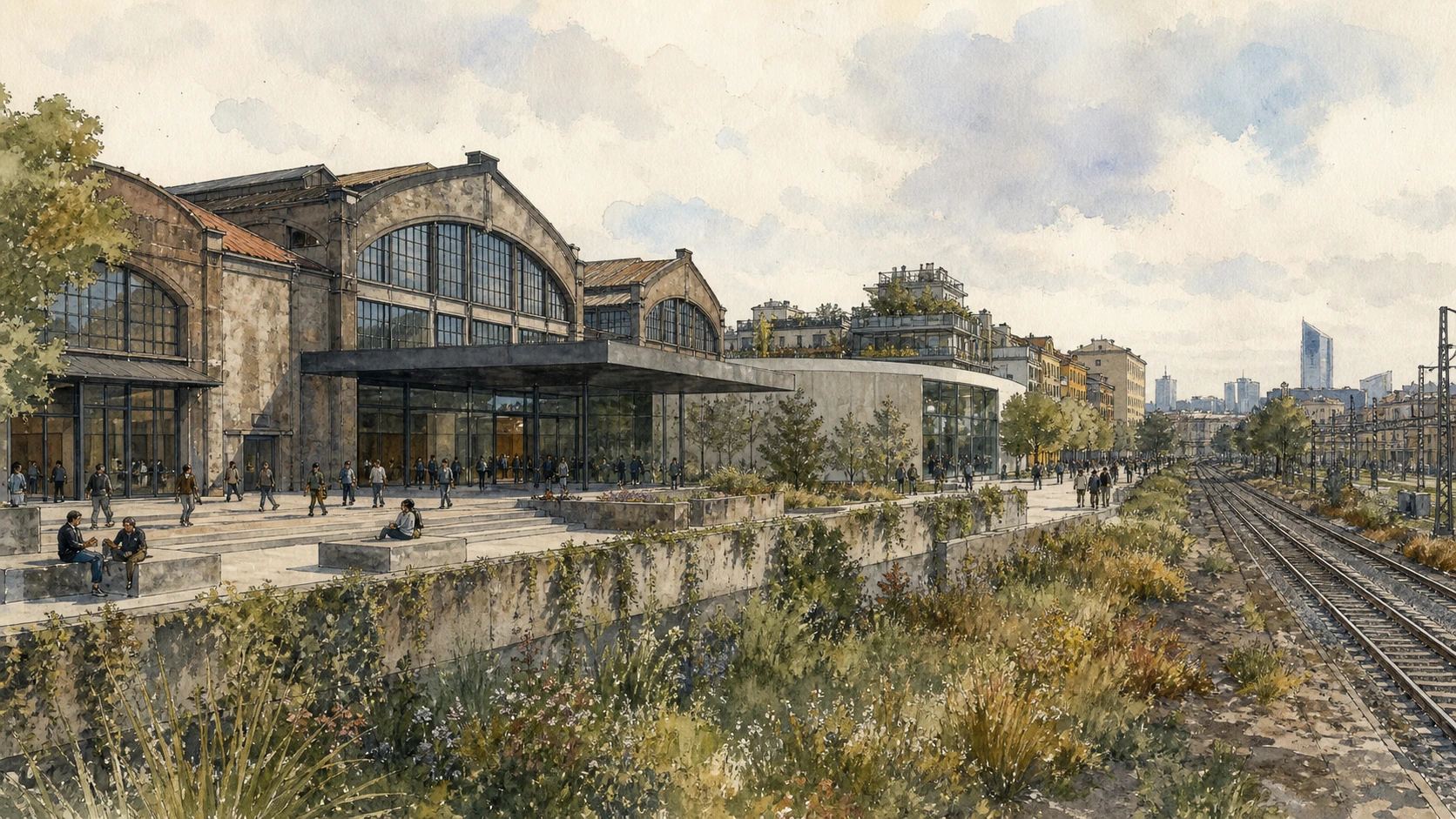
A complete route through former Ansaldo industrial buildings and the MUDEC-BASE cultural system, then across the Tortona design district, fashion archives, Porta Genova railway edge and the working neighbourhoods beyond the showroom image.

Plan the route
Milan · Lombardy10 chapters · one complete route

Why this route must be read in layers

Tortona’s cultural identity is built inside reused industrial and railway fabric: museums, design events and fashion depend on spaces whose earlier labour and surrounding residential histories remain essential evidence.

The Ansaldo works formed part of Milan’s industrial production system. Municipal acquisition and gradual cultural reuse preserved substantial structures while changing circulation, ownership and the meaning of work inside them.

MUDEC combines civic ethnographic collections with exhibitions and public-private management. Provenance research is central because objects from Africa, Asia, the Americas and Oceania entered Milan through unequal histories of travel, collecting and colonial power.

Design-week visibility can overwhelm the year-round district. Workshops, rail infrastructure, schools, housing and migrant communities complicate a simple story of creative regeneration and must remain present in the route.

Begin with industrial structure and collection ethics before moving into branded design streets; end beyond Tortona so that cultural reuse remains connected to rail, housing and work.

The route

Plan your visit

Start in the former Ansaldo complex, separate museum and cultural-production functions, then trace fashion, design, rail and neighbourhood layers across Tortona and Solari.

Early morning

Former Ansaldo works · MUDEC architecture · MUDEC collections

Move in the documented order: Former Ansaldo works: industrial structure before cultural branding; then MUDEC architecture: a new museum within retained sheds; then MUDEC collections: Milan and cultures beyond Europe. Recheck live access and transport before entering a controlled site.

Late morning

Provenance research · BASE Milano · Via Tortona

Move in the documented order: Provenance research: how objects reached Milan; then BASE Milano: cultural production inside the factory; then Via Tortona: design district and event economy. Recheck live access and transport before entering a controlled site.

Afternoon

Armani/Silos · Porta Genova station · Solari and the former railway-industrial belt

Move in the documented order: Armani/Silos: fashion archive in a converted granary; then Porta Genova station: rail infrastructure at the district edge; then Solari and the former railway-industrial belt. Recheck live access and transport before entering a controlled site.

Late afternoon

Lorenteggio and Giambellino

Move in the documented order: Lorenteggio and Giambellino: the working city beyond the showroom. Recheck live access and transport before entering a controlled site.

Ten chapters

Explore the places

The order follows terrain, institutions and present-day movement. Use the index to return to a chapter without reducing the route to isolated monuments.

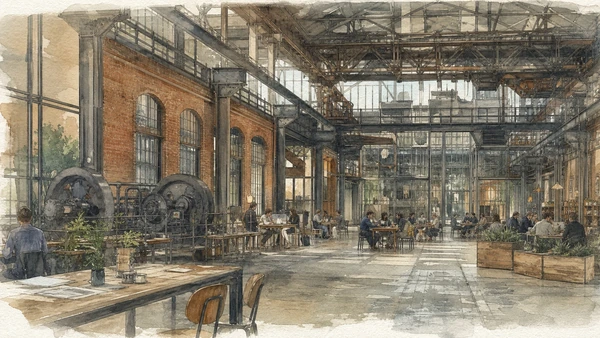
  1. 01Former Ansaldo works: industrial structure before cultural branding
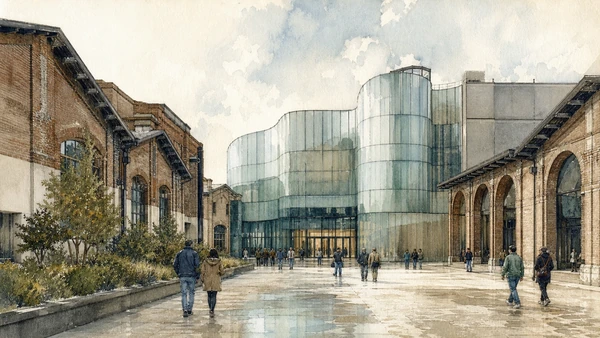
  2. 02MUDEC architecture: a new museum within retained sheds
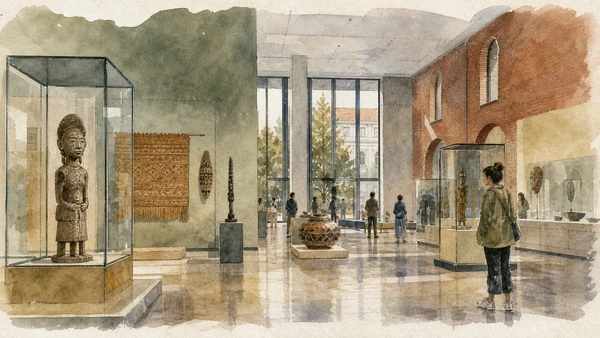
  3. 03MUDEC collections: Milan and cultures beyond Europe
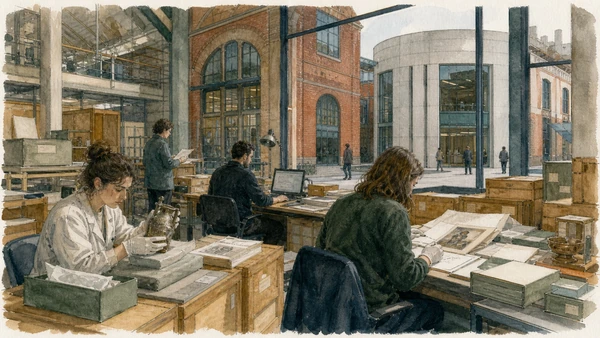
  4. 04Provenance research: how objects reached Milan
  5. 05BASE Milano: cultural production inside the factory
  6. 06Via Tortona: design district and event economy
  7. 07Armani/Silos: fashion archive in a converted granary
  8. 08Porta Genova station: rail infrastructure at the district edge
  9. 09Solari and the former railway-industrial belt
  10. 10Lorenteggio and Giambellino: the working city beyond the showroom
01

Large spans, courtyards and service routes preserve the spatial logic of manufacturing inside today’s cultural district.

Former Ansaldo works: industrial structure before cultural branding

Large spans, courtyards and service routes preserve the spatial logic of manufacturing inside today’s cultural district. The site becomes clearer when its surviving fabric, later alterations and present use are read together.

Today

The area is inhabited and worked, not staged for visitors. Keep doorways, pavements, cycle lanes and deliveries clear, ask before photographing people and use current municipal mobility information.

History

Engineering and industrial activity occupied the complex through major phases of Milanese production before municipal acquisition supported archives, workshops, museums and events.

How to read this place

Begin with shed spans and structural grids. Then compare large doors and service circulation with new insertions that enable cultural use; the differences are evidence, not visual noise.

What to notice

  • shed spans and structural grids
  • large doors and service circulation
  • new insertions that enable cultural use
MUDEC · Museo delle Culture
Original documentary watercolour of Former Ansaldo works: industrial structure before cultural branding in Milan · Lombardy, showing accurate architecture, landscape, people and present-day use
Former Ansaldo works: industrial structure before cultural brandingOriginal Merlintravel documentary watercolour · 2026
02

A luminous central hall and angular galleries create a contemporary interior behind the more restrained industrial perimeter.

MUDEC architecture: a new museum within retained sheds

A luminous central hall and angular galleries create a contemporary interior behind the more restrained industrial perimeter. The site becomes clearer when its surviving fabric, later alterations and present use are read together.

Today

Opening, ticketing, room access and temporary displays can change. Check the institution’s official notice shortly before visiting, use the designated entrance and allow for security or conservation controls.

History

David Chipperfield Architects designed the museum intervention after a long redevelopment process, opening new exhibition and civic spaces within the former works.

How to read this place

Begin with the transition from brick exterior to central hall. Then compare gallery volumes and controlled light with retained industrial courtyards around the building; the differences are evidence, not visual noise.

What to notice

  • the transition from brick exterior to central hall
  • gallery volumes and controlled light
  • retained industrial courtyards around the building
MUDEC · Museo delle Culture
Original documentary watercolour of MUDEC architecture: a new museum within retained sheds in Milan · Lombardy, showing accurate architecture, landscape, people and present-day use
MUDEC architecture: a new museum within retained shedsOriginal Merlintravel documentary watercolour · 2026
03

Civic ethnographic holdings connect objects to collectors, exhibitions, migration and the institutions that classified them.

MUDEC collections: Milan and cultures beyond Europe

Civic ethnographic holdings connect objects to collectors, exhibitions, migration and the institutions that classified them. The site becomes clearer when its surviving fabric, later alterations and present use are read together.

Today

Opening, ticketing, room access and temporary displays can change. Check the institution’s official notice shortly before visiting, use the designated entrance and allow for security or conservation controls.

History

Milan’s non-European collections grew through nineteenth- and twentieth-century collecting, missions, expeditions, donations and civic museum reorganisation.

How to read this place

Begin with object provenance in the labels. Then compare the categories used to organise cultures with voices and contexts added by current interpretation; the differences are evidence, not visual noise.

What to notice

  • object provenance in the labels
  • the categories used to organise cultures
  • voices and contexts added by current interpretation
MUDEC · Museo delle Culture
Original documentary watercolour of MUDEC collections: Milan and cultures beyond Europe in Milan · Lombardy, showing accurate architecture, landscape, people and present-day use
MUDEC collections: Milan and cultures beyond EuropeOriginal Merlintravel documentary watercolour · 2026
04

Research into acquisition, colonial context, ownership and community knowledge changes how collections are catalogued and displayed.

Provenance research: how objects reached Milan

Research into acquisition, colonial context, ownership and community knowledge changes how collections are catalogued and displayed. The site becomes clearer when its surviving fabric, later alterations and present use are read together.

Today

Opening, ticketing, room access and temporary displays can change. Check the institution’s official notice shortly before visiting, use the designated entrance and allow for security or conservation controls.

History

Museums inherited records shaped by unequal power and incomplete documentation. Current study can identify collectors, routes, contested ownership and gaps without pretending every case is resolved.

How to read this place

Begin with dates and names in acquisition histories. Then compare places where documentation remains uncertain with collaboration or reinterpretation acknowledged by the museum; the differences are evidence, not visual noise.

What to notice

  • dates and names in acquisition histories
  • places where documentation remains uncertain
  • collaboration or reinterpretation acknowledged by the museum
MUDEC · Museo delle Culture
Original documentary watercolour of Provenance research: how objects reached Milan in Milan · Lombardy, showing accurate architecture, landscape, people and present-day use
Provenance research: how objects reached MilanOriginal Merlintravel documentary watercolour · 2026
05

Studios, performance, exhibitions and hospitality occupy industrial space as an active production platform rather than a conventional museum.

BASE Milano: cultural production inside the factory

Studios, performance, exhibitions and hospitality occupy industrial space as an active production platform rather than a conventional museum. The site becomes clearer when its surviving fabric, later alterations and present use are read together.

Today

The area is inhabited and worked, not staged for visitors. Keep doorways, pavements, cycle lanes and deliveries clear, ask before photographing people and use current municipal mobility information.

History

BASE developed within the wider Ansaldo cultural conversion, using adaptable halls for creative work, public programmes and temporary communities.

How to read this place

Begin with shared work and event areas. Then compare retained industrial material with temporary installations that do not erase the building; the differences are evidence, not visual noise.

What to notice

  • shared work and event areas
  • retained industrial material
  • temporary installations that do not erase the building
BASE Milano · Official site
Original documentary watercolour of BASE Milano: cultural production inside the factory in Milan · Lombardy, showing accurate architecture, landscape, people and present-day use
BASE Milano: cultural production inside the factoryOriginal Merlintravel documentary watercolour · 2026
06

Showrooms, studios, courtyards and temporary installations concentrate visibility during design and fashion events.

Via Tortona: design district and event economy

Showrooms, studios, courtyards and temporary installations concentrate visibility during design and fashion events. The site becomes clearer when its surviving fabric, later alterations and present use are read together.

Today

The area is inhabited and worked, not staged for visitors. Keep doorways, pavements, cycle lanes and deliveries clear, ask before photographing people and use current municipal mobility information.

History

Industrial and logistical premises attracted creative reuse from the late twentieth century onward, building a district brand amplified by the Salone del Mobile period.

How to read this place

Begin with former industrial depths behind street façades. Then compare temporary event structures with ordinary year-round use outside festival periods; the differences are evidence, not visual noise.

What to notice

  • former industrial depths behind street façades
  • temporary event structures
  • ordinary year-round use outside festival periods
Comune di Milano · Official city portal
Original documentary watercolour of Via Tortona: design district and event economy in Milan · Lombardy, showing accurate architecture, landscape, people and present-day use
Via Tortona: design district and event economyOriginal Merlintravel documentary watercolour · 2026
07

A private museum uses a former industrial building to organise decades of fashion through themes selected by the brand.

Armani/Silos: fashion archive in a converted granary

A private museum uses a former industrial building to organise decades of fashion through themes selected by the brand. The site becomes clearer when its surviving fabric, later alterations and present use are read together.

Today

Opening, ticketing, room access and temporary displays can change. Check the institution’s official notice shortly before visiting, use the designated entrance and allow for security or conservation controls.

History

The building’s storage history informed its reuse as an exhibition space opened in 2015, joining fashion archive, corporate memory and district regeneration.

How to read this place

Begin with the retained concrete mass. Then compare garments grouped by curatorial theme with the distinction between archive and corporate narrative; the differences are evidence, not visual noise.

What to notice

  • the retained concrete mass
  • garments grouped by curatorial theme
  • the distinction between archive and corporate narrative
Armani/Silos · Official site
Original documentary watercolour of Armani/Silos: fashion archive in a converted granary in Milan · Lombardy, showing accurate architecture, landscape, people and present-day use
Armani/Silos: fashion archive in a converted granaryOriginal Merlintravel documentary watercolour · 2026
08

A nineteenth-century station and its tracks explain both the area’s industrial access and its long barrier between neighbourhoods.

Porta Genova station: rail infrastructure at the district edge

A nineteenth-century station and its tracks explain both the area’s industrial access and its long barrier between neighbourhoods. The site becomes clearer when its surviving fabric, later alterations and present use are read together.

Today

Timetables, engineering works, capacity and accessibility arrangements can change. Check the operator on the day, leave a realistic connection margin and never enter tracks, depots or restricted infrastructure.

History

The station developed with the Milan–Mortara line and supported freight and passenger movement. Changing rail plans and temporary crossings continue to affect the surrounding district.

How to read this place

Begin with the station building and platform approach. Then compare tracks dividing urban blocks with pedestrian links toward navigli and tortona; the differences are evidence, not visual noise.

What to notice

  • the station building and platform approach
  • tracks dividing urban blocks
  • pedestrian links toward Navigli and Tortona
RFI · Railway stations
Original documentary watercolour of Porta Genova station: rail infrastructure at the district edge in Milan · Lombardy, showing accurate architecture, landscape, people and present-day use
Porta Genova station: rail infrastructure at the district edgeOriginal Merlintravel documentary watercolour · 2026
09

Housing, park space and reused production sites reveal planning beyond the highly branded Tortona streets.

Solari and the former railway-industrial belt

Housing, park space and reused production sites reveal planning beyond the highly branded Tortona streets. The site becomes clearer when its surviving fabric, later alterations and present use are read together.

Today

The area is inhabited and worked, not staged for visitors. Keep doorways, pavements, cycle lanes and deliveries clear, ask before photographing people and use current municipal mobility information.

History

Industrial expansion and railway access drew workers and new housing; later public projects and deindustrialisation redistributed land between residence, culture and services.

How to read this place

Begin with housing types from different decades. Then compare former production buildings with public green and school infrastructure; the differences are evidence, not visual noise.

What to notice

  • housing types from different decades
  • former production buildings
  • public green and school infrastructure
Comune di Milano · Official city portal
Original documentary watercolour of Solari and the former railway-industrial belt in Milan · Lombardy, showing accurate architecture, landscape, people and present-day use
Solari and the former railway-industrial beltOriginal Merlintravel documentary watercolour · 2026
10

Public housing, local markets, migration and infrastructure connect the creative district to broader western Milan.

Lorenteggio and Giambellino: the working city beyond the showroom

Public housing, local markets, migration and infrastructure connect the creative district to broader western Milan. The site becomes clearer when its surviving fabric, later alterations and present use are read together.

Today

The area is inhabited and worked, not staged for visitors. Keep doorways, pavements, cycle lanes and deliveries clear, ask before photographing people and use current municipal mobility information.

History

Twentieth-century expansion produced large residential quarters shaped by industry, social housing and later migration. Current transport and regeneration projects affect daily access and land values.

How to read this place

Begin with housing estates and street scale. Then compare local commerce and community facilities with construction or mobility changes at the district edge; the differences are evidence, not visual noise.

What to notice

  • housing estates and street scale
  • local commerce and community facilities
  • construction or mobility changes at the district edge
Comune di Milano · Official city portal
Original documentary watercolour of Lorenteggio and Giambellino: the working city beyond the showroom in Milan · Lombardy, showing accurate architecture, landscape, people and present-day use
Lorenteggio and Giambellino: the working city beyond the showroomOriginal Merlintravel documentary watercolour · 2026

Milan through time

A short chronology

From Insubrian settlement and imperial Mediolanum to the ducal court, industrial metropolis, wartime rupture and contemporary redevelopment.

  1. An Insubrian settlement develops on the plain at the crossing of routes later absorbed by Roman Mediolanum.

  2. Roman forces take Mediolanum, which grows into a major Cisalpine administrative and commercial centre.

  3. Milan becomes an imperial residence in the western Roman Empire and gains palace, circus, baths and monumental infrastructure.

  4. The agreement associated with Constantine and Licinius establishes religious toleration and becomes inseparable from Milan’s Christian memory.

  5. Ambrose serves as bishop; basilicas, burial places and episcopal authority reshape the late-antique city.

  6. Frederick Barbarossa’s forces destroy much of Milan; reconstruction and communal institutions subsequently re-form the city.

  7. Visconti power becomes dominant, beginning a long phase of ducal patronage, fortification and territorial government.

  8. Construction of the Duomo begins, creating a building site and civic-religious institution that continue across centuries.

  9. Sforza rule renews the castle and court while artists, engineers and scholars, including Leonardo, work within ducal networks.

  10. Spanish Habsburg administration reshapes government, defence, religion and the social geography of the city.

  11. French and Napoleonic rule reorganises institutions, collections, ceremonial space and Milan’s role in northern Italy.

  12. Austrian rule ends and Milan enters the Kingdom of Italy, accelerating railway, industrial and civic expansion.

  13. The present Milano Centrale opens as a monumental transport complex within a rapidly expanding metropolis.

  14. Bombing, occupation, resistance and liberation damage monuments, housing and industry and leave a difficult memorial landscape.

  15. Post-war migration, design and manufacturing, deindustrialisation, Expo 2015 and metropolitan redevelopment repeatedly transform the city.

Before your visit

Practical information

01

Check the live page

Opening hours, reservation systems, restoration, exhibitions and transport can change. Recheck the linked official institution shortly before departure.

02

Separate worship and tourism

Churches and sanctuaries remain religious spaces. Services, funerals and community use take priority over visitor itineraries.

03

Plan real distances

Milan · Lombardy combines dense urban routes with lakes, valleys and dispersed towns. Do not compress distant chapters into an unsafe or superficial day.

04

Keep thresholds open

Arcades, station halls, markets, courtyards, workshops and residential streets must continue to function while you observe or photograph them.

05

Use current mobility data

Check the responsible rail, navigation, bus, road or park operator on the day; replacement services and weather can change an otherwise sound route.

06

Read change honestly

Restoration, reconstruction, adaptive reuse and new development have all shaped the landscape visible today.

Method and sources

Sources and image credits

This guide uses official museum, ministry, municipal, transport, park and UNESCO documentation checked on 29 August 2026. It separates durable historical interpretation from access details that can change, distinguishes surviving fabric from restoration or reconstruction, and treats worship, work, residence and public movement as part of the evidence. Every chapter links its principal institutional source; tickets, closures, weather and transport must always be verified again on the day of the visit.

All ten images are original Merlintravel editorial watercolours based on documented present-day conditions. They are illustrations, not substitutes for archaeological plans. Opening hours, tickets, accessible routes, temporary exhibitions and conservation work can change; consult the linked official pages shortly before visiting.