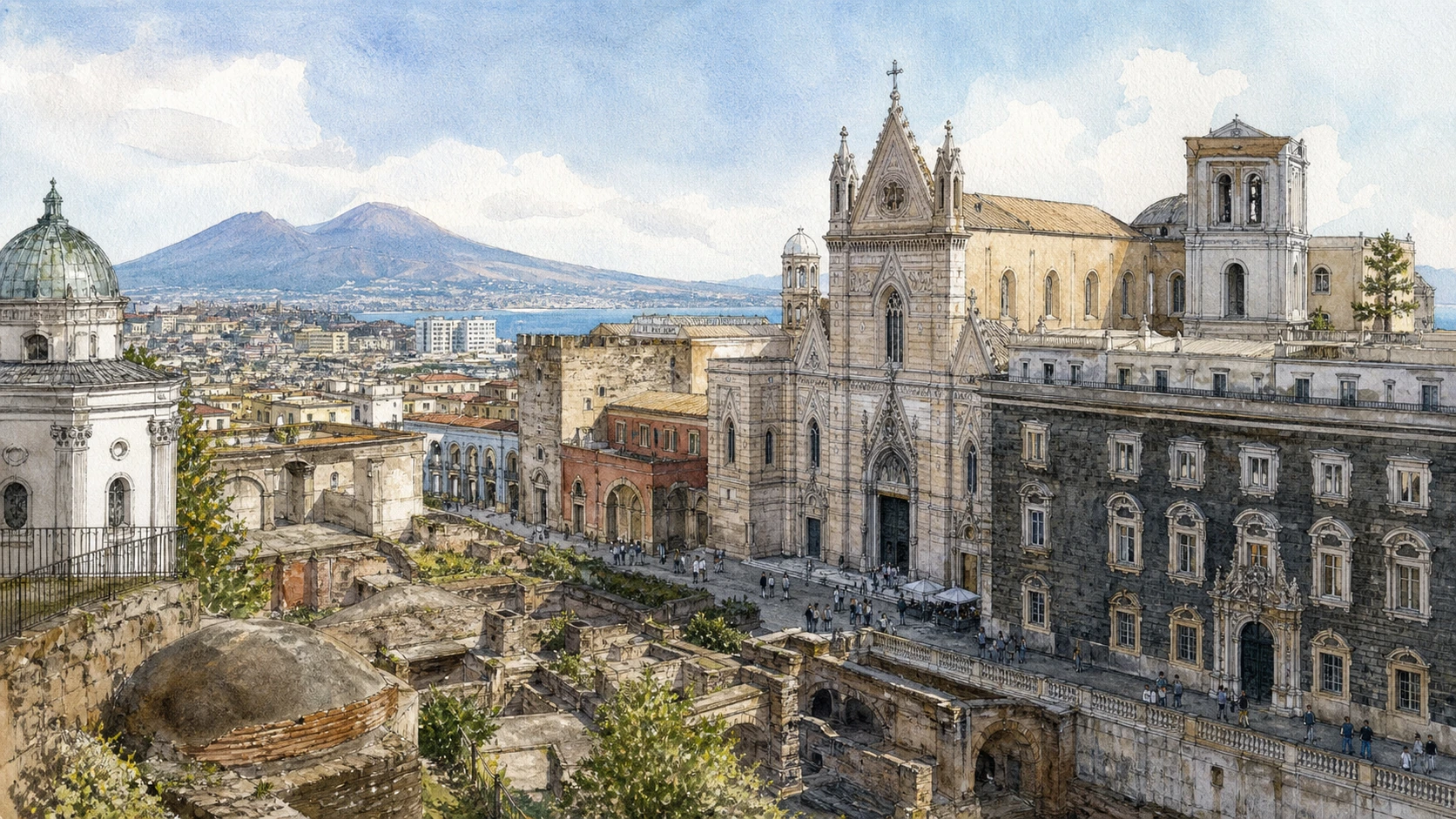
Original documentary watercolour panorama for Naples Cathedral, San Gennaro and the Sacred City: Complete Guide, with accurate Naples architecture and lived urban context

Naples Guide 02 · Cathedral precinct, patronal devotion, confraternities, libraries and living worship

Cathedral, San Gennaro
& the Sacred City

A documented route through Naples’s episcopal and devotional landscape, connecting the Cathedral, early Christian remains, the Treasure of San Gennaro, charitable institutions, monastic museums and active religious practice.

Plan the route
Naples · Campania10 chapters · one full day

Why this Naples district must be read in layers

Sacred Naples is an institutional city: cathedral, chapels, confraternities, charitable foundations, monasteries and neighbourhood processions preserved different forms of authority and care.

The Cathedral is a complex rather than one façade. Santa Restituta, the Baptistery of San Giovanni in Fonte, medieval and Baroque chapels, archaeological traces and repeated rebuilding require a route that distinguishes phases.

San Gennaro’s cult connects liturgy, civic identity, treasury, procession and collective memory. The Chapel and Treasure were governed through institutions with their own history; devotion should not be reduced to spectacle around the liquefaction rite.

Nearby foundations broaden the story. The Girolamini join worship to music and books; Pio Monte della Misericordia connects art to organised charity; Donnaregina and San Giovanni a Carbonara record female patronage, dynastic memory and changing museum use.

Check worship and museum schedules separately, then move slowly: the sacred city becomes legible through thresholds, chapels, archives and present communities, not through a checklist of relics.

The route

Plan your visit

Begin inside the Cathedral complex, follow San Gennaro’s institutional landscape, then continue to the Girolamini and charitable or monastic foundations that extend sacred authority into the surrounding streets.

Early morning

Naples Cathedral · Santa Restituta · San Giovanni in Fonte

Move in the documented order: Naples Cathedral: façade, nave and repeated rebuilding; then Santa Restituta: an earlier basilica inside the Cathedral; then San Giovanni in Fonte: the early Christian baptistery. Check live access before entering ticketed or liturgical spaces.

Late morning

Chapel of the Treasure of San Gennaro · Museum of the Treasure of San Gennaro · San Gennaro’s feast

Move in the documented order: Chapel of the Treasure of San Gennaro: civic devotion in marble and silver; then Museum of the Treasure of San Gennaro: devotion, diplomacy and material value; then San Gennaro’s feast: ritual, calendar and collective attention. Check live access before entering ticketed or liturgical spaces.

Afternoon

The Girolamini · Pio Monte della Misericordia · Donnaregina

Move in the documented order: The Girolamini: church, library and musical institution; then Pio Monte della Misericordia: charity organised through art; then Donnaregina: female patronage and two churches. Check live access before entering ticketed or liturgical spaces.

Late afternoon

San Giovanni a Carbonara

Move in the documented order: San Giovanni a Carbonara: dynastic tombs beyond the ancient walls. Check live access before entering ticketed or liturgical spaces.

Ten chapters

Explore the places

The order follows terrain, institutions and present-day movement. Use the index to return to a chapter without reducing the district to isolated monuments.

  1. 01Naples Cathedral: façade, nave and repeated rebuilding
  2. 02Santa Restituta: an earlier basilica inside the Cathedral
  3. 03San Giovanni in Fonte: the early Christian baptistery
  4. 04Chapel of the Treasure of San Gennaro: civic devotion in marble and silver
  5. 05Museum of the Treasure of San Gennaro: devotion, diplomacy and material value
  6. 06San Gennaro’s feast: ritual, calendar and collective attention
  7. 07The Girolamini: church, library and musical institution
  8. 08Pio Monte della Misericordia: charity organised through art
  9. 09Donnaregina: female patronage and two churches
  10. 10San Giovanni a Carbonara: dynastic tombs beyond the ancient walls
01

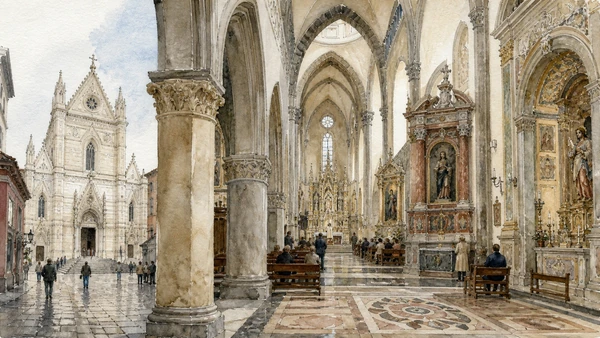
The metropolitan cathedral preserves medieval structure beneath later façades, chapels and restoration campaigns

Naples Cathedral: façade, nave and repeated rebuilding

Its present unity is the result of earthquakes, dynastic patronage, liturgy and conservation rather than one construction date.

Today

Entry is governed by worship and can pause for services. Dress respectfully, keep the central aisle clear and use official notices for chapels with separate access.

History

Angevin rulers promoted the Gothic cathedral on an earlier sacred site. Earthquakes and rebuilding changed the exterior and interior, while major chapels accumulated through noble, episcopal and civic patronage.

How to read this place

Begin with plan and columns before individual artworks. Changes in arch, pavement and chapel language reveal the building’s long construction history.

What to notice

  • Gothic spatial frame beneath later decoration
  • Chapels expressing distinct patronage
  • Active liturgy directing present circulation
Duomo di Napoli · Official cathedral
Original documentary watercolour of Naples Cathedral: façade, nave and repeated rebuilding in Naples, showing architecture, people and present-day urban context
Naples Cathedral: façade, nave and repeated rebuildingOriginal Merlintravel documentary watercolour · 2026
02

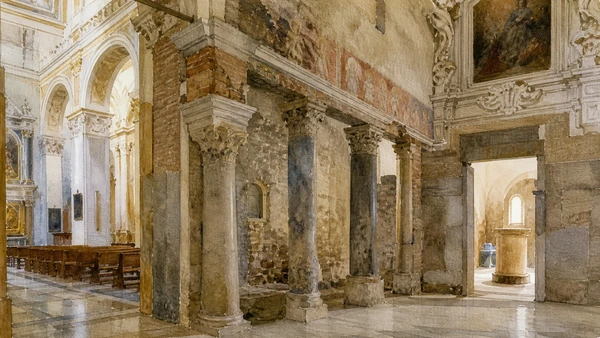
A major early Christian and medieval worship space survives as a distinct architectural body attached to the later cathedral

Santa Restituta: an earlier basilica inside the Cathedral

The basilica corrects the idea that the sacred precinct began with Angevin construction.

Today

Access follows cathedral opening and liturgical use. Some archaeological areas or side spaces can be closed, so do not infer availability from the main nave.

History

The basilica preserves elements linked to early Christian Naples and was repeatedly altered before becoming incorporated into the cathedral complex. Ancient columns and later decoration coexist within its present form.

How to read this place

Compare its proportions and reused supports with the cathedral nave, then identify the doorway leading toward the baptistery.

What to notice

  • Earlier basilica embedded beside the cathedral
  • Ancient columns reused in Christian architecture
  • Later decoration layered over medieval structure
Duomo di Napoli · Santa Restituta
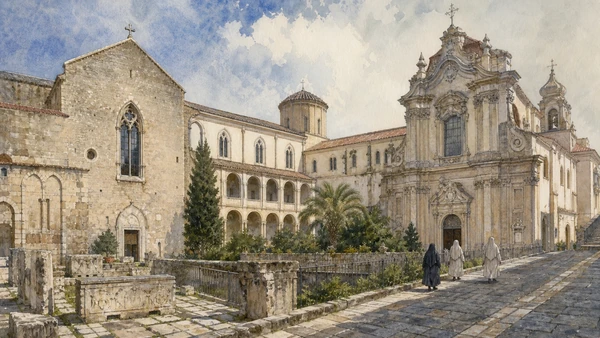
Original documentary watercolour of Santa Restituta: an earlier basilica inside the Cathedral in Naples, showing architecture, people and present-day urban context
Santa Restituta: an earlier basilica inside the CathedralOriginal Merlintravel documentary watercolour · 2026
03

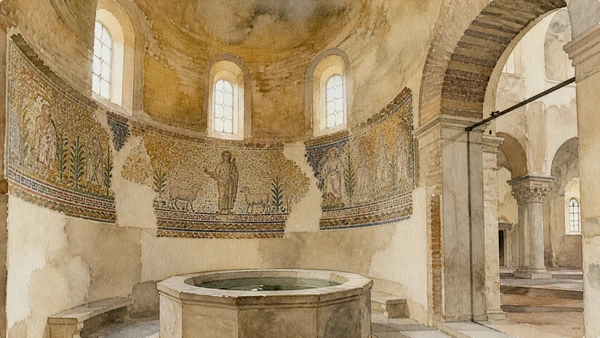
One of the oldest surviving baptisteries in the West preserves a focused ritual space and an important mosaic programme

San Giovanni in Fonte: the early Christian baptistery

Its small scale makes the relation between water, initiation and episcopal authority unusually legible.

Today

The baptistery is reached through the cathedral complex and may have controlled capacity. Low light and worshipful conduct require patient observation rather than flash photography.

History

The building and mosaics belong to the early Christian development of Naples, later enclosed within changing cathedral structures. Restoration and altered approaches affect how the original setting is understood.

How to read this place

Stand beneath the dome and follow the mosaic programme around the central ritual focus. Separate ancient imagery from later repairs and surrounding architecture.

What to notice

  • Domed chamber organised around baptism
  • Early Christian mosaic fragments
  • Later cathedral fabric enclosing the earlier space
Duomo di Napoli · San Giovanni in Fonte
Original documentary watercolour of San Giovanni in Fonte: the early Christian baptistery in Naples, showing architecture, people and present-day urban context
San Giovanni in Fonte: the early Christian baptisteryOriginal Merlintravel documentary watercolour · 2026
04

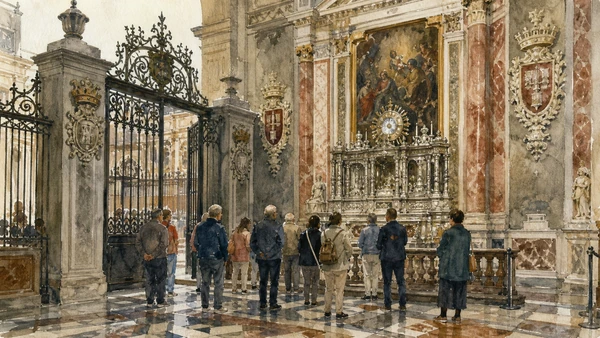
A richly built chapel records a civic commitment to the patron saint and a governing institution distinct from ordinary royal ownership

Chapel of the Treasure of San Gennaro: civic devotion in marble and silver

Architecture, treasury and ritual reveal how Naples represented collective protection.

Today

The chapel remains part of an active cathedral. Major feast dates, services and security can restrict circulation; follow staff directions and never treat worshippers as performance.

History

The Deputation of the Chapel emerged from a civic vow and commissioned a major Baroque programme. Paintings, sculpture, precious materials and relics were assembled under rules that expressed the city’s relationship with San Gennaro.

How to read this place

Read the gates, inscriptions and heraldic evidence before the altar. Distinguish the chapel’s institutional history from legends about absolute independence or ownership.

What to notice

  • Monumental gates marking a governed precinct
  • Baroque marble and painting framing relic devotion
  • Civic symbols embedded within cathedral space
Cappella di San Gennaro · Official institution
Original documentary watercolour of Chapel of the Treasure of San Gennaro: civic devotion in marble and silver in Naples, showing architecture, people and present-day urban context
Chapel of the Treasure of San Gennaro: civic devotion in marble and silverOriginal Merlintravel documentary watercolour · 2026
05

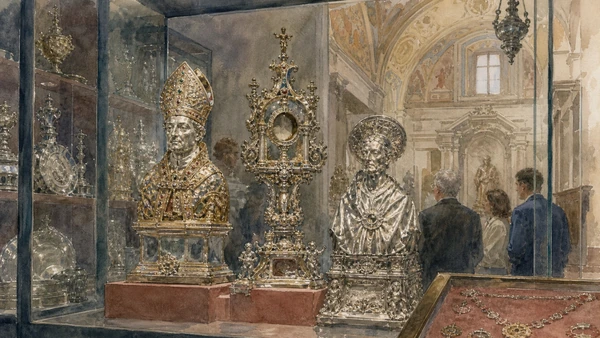
Reliquaries, silver and gifts form an archive of patronage and ritual rather than a simple display of wealth

Museum of the Treasure of San Gennaro: devotion, diplomacy and material value

The collection records changing relationships among saint, city, rulers and donors.

Today

The museum uses ticketed, protected displays and current opening rules. Allow time for object labels and do not rely on promotional valuations as historical interpretation.

History

Precious works accumulated through commissions and gifts over centuries. Their materials, makers, inscriptions and ceremonial uses connect Naples to wider European courts and local goldsmith traditions.

How to read this place

Choose a few objects and trace donor, date, maker and ritual purpose. Compare material value with the institutional duty to safeguard and use the treasury.

What to notice

  • Reliquaries designed for procession and display
  • Neapolitan silverwork preserving skilled production
  • Gifts documenting civic and diplomatic relationships
Museo del Tesoro di San Gennaro · Official museum
Original documentary watercolour of Museum of the Treasure of San Gennaro: devotion, diplomacy and material value in Naples, showing architecture, people and present-day urban context
Museum of the Treasure of San Gennaro: devotion, diplomacy and material valueOriginal Merlintravel documentary watercolour · 2026
06

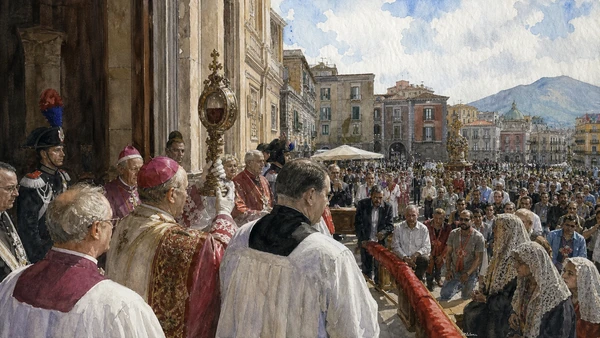
The celebrated blood rite belongs to scheduled Catholic worship and a wider calendar of patronal devotion

San Gennaro’s feast: ritual, calendar and collective attention

Its meaning cannot be reduced to a tourist event or a laboratory claim presented without evidence.

Today

Ceremonies create strict crowd, security and liturgical controls. Consult Cathedral and Deputation notices, arrive only if prepared to participate respectfully and never obstruct the faithful.

History

Devotion to the martyr developed over centuries and became deeply connected to Naples’s civic identity. The relics, processions and repeated ritual occasions survived political change while acquiring new public interpretations.

How to read this place

Observe who governs the space, how relics move and how prayer structures time. Report the rite accurately without declaring a supernatural or reductive scientific conclusion.

What to notice

  • Liturgical calendar governing public access
  • Relics handled under institutional rules
  • Community participation extending beyond the cathedral
Cappella di San Gennaro · Official institution
Original documentary watercolour of San Gennaro's feast: ritual, calendar and collective attention in Naples, showing architecture, people and present-day urban context
San Gennaro’s feast: ritual, calendar and collective attentionOriginal Merlintravel documentary watercolour · 2026
07

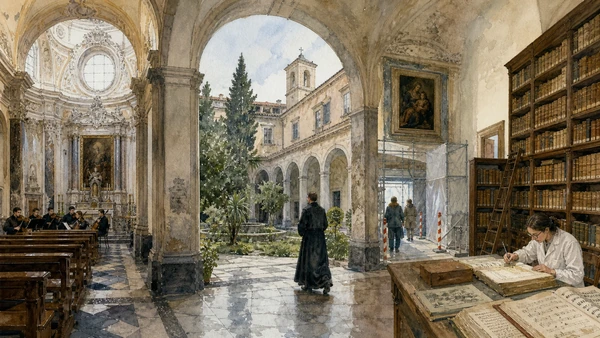
An Oratorian complex joins monumental worship to books, archives, art and Naples’s sacred music history

The Girolamini: church, library and musical institution

Its phased reopening makes conservation and institutional recovery part of the present story.

Today

Church-museum and library services can have different entrances, hours and booking rules. Use the current official MiC page and respect reading-room restrictions.

History

The Oratorians established the complex from the late sixteenth century, developing churches, cloisters, collections and an important library. Theft, investigation, conservation and progressive reopening form a serious recent chapter.

How to read this place

Separate church, picture collection and library functions. Notice how courtyards and service routes organised a large learned religious institution.

What to notice

  • Church and cloisters forming a large Oratorian complex
  • Library preserving rare book and music collections
  • Modern conservation visible in phased access
Complesso monumentale e Biblioteca dei Girolamini · MiC
Original documentary watercolour of The Girolamini: church, library and musical institution in Naples, showing architecture, people and present-day urban context
The Girolamini: church, library and musical institutionOriginal Merlintravel documentary watercolour · 2026
08

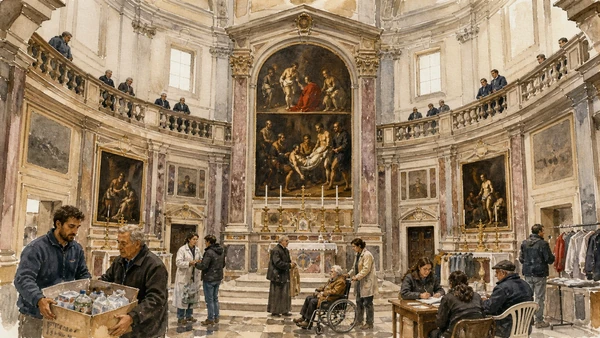
A lay charitable institution commissioned architecture and Caravaggio’s Seven Works of Mercy around an enduring programme of assistance

Pio Monte della Misericordia: charity organised through art

The painting belongs to a working foundation, not an isolated masterpiece room.

Today

The chapel and galleries have ticketed access while charitable activities continue. Keep the compact central space clear and check the foundation’s official visitor information.

History

Founded in the early seventeenth century, the institution organised concrete works of mercy and commissioned a purpose-built complex. Caravaggio’s altarpiece condensed those obligations into one urban night scene.

How to read this place

Read the octagonal chapel, balconies and altars as a system before focusing on the painting. Then connect depicted actions to the foundation’s historic and current mission.

What to notice

  • Octagonal chapel organising collective governance
  • Caravaggio altarpiece uniting seven acts
  • Institutional charity continuing beyond museum display
Pio Monte della Misericordia · Official foundation
Original documentary watercolour of Pio Monte della Misericordia: charity organised through art in Naples, showing architecture, people and present-day urban context
Pio Monte della Misericordia: charity organised through artOriginal Merlintravel documentary watercolour · 2026
09

Medieval and Baroque sacred spaces preserve different programmes, convent history and forms of female commissioning

Donnaregina: female patronage and two churches

The complex resists being read as one stylistic monument.

Today

Museum access, exhibitions and church use can vary. Confirm the current route and allow for stairs and separated interiors.

History

Donnaregina Vecchia developed within a Clarissan environment and preserves major medieval art linked to Angevin patronage. The later church created a new Baroque frontage and spatial order while the earlier building survived.

How to read this place

Compare the choir, tombs and fresco programme of the medieval church with the later ceremonial interior. Ask how enclosure shaped viewpoint and access.

What to notice

  • Medieval church preserving Angevin patronage
  • Convent choir structuring female religious life
  • Baroque successor creating a distinct public face
Museo Diocesano Napoli · Donnaregina
Original documentary watercolour of Donnaregina: female patronage and two churches in Naples, showing architecture, people and present-day urban context
Donnaregina: female patronage and two churchesOriginal Merlintravel documentary watercolour · 2026
10

A layered church and monastic complex contains major Angevin and early Renaissance funerary monuments

San Giovanni a Carbonara: dynastic tombs beyond the ancient walls

Its position near the former city edge connects sacred patronage to urban expansion.

Today

Opening is not continuous and worship takes priority. Check current diocesan or cultural notices before making it a fixed timed stop.

History

The Augustinian complex developed from the fourteenth century and received monumental royal and noble commissions. Chapels, stairways and later interventions created a dense vertical sequence around dynastic memory.

How to read this place

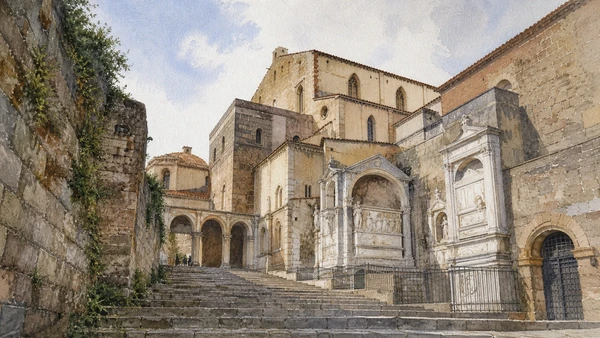
Approach from the monumental stair and follow the tombs by date and patron. Their scale and placement reveal political claims, not only sculptural virtuosity.

What to notice

  • Monumental stair marking arrival
  • Royal tombs organising chapel space
  • Multiple building campaigns visible in the vertical complex
Comune di Napoli · San Giovanni a Carbonara
Original documentary watercolour of San Giovanni a Carbonara: dynastic tombs beyond the ancient walls in Naples, showing architecture, people and present-day urban context
San Giovanni a Carbonara: dynastic tombs beyond the ancient wallsOriginal Merlintravel documentary watercolour · 2026

Naples through time

A short chronology

From Greek Neapolis and Roman infrastructure to dynastic capitals, wartime rupture, UNESCO care and a living metropolitan centre.

  1. Greek settlements and Neapolis establish the coastal and gridded urban foundations later absorbed by Roman Naples.

  2. Walls, streets, sanctuaries and civic spaces consolidate the ancient city on the tuff plateau.

  3. Roman Naples expands its theatres, baths, water systems, port functions and elite residences.

  4. Christian worship, burial and episcopal institutions reshape the ancient city and its edges.

  5. The Duchy of Naples maintains a distinct Mediterranean political and cultural identity.

  6. Norman and Swabian rule integrate Naples into larger southern kingdoms while reusing existing institutions.

  7. Angevin rule makes Naples a royal capital and begins major castle, church and urban commissions.

  8. Aragonese rule adds court culture, fortification and monumental Renaissance patronage.

  9. Spanish viceregal government extends Via Toledo, military quarters, religious houses and administrative power.

  10. Bourbon rule restores Naples as a dynastic capital and expands royal, cultural and infrastructural projects.

  11. The brief Parthenopean Republic and its repression expose deep political and social conflict.

  12. French-period government reforms streets, institutions and public administration.

  13. Naples enters the unified Kingdom of Italy and its capital functions are reorganised.

  14. Bombing, occupation, the Four Days and post-war rebuilding transform the city and port.

  15. UNESCO inscription, restoration, tourism pressure and resident-led cultural work renew debate over a living historic centre.

Before your visit

Practical information

01

Reserve constrained interiors

Timed museums, underground routes and major chapels can sell out; use only their current official booking channels.

02

Respect worship

Church access can pause for liturgy, funerals or community events; a visitor ticket never overrides religious use.

03

Walk the terrain

Tuff ridges, steep stairs, uneven paving and dense traffic are part of the city; keep a shorter accessible alternative.

04

Do not turn residents into scenery

Keep doorways, workshops, market lanes and courtyards clear; photograph people only with consent.

05

Check live transport

Metro, funicular, port and bus service can change; verify the same-day operator notice before relying on a connection.

06

Read layers, not clichés

Religious devotion, poverty, theatricality and danger are not interchangeable labels for Naples; use documented sites and institutions.

Method and sources

Sources and image credits

This guide uses official museum, ministry, church, transport and UNESCO documentation checked on 29 August 2026. It separates durable historical interpretation from access details that can change; distinguishes surviving fabric from reconstruction, restoration and legend; and treats worship, work, residence and public movement as part of the evidence rather than visual interference. Every chapter links its principal institutional source, while current tickets, closures and transport must always be verified again on the day of the visit.

All ten images are original Merlintravel editorial watercolours based on documented present-day conditions. They are illustrations, not substitutes for archaeological plans. Opening hours, tickets, accessible routes, temporary exhibitions and conservation work can change; consult the linked official pages shortly before visiting.