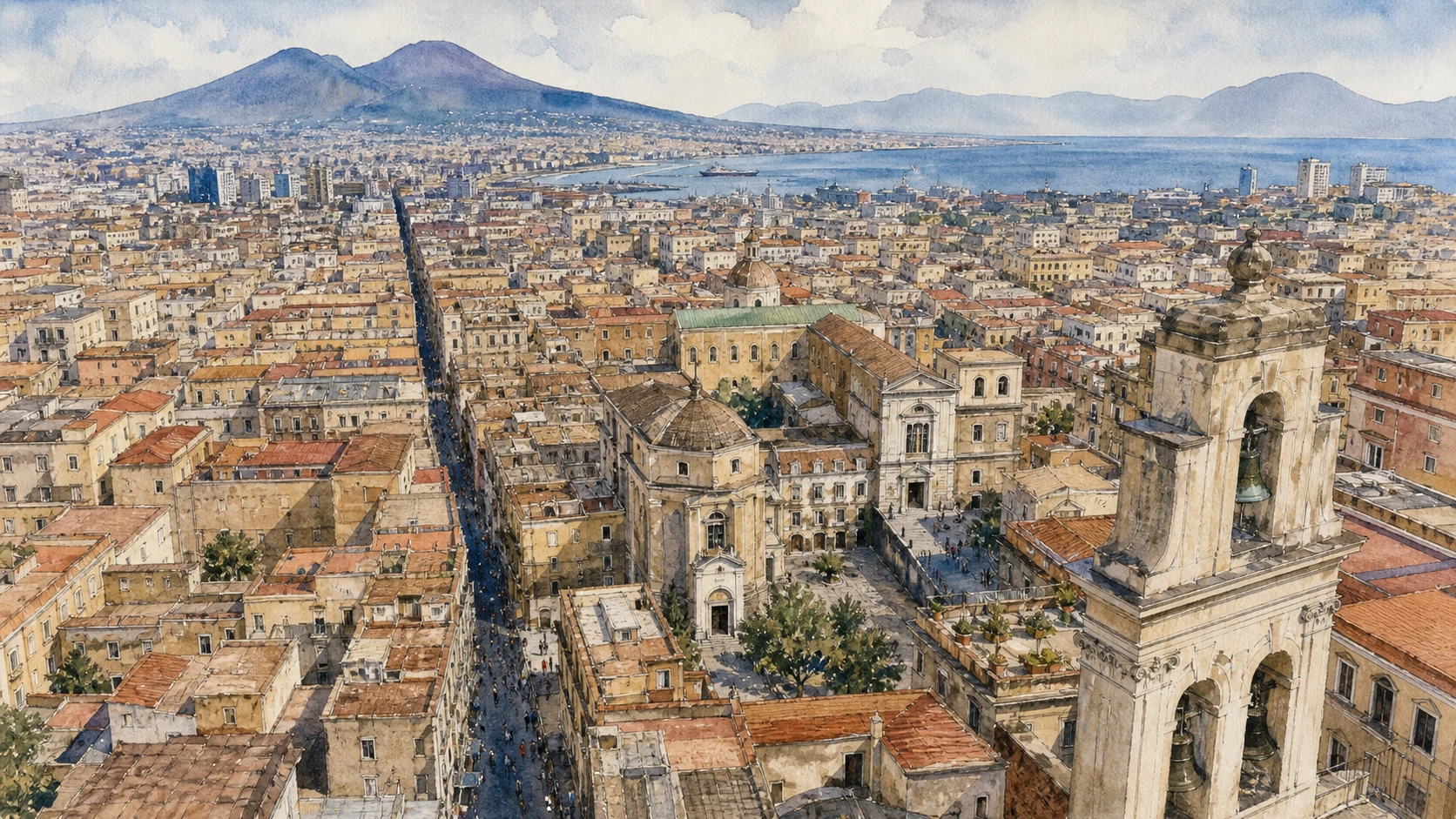
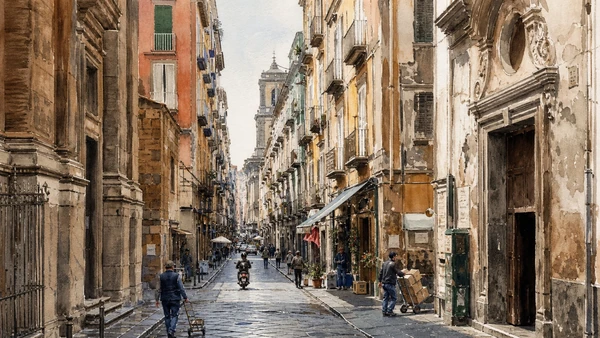
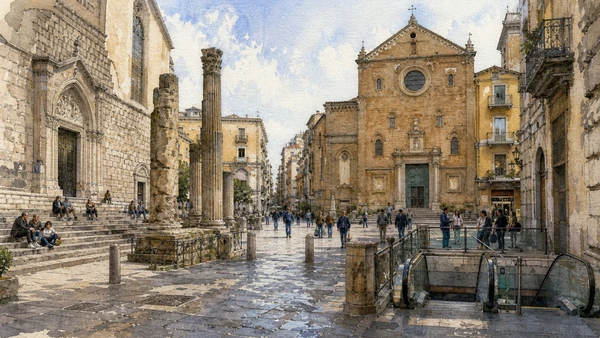
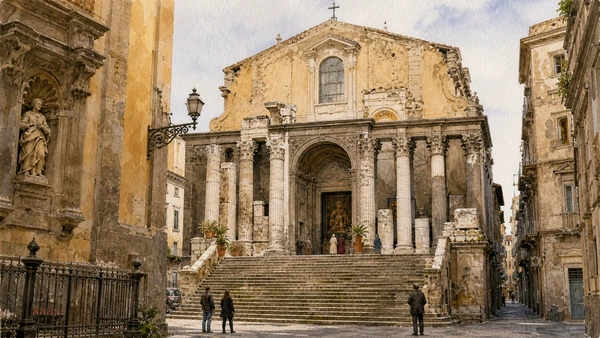
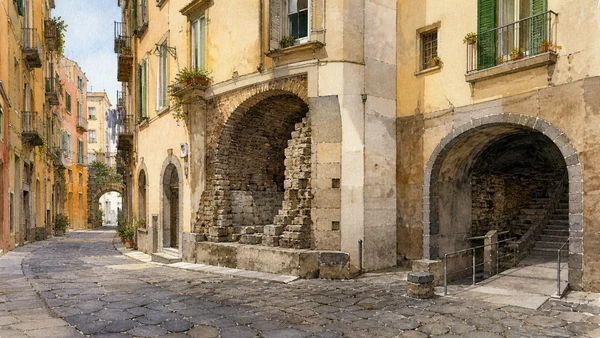
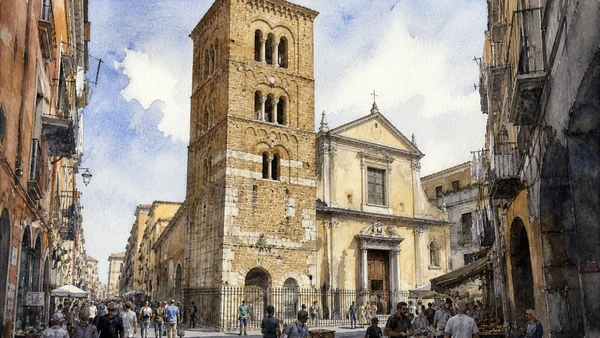
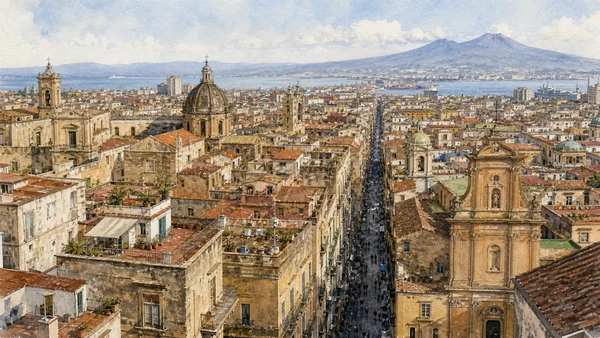
The three long east-west streets commonly called decumani are a useful orientation device, but the modern labels simplify a Greek and Roman system of plateiai and stenopoi. The value lies in the repeated proportions, crossings and blocks that remain visible under later façades.
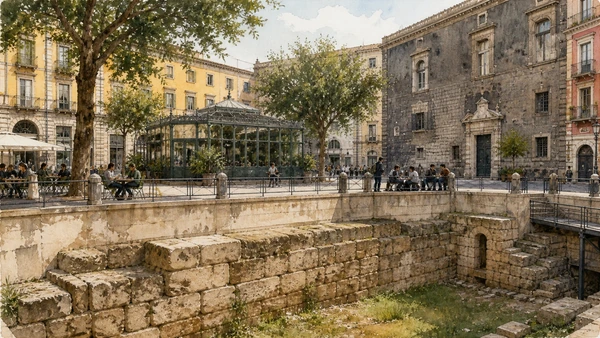
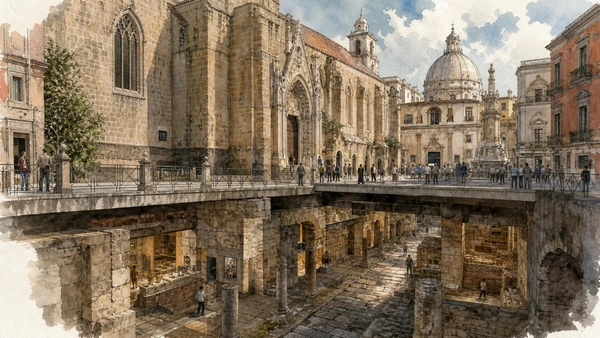
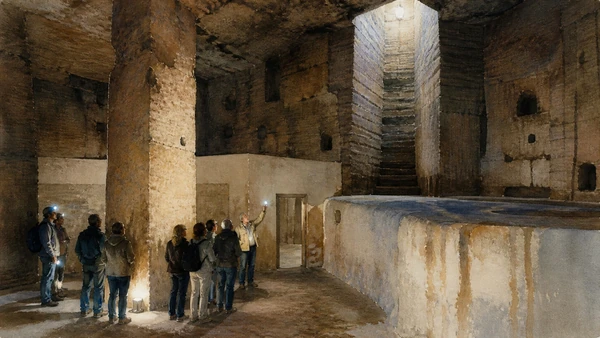
Archaeology is not confined to one excavation. Wall fragments appear beside Piazza Bellini, Roman market structures survive below San Lorenzo, theatre remains are absorbed into buildings, and tuff quarries and cisterns extend below the streets. Each fragment needs its own evidence and access rules.
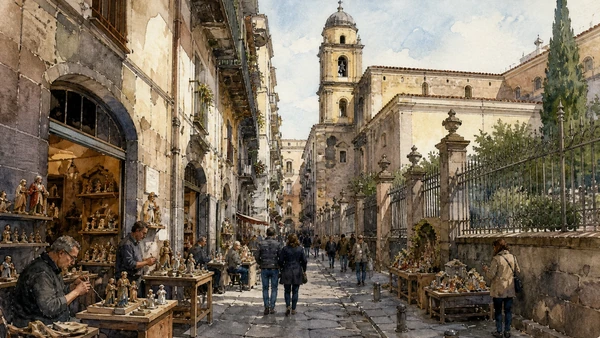
The district is also densely inhabited. Religious processions, workshops, university life, food businesses and visitor pressure continually reshape movement. A complete reading therefore respects residents and treats ordinary use as part of continuity, not as clutter around monuments.
Walk the grid in sequence, then descend only where access is officially managed: the city becomes clearer when the streets above and spaces below are read as one system.