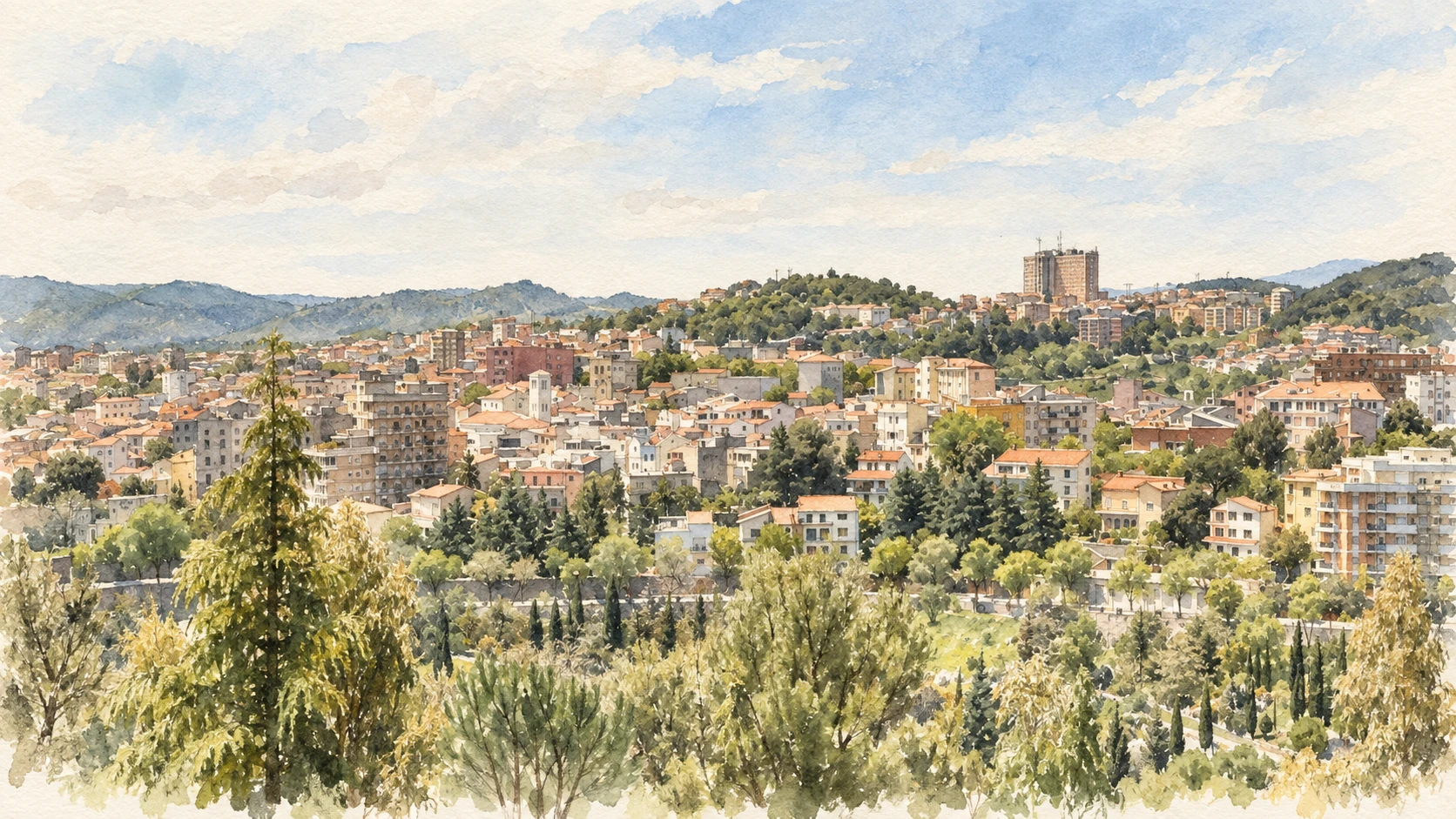
Watercolour: Nuoro and Barbagia establishing view

Sardinia · Guide 06

Nuoro

Literature, museums and public art connect Nuoro with the living cultures and mountain landscapes of the surrounding towns.

Plan the route
Nuoro and Barbagia10 chapters · history, culture and landscape

Why this place matters

Give each community its own voice.

Nuoro provides a useful starting point for understanding inland Sardinia through writing, objects and modern art. It is also a contemporary city, not a preserved backdrop to a vanished pastoral world. Around it, Mamoiada, Orgosolo, Oliena and Orani offer distinct histories and institutions. Woodland and spring landscapes add another scale of time. This guide connects these places without suggesting that one museum, costume or festival can stand for the whole island.

The guide separates documented history from suggestions for reading the site. Named buildings and landscape relationships follow institutional sources; the illustrations are editorial interpretations, not measured surveys or records of current access.

Literature, museums and public art connect Nuoro with the living cultures and mountain landscapes of the surrounding towns.
The route

Plan your visit

Group Casa Deledda, MAN and Piazza Satta as a central-city walk, giving the Costume Museum its own substantial stop. Ortobene is a separate woodland outing. Pair Mamoiada with Orgosolo only if museum time allows; Oliena and Su Gologone make another excursion. Orani and Museo Nivola deserve an independent visit.

Nuoro collections

Deledda, ethnography and modern art

Group Casa Deledda, MAN and Piazza Satta as a central-city walk, giving the Costume Museum its own substantial stop.

Public landscape

Piazza Satta and Ortobene

Living communities

Mamoiada and Orgosolo

Further outings

Oliena, Su Gologone and Orani

Ten chapters

Explore the places

The chapters connect history and terrain. Use the route notes to choose visits and plan transfers between separate sites.

  1. 01Casa Deledda
  2. 02The Costume Museum
  3. 03MAN: modern and contemporary art
  4. 04Piazza Sebastiano Satta
  5. 05Ortobene: granite and woodland
  6. 06Mamoiada and the Museum of Mediterranean Masks
  7. 07Orgosolo: art in inhabited streets
  8. 08Oliena beneath the mountains
  9. 09Su Gologone: water emerging from limestone
  10. 10Orani and Museo Nivola
01

Evidence and interpretation

Casa Deledda

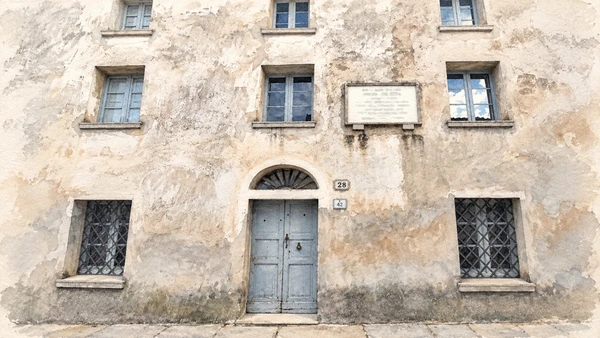
A restrained plaster facade marks the birthplace of Grazia Deledda in the Santu Pedru neighbourhood. The house links a writer’s personal history with the social world she knew.

Today

Check the institution’s current opening, booking arrangements and accessible route. Individual rooms, exhibitions and approaches may have separate conditions.

History

Deledda was born in 1871 and received the Nobel Prize in Literature for 1926. The nineteenth-century family house later became a museum managed by the regional ethnographic institute. Manuscripts, documents, photographs and personal objects connect her Nuoro years with her later life in Rome.

How to read this place

Read the house as a curated literary museum. A room arrangement can explain a period without reproducing every detail of one remembered day. The facade illustration gives the building a concrete setting; inside, use the documents to distinguish biography from the fictional worlds of the novels.

What to notice

  • Read the house as a curated literary museum.
  • A room arrangement can explain a period without reproducing every detail of one remembered day.
  • The facade illustration gives the building a concrete setting; inside, use the documents to distinguish biography from the fictional worlds of the novels.
Museo deleddiano – Casa museo Grazia Deledda
Watercolour: Casa museo Grazia Deledda, weathered facade with blue-grey windows and central entrance
Casa DeleddaEditorial watercolour · AI-generated · 2026
02

Evidence and interpretation

The Costume Museum

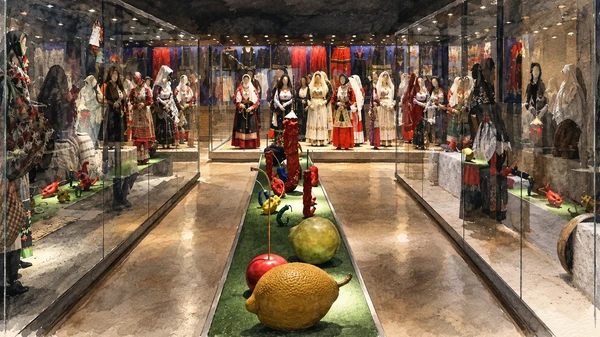
Clothing, tools, domestic objects and displays of work reveal the diversity of life across Sardinia. The museum’s scope extends well beyond ceremonial dress.

Today

Check the institution’s current opening, booking arrangements and accessible route. Individual rooms, exhibitions and approaches may have separate conditions.

History

The ethnographic museum opened in 1976 and underwent a major renewal completed in 2015. Its thematic presentation examines production, homes, food, textiles, devotion and celebration. Collecting and interpretation are themselves part of its history: these objects entered an institution through specific choices and research.

How to read this place

Compare garments by locality, date and use rather than imagining a single standard Sardinian costume. Distinguish original objects from recreated environments. The watercolour follows a documented exhibition room; the figures are display mannequins, and the arrangement should not be confused with everyday street dress.

What to notice

  • Compare garments by locality, date and use rather than imagining a single standard Sardinian costume.
  • Distinguish original objects from recreated environments.
  • The watercolour follows a documented exhibition room; the figures are display mannequins, and the arrangement should not be confused with everyday street dress.
Nuorese Cultural District
Watercolour: Nuoro Costume Museum, glass displays of traditional clothing and a central exhibition installation
The Costume MuseumEditorial watercolour · AI-generated · 2026
03

Evidence and interpretation

MAN: modern and contemporary art

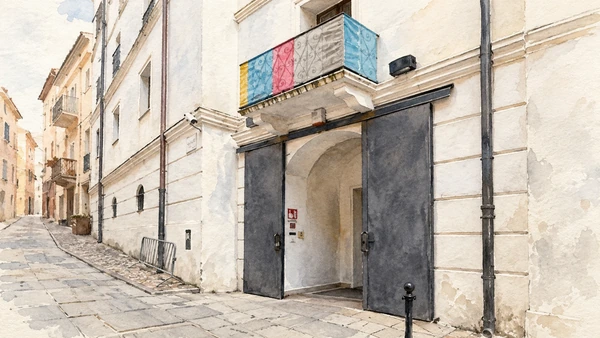
A modest urban entrance leads to a museum whose work reaches far beyond the scale of its facade. Its programme connects Sardinian collections with wider artistic debates.

Today

Check the institution’s current opening, booking arrangements and accessible route. Individual rooms, exhibitions and approaches may have separate conditions.

History

MAN opened in 1999 in a building from the 1920s. Public collections formed its initial nucleus, followed by acquisitions, exhibitions and educational activity. Its remit includes modern and contemporary art, with temporary projects playing a central role alongside the care of the collection.

How to read this place

Check which exhibition is actually on view before planning around a particular artist. Ownership of a work does not mean it is permanently displayed. The illustration records the entrance and its urban setting, leaving the changing interior programme to the museum’s current information.

What to notice

  • Check which exhibition is actually on view before planning around a particular artist.
  • Ownership of a work does not mean it is permanently displayed.
  • The illustration records the entrance and its urban setting, leaving the changing interior programme to the museum’s current information.
Scopra la storia, la missione e il presente del Museo MAN.
Watercolour: MAN Nuoro, pale facade and dark entrance panels on the historic-centre street
MAN: modern and contemporary artEditorial watercolour · AI-generated · 2026
04

The inhabited landscape

Piazza Sebastiano Satta

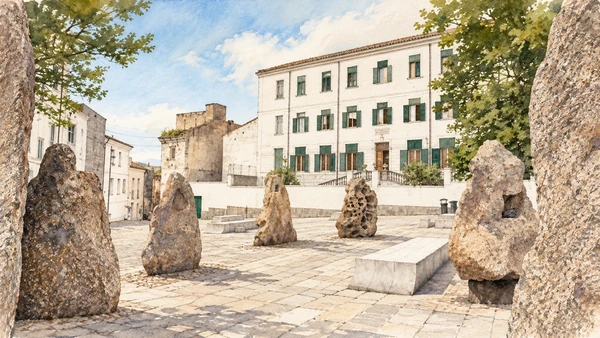
Natural granite boulders stand on a carefully ordered paved surface between white buildings. Small figures occupy protected recesses, rewarding a closer look.

Today

This remains an inhabited place. Use pedestrian routes, keep entrances clear and check municipal mobility notices for any restricted area.

History

Commissioned in 1965 and completed in 1967, Costantino Nivola’s intervention honours the poet Sebastiano Satta. The artist transformed the square through paving, colour and the placement of stones containing small bronze figures. The result makes commemoration part of a space used by the city.

How to read this place

Move slowly around the square: no single frontal view explains the whole work. Notice the contrast between the rough boulders and the geometric paving, and look for the small figures without climbing or touching them. The surrounding houses are part of the composition.

What to notice

  • Move slowly around the square: no single frontal view explains the whole work.
  • Notice the contrast between the rough boulders and the geometric paving, and look for the small figures without climbing or touching them.
  • The surrounding houses are part of the composition.
Piazza Satta – Nuoro | SardegnaTurismo – Sito ufficiale del turismo della Regione Sardegna
Watercolour: Piazza Satta in Nuoro, granite boulders and niches within the pale paved square
Piazza Sebastiano SattaEditorial watercolour · AI-generated · 2026
05

Terrain and access

Ortobene: granite and woodland

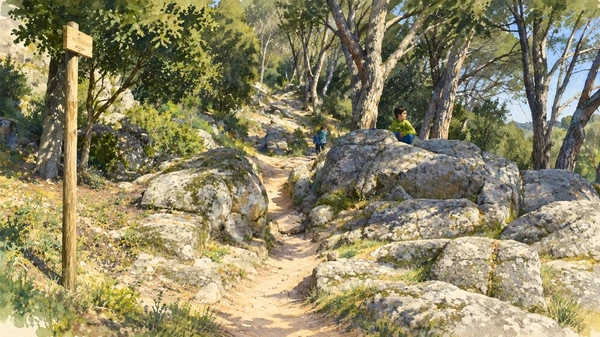
Rounded granite outcrops interrupt the woodland above Nuoro. Paths pass between rocks and trees, with views opening only in particular places.

Today

Conditions depend on the exact route and the day. Check the responsible operator, weather and local access notices; use the designated routes and confirm the return journey.

History

The mountain’s long natural history intersects with prehistoric occupation, religious landmarks and generations of local recreation. The Redentore statue by Vincenzo Jerace, inaugurated in 1901, added an important modern devotional focus. Woodland, rock and cultural memory all contribute to the mountain’s meaning for Nuoro.

How to read this place

Choose a marked route appropriate to the day and your ability. A woodland stroll and a longer mountain walk are different plans. The illustration follows a documented path among boulders; it is not a navigation map and does not imply that every branch of the trail reaches the same destination.

What to notice

  • Choose a marked route appropriate to the day and your ability.
  • A woodland stroll and a longer mountain walk are different plans.
  • The illustration follows a documented path among boulders; it is not a navigation map and does not imply that every branch of the trail reaches the same destination.
Ortobene | SardegnaTurismo – Sito ufficiale del turismo della Regione Sardegna
Watercolour: Monte Ortobene, woodland path between rounded granite boulders
Ortobene: granite and woodlandEditorial watercolour · AI-generated · 2026
06

Evidence and interpretation

Mamoiada and the Museum of Mediterranean Masks

Masks, clothing and audiovisual interpretation introduce performances whose meaning includes movement, sound and community participation. An isolated mask can only tell part of that story.

Today

Check the institution’s current opening, booking arrangements and accessible route. Individual rooms, exhibitions and approaches may have separate conditions.

History

The museum places Mamoiada’s Mamuthones and Issohadores in dialogue with other Sardinian and European masking traditions. Its comparative displays document living cultural practices. Similar forms across regions do not by themselves prove one shared ancient origin or an unchanged ritual transmitted without interruption.

How to read this place

Use the museum’s explanation to distinguish local figures from costumes belonging to other communities. The watercolour is a study of a documented Mamuthone mask and clothing detail, not a claim that a live procession happens daily. Check separate dates for performances and choose the guided or audio visit offered by the museum.

What to notice

  • Use the museum’s explanation to distinguish local figures from costumes belonging to other communities.
  • The watercolour is a study of a documented Mamuthone mask and clothing detail, not a claim that a live procession happens daily.
  • Check separate dates for performances and choose the guided or audio visit offered by the museum.
Biglietto Museo delle Maschere Mediterranee
Watercolour: Mamoiada, documented Mamuthone black wooden mask, headcloth, sheepskin and leather straps
Mamoiada and the Museum of Mediterranean MasksEditorial watercolour · AI-generated · 2026
07

The inhabited landscape

Orgosolo: art in inhabited streets

Murals appear among homes, shops, balconies and everyday movement. Their setting matters: this is a living town where public images share space with ordinary activity.

Today

This remains an inhabited place. Use pedestrian routes, keep entrances clear and check municipal mobility notices for any restricted area.

History

Twentieth-century muralism developed as a vehicle for protest, political reflection and social narration. Local and visiting artists contributed to its changing visual language. The wider community also maintains textile and musical practices whose histories cannot be reduced to the town’s reputation in film or stories of banditry.

How to read this place

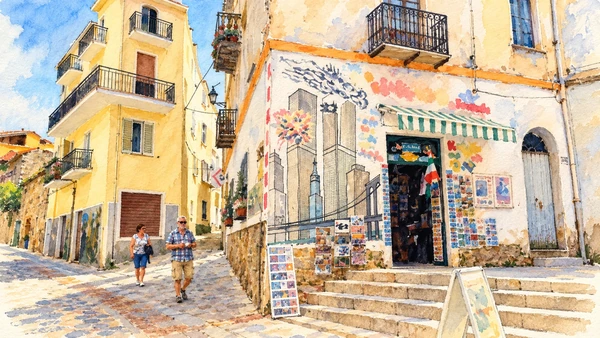
Read dates, authorship and subject where interpretation is available. Different murals speak to different moments and concerns. The illustration records a street setting with painted walls, not an exact transcription of every slogan; a guided walk can help explain the original works in their context.

What to notice

  • Read dates, authorship and subject where interpretation is available.
  • Different murals speak to different moments and concerns.
  • The illustration records a street setting with painted walls, not an exact transcription of every slogan; a guided walk can help explain the original works in their context.
Orgosolo | SardegnaTurismo – Sito ufficiale del turismo della Regione Sardegna
Watercolour: Orgosolo, inhabited street with balconies, steps, shopfront and mural-painted walls
Orgosolo: art in inhabited streetsEditorial watercolour · AI-generated · 2026
08

The inhabited landscape

Oliena beneath the mountains

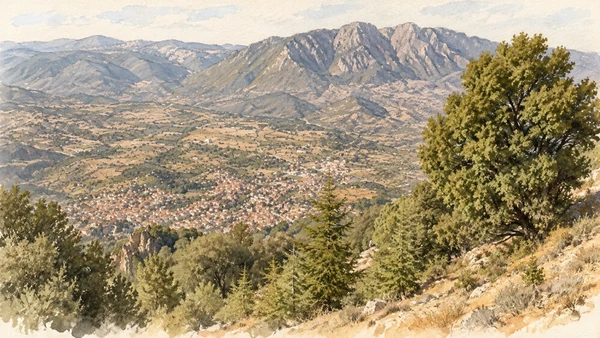
The town spreads below the limestone landscape of the Corrasi area. Cultivated land, houses and mountain slopes remain closely connected in the wider view.

Today

This remains an inhabited place. Use pedestrian routes, keep entrances clear and check municipal mobility notices for any restricted area.

History

Oliena’s built and cultural heritage reflects religious institutions, agriculture, craft and exchange. Embroidery, woodworking, filigree and food production give material form to knowledge passed between generations and adapted to new circumstances. Public celebrations add another layer, with their own local calendar.

How to read this place

Begin with the town rather than treating it only as a departure point for the Supramonte. Look for named makers and ask about the work behind objects on display. The elevated landscape illustration does not define a walking route; mountain excursions need their own preparation and suitable local advice.

What to notice

  • Begin with the town rather than treating it only as a departure point for the Supramonte.
  • Look for named makers and ask about the work behind objects on display.
  • The elevated landscape illustration does not define a walking route; mountain excursions need their own preparation and suitable local advice.
Oliena | SardegnaTurismo – Sito ufficiale del turismo della Regione Sardegna
Watercolour: Oliena, elevated view across the town and cultivated valley toward surrounding hills
Oliena beneath the mountainsEditorial watercolour · AI-generated · 2026
09

Terrain and access

Su Gologone: water emerging from limestone

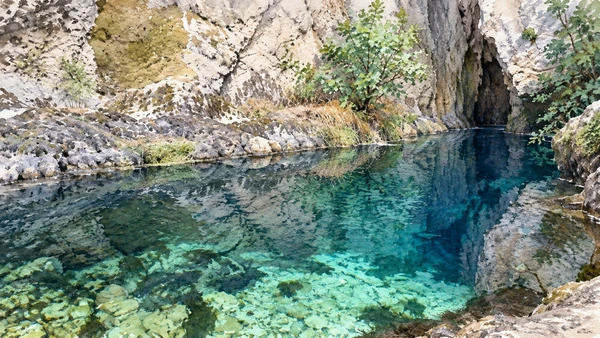
Clear blue-green water occupies a narrow rocky fissure. The visible pool is the surface expression of an underground system, not an ordinary shallow pond.

Today

Conditions depend on the exact route and the day. Check the responsible operator, weather and local access notices; use the designated routes and confirm the return journey.

History

Water moving through the Supramonte’s limestone emerges here before flowing toward the Cedrino. The spring received natural-monument recognition in 1998. Specialist exploration has investigated its great depth, but that research is distinct from the normal visitor experience at the surface.

How to read this place

Observe from the managed visitor area and keep away from unstable or slippery edges. Water colour does not establish safe depth or bathing access. Confirm any separately organised river activity with its operator; the spring viewpoint, kayaking and cave diving are not interchangeable forms of admission.

What to notice

  • Observe from the managed visitor area and keep away from unstable or slippery edges.
  • Water colour does not establish safe depth or bathing access.
  • Confirm any separately organised river activity with its operator; the spring viewpoint, kayaking and cave diving are not interchangeable forms of admission.
Su Gologone
Watercolour: Su Gologone, clear water in the narrow limestone spring fissure
Su Gologone: water emerging from limestoneEditorial watercolour · AI-generated · 2026
10

Evidence and interpretation

Orani and Museo Nivola

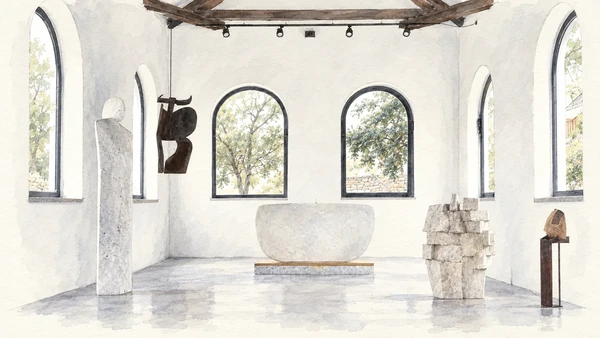
Light-filled galleries and outdoor spaces connect sculpture with the hillside. The former washhouse provides a tangible link between the museum and the town’s communal history.

Today

Check the institution’s current opening, booking arrangements and accessible route. Individual rooms, exhibitions and approaches may have separate conditions.

History

The museum opened in 1995 to honour Costantino Nivola, born in Orani in 1911 and later active in the United States. Subsequent additions expanded the original washhouse setting. Sculpture, models and other works illuminate an artist concerned with the relationship between art, architecture and public life.

How to read this place

Consider the spaces around the works as well as the objects themselves. Compare this museum with Piazza Satta, where Nivola’s art becomes an urban environment. The illustrated gallery follows a documented arrangement; consult the museum’s current programme for temporary exhibitions and admission.

What to notice

  • Consider the spaces around the works as well as the objects themselves.
  • Compare this museum with Piazza Satta, where Nivola’s art becomes an urban environment.
  • The illustrated gallery follows a documented arrangement; consult the museum’s current programme for temporary exhibitions and admission.
Museo Nivola | SardegnaTurismo – Sito ufficiale del turismo della Regione Sardegna
Watercolour: Museo Nivola in Orani, pale sculpture gallery with round-arched windows and exposed roof beams
Orani and Museo NivolaEditorial watercolour · AI-generated · 2026

The territory through time

A short chronology

A concise chronology linking the documented sites to the wider story.

  1. The family house later associated with Deledda belongs to Nuoro’s social landscape.

  2. Grazia Deledda is born in Nuoro.

  3. The Redentore statue is inaugurated on Ortobene.

  4. Costantino Nivola is born in Orani.

  5. Deledda receives the Nobel Prize in Literature for this year.

  6. Nivola completes Piazza Sebastiano Satta.

  7. The Costume Museum, Museo Nivola and MAN open in successive decades.

  8. The renewed Costume Museum opens after major redevelopment.

Before your visit

Practical information

01

Plan separate days

Choose a manageable set of visits and allow for transport, booked entries and the return journey.

02

Use the exact place name

Sardinia contains separate cities, hill routes and coastal approaches. Confirm the precise locality and route rather than treating nearby names as one destination.

03

Check the institution

Opening hours, tickets, exhibitions and religious access change. Use the linked managing institution shortly before visiting.

04

Check the actual terrain

Steps, gradients and uneven ground vary between the individual sites. Use current route information, weather and closures for the option you choose.

05

Arrange accessible visits

Historic interiors and outdoor approaches can include steps, gradients or uneven surfaces. Ask about the specific route instead of assuming an entire destination is step-free.

06

Respect work and residence

Farms, workshops, churches and historic streets remain in use. Follow signs, keep entrances clear and ask permission before entering private spaces.

Method and sources

Sources and image credits

Prepared on 9 September 2026 from the institutional sources linked below. Historical claims are separated from editorial observations and itinerary suggestions. Older institutional brochures are used for stable cultural context, never as current timetables. Prices, transport schedules, trail status and admission are deliberately left to the responsible operators. Illustrations are not photographs, measured reconstructions or evidence of current conditions.

The eleven images are AI-generated editorial watercolours guided by photographic references. They interpret named places and are not photographs or substitutes for measured plans. Opening hours, tickets, accessible routes, temporary exhibitions and conservation work can change; consult the linked official pages shortly before visiting.

Illustration references and credits