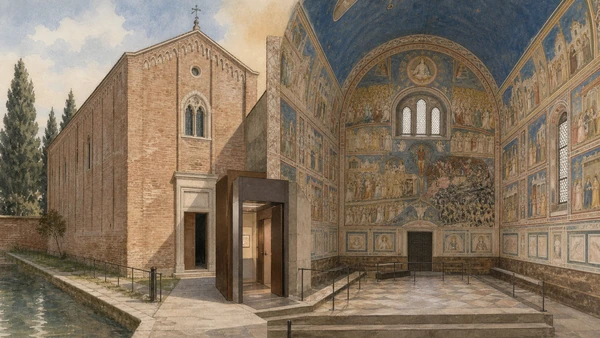
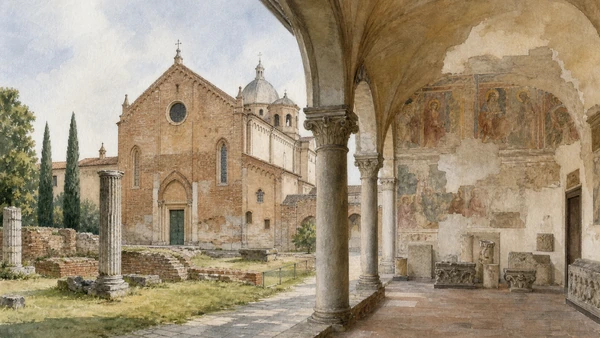
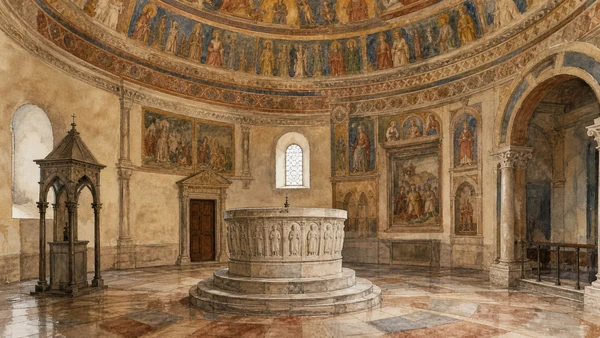
The Scrovegni Chapel belongs to a conservation system of timed entry and controlled climate. Its relationship with the Eremitani complex and civic museums begins a wider UNESCO property of eight fourteenth-century fresco sites. Palazzo della Ragione, the Baptistery, Saint Anthony’s complex and other painted rooms show that innovation occurred under different patrons and in different civic, religious and dynastic settings.
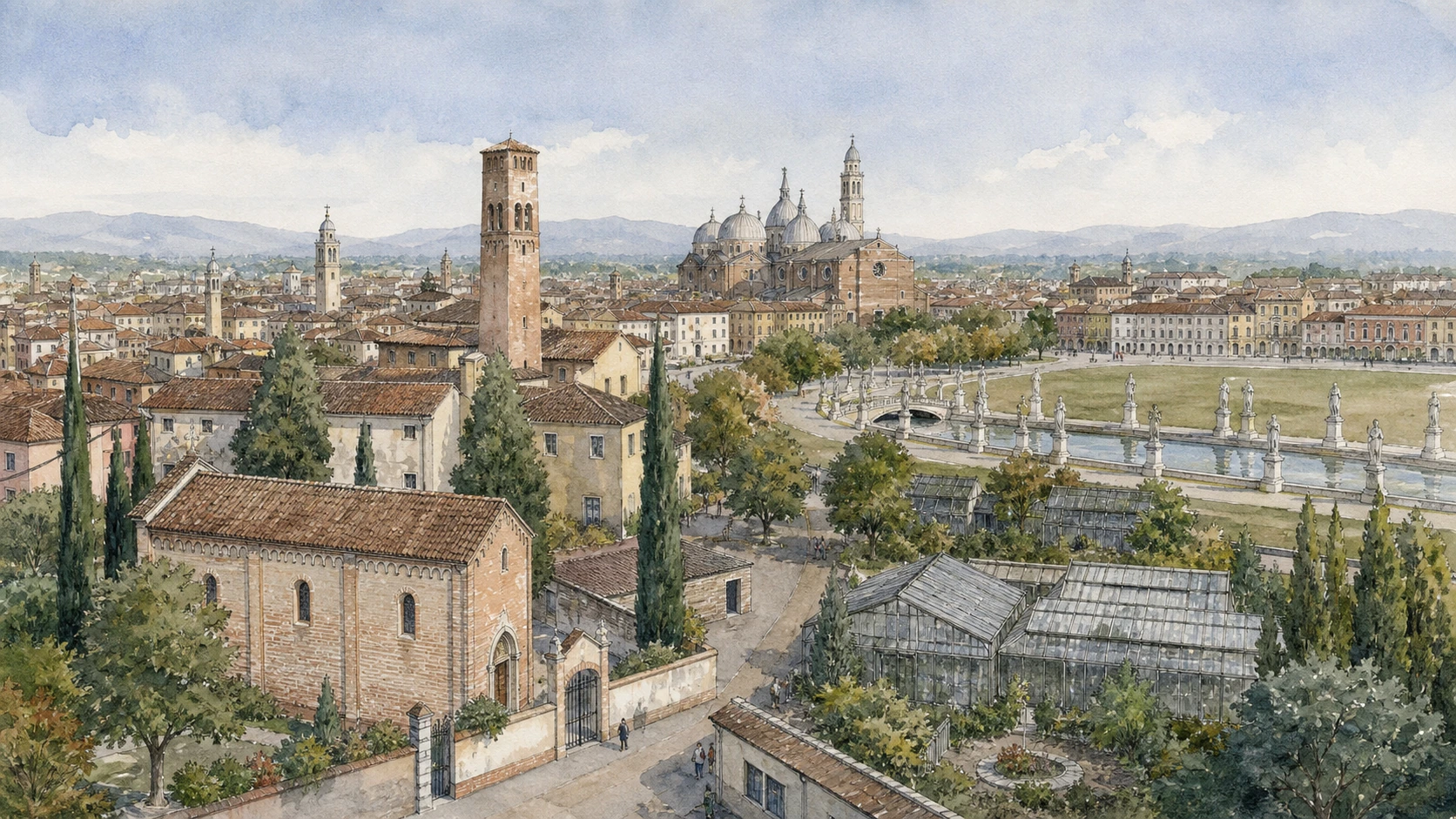
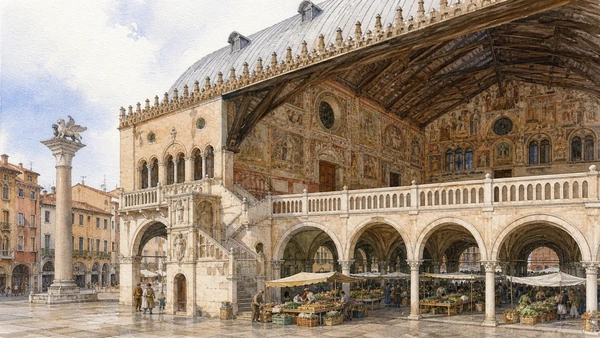
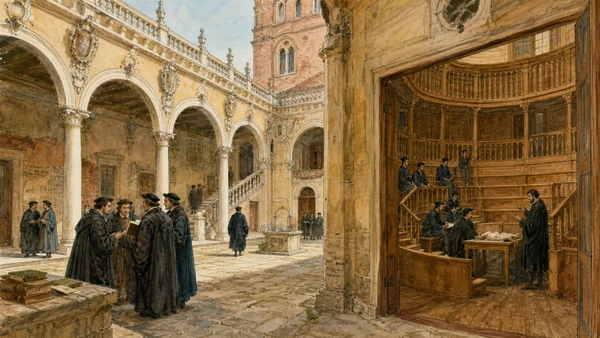
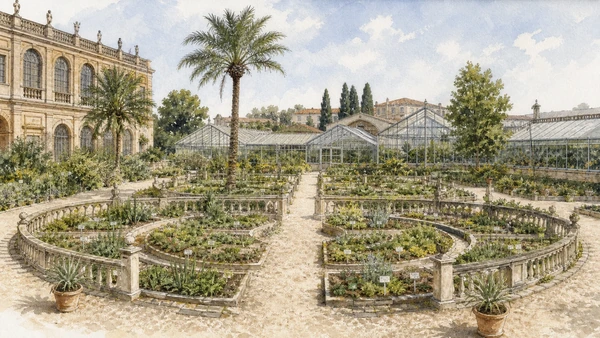
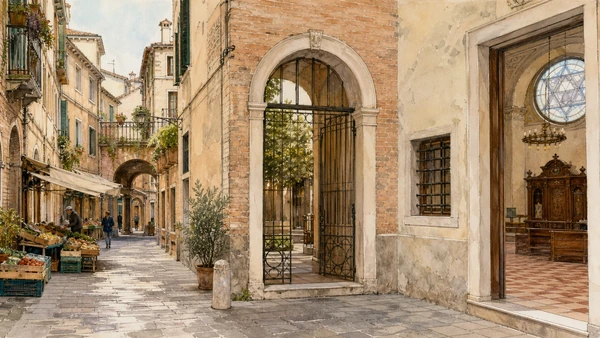
Palazzo della Ragione and the market squares connect government, trade and the continuing life of the centre. Nearby Palazzo Bo represents a university founded in 1222 whose teaching spaces, anatomical theatre and academic ceremonies remain part of an active institution. The Botanical Garden extends that history into living collections and biodiversity research rather than functioning as a decorative park.
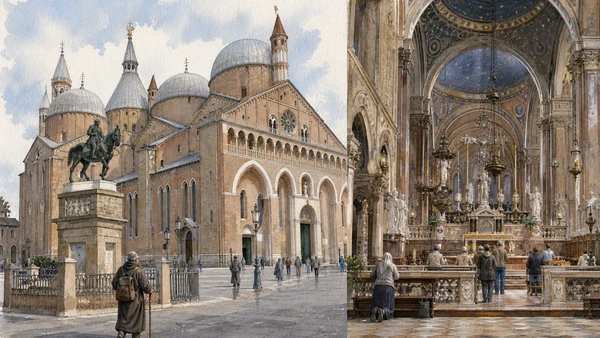
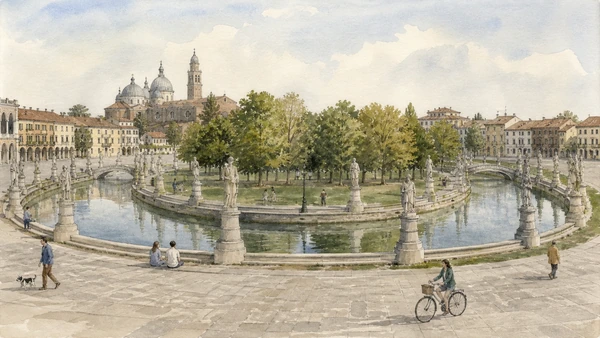
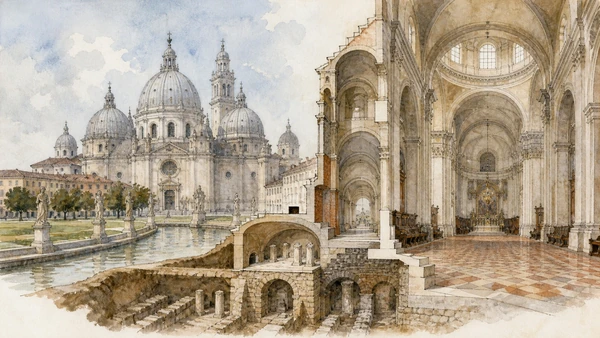
South of the centre, the Basilica of Saint Anthony and Santa Giustina sustain worship and pilgrimage; Prato della Valle is both designed hydraulic space and everyday civic ground. The route therefore requires reservations, respect for liturgy and enough time to move between distinct systems instead of chasing a checklist of famous interiors.
Reserve the Scrovegni Chapel first, place Palazzo della Ragione and Palazzo Bo around that time, then use the Basilica, Botanical Garden, Prato della Valle and Santa Giustina as a coherent southern sequence.