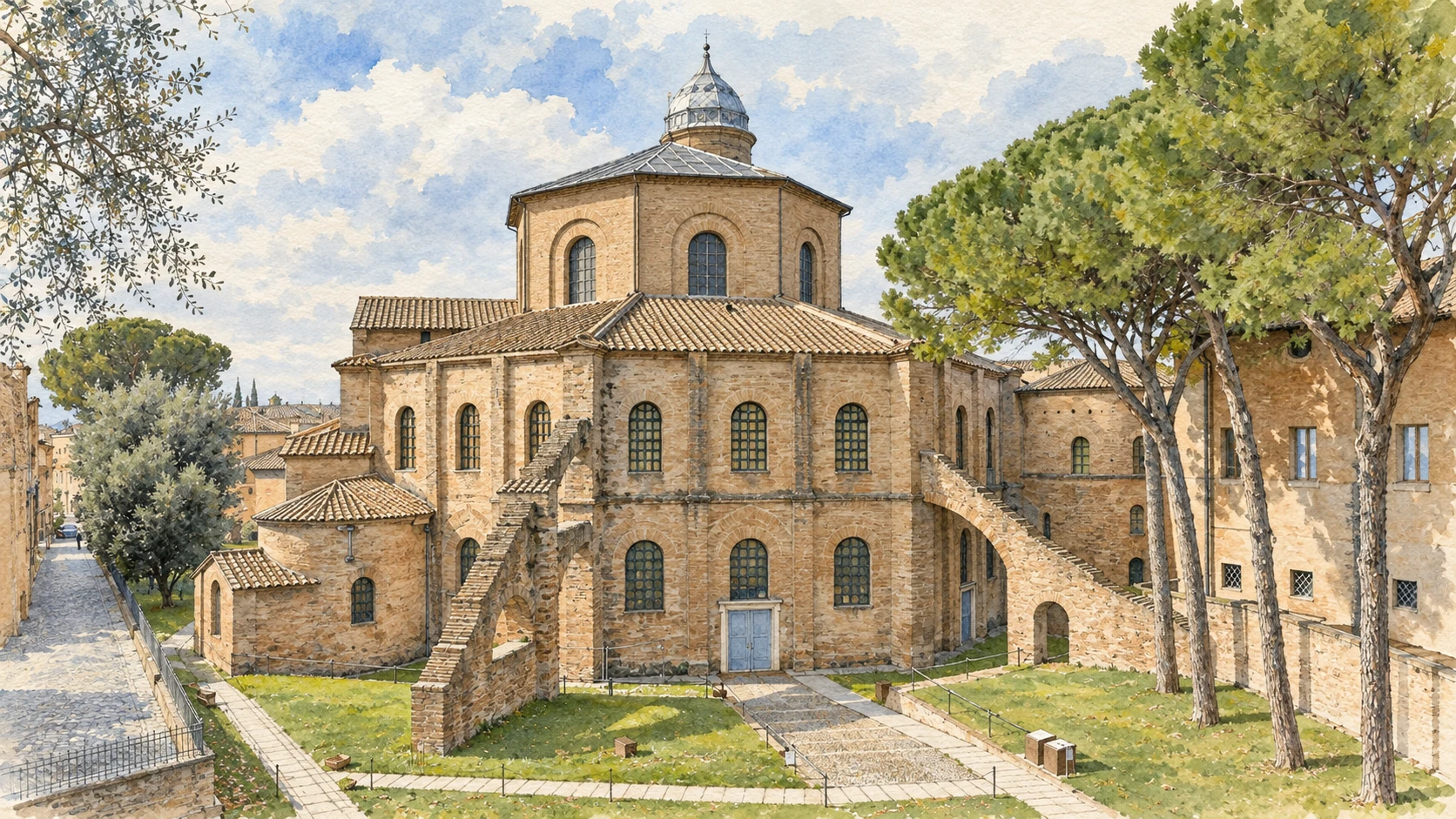
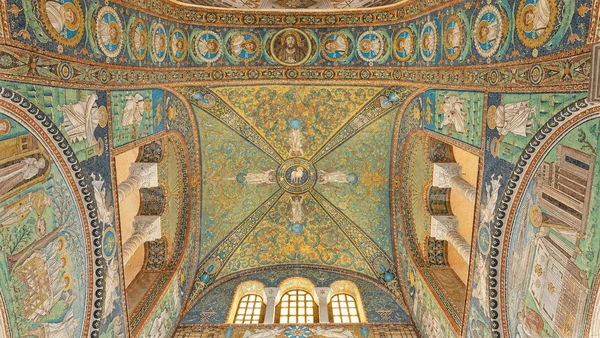
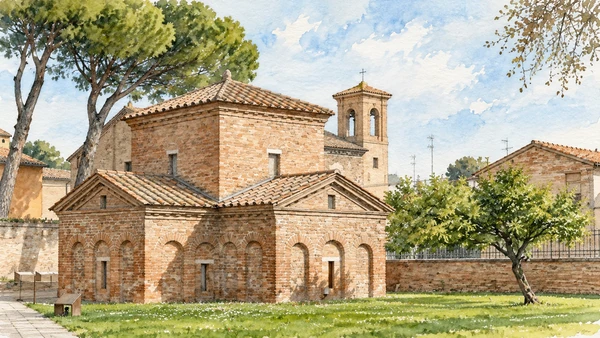
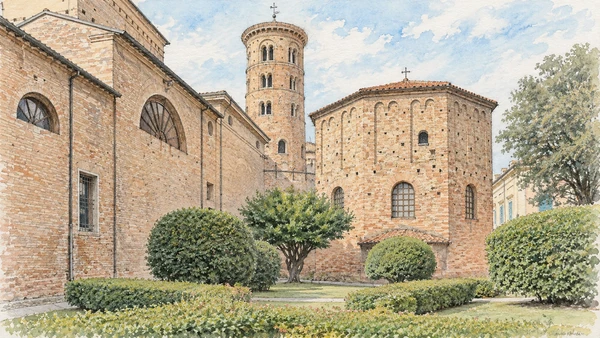
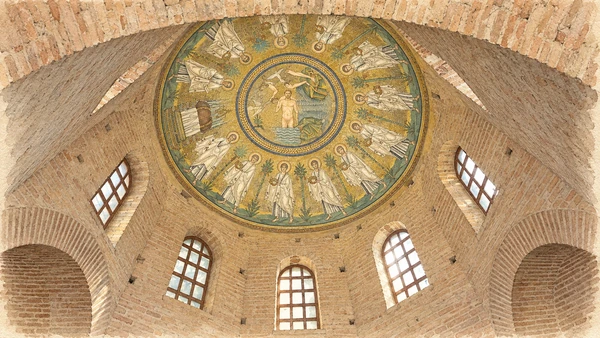
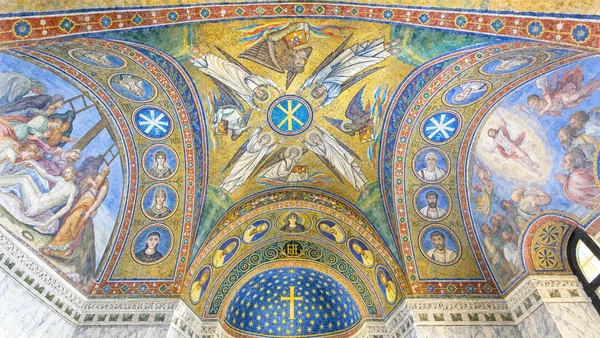
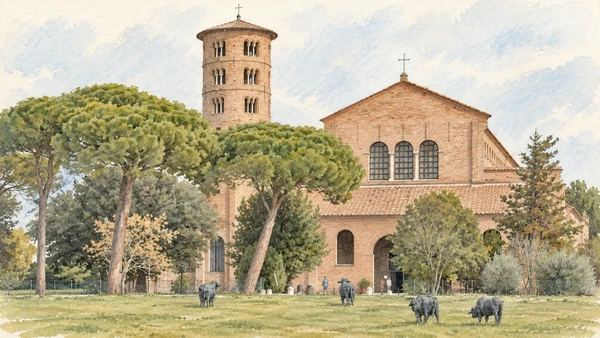
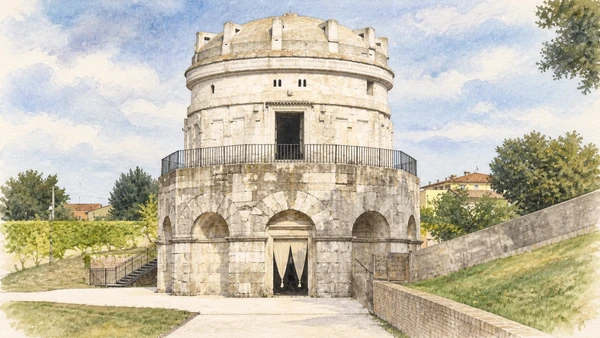
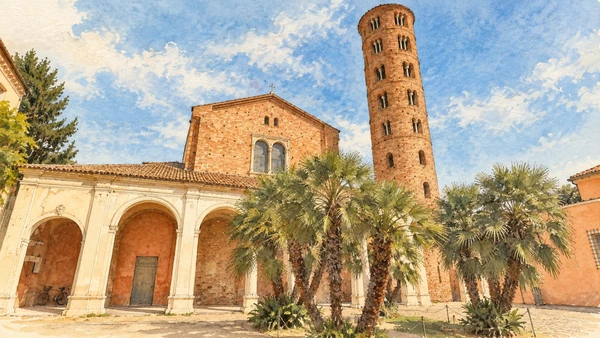
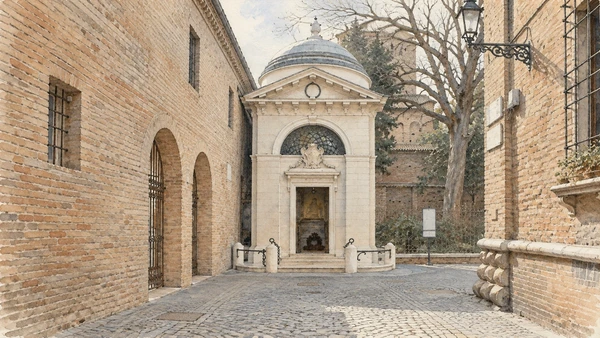
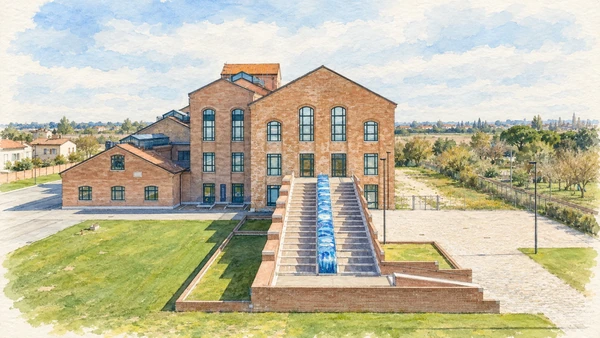
Ravenna’s celebrated interiors belong to buildings with different patrons, purposes and histories. A baptistery organises a ritual around a central space; a basilica directs attention along a nave; San Vitale creates a more complex movement around an octagonal core. The eight early Christian monuments inscribed by UNESCO form a group, but they do not share one date or one religious-political setting. Dante’s tomb adds a later history of exile and remembrance. At Classe, an archaeological museum in a former factory reconnects the monuments with settlement, production and the sea.
The guide separates documented history from suggestions for reading the site. Named buildings and landscape relationships follow institutional sources; the illustrations are editorial interpretations, not measured surveys or records of current access.
Brick buildings, luminous mosaics and a changing relationship with the sea connect late-antique power with the city’s later memories.