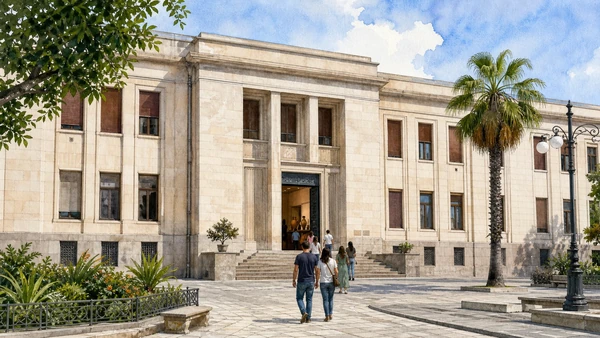
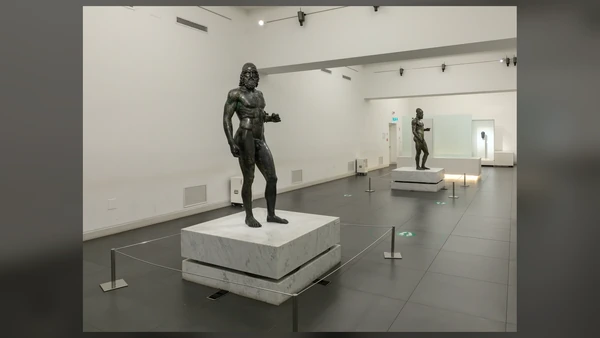
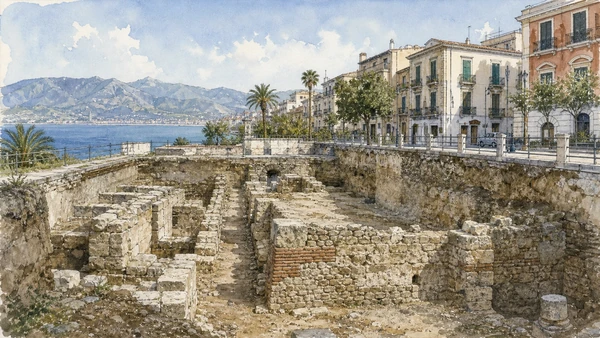
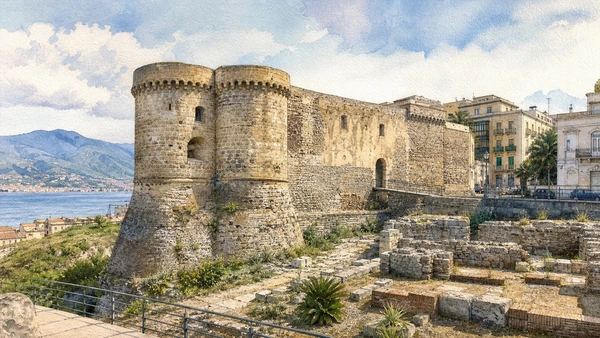
The National Archaeological Museum connects the Riace Bronzes to a much larger record of Indigenous communities, Greek cities, sanctuaries, trade and Roman Calabria. The bronzes are not a substitute for this regional history.
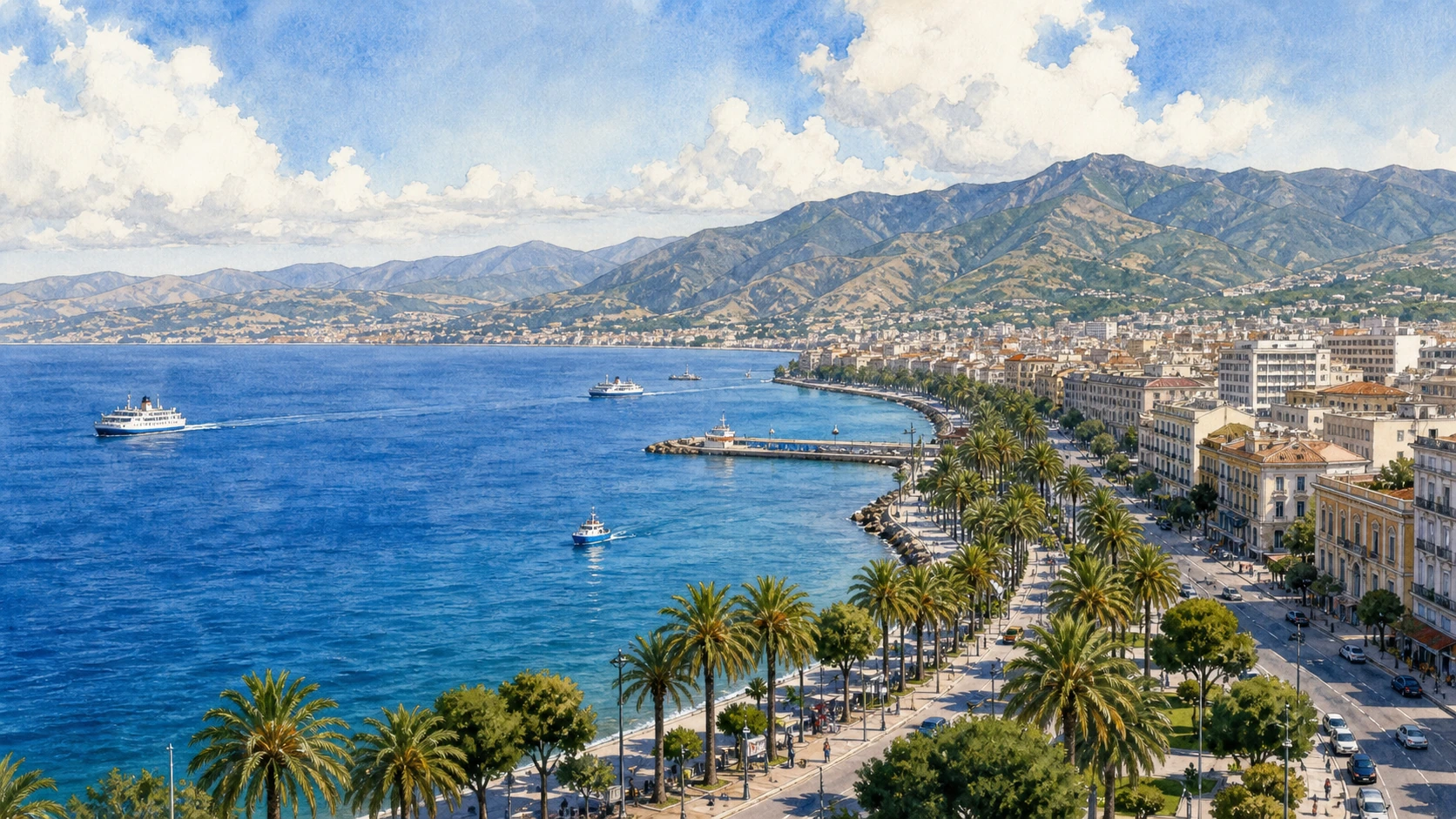
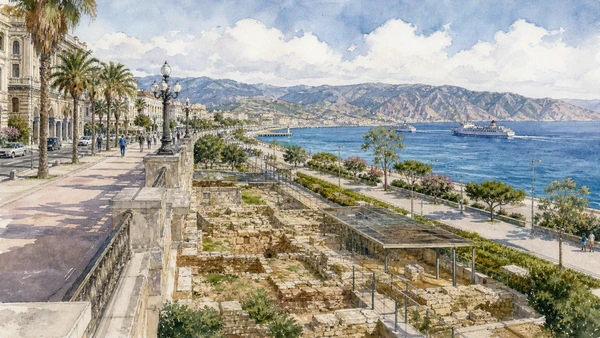
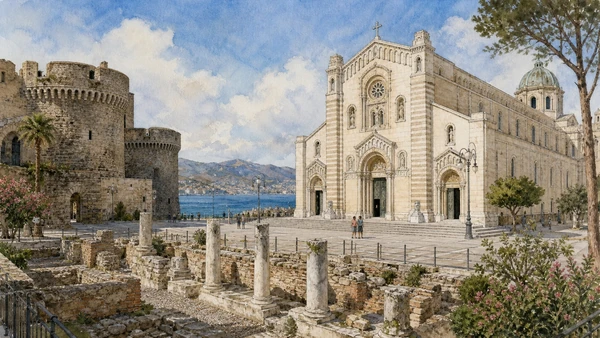
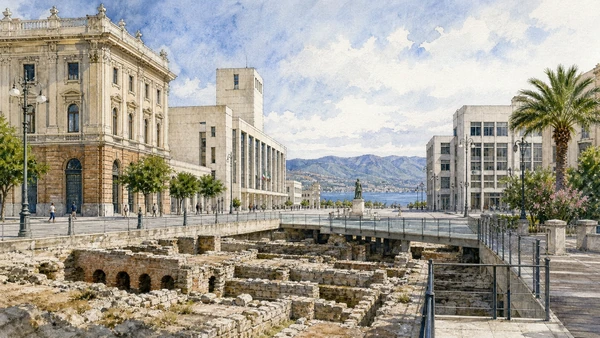
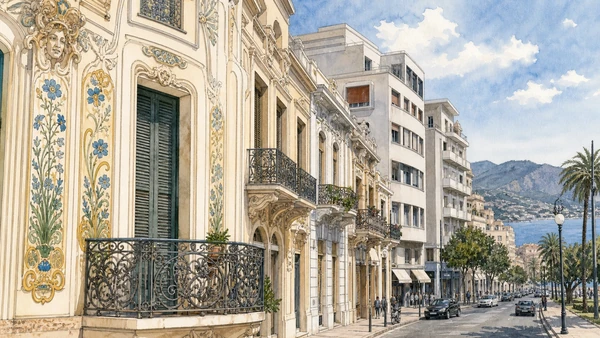
Much of the visible centre reflects planning after the 1908 earthquake and tsunami. Street grids, public buildings, reinforced construction and the seafront must be read as twentieth-century responses to destruction rather than as an untouched ancient city.
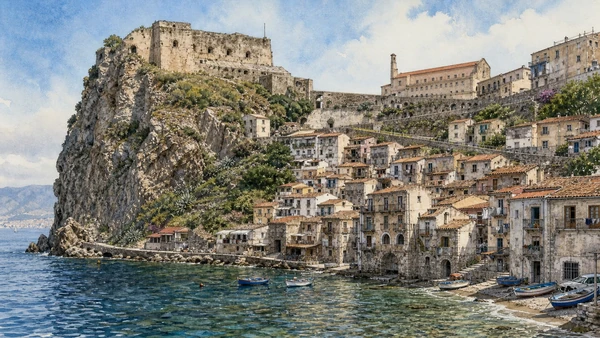
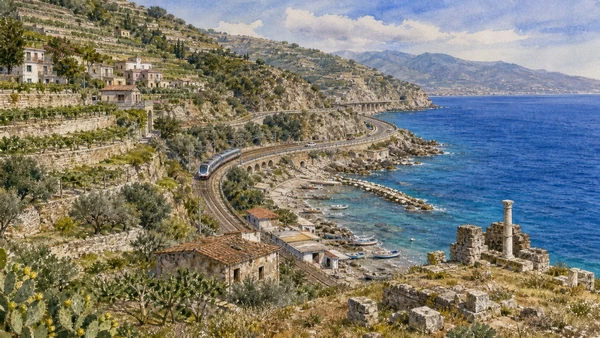
The Strait remains infrastructure as well as scenery. Ferries, rail approaches, fishing, currents and the views toward Sicily shape daily movement, while Scilla and the Costa Viola reveal how settlement adapts to cliffs and narrow coastal ground.
Give the museum and rebuilt centre one full day, then use a second day for the waterfront, Scilla and Costa Viola without compressing rail, road and hill access.