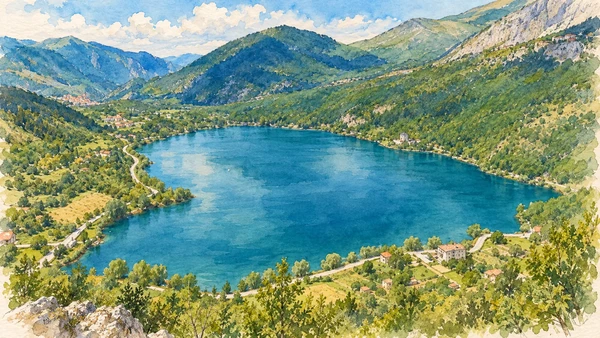
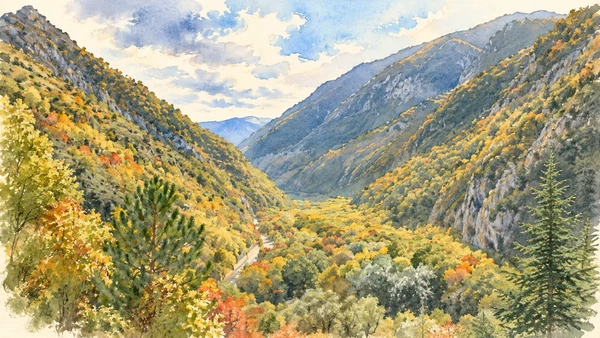
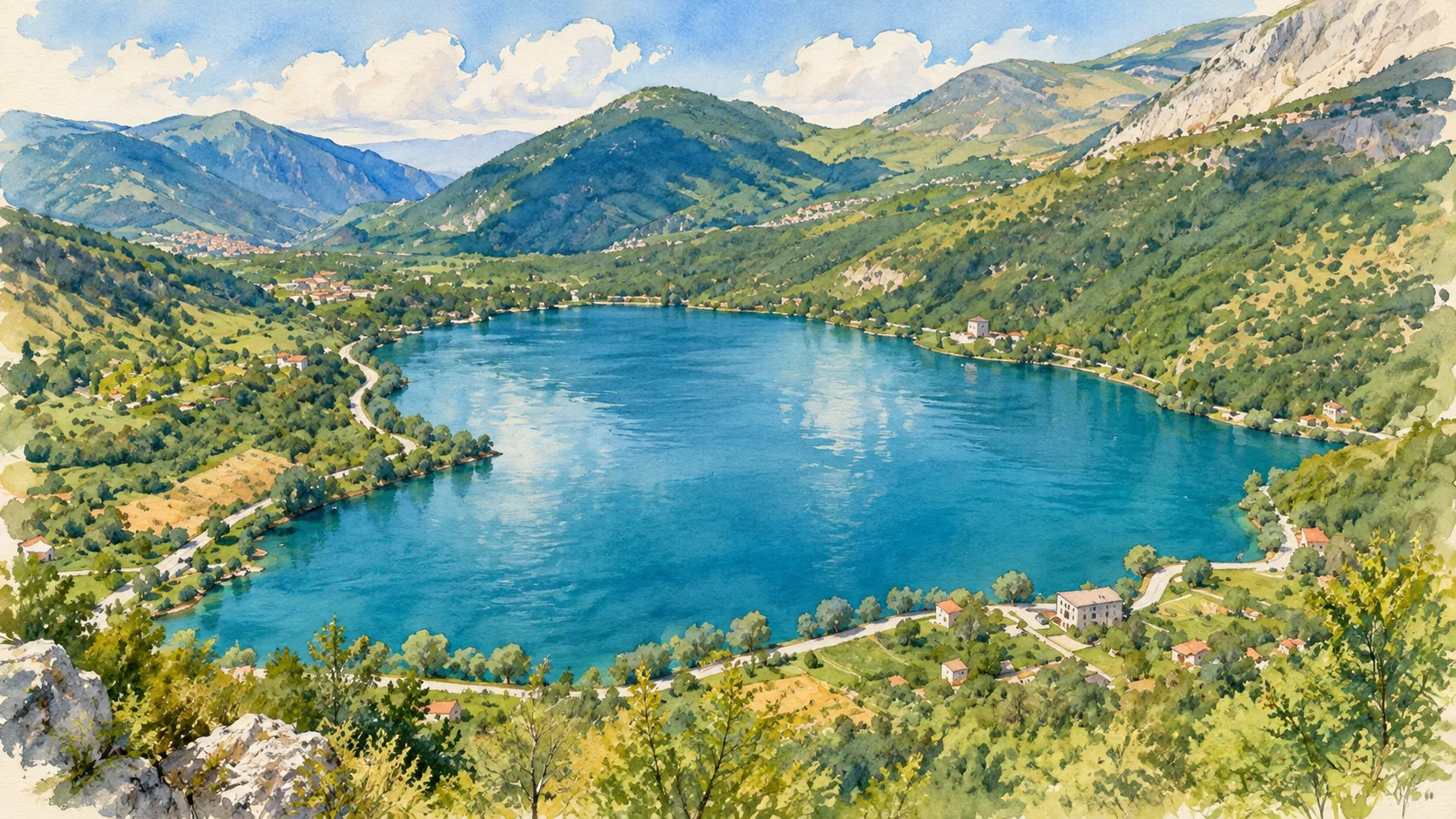
Watercolour: Lake Scanno within its wooded mountain basin.

Abruzzo · Guide 07

Scanno
and the Sagittario

Stone streets, craft, two different lakes and a protected river gorge connect inhabited mountain places with changing water landscapes.

Plan the route
Scanno and the Sagittario10 chapters · history, culture and landscape

Why this place matters

More than a heart-shaped photograph.

Scanno’s most familiar lake image is a view from one position, not the shape of the entire territory. The town, its craft traditions, Villalago and the lower Sagittario deserve their own attention. Follow the distinction between inhabited streets, managed lake shores and reserve paths. A scenic road linking them does not make all their approaches equally easy or suitable for the same day.

The guide separates documented history from suggestions for reading the site. Named buildings and landscape relationships follow institutional sources; the illustrations are editorial interpretations, not measured surveys or records of current access.

Stone streets, craft, two different lakes and a protected river gorge connect inhabited mountain places with changing water landscapes.
The route

Plan your visit

Give Scanno and its nearby lake a day at a comfortable pace. Treat an uphill viewpoint as an optional walk after checking conditions. Villalago, San Domenico and Anversa form a separate valley journey; the reserve needs its own route choice.

Town morning

Scanno, church, fountain and craft

Give Scanno and its nearby lake a day at a comfortable pace.

Lake time

The shore and an optional viewpoint

Separate valley day

Villalago and San Domenico

Reserve outing

Anversa and Gole del Sagittario

Ten chapters

Explore the places

The chapters connect history and terrain. Mountain areas and outlying towns are separate options, not a single continuous walking route.

  1. 01Scanno’s old town
  2. 02Santa Maria della Valle
  3. 03Fontana Sarracco
  4. 04Goldsmithing, dress and local identity
  5. 05Lake Scanno
  6. 06The lake’s elevated viewpoint
  7. 07Villalago
  8. 08San Domenico lake and hermitage
  9. 09Anversa degli Abruzzi
  10. 10Gole del Sagittario reserve
01

The inhabited landscape

Scanno’s old town

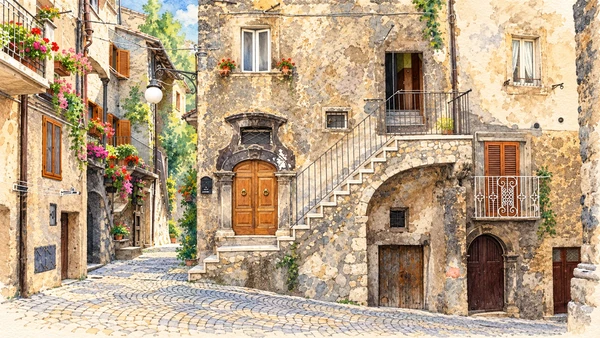
Stairs, covered passages and closely grouped houses reward a walk that allows time to look back as well as ahead. This is an inhabited place, not a set arranged for photographs.

Today

This remains an inhabited place. Use pedestrian routes, keep entrances clear and check municipal mobility notices for any restricted area.

History

Scanno’s built landscape and craft traditions are associated with its mountain economy. Photographers have contributed to its wider image, but that image is not the whole community.

How to read this place

Keep domestic thresholds clear and ask before photographing residents. Notice how stairs accommodate the slope rather than treating them as decorative objects.

What to notice

  • Keep domestic thresholds clear and ask before photographing residents.
  • The relationship between the site and its surrounding route.
  • The distinction between surviving evidence and modern interpretation.
Italia.it · Scanno
Watercolour: External stairs, arched supports and closely grouped doorways in Scanno’s old town.
Scanno’s old townEditorial watercolour · AI-generated · 2026
02

Worship and memory

Santa Maria della Valle

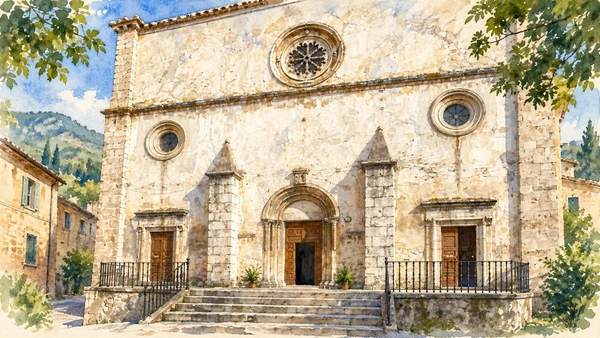
The church gives the town a religious focus and helps orient a first walk. Its tower and façade belong to the streets around them rather than to an isolated postcard composition.

Today

Worship and local religious life continue here. Visitor access may pause for services; consult the church or managing institution before planning an interior visit.

History

The church preserves medieval and later architectural layers. Its continuing religious function connects historical fabric with present community life.

How to read this place

Compare the tower’s form with the body of the church. Interior access depends on worship and current arrangements, not simply on the hours of nearby shops.

What to notice

  • Compare the tower’s form with the body of the church.
  • The relationship between the site and its surrounding route.
  • The distinction between surviving evidence and modern interpretation.
Italia.it · Scanno
Watercolour: The portals and circular windows of Santa Maria della Valle’s facade.
Santa Maria della ValleEditorial watercolour · AI-generated · 2026
03

The inhabited landscape

Fontana Sarracco

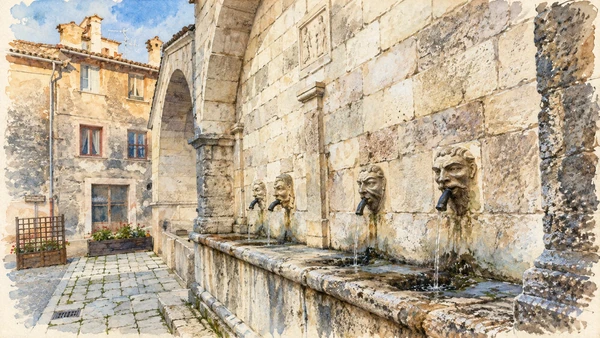
The fountain offers a small-scale way to read the town’s public infrastructure. It is a place to consider water, work and social contact within the settlement.

Today

This remains an inhabited place. Use pedestrian routes, keep entrances clear and check municipal mobility notices for any restricted area.

History

Its arched stone structure is among Scanno’s recognised historic features. Fountains served practical needs long before becoming stops in photographic itineraries.

How to read this place

Look at the relationship between basin, spouts and the space in front. Appearance alone does not establish a social meaning for each carving.

What to notice

  • Look at the relationship between basin, spouts and the space in front.
  • The relationship between the site and its surrounding route.
  • The distinction between surviving evidence and modern interpretation.
Italia.it · Scanno cultural route
Watercolour: The four carved spouts, long basin and arched recesses of Fontana Sarracco.
Fontana SarraccoEditorial watercolour · AI-generated · 2026
04

Materials and work

Goldsmithing, dress and local identity

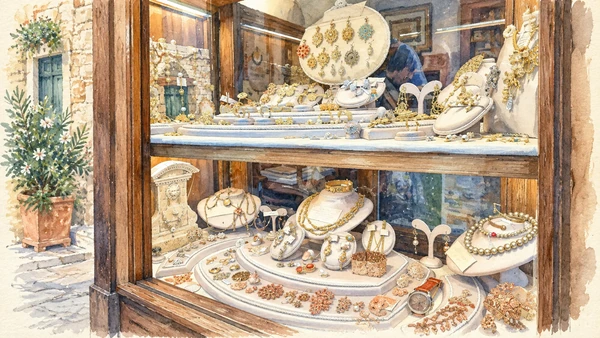
Craft invites close attention to skill and the choices of a maker. Shops and collections can introduce local ornament without reducing the town to a costume tradition.

Today

Workshops are places of work. Arrange a visit where offered and ask permission before entering private spaces or photographing a maker.

History

Goldsmithing, lace and distinctive dress are associated with Scanno’s cultural history. Their meaning changes across ordinary use, ceremony, display and contemporary production.

How to read this place

Distinguish an object made today from an antique, and ceremonial dress from everyday clothing. Ask permission for workshop access and avoid staging residents as anonymous heritage figures.

What to notice

  • Distinguish an object made today from an antique, and ceremonial dress from everyday clothing.
  • The relationship between the site and its surrounding route.
  • The distinction between surviving evidence and modern interpretation.
Italia.it · Scanno
Watercolour: Traditional gold jewellery and presentosa pendants displayed in a Scanno shop window.
Goldsmithing, dress and local identityEditorial watercolour · AI-generated · 2026
05

Terrain and access

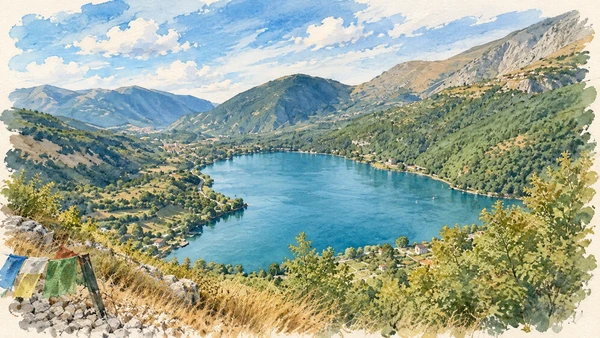
Lake Scanno

The shore gives a direct encounter with water and the enclosing slopes. Choose a permitted stopping point and let the lake be experienced without needing the famous elevated view.

Today

Conditions depend on the exact route and the day. Check the responsible operator, weather and local access notices; a viewpoint is not the same undertaking as a mountain traverse.

History

Lake Scanno is a natural basin in the Marsican mountain landscape. It is distinct from the smaller San Domenico reservoir farther down the valley.

How to read this place

Observe the real shoreline from where you stand. Do not redraw the lake into a symmetrical heart or infer swimming conditions and services from a scenic image.

What to notice

  • Observe the real shoreline from where you stand.
  • The relationship between the site and its surrounding route.
  • The distinction between surviving evidence and modern interpretation.
Italia.it · Lake Scanno and its viewpoint
Watercolour: Lake Scanno within its wooded mountain basin.
Lake ScannoEditorial watercolour · AI-generated · 2026
06

Terrain and access

The lake’s elevated viewpoint

From the recognised viewing area, perspective makes part of the lake resemble a heart. Reaching that view is an optional walking outing, not an essential completion of a shore visit.

Today

Conditions depend on the exact route and the day. Check the responsible operator, weather and local access notices; a viewpoint is not the same undertaking as a mountain traverse.

History

The celebrated outline depends on the viewpoint. It is a visual effect created by the shore, foreground terrain and viewing angle.

How to read this place

Check the actual path, gradient, footwear needs and weather before setting out. The name Sentiero del Cuore describes the attraction; it does not classify every visitor’s ability.

What to notice

  • Check the actual path, gradient, footwear needs and weather before setting out.
  • The relationship between the site and its surrounding route.
  • The distinction between surviving evidence and modern interpretation.
Italia.it · Lake Scanno and its viewpoint
Watercolour: Lake Scanno seen from a rocky elevated viewpoint, where the foreground partly conceals the shoreline.
The lake’s elevated viewpointEditorial watercolour · AI-generated · 2026
07

The inhabited landscape

Villalago

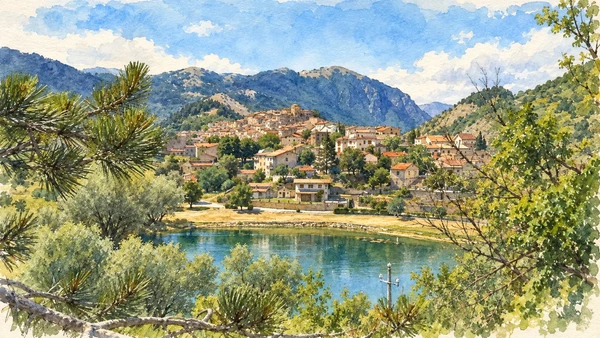
The village climbs through steps, lanes and small spaces above the valley. It has its own settlement pattern and should not be treated as another name for Scanno.

Today

This remains an inhabited place. Use pedestrian routes, keep entrances clear and check municipal mobility notices for any restricted area.

History

The history of Villalago is linked with monastic foundations and the cult of San Domenico. Later houses and communal buildings add further layers.

How to read this place

Read the slope through the sequence of stairways and supported passages. The upper village and lakeside hermitage require different approaches.

What to notice

  • Read the slope through the sequence of stairways and supported passages.
  • The relationship between the site and its surrounding route.
  • The distinction between surviving evidence and modern interpretation.
I Borghi più belli d’Italia · Villalago
Watercolour: Villalago’s houses above the small Lago Pio.
VillalagoEditorial watercolour · AI-generated · 2026
08

Worship and memory

San Domenico lake and hermitage

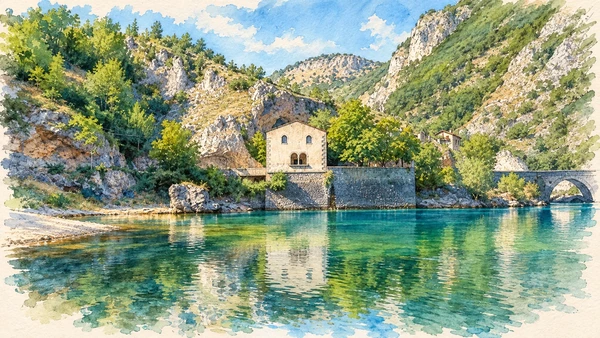
The small church and waterside setting form one of the valley’s distinct encounters. The bridge and shore are part of the approach, with access subject to local conditions.

Today

Worship and local religious life continue here. Visitor access may pause for services; consult the church or managing institution before planning an interior visit.

History

Devotion to San Domenico connects the site with the area’s monastic history. The present water landscape should be distinguished from the much older religious tradition.

How to read this place

Do not confuse this water body with Lake Scanno or use its colour as evidence of depth or safe swimming. Treat the chapel as a place of worship and verify the permitted route.

What to notice

  • Do not confuse this water body with Lake Scanno or use its colour as evidence of depth or safe swimming.
  • The relationship between the site and its surrounding route.
  • The distinction between surviving evidence and modern interpretation.
I Borghi più belli d’Italia · Villalago
Watercolour: The hermitage of San Domenico beside the green reservoir and stone bridge.
San Domenico lake and hermitageEditorial watercolour · AI-generated · 2026
09

The inhabited landscape

Anversa degli Abruzzi

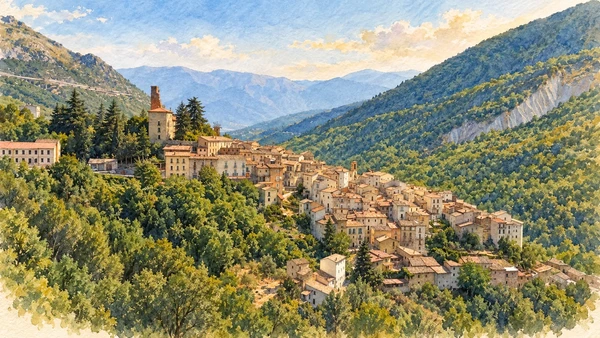
The lower-valley town provides an inhabited counterpoint to the gorge. Its streets and outlooks make the relation between settlement and water visible.

Today

This remains an inhabited place. Use pedestrian routes, keep entrances clear and check municipal mobility notices for any restricted area.

History

Pastoral prosperity contributed to the houses and architectural character of the town, particularly in the early-modern period.

How to read this place

Look at stone portals and the way the town faces the valley. Keep Castrovalva, Anversa and the reserve entrance geographically distinct when choosing a route.

What to notice

  • Look at stone portals and the way the town faces the valley.
  • The relationship between the site and its surrounding route.
  • The distinction between surviving evidence and modern interpretation.
I Borghi più belli d’Italia · Anversa degli Abruzzi
Watercolour: Anversa degli Abruzzi’s houses on a slope above the Sagittario valley.
Anversa degli AbruzziEditorial watercolour · AI-generated · 2026
10

Terrain and access

Gole del Sagittario reserve

The reserve offers a close reading of river, rock and habitat. Begin with the managing organisation’s current information and choose a defined route.

Today

Conditions depend on the exact route and the day. Check the responsible operator, weather and local access notices; a viewpoint is not the same undertaking as a mountain traverse.

History

The protected area conserves the Sagittario gorge landscape and supports environmental interpretation. It is part of a living ecosystem, not a setting arranged for guaranteed wildlife sightings.

How to read this place

Follow marked and open paths, keep animals at a distance and avoid feeding them. A road view of the gorge is not the same experience or undertaking as walking within the reserve.

What to notice

  • Follow marked and open paths, keep animals at a distance and avoid feeding them.
  • The relationship between the site and its surrounding route.
  • The distinction between surviving evidence and modern interpretation.
WWF · Gole del Sagittario reserve
Watercolour: Wooded slopes and exposed limestone in the Gole del Sagittario reserve.
Gole del Sagittario reserveEditorial watercolour · AI-generated · 2026

The territory through time

A short chronology

A concise chronology linking the documented sites to the wider story.

  1. Lake Scanno has a natural origin, distinct from the later San Domenico reservoir.

  2. Compact towns adapt streets and buildings to steep slopes.

  3. Santa Maria della Valle and the San Domenico hermitage belong to different local settings.

  4. Fontana Sarracco links built form with the practical life of Scanno.

  5. Seasonal movement and trade link the valley communities to wider economies.

  6. Goldsmithing and local clothing preserve skills while changing with the people who use them.

  7. The artificial lake at San Domenico creates a waterside setting distinct from Lake Scanno.

  8. The Gole del Sagittario reserve connects habitat protection with managed visitor routes.

Before your visit

Practical information

01

Plan separate days

Choose a manageable set of visits and allow for transport, booked entries and the return journey.

02

Use the exact place name

Similar religious names can refer to different sites. Santo Spirito al Morrone near Sulmona and Santo Spirito a Maiella near Roccamorice require separate journeys.

03

Check the institution

Opening hours, tickets, exhibitions and religious access change. Use the linked managing institution shortly before visiting.

04

Check the actual terrain

A town walk, gorge walkway, lift arrival and mountain path have different demands. Use current route information, weather and closures for the option you choose.

05

Arrange accessible visits

Historic interiors and mountain approaches can include steps, gradients or uneven surfaces. Ask about the specific route instead of assuming an entire destination is step-free.

06

Respect work and residence

Farms, workshops, churches and historic streets remain in use. Follow signs, keep entrances clear and ask permission before entering private spaces.

Method and sources

Sources and image credits

Prepared on 8 September 2026 from the institutional sources linked below. Historical claims are separated from editorial observations and itinerary suggestions. Older institutional brochures are used for stable cultural context, never as current timetables. Prices, transport schedules, trail status and admission are deliberately left to the responsible operators. Illustrations are not photographs, measured reconstructions or evidence of current conditions.

The eleven images are AI-generated editorial watercolours guided by photographic references. They interpret named places and are not photographs or substitutes for measured plans. Opening hours, tickets, accessible routes, temporary exhibitions and conservation work can change; consult the linked official pages shortly before visiting.