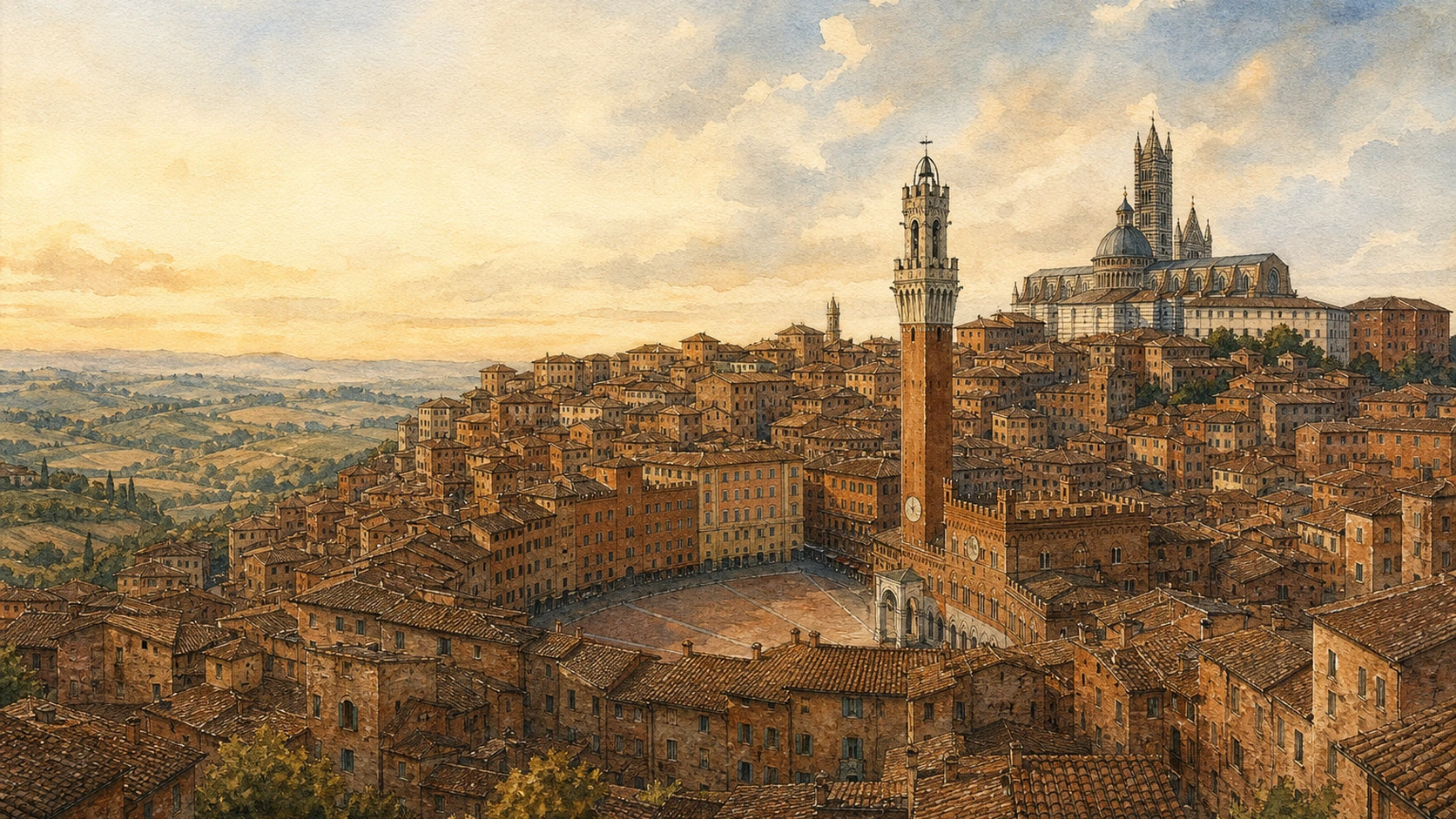
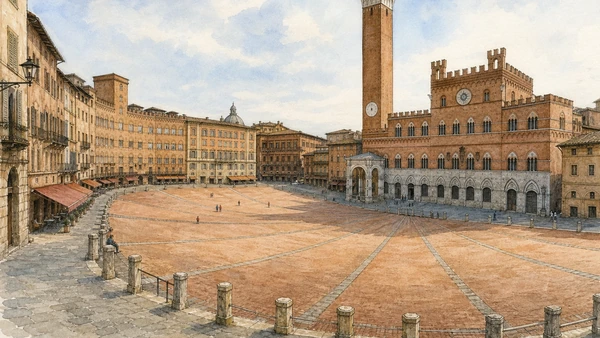
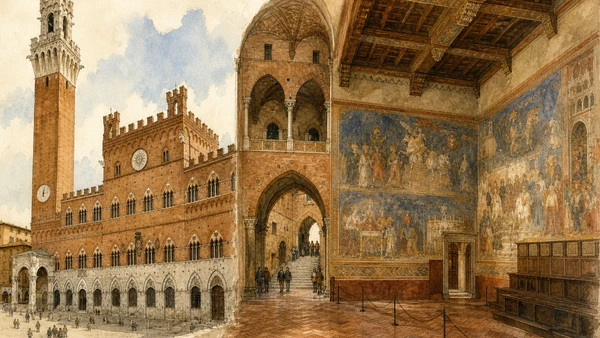
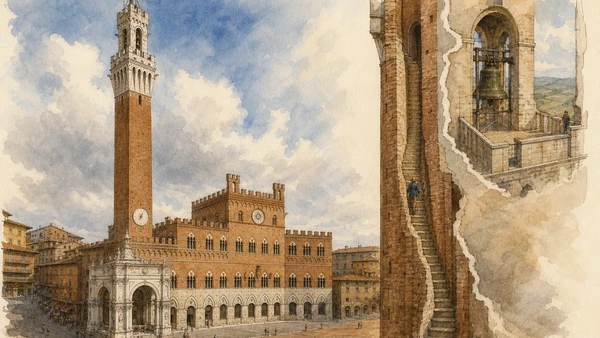
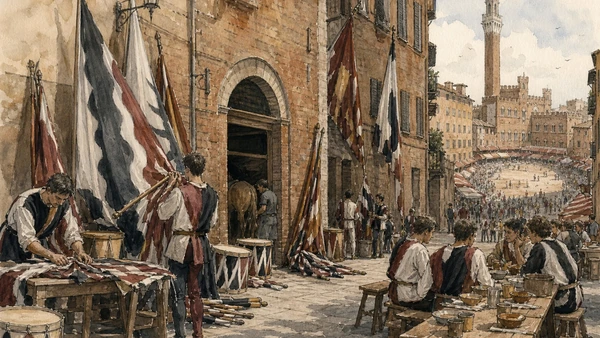
Piazza del Campo is both designed topography and public institution. Its nine paving segments descend toward Palazzo Pubblico, built for the Government of the Nine and still occupied by the Comune. Inside, the Museo Civico preserves paintings made for governing rooms, including Ambrogio Lorenzetti’s argument about public power. The Torre del Mangia adds a vertical civic signal, but its limited timed ascent, four hundred steps and weather closures make it a separate visit rather than a guaranteed extension of the museum.
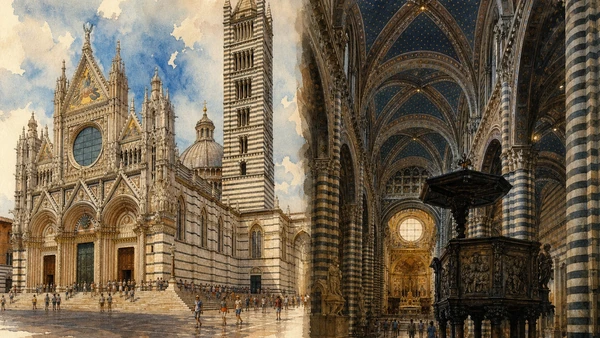
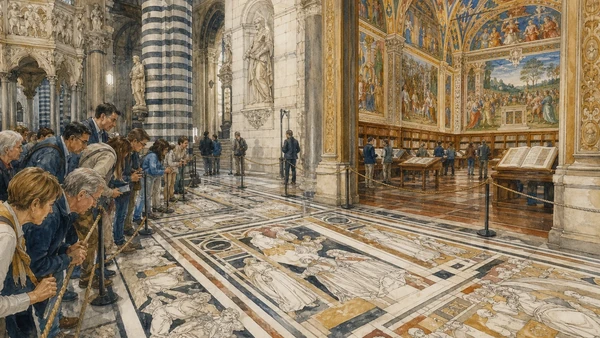
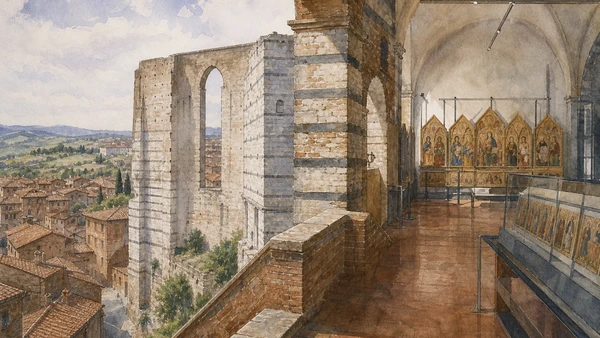
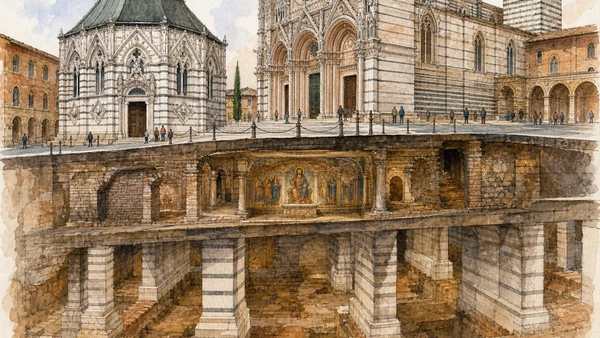
The cathedral ridge presents another system. Cathedral, pavement, Piccolomini Library, Museo dell’Opera, Facciatone, Crypt and Baptistery are related but not one undifferentiated interior. The pavement is uncovered only during announced periods; the Gate of Heaven and panorama have capacity and ticket rules; the unfinished Duomo Nuovo records ambition, plague and changing resources rather than a picturesque ruin.
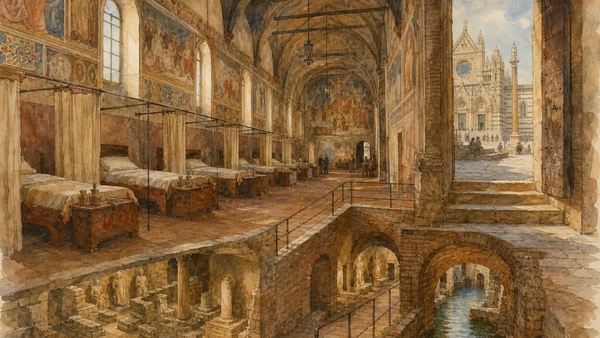
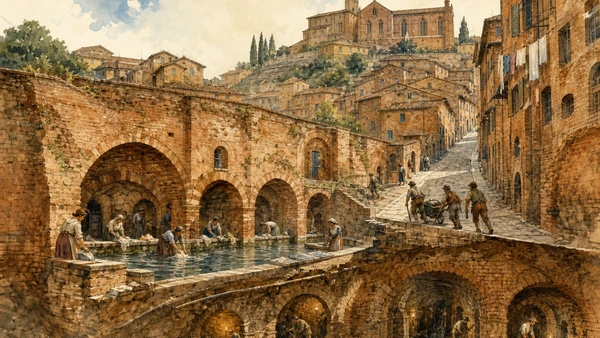
Across from the cathedral, Santa Maria della Scala grew from hospital care into a layered museum complex. Downhill, Fontebranda and the bottini reveal the infrastructure needed by households, craft and animals in a ridge city without a major watercourse. Contrade connect these spaces through territory, baptism, social care, preparation and memory. The Palio is one visible moment within that continuing neighbourhood system, not its sole purpose.
Begin at the Campo before crowds, choose either Torre or a longer museum visit, reserve the cathedral complex for its current access window, then finish at Santa Maria della Scala and Fontebranda without treating steep map distances as level walking.